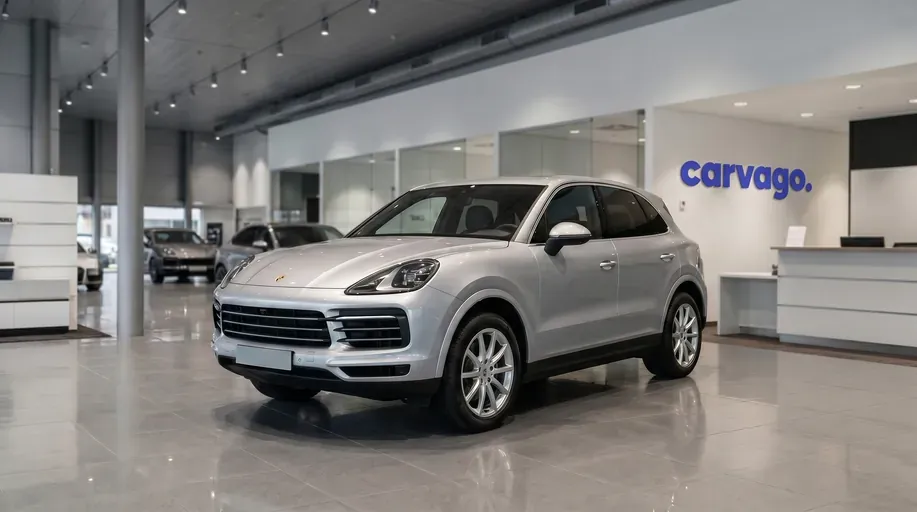
Review Porsche Cayenne: What do owners and experts really say?
Porsche Cayenne Electric review: real owner experience, practical boot space, performance specs, and our verdict on the new luxury SUV.
November 1, 2026
Introduction
The Porsche Cayenne enters its fourth generation as a fully electric luxury vehicle, competing at the upper end of the premium full-size crossover segment. This review focuses exclusively on this fourth-generation model line (internal designation E4), which celebrated its world premiere in November 2025 when order books opened across Europe. Series production began in February 2026, with the first European customer deliveries following at the end of June 2026.
The lineup launched in a traditional Porsche Cayenne SUV body style and expanded in April 2026 to include the Porsche Cayenne Coupé. The powertrain roster grew as well, with the S variant joining the initial base and Turbo options in March 2026. Having arrived recently on the market, the generation has received no facelift to date.
This generation targets buyers seeking a blend of sports-car chassis tuning, substantial towing ability, and daily practicality. It is aimed primarily at executive drivers and families looking for a spacious long-distance cruiser with an all-electric drivetrain.
Owner Experiences: Common Faults and Recalls
European customer deliveries of the all-electric Porsche Cayenne Electric began at the end of June 2026. Because the vehicle has been in service for only four months, long-term durability and component reliability cannot yet be established. No recurring, model-specific defects have met the threshold of independent corroboration in owner reports or specialist testing. While isolated forum reports mention occasional electronic warning messages after third-party accessory installations, these remain unverified single cases rather than systematic generation faults.
Official safety records across European surveillance databases show that no recalls have been issued for this fourth generation of the Porsche Cayenne as of November 2026. Prospective buyers should still verify any individual car by VIN against official manufacturer databases to confirm that all routine factory software updates and technical quality actions are fully up to date.
Professional tests describe the substantial weight of the electric platform as the primary factor influencing wear on running gear. Heavy battery-electric vehicles subject suspension bushings, active dampers, and high-performance tyres to significant mechanical stress. Uneven tread wear on the inner or outer shoulders of large-diameter wheels is a potential issue to monitor, particularly on cars driven regularly on winding roads. Similarly, because regenerative braking handles a large portion of everyday slowing down, the friction brakes can develop light surface corrosion if not exercised periodically.
Most pre-owned examples currently entering the secondary market are dealer demonstrators or manufacturer inventory. On vehicles equipped with advanced chassis hardware, such as active suspension levelling (optional on higher trims) and rear-axle steering (optional across all variants), prospective buyers should verify that all electronic ride adjustments cycle smoothly without hydraulic whine or valve hesitation. If you are evaluating a pre-owned car, arranging an independent condition inspection through CarAudit provides an objective assessment of chassis components, battery diagnostic readouts, and cosmetic integrity before purchase.
🔍 What to check before buying
Diagnostic health readout: Request an official workshop diagnostic certificate to check the high-voltage battery state of health and verify the proportion of high-power DC fast-charging sessions in the vehicle's log.
Active suspension operation: Cycle the adaptive suspension through every height setting, including access and raised clearance modes, listening for compressor strain, uneven levelling, or mechanical pump noise.
Tyre tread wear: Check all four tyres across both the inner and outer shoulders for uneven wear or alignment scrubbing caused by the vehicle's high unladen weight.
Brake disc condition: Inspect the friction rings of both standard cast and optional ceramic brakes for rust accumulation, rim lip formation, or edge chipping, ensuring the physical brakes bite cleanly.
Chassis campaign status: Ask an authorised dealer to confirm by vehicle identification number (VIN) that all factory software updates and technical quality actions have been fully completed.
Engines: Which One to Choose
The fourth-generation electric Porsche Cayenne relies exclusively on dual-motor battery-electric powertrains paired with an automatic single-speed transmission and permanent all-wheel drive. The line-up spans three distinct power stages, each offered across both the standard SUV and Coupé body styles.
Engine
Fuel
Power
Gearbox
Model years
Cayenne Electric
Electric
325 kW (442 hp)
Automatic
2026 – present
Cayenne S Electric
Electric
490 kW (666 hp)
Automatic
2026 – present
Cayenne Turbo Electric
Electric
850 kW (1,156 hp)
Automatic
2026 – present
Which motorization to choose
For urban commuting, suburban errands, and daily family duty, the base Cayenne Electric is the most rational selection in the range. It delivers smooth, quiet progress and progressive throttle calibration that makes navigating congested city traffic relaxed and predictable. Out on open roads, it provides prompt responses for overtaking and composed motorway cruising, offering all the pace a luxury family vehicle realistically requires.
Drivers seeking the most versatile configuration for mixed driving should focus on the Cayenne S Electric. Benefiting from a directly oil-cooled rear electric motor, this variant delivers consistent performance even under sustained loads without power fading. It is particularly well-suited for cross-country touring and regular towing duties, providing substantial pulling reserves when hitched to heavy trailers or traversing mountainous routes. For most buyers of this Porsche Cayenne, the S represents a well-judged middle ground between everyday comfort and grand touring ability.
At the summit of the range, the Cayenne Turbo Electric exists for drivers who demand blistering acceleration and rapid high-speed progress on unrestricted motorway sections. Its instant throttle response produces sports-car pace in a straight line, making it an enthusiast's indulgence rather than a pragmatic daily driver.
Given the recent introduction of this generation, long-term powertrain durability and verified component issues are detailed in the owner experiences section.
Space & Practicality
Dimension / Parameter
SUV
Coupé
Length (mm)
4,985
4,985
Width excluding mirrors (mm)
1,980
1,980
Height (mm)
1,674
1,650
Wheelbase (mm)
3,023
3,023
Rear boot capacity (upright / folded, litres)
553–781 / 1,588
490–534 / 1,347
Front boot / frunk (litres)
90
90
Note: Rear luggage ranges reflect backrests in upright versus cargo positions. Figures do not apply to Turbo models, which feature slightly lower maximum boot capacities, while optional upgraded sound systems reduce rear boot space.
The electric Porsche Cayenne provides expansive passenger accommodation across both seating rows thanks to its long wheelbase. Taller occupants find abundant legroom in the rear, although the Coupé body style trades away a noticeable portion of rear headroom compared to the more upright SUV. Standard SUV variants offer seating for five, whereas the Coupé comes standard in a four-seat layout with an optional five-seat arrangement. Everyday usability benefits from a 40:20:40 split-folding rear bench with electrically adjustable backrests, which can be released directly from the cargo area to create an even load floor. The dedicated front compartment acts as a secondary storage well, ideal for keeping charging cables separate from daily luggage. However, over-the-shoulder visibility is hampered by broad roof pillars and tall rear headrests, making parking sensors and cameras necessary aids during tight manoeuvres.
What the Tests Say
On the road, the electric Porsche Cayenne maintains steady composure, filtering road imperfections effectively at higher speeds. The standard air suspension balances impact absorption with chassis control, while the active suspension, optional on higher trims, hydraulically keeps the vehicle level through rapid directional changes. However, professional road tests note that on narrow roads or tight hairpins, its substantial physical mass cannot be disguised. The front pushes wide if carried into turns with excess momentum, and steering feedback softens off-centre. Optional rear-axle steering aids low-speed maneuverability, although it feels artificially light at car-park speeds. Cabin refinement is strong, with wind rush and road noise well isolated.
Inside the Porsche Cayenne SUV, assembly standards and material fit are high. The digital displays present a multi-layered menu layout that requires familiarisation, and outward visibility is restricted by thick pillars alongside fixed rear head restraints. Testers also point out that the steering wheel lacks paddles to modulate regenerative braking on the move.
Professional reviews agree on the quiet cabin, secure high-speed stability, and flat cornering posture, but they diverge on primary ride comfort. While some tests find the damping calm on open motorways, others judge the baseline suspension tuning to be uncompromisingly firm over broken urban tarmac.
Prices and Market Offer
All market charts in this section reflect Carvago listings across the entire Porsche Cayenne model family—including earlier generations alongside the current lineup—rather than isolating the reviewed fourth generation. Advertised prices display a steady progression across build dates, where a 2019 model posts a median asking price of €64,900, rising to €99,900 for 2023 examples and reaching €139,200 for 2026 models.
Active listings for the Porsche Cayenne ranged between 7,873 and 8,351 across the six-month span from April 2026 to September 2026, starting at 8,187 and reaching a high of 8,351 in June 2026. The chart below tracks how advertised inventory fluctuated across these months.
Porsche Cayenne - availability over time
Active listings over time
Month
Porsche Cayenne
2026-04
8 187
2026-05
8 297
2026-06
8 351
2026-07
8 279
2026-08
7 873
2026-09
8 139
Source Carvago
Buyers can expect an extensive selection on the market, with monthly advertised stock consistently hovering around the 8,000-vehicle mark despite a brief dip to 7,873 in August 2026 before recovering to 8,139 in September 2026.
For used listings advertised today, the median asking price of cars built in 2019 is €64,900, compared to €139,200 for those built in 2026.
Porsche Cayenne - median price by model year
Median advertised price by year of manufacture
Model year
Porsche Cayenne
2019
64 900
2020
69 800
2021
75 000
2022
85 000
2023
99 900
2024
124 300
2025
131 000
2026
139 200
Source Carvago
Buyers targeting 2020 vehicles face a median asking price of €69,800, whereas stepping up to a 2024 model requires a median asking price of €124,300.
This depreciation curve tracks how the Porsche Cayenne's residual value falls with vehicle age, showing a loss of approximately 16% after the first year and 37% by age three.
Porsche Cayenne - value loss by age
Residual value by vehicle age
Vehicle age
Porsche Cayenne
New
138 900
1 yr
116 000
2 yrs
104 200
3 yrs
87 200
4 yrs
77 100
5 yrs
67 900
6 yrs
60 800
7 yrs
52 900
Source Carvago
Over the seven years shown, the model sheds roughly 62% of its initial residual value. The steepest annual declines occur within the first three years, before the loss rate moderates to a steadier pace from age four onward.
Between April and September 2026, hybrid and petrol variants formed the core of advertised vehicles, with hybrid listings closing the period at 3970 alongside 3466 petrol cars in September 2026. The breakdown below shows the monthly listing counts across all recorded fuel types.
Porsche Cayenne - supply by fuel over time
Supply composition by fuel type
Petrol
Diesel
Hybrid
Electric
Month
Petrol
Diesel
Hybrid
Electric
2026-04
3 738
514
3 879
47
2026-05
3 721
419
4 061
90
2026-06
3 644
428
4 038
237
2026-07
3 552
424
3 975
326
2026-08
3 337
363
3 839
333
2026-09
3 466
366
3 970
335
Source Carvago
Hybrid and petrol models dominate the market by a wide margin, leaving significantly fewer options for those seeking a diesel, with 366 listings, or an electric version, with 335 in September 2026. Buyers will therefore have extensive choice among petrol and hybrid variants, but will encounter a far smaller pool of diesel and electric cars.
Between April 2026 and September 2026, the average asking price for a Porsche Cayenne began at €91,100 and stood at €92,200 the following month.
Porsche Cayenne - price trend over time
Average price development over time
Month
Porsche Cayenne
2026-04
91 100
2026-05
92 200
2026-06
91 600
2026-07
91 800
2026-08
92 700
2026-09
92 600
Source Carvago
Over the six-month span, the average fluctuated within a narrow band between €91,100 and €92,700, ending at €92,600. With an overall change of less than two percent, values remained comparatively flat relative to the total price.
Strong cabin refinement with thorough isolation from wind and road noise
Composed high-speed stability and flat cornering posture on air suspension
Ample rear passenger legroom and practical front boot storage
Cons
Substantial vehicle mass limits agility through narrow roads and tight turns
Baseline suspension tuning feels uncompromisingly firm over broken city surfaces
Restricted outward visibility due to broad roof pillars and tall rear headrests
Frequently asked questions
Is the fourth-generation Porsche Cayenne reliable?
Long-term reliability is not yet established because customer deliveries only began at the end of June 2026. No recurring defects or official safety recalls have been recorded for this generation to date.
Which version of the electric Cayenne should you choose?
The Cayenne S Electric is the most versatile choice for mixed driving, offering sustained power delivery for towing and long-distance touring. The base electric Porsche Cayenne remains well suited for everyday urban and family use.
What should you check before buying a pre-owned model?
Obtain an official diagnostic report to verify high-voltage battery health and charging history. Buyers should also inspect the tyre shoulders for uneven wear and verify that the air suspension operates smoothly across all heights.
Should you choose the SUV or the Coupé body style?
Choose the SUV if you frequently carry adult passengers in the rear or need maximum cargo space. The Coupé offers a sleeker profile but reduces rear headroom and comes standard with four seats rather than five.