Articles

Car battle

BMW X7 vs. Porsche Cayenne: Complete comparison 2026

Detailed comparison of BMW X7 vs. Porsche Cayenne. We reveal the real differences in performance, spaciousness, and equipment. Read the verdict and choose the best SUV!

May 21, 2026

VS
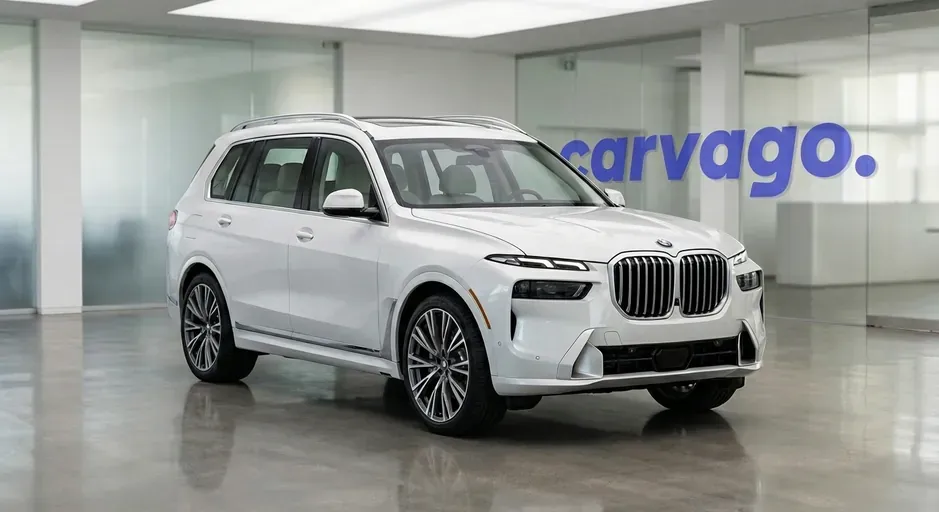
BMW X7

BMW X7

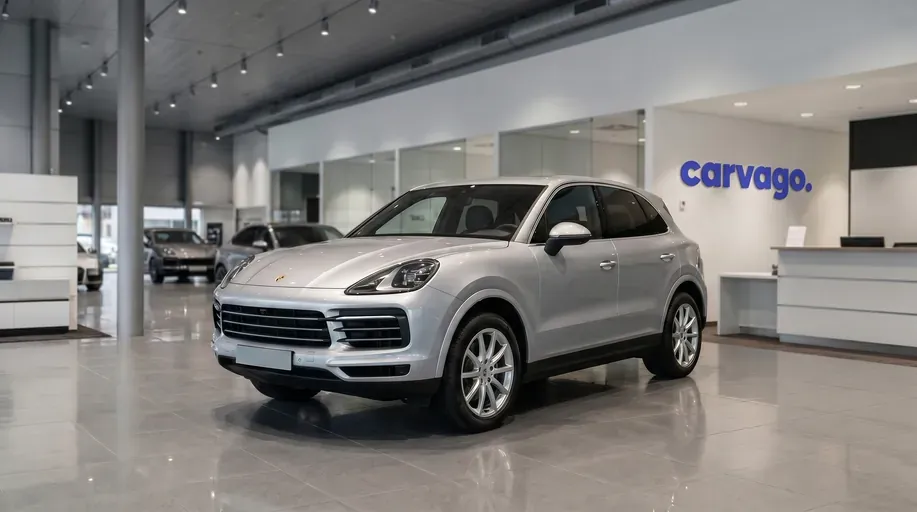
Porsche Cayenne

Porsche Cayenne

Introduction

The BMW X7 is a majestic and luxurious SUV that represents the very pinnacle of the Munich automaker's lineup, providing unprecedented space and comfort for larger families. In contrast, the Porsche Cayenne, which is also available on the market in a more stylish Coupé body style, is considered the absolute benchmark for sporty SUVs with an emphasis on top-tier driving characteristics and dynamics. Let's find out in our detailed comparison which of these two exceptional premium vehicles will be the better choice, whether you prefer uncompromising spaciousness or rather pure driving emotions.

Comparison of External Dimensions

Majesty vs. Athleticism

Looking at the exterior proportions, it is immediately apparent that the BMW X7 and Porsche Cayenne target slightly different customer groups, although both models fall into the luxury SUV category. While the Bavarian representative is a full-sized, massive family SUV with ambitions to comfortably carry up to seven passengers, Porsche maintains a more athletic and significantly more compact stance, which exudes the brand's sporting DNA at first glance. This difference in size is not just an aesthetic matter, but a key factor that completely defines the daily usability of both cars.

Length and Wheelbase: Space vs. Agility

You simply cannot miss the BMW X7 on the road. With its length oscillating between 5151 and 5181 mm (depending on whether you go for the pre- or post-facelift version in 2022), it outgrows the Cayenne by a massive 22 to 26 centimeters. The wheelbase is equally telling. The value of 3105 mm for the BMW means literally regal interior space, especially for passengers in the second and optionally the third row of seats. The Porsche Cayenne, with a wheelbase of 2895 mm (210 mm less), naturally does not offer such generous legroom in the rear. However, its shorter platform and overall smaller dimensions (length 4918 to 4942 mm) grant it incomparably better agility. When choosing, you must consider whether maximizing interior space for a large family is more important to you, or if you prefer more agile cornering and easier maneuvering in tight city streets.

Width and Height: Confidence Behind the Wheel

The height difference is another parameter you will feel as soon as you first get in. The BMW X7 towers up to 1835 mm, providing the driver and crew with a truly majestic view of the surrounding traffic and a sense of maximum safety. The Cayenne, with values between 1636 and 1698 mm (especially in the popular and lowered Coupé body style), is more than 10 centimeters lower. Porsche benefits from this lower and more crouched build in terms of aerodynamics and a lower center of gravity, which translates directly into its phenomenal handling in corners. Conversely, the width of both vehicles is almost identical – the BMW measures exactly two meters (2000 mm), while the Porsche takes up 1983 to 1995 mm in width depending on the version and equipment. The wide track of both cars means perfect stability on the highway, but you must expect to fight for every centimeter in standard parking spaces. However, in the lower and overall shorter Porsche, parking or driving through older underground garages will be significantly less stressful for you.

ParameterBMW X7 SUVPorsche Cayenne SUV
Width (mm)20001983 - 1995
Length (mm)5151 - 51814918 - 4942
Height (mm)1805 - 18351636 - 1698
Wheelbase (mm)31052895

Trunk Volume

When choosing a luxury large SUV, luggage capacity plays a key role, as it directly affects daily practicality and overall travel comfort. Whether you're planning a weekend shopping trip, transporting bulky sports equipment, or heading out on a long family holiday, sufficient boot space can be a deciding factor. In this regard, both cars represent different approaches, primarily due to their overall concept. While the BMW X7 is designed as a full-fledged seven-seater family SUV with an emphasis on maximum spaciousness, the Porsche Cayenne traditionally focuses more on sporty proportions and dynamics, being available in both standard body style and a more stylish Coupé version.

In the basic layout, luggage space varies significantly depending on the chosen configuration. The BMW X7 offers 326 litres behind the third row of seats, which is space enough for everyday errands. However, if you use the car in five-seater mode with the third row folded down, you get a generous 750 litres. The standard Porsche Cayenne offers a very respectable 770 litres in its basic configuration (or 745 litres for the top-of-the-line Turbo version). However, if you opt for the more dynamic Cayenne Coupé with its sloping roofline, expect the basic volume to drop to 625 litres. Plug-in hybrid powertrains (E-Hybrid) also have a significant impact on boot size, as the batteries take up some of the space – in the standard Cayenne, capacity drops to 648 litres, and in the Coupé version even to 500 litres, which must be taken into account when packing for longer trips.

When all rear seats are folded down, the massive exterior dimensions of the Munich representative fully stand out. At that point, the BMW X7 offers a cavernous 2120 litres, representing a huge storage space for several extra suitcases, moving larger items, or carefree transport of bulky cargo. The maximum transport capacity of the Porsche Cayenne reaches 1710 litres for the standard body and 1540 litres for the Coupé version (hybrid variants then offer 1610 litres and 1440 litres, respectively). Overall, the BMW X7 provides significantly more usable space and variability, making it the ideal choice for larger families looking for maximum comfort without compromising on space. The Porsche Cayenne, on the other hand, scores points with drivers who require the practicality of a family SUV but prefer a sportier look and for whose needs the standard volume is quite sufficient.

ParameterBMW X7 SUVPorsche Cayenne SUV
Basic volume (litres)326 - 750500 - 770
Maximum volume with seats folded (litres)21201440 - 1710

Family cruiser vs. sporty style 🎒

The BMW X7 wins in absolute spaciousness and variability with a giant boot of up to 2120 litres, while the Porsche Cayenne sacrifices some litres in exchange for a more attractive sporty design, especially in the Coupé version or with the plug-in hybrid powertrain.

Discover the true condition of the car thanks to an independent inspection

Order CarAudit™

Trailer Weights

The ability to tow a heavy trailer is often a key factor for large luxury SUVs, whether you plan to tow a spacious caravan, a horse trailer, or a heavy boat. When comparing approximately four-year-old used cars, both the BMW X7 (G07 generation) and the Porsche Cayenne (9YA generation) represent the absolute top of the market, although you will encounter certain differences depending on the chosen engine.

Both vehicles in their standard internal combustion versions offer a maximum braked trailer weight of 3,500 kg. This value represents the common legislative maximum for passenger cars in Europe. This means that whether you choose the diesel BMW X7 xDrive40d or the petrol Porsche Cayenne S, you get an ideal towing vehicle. The unbraked trailer weight is limited to the standard 750 kg for all versions of both cars.

However, a fundamental difference occurs with high-performance plug-in hybrid powertrains. While the BMW X7 strictly maintains a towing capacity of 3,500 kg even in its top petrol and diesel versions (such as the M50i), you have to be more cautious with Porsche cars. For example, the top hybrid version, the Porsche Cayenne Turbo S E-Hybrid, has its maximum permitted braked trailer weight reduced to 3,000 kg, mainly due to the higher curb weight of the heavy batteries and the specific design of the car. In newer used cars, you may also come across the Cayenne Turbo E-Hybrid model, which has the limit set to the same value.

In practice, this 500 kg difference means that with the BMW X7 or a regular Porsche Cayenne, you get complete freedom and space for transporting giant twin-axle trailers. The reduced capacity of the top hybrid Porsche versions (3,000 kg) is perfectly sufficient for most common needs, such as weekend trips or longer holidays with a medium-sized motorhome, but it could pose a complication for extreme loads (e.g., yachts).

For used car buyers, a simple rule applies: if unrivaled towing power is your absolute priority, the BMW X7 offers the certainty of 3.5 tonnes across its entire range. The Porsche Cayenne is no less capable for towing, but if you are considering the most powerful hybrid variants from 2020 to 2023, you need to take into account that you will lose half a tonne of maximum capacity.
Model and engineBraked trailer weight (kg)Unbraked trailer weight (kg)
BMW X7 xDrive40d (G07)3500750
BMW X7 M50i (G07)3500750
Porsche Cayenne S (9YA)3500750
Porsche Cayenne E-Hybrid (9YA)3500750
Porsche Cayenne Turbo S E-Hybrid (9YA)3000750

Overview of Most Common Motorizations

Traditional Diesel versus Hybrid Dynamics

The range of powertrains accurately reflects the philosophy of both automakers and represents one of the most important decision-making factors for used car buyers. While BMW still relies on traditional luxury for the X7, offering exceptionally efficient diesel six-cylinders ideal for long journeys with a fully loaded vehicle, Porsche has completely cut the Cayenne off from diesel in its current generation (9YA). Instead, the Stuttgart-based automaker has focused exclusively on high-performance petrol engines and technologically advanced plug-in hybrids (PHEVs) that combine the brutality of a sports car with the possibility of pure electric driving in the city. Both SUVs come standard with all-wheel drive and eight-speed automatic transmissions.

BMW X7 (G07): King of Refined Six-Cylinders and Mile-Muncher

In the market for roughly four-year-old used cars, BMW offers a classic portfolio of inline three-liter six-cylinders complemented by a charismatic 4.4-liter V8. If you are looking for bulletproof reliability and excellent fuel consumption for a large family SUV, the absolute ideal is the mild-hybrid diesel version xDrive40d with 250 kW. In used car listings, you may also come across the older, less powerful xDrive30d (195 kW) or a remarkable technical unique with four turbochargers – the diesel super-monster M50d (294 kW and 760 Nm). However, it is crucial to emphasize that production of both these older diesel engines (30d and M50d) was definitively ended during 2020. The petrol base is the silky-smooth six-cylinder xDrive40i (250 kW), and the pinnacle of the standard range is the fantastic-sounding M50i version with a massive output of 390 kW.

Engine TypeFuelPower (kW)Torque (Nm)Transmission
xDrive40i (3.0 R6)Petrol2504508-speed Steptronic
M50i (4.4 V8)Petrol3907508-speed Steptronic
xDrive30d (3.0 R6)Diesel1956208-speed Steptronic
xDrive40d (3.0 R6)Diesel2507008-speed Steptronic
M50d (3.0 R6)Diesel2947608-speed Steptronic

*Note: The xDrive30d and top-tier M50d versions were only available until 2020.

Porsche Cayenne (9YA): Electrified Sharpness and Powerful V8s

The Porsche Cayenne is the embodiment of sporting performance in the SUV world, and its engine range since 2018 (when the 9YA generation arrived) fully reflects this. The base is a three-liter turbocharged V6 labeled simply as Cayenne (250 kW). For more demanding drivers, the more agile Cayenne S with a 2.9-liter biturbo V6 engine (324 kW) is available. True purists, however, head straight for the excellent V8 of the Cayenne GTS version (338 kW) or the blisteringly fast Cayenne Turbo with a dazzling output of 404 kW. Plug-in hybrids are a major topic in the used car market. Even the entry-level E-Hybrid, combining a V6 and an electric motor, delivers a perfectly sufficient 340 kW. The absolute extreme, however, is the technological flagship Turbo S E-Hybrid, which generates a staggering 500 kW (680 hp) and a crushing 900 Nm of torque from its petrol V8 and batteries.

Engine TypeFuelPower (kW)Torque (Nm)Transmission
Cayenne (3.0 V6)Petrol2504508-speed Tiptronic S
Cayenne S (2.9 V6)Petrol3245508-speed Tiptronic S
Cayenne GTS (4.0 V8)Petrol3386208-speed Tiptronic S
Cayenne Turbo (4.0 V8)Petrol4047708-speed Tiptronic S
E-Hybrid (3.0 V6 PHEV)Petrol / Electric3407008-speed Tiptronic S
Turbo S E-Hybrid (4.0 V8 PHEV)Petrol / Electric5009008-speed Tiptronic S

Who Are They For?

The final decision between the two vehicles is often determined by the owner's driving profile itself. If you are a driver who spends hours on highways, drives to the mountains and the sea, and requires maximum comfort and range with a massive body, the BMW X7 with its perfect diesel six-cylinder xDrive40d is a hard-to-beat choice. Conversely, for those who don't mind more frequent refueling but long for driving emotions, sports-car-like acceleration, and exemplary handling, the Porsche Cayenne is the clear winner. Its plug-in hybrid versions will be especially appreciated by those who operate in a suburban environment, have the option to charge the vehicle at home, and appreciate the charm of quiet morning departures on electricity.

Heart or Mind? 💡

While the BMW X7 dazzles highway mile-munchers with the excellent economy of its indestructible diesel six-cylinders, the Porsche Cayenne is the uncompromising choice for drivers seeking blistering dynamics and sports car genes hidden within a massive SUV.

Choosing the right engine is absolutely crucial for long-term satisfaction with premium SUVs. While the BMW X7, given its massive build and weight exceeding 2.4 tons, works best with torquey diesel six-cylinders, the lighter and sportier Porsche Cayenne, on the other hand, shines thanks to its refined and reliable petrol units. Our recommendations are based on real-world experience, mechanical reliability, and operating costs in the market for roughly four-year-old used cars, specifically the G07 generation for BMW and 9YA for Porsche (where very popular trims like the Platinum Edition were offered between 2020 and 2023).

For the BMW X7, we recommend: xDrive40d (3.0 R6, 250 kW / 340 hp)

This diesel inline-six (engine code B57) represents the absolute ideal in the massive X7's range. In the market for four-year-old used cars, you will find a wide selection of versions sold between 2020 and 2023, which represent a perfect balance between the purchase price of a used car, reliability, and everyday usability.

  • Technical advantages: A massive 700 Nm of torque guarantees effortless dynamics even with a fully loaded seven-seat interior. The engine has a velvety smooth operation, and thanks to the excellent cabin soundproofing, you barely know it's there. Real-world fuel consumption remains at an excellent 8 to 9 liters per 100 km, partly thanks to mild-hybrid assistance.
  • Known risks and their prevention: Like any modern diesel with a diesel particulate filter (DPF), it does not like exclusively short city trips, where there is a risk of filter clogging and oil dilution with diesel. When choosing a used car, fundamentally check whether the vehicle has undergone a recall for the EGR valve cooler – this is a typical weakness of BMW diesel engines from these years, which can lead to coolant loss.
  • Who it's ideal for: A perfect choice for families and drivers who eat up highway miles. If you appreciate a range approaching 1,000 km on a single tank and tow heavy trailers, you won't find a better engine in this category.

For the Porsche Cayenne, we recommend: Cayenne (3.0 V6, 250 kW / 340 hp)

Although the market offers more powerful V8s or tax-advantaged plug-in hybrids, the base turbocharged petrol V6 (from the EA839 engine family) is the most sensible and mechanically durable choice for roughly four-year-old 9YA generation models.

  • Technical advantages: This unit does not suffer from the unnecessary complexity and additional weight of a hybrid system. It pairs perfectly with the eight-speed Tiptronic S automatic transmission. It offers a beautifully linear pull, and with 340 horsepower, it is more than enough for a very brisk drive; outside the city, it can be driven with surprisingly reasonable fuel consumption of around 10 liters of petrol per 100 km.
  • Known risks and their prevention: With this petrol V6, watch out for the condition of the water pump and thermostat, which can show leaks in used cars after several years of operation. During inspection, monitor the coolant level and check if the engine bay shows traces of dried pink crystals. Furthermore, the absence of heavy batteries means significantly lower wear on brakes and air suspension components.
  • Who it's ideal for: A great choice for dynamically minded drivers looking for an agile luxury SUV for daily suburban and highway use, while also requiring maximum predictability of future service costs.

Real Fuel Consumption

Paper fuel consumption figures provided by manufacturers according to the WLTP standard look very tempting for modern luxury SUVs, but the laws of physics cannot be cheated. For vehicles with a weight far exceeding two tonnes and a huge frontal area, aerodynamic drag, kerb weight, and above all, driving style will always have a fundamental impact on real-world figures. Especially with large displacements and plug-in hybrid powertrains, the gap between official and actual data can be surprisingly deep.

To achieve the most objective comparison possible, we did not rely on theoretical manufacturer brochures but used aggregated user data from drivers themselves on the specialized portal Spritmonitor.de, which tracks real-world operation over the long term. We focused on models and engines that currently form the core of the market for approximately four-year-old used cars, namely the G07 generation of the BMW X7 (pre-facelift) and the current third generation of the Porsche Cayenne (9YA) from model years 2020 to 2023.

Model and engineAverage consumption (l/100 km)
Diesel engines
BMW X7 xDrive40d8.7
Petrol engines
BMW X7 xDrive40i11.1
Porsche Cayenne S11.8
BMW X7 M50i13.5
Porsche Cayenne Turbo16.1
Plug-in hybrid engines
Porsche Cayenne E-Hybrid6.5*

* The stated E-Hybrid value represents the average fuel consumption under normal user charging conditions and does not include the simultaneous consumption of electrical energy from the grid.

Several clear trends can be observed when interpreting this data. The traditional diesel six-cylinder in the BMW X7 xDrive40d proves that a modern diesel is still the most logical choice for a heavy, family-oriented SUV – keeping the combined average below 9 litres is an impressive feat for such a massive vehicle. Conversely, standard petrol six-cylinders, such as the X7 xDrive40i or Cayenne S, inexplicably do not consume much less in normal traffic than some V8s, and you should expect around 11 to 12 litres. Unsurprisingly, the top V8 versions (BMW's M50i or Porsche's Turbo) require a significant fuel budget from drivers, with averages climbing to 14 to 16 litres. A special category is the popular Cayenne E-Hybrid, which on paper promises consumption of around three litres. In reality, consumption is extremely dependent on the diligence of charging; while it can drive around town on electricity with zero petrol consumption, with a flat battery on the motorway, it can easily ask for 10 litres. The average of 6.5 l/100 km thus reflects the reality of drivers who at least partially recharge the battery.

What does this mean for a typical used car buyer? If you are among the motorists who spend most of their time on long-distance routes or weekend family trips and appreciate a huge range on a single tank, the diesel BMW X7 will be absolutely unbeatable in terms of costs. However, if you use the car more for commuting in suburban traffic, have easy access to home or workplace charging, and want to occasionally enjoy the dynamics of a petrol six-cylinder, the Cayenne E-Hybrid will actually be a more economical choice for you despite its more complex technology.

It can therefore be said that overall fuel savings will generally not be the main parameter that decides the overall dispute over whether to buy a comfortable BMW or a sporty Porsche. However, it fundamentally shapes the choice of the engine itself in a given vehicle – for the BMW motorway cruiser, buyers logically opt for efficient diesel, while for the Porsche, most customers lean towards powerful petrol engines or plug-in hybrids for efficient suburban operation.

Price Range and Used Car Offerings

When comparing the used car market (focusing on 2021–2022 models, i.e., cars approximately 4 years old), we encounter two different worlds of premium SUVs. Both generations – BMW X7 (G07) and Porsche Cayenne (E3) – required huge investments when new, but their depreciation and current second-hand prices differ quite significantly.

BMW X7 (Generation G07)

Thanks to its focus on maximum practicality, comfort, and the range of popular fuel-efficient diesel six-cylinder engines, the BMW X7 represents a more affordable option for a large family on the used car market.

  • More affordable units: The entry point to the world of the X7 consists of xDrive30d and xDrive40d models with higher mileage. Their price tags start at around €58,000.
  • The sweet spot: If you are looking for a car with mileage up to 80,000 km, a clear service history, and rich equipment (often xDrive40d or petrol xDrive40i specifications), expect an amount in the range of €66,000 to €74,000.
  • Top-of-the-line models: Sportier engine versions like the M50d or petrol V8 M50i appear on the market in the €78,000 to €103,000 range, making them a very attractive offer compared to competing derivatives.

Porsche Cayenne (Generation E3)

The third generation of the Cayenne benefits from its reputation as an uncompromising sports SUV and the fact that it also offers the extremely popular Coupé body style. This is directly reflected in slower depreciation and overall higher purchase prices.

  • Base models and hybrids: The standard petrol V6 or the highly sought-after E-Hybrid plug-in hybrid version start at approximately €66,000 to €74,000.
  • Most sought-after specifications: The more powerful Cayenne S and better-specified models (especially in the stylish Coupé variant) most often hold their price in the €82,000 to €99,000 range.
  • Premium engine versions: V8 beasts like the GTS, Turbo, or Turbo S E-Hybrid rarely drop below the €103,000 mark. Exceptionally well-preserved and extreme models like the Turbo GT easily exceed €144,000.

Clear comparison of used car prices (2021–2022 models)

Car categoryBMW X7 (G07)Porsche Cayenne (E3)
Base market pricefrom approx. €58,000from approx. €66,000
Common mid-range€66,000 – €74,000€82,000 – €99,000
Price for top models€78,000 – €103,000€103,000 – €144,000+

From a financial perspective, a roughly four-year-old BMW X7 is the more efficient choice – for comparable or even slightly less money, you get a significantly larger family cruiser with three full rows of seats. However, the Porsche Cayenne can easily justify its higher price tag with the absolute prestige of the brand itself and unrivaled driving dynamics.

Final financial assessment 💰

While the BMW X7 represents a more sensible and spacious choice with a more favorable price tag, the Porsche Cayenne maintains a higher residual value and will primarily appeal to drivers willing to pay extra for sporting character and exclusivity.

Safety and Euro NCAP Rating

Both models belong to the top tier of premium SUVs, where a maximum level of safety and a full five-star Euro NCAP rating are considered an absolute standard. However, it is essential to view these results in the context of when the testing took place. Euro NCAP methodology and test protocols are constantly evolving and becoming significantly stricter. While older tests focused primarily on basic impact deformation, modern methodologies account for more severe frontal collisions with a mobile barrier, advanced cyclist detection, and vehicle reactions to emergency scenarios at intersections. For this reason, percentage scores from different years cannot be directly compared.

BMW X7

For Munich's largest SUV, you will encounter a specific trait typical of the low-volume luxury car market – the independent organization Euro NCAP never officially tested the BMW X7. Consequently, there is no exact crash test data, and no values are intentionally listed for this model in the table below. However, the absence of a certificate does not mean lower safety. The X7 shares its chassis platform, body reinforcements, and key assistance systems with the slightly smaller BMW X5. The X5 received a full five-star rating in 2018. Although the certification for the related X5 model has formally expired and does not reflect the latest standards, for those interested in a roughly four-year-old used car, the BMW X7 represents a top-tier rigid vehicle equipped with a wide range of advanced sensors and driving assistants in terms of both passive and active safety.

Porsche Cayenne

While the Porsche Cayenne vehicles that dominate today's four-year-old used car market fall under the generation originally rated in 2017 (with a very strong score of 95% for adults at the time), Porsche decided to prove the timelessness of its model. The updated Cayenne underwent the latest and strictest Euro NCAP tests at the end of 2023, where it once again confirmed its full five-star rating. Under the tough conditions of today's rules, it achieved an excellent 91% for adult protection and 89% for child protection on board. It also achieved an excellent result of 81% in the protection of vulnerable road users, clearly demonstrating how the manufacturer is constantly improving the functionality of radar and cameras for autonomous braking.

Safety Summary

While with the BMW X7 you must rely on the brand's reputation and structural kinship with the excellently rated X5 model when assessing safety, the Porsche Cayenne provides you with unquestionable certainty backed by official data. Thanks to recently passing the toughest tests in 2023, the Cayenne offers a demonstrably more modern, reliably certified, and more comprehensive safety package that meets current trends in occupant protection.

ParameterBMW X7Porsche Cayenne
Year of testing-2023
Adult occupant protection-91 %
Child occupant protection-89 %
Vulnerable road user protection-81 %
Safety assistance systems-79 %

Certainty and protection first 🛡️

Although the BMW X7 was not directly tested and relies on a rigid body shared with the X5 model, both family SUVs will protect you safely; however, the Porsche Cayenne brings an indisputable bonus in the form of official quality confirmation from the latest rigorous Euro NCAP tests.

Comparison of Interesting Equipment Features

In addition to standard equipment, each of the models offers several unique features and technologies that can be completely decisive for a customer in this luxury category. Each brand approaches added value in its own way, whether it's absolute family comfort and technological dominance, or uncompromising sporting DNA and driving pleasure.

BMW X7: First-class space and technological dominance

From the start, the BMW X7 was designed as the ultimate cruiser for large families, which is reflected in its clever solutions and the range of luxury equipment that makes travel more pleasant for all passengers.

  • Interior variability and comfort: As standard, the car is a seven-seater, but upon request, the second row of seats can be replaced by a pair of luxury "captain's chairs" (six-seater version) for maximum comfort. Furthermore, the third row is not just for emergencies – it offers its own climate control zone, cup holders, and its own glass roof panel.
  • Design and luxury features: One of the most impressive features is the Sky Lounge panoramic roof. More than 15,000 light elements are integrated into the glass, creating the impression of a starry sky at night. The interior can also be embellished with CraftedClarity cut glass applications on the gear selector, start button, and iDrive controller.
  • Advanced assistance systems: A very practical helper in daily traffic is the Reversing Assistant. The car remembers the last 50 meters driven at speeds up to 36 km/h and, if necessary, can reverse completely autonomously along exactly the same trajectory. An ideal solution for narrow driveways or confusing parking lots.
  • Chassis and electronics: The standard adaptive air suspension on both axles can be supplemented with the Executive Drive Pro system. Using cameras, it predictively scans the road ahead of the car and actively adjusts the settings of the stabilizers and dampers to eliminate body roll and maximize ride smoothness.

Porsche Cayenne: Uncompromising driving dynamics and track genes

Even with its largest SUV, Porsche proves it can build a car that defies the laws of physics and offers an unsurpassed driving experience in everyday use.

  • Chassis and handling: A crucial element for sporty driving is the PDCC (Porsche Dynamic Chassis Control) system. Active stabilizers working with a 48V electrical system can react to lateral forces within milliseconds and keep the body completely parallel to the road in corners. Combined with rear-axle steering, the large SUV handles with the agility of a hatchback.
  • Innovative braking system: In this generation, Porsche offers PSCB (Porsche Surface Coated Brake) brakes, whose discs are coated with a layer of tungsten carbide. They feature white brake calipers and not only offer better braking performance and a longer lifespan than conventional steel brakes but also produce 90% less brake dust, so the wheels stay clean longer.
  • Engines and body variants: Unlike the X7, the Cayenne also offers the very popular Coupé body style with a sloping rear and an active rear spoiler. In terms of powertrains, the E-Hybrid and the extreme Turbo S E-Hybrid versions stand out, combining pure electric range for daily commuting with brutal power approaching the 700 hp mark.
  • Infotainment and telematics: The cabin relies on the Porsche Advanced Cockpit, where the instrument cluster retains a large analog tachometer as a tribute to the brand's tradition, but is surrounded by two 7-inch high-resolution displays. Together with the central 12.3-inch PCM screen and the drive mode selector on the steering wheel from the Sport Chrono package, it creates a driver-centric layout that is unparalleled among competitors.

Key Advantages and Disadvantages

BMW X7

Pros

Fully usable third row of seats offering comfort even for adult passengers

Top-tier travel comfort thanks to the standard air suspension

Excellent cabin soundproofing even at high highway speeds

Intuitive and lightning-fast iDrive multimedia system

Impressive interior space supported by high-end luxury material craftsmanship

Cons

Giant exterior dimensions significantly complicate maneuvering and parking in urban environments

Very high curb weight limiting any attempt at more dynamic driving

Polarizing design with massive front kidney grilles may not suit everyone

High operating and service costs, especially when replacing air suspension components

The BMW X7 is the perfect cruiser for large families who demand uncompromising comfort, luxury, and full space for up to seven people. It reveals its full potential especially during long highway journeys, where the crew will appreciate the top-tier silence and smooth ride.

Porsche Cayenne

Pros

Unrivaled driving characteristics and top-tier handling within the large SUV segment

First-class craftsmanship and the use of high-end premium materials in the interior

Very low depreciation on the used car market compared to the competition

Excellent performance of plug-in hybrid versions (E-Hybrid) combining power and efficiency

A wide range of powerful and reliable engines, including characterful V8 units

Cons

Absence of a third row of seats; the car is strictly designed for only five passengers

Noticeably smaller luggage compartment volume in direct comparison with the BMW X7

Sportier, and therefore stiffer, suspension tuning may not suit those seeking pure comfort

The policy of expensive optional extras can mean that poorly specified used cars lack basic modern features

The Porsche Cayenne will primarily appeal to drivers who need the daily practicality and prestige of a large SUV but refuse to give up sports dynamics and driver engagement. Although it doesn't transport seven people, it richly rewards with phenomenal cornering stability and a driving character more reminiscent of a sports sedan.

Common Problems and Owner Complaints

Based on data from service bulletins, long-term test reports, reliability statistics, and our own experience during a comprehensive car audit, we have compiled an overview of the most common problems you may encounter with these premium SUVs.

The BMW X7 (G07 generation) is the benchmark of luxury, but given the vast amount of technology on board, it requires careful maintenance and is not entirely without flaws.

  • Electronics and Infotainment: Frequent complaints are directed at the iDrive 7 system freezing, issues with wireless Apple CarPlay, malfunctioning keyless entry, or parking assistant failures, which are mostly resolved by ongoing over-the-air (OTA) software updates.
  • Chassis: The standard air suspension is prone to air leaks from the air springs at higher mileages, or compressor faults may occur, which can cause the vehicle to "sag" on one side.
  • Engines: Both petrol and diesel inline-six engines are very reliable, but with the V8 petrol engines (e.g., the M50i version), higher oil consumption is more common under load, and occasional coolant leaks have also appeared.
  • Interior: Owners occasionally report squeaking from the area of the massive panoramic sunroof and premature surface wear of the Merino leather upholstery on the driver's seat bolsters.

BMW X7: Technology requires care

The X7's biggest weaknesses remain minor but annoying software glitches and potentially expensive air suspension repairs; however, mechanically, the vehicle is a reliable companion with regular servicing.

The third-generation Porsche Cayenne (9Y0) offers top-tier driving dynamics, but its sporty focus and complex powertrains bring specific risks that require regular inspection.

  • Brakes and Chassis: A common ailment in user reviews is unpleasant brake squealing at low speeds, especially in models equipped with Porsche Surface Coated Brakes (PSCB). On air suspensions, valve leaks can be an issue.
  • Powertrains: Similar to its competitors, the top-tier V8 engines (Turbo) more frequently deal with increased engine oil consumption. In the popular plug-in hybrid versions (E-Hybrid), software glitches can occur in the high-voltage network control units.
  • Transmission: The eight-speed Tiptronic S torque converter automatic can, in some cases, jerk unpleasantly during crawling or downshifting. This issue is most often resolved by reflashing the transmission control unit software at an authorized service center.
  • Electronics: The Porsche Communication Management (PCM) system can occasionally freeze or restart spontaneously. Occasional image dropouts from the rear parking camera are also known.

Porsche Cayenne: Premium performance, premium service

The Cayenne is a phenomenally driving SUV, but future owners must be prepared for higher service costs associated with sporty brakes and addressing minor software issues.

Tips for Buying a Used Car

When buying a used car, a thorough inspection is key, and an independent physical car inspection should take place before the purchase itself. Here are some specific points to focus on for these two luxury SUVs, especially if you are choosing models approximately four years old.

When choosing a BMW X7:

  • Condition of the air suspension: The BMW X7 features air suspension on both axles as standard. During the inspection, try changing the ride height to all positions and listen to the compressor. If it runs too loudly, unusually long, or if the car sags to one side after standing for a long time, it indicates a pressure leak and an approaching expensive repair of the air bellows.
  • Excessive brake and tire wear: Due to the vehicle's massive weight (often exceeding 2.5 tons), tire tread and brake linings disappear very quickly on used cars. Visually check the edge of the brake discs and the tread depth on all four wheels so that you don't have to immediately invest thousands of euros in basic consumables after the purchase.
  • Functionality of the iDrive system and assistants: The X7 is packed with modern technology. Test all screens, the camera system with 3D view, gesture control, and driving assistants. Camera failures, slow system responses, or infotainment freezing may require a software update or reveal the need to replace a faulty control module.
  • Engine behavior after a cold start (especially the V8 M50i version): If choosing the powerful V8, insist on a completely cold start. Visually search under the hood for signs of coolant or oil leaks in the area between the cylinder heads, which is a known design weakness in these engines (N63/S63). The engine must run smoothly after starting and must not make any metallic clicking sounds.

When choosing a Porsche Cayenne:

  • Condition of special braking systems (PSCB and PCCB): This generation of Cayenne is very often equipped with tungsten carbide-coated brakes (identifiable by white calipers) or top-tier carbon-ceramic brakes (yellow calipers). Carefully check the surface of the discs. Even the smallest cracks, peeling of the layer, or deep grooves mean the need for replacement, the price of which climbs to extreme amounts for these special brakes.
  • Battery condition and drivetrain in the E-Hybrid version: For roughly four-year-old plug-in hybrid versions, the condition of the traction battery already plays a role. Check the current estimated electric-only range in the dashboard menu. During the test drive, observe whether the car switches smoothly and without any noticeable jerking between electric and combustion power.
  • Behavior of the eight-speed automatic transmission (Tiptronic S): During the test drive, focus closely on the smoothness of the shifts. Try slow crawling, driving in traffic, and sudden downshifting during sharp acceleration (kickdown). Any hesitation, hard jolts, or jerking when changing gears at low speeds may indicate wear of the friction plates or a software problem.
  • Functionality of the transfer case: In an empty parking lot, turn the steering wheel to full lock and drive slowly in circles or figure-eights. If you feel strange vibrations, slight wheel skipping, or hear mechanical noises from the chassis, it could be a problem with the center transfer case, which is historically a sensitive spot for large Porsche SUVs.

FAQ: Most Frequently Asked Questions

The BMW X7 is a full-size seven-seater SUV with three rows of seats, making it an ideal choice for larger families looking for maximum comfort. The Porsche Cayenne, on the other hand, offers only a five-seater cabin and focuses more on a luxury sports driving experience than on carrying capacity. If you regularly need to transport more than five people, the Bavarian model is clearly the better choice.

In a five-seat configuration, the vehicles are quite similar; the X7 offers 750 liters and the Cayenne approximately 770 liters (though significantly less for the plug-in hybrid). A major difference occurs when the rear seats are fully folded, where the BMW dominates with a massive volume of 2,120 liters compared to roughly 1,708 liters for the Porsche. Overall, the X7 has a boxier shape and therefore features a much more practical and better-utilizable trunk.

The Porsche Cayenne has long been considered the benchmark for the most fun-to-drive and agile SUVs on the market, thanks to its precisely tuned chassis. The BMW X7, conversely, is built primarily for top-tier comfort, perfect sound insulation, and a smooth ride when covering long highway distances. Although the BMW handles very confidently in corners for its size, it cannot match its rival from Stuttgart in terms of dynamics and natural steering response.

Porsche scores with its very popular range of plug-in hybrid powertrains (E-Hybrid), which can drastically reduce consumption on shorter city trips when charged regularly. BMW, on the other hand, excels with the availability of its excellent mild-hybrid six-cylinder diesel (xDrive40d), which provides a huge range and reasonable consumption on long journeys. It primarily depends on whether you prefer an electrified car for daily suburban commuting or a traditional highway cruiser.

With both large premium SUVs, you must budget ahead for high costs for regular servicing as well as potential repairs to the air suspension and complex onboard electronics. BMW benefits from reliable B57 and B58 straight-six engines and generally slightly more affordable service procedures. Spare parts and hourly labor rates at authorized Porsche service centers tend to be traditionally higher, which is reflected in the total operating costs.

Conclusion: Which Model to Choose?

Our Verdict

The choice between the BMW X7 and Porsche Cayenne ultimately depends primarily on whether you prefer uncompromising spaciousness or pure driving pleasure in a premium SUV. The Bavarian representative is the ideal choice for larger families and long-distance highway travelers, offering absolute travel comfort even on the longest journeys thanks to its full three rows of seats, massive trunk, and economical diesel engines. Porsche, on the other hand, excels with its phenomenal driving characteristics, agility, and top-tier gasoline or plug-in hybrid powertrains, appealing to more demanding drivers looking for athletic performance regardless of the overall higher purchase and maintenance costs. While the BMW X7 thus confidently fulfills the role of a perfect and highly practical family cruiser, the Cayenne remains the uncompromising benchmark for all those who require everyday usability closely linked with true sporting DNA.

Find your ideal car

Sources: ADAC, aktualne.cz, auto.cz, fdrive.cz, mobilmania.cz, autoguru.cz

This article was prepared using artificial intelligence tools. The section guarantor is Petr Dušek.

Related articles

Car battle

Porsche Cayenne vs. Volkswagen Touareg: Complete comparison 2026

Comparison of premium SUVs: Porsche Cayenne vs. Volkswagen Touareg. A detailed look at performance, reliability, features, and real-world experience. Choose the right one for you!

Apr 27, 2026

Car battle

Porsche Cayenne vs. Volvo XC90: Complete comparison 2026

Detailed comparison of Porsche Cayenne vs Volvo XC90. Find out which of these premium SUVs offers better performance, comfort, and operating costs as a used car.

Apr 22, 2026

Car battle

Bentley Bentayga vs. Lamborghini Urus: Complete comparison 2026

Detailed comparison of luxury SUVs Bentley Bentayga vs. Lamborghini Urus. Discover the real differences in performance, equipment, and comfort, and read our verdict.

Apr 16, 2026

We accept online card payments as well as wire transfers.

visa payment provider logovisa-electron payment provider logomastercard payment provider logomaestro payment provider logodiners-club payment provider logodiscover payment provider logo