Ferrari F8 Tributo vs. Lamborghini Huracán: Complete comparison 2026
Detailed comparison of Ferrari F8 Tributo vs Lamborghini Huracán. Discover technical details, real-world driving insights, and our verdict for choosing a supercar.
May 17, 2026
Porsche 718 Cayman review: real owner experience, common faults, engine picks, and running costs — our definitive used buyer's verdict.
November 4, 2026

The Porsche 718 Cayman (Type 982) is a two-seat, mid-engine sports car positioned beneath the larger 911 in the model lineup. European order books opened on 25 April 2016 following its premiere, series production commenced at Zuffenhausen on 3 June 2016, and initial European customer deliveries began in September 2016. Standard variants were withdrawn from sale across the European Union in March 2024 due to regulatory cybersecurity rules, before series production concluded globally in October 2025.
Sold exclusively as a closed two-door coupé, the Type 982 received no conventional mid-cycle sheet-metal facelift. Porsche updated the car through rolling technical revisions and drivetrain additions. While the model launched with turbocharged four-cylinder engines, naturally aspirated flat-six options joined the lineup in June 2019 and January 2020, followed by automatic dual-clutch transmissions for the six-cylinders in September 2020 and a track-focused flagship delivered from March 2022.
The Porsche 718 Cayman coupé targets drivers prioritising chassis balance and steering precision over passenger space or cargo versatility. On the pre-owned market, it attracts buyers deciding between daily-usable four-cylinder base models and higher-revving six-cylinder variants.
European owner forums and specialist workshops generally regard the Type 982 Porsche Cayman as a mechanically robust sports car, though several repeated faults have emerged across its production cycle.
A frequent issue on cars equipped with the optional dynamic drivetrain mounts concerns the internal displacement sensor. Tests and specialist diagnostic reports describe the instrument cluster displaying a yellow warning indicating that dynamic drivetrain mounts are disabled. While the mechanical mount housing and magnetorheological fluid remain intact, thermal stress and vibration cause the integrated sensor circuit board bond to fracture. Workshops resolve the fault either by replacing the entire dynamic mount assembly with updated factory revisions or by installing uprated aftermarket sensors.
On turbocharged four-cylinder variants, owners and specialist technicians report coolant loss related to the variable-flow water pump. The internal vacuum actuator diaphragm seal can fatigue over time. When it fails, engine vacuum draws coolant directly into the pneumatic lines and solenoid changeover blocks, triggering cooling system warnings or secondary issues with vacuum-controlled exhaust flaps and heater valves. Addressing the fault requires an updated water pump assembly and flushing or replacing contaminated vacuum lines. In addition, owners frequently document upper interior door cards delaminating along the window sill; prolonged thermal exposure breaks down the factory adhesive, causing the trim lining to curl upward against the glass.
Several safety recalls have been issued across the European market throughout the generation's run. In October 2026, authorities in Germany and the UK recorded a campaign affecting central-locking wheel mounts on 2024 to 2025 track-focused models such as the GT4 RS. The notices stated that faulty wheel fastenings could lead to central lock bolt damage or fracture, risking wheel detachment, and directed owners to stop driving until bolts were inspected and replaced where necessary.
Earlier recalls addressed other mechanical and structural areas across Europe. In 2021, naturally aspirated 4.0-litre models built between September 2020 and March 2021 were recalled due to potentially faulty connecting rod bolts that risked oil leaks and engine failure, which required fastener inspection and in some cases replacement crate engines. That same year, a wider European campaign for vehicles built from October 2020 to January 2021 checked threaded chassis screw connections for loose hardware. In January 2024, a smaller European action covered cars built between June and October 2023 with deployable spoilers; incorrectly programmed rear control units could alter high-speed aerodynamic stability and obscure the high-mounted third brake light, rectified via a software recode. Models built between April 2016 and February 2019 were also recalled to secure a luggage compartment crossmember with additional rivets to protect the fuel-feed installation during a frontal collision. Additionally, a February 2020 recall covered vehicles produced between 17 July 2019 and 15 January 2020 for a defective high-pressure fuel rail seal on cylinder bank 2 that risked fuel leakage and fire.
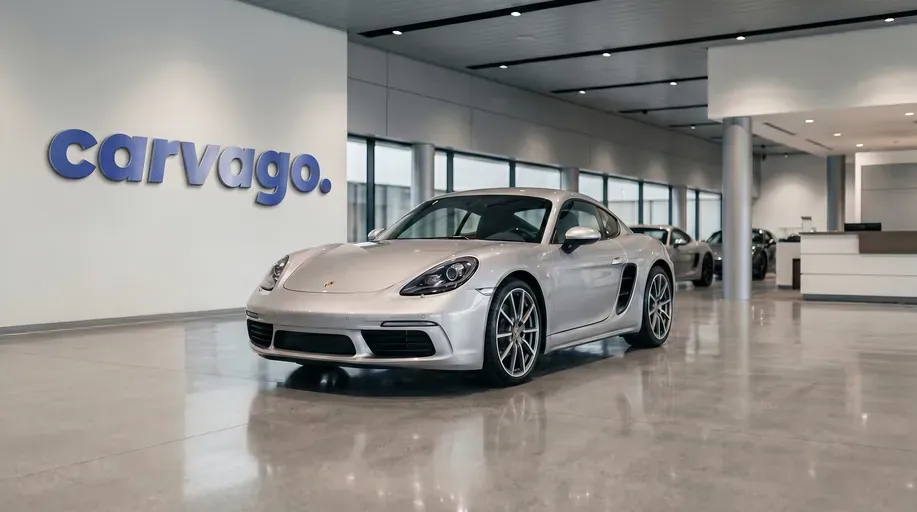
The Type 982 generation of the Porsche Cayman brought significant mechanical diversification, introducing turbocharged four-cylinder boxer engines alongside high-revving, naturally aspirated six-cylinder units. Power is delivered exclusively to the rear wheels through either a six-speed manual gearbox or a seven-speed dual-clutch automatic.
| Engine | Fuel | Power | Gearbox | Model years |
|---|---|---|---|---|
| 718 Cayman (2.0) | Petrol | 220 kW (300 hp) | 6-speed manual, 7-speed automatic | 2016–2024 |
| 718 Cayman T (2.0) | Petrol | 220 kW (300 hp) | 6-speed manual, 7-speed automatic | 2019–2023 |
| 718 Cayman S (2.5) | Petrol | 257 kW (350 hp) | 6-speed manual, 7-speed automatic | 2016–2024 |
| 718 Cayman GTS (2.5) | Petrol | 269 kW (365 hp) | 6-speed manual, 7-speed automatic | 2017–2020 |
| 718 Cayman GTS 4.0 | Petrol | 294 kW (400 hp) | 6-speed manual, 7-speed automatic | 2020–2024 |
| 718 Cayman GT4 | Petrol | 309 kW (420 hp) | 6-speed manual, 7-speed automatic | 2019–2024 |
| 718 Cayman GT4 RS | Petrol | 368 kW (500 hp) | 7-speed automatic | 2021–2025 |
For urban driving and frequent short trips, an automatic Porsche Cayman equipped with the base four-cylinder engine is the easiest to live with as a used car buy. Its turbocharger provides broad low-rpm pulling power that requires little effort to tap in stop-and-go conditions, while the dual-clutch automatic spares the driver the fatigue of managing a firm sports clutch in heavy traffic.
For mixed daily use and weekend backroad driving, the four-cylinder Cayman S represents a balanced compromise on the secondary market. Its variable turbine geometry sharpens throttle response and offers rapid mid-range acceleration for prompt overtaking. Buyers prioritizing mechanical emotion and acoustic engagement should focus on the naturally aspirated flat-six in the GTS 4.0. While the manual Porsche Cayman delivers tactile mechanical satisfaction, its unusually tall gearing prevents the engine from being revved out on public roads without exceeding legal limits; the closely spaced ratios of the automatic gearbox resolve this characteristic.
On long motorway journeys, the six-cylinder GTS 4.0 and the four-cylinder Cayman S paired with the automatic transmission cruise comfortably at low engine speeds.
For drivers needing utility, the petrol Porsche Cayman is not engineered or approved for towing, and the manufacturer provides no tow ratings or factory hitch provisions.
| Dimension / Capacity | 718 Cayman Coupé |
|---|---|
| Length (mm) | 4,379 |
| Width (mm) | 1,801 |
| Height (mm) | 1,295 |
| Wheelbase (mm) | 2,475 |
| Boot capacity – front / rear (l) | 150 / 275 |
| Boot capacity – seats folded (l) | Not applicable |
Figures reflect the standard coupe on standard suspension; sports chassis, GTS, GT4, and GT4 RS variants differ in length, width, and ride height.
As a dedicated mid-engine sports car, the Porsche 718 Cayman features a strict two-seat cabin with no rear seating bench or split-folding mechanism. Everyday space inside the passenger compartment focuses on seating comfort, providing sufficient legroom and headroom for tall occupants, though small-item storage is restricted to narrow door pockets, a shallow centre console cubby, and pop-out cup holders integrated into the dashboard fascia.
Practical luggage accommodation in the Porsche 718 Cayman coupé is split across two separate cargo compartments. A deep front hold easily accepts standard carry-on suitcases, while the rear cargo deck under the lifting hatchback lid accommodates additional soft luggage above the engine bay. Because the cargo capacity is divided rather than consolidated in a single bay, bulkier items cannot be transported. Heat radiating from the mid-mounted engine can warm the rear load deck over longer journeys, meaning groceries or heat-sensitive items travel better in the front compartment.
Professional road tests consistently praise the Porsche 718 Cayman coupe for its mid-engine balance, agility, and steering feel. Across all iterations, testers highlight the electromechanical steering for its intuitive weighting and communicative feedback. Body control remains tightly checked with minimal roll, particularly on models equipped with optional adaptive dampers, which provide a broad operating window between supple compliance over uneven tarmac and firm control on smoother surfaces. The standard passive suspension is noticeably firmer over lateral ridges, while track-focused derivatives feature unyielding ball-jointed mounts that transmit sharp road imperfections directly into the chassis.
Cabin refinement is where testers voice their strongest reservations. Standard four-cylinder engines are frequently criticised for a coarse, droning acoustic delivery under load that lacks the character expected of a sports car, alongside noticeable tyre rumble at sustained motorway speeds. The later naturally aspirated six-cylinder models restore the vocal engine note, though testers note that gasoline particulate filters slightly soften the exhaust note. In track-oriented variants, side-window intake ducts generate an intense induction roar that causes acoustic fatigue during longer journeys.
The interior earns high marks for structural rigidity, physical switchgear tactile feedback, and driving position. The low-slung seats and clear analogue instruments provide an ergonomic baseline, although optional fixed-back carbon bucket seats hinder entry and exit on daily commutes. Testers agree that build quality and materials are robust, but they consistently note dated touchscreen interfaces and a crowded arrangement of console buttons compared to newer designs.
All market charts in this section draw on listings for the entire Porsche Cayman model family, including earlier generations represented in the data, rather than isolating the reviewed generation alone. Because listings are grouped strictly by build year, the data does not establish a separate price level for the reviewed generation. Across current offerings, the median asking price sits at €62,900 for 2019 cars, stands at €145,000 for 2022 models, and reaches €192,100 for 2026 listings, shaped by the market mix of four-cylinder and specialized six-cylinder variants.
Between May 2026 and October 2026, the volume of active Porsche Cayman listings moved from 793 down to 663 cars advertised per month. The chart below tracks this six-month progression in available inventory.
Active listings over time
| Month | Porsche 718 Cayman |
|---|---|
| 2026-05 | 793 |
| 2026-06 | 766 |
| 2026-07 | 717 |
| 2026-08 | 687 |
| 2026-09 | 689 |
| 2026-10 | 663 |
Source Carvago
Buyers still have a wide selection of several hundred vehicles to consider across the market, though overall choice has narrowed over this period from the peak of 793 listings in May.
The median asking price of cars advertised today, built in 2019, is €62,900, while the median asking price of cars advertised today, built in 2026, is €192,100. The price differences between model years do not follow a uniform pattern, as listings built in 2023 and 2024 have lower median asking prices than those built in 2022.
Median advertised price by year of manufacture
| Model year | Porsche 718 Cayman |
|---|---|
| 2019 | 62 900 |
| 2020 | 87 000 |
| 2021 | 89 900 |
| 2022 | 145 000 |
| 2023 | 122 800 |
| 2024 | 93 800 |
| 2025 | 180 800 |
| 2026 | 192 100 |
Source Carvago
Buyers looking at earlier model years see that the median asking price of cars advertised today is €62,900 for 2019 builds and €87,000 for 2020 builds. For the newest model years, the median asking price of cars advertised today stands at €180,800 for 2025 builds and €192,100 for 2026 builds.
Between May 2026 and October 2026, the volume of advertised cars consisted entirely of petrol models, moving from 793 listings in May to 663 in October. The chart illustrates how the active offer developed across each fuel category over this six-month period.
Supply composition by fuel type
| Month | Petrol |
|---|---|
| 2026-05 | 793 |
| 2026-06 | 766 |
| 2026-07 | 717 |
| 2026-08 | 687 |
| 2026-09 | 689 |
| 2026-10 | 663 |
Source Carvago
In October 2026, all 663 active listings were petrol, with zero diesel, hybrid, or electric variants recorded. Anyone shopping for a 718 Cayman on the market will realistically be choosing exclusively from petrol powertrains.
Between May 2026 and October 2026, the average asking price for the Porsche Cayman moved from €105,900 down to €101,300, as shown in the monthly breakdown below.
Average price development over time
| Month | Porsche 718 Cayman |
|---|---|
| 2026-05 | 105 900 |
| 2026-06 | 105 600 |
| 2026-07 | 104 400 |
| 2026-08 | 102 400 |
| 2026-09 | 101 300 |
| 2026-10 | 101 300 |
Source Carvago
Across these six months, the average asking price shifted downward by roughly 4%, with the largest single decrease occurring between July and August before leveling off at €101,300 through October.
Agile mid-engine chassis balance with communicative, intuitive steering feel
Split front and rear luggage bays offer useful everyday storage for a two-seater
Low-slung driving position, solid interior build quality, and tactile physical switchgear
Four-cylinder engines sound coarse and droning under load compared to sports car expectations
Unusually tall gearing on manual gearboxes restricts revving out the engine on public roads
Heat radiating from the engine bay warms the rear cargo deck, and divided spaces preclude bulky items
The Porsche 718 Cayman is mechanically durable, provided service records confirm all factory safety campaigns were completed by VIN. Key areas to check on pre-owned cars include the optional dynamic drivetrain mounts and water pump seals on four-cylinder engines.
The four-cylinder Cayman S provides a practical balance of everyday mid-range torque and responsiveness for mixed driving. Buyers seeking acoustic engagement should look for the flat-six GTS 4.0, ideally paired with the automatic Porsche Cayman to mitigate the tall manual gear ratios.
Inspect the front radiator and condenser fins for trapped road debris and corrosion, and examine the front chin spoiler and composite underbody for ground clearance damage. An electronic diagnostic scan is also advisable to verify dynamic mount function and check for recorded over-revs.
The two-seat cabin accommodates tall occupants comfortably, but cargo capacity is split between a deep front compartment and a rear deck that warms up over longer trips. With no rear seats and no manufacturer tow rating, it functions primarily as a dedicated sports car rather than a family vehicle.
Sources: newsroom.porsche.com, adac.de, ec.europa.eu, autocar.co.uk, evo.co.uk
This article was prepared using artificial intelligence tools. The section guarantor is Petr Dušek.

Detailed comparison of Ferrari F8 Tributo vs Lamborghini Huracán. Discover technical details, real-world driving insights, and our verdict for choosing a supercar.
May 17, 2026

Detailed comparison of the BMW M4 and Lexus RC F. Discover the key differences in engines, driving characteristics, and reliability. Read our verdict before you buy.
Apr 14, 2026

Audi RS 5 vs Mercedes-AMG C 63 Coupé comparison. We compared real-world performance, driving dynamics, and features. Find out which sports coupé is the right one for you!
May 8, 2026