Car battle
Lexus RC F vs. Toyota Supra: Complete comparison 2026
The Great Coupe Comparison: Lexus RC F vs Toyota GR Supra. A detailed look at performance, equipment, and real-world driving characteristics. Read our final verdict!
Oct 16, 2026
Detailed comparison of Ferrari F8 Tributo vs Lamborghini Huracán. Discover technical details, real-world driving insights, and our verdict for choosing a supercar.
May 17, 2026
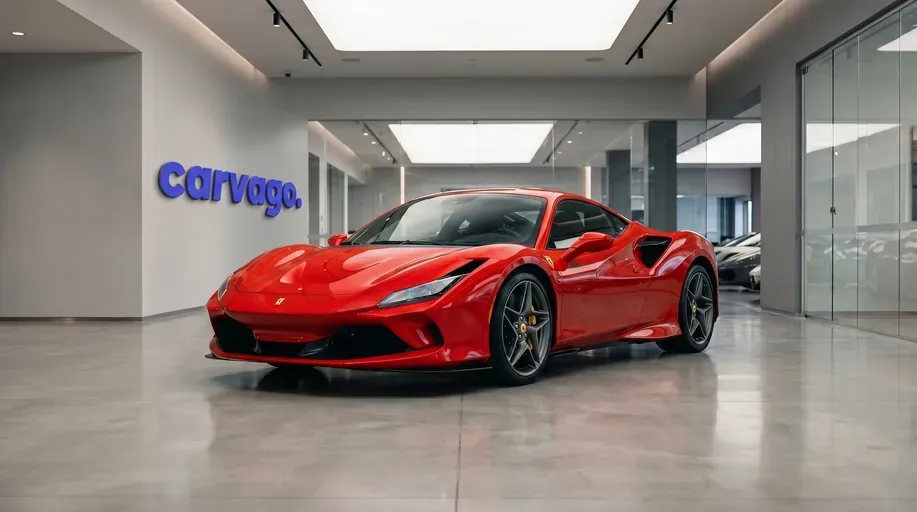
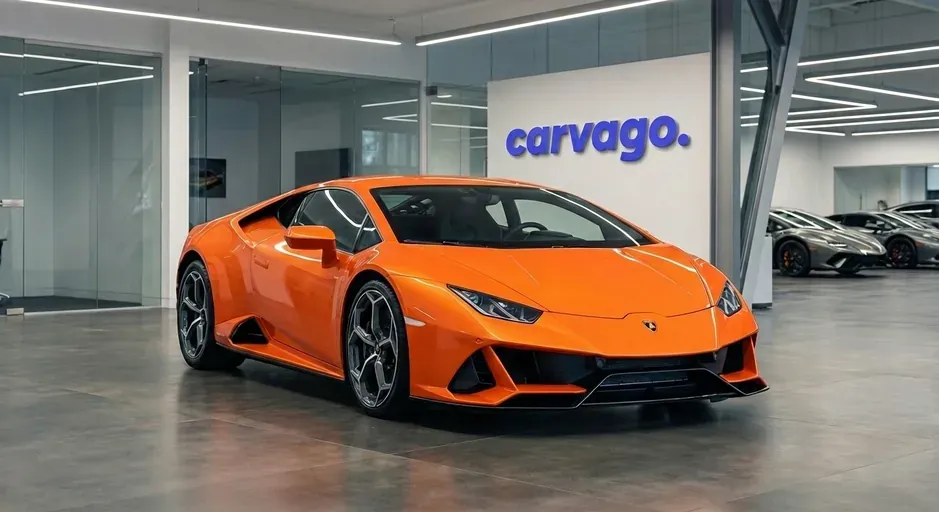
Ferrari F8 Tributo, also offered on the used car market as an open-top roadster under the name F8 Spider, is a masterpiece from Maranello that pays tribute to one of the most successful twin-turbocharged V8 engines in the brand's history with its advanced aerodynamics. Its rival today is the equally famous Lamborghini Huracán, which, depending on the generation and focus, can also be found under specific designations such as Huracán Evo, Performante, STO, or LP 610-4, and which still proudly attracts with its uncompromisingly sharp design complemented by the characteristic sound of a naturally aspirated V10 engine. Let's take a detailed look at how these two extremely powerful Italian rivals stand in a direct comparison and which of them will offer the future owner a more ultimate driving experience.
Looking at the exterior dimensions of these two Italian thoroughbreds, it is clear that both automakers approached the design of their supercars slightly differently. The Ferrari F8 Tributo in both its body styles (coupe and spider) is, at 4611 mm, noticeably longer than most variants of the Lamborghini Huracán, which measure from 4459 to 4567 mm depending on the specific version (Evo, STO, Tecnica, etc.). The Ferrari is also slightly wider overall – a value of 1979 mm compared to the range of 1924 to 1956 mm for the Huracán means that the F8 Tributo gives a slightly more expansive and dominant impression on the road. However, this presents a minor disadvantage for everyday usability; in narrow city streets or underground garages, you will have to focus a bit more on every centimeter of space with the Ferrari.
A look at the wheelbase and overall height of the vehicles is also interesting. The F8 Tributo boasts a wheelbase of 2650 mm, which is exactly 30 mm more than the Huracán (2620 mm). While this difference does not look dramatic on paper, in practice, the Ferrari's slightly longer wheelbase contributes to better directional stability at high speeds and ensures smoother reactions during fast transitions. As for height, the Huracán in the standard coupe version sits slightly closer to the asphalt at just 1165 mm (the only exception being the off-road-tuned Sterrato version, which rises to a height of 1248 mm), while the Ferrari maintains a constant 1206 mm for both versions. The lower build of the standard Huracán thus enhances the visual sensation of an extremely flat and aggressive "fighter jet," but naturally makes getting in and out a bit more difficult.
In terms of exterior proportions, the choice between these two cars to some extent reflects what you expect from your supercar on back roads and tracks. The Ferrari F8 Tributo, with its longer and wider body, offers a more elegant and elongated silhouette, which brings with it slightly more predictable and stable handling. In contrast, the more compact dimensions and shorter wheelbase of the Lamborghini Huracán help the car with incredibly fast changes of direction and a more immediate sense of agility in tight corners.
| Parameter | Ferrari F8 Tributo Coupe | Lamborghini Huracán Coupe | Ferrari F8 Tributo Convertible | Lamborghini Huracán Convertible |
|---|---|---|---|---|
| Width (mm) | 1979 | 1924 – 1956 | 1979 | 1924 – 1933 |
| Length (mm) | 4611 | 4459 – 4567 | 4611 | 4459 – 4520 |
| Height (mm) | 1206 | 1165 – 1248 | 1206 | 1180 |
| Wheelbase (mm) | 2650 | 2620 | 2650 | 2620 |
Although supercars like Ferrari F8 Tributo and Lamborghini Huracán are designed primarily for breathtaking performance on both the road and the track, their practicality still plays an important role for buyers planning to take the car on longer trips or grand touring. Both cars utilize a mid-engine layout, which means the main luggage compartment (often referred to as a "frunk") is located under the front hood. Even in this exotic category, space for a few extra suitcases is a crucial factor that determines the car's weekend usability.
In a direct comparison of numbers, the Ferrari emerges as the more practical companion. The F8 Tributo offers a solid volume of 200 liters for both the Coupé and the open-top Spider version. This space is shaped to be sufficient for weekend shopping or a longer holiday for two, provided you use soft travel bags for packing. In contrast, the Lamborghini Huracán offers a significantly more modest 100 liters in its standard variants, such as the Evo or Spyder, which requires a more minimalist approach to packing from the occupants.
It is also worth noting that Lamborghini limits practicality even more significantly in some special editions. The hardcore Huracán STO version, focused on track driving, sacrificed luggage space in favor of sophisticated aerodynamics and cooling, leaving just 38 liters under the front hood – barely enough space for a racing helmet. Since both models are strictly two-seater supercars, they do not have folding rear seats, and the base volume represents the ultimate maximum.
| Parameter | Ferrari F8 Tributo Coupé | Lamborghini Huracán Coupé | Ferrari F8 Tributo Cabriolet | Lamborghini Huracán Cabriolet |
|---|---|---|---|---|
| Base volume (liters) | 200 | 100 | 200 | 100 |
| Max. volume after folding seats (liters) | N/A | N/A | N/A | N/A |
If the ability to pack for more than one day without major compromises is important to you when choosing a used supercar, the Ferrari F8 Tributo makes much more sense. Its luggage compartment is twice as large as that of the standard Huracán, making it a noticeably more usable car for trips and journeys across Europe.
While the Lamborghini Huracán offers a very limited 100 liters for the most essential small items, the Ferrari F8 Tributo, with its 200 liters, represents a significantly better choice for weekend travel for two.
When comparing purist super sports cars, the possibility of towing a trailer naturally plays a completely marginal role, yet it is good to know the technical limits of both cars if you expect at least a pinch of everyday practicality from them. For models like the Ferrari F8 Tributo and Lamborghini Huracán, someone might jokingly appreciate space for a few extra suitcases, but the structural reality is relentless in this regard.
From a practical point of view, a clear conclusion follows from these numbers: for weekend shopping or a longer vacation, you will have to rely exclusively on the very limited storage space (the so-called frunk) under the front hood. Both cars completely lack any technical data and homologation for a tow bar, so neither brand allows towing heavier braked caravans or light unbraked trailers.
Short summary: In the discipline of towing capacity, both models logically fail completely as expected. The choice between the Ferrari F8 Tributo and Lamborghini Huracán must therefore depend exclusively on preferences regarding the engine (V8 vs. V10), driving characteristics, and Italian design. It is certainly not possible to decide based on which of them would be a better "tow car". Given the complete absence of towing capacities and relevant data from manufacturers for all versions of both models, the comparison table below remains empty.
| Model and engine | Braked trailer (kg) | Unbraked trailer (kg) |
|---|
When looking at the engine options of these two iconic Italian supercars, a fascinating comparison emerges between two completely different approaches to achieving extreme performance. While the Ferrari F8 Tributo relies on a twin-turbocharged V8 (3.9 V8) that excels with brutal low-end pull and immense power, the Lamborghini Huracán remains faithful to the naturally aspirated V10 (5.2 V10), which rewards the driver with lightning-fast throttle response and an unmistakable sound profile at high revs. Both manufacturers offer power units that run exclusively on petrol and are paired with seven-speed dual-clutch transmissions. However, a fundamental difference lies in the driven axle – Ferrari sends all power exclusively to the rear wheels at all times, whereas the Lamborghini, in the generation corresponding to roughly four-year-old used cars, offers both purist rear-wheel drive (RWD) and variants with advanced all-wheel drive (AWD). While the F8 Tributo clearly leads in on-paper power and torque figures thanks to its turbocharging, the Huracán counters with a wider range of specific versions and the now exceptionally rare character of a purely naturally aspirated, large-displacement engine.
The engine lineup for the Ferrari F8 Tributo (as well as for its open-top version F8 Spider) is exceptionally simple, with all focus placed on perfecting a single unit. The heart of these cars is the iconic 3.9-liter V8 Twin-Turbo engine. This unit, a multiple winner of the prestigious "International Engine of the Year" award, boasts a staggering 530 kW (720 hp) and a mammoth 770 Nm of torque. All power is sent exclusively to the rear axle via a seven-speed F1 dual-clutch transmission. Inside the F8 Tributo, you will find absolutely no hybrid technology – it is an uncompromising, traditional driving experience without any assistance from electric motors. Production of this generation and its outstanding non-hybrid turbocharged V8 ended in 2023, meaning that models from 2019 to 2023 are now available exclusively on the nearly new used car market, where they enjoy immense interest from collectors.
| Engine type | Fuel | Power (kW) | Torque (Nm) | Transmission |
|---|---|---|---|---|
| 3.9 V8 Twin-Turbo | Petrol | 530 | 770 | 7DCT |
In the case of used Lamborghini Huracáns from years corresponding to a four-year age (model year 2020 and newer), you will encounter a significantly richer variety of versions on the market. The most common include the Evo, the track-focused STO, the updated Tecnica, and even the off-road-tuned Sterrato. However, all these models share the legendary and sonically inimitable naturally aspirated 5.2 V10 engine. In the Evo RWD variant and the Sterrato specification, this engine provides 449 kW (610 hp) and 560 Nm of torque. The standard Evo model with all-wheel drive (AWD) offers power boosted to 471 kW (640 hp) and a maximum torque of 600 Nm. The hardcore STO and Tecnica versions return to rear-wheel drive only and produce the same 471 kW (640 hp), but for faster and more precise throttle response, their torque is specifically reduced and tuned to 565 Nm. In all configurations, drivers shift using the lightning-fast seven-speed LDF dual-clutch transmission. As with its competitor from Maranello, production of this iconic naturally aspirated V10 reached its final end in 2024, making today's four-year-old Huracán used cars highly sought-after mechanical gems.
| Engine type | Fuel | Power (kW) | Torque (Nm) | Transmission |
|---|---|---|---|---|
| 5.2 V10 (Evo RWD / Sterrato) | Petrol | 449 | 560 | 7DCT |
| 5.2 V10 (STO / Tecnica) | Petrol | 471 | 565 | 7DCT |
| 5.2 V10 (Evo AWD) | Petrol | 471 | 600 | 7DCT |
For drivers who prefer crushing and unstoppable acceleration thanks to a massive wave of torque, the Ferrari F8 Tributo is the perfect choice; conversely, those seeking a purist driving experience, absolute linearity, and the haunting sound of a naturally aspirated V10 will find their clear ideal in the Lamborghini Huracán.
Choosing the right engine is absolutely crucial for long-term satisfaction with the car, which is why our recommendations are based on real-world experience with dynamics, actual fuel consumption, owner feedback, and mechanical reliability. Although in both cases we are talking about purebred supercars, each car approaches propulsion with a completely different philosophy. Ferrari relies on an extremely efficient twin-turbocharged V8 with massive torque and technologies derived directly from Formula 1 racing. Lamborghini, on the other hand, stubbornly sticks to the pure and unadulterated emotion of a large-displacement naturally aspirated V10, which, while lagging behind in paper torque figures, rewards the driver with an absolutely immediate response and a deafening sound. Interestingly, both of these engines represent the absolute pinnacles of their respective design schools just before the inevitable onset of hybridization, making them highly sought after by enthusiasts on the used car market today.
The Ferrari F8 Tributo (manufactured between 2019 and 2023) was offered with a single power unit, which is, however, the legendary engine from the F154 family. Since the model is no longer produced as new, it is the newest and most refined non-hybrid mid-engine Ferrari on the used market. This twin-turbocharged V8 has repeatedly won the "International Engine of the Year" award and delivers a crushing 530 kW and 770 Nm of torque to the rear wheels. Its greatest technical weapon is the Variable Torque Management system, which gradually releases the torque curve according to the selected gear. This successfully simulates the smoothness and linear pull of a classic naturally aspirated engine and perfectly masks turbo lag. As a result, the pull is brutal yet very predictable, giving the driver the necessary confidence. This power unit is ideal for drivers who love maximum speed, dynamics, and advanced technology, who take to regular roads during the week and want to chase the clock on "track days" at the weekend.
Despite its top-tier design, maintaining a turbocharged supercar has its pitfalls:
From the very extensive range of the Huracán model, which has been sold in various generations since 2014, for a roughly four-year-old used car, we clearly recommend going for the updated Evo version with all-wheel drive (available between 2019 and 2024). It is here that the legendary naturally aspirated V10 offers its peak performance – 470 kW and 600 Nm of torque. Its absolute greatest technical advantage today is its high-revving character without any forced induction, offering an immediate connection between the right foot and the rear axle and an unmistakable roar at speeds above 8,000 rpm. Combined with smart chassis electronics (LDVI) and all-wheel drive, it is paradoxically a very efficient and usable car that even a slightly less experienced driver can comfortably get used to. Real-world fuel consumption is slightly higher than Ferrari's turbo engines, but for the target group, this is a negligible compromise. We recommend this model to purists, lovers of emotion and long mountain passes, who prefer to enjoy the soundscape and pure mechanics rather than just chasing the highest possible speeds.
With a naturally aspirated Lamborghini, it is essential to check several key points:
While fuel consumption is not usually the main decision criterion when buying supercars, the difference between official paper figures and real-world consumption can significantly affect the overall range and frequency of visits to gas stations. Official values, measured according to standardized laboratory cycles, generally do not correspond to reality – especially when drivers exploit the enormous dynamic potential of these machines. To get the most accurate picture possible, we have therefore used real data from crowdsourcing portals such as Spritmonitor.de, where owners themselves record their refueling. We focused primarily on models and generations produced about four years ago (i.e., versions available mostly from 2019 onwards), which are now very relevant for the used car market.
| Model and Engine | Average Consumption (l/100 km) |
|---|---|
| Ferrari F8 Tributo 3.9 V8 Twin-Turbo | 12.8 |
| Ferrari F8 Spider 3.9 V8 Twin-Turbo | 12.8 |
| Lamborghini Huracán Evo 5.2 V10 | 13.8 |
| Lamborghini Huracán STO 5.2 V10 | 13.9 |
| Lamborghini Huracán Spyder 5.2 V10 | 14.2 |
| Lamborghini Huracán Tecnica 5.2 V10 | 14.5 |
| Lamborghini Huracán Sterrato 5.2 V10 | 14.9 |
The measured data clearly show differences resulting from the different designs of the two power units. The twin-turbocharged 3.9-liter V8 under the hood of the Ferrari F8 shows surprising efficiency, with its average consumption for both the coupe and the open Spider version staying at a very solid 12.8 liters per 100 km. In this case, the smaller displacement supported by a pair of turbochargers really contributes to better fuel economy during normal driving. In contrast, the large-displacement naturally aspirated V10 (5.2 liters) in the Lamborghini Huracán is understandably more demanding on gasoline. Even the base Evo version approaches the 14-liter mark, and if we look at the sharper track-focused Tecnica variant or the off-road Sterrato with different aerodynamics, consumption rises to nearly 15 liters per 100 km. Since the Huracán does not use turbocharging, it is necessary to keep the engine at higher RPMs to achieve high performance, which is logically reflected in its overall appetite.
While slightly higher consumption does not represent a significant financial problem for the typical user of these luxury cars, it has non-negligible practical impacts. Lower consumption in the Ferrari F8 Tributo means a longer real-world range, which owners will greatly appreciate especially during long highway journeys or weekend road trips, as it limits the need for too frequent planning of stops at gas stations. Lamborghini owners – whether they use their car for city cruising or regular track days – simply have to expect that the fuel gauge needle will drop noticeably faster and they will spend more time at the pump.
In the end, however, average fuel consumption will not be the definitive factor in deciding whether to buy one model or the other. The emotional level and driver preference play a crucial role – whether they prefer the phenomenal pull and efficiency of the turbochargers in the Ferrari, or the raw response and unmistakable roar of the naturally aspirated V10 in the Lamborghini. The difference of less than two liters of fuel per hundred kilometers remains more of a minor, albeit interesting, technical nuance for buyers in this highly exclusive segment.
When purchasing a supercar approximately 4 years old (model years 2020 to 2022), you are acquiring a vehicle that has already undergone its greatest initial depreciation, yet still offers cutting-edge modern technology and absolutely stunning performance. On the European market, both of these Italian legends perform in a specific way, with the equipment level, mileage, and service history of the specific unit playing a crucial role.
Ferrari is traditionally a brand where depreciation on the used car market is very gradual. For the F8 Tributo model, this is doubly true, as it is viewed among collectors and enthusiasts as possibly the last Maranello masterpiece powered by a purely non-hybrid mid-mounted V8.
The Lamborghini Huracán was produced for a longer period and in many different versions. For the most accurate comparison of 4-year-old cars, the Huracán EVO variant is the ideal choice, representing a significant technological and design modernization of the original model. This ten-cylinder gem is notably more affordable on the used market than its rival from Maranello.
| Model | Lowest Average Price | Highest Average Price | Value Retention Potential |
|---|---|---|---|
| Ferrari F8 Tributo | ~ €288,000 | ~ €432,000 | Excellent |
| Lamborghini Huracán EVO | ~ €226,000 | ~ €362,000 | Very Good |
From the perspective of initial investment on the used market, the Huracán EVO represents a slightly more accessible path into the league of uncompromising supercars, while the Ferrari F8 Tributo requires a higher purchase budget, which it repays with a stronger potential for minimal market value decline in the coming years.
While the Lamborghini Huracán EVO offers a more attractive price tag and a more accessible entry into the world of supercars on the 4-year-old used market, the Ferrari F8 Tributo requires a significantly higher initial investment, which it compensates for with fantastic resistance to further loss of value.
Although comparisons of modern premium vehicles often begin by stating that both models have received a five-star Euro NCAP rating, it is always essential to emphasize the importance of context and the specific year of testing. Protocols of independent organizations are constantly evolving over time and becoming significantly stricter, which means that percentage scores from different years cannot be directly compared. Modern tests include entirely new frontal impact simulations, more advanced cyclist detection, and the evaluation of complex scenarios at intersections. In the case of exclusive supercars such as the Ferrari F8 Tributo and Lamborghini Huracán, however, the reality is different. Due to their extremely high purchase price and very low production volumes, these cars have never undergone official Euro NCAP safety tests, and therefore, a classic point rating cannot be applied to them.
The Ferrari F8 Tributo thus has no official testing year or independent safety certification. The car protects its occupants primarily through an extremely stiff and strong construction, which is an evolutionary development of the Italian automaker's older architectures. Although the car is equipped with the necessary airbags and an advanced traction control system with many sensors, from the perspective of current standards, it lacks a whole range of active features. For this purist model, the automaker primarily aimed for a raw driving experience and weight savings, which means that the point rating for assistance systems or the protection of vulnerable road users cannot be expressed and would significantly lag behind mainstream vehicles by today's standards.
The same rules apply to the Lamborghini Huracán. Due to its exclusivity, this ten-cylinder model has never been subjected to Euro NCAP testing. However, the car is built on an exceptionally strong and innovative platform made of a combination of aluminum and carbon fiber, which it shares with its sister model, the Audi R8. This architecture theoretically provides an excellent level of structural safety in the event of an impact. However, if we focus on accident prevention, the Huracán lacks modern advanced driver-assistance systems (ADAS). The equipment lacks active lane-keeping or the latest generation of autonomous emergency braking, without which it is simply impossible to succeed in today's strict tests.
In conclusion, it can be stated that neither of these exclusive Italian cars offers a modern and comprehensive active safety package according to the current and strict standards of independent testing laboratories. Although both supercars protect their occupants with very rigid constructions and top-tier passive features, they represent an older school of engineering in the area of electronic accident prevention and pedestrian protection. For buyers of used cars in this category, however, this is usually not an obstacle, as their choice is typically driven by a desire for pure driving without the intervention of electronic assistants.
| Parameter | Ferrari F8 Tributo | Lamborghini Huracán |
|---|---|---|
| Year of testing | - | - |
| Adult occupant protection | - | - |
| Child occupant protection | - | - |
| Vulnerable road user protection | - | - |
| Safety assist systems | - | - |
Although both Ferrari and Lamborghini possess extremely rigid constructions ensuring high passive protection, they have never undergone official Euro NCAP tests and clearly prioritize a pure driving experience over the offering of active assistance systems.
In addition to standard equipment and breathtaking performance, each of these Italian supercars offers several unique features and technological solutions that clearly define their distinct character and can be crucial for the customer during the final decision-making process.
Extremely powerful twin-turbocharged V8 (720 hp) with minimal turbo lag
Excellent handling and lightning-fast steering response with precise power delivery
Surprisingly high comfort of the adaptive suspension, making the car usable even for longer trips
Top-tier aerodynamics ensuring perfect stability at high speeds
Larger and more practical luggage compartment (200 liters at the front) than its main competitors
The sound of the turbocharged engine is noticeably more muffled and less emotive compared to its naturally aspirated predecessors
Infotainment and most function controls directly on the steering wheel feel very chaotic at first
Extremely high costs for post-warranty service and potential repairs
The Ferrari F8 Tributo is the perfect choice for drivers seeking the absolute pinnacle of technical perfection, crushing speed, and precise driving characteristics, while appreciating surprising comfort for occasional daily use. This model represents a celebration of Maranello's V8s and offers surgically precise dynamics wrapped in a highly functional aerodynamic design.
Superb naturally aspirated V10 with instant throttle response and an unbeatable sound
Unmistakable, aggressive, and sharp design that attracts huge attention on the road
Excellent traction and confidence when exiting corners in all-wheel-drive versions
A rawer, more mechanical, and overall more dramatic driving experience full of emotion
Very cramped interior with a lack of headroom, which is problematic for taller individuals
Tragic rear and rear-quarter visibility due to the body design
Noticeably smaller luggage compartment (only 100 liters), which limits usability for weekend trips
Significantly stiffer suspension, which makes the car uncomfortable on broken roads and during longer travel
The Lamborghini Huracán will appeal to enthusiasts who prefer undiluted emotions, a theatrical look, and the unique roar of a naturally aspirated engine over the cold efficiency of turbochargers. It is a car for drivers who love attention and seek an immediate and dramatic experience behind the wheel, even at the cost of compromises in daily practicality and comfort.
Based on long-term owner experience, service reports, recall records, and CarAudit professional inspection data, we have compiled an overview of the most common problems that buyers of roughly four-year-old used cars of these models should watch out for.
The Ferrari F8 Tributo is surprisingly reliable by Italian supercar standards, but like any extremely high-performance machine, it has its specifics and requires careful maintenance.
The Tributo represents a reliable peak of V8 Ferraris, but a documented service history and confirmation of the brake system recall completion are absolute necessities before purchase.
The Lamborghini Huracán, especially in the updated Evo version from 2019 and newer, benefits from a shared platform with the Audi R8 and has long been considered one of the most reliable cars on the market in the supercar segment.
Thanks to proven German technology, the Huracán is an excellent choice for anyone looking for uncompromising performance combined with above-average mechanical durability.
When buying a used car, a thorough inspection is crucial. Here are some specific points to focus on for these two models to avoid unpleasant surprises and expensive service interventions.
The Ferrari F8 Tributo has a noticeable performance advantage thanks to its twin-turbocharged V8 with a massive 720 hp. It can handle acceleration from 0 to 100 km/h in just 2.9 seconds, while most Lamborghini versions need a fraction of a second more to reach this mark. On straight sections, the turbocharged engine from Maranello thus offers more explosive dynamics.
Sound performance is somewhat subjective, but the naturally aspirated 5.2-liter V10 engine in the Lamborghini is generally considered by car enthusiasts to be one of the best-sounding engines ever. While the turbocharged V8 in the Ferrari is more powerful, the presence of turbochargers and stricter particulate filters slightly muffles its sound. For lovers of high-revving raw roar, the Huracán is the clear winner.
Ferrari offers a special "Bumpy Road" button on the steering wheel, which significantly softens the suspension and fantastically filters out bumps, making it a surprisingly comfortable car. The Lamborghini is tuned as a generally stiffer and more uncompromising machine for maximum contact with the road. On rougher surfaces and during long-distance travel, the Ferrari will therefore provide much higher cruising comfort.
Ferrari sticks to its proven purist concept, sending all torque exclusively to the rear wheels and requiring more caution from the driver. Lamborghini, on the other hand, relies on all-wheel drive (AWD) for most of its production versions, ensuring almost infinite traction regardless of the weather. Although the Huracán also offers rear-wheel-drive variants, its all-wheel-drive nature gives it greater stability when exiting corners.
Both models have their primary luggage compartment located at the front under the hood, but the difference in their capacity is significant. The Ferrari F8 Tributo offers a usable volume of 200 liters, which is a relatively generous value by supercar standards. The trunk in the Lamborghini is substantially smaller and, with its 100 liters, is only enough for very minimalist packing, so the Ferrari is more practical for weekend trips for two.
Sources: ADAC, auto.cz, aktualne.cz, elektromobil.cz, auto-mania.cz, autolife.cz
This article was prepared using artificial intelligence tools. The section guarantor is Petr Dušek.
The Great Coupe Comparison: Lexus RC F vs Toyota GR Supra. A detailed look at performance, equipment, and real-world driving characteristics. Read our final verdict!
Oct 16, 2026

The ultimate comparison: Audi RS 5 (RS5) vs Porsche 718 Boxster. Discover real-world experiences, performance differences, and a clear verdict that will make choosing your used car easier.
May 2, 2026

Cupra Leon vs Hyundai i30 N: Which hot hatch is better? A detailed comparison of performance, equipment, and reliability of used cars. Find out our verdict and make the right choice!
Apr 18, 2026