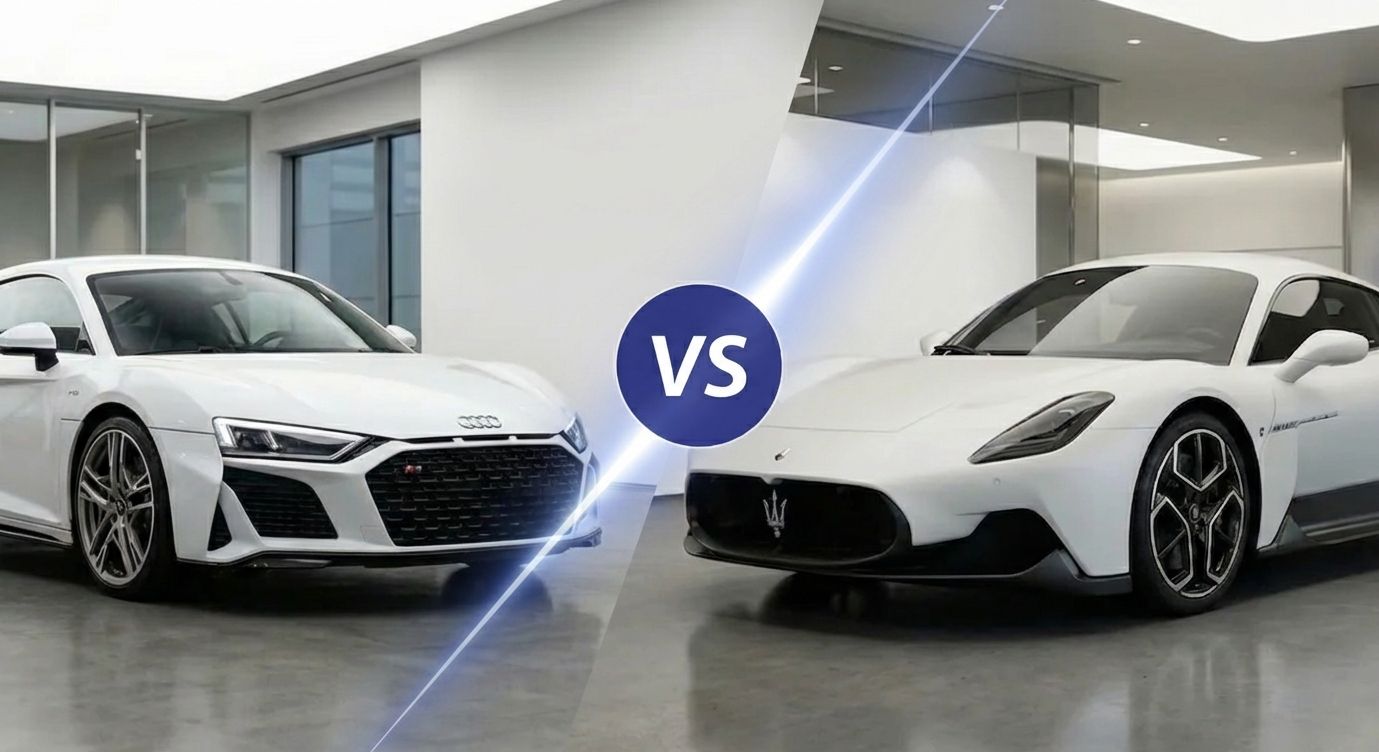
Car battle
Audi R8 vs Maserati MC20: Complete Comparison 2025
Audi R8 or Maserati MC20? Comparing performance, design, and handling. Our detailed test helps you choose the perfect supercar.
Apr 13, 2026
Articles
Car battle
Cupra Leon vs Hyundai i30 N: Which hot hatch is better? A detailed comparison of performance, equipment, and reliability of used cars. Find out our verdict and make the right choice!
April 18, 2026
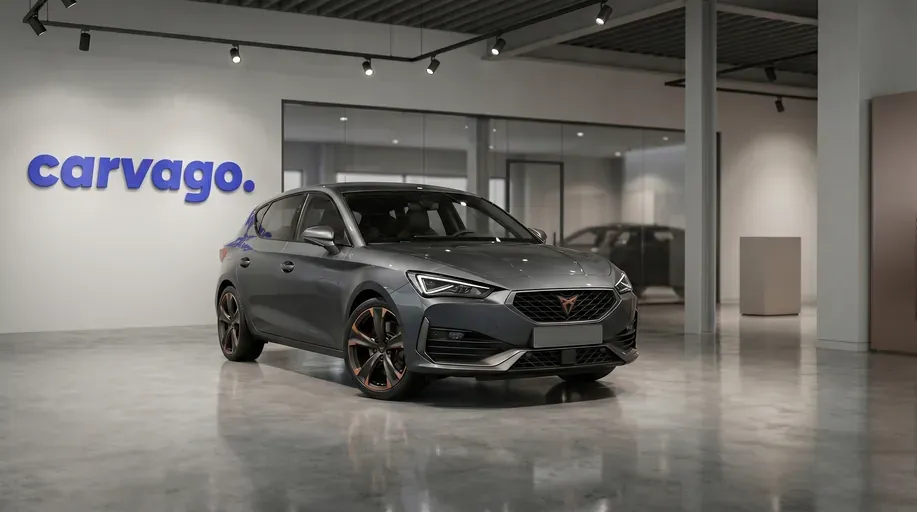
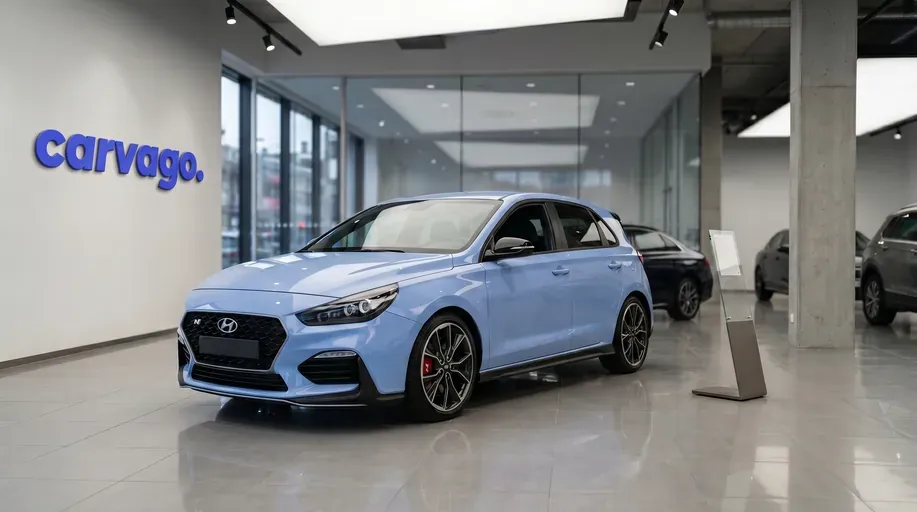
The Cupra Leon, a fierce model seamlessly following the highly successful legacy of its predecessor formerly known as the SEAT Leon Cupra, brings sophisticated Spanish temperament combined with high performance and modern technology to the hot hatch segment. Standing against it is the relentless South Korean challenger, the Hyundai i30 N, which since its inception has very quickly won over the world of car enthusiasts with its raw mechanical response, playful chassis, and pure driving joy. In the following comparison, we will take a detailed look at which of these two exceptionally popular hot hatches represents the better overall choice and will offer you a genuine smile behind the wheel as well as everyday utility.
When comparing the exterior dimensions of both sporty models, we find that although both target the same segment, their overall proportions differ slightly. The Cupra Leon in the hatchback version measures 4398 mm in length, which means it is up to 63 mm longer than the base Hyundai i30 N, whose length ranges between 4335 and 4340 mm depending on the model year. This additional length in the Spanish representative plays a role primarily in the interior, where rear-seat passengers will appreciate slightly more legroom. Conversely, the more compact dimensions of the i30 N represent a slight advantage during daily parking in narrow city streets or crowded underground garages. A fundamental difference comes when choosing alternative body styles. Cupra offers a full-fledged estate (Sportstourer) with a respectable length of 4657 mm, while Hyundai responds on a more practical note with the elegant Fastback model (4455 mm). The customer must therefore consider whether their priority is the massive family boot of the extended estate or if they prefer the more compact liftback form with a smoothly sloping rear.
If we focus on width and height, both cars are very close and give an almost equally wide and confident impression on the road. The width of the Cupra Leon reaches 1799 mm, which is only 4 mm more than the Hyundai i30 N (1795 mm). This negligible difference means that the perceived interior width in the shoulder area and the space requirements for a parking spot are absolutely identical for both rivals. In terms of height, the sporty hatchbacks range from 1439 to 1467 mm, with higher values for the Cupra (up to 1467 mm) typically belonging to plug-in hybrid variants (e-HYBRID), which must accommodate battery modules. For practical use, this means that from the perspective of garage clearance or overall aerodynamic drag, you won't have to make compromises with either car.
A key parameter affecting both interior space and driving characteristics is the wheelbase. Here, the Cupra Leon benefits from the VW Group platform and offers a wheelbase ranging from 2681 to 2689 mm, while the Hyundai i30 N maintains a shorter 2650 mm across its versions. The difference of up to 39 mm in favor of the Cupra translates into a slightly more confident and stable ride during motorway journeys and gives the car a calmer character. On the other hand, the shorter wheelbase of the i30 N naturally favors agility, a greater willingness to turn, and overall more playful behavior on technical backroads. This dimension thus clearly reflects the nature of both cars – the Cupra Leon is considered a more mature and stable grand tourer for daily fast travel, while the Hyundai i30 N's construction prefers raw agility.
| Parameter | Cupra Leon Hatchback | Hyundai i30 N Hatchback | Hyundai i30 Fastback N | Cupra Leon Estate |
|---|---|---|---|---|
| Width (mm) | 1799 | 1795 | 1795 | 1799 |
| Length (mm) | 4398 – 4399 | 4335 – 4340 | 4455 | 4656 – 4657 |
| Height (mm) | 1444 – 1467 | 1439 – 1451 | 1417 – 1425 | 1438 – 1463 |
| Wheelbase (mm) | 2681 – 2689 | 2650 | 2650 | 2681 – 2689 |
Trunk capacity is often not among the primary parameters when choosing a hot hatchback, but if the car is also to serve for everyday family use, it quickly becomes a key factor. Both the first-generation Cupra Leon (produced since 2021) and the third-generation Hyundai i30 N (including popular facelifted versions available on the used car market) offer very solid practicality, which is more than enough for weekend shopping or longer holidays. However, the fundamental difference lies in the range of body styles. While Hyundai bets on the classic five-door hatchback and the elegant Liftback body (known as the Fastback), the Cupra Leon plays a huge trump card with a full-size estate (Estate, sold under the Sportstourer designation). For many buyers looking for a sporty drive without compromising on transport capacity, this represents a decisive argument.
In the basic hatchback body version, both cars are very similar in terms of spec sheet values. The Cupra Leon has a trunk with a volume of 380 liters, which is a negligible one liter less than the 381 liters of the Hyundai i30 N. In the case of the Korean "N", however, it is necessary to take into account the presence of a massive steel strut bar located immediately behind the rear seat backrests. While this phenomenally improves body rigidity for more precise cornering behavior, in practice it can make transporting long or bulky items slightly more difficult. If you desire a more stylish design with better access to the trunk, the ideal choice may be the Hyundai i30 N Liftback, which in its basic configuration offers a great 436 liters (including the aforementioned strut bar). However, if you often transport space for several extra suitcases, a dog crate, or a large stroller, the Cupra Leon Estate with its staggering basic volume of 620 liters plays in a completely different league in terms of transport capacity.
A specific feature on the used car market for the Spanish car is the offer of plug-in hybrid powertrains (e-HYBRID). However, the presence of the traction battery under the floor takes a natural toll in the form of a significant reduction in trunk capacity. For the hybrid hatchback, the value drops to a relatively modest 270 liters, and for the Estate version, it falls to 470 liters. In contrast, the Hyundai i30 N retains its purely internal combustion heart – and thus its constant trunk volume – across the entire range. So, if you are looking for a classic agile compact for every day, both cars will serve you quite identically. As a highway cruiser and hauler in one, however, the Cupra Leon Estate clearly dominates with a maximum space after folding the seats of up to 1,600 liters, while the i30 N scores with the original, albeit slightly less spacious, Liftback alternative, combining visual drama and good usability.
| Parameter | Cupra Leon Hatchback | Hyundai i30 N Hatchback | Cupra Leon Estate | Hyundai i30 N Liftback |
|---|---|---|---|---|
| Base volume (liters) | 380 | 381 | 620 | 436 |
| Max volume with seats folded down (liters) | 1210 | 1287 | 1600 | 1337 |
If you want a hot car without losing family practicality, the Cupra Leon Estate with its giant trunk is unbeatable, but for a stylish compromise with excellent trunk access, the i30 N Liftback will serve you excellently.
When it comes to practicality combined with trailer towing, both sport-tuned cars – considering popular used models from 2021 and 2022 – offer unexpectedly solid values for their class. The Hyundai i30 N maintains a completely consistent towing capacity across its versions from this period; the maximum braked trailer weight for all variants is 1,600 kg, and it can handle exactly 700 kg for an unbraked trailer. In contrast, the first-generation Cupra Leon offers more diverse specifications depending on the specific engine and body style. The standard braked capacity for the 1.5 TSI or 1.5 eTSI versions is 1,500 kg, while the more powerful 2.0 TDI units and the VZ 2.0 TSI hot-hatch models push this limit to 1,600 kg. Interestingly, unlike some competing vehicles, the plug-in hybrid powertrain here does not reduce utility – the 1.4 e-HYBRID version reliably maintains a braked towing capacity of 1,500 kg. The maximum is then offered by the estate version (Sportstourer) with the top-of-the-line 2.0 TSI engine producing 228 kW, which can tow up to 1,700 kg. The unbraked trailer weight for the Cupra brand is set at a slightly higher 750 kg. In practice, these parameters bring a huge advantage, as the limits of both cars are perfectly sufficient for a weekend purchase of bulky materials for a cottage or a longer holiday with a caravan, which easily replaces the space for several extra suitcases on family trips. In conclusion, it can be summarized that although the Hyundai i30 N brings excellent and stable values for a high-performance hatchback, the Cupra Leon, thanks to the Sportstourer version and higher maximum limits, provides customers with slightly broader possibilities of use.
| Model and engine | Braked trailer weight (kg) | Unbraked trailer weight (kg) |
|---|---|---|
| Cupra Leon 1.5 TSI / 1.5 eTSI (110 kW) | 1500 | 750 |
| Cupra Leon 1.4 e-HYBRID (110 kW) | 1500 | 750 |
| Cupra Leon 2.0 TDI / VZ 2.0 TSI (110–221 kW) | 1600 | 750 |
| Cupra Leon Sportstourer VZ 2.0 TSI (228 kW) | 1700 | 750 |
| Hyundai i30 N / Fastback N (184–206 kW) | 1600 | 700 |
When comparing the engine lineups of both cars, we encounter two completely different philosophies, which plays a crucial role for those interested in a used hatchback from the sporty spectrum. The Cupra Leon (2021 to 2024 generation) offers an extremely diverse range of powertrains that fully reflects modern trends – from economical turbocharged four-cylinders and diesel "mileage eaters" to highly efficient plug-in hybrids with electric range, all the way to full-fat petrol two-liters labeled VZ with nearly 310 hp. Cupra thus gives everyone a choice. On the other side stands the uncompromising South Korean approach. While standard Hyundai i30 models satisfy the masses with more modest engines featuring 48V mild-hybrid technology, its top-tier variant – the Hyundai i30 N – is built as a purebred tool for petrolheads. It completely avoids the electrification trend, relying instead on a raw petrol two-liter and mechanical feedback. It is therefore a clear choice: modern diversity on one side and driver purism on the other.
The engine range for the Cupra Leon benefits from the shared technology of the entire group and satisfies almost every demand. The offering starts with the proven 1.5 TSI petrol four-cylinder (110 kW), which can also be found as a mild-hybrid (eTSI) with a DSG automatic transmission. Reliable plug-in hybrid units combining dynamics with low operating costs are a highly sought-after alternative on the used car market. Especially with cars from around 2021, you will commonly encounter 1.4 e-HYBRID versions with 150 kW or 180 kW. This engine was discontinued and completely withdrawn from the range around mid-2024 to make room for the newer generation with the 1.5 e-HYBRID engine. For long journeys, the reliable 2.0 TDI (110 kW) diesel engine still makes sense. However, if you are looking for true sporting excitement, the main course for Cupra is the 2.0 TSI units. In the top VZ tuning, they produce a massive 221 kW (300 hp) and, in the case of the estate version (Sportstourer), up to 228 kW (310 hp), delivered confidently to the road through the 4Drive all-wheel-drive system.
| Engine type | Fuel type | Power (kW) | Torque (Nm) | Transmission |
|---|---|---|---|---|
| 1.5 TSI / eTSI | Petrol / Mild-hybrid | 110 | 250 | 6MT / 7DSG |
| 2.0 TDI | Diesel | 110 | 360 | 6MT / 7DSG |
| 1.4 e-HYBRID | Plug-in hybrid | 150 / 180 | 350 / 400 | 6DSG |
| 2.0 TSI | Petrol | 140 / 180 | 320 / 370 | 7DSG |
| 2.0 TSI VZ | Petrol | 221 / 228 | 400 | 7DSG |
The standard civilian Hyundai i30 model is most commonly found in used car lots with 1.0 T-GDI three-cylinders or the more agile 1.5 T-GDI engines, which completely pushed the older and now discontinued 1.4 T-GDI out of the range in cars after 2020. Furthermore, a large portion of used cars benefit from a 48V mild-hybrid system combined with either a clever iMT manual transmission or a DCT dual-clutch automatic. However, if you are looking for emotion, all attention turns to the hot Hyundai i30 N variant. The core of this uncompromising predator is a turbocharged 2.0 T-GDI two-liter. In the base variant, it offers 184 kW (250 hp), but the vast majority of buyers opted for the Performance variant, which in post-facelift versions (from 2021) boasts 206 kW (280 hp) and a generous 392 Nm of torque. An interesting historical milestone and a key fact regarding four-year-old used cars is that for the modernized i30 N, Hyundai offered the excellent eight-speed N DCT wet-clutch automatic for the first time in this generation, which competently complements the beloved six-speed manual with its sharp "overboost" kicks during shifting.
| Engine type | Fuel type | Power (kW) | Torque (Nm) | Transmission |
|---|---|---|---|---|
| 1.0 T-GDI | Petrol / Mild-hybrid | 88 | 172 | 6MT / 7DCT |
| 1.4 T-GDI | Petrol | 103 | 242 | 6MT / 7DCT |
| 1.5 T-GDI | Petrol / Mild-hybrid | 118 | 253 | 6MT / 7DCT |
| 1.6 CRDi | Diesel / Mild-hybrid | 85 / 100 | 280 / 320 | 6MT / 7DCT |
| 2.0 T-GDI (i30 N) | Petrol | 184 | 353 | 6MT |
| 2.0 T-GDI (N Perf.) | Petrol | 206 | 392 | 6MT / 8DCT |
While the Cupra Leon represents a technologically advanced Swiss Army knife for any situation with its economical hybrids and all-wheel drive, the Hyundai i30 N remains a charming and playful hooligan without electricity, targeting solely driving fun.
Choosing the right engine is absolutely crucial for long-term satisfaction with a car, which is why we base our recommendations on real-world data, mechanical reliability, and everyday usability. While the first-generation Cupra Leon relies on a wide range of powertrains, including heavier plug-in hybrids and the proven EA888 group foundation, the Hyundai i30 N takes the path of purist performance with its genuine, Nürburgring-tuned G4KH unit. Interestingly, while the Cupra scores with excellent efficiency and slightly lower fuel consumption with its 2.0 TSI engine, the Hyundai i30 N intentionally sacrifices a few drops of fuel in exchange for a highly emotional, rawer sound and immediate response. For the used car market at around four years of age (2021–2022 models), it is essential to find an engine that not only performs great but has also overcome its initial teething problems.
Although there are quite a few models with the 1.4 e-HYBRID engine on the market (due to previous corporate tax incentives), from the perspective of long-term mechanical durability and pure driving pleasure, the purely petrol four-cylinder 2.0 TSI VZ is clearly the best choice. This engine represents the absolute pinnacle of what Cupra offers in its sports hatchbacks. Compared to the hybrid, it does not suffer from the weight of batteries, which radically improves handling in corners and eliminates future risks associated with battery degradation. Technically, this unit (evo4) excels with a massive and flat torque of 400 Nm from as low as 2000 rpm and real-world fuel consumption that can surprisingly be pushed down to around 8 liters per 100 km during steady highway driving.
For the Hyundai i30 N from 2021 and newer (post-facelift), we strongly recommend going for the more powerful Performance version. The base variants with 250 hp lack the most important features – the electronically controlled limited-slip differential (e-LSD), larger brakes, and an active exhaust valve. It is this hardware that makes the "N" model a phenomenal driver's car. Furthermore, the facelifted 280 hp engine brought a flatter torque curve (392 Nm), and on the used market, you can find it with either a precise 6-speed manual or the exceptionally well-executed 8-speed dual-clutch automatic (DCT).
Official fuel consumption figures for modern cars often differ significantly from what drivers experience in daily operation. Paper data based on laboratory measurement cycles can be particularly misleading for high-performance models and plug-in hybrids, where driving style and battery charging frequency matter most. To get the most accurate picture, we looked at data from the independent community portal Spritmonitor.de, where hundreds of thousands of drivers from across Europe regularly record their actual refueling. We focused on the versions and generations of both models that are most relevant to the market for roughly four-year-old used cars today – specifically the first generation of the Cupra Leon (2021–2024) and the third generation of the Hyundai i30 family, which includes the popular N sports version.
news_site: Spritmonitor.de
| Model and engine | Average consumption (l/100 km) |
|---|---|
| Diesel engines | |
| Hyundai i30 1.6 CRDi | 5.3 |
| Cupra Leon 2.0 TDI | 5.6 |
| Petrol engines | |
| Hyundai i30 1.0 T-GDI | 6.0 |
| Cupra Leon 1.5 eTSI | 6.1 |
| Hyundai i30 1.5 T-GDI 48V | 6.3 |
| Cupra Leon VZ 2.0 TSI | 8.6 |
| Hyundai i30 N Performance | 9.2 |
| Plug-in hybrid engines | |
| Cupra Leon 1.4 e-HYBRID | 4.3 |
Interesting operational trends clearly emerge from the data. Regarding efficiency on longer journeys, traditional diesel engines (2.0 TDI in the Cupra and 1.6 CRDi in the Hyundai) simply do not disappoint and, even in real-world conditions, comfortably stay just above the five-liter mark. For standard petrol versions, a surprising finding is that the downsized small three-cylinder 1.0 T-GDI in the Hyundai i30 does not bring a significant advantage in terms of consumption. With an average of 6.0 l/100 km, it is not much more economical than the larger, more powerful, and more refined four-cylinder 1.5 eTSI in the Cupra (6.1 l/100 km). The smaller engine has to work harder during normal highway driving, thus losing its paper benefits. A specific case is the plug-in hybrid Cupra Leon 1.4 e-HYBRID. While the spec sheets state consumption just above 1 liter, the real average of 4.3 l/100 km shows the variance between those who charge diligently every day and those who rely only on occasional driving in hybrid mode. We see a similarly vast difference in the top sports derivatives: the top-of-the-line Cupra Leon VZ can benefit from efficient Group technology and average 8.6 liters, while the rawer and more emotionally immediate Hyundai i30 N typically demands more than nine liters of fuel for its more aggressive sports performance.
Clear recommendations follow for typical used car buyers. If you are a driver covering hundreds of highway kilometers a week, classic diesel variants from both manufacturers are still a safe bet with the lowest operating costs. For people commuting shorter distances to work daily – and especially with the possibility of home or workplace charging – the plug-in hybrid Cupra can be a fantastic economical choice. However, if you don't want to deal with cables and battery monitoring, the 1.5-liter petrol engines represent the golden mean for any budget in both cars.
Overall, fuel consumption should not be the only deciding factor, but it will help you discover which model fits better into your daily routine. Standard specifications of both cars are relatively balanced, with a slightly more modern hybrid lead for the Cupra Leon. But if you are considering investing in the top VZ model or the i30 N version, you are likely looking at operating costs a bit differently – there, higher consumption at the gas station simply becomes the price for the driving pleasure these vehicles were created for.
When focusing on the used car market for these two sporty models, the ideal target for a balanced price-to-reliability ratio are units around four years old, primarily from 2021 and 2022. In both cases, we are talking about highly sought-after cars that hold their value exceptionally well thanks to their reputation and strong demand.
The Cupra Leon from these years represents a fairly diverse and variable offering on the used car market. Unlike its Korean competitor, it offers more engine options and drivetrain types, which significantly affects the overall price range.
Used units from 2021 and 2022 mainly include the highly desirable facelift. This brought several major innovations: from a reduction in unsprung weight using 19" forged wheels and revised suspension characteristics to power increased to 280 hp (for the top version) and an entirely new eight-speed dual-clutch N DCT transmission, which expanded the customer base.
A major advantage of a used Hyundai i30 N in this age category is the renowned five-year unlimited mileage factory warranty. Cars manufactured or first registered in 2022 thus very often have a valid full warranty until 2027. This factor alleviates concerns for many buyers about purchasing a used car that has been driven sportily.
| Model (2021-2022 years) | Starting price (higher mileage / base trim) | Typical price for top version (mileage up to 50,000 km) | Main benefit when buying on the used market |
|---|---|---|---|
| Cupra Leon (KL) | from ~ €23,000 | €28,000 – €33,000 | Availability of a spacious estate body with 4x4 drive. |
| Hyundai i30 N (PD) | from ~ €23,000 | €23,000 – €32,000 | Ongoing five-year factory warranty with no mileage limit. |
From the perspective of four-year-old used cars, both meet at almost identical price levels in the market. The selection on the market is decent, so the deciding factor will usually not be the budget, but rather personal preference – while the Leon can also offer 4x4 drive and smoother everyday usability, the i30 N appeals to buyers with its rawer character and the strong argument of factory warranty security.
Whether you go for the sophisticated Spanish hot hatch or the spirited South Korean B-road blaster, you will pay a comparable sum just above the €29,000 mark for top-tier and fully equipped four-year-old cars.
Both cars, the Cupra Leon and the Hyundai i30 N, boast a maximum five-star rating in tests by the independent organization Euro NCAP. However, it is crucial to put these results into the correct context and look primarily at the year of testing. Euro NCAP's methodology and requirements are constantly evolving and becoming significantly stricter over time. Percentage scores from different years cannot be directly compared because tests from a more recent period include more demanding accident simulations and much stricter requirements for active assistance systems.
The Cupra Leon underwent testing in 2020 (sharing results with its sister model, the SEAT Leon). It was in this year that Euro NCAP introduced completely new and significantly stricter protocols. For the first time, these included a moving car impact into a mobile deformable barrier, assessment of protection in a side impact on the opposite side (using the standard center airbag), and detailed tests for cyclist detection and junction turning.
On the other hand, the Hyundai i30 N is based on the structural foundation of the standard family i30, whose safety tests took place back in 2017. Although this model also earned the full number of stars and offers a sturdy construction, its rating assessed older and milder scenarios. Due to the rapid development of safety standards, the validity of this certificate for the i30 model formally expired in January 2024. This is common practice for older tests, as the car no longer meets the latest criteria required for a rating.
| Parameter | Cupra Leon | Hyundai i30 N |
|---|---|---|
| Year of testing | 2020 | 2017 |
| Adult Occupant Protection | 91 % | 88 % |
| Child Occupant Protection | 88 % | 84 % |
| Vulnerable Road Users Protection | 71 % | 64 % |
| Safety Assist Systems | 80 % | 68 % |
From the perspective of a used car buyer, this data sends a clear message about the level of equipment and protection. The significantly higher score of the Cupra Leon in the safety assist systems category reflects modern and highly sensitive emergency braking that responds better to pedestrians and cyclists in critical situations. While the Hyundai i30 N also features basic elements such as autonomous braking or lane keeping, these do not reach the same level of sensitivity and complexity as in the newer Spanish hatchback.
Overall, it can be said that while both cars can reliably protect the occupants during an actual impact, the Cupra Leon offers a more advanced passive structure and significantly more capable active safety systems thanks to its more modern platform. It thus corresponds much better to current modern standards and represents a more advanced choice from a safety perspective.
While the Hyundai i30 N relies on an older rating with expired validity, the Cupra Leon passed much stricter tests from 2020 and, thanks to more advanced assistants, offers a more comprehensive level of overall safety.
In addition to standard equipment, each model offers several unique features that take everyday usability and the sporting experience to a whole new level, although they approach added value from very different directions.
Wide range of powertrains including an efficient plug-in hybrid and an extremely fast estate (Sportstourer) with all-wheel drive.
Excellent interior build quality and an attractive, modern dashboard design.
Great compromise between daily comfort and sporty performance, especially in models with DCC adaptive suspension.
More practical dimensions and generous space for rear passengers and luggage.
Richer technological equipment and advanced assistance systems on board.
Frustrating touch controls for infotainment and climate control, which lack backlighting.
Driving performance is efficient rather than emotionally thrilling, even in the most powerful versions.
Engine sound transmitted into the cabin via speakers feels too artificial.
Higher purchase price on the used car market compared to some competitors.
Cupra Leon represents an ideal choice for drivers looking for a very fast yet refined and practical car for daily commutes. It scores mainly with its wider range of body styles, first-class technology, and excellent travel comfort, albeit at the cost of a slightly less raw driving experience.
Fantastic and captivating driving experience with precise mechanical feel and excellent feedback.
Unmistakable, loud, and aggressive factory exhaust sound that needs no artificial enhancement.
Top-tuned electronic limited-slip differential (e-LSD) and vast possibilities for individual vehicle settings.
Attractive 5-year factory warranty with unlimited mileage, which may still be valid for 4-year-old used cars.
Excellent price-to-fun ratio behind the wheel.
Stiffer and less compliant suspension even in the most comfortable mode, which impairs daily usability on broken roads.
Higher average fuel consumption for the 2.0 T-GDI engine compared to competitors from the VW Group.
The interior feels more dated and contains a larger amount of hard, less premium plastics.
Limited range of body styles without the option of a more practical family estate.
The Hyundai i30 N is a purebred and uncompromising hot hatch created for enthusiastic drivers who prioritize emotion, communicativeness, and perfect handling on backroads. It is the car that will entertain you the most behind the wheel, even if it takes its toll in the form of a stiffer ride and a cheaper interior finish.
Based on service reports, long-term feedback from owners, and data provided by our independent car condition inspection, we have compiled an overview of the most common problems that buyers of both used cars should watch out for.
For the Cupra Leon model (current generation sold since 2020), owners most often face software ailments rather than fatal mechanical defects.
The basic mechanics of the Cupra Leon are very reliable and the engines can withstand higher loads, but used cars can be plagued by unpredictable infotainment errors and steering wheel sensors. Before buying, it is crucial to thoroughly verify whether the car has all available service updates installed.
The Hyundai i30 N (especially cars from the 2018–2022 period) is considered an extremely robust and mechanically durable hot hatch built for track use, but it too has its very well-documented weak points.
The South Korean sports model is mechanically extremely durable, but the manual transmission and fuel pump require increased attention in roughly four-year-old used cars. A careful inspection of the condition and history is an absolute necessity for this often hard-driven car.
When buying a used car, a thorough inspection is key, because especially with sporty models, the mechanics often take a beating and previous handling significantly affects the car's lifespan. Here are several specific points to focus on for these two models. To be absolutely sure you aren't buying a pig in a poke, an Independent technical inspection of the car is always recommended.
The Cupra Leon is noticeably more comfortable for regular daily commuting thanks to its more compliant adaptive suspension and overall better cabin soundproofing. The South Korean competitor is relatively stiff and noisier even in the softest damper setting, which enhances the sporty experience but can become tiring on broken roads over time. Furthermore, the Spanish car offers smoother operation of the dual-clutch transmission when crawling at low speeds.
The Hyundai i30 N is considered one of the most fun and mechanical cars in its class, primarily due to its aggressive exhaust sound and perfectly tuned electronic limited-slip differential (e-LSD). In contrast, the Cupra feels more like a very fast, neutral, and efficient car, but it lacks a bit of that hooligan rawness. For enthusiast drivers looking for maximum involvement and emotion, the Asian representative is clearly the better choice.
While the Cupra Leon is fully available as an above-average spacious estate labeled Sportstourer with a boot capacity of 620 liters, its South Korean rival does not offer a classic estate in the full N version. Instead, you can choose the dynamically styled Fastback body from Hyundai, which provides a slightly larger and more accessible luggage compartment than the basic hatchback. For family purposes with a regular need to carry a lot of luggage, the Spanish model is therefore more suitable.
The top petrol versions of the Spanish model offer 300 hp for the hatchback and even 310 hp for the estate version, which also features all-wheel drive. The competing model after the 2021 facelift has 280 hp in its more powerful Performance version and is exclusively front-wheel drive. In a straight line, and especially when starting off in poor grip conditions, the Cupra is noticeably faster.
Yes, with the Spanish representative, you have the option to choose the e-Hybrid plug-in hybrid version with a combined output of 245 hp, which allows for pure electric city driving with a range of around 50 kilometers. Conversely, the i30 N relies exclusively on a traditional purist two-liter internal combustion engine without any electrification. While the hybrid technology in the Leon brings lower operating costs with regular charging, it also significantly increases the car's curb weight.
The choice between used Cupra Leon and Hyundai i30 N ultimately comes down to how you plan to use your performance car on a daily basis. The sophisticated Spanish representative is an ideal choice for drivers seeking an effective compromise; it excels as a versatile car with modern technology, more efficient engines, and an unbeatably practical estate body for the family. In contrast, the South Korean challenger is an uncompromising driver's purist with fantastic mechanical feedback, a thunderous sound, and a playful chassis that clearly dominates in the discipline of pure driving fun. If you require maximum daily comfort combined with high motorway speeds, go for the Cupra; however, for raw emotions and genuine weekend joy on backroads, the Hyundai is the clear winner.
Sources: ADAC, forbes.cz, idnes.cz, autoexpress.cz, hybrid.cz, automakers.cz
This article was prepared using artificial intelligence tools. The section guarantor is Petr Dušek.
Audi R8 or Maserati MC20? Comparing performance, design, and handling. Our detailed test helps you choose the perfect supercar.
Apr 13, 2026
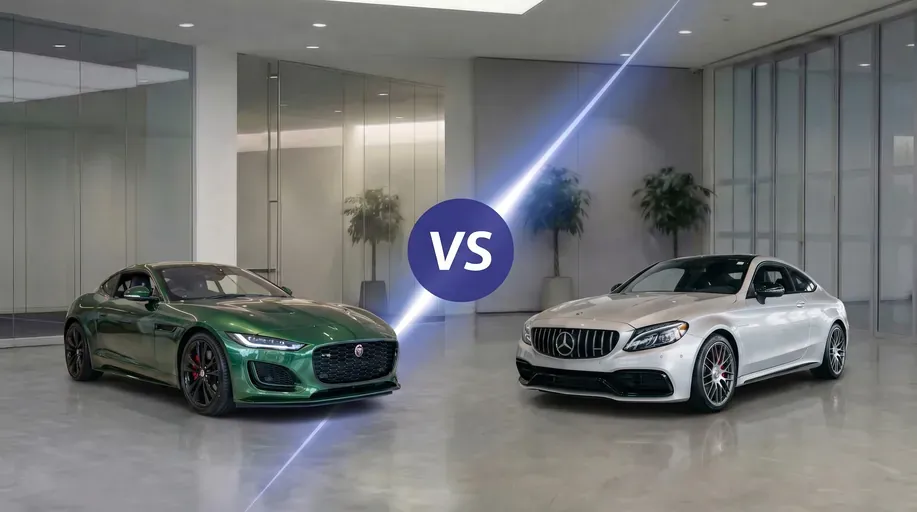
Detailed comparison of Jaguar F-Type vs. Mercedes-AMG C 63 Coupé (C63 AMG). Real-world experience, performance test, and final verdict. Which sports car to choose?
Apr 14, 2026
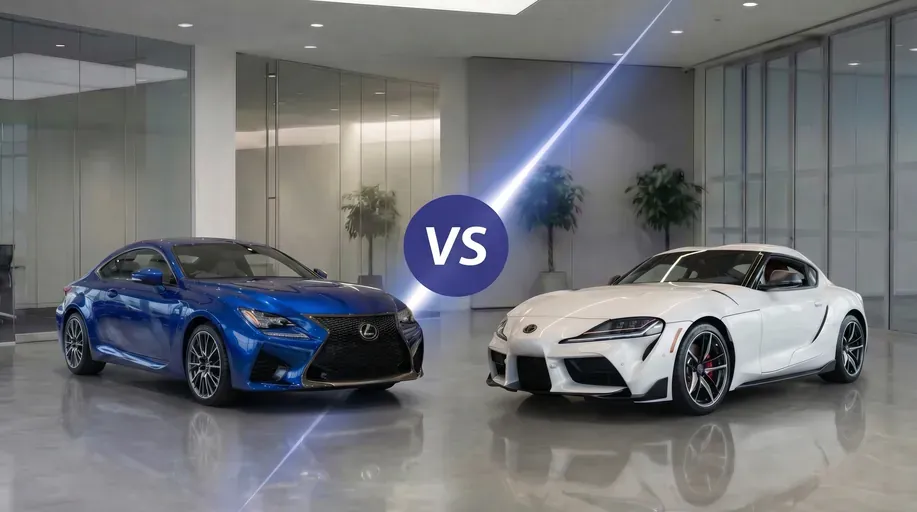
The Great Coupe Comparison: Lexus RC F vs Toyota GR Supra. A detailed look at performance, equipment, and real-world driving characteristics. Read our final verdict!
Apr 14, 2026