Car battle
BMW M2 vs. Mercedes-AMG C 63: Complete comparison 2026
BMW M2 vs Mercedes-AMG C 63: A detailed comparison of performance, driving, and price. Find out which sports coupé is the right choice for you in our test.
Apr 14, 2026
Articles
Car battle
The Great Coupe Comparison: Lexus RC F vs Toyota GR Supra. A detailed look at performance, equipment, and real-world driving characteristics. Read our final verdict!
October 16, 2026
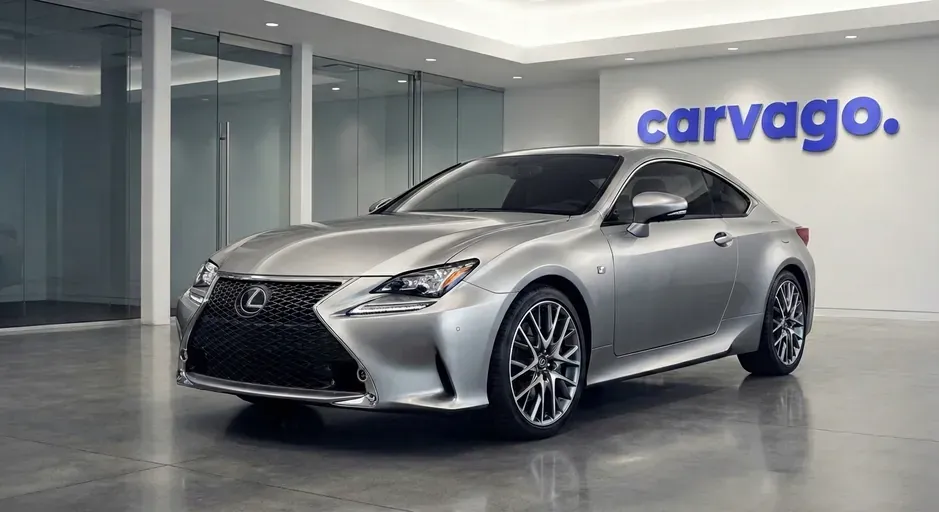
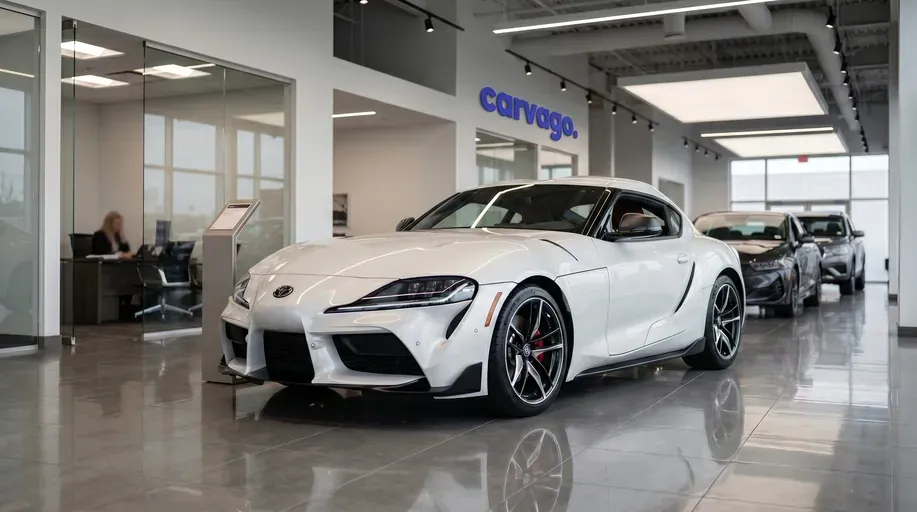
The Lexus RC F represents the ultimate old-school luxury sports coupe, which charms enthusiastic drivers primarily with its massive naturally aspirated V8 engine and uncompromising Japanese design. On the other side of the barricade stands the iconic Toyota Supra, officially sold and also known as the Toyota GR Supra (or by its internal generation designation A90), which bets on a turbocharged inline-six engine, top-tier agility, and modern technology developed in cooperation with BMW. Let's take a detailed look at how these two fascinating rivals with completely different approaches to performance and dynamics stand in a direct comparison, so you can find out which one will be the right choice for your garage.
When looking at the exterior dimensions, the different philosophies of both cars are fully revealed, even though both are considered sports coupes on the used car market (focusing on models roughly four years old). While the Lexus RC F (XC1 generation) is a classic representative of the Gran Turismo (GT) category, combining V8 power with a certain amount of comfort and everyday usability, the Toyota GR Supra (A90 generation) is a purist sports machine focused on maximum agility and handling.
The differences in physical proportions are truly striking. With a length of up to 4,710 mm, the Lexus RC F is a staggering 331 mm longer than the Toyota Supra (4,379 mm). This difference is logically also evident in the wheelbase, where the Lexus offers 2,730 mm compared to the very compact 2,470 mm of the Toyota (a difference of 260 mm). With a height of 1,390 mm, the Lexus is also nearly 10 centimeters taller. A very interesting anomaly, however, is that despite its overall more subtle and shorter body structure, the Supra is slightly wider – the base version measures 1,854 mm in width, while the Lexus has 1,845 mm. Thanks to the combination of low height and a wide stance, the Supra appears much more hunkered down on the road.
In practice, these values fundamentally influence the user experience. The significantly longer wheelbase and proportions of the Lexus bring excellent directional stability at high highway speeds and allow for a 2+2 interior layout, providing additional storage space or emergency seating for passengers. Conversely, the Toyota Supra capitalizes on its short wheelbase and overall compactness – it is much more agile and sharper in tight corners and easier to park in the city. The price for this agility, however, is a strictly two-seater interior with a less airy feel.
| Parameter | Lexus RC F Coupé | Toyota Supra Coupé |
|---|---|---|
| Width (mm) | 1845 | 1854 - 1867 |
| Length (mm) | 4705 - 4710 | 4379 |
| Height (mm) | 1390 | 1276 - 1292 |
| Wheelbase (mm) | 2730 | 2470 |
When choosing a sports car, trunk capacity is usually not the most important parameter, but if you plan to use the car for more than just Sunday drives on the track, the liters in the trunk start to play a surprisingly large role. Whether it's a weekend trip for two, transporting golf clubs, or just a regular grocery run on the way home from work, every bit of extra practicality can make daily life with the car significantly more pleasant. In a direct comparison between the Lexus RC F and the Toyota GR Supra (in the current A90 generation), we encounter completely different approaches that stem from the very concept of these two coupe body styles.
The Lexus RC F, as a representative of a more traditional and larger coupe with a 2+2 seating configuration, offers surprisingly more generous space. Its standard volume is 366 liters (or 340 liters for the special Track Edition, where a carbon body brace is located behind the rear seats). This value represents solid space for a few extra suitcases and makes the Lexus a very capable highway cruiser. An interesting point, however, is that to maintain maximum torsional body rigidity, the rear seats cannot be folded even in the standard RC F – the backrests are fixed, and you only have a practical ski pass-through available.
In contrast, the Toyota GR Supra is a purebred two-seater sports car betting on maximum agility and lightness. This naturally takes a toll on practicality, as its trunk has a volume of 290 liters. Although it is accessible via a liftgate and surprises with a very decent length for its class, it is generally shallower. A major advantage, however, is its direct connection to the cabin itself. The smaller volume – specifically 76 liters less compared to the Lexus – simply requires a bit more thoughtful packing, but it is still perfectly sufficient for a weekend grocery run or a longer vacation if you are traveling as a pair.
In summary, the Lexus embodies a comfortable gran turismo ready to handle long-distance travel with more belongings, while the Toyota serves up a typical purist two-seater concept with a trunk that requires you to pack a bit more modestly.
| Parameter | Lexus RC F Coupe | Toyota GR Supra Coupe |
|---|---|---|
| Base volume (liters) | 366 l | 290 l |
| Maximum volume with seats folded (liters) | 366 l | 290 l |
If you plan to travel frequently with the car and need space for golf clubs or larger suitcases, the Lexus RC F will serve you significantly better, while the Supra offers a more modest space sufficient mostly just for a weekend for two.
When it comes to towing a trailer, those interested in high-performance sports coupes usually have to compromise on their practical requirements. This is also the case for the Lexus RC F (XC1 generation) and Toyota GR Supra (A90 generation) models, which represent pure driver's cars on the used car market at around four years of age. Neither of these cars is factory-homologated for towing a trailer.
Both the standard and maximum trailer weight for both of these models is exactly 0 kg. This fact applies to absolutely all versions and engines without exception. You won't find any hybrid or other specific variants with limited towing capacity on the market – whether you focus on the four-cylinder or six-cylinder engines under the Toyota's hood, or the naturally aspirated V8 in the Lexus.
In practice, these zero values mean a significant limitation of overall utility. Without the possibility of attaching a trailer, you don't gain space for several extra suitcases, and these cars are thus not very sufficient for weekend shopping for bulky items or longer holidays involving, for example, the transport of heavy e-bikes on a tow bar. Every piece of luggage and sports equipment must therefore find its place exclusively inside the luggage compartment, or on the emergency rear seats in the case of the Lexus.
The absence of towing capacity is completely logical for cars with this focus. In the context of deciding between these two models, the tow bar parameter plays no role, as both offer exactly the same (zero) level of utility for towing loads and thus necessarily require the presence of another practical car in the family. Due to the complete absence of towing capacity and the absence of any data for both relevant generations, the comparison table below does not contain any data for the individual models.
| Model and engine | Braked trailer (kg) | Unbraked trailer (kg) |
|---|
A comparison of the engine options for the Lexus RC F and Toyota GR Supra clearly demonstrates two completely different approaches to building sports cars. For buyers in the market for roughly four-year-old used cars, a choice opens up between a traditional, roaring large-displacement engine and modern turbocharged efficiency. The Lexus RC F remains one of the last representatives of purely naturally aspirated V8s, relying on a perfectly linear power delivery and mechanical response without any hybrid assistance. On the other hand, the Toyota GR Supra utilizes lighter and more modern turbocharged units of BMW origin, which benefit from massive torque available from low RPMs. Both vehicles are exclusively rear-wheel drive; however, the differing characteristics of their engines mean that while the Supra scores with everyday dynamics and easy tuning, the Lexus appeals to purists' emotions with its instant throttle response and unmistakable sound.
The Lexus RC F appears on the four-year-old used car market with a single, yet all the more legendary, engine option. Its heart is a proper naturally aspirated five-litre V8 (5.0 V8). While early model years provided an output of 351 kW, cars from roughly 2018 onwards had to respond to stricter European WLTP standards, which meant a slight reduction in parameters to 341 kW (464 hp) and 520 Nm of torque. Power is always delivered to the rear axle via a perfectly tuned eight-speed Sport Direct Shift automatic transmission. The strength of this concept is the extreme reliability of natural aspiration and a fantastic sound profile peaking at 7,300 RPM. The weakness can be significantly higher fuel consumption and the need to rev the engine higher to get the best out of it.
| Engine type | Fuel | Power (kW) | Torque (Nm) | Transmission |
|---|---|---|---|---|
| 5.0 V8 | Petrol | 341 - 351 | 520 - 530 | 8AT |
The current generation of the Toyota GR Supra (A90), produced since 2019, gives buyers a choice of two modern turbocharged units. The base variant is a two-litre four-cylinder with a twin-scroll turbocharger, generating 190 kW (258 hp) and 400 Nm. As indicated by historical data and available model year listings, this lighter engine option, which significantly lightens the front axle and improves the car's agility, was gradually withdrawn for the 2025 model year, so it will start to represent a rather rare and interesting entry-level choice on the used market. The pinnacle is the award-winning three-litre inline-six (B58). In European specification, it reaches a reliable 250 kW (340 hp) and a massive 500 Nm of torque. While the six-cylinder was initially available only with a fast eight-speed ZF automatic transmission, from 2022 Toyota enriched the range with a purist six-speed manual transmission. The strength of the Supra's engines is the phenomenal pull from the lowest revs and wide potential for performance modifications; conversely, a weakness for some may be the less distinctive and artificially enhanced sound compared to the V8 Lexus.
| Engine type | Fuel | Power (kW) | Torque (Nm) | Transmission |
|---|---|---|---|---|
| 2.0 Turbo | Petrol | 190 | 400 | 8AT |
| 3.0 Turbo | Petrol | 250 | 500 | 8AT / 6MT |
From the perspective of different types of drivers, both cars complement each other. The four-cylinder Toyota GR Supra 2.0 is the perfect choice for budget-conscious buyers and drivers looking for an agile and relatively economical car for daily commuting. The more powerful six-cylinder Supra 3.0 represents the ideal for drivers focused on maximum performance, drifting, and tuning enthusiasts who also welcome the choice of a manual transmission. In contrast, the Lexus RC F is a collector's dream for true automotive connoisseurs. They will gladly forgive its higher weight and fuel consumption in exchange for the unmatched mechanical reliability of the naturally aspirated V8 and an exciting character that modern turbo engines simply cannot replicate.
Whether you reach for the collector value of the roaring V8 in the Lexus or prefer the technological precision and massive torque of the Toyota, both coupes represent the absolute top of their segment among nearly-new used cars.
Choosing the right engine is key to long-term satisfaction with a car, and this is doubly true for such specialized sports coupes, where recommendations are based on real-world experience, mechanical reliability, and daily usability. While Lexus relies on traditional, honest "old school" naturally aspirated power in the form of a massive V8 with lightning-fast response, Toyota hides a modern turbocharged inline-six (developed in cooperation with BMW) under the hood, which impresses with the sheer magnitude and availability of torque from the lowest revs. Both of these paths have their undeniable charm, but each will appeal to a completely different group of drivers and requires a different approach to daily operation and service maintenance.
The naturally aspirated five-liter V8 (engine code 2UR-GSE) is an absolute rarity in today's market of roughly four-year-old used cars and represents the only, yet absolutely perfect, choice for the RC F from 2021 to 2025 (XC1 generation). It is worth mentioning that the older, slightly more powerful 351 kW versions produced until 2018 are no longer available as nearly new used cars due to the transition to stricter emission standards; however, the current 341 kW variant fully compensates for this minimal difference on paper with a more refined power delivery. The engine's greatest technical strength is its beautifully linear curve with a peak torque of 520 Nm at 4800 rpm and the associated addictive mechanical roar as it approaches the redline at 7100 rpm. In terms of reliability, it is one of the most bulletproof sports engines on the market; it suffers from absolutely no complex forced induction issues. The biggest pitfall for used units remains overall mechanical wear stemming from the car's high curb weight (over 1700 kg). During a physical inspection of a used car, you should therefore focus primarily on the condition of the brakes – during the test drive, look for any vibrations in the steering wheel during heavy braking, which would reveal warped and extremely expensive brake discs. Furthermore, we recommend having a mechanic check the oil history in the rear differential and use diagnostics to read the number of "Launch Control" starts, as excessive use dramatically shortens the life of the driveshaft. This engine is ideal for purists and drivers who prefer fast "grand touring" travel, who care about the maximum long-term longevity of the car and are happy to accept a real-world fuel consumption of around 12 to 14 liters of gasoline per 100 km.
Although the A90 generation (in specifications available for four-year-old used cars mostly from 2020 to 2024, such as the Legend Automatik trim) is also available with a more affordable two-liter engine, for a true sports experience, we clearly recommend the top-of-the-line three-liter inline-six with a single twin-scroll turbocharger (designated as B58). The first launch specifications like the A90 Edition (2019) are slowly disappearing from the modern used car market, but newer model years are all the more refined. This engine has made its mark in modern history thanks to its forged crankshaft, immense robustness, and ability to deliver a massive 500 Nm of torque instantly from as low as 1600 rpm. Moreover, it is very efficient on long highway journeys, and consumption can surprisingly drop below 8 liters per 100 km. Although it is very reliable, it has its specifics that need to be monitored. The most attention must be paid to the PCV valve (crankcase ventilation system). A faulty membrane in a used car is easy to detect: the engine sounds rough at idle, a loud, high-pitched whistling may come from the engine bay, and bluish smoke exits the exhaust; this problem must not be ignored, otherwise, it will lead to high oil consumption and subsequent carbon buildup in the engine. Further inspection should be given to the engine block and the plastic oil filter housing, where microscopic oil or coolant leaks can occur in four-year-old cars due to frequent heat cycling. The Supra with the B58 engine is perfect for spirited drivers and track-day fans who want a car with an unrivaled eagerness to accelerate at any rpm and, additionally, with huge, relatively affordable potential for any further tuning.
While car manufacturers like to state ideal laboratory fuel consumption values in their official materials, the reality on the road often differs significantly. Especially with high-performance sports models, the difference between theoretical catalog consumption and reality is very noticeable and depends primarily on driving style. For the most objective comparison of used cars around four years old (for generations commonly available from 2021 and 2022), we therefore rely on real data from the community portal Spritmonitor.de, where owners of both Japanese coupes record their long-term refueling logs directly.
| Model and engine | Average consumption (l/100 km) | Source |
|---|---|---|
| Toyota GR Supra 2.0 (A90) | 8,2 | Spritmonitor.de |
| Toyota GR Supra 3.0 (A90) | 9,5 | Spritmonitor.de |
| Lexus RC F 5.0 V8 (XC1) | 13,5 | Spritmonitor.de |
Looking at the real data, the interpretation of trends is very clear and fully reflects two completely different technical approaches by the manufacturers. The most economical choice is, of course, the turbocharged 2.0-liter four-cylinder in the Toyota Supra, which benefits from downsizing and the overall lower weight of the car. Perhaps the most pleasant finding is the efficiency of the 3.0-liter six-cylinder from BMW. This turbo engine requires, on average, just under a liter and a half more fuel than the base four-cylinder, which is a fascinating result given the massive jump in performance. At the opposite end stands the Lexus RC F with its naturally aspirated five-liter V8. Here we get a glimpse into the era of honest "old school," where power is provided by displacement rather than small turbochargers. In the real world, however, this means that the Lexus's typical consumption easily exceeds the 13 liters per 100 km mark.
For the average user and prospective buyer, this data represents fairly strict boundaries. If you prefer using the car for more regular long-distance driving, commuting, or are simply looking at the long-term budget associated with operating costs, the Toyota GR Supra is a much more sensible choice for you. Conversely, the Lexus RC F will find owners among connoisseurs and weekend enthusiasts, for whom higher fuel expenses are simply an acceptable price to pay for the fantastic sound and character of a massive naturally aspirated V8.
In conclusion, it can be summarized that in this specific comparison, fuel consumption will be a crucial decision-making factor. The turbocharged units under the hood of the Toyota Supra make this legend a relatively economical and efficient "daily car" (a car for every day), while the Lexus RC F remains an aristocratic, albeit highly thirsty, thoroughbred. If operating economy is important to you when purchasing a used sports car, Toyota's smaller turbocharged units win hands down over the old-fashioned engine from Lexus.
When looking at the used car market for vehicles approximately 4 years old (specifically the 2021 and 2022 model years), the fifth-generation Toyota Supra (designated as A90) stands against the facelifted first-generation Lexus RC F. While the Supra is relatively common on the used market, the Lexus represents an exclusive and rare find for enthusiasts, which is directly reflected in its higher purchase price.
The fifth-generation Supra benefits from shared technology and higher sales figures, providing used car buyers with a very decent selection and the ability to negotiate on price more easily. The price naturally depends on the chosen engine:
The Lexus RC F is a great rarity on the used car market. At roughly four years old, you are looking at the updated and facelifted models, which received improved aerodynamics and technology. The presence of the massive 472 hp naturally aspirated 5.0-liter V8 already makes it something of a collector's item. This prevents the steep depreciation typically seen in other luxury coupes.
| Model | Engine | Estimated Price From | Estimated Price To |
|---|---|---|---|
| Toyota Supra (A90) | 2.0 Turbo (I4) | €39,000 | €49,000 |
| Toyota Supra (A90) | 3.0 Turbo (I6) | €49,000 | €70,000 |
| Lexus RC F | 5.0 V8 (Standard version) | €57,000 | €74,000 |
| Lexus RC F | 5.0 V8 (Track / Fuji Edition) | €78,000 | €94,000+ |
Value Retention and Operational Specifics
In terms of long-term investment potential, the Lexus RC F has a significantly better outlook. The production of cars with massive, high-revving V8s without the support of turbos or electric motors is coming to an end, which predestines the RC F for future classic status with minimal further depreciation. In contrast, a 4-year-old Toyota Supra loses its value at a rate typical for premium coupes in its class, but its immense popularity within the tuning and track-day communities ensures that its secondary market prices will never bottom out completely.
While the 4-year-old fifth-generation Toyota Supra offers an appealing balance of affordability and performance for agile weekend and daily driving, the rarer Lexus RC F is a choice for the heart—for a premium of approximately €21,000, you gain the unrivaled sound of a naturally aspirated V8 and excellent protection of the car's value against further depreciation.
Although we can talk about five-star Euro NCAP standards in the context of shared platforms and related models for both cars, it is crucial to emphasize the context and the year of testing for these specific sports coupes. Independent crash test protocols are constantly evolving and becoming stricter over time. This means that older tests do not correspond to the latest methodologies, which now standardly include complex frontal overlap crash simulations, advanced cyclist detection, or emergency scenarios at complex intersections. For this reason, percentage scores from different years cannot be objectively compared directly.
Lexus RC F was never officially tested by Euro NCAP during its production. This is because it is a niche, low-volume model whose basic platform dates back to 2014 (though the related IS sedan achieved 5 stars at the time). Due to the absence of any official data for this specific car, we do not list any percentage results in the table. However, the model is undoubtedly safe – over the years, the manufacturer has equipped it with a generous Lexus Safety System+ active safety package, which includes adaptive cruise control, a pre-collision system with pedestrian detection, blind spot monitoring, and lane departure warning. Its basic architecture, however, dates back to a somewhat more lenient safety era.
Toyota Supra (current A90 generation) faces exactly the same situation – due to low sales figures, it was not directly tested by Euro NCAP, and therefore we do not provide any data in the table for this model. However, the Supra shares its entire technical foundation with the BMW Z4, which successfully passed Euro NCAP tests in 2019, earning a full five stars according to the stricter standards of the time. Thus, the Supra provides customers with a very rigid body and a modern suite of assistance features. These include autonomous emergency braking with pedestrian and cyclist detection, intelligent lane keeping, and a reliable automatic emergency call system (eCall).
In the overall assessment, the Toyota Supra offers a more modern and comprehensive safety package. While the Lexus RC F provides a solidly built but now relatively aged platform, the Supra benefits from a newer architecture developed in cooperation with BMW. Although neither of the compared sports models has its own direct Euro NCAP test, the Supra's robust structure and its more advanced active safety assistants correspond significantly better to the stricter standards of the current market.
| Parameter | Lexus RC F | Toyota Supra |
|---|---|---|
| Year of testing | - | - |
| Adult occupant protection | - | - |
| Child occupant protection | - | - |
| Vulnerable road users protection | - | - |
| Safety assist systems | - | - |
Although neither car has its own Euro NCAP test specifically for its model, the Toyota Supra benefits from a significantly newer platform and more modern assistants, making it a safer and more advanced choice.
In addition to standard equipment, each of the models offers several unique elements and features that go far beyond the usual standard and clearly define their distinct approach to the driving experience. While one bets on the old school and a naturally aspirated peak, the other brings a purist sporting balance enriched with modern technology from Europe.
Naturally aspirated 5.0-liter V8 with fantastic sound and linear power delivery
Exceptional build quality and legendary long-term reliability
Excellent characteristics for fast and comfortable long-distance travel (GT)
Top-tier interior materials and premium Mark Levinson audio system
2+2 cabin layout offers emergency rear seats, unlike the Supra
High curb weight limiting agility in tight corners
Outdated multimedia system with unintuitive touchpad control
Significantly higher fuel consumption and more expensive running costs
Very cramped rear seat space, realistically usable more for luggage
The Lexus RC F is a charismatic coupe that will appeal to purists looking for one of the last honest naturally aspirated V8s on the market. It is more of an exclusive grand tourer than an uncompromising track tool, making it an excellent choice for drivers who appreciate reliability, comfort, and luxury materials.
Excellent handling and agility thanks to low weight and ideal weight distribution
Powerful and flexible 3.0-liter turbocharged six-cylinder with great potential for further modifications
Lightning-fast eight-speed ZF automatic transmission (manual also available)
Modern and smooth-running infotainment with intuitive controls
Striking and aggressive sports design that commands attention on the road
Poor visibility and more difficult entry due to the very low roofline
Known issue with wind buffeting and turbulence when driving with windows down
Two-seater cabin only, with limited daily practicality
Interior and technology shared with BMW may disappoint fans of the brand's pure Japanese identity
The current generation Toyota Supra is a purebred sports car focused on maximum driving experience and surgically precise cornering. It is ideal for enthusiasts who prefer sharper handling, enjoy exploiting the car's dynamic potential on backroads, and don't mind compromises in practicality.
Based on our comprehensive car audit, breakdown statistics, service reports, and expert evaluations, we have compiled an overview of the most common problems that used car buyers should watch out for. Given that we target the market for nearly-new used cars around 4 years old, a detailed inspection of a used vehicle plays a crucial role in a safe and worry-free purchase.
The Lexus RC F has long maintained a reputation as one of the most reliable sports cars, yet it can still exhibit specific ailments that a detailed independent technical inspection should always focus on.
The Lexus RC F is a mechanically exceptionally robust car, where you are more likely to deal with frequent replacement of rapidly depleting consumables and an outdated infotainment system than being troubled by serious powertrain defects.
The Toyota Supra A90 generation, sharing a large part of its premium technology with BMW models, delivers excellent driving characteristics but also several specific pain points that require a careful physical inspection of the used car to reliably detect.
The Supra A90 impresses with top-tier performance and modern technology, but buyers of used units should expect occasional interior squeaks, the need to monitor engine oil levels in older model years, and poor window aerodynamics.
When buying a used car, a thorough inspection is key. Here are some specific points to focus on for these two models to ensure your new sports car brings only joy and no unexpected financial expenses.
Thanks to its significantly lower weight and shorter wheelbase, the Toyota Supra is much more agile and provides sharper steering feedback. The Lexus RC F feels more cumbersome due to its higher weight, making it more of a fast GT for straights and long curves than a nimble sports car. If you are looking for maximum driving precision and playfulness, the Supra is clearly the better choice.
The Lexus features a 2+2 seat configuration, so it can carry additional passengers in the rear in an emergency, and it also offers a larger luggage compartment (366 liters). In contrast, the Supra is strictly a two-seater with a smaller and less accessible trunk with a capacity of 290 liters. For everyday practicality and carrying more things, the Japanese V8 coupe is much more usable.
The Lexus boasts a naturally aspirated five-liter V8 that offers over 460 hp, linear power delivery, and an absolutely unmistakable mechanical sound at high revs. The Supra relies on a turbocharged three-liter inline-six from BMW, which has a lower paper output (340 hp) but, thanks to massive torque and lower weight, accelerates to 100 km/h comparably fast. The choice thus depends on whether you prefer the classic character of a high-revving naturally aspirated engine or the immediate pull of a modern turbo.
Lexus has long excelled with its legendary Japanese reliability, and its time-tested naturally aspirated V8 is one of the most durable engines on the market, although it has higher fuel consumption. The Toyota Supra's technology is entirely based on BMW parts, which means slightly higher service costs and the need to account for more complex interventions in modern electronics. In the long run, the Lexus is therefore a more predictable and robust choice for servicing.
The Lexus RC F is a typical representative of the Gran Turismo category, so it offers much better sound insulation, more premium materials in the interior, and a more compliant damper setting for longer trips. The Toyota Supra, on the other hand, is stiffer, there is significantly more noise from the wide tires in the cabin, and it is overall focused more on an undiluted sports experience than on comfort. For swallowing hundreds of highway kilometers, the Lexus is the clear winner.
Sources: ADAC, lidovky.cz, mdcr.cz, motorvize.cz, fdrive.cz, powerfan.cz
This article was prepared using artificial intelligence tools. The section guarantor is Petr Dušek.
BMW M2 vs Mercedes-AMG C 63: A detailed comparison of performance, driving, and price. Find out which sports coupé is the right choice for you in our test.
Apr 14, 2026
Subaru BRZ vs. Toyota GR86. Which of these sports twins is better? Our detailed comparison will help you choose the right coupe for you.
Apr 13, 2026
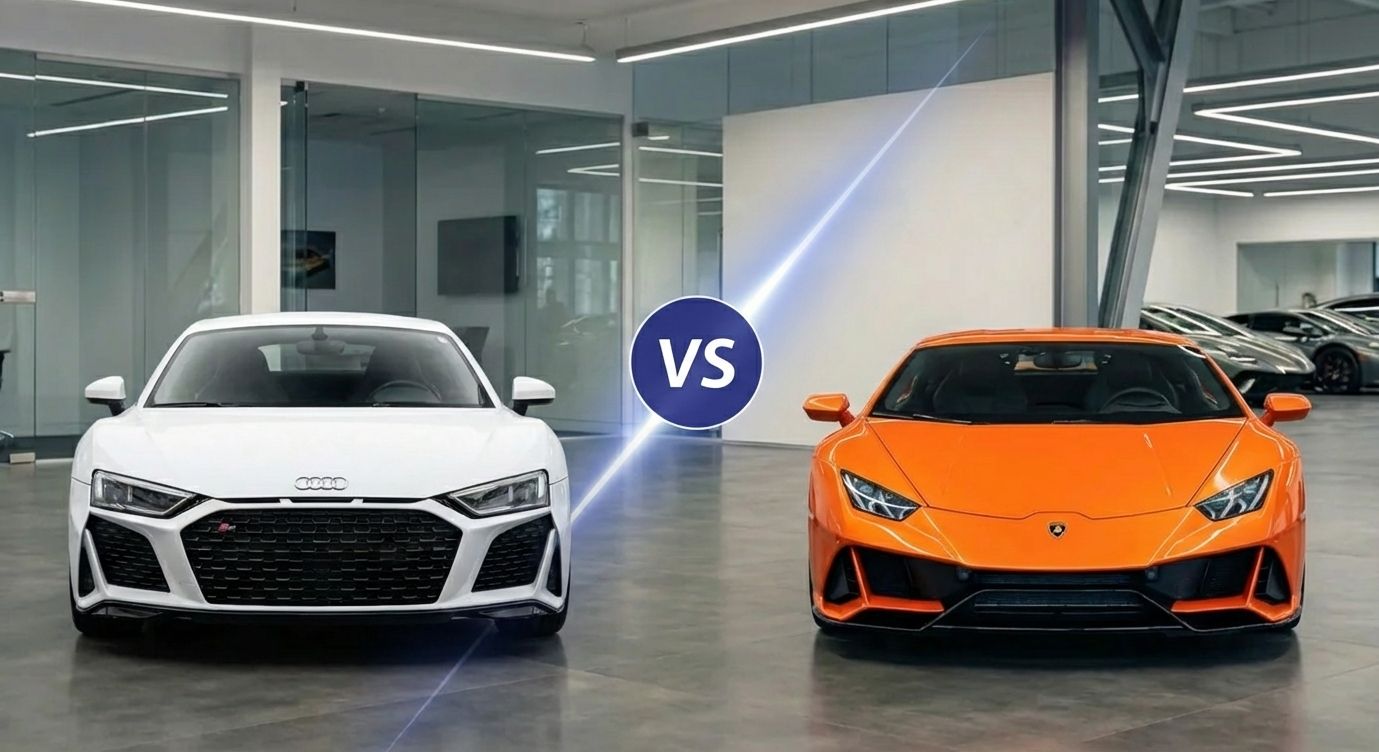
Detailed comparison of Audi R8 vs Lamborghini Huracán. We reveal the real differences, performance, and driving characteristics of these V10 supercars. Which one to choose?
Apr 14, 2026