Articles

Car battle

BMW M2 vs. Mercedes-AMG C 63: Complete comparison 2026

BMW M2 vs Mercedes-AMG C 63: A detailed comparison of performance, driving, and price. Find out which sports coupé is the right choice for you in our test.

April 14, 2026

VS
BMW M2

BMW M2

Mercedes-AMG C 63 Coupé

Mercedes-AMG C 63 Coupé

Introduction

The BMW M2 is a modern interpretation of the classic recipe for driving fun, combining compact dimensions with a powerful inline-six engine and rear-wheel drive. Against it stands the Mercedes-AMG C 63, which in this generation is more of a muscular GT with a roaring V8 under the bonnet, offering brutal power in a more luxurious and spacious package. We've pitted these two different approaches to high performance against each other to see which one leaves a stronger impression.

Comparison of External Dimensions

Exterior Dimensions: Compact Agility vs. Commanding Power

At first glance, it's clear that the BMW M2 and the Mercedes-AMG C 63 belong to different size categories. While the M2 is the essence of a compact sports coupé, the C 63, based on the larger C-Class, has a significantly more mature and massive feel. This difference is not just visual; it fundamentally affects the driving characteristics and everyday usability of both cars.

The biggest difference is in length. The Mercedes-AMG C 63 in the coupé variant is a whopping 290 mm longer than the BMW M2. This is a length that is reflected not only in the more generous interior space of the Mercedes but also in its better stability at high speeds on the motorway. Conversely, thanks to its more compact dimensions and significantly shorter wheelbase (by 147 mm), the BMW M2 excels in tight corners and when manoeuvring in the city, where finding a parking space is noticeably easier.

The comparison of width is interesting, as the two cars are surprisingly close, especially in their top specifications. This shows that both models rely on an aggressive, wide stance for maximum grip and stability in corners. While Mercedes offers a wider range of body styles – from saloon to estate to convertible – the BMW M2 sticks to its purist focus and is available exclusively as a coupé. The choice thus depends on the preference between an agile, playful sports car and a larger, more versatile GT.

Dimensions Comparison

ParameterBMW M2 Coupé (F87)Mercedes-AMG C 63 Coupé (205)Mercedes-AMG C 63 Saloon (205)Mercedes-AMG C 63 Estate (205)Mercedes-AMG C 63 Cabriolet (205)
Length (mm)44614751475747724751
Width (mm)18541877183918391877
Height (mm)14101401142614411404
Wheelbase (mm)26932840284028402840

Trunk Volume

Luggage Compartment Volume and Practicality

Although customers don't typically choose sports coupés like the BMW M2 and Mercedes-AMG C 63 for their hauling capabilities, the differences in practicality between these two models are surprisingly significant. While the BMW M2 sticks to a purely sporty coupé body style, the Mercedes-AMG C 63 offers a much wider range of versions, making it a significantly more versatile car for those who need to combine adrenaline with everyday usability.

In a direct comparison of the coupé bodies, the more compact BMW M2 paradoxically has the upper hand. Its luggage compartment offers a solid volume of 390 litres, which is a very decent figure for a two-door sports car, sufficient for a weekend trip for two. The Mercedes-AMG C 63 Coupé of the 205 generation (sold until around 2023) counters with a slightly more modest volume of 355 litres. While the difference is not dramatic, it shows that the M2 can be a more practical companion within its class.

However, the biggest advantage of the Mercedes lies in its body style diversity. If you're looking for performance combined with practicality for the family, the Saloon (480 litres) and especially the Estate (T-Modell) versions, with a volume of 490 litres in the basic configuration and up to 1510 litres with the rear seats folded down, clearly dominate. Here, the C 63 becomes a fully-fledged family express that the M2 cannot compete with. However, it is necessary to be aware of the latest C 63 S E PERFORMANCE generation (from 2023), where the installation of the hybrid system has significantly reduced the boot space in the saloon to just 280-315 litres and in the estate to 360 litres.

Luggage Compartment Volume Comparison

ParameterBMW M2 CoupéMercedes-AMG C 63 CoupéMercedes-AMG C 63 SaloonMercedes-AMG C 63 Estate
Basic volume (litres)390355480490
Max. volume with seats folded (litres)---1510

Leave it to Carvago CarAudit™

Order CarAudit™

Trailer Weights

Trailer Weight: The Athletes That (Don't) Tow

When choosing a high-performance car like the BMW M2 or Mercedes-AMG C 63, towing capacity is not usually a major factor. It's all about driving dynamics, performance, and emotion. Nevertheless, there are drivers who would appreciate the ability to attach a small trailer with racing tyres or perhaps a jet ski, even with such a car. And it is in this seemingly marginal parameter that the two cars differ fundamentally, especially when comparing their latest generations.

The BMW M2, whether we're talking about the older F87 generation (2018-2020) or the latest G87, is very clear on this matter. The car is not homologated from the factory for use with a tow hitch. Its construction is fully subordinated to maximum body rigidity and the best possible driving performance. Any additional intervention to install a tow hitch would disrupt this philosophy, and therefore BMW does not offer this option on M2 models at all.

The previous generation Mercedes-AMG C 63 W205 (2018-2023), powered by the iconic V8 engine, was in a similar situation. Here, too, sporty driving was the priority, and practicality in the form of a tow hitch was sidelined. However, a major turnaround comes with the latest W206 generation, designated as the C 63 S E PERFORMANCE. This model, with its plug-in hybrid powertrain, surprisingly offers the ability to tow a braked trailer weighing up to 1800 kg. For an unbraked trailer, the standard limit is 750 kg. This makes it an unexpectedly versatile car that combines extreme performance with a practicality that is completely lacking in its competitors.

For a used car buyer, the choice is clear – neither the M2 F87 nor the C 63 W205 are designed for towing. However, if you are considering newer models, the Mercedes-AMG C 63 S E PERFORMANCE offers an unexpected advantage for those who want one car for both track day fun and weekend activities with a trailer.

Model and EngineBraked trailer weight (kg)Unbraked trailer weight (kg)
BMW M2 (F87 & G87)Not homologatedNot homologated
Mercedes-AMG C 63 (W205)Not homologatedNot homologated
Mercedes-AMG C 63 S E PERFORMANCE (W206)1800750

Overview of Most Common Motorizations

Engine Showdown: Inline-Six vs. Roaring V8

When choosing between the BMW M2 and the Mercedes-AMG C 63, you're not just comparing two cars, but two completely different powertrain philosophies that define their character. While BMW bets on the precision and high-revving nature of its inline-six, Mercedes-AMG counters with the brutal force and unmistakable sound of its V8 engine. For buyers of used cars from 2018-2021, this is a key difference: the choice between a surgically precise instrument and a charismatic muscle car in a German package.

BMW M2: A Tribute to the Inline-Six

The F87 generation BMW M2 is a celebration of what the brand's fans love most: a balanced chassis and a high-revving inline-six engine. While the original M2 (2016-2018) used the excellent N55 engine, the real breakthrough came with the M2 Competition model in 2018. It received the 'full-fat' S55 twin-turbo engine from the larger M4, which offered sharper responses and higher performance. The pinnacle is the limited edition M2 CS, which pushed the performance even further. A key advantage for driving purists is the availability of a six-speed manual transmission in all versions, a rarity in this category. The alternative was a fast seven-speed M-DKG dual-clutch transmission.

Engine TypeFuelPower (kW)Torque (Nm)Transmission
3.0 I6 Turbo (N55)Petrol2724656MT / 7-DKG
3.0 I6 Twin-Turbo (S55)Petrol3025506MT / 7-DKG
3.0 I6 Twin-Turbo (S55)Petrol3315506MT / 7-DKG

Mercedes-AMG C 63: The Power and Thunder of the V8

The W205 generation Mercedes-AMG C 63 is a completely different beast. At its heart is a four-litre M177 twin-turbo V8 engine, which gives the car the character of an American muscle car. It was offered in two variants: the standard C 63 and the even more powerful C 63 S. The main weapon of this engine is the massive torque available from low revs, which ensures stunning in-gear acceleration in any situation. The sound is a chapter in itself – a deep burble that turns into a thunderous roar is addictive. Unlike the M2, the C 63 was available exclusively with an automatic transmission: a seven-speed until 2018, and a nine-speed AMG SPEEDSHIFT MCT after the facelift.

Important note for buyers: The successor to this generation (from 2023) no longer has a V8 and relies on a hybrid four-cylinder. This makes the W205 generation with the V8 engine a highly sought-after and potentially the last car of its kind.

Engine TypeFuelPower (kW)Torque (Nm)Transmission
4.0 V8 Biturbo (M177)Petrol3506507-MCT / 9-MCT
4.0 V8 Biturbo (M177)Petrol3757007-MCT / 9-MCT

Summary and Recommendation

  • For the driving enthusiast seeking maximum engagement, cornering precision, and a love for high-revving engines with a manual shifting option, the BMW M2 Competition is the clear choice. It is a more playful and capable car on the track.
  • For the driver who craves brutal power, a charismatic sound, and a car that combines the qualities of a luxury GT and a muscle car, the Mercedes-AMG C 63 S is ideal. It offers stunning performance for daily driving and motorway sprints.

Choosing the right engine is key to long-term satisfaction with a car. In the case of these two powerful machines, this is doubly true. Our recommendations are based on a combination of performance, real-world fuel consumption, owner feedback, and mechanical reliability, focusing on generations relevant to the used car market. While BMW relies on a precise and high-revving inline-six, Mercedes-AMG counters with the brutal power and charisma of a V8. It's a clash of two different philosophies that lead to the same goal: maximum driving pleasure.

For the BMW M2, we recommend: the 3.0 Twin-Turbo inline-six (S55)

The best choice for the BMW M2 is the engine from the M2 Competition version, produced between 2018 and 2020. Under the bonnet, it hides an engine with the code name S55 – a twin-turbocharged 3.0-litre inline-six, which is essentially a slightly modified version of the power unit from the larger M3 and M4 models. With 302 kW (410 hp) and 550 Nm of torque, it offers phenomenal dynamics and, unlike the original N55 engine in the basic M2, has a much sharper character and a thirst for revs. The S55 engine is renowned for its robustness and excellent throttle response. In real-world driving, expect fuel consumption to be between 10 and 12 litres per 100 km, which is an acceptable figure for the given performance. In terms of reliability, it is a proven unit, but on used cars, it is a good idea to check the condition of the cooling system and the plastic intake pipes, which can crack over time. This engine is ideal for purist drivers looking for an agile and communicative car for country roads and occasional trips to the race track. It is the choice for those who want to feel a direct connection with the car and appreciate the precision of the chassis and steering.

For the Mercedes-AMG C 63, we recommend: 4.0 V8 Bi-Turbo (M177)

In the case of the Mercedes-AMG C 63, our recommendation is clear: go for the more powerful C 63 S version of the post-facelift W205 generation (from 2018 onwards). The reason is simple – under its bonnet beats a heart of pure gold in the form of a four-litre V8 Bi-Turbo with the code name M177. This engine, delivering 375 kW (510 hp) and a crushing 700 Nm of torque, is already a legend. Not only does it offer stunning pull from virtually any revs, but it is also accompanied by an addictive, deep soundtrack that you won't find in newer generations. The M177 engine, with its turbochargers located between the cylinder banks (a "hot V" setup), is considered very reliable and does not suffer from any major systemic problems. Real-world fuel consumption ranges between 12 and 15 litres per 100 km, but it can easily exceed 20 litres when using its full potential. This engine is ideal for drivers who desire the character of a classic muscle car in a luxurious and modern package. It is a car that excels on motorways and in high-speed corners, where it can fully display its commanding power. Compared to the M2, it is more of a high-speed grand tourer than an agile tool for country roads.
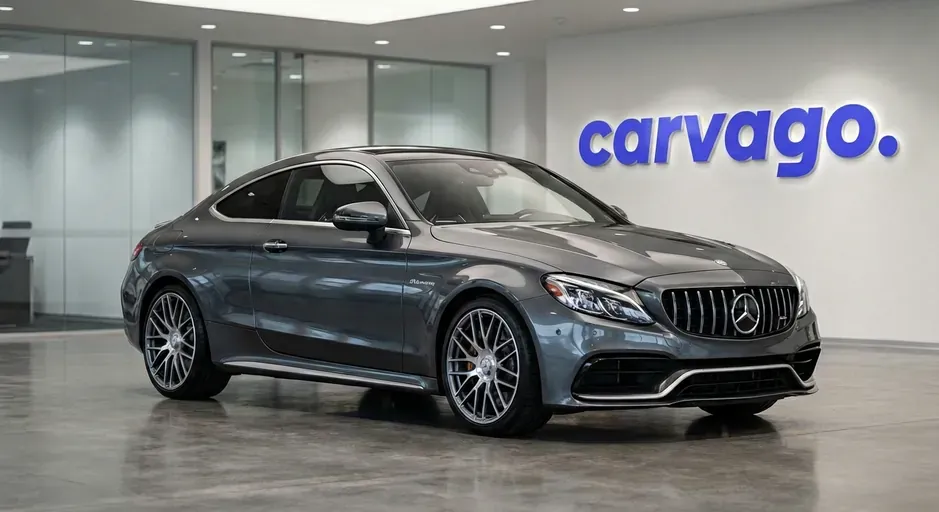
Real Fuel Consumption

Real-World Consumption: A Battle of Six and Eight Cylinders

When choosing a high-performance car like the BMW M2 or Mercedes-AMG C 63, fuel consumption usually plays a secondary role. Nevertheless, it's good to know what to expect from these beasts in real-world operation. The official figures provided by manufacturers are one thing, but the actual numbers from everyday driving, collected by owners themselves on portals like the German Spritmonitor.de, reveal much more. In this category of cars, more than anywhere else, the final consumption is extremely dependent on driving style – the difference between a calm drive and using the engine's full potential can be twofold.

For our comparison, we have selected generations that are relevant for the market of roughly four-year-old used cars. For BMW, this is the F87 generation, especially in the more powerful Competition and CS variants. For Mercedes, it's the W205 generation with the characterful V8 biturbo engine, which preceded the current controversial hybrid four-cylinder.

Model and EngineAverage Real-World Fuel Consumption (l/100 km)
BMW M2 Competition (F87)10.5 - 11.5
BMW M2 CS (F87)11.0 - 12.0
Mercedes-AMG C 63 (W205)12.0 - 13.5
Mercedes-AMG C 63 S (W205)12.5 - 14.0

Who drives more economically?

At first glance, it is clear that the BMW M2 has a slight edge in terms of fuel consumption. Its 3.0-litre inline-six engine is inherently a bit more efficient than the Mercedes' 4.0-litre V8. The M2's lower weight and more compact dimensions also play a role. While the BMW M2 Competition can be driven at around 10 litres with a calmer driving style, the Mercedes-AMG C 63 struggles to get below 12 litres.

For drivers who plan to use the car for longer journeys or more frequently in city traffic, this difference in fuel costs can be noticeable. On the other hand, during spirited driving on country roads or on a race track, the consumption of both models will easily surpass 15, and even 20 l/100 km.

Ultimately, no one buys either of these cars primarily for low fuel consumption. However, if operating efficiency is at least partially important to you, the BMW M2 is a slightly more sensible choice. The Mercedes-AMG C 63 demands about 1.5 to 2 litres more fuel for every 100 kilometres for its epic sound and V8 power. Thus, consumption is not the deciding factor in this duel, but rather another piece in the puzzle of the two cars' different characters.

Price Range and Used Car Offerings

Used Car Prices: Premium Performance for Different Money

When comparing the prices of used BMW M2 and Mercedes-AMG C 63 cars, several key factors come into play, including generation, version, mileage, and overall condition. For the purpose of this comparison, we will focus on models that are approximately four years old, which represent an attractive option on the used car market. This means we will be looking primarily at the BMW M2 Competition (F87) and the post-facelift Mercedes-AMG C 63 from the W205 generation.

BMW M2 Competition: A Compact Rocket with Increasing Value

The BMW M2 Competition, produced from 2018 to 2021, holds its value very well. It is perceived as a purist and driver-focused car, which increases its appeal among enthusiasts.

  • Price Range: Used M2 Competition models from 2019-2020 on the European market typically range from €50,000 to €66,000. Prices vary depending on the mileage and specific equipment.
  • Factors affecting price: Cars with a manual gearbox can be slightly more expensive and sought-after due to their limited numbers. Optional extras like M sport seats or carbon-ceramic brakes also increase the price. Lower mileage and a documented service history from an authorised dealer are key to maintaining a high value.

Mercedes-AMG C 63: A V8 Muscle Car at a More Affordable Price

The Mercedes-AMG C 63 (W205), especially in the "S" version, offers the brutal power of a V8 engine and is often more affordable compared to the M2, despite its original purchase price being higher. You can find sedan and coupé versions on the market, as well as the more practical estate.

  • Price range: Prices for 2019-2020 models typically range between £54,000 and £74,000. The coupé and convertible versions tend to be more expensive than the sedan or estate.
  • Factors affecting price: Similar to the BMW, mileage and service history play a role here as well. The more powerful "S" variant models are more sought-after. A wide range of optional equipment, such as the sport exhaust system, panoramic roof, or advanced assistance systems, can significantly affect the price.

Price Verdict

While the Mercedes-AMG C 63 offers more power and body styles for a comparable, and sometimes lower, price, the BMW M2 Competition holds its value better and is seen as an investment with the potential for price growth. The choice thus depends on the buyer's preferences – whether they prefer the raw power and luxury of the V8 Mercedes or the driving precision and agility of the compact BMW. In both cases, however, these are cars with running costs significantly higher than standard models.

Safety and Euro NCAP Rating

Comparison of Safety and Euro NCAP Results

When choosing a high-performance car, safety is a key factor. Although top-tier levels are expected from premium brands like BMW and Mercedes-Benz, Euro NCAP test results reveal interesting differences worth considering. However, it is important to note that testing protocols are constantly becoming stricter, so a direct comparison of percentage results from different years can be misleading.

BMW M2

The BMW M2 has not been tested by Euro NCAP as a standalone model. Its rating is therefore based on its technical foundation, the BMW 2 Series Coupé (G42 generation), which was tested in 2022. Under the stricter rules of that time, the 2 Series Coupé received four stars out of a possible five. Although adult (82%) and child (81%) protection was at a good level, the car lost points in the categories of vulnerable road user protection (67%) and safety assist systems (64%). The tests showed that the autonomous emergency braking system performed adequately in standard scenarios, but its performance was more limited in more challenging situations, such as reacting to cyclists.

Mercedes-AMG C 63

Similar to the M2, the Mercedes-AMG C 63 does not have its own specific rating from Euro NCAP. Its safety profile is derived from the standard Mercedes-Benz C-Class model (W206 generation), which was tested in the same year, 2022. The C-Class earned a full five stars in these tests and achieved excellent results in all key areas. Adult occupant protection was rated at 93% and child protection at 89%. It also performed excellently in the area of vulnerable road user protection (80%) and in the assessment of safety assist systems (82%), indicating modern and comprehensive safety equipment.

Verdict and Summary of Results

Based on the available data from the 2022 Euro NCAP tests, the Mercedes-Benz C-Class, and by extension the AMG C 63 model, offers a more comprehensive and modern safety package. It not only received a higher overall rating but also achieved better results in all monitored categories, especially in safety assist systems and the protection of pedestrians and cyclists. The BMW 2 Series Coupé, the basis for the M2, still provides very good passive safety, but it slightly lags behind its competitor in the area of active safety.

ParameterBMW M2 (based on 2 Series Coupé G42)Mercedes-AMG C 63 (based on C-Class W206)
Year of testing20222022
Adult Occupant Protection82%93%
Child Occupant Protection81%89%
Vulnerable Road User Protection67%80%
Safety Assist64%82%
Overall Euro NCAP Rating★★★★☆★★★★★

Comparison of Interesting Equipment Features

In addition to the standard equipment, each model offers several unique features that can be decisive for the customer and reflect the different philosophies of the two brands. While BMW focuses on a purist driving experience with technological support for track days, Mercedes-AMG combines brutal power with luxury and comfort features for everyday use.

BMW M2: A Track Toy with Motorsport DNA

The BMW M2, especially in the Competition version, is designed with a clear goal – to provide maximum driving pleasure. Its interesting features, therefore, focus mainly on improving performance and connecting the driver with the car.

  • S55 engine from the M3/M4: The Competition version received the true heart from the larger M3 and M4 models. The twin-turbocharged S55 inline-six engine is a huge leap from the original N55 engine, offering sharper responses, higher power (410 hp), and a relentless appetite for revs.
  • Chassis and brakes from the M3/M4: It's not just about the engine. The M2 Competition also inherited key chassis components, such as aluminium axles and suspension, as well as a more powerful braking system. This gives the car much better handling and stability at high speeds.
  • M Driver's Package: For those who are serious about speed, there is an optional package that not only raises the speed limiter from 250 km/h to 280 km/h but also includes a voucher for a professional BMW M Driving Experience course. So, the carmaker not only sells you a fast car but also teaches you how to handle it safely.
  • M Laptimer App: A great tool for track enthusiasts. This app, connected to the iDrive infotainment system, allows you to record and analyze telemetry data from your track driving. You can monitor lap times, g-forces, steering angle, or braking pressure and then share your performance with friends.
  • M1 and M2 buttons on the steering wheel: Two programmable buttons allow the driver to save their favorite settings for the engine, chassis, steering, and stability control system. With a single press, the car can be instantly switched from a comfortable daily mode to a sharp track setup.

Mercedes-AMG C 63: A Muscle Car in a Luxury Suit

The Mercedes-AMG C 63 (W205 generation, post-facelift) relies on a combination of the breathtaking power of its V8 engine and premium equipment that makes every journey pleasant, whether you're heading to the racetrack or the opera.

  • AMG DYNAMIC SELECT with "RACE" mode: In addition to the standard driving modes (Comfort, Sport, Sport+), the top-tier C 63 S version also offers a special "RACE" mode. This sets all the car's systems—engine, transmission, chassis, and exhaust flaps—to maximum performance and provides the most intense experience possible, including a "Race Start" function for perfect standing-start acceleration.
  • AMG TRACK PACE App: Similar to BMW, AMG also offers a virtual race engineer. The AMG TRACK PACE app, integrated into the infotainment system, records dozens of different data points during track driving, displays the ideal racing line on famous tracks, and helps the driver analyze and improve their lap times.
  • AMG Performance seats: The optional sport seats not only look great but, most importantly, provide excellent lateral support in corners. At the same time, they can be equipped with heating and ventilation, demonstrating AMG's focus on combining sportiness with everyday comfort.
  • Burmester® premium audio system: For moments when you're not listening to the roar of the V8, there's a top-of-the-line surround sound system from Burmester. With carefully placed speakers featuring a distinctive design, it creates an acoustic experience in the cabin comparable to a live concert.
  • Dynamic engine mounts: The C 63 S version is equipped with active engine mounts. During relaxed driving, they are softer and dampen vibrations, increasing comfort. During spirited driving, they stiffen up, which improves steering precision and the car's responsiveness by limiting the movement of the heavy engine within the body.

Key Advantages and Disadvantages

BMW M2

Advantages:

  • Exceptionally agile and playful handling thanks to its compact dimensions, low weight, and rear-wheel drive.
  • Availability of a manual transmission, which offers a purer and more engaging driving experience for true enthusiasts.
  • Powerful inline-six engines (N55 in the original version, S55 in the Competition variant) with huge potential for further performance tuning.
  • Precise and communicative steering that provides the driver with excellent feedback about what's happening under the front wheels.
  • Lower purchase price and running costs compared to the Mercedes-AMG C 63.
  • Decent practicality for a sports coupe with a boot capacity of 390 liters.

Disadvantages:

  • Very stiff suspension, which can be uncomfortable for daily use on poor-quality roads.
  • Cramped rear seats, which are more suitable for occasional use or for children.
  • Simpler and less luxurious interior compared to the more premium approach of the Mercedes.
  • Smaller fuel tank, which, combined with the powerful engine, means more frequent stops at the gas station.

Mercedes-AMG C 63

Advantages:

  • Phenomenal 4.0L V8 Bi-Turbo engine with stunning torque, an addictive sound, and a reliable reputation.
  • A higher degree of luxury and comfort in the interior, with higher-quality materials and better sound insulation for longer journeys.
  • Availability in several body styles (sedan, coupe, convertible, and a practical estate), which increases its versatility.
  • Brutal straight-line pull and performance that surpasses the BMW M2, especially in the S version.
  • Adaptive suspension that allows for a more comfortable setting for regular driving, making it a better daily driver.

Disadvantages:

  • Higher weight, which is noticeable in sharp corners and reduces agility compared to the lighter BMW M2.
  • Difficulty in transferring its immense power to the road through the rear wheels alone, leading to frequent traction control intervention.
  • Significantly higher fuel consumption and overall running costs (tires, brakes, insurance).
  • Some plastic parts in the interior can creak over bumps, which detracts from the premium feel.

Common Problems and Owner Complaints

What to Watch Out For: Common Problems and Reliability

Based on our own CarAudit inspections, fault statistics from German technical inspections (STK), and feedback from owners, we have compiled an overview of the most common problems that used car buyers should watch out for. Neither of these sports cars is flawless, but the nature of their problems differs.

BMW M2 (F87)

The first-generation M2 is generally considered a mechanically robust car, but it does have a few specific weaknesses. Most of them relate to the engine and its peripherals, which is quite common for a high-performance BMW.

  • Engine and Cooling: With the N55 engine (pre-facelift version, 2016–2018) and the S55 (M2 Competition), oil leaks are a recurring issue, most often from the valve cover gasket or the oil pan gasket. A problem that can lead to a sudden loss of power is the cracking of the plastic charge pipe. For cars with higher mileage or those frequently driven on the track, a preventative check of the water pump is recommended, as its failure can cause the engine to overheat.
  • Transmission: The manual gearboxes are durable and reliable. The M-DCT dual-clutch transmission is also generally robust, but it requires regular oil changes every 60,000 km. If maintenance is neglected, it can lead to rougher shifting.
  • Chassis and Brakes: The chassis is durable, but due to the stiff setup, the silentblocks can wear out faster on poor quality roads. The brakes are well-sized, but with frequent sporty use, you should expect faster wear of the pads and discs. Occasionally, an unpleasant squeaking sound may come from the rear brakes, caused by a small stone between the disc and its dust shield.
  • Electronics: The electronics are generally reliable. Minor sensor or infotainment glitches may occur from time to time, but these are usually resolved with a software update.

Overall, the problems with the BMW M2 are of a minor nature and are easily solvable. The most important thing is to carefully check the service history, especially regarding oil leaks and the condition of the cooling system. A thorough technical inspection of the car before purchase is key here.

Mercedes-AMG C 63 (W205)

The Mercedes-AMG C 63 of the W205 generation is a more complex and luxurious car, which is also reflected in the spectrum of its potential problems. These are more focused on the V8 engine and sophisticated electronics.

  • Engine: The 4.0-liter bi-turbo V8 (M177) is a powerhouse, but it's not flawless. Some owners report higher oil consumption. There are also cases of misfiring or rough idling, often caused by faulty ignition coils or injectors. Problems with the turbochargers are not common, but if they do occur, it is a very expensive repair.
  • Transmission: The seven-speed AMG Speedshift MCT automatic transmission can sometimes shift jerkily or respond more slowly, especially when the engine is cold. The problem is often solved by updating the transmission control unit software; in worse cases, a worn valve body (mechatronics) may be to blame.
  • Chassis and Axles: Due to the high performance and weight of the car, chassis parts such as silentblocks and control arms suffer and can wear out faster than on standard models. Owners occasionally complain of creaking noises from the front axle.
  • Electronics and Interior: The complex electronic equipment can be a source of problems. There are complaints about the infotainment system occasionally freezing, a non-functional start-stop system, or error messages from various sensors. In the interior, creaking plastic parts may appear, especially from the center console.

The problems with the C 63 can be more serious and costly to repair than those of the M2. A comprehensive vehicle inspection, including detailed engine and transmission diagnostics, is strongly recommended. A complete and verifiable service history from an authorized service center is key.

Tips for Buying a Used Car

When buying a used car, a thorough inspection is crucial, and these two high-performance models are no exception. Here are a few specific points to focus on.

When choosing a BMW M2:

  • Check the behavior of the dual-clutch transmission (DCT): During a test drive, focus on the smoothness of shifting during slow driving and under full throttle. Any jerking, cold stuttering, or hesitation when engaging first gear may indicate wear or a software problem. The repair can be very expensive.
  • Look for oil and coolant leaks: Carefully inspect the engine bay and undercarriage. With N55 and S55 engines, leaks can occur at the valve cover gasket, oil filter housing, or oil pan. There can also be problems with the electric water pump. Any leak deserves attention as part of a comprehensive vehicle inspection.
  • Listen to the engine on a cold start: Pay attention to how the engine runs right after starting. An irregular idle or hesitation when accelerating may indicate problems with the ignition coils, which is a common fault in these engines.
  • Check the condition of the chassis and brakes: Given the nature of the car, it is likely that it has been occasionally used on a race track. While driving over bumps, listen for any knocking sounds from the chassis, which would indicate worn silentblocks or control arms. A thorough physical inspection of the used car will also reveal excessive brake wear.
  • Watch out for a cracked charge pipe: The original plastic pipe between the turbocharger and the intake can become brittle with age and crack. This leads to a sudden loss of power and the engine going into limp mode. a visual inspection can reveal if it has already been replaced with a more durable aluminum one.

When choosing a Mercedes-AMG C 63:

  • Thoroughly test the MCT transmission: The MCT (Multi-Clutch Technology) automatic transmission should shift quickly and smoothly. During the test drive, try all driving modes. Any jerky or delayed shifts, especially in comfort mode or when downshifting, may mean a software update is needed, or in a worse case, it signals a problem with the control unit or valve body.
  • Look for engine oil leaks: The V8 biturbo engine is robust, but it can suffer from oil leaks. Leaks under the valve covers or through the camshaft position sensors are common. A careful technical inspection of the car should be a matter of course.
  • Focus on noises from the chassis: The high power and weight of the car place great demands on the suspension components. While driving on a poor quality road, listen for any knocking or creaking that would indicate worn silentblocks, control arms, or shock absorbers.
  • Check all electronics: The car is equipped with a complex infotainment system and many electronic assistants. Take the time to try all the functions – from navigation and parking sensors to the electric seat adjustment. Occasional electrical faults are not uncommon in this generation.
  • Pay attention to how the engine runs: A rough idle or noticeable power drop-offs during acceleration can be caused by faulty ignition coils, spark plugs, or injectors. The engine should run smoothly, and its response to the throttle should be immediate.

FAQ: Most Frequently Asked Questions

BMW M2 is an agile and playful sports coupe focused on precise handling and a feeling of connection with the road, often described as a go-kart. The Mercedes-AMG C 63 is more of a brawny "muscle car" with a more luxurious interior, which relies on the stunning power and sound of its V8 engine. The M2 excels in the corners, while the C 63 dominates on the straights and offers a higher degree of comfort.

For daily driving, the Mercedes-AMG C 63 is generally more suitable thanks to its more comfortable suspension and a more spacious, luxuriously crafted interior. The BMW M2 has a significantly stiffer suspension, which can be less comfortable in the city, and its rear seats are more cramped. While the C 63 combines the characteristics of a luxury car and a sports machine, the M2 is more uncompromisingly focused on sporty driving.

The fundamental difference lies in the engine concepts, which define the character of both cars. The BMW M2 uses a turbocharged inline-six engine, known for its willingness to rev and a sharp, sporty sound. The Mercedes-AMG C 63 (in older generations relevant to the used car market) relies on a large-displacement V8 Biturbo engine, whose main asset is massive torque and a deep, thunderous rumble that is addictive for many.

Thanks to its more compact dimensions, lower weight, and better balance, the BMW M2 is naturally more talented for track driving. Its agility and precise steering allow for faster cornering and give the driver more confidence. Although the Mercedes-AMG C 63 has a higher power output, its higher weight and focus on comfort put it at a slight disadvantage in the technical sections of a circuit.

Both cars belong to the category of high-performance premium automobiles, so you must expect higher running costs for fuel, insurance, tires, and service. On older C 63 models with the 6.2 V8 engine (M156), it is necessary to pay attention to specific service tasks, such as checking the cylinder head bolts. The BMW M2 is generally considered reliable, but as with any high-performance car, regular and proper maintenance is key.

Conclusion: Which Model to Choose?

Our Verdict

The choice between BMW M2 and Mercedes-AMG C 63 represents a decision between two distinct philosophies of sports driving. BMW M2 is ideal for the driving purist who seeks surgical precision, agility, and maximum involvement behind the wheel, excelling on country roads and the track. Conversely, Mercedes-AMG C 63 will appeal to those who crave the crushing power of the legendary V8, an emotional sound, and sovereign speed on the highway. The C 63 also offers higher comfort, luxury, and better everyday usability thanks to various body variants. The final decision thus depends on the preferred experience: whether you are looking for a precise scalpel for corners, or a powerful hammer for straights.

Find your ideal car

Sources: ADAC, e15.cz, lidovky.cz, elektromobil.cz, autoexpress.cz, autoemotion.cz

This article was prepared using artificial intelligence tools. The section guarantor is Petr Dušek.

Related articles

Car battle

Audi R8 vs. Lamborghini Huracán: Complete comparison 2026

Detailed comparison of Audi R8 vs Lamborghini Huracán. We reveal the real differences, performance, and driving characteristics of these V10 supercars. Which one to choose?

Apr 14, 2026

Car battle

Audi R8 vs Maserati MC20: Complete Comparison 2025

Audi R8 or Maserati MC20? Comparing performance, design, and handling. Our detailed test helps you choose the perfect supercar.

Apr 13, 2026

Car battle

Audi RS 5 vs. BMW M2: Complete comparison 2026

Audi RS 5 vs. BMW M2. A detailed comparison of performance, driving dynamics, and practicality. Find out which sports coupe is the right choice for you.

Apr 14, 2026

We accept online card payments as well as wire transfers.

visa payment provider logovisa-electron payment provider logomastercard payment provider logomaestro payment provider logodiners-club payment provider logodiscover payment provider logo