Car battle
Audi R8 vs Maserati MC20: Complete Comparison 2025
Audi R8 or Maserati MC20? Comparing performance, design, and handling. Our detailed test helps you choose the perfect supercar.
Apr 13, 2026
Articles
Car battle
Audi RS 5 vs. BMW M2. A detailed comparison of performance, driving dynamics, and practicality. Find out which sports coupe is the right choice for you.
April 14, 2026
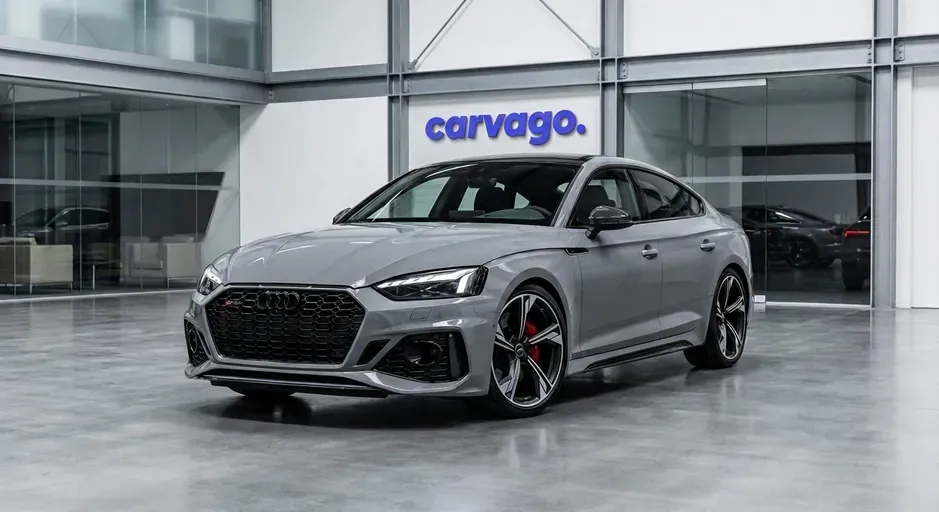
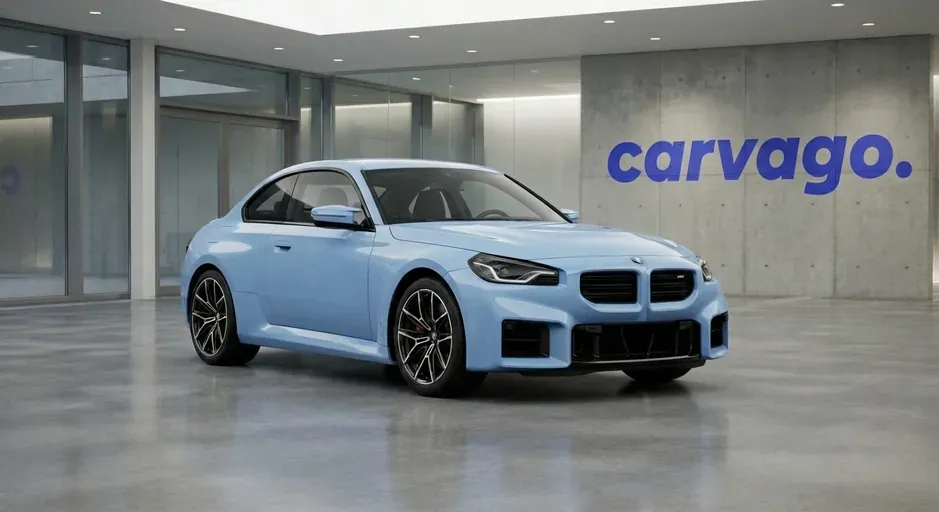
The Audi RS 5 represents a sophisticated combination of crushing performance, everyday usability, and the confidence of quattro all-wheel drive in an elegant body. Against it stands the BMW M2, a compact and purist coupe focused on the most intense driving experience possible, thanks to its classic rear-wheel-drive layout. In our comparison, we'll look at the key differences to help you decide which of these German sports cars is right for you.
It's clear from the first glance that the Audi RS 5 and BMW M2 are aimed at different audiences, and their exterior dimensions only confirm this. The Audi RS 5 is a significantly larger car in every respect, falling into the Gran Turismo category. In contrast, the BMW M2 stays true to the philosophy of a compact sports coupe that relies on agility and minimal exterior dimensions.
The most significant difference is in length. At 4723 mm, the Audi RS 5 Coupé is more than 14 centimetres longer than the BMW M2 (4580 mm). The Sportback variant increases this difference even further, outgrowing the M2 by more than 20 centimetres. In practice, this means the Audi has a more majestic presence on the road, and its longer wheelbase promises better stability at high speeds. The BMW, on the other hand, benefits from easier manoeuvrability in city traffic and simpler parking.
The width offers an interesting comparison. Although the Audi is larger overall, the BMW M2, at 1887 mm, is a noticeable 2 centimetres wider than the RS 5 (1866 mm). This dimension, combined with the shorter body, gives the M2 an extremely muscular and aggressive stance. The Audi RS 5, in contrast, is more elegantly shaped, and its proportions are more in line with a fast touring car than a track weapon. The choice, therefore, is between elegance and raw power expressed through design.
| Parameter | Audi RS 5 Coupé (F5) | Audi RS 5 Sportback (F5) | BMW M2 Coupé (G87) |
|---|---|---|---|
| Length (mm) | 4723 | 4783 | 4580 |
| Width (mm) | 1866 | 1866 | 1887 |
| Height (mm) | 1372 | 1399 | 1403 |
| Wheelbase (mm) | 2766 | 2826 | 2747 |
Although the size of the luggage compartment is not a primary criterion for sports cars like the Audi RS 5 and BMW M2, differences in practicality can be decisive for many buyers. This is where the different philosophies of the two brands are fully revealed. While the BMW M2 is an uncompromising driver-focused coupe, the Audi RS 5 also offers a more practical Sportback variant that will appeal to those who don't want to sacrifice everyday usability for performance.
The BMW M2, in both its F87 generation (produced until 2020) and the newer G87 (from 2023), offers a consistent boot volume of 390 litres. This figure is perfectly adequate for a two-door coupe and is easily sufficient for a weekend's shopping or luggage for two on holiday. Against it stands the Audi RS 5 Coupé (F5 generation after the 2020 facelift), which provides a slightly more generous 410 litres. While this small difference isn't dramatic, it does represent a few extra bags.
However, the real difference in practicality comes with the Audi RS 5 in the Sportback version. Thanks to its five-door liftback body, it offers an excellent 465 litres in its standard configuration. This is a value comparable to compact estate cars. Furthermore, folding down the rear seats creates a space of up to 1280 litres, making the RS 5 Sportback a surprisingly versatile car, capable of transporting even bulkier cargo. For families or sports-minded individuals who need to carry skis or other equipment, this variant is the clear choice.
| Parameter | Audi RS 5 Coupé | Audi RS 5 Sportback | BMW M2 Coupé |
|---|---|---|---|
| Basic volume (litres) | 410 l | 465 l | 390 l |
| Max. volume with seats folded (litres) | - | 1280 l | - |
If towing capacity is a key criterion for you when choosing a car, then the battle between the Audi RS 5 and the BMW M2 will be decided very quickly. Neither of these high-performance sports models is primarily designed for towing trailers, and the manufacturers do not officially state any values for a tow hitch. This is quite common in this category, as these are cars focused on maximum driving dynamics, low weight, and optimal aerodynamics, which would be compromised by the installation of a tow hitch.
While it is possible to count on a trailer with the standard versions of the Audi A5 or BMW 2 Series model lines, this option is not offered from the factory for the top RS and M variants. Their construction, including the placement of the exhaust system and cooling elements, simply does not account for a tow hitch. For buyers, this sends a clear message: if you need to transport anything behind your car, you will have to look for another type of vehicle, for example in the performance SUV category, such as the Audi SQ5 or BMW X3 M40i, which combine sporty performance with practicality.
| Model and Engine | Braked Trailer Weight (kg) | Unbraked Trailer Weight (kg) |
|---|---|---|
| Audi RS 5 (F5) | Not specified | Not specified |
| BMW M2 (F87/G87) | Not specified | Not specified |
The Audi RS 5 and BMW M2 approach high performance from completely different philosophical directions, which is most evident in their engines and drivetrains. While Audi relies on a sophisticated turbocharged V6 engine and quattro all-wheel drive for maximum traction in all conditions, BMW remains true to its tradition of inline-six engines and rear-wheel drive, which driving purists will especially appreciate. The choice between these two cars is therefore not just a question of performance, but also of preferred driving character – a lightning-fast and stable GT, or a raw and agile sports coupe.
The current generation (F5) of the Audi RS 5 offers a single, yet exceptionally potent, engine option. Under the bonnet is a twin-turbocharged 2.9 TFSI V6, developed in collaboration with Porsche. This power unit delivers 331 kW (450 hp) and, most notably, a massive 600 Nm of torque, available across a wide rev range. Power is sent to all four wheels via an eight-speed Tiptronic automatic transmission and the legendary quattro all-wheel-drive system. As a result, the RS 5 offers phenomenal acceleration from a standstill (0-100 km/h in approx. 3.9 seconds) and unwavering stability, even on wet or otherwise slippery surfaces. for the driver, this means easily accessible and safely delivered performance in almost any circumstance.
| Engine Type | Fuel | Power (kW) | Torque (Nm) | Transmission |
|---|---|---|---|---|
| 2.9 TFSI V6 bi-turbo | Petrol | 331 | 600 | 8-speed Tiptronic |
The BMW M2 is much more diverse in its engine offerings, reflecting its evolution. Older, but still very relevant on the used car market, the M2 Competition and M2 CS models (F87 generation) use the S55 engine – a twin-turbocharged 3.0-litre inline-six that also powered the larger M3 and M4 models. The new M2 generation (G87) comes with the even more modern S58 engine, again shared with the current M3/M4.
The key difference compared to the Audi is the rear-wheel-drive-only layout and, crucially, the availability of a six-speed manual transmission in all variants, which is a deciding factor for many enthusiasts. Although a fast eight-speed M Steptronic automatic is also available, the option of manual shifting makes the M2 a much more interactive machine. Power ranges from 302 kW (410 hp) in the Competition version to 338 kW (460 hp) in the new G87 generation.
| Model | Engine Type | Fuel | Power (kW) | Torque (Nm) | Transmission |
|---|---|---|---|---|---|
| M2 Competition (F87) | 3.0 R6 bi-turbo (S55) | Petrol | 302 | 550 | 6-speed manual / 7-speed M-DCT |
| M2 CS (F87) | 3.0 R6 bi-turbo (S55) | Petrol | 331 | 550 | 6-speed manual / 7-speed M-DCT |
| M2 (G87) | 3.0 R6 bi-turbo (S58) | Petrol | 338 | 550 | 6-speed manual / 8-speed M Steptronic |
Verdict for Different Types of Drivers:
Choosing the right engine is key to long-term satisfaction with your car. In the following lines, we will present the recommended engine options for the Audi RS 5 and BMW M2, selected based on their performance, real-world fuel consumption, reliability, and owner experiences. Although both cars offer breathtaking performance, their characters differ fundamentally – Audi bets on sophisticated power and all-wheel drive, while BMW delivers a purist driving experience with rear-wheel drive.
For the F5 generation, which is the most common on the used car market (from 2017 onwards), the only choice is also the best one. The 2.9 TFSI V6 twin-turbo engine, developed in collaboration with Porsche, is a masterpiece of modern engineering. It replaced the older naturally aspirated V8 and brought not only the same 331 kW (450 hp) of power but, more importantly, a massive 600 Nm of torque available across a wide rev range (1900–5000 rpm).
In practice, this translates to stunning flexibility and pull in any situation, whether cruising on the motorway or dynamically navigating corners. Thanks to the quattro all-wheel-drive system, power delivery to the road is flawless, and the car feels incredibly stable and confident even in adverse conditions. Real-world fuel consumption is around 10-11 litres per 100 km with a normal driving style, but can easily exceed 15 litres during spirited driving. The engine is generally considered reliable, but like any modern direct-injection unit, it can be prone to carbon build-up, especially with frequent short trips. It is therefore ideal for drivers who will regularly stretch the car's legs on longer journeys and treat it to high-quality fuel and regular servicing. It's a great choice for those looking for an extremely fast and capable GT for everyday use.
In the case of the BMW M2, we will focus on the F87 generation, specifically the Competition and CS versions produced from 2018. These received the "full-fat" S55 engine from the larger M3/M4, unlike the earlier M2 version with the N55 engine. This twin-turbocharged inline-six is a true icon, offering 302 kW (410 hp) in the Competition version and up to 331 kW (450 hp) in the limited-edition CS.
The S55 engine is known for its explosive power delivery at high revs and sharp throttle response, making it a true sports powerplant. Its character is rawer and more communicative than the engine in the RS 5. Thanks to its rear-wheel-drive-only layout and compact dimensions, the M2 Competition is an immensely fun and agile machine that demands more concentration from the driver but rewards with a pure driving experience. Real-world fuel consumption is in a similar range to the Audi, around 11 litres during calm driving. In terms of reliability, the S55 engine is proven, but it is crucial to adhere to oil change intervals and carefully warm up the engine before dynamic driving. It is the ideal choice for enthusiastic drivers who prioritise playfulness, precise handling, and a mechanical feel from the steering over absolute speed in all conditions.
For sports cars, the official fuel consumption figures are more of a theoretical exercise. The engine's real appetite is only revealed in actual operation and by the driving style of the owner, who typically doesn't buy such a car for economical driving. To get the most accurate picture, we compared data from real drivers, primarily from the German portal Spritmonitor.de, which collects consumption data from thousands of motorists. We focused on the generations relevant to the nearly-new used car market, namely the Audi RS 5 F5 generation (from 2017) and the BMW M2 Competition F87 generation (2018-2021).
Both cars use turbocharged six-cylinder engines, but with different concepts. Audi relies on a 2.9 TFSI V6, while BMW uses the S55 inline-three-litre. Despite similar performance, their real-world consumption differs slightly, reflecting not only the engine technology but also the overall tuning of the car – the RS 5 as a fast GT and the M2 as an uncompromising sports machine.
| Model and Engine | Average Real-World Consumption (l/100 km) |
|---|---|
| Audi RS 5 Coupé/Sportback 2.9 TFSI (450 hp) | 10.3 - 11.5 |
| BMW M2 Competition 3.0 (410 hp) | 10.5 - 12.6 |
As the data from owners shows, the Audi RS 5 is slightly more economical in the real world. The average consumption most often ranges between 10 and 11.5 litres per 100 km. Thanks to its quattro all-wheel drive and its character as more of a grand tourer, its consumption does not increase dramatically even during brisker driving over longer distances. On the contrary, at a calm motorway pace, it is possible to get close to figures below 10 l/100 km.
The BMW M2 Competition is a different story. Its inline-six engine demands an average of 10.5 to 12.6 litres, with the upper limit being nothing unusual during sporty driving. The car's character, with its rear-wheel drive and sharper tuning, simply tempts the driver to use its full potential, which is logically reflected in the consumption. Especially in city traffic or on country roads where the driver enjoys the chassis's agility, the engine's appetite grows more steeply than the Audi's.
In the end, neither of these cars is intended for penny-pinchers. However, if fuel consumption is at least a marginally important factor for you, the Audi RS 5 offers a slight advantage. Its ability to be a relatively frugal companion on long journeys makes it a more versatile car. The consumption of the BMW M2 Competition is a direct reflection of its puristic and playful character. Thus, fuel consumption will probably not be the deciding factor when choosing between these two icons, but it is good to know that their different philosophies are evident in this area as well.
When considering the purchase of a used Audi RS 5 or BMW M2, price plays a key role. Although both models fall into the category of high-performance premium cars, their price points on the used car market differ, reflecting their original focus and market position.
The Audi RS 5, whether in the Coupé or the five-door Sportback variant, generally occupies a higher price bracket. For models from 2020 to 2022, prices on the Czech market and in the surrounding area typically range from €60,000 to €78,000.
The price is primarily influenced by the year of manufacture, mileage, and level of equipment. Models with lower mileage and extensive optional equipment, such as a carbon-ceramic brake system or exclusive design packages, will naturally be at the upper end of this range. The Sportback variant is often slightly more expensive due to its greater practicality.
The BMW M2, especially in the sought-after Competition version, represents a more affordable path to a pure sports experience for many drivers. Used cars from 2020 to 2021 can be found on the market in a price range of approximately from €49,000 to €62,000.
Similar to the Audi, the price here also increases with lower mileage and a more attractive specification. The rarer and more collectible M2 CS version sells for significantly higher amounts, often exceeding the €82,000 mark, thus forming a separate category. However, standard M2 Competition models remain a more affordable alternative to the RS 5.
| Model | Approximate Price Range (2020-2022) | Key Factors Affecting Price |
|---|---|---|
| Audi RS 5 (Coupé/Sportback) | €60,000 - €78,000 | Year of manufacture, mileage, optional equipment, body style |
| BMW M2 Competition | €49,000 - €62,000 | Year of manufacture, mileage, condition, specific version (CS is more expensive) |
In conclusion, the Audi RS 5 maintains its position as a more expensive and complex car even when used, while the BMW M2 Competition offers a more focused sports car experience for a noticeably lower purchase price. The choice will therefore depend on the buyer's priorities – whether they prefer the everyday usability and luxury of the Audi, or the rawer and more affordable driving experience of the BMW.
When evaluating safety, at first glance, the Audi RS 5 seems to have the upper hand. Its rating is derived from the standard Audi A5 model, which received a full five-star rating in Euro NCAP tests. However, there is crucial context: this rating dates back to 2015, when testing protocols were significantly less stringent than they are today. Although results like 89% for adult occupant protection and 87% for child occupant protection were top-tier at the time, the car would most likely not achieve five stars today, mainly due to its older assistance systems.
On the other hand, there is the BMW M2. This model wasn't tested directly either, but its rating is based on the BMW 2 Series Coupé, which underwent Euro NCAP crash tests in 2022. The result was four stars. While this may seem like a worse result, it's important to realize that the tests were conducted under much stricter and more modern regulations. These place a greater emphasis on active safety assistants and the protection of vulnerable road users. The lower scores in the safety assist (64%) and vulnerable road user protection (67%) categories indicate weaker areas, but overall occupant protection remains at a high level.
As a result, we have a showdown between an older five-star rating and a newer four-star one. Although the Audi nominally has one more star, the newer and stricter test of the BMW provides a more relevant picture of its active and passive safety levels by current standards. For a buyer who emphasizes the latest assistance technologies, the BMW M2 might paradoxically represent the safer choice, as its rating better reflects modern safety demands.
| Parameter | Audi RS 5 | BMW M2 |
|---|---|---|
| Year of testing (base model) | 2015 (Audi A4) | 2022 (BMW 2 Series Coupé) |
| Adult Occupant Protection | 89 % | 82 % |
| Child Occupant Protection | 87 % | 81 % |
| Vulnerable Road User Protection | 75 % | 67 % |
| Safety Assist | 75 % | 64 % |
Both models offer more than just basic equipment, and each has its own unique approach to added value.
The Audi RS 5 focuses on combining breathtaking performance with advanced technologies and comfort for daily driving. It is a car that can be both a civilized companion and an uncompromising sports machine.
The BMW M2 is the essence of what fans of the brand love: compact dimensions, rear-wheel drive, and an engine with immense character. It is a car focused primarily on the driver and their experience behind the wheel.
Based on our own CarAudit inspections, failure rate statistics from partners, and feedback from owners, we have compiled an overview of the most common problems that used car buyers should watch out for. Neither of these sports cars is flawless, but the nature of their problems differs significantly.
The Audi RS 5 is generally considered a reliable car, but its complex technology requires careful and regular maintenance. Most reported problems are related to its high-performance character.
Summary for Audi RS 5: The problems are generally minor and often related to operational wear and tear on a high-performance car. The key to trouble-free ownership is consistent and timely maintenance, especially concerning the engine and brakes.
The BMW M2 is mechanically simpler than the RS 5, but it has several well-known weak spots to focus on when buying. Reliability also differs between the original version with the N55 engine and the later M2 Competition with the S55 engine.
Summary for the BMW M2: The M2 has several well-documented and community-addressed weaknesses, especially with the N55 engine (oil leaks, charge pipe). However, despite these known issues, it is considered a robust and reliable sports car with proper care. For the Competition version, it is crucial to check the car's history due to the potential risk with the crank hub.
When buying a used car, a thorough inspection is key, and this is doubly true for high-performance machines. Here are a few specific points to focus on with these two models, as even a minor defect can easily turn into an extremely expensive repair.
The Audi RS 5 is equipped with quattro all-wheel drive, which provides excellent traction and stability in all conditions, making it a great year-round car. In contrast, the BMW M2 relies on classic rear-wheel drive, which offers a rawer and more engaging experience for the driver, especially on dry roads. The choice, therefore, depends on the preference between the security of all-wheel drive and the fun of rear-wheel drive.
For everyday use, the Audi RS 5 is generally more practical, especially in the Sportback variant, which offers five doors and a larger luggage compartment. The BMW M2 is a strict two-door coupe with a smaller interior and trunk, which limits its practicality. The RS 5 thus better combines high performance with usability for regular journeys and family needs.
Both models have six-cylinder engines, but with different parameters. The Audi RS 5 uses a 2.9-liter V6 with two turbochargers, producing around 444 horsepower. The BMW M2 is powered by a 3.0-liter inline-six M TwinPower Turbo engine, which offers slightly more power, at approximately 453 horsepower.
Although both cars are sports coupes, the BMW M2 paradoxically offers slightly more interior volume. Front passengers have more head, shoulder, and legroom, and even the luggage compartment is a bit larger. The Audi RS 5, on the other hand, has an advantage in rear-seat headroom and legroom.
The Audi RS 5 has a slight advantage in fuel consumption and range. Its combined consumption is around 9.4 l/100 km. The BMW M2 is a bit thirstier, with an average consumption of about 9.7 l/100 km.
Sources: ADAC, mdcr.cz, svetmotoru.cz, autoservis.cz, autoweb.cz, autowork.cz
This article was prepared using artificial intelligence tools. The section guarantor is Petr Dušek.
Audi R8 or Maserati MC20? Comparing performance, design, and handling. Our detailed test helps you choose the perfect supercar.
Apr 13, 2026
BMW M2 vs Mercedes-AMG C 63: A detailed comparison of performance, driving, and price. Find out which sports coupé is the right choice for you in our test.
Apr 14, 2026
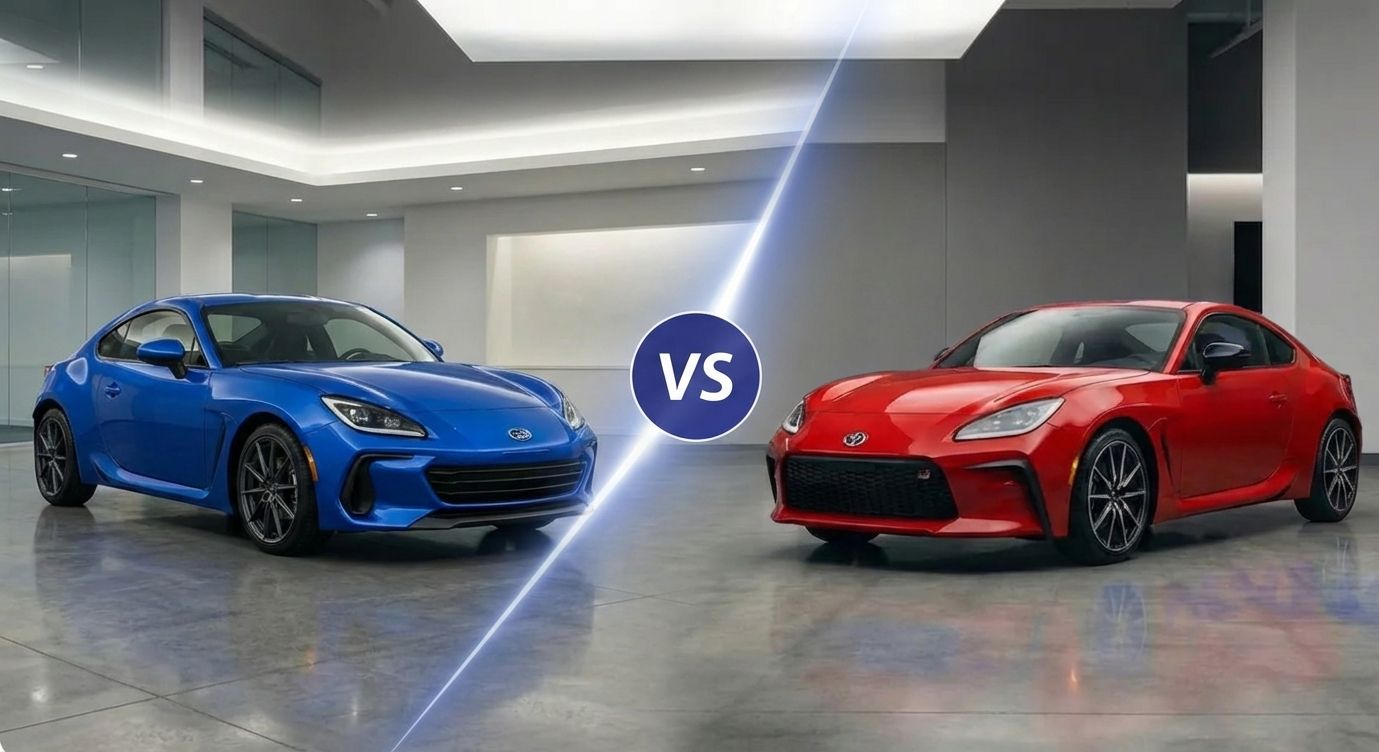
Subaru BRZ vs. Toyota GR86. Which of these sports twins is better? Our detailed comparison will help you choose the right coupe for you.
Apr 13, 2026