Car battle
Volkswagen Golf vs. Ford Focus: Complete comparison 2026
Volkswagen Golf vs. Ford Focus: a detailed comparison of the engine, equipment, and reliability. Find out which of these hatchbacks is the best choice for you.
Apr 13, 2026
Articles
Car battle
Detailed comparison of Audi R8 vs Lamborghini Huracán. We reveal the real differences, performance, and driving characteristics of these V10 supercars. Which one to choose?
April 14, 2026
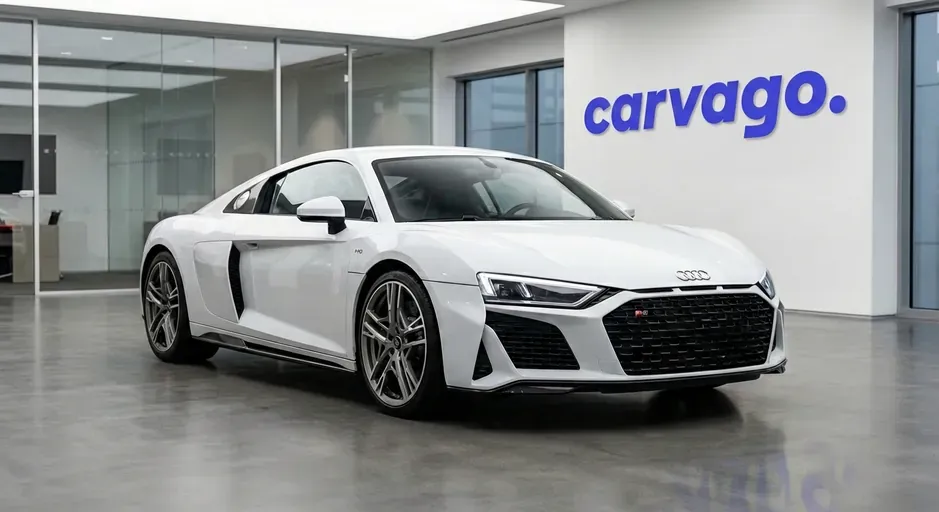
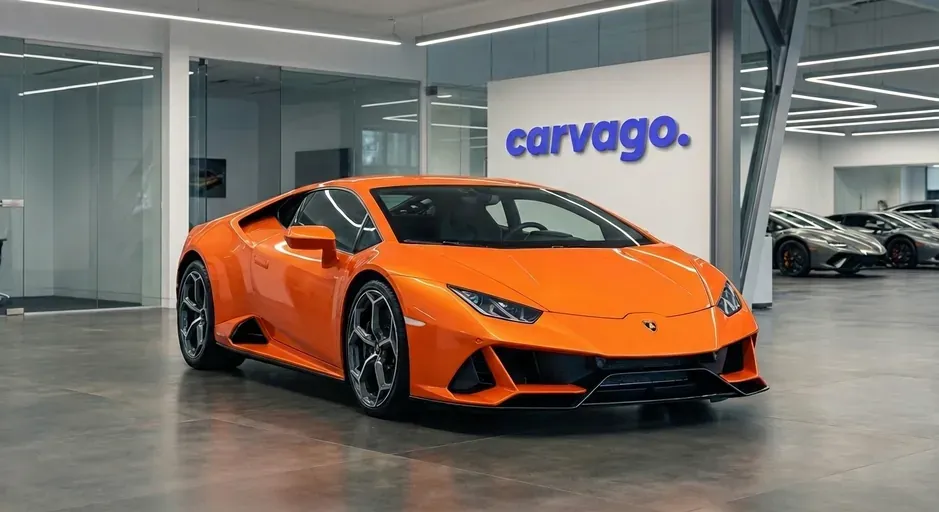
The Audi R8 is a masterpiece of German engineering that perfectly combines precision craftsmanship, surprising everyday usability, and the raw power of the legendary naturally aspirated V10. Its Italian blood relative, the Lamborghini Huracán (depending on the specific generation and version also referred to as LP 610-4, EVO, or Performante), shares the same technical foundation but dresses it in an uncompromisingly aggressive design full of purebred Italian temperament. Let's take a detailed look at which of these two fascinating and closely related supercars ultimately emerges from this comparison as the better choice for your driving pleasure.
Although the Audi R8 and Lamborghini Huracán share the same technical foundation in the form of a group platform, their exterior dimensions and overall proportions clearly reflect the different approach of both brands. While the Audi R8 is designed with slightly better everyday usability in mind, its Italian sibling bets on extreme and uncompromising shapes that make it a typical low-slung silhouette pressed to the road.
Looking at the numbers, the Lamborghini is noticeably longer. Standard versions from recent years measure over 4.5 meters in length, which is roughly 90 mm more than the German model. This difference gives the Italian supercar a more dramatic and elongated profile. The Audi R8, on the other hand, scores with a 30 mm longer wheelbase (2650 mm compared to 2620 mm). This slightly longer wheelbase aids better directional stability at high highway speeds and adds a bit of valuable space in the interior, which you will appreciate especially on longer journeys.
A significant difference can be found in the height of both cars. The Lamborghini Huracán is extremely low at 1165 mm (in the case of the standard Coupé version). The low center of gravity guarantees fantastic handling and top-tier aerodynamics on the race track, but in practice, it means slightly more challenging entry and poorer visibility from the car. The Audi R8 is approximately 70 mm taller, which exactly matches its reputation as a supercar that can be lived with every day without major compromises. The width of both models is similar, around 1.94 meters, which means stunning stability in corners but also requires increased caution when parking or maneuvering in the tight spaces of underground garages.
| Parameter | Audi R8 Cabriolet | Lamborghini Huracán Cabriolet | Audi R8 Coupé | Lamborghini Huracán Coupé |
|---|---|---|---|---|
| Width (mm) | 1940 | 1924 - 1933 | 1940 - 1964 | 1924 - 1956 |
| Length (mm) | 4426 - 4429 | 4459 - 4520 | 4426 - 4496 | 4459 - 4567 |
| Height (mm) | 1242 - 1244 | 1180 | 1236 - 1240 | 1165 - 1248 |
| Wheelbase (mm) | 2650 | 2620 | 2650 | 2620 |
When choosing a mid-engine supercar like the Audi R8 (4S generation) and Lamborghini Huracán (1st generation) from 2015 to 2024, luggage capacity is not among the most common arguments for purchase; however, for real everyday usability, it plays a crucial role. Since both cars share a common technical platform, their primary luggage compartments are located at the front under the hood, in the so-called "frunk." For buyers who plan to use their cars not only on the track but also for weekend trips or longer journeys for two, even a seemingly negligible difference in liters and overall interior practicality can be a very important factor.
The basic front trunk of the Audi R8 offers an identical volume of 112 liters for both the Coupé and Cabriolet (Spyder) body styles. Although this may seem small at first glance, the shape of the trunk is deep enough to hold two smaller travel bags. A major advantage of the Coupé version is the additional storage space directly behind the front seats, which adds a very valuable 226 liters of practical space for storing jackets or soft luggage. For the Lamborghini Huracán, the basic front trunk volume is around 100 liters, with some rear-wheel-drive versions (Evo RWD) offering a slightly different shape with a capacity of up to 150 liters. However, it is important to mention that in extreme track variants like the Huracán STO, the front trunk is radically reduced to just 38 liters due to specific aerodynamics.
In practice, this means that while you won't fit a set of golf clubs or a large family grocery shop into either car, both models will serve without major problems for packing for a long weekend. As these are strictly two-seater supercars, you cannot, of course, count on increasing space by folding the rear seats, so the maximum stated luggage capacity in the tables is identical to the base. In the final comparison, however, the Audi R8 emerges as a slightly more practical and everyday-usable car, especially in the Coupé body style thanks to the mentioned added space behind the seats, while the uncompromising Lamborghini Huracán requires more compromises when packing.
| Parameter | Audi R8 Coupé | Lamborghini Huracán Coupé | Audi R8 Cabriolet | Lamborghini Huracán Cabriolet |
|---|---|---|---|---|
| Base volume (liters) | 112 | 100 | 112 | 100 |
| Maximum volume after folding seats (liters) | 112 | 100 | 112 | 100 |
When comparing supercars such as the Audi R8 (4S generation) and Lamborghini Huracán (1st generation), which are sought after on the secondary market as approximately four-year-old models, it is clear from the start that overall practicality had to completely give way to maximum performance, driving characteristics, and sophisticated aerodynamics. If you were looking for specific trailer weight figures for these cars, you would look in vain. Technical specifications show that neither of these exclusive mid-engine models is factory-homologated for towing a trailer. There is no standard or maximum weight for a braked or unbraked trailer, as the installation of a tow bar is technically and legally impossible for them. This fact applies without exception to all available variants, from the basic rear-wheel-drive models to the uncompromising, track-focused versions like the Audi R8 V10 performance or Lamborghini Huracán STO.
In practice, this means you can forget about attaching a trailer with track tires or gaining space for a few extra suitcases. You are limited to a very modest front luggage compartment, which is sufficient at most for a weekend shop or two carry-on bags, certainly not for a longer holiday with bulky equipment. In conclusion, it can be stated that the trailer weight parameter plays no role at all when choosing between the Audi R8 and Lamborghini Huracán. If you require not only extreme speed from your car but also towing capability and a higher degree of everyday usability, you will have to shift your focus towards the SUV models of both manufacturers. Since there are no permitted towing values for these models, no data is included in the table below.
The heart of both these supercars is one of the last naturally aspirated engines on the market – the legendary 5.2-liter V10. In the context of the late-model used car market (cars roughly 4 years old, i.e., model years 2020–2023), this represents a huge draw for buyers, as engines without turbocharging or hybrid assistance offer immediate throttle response, linear power delivery, and an unmistakable sound. Although the Audi R8 and Lamborghini Huracán share the same hardware base, the Italian manufacturer kept more aggressive software mapping and sharper exhaust system tuning for itself. While the Audi R8 offers a power spectrum from 397 kW to 456 kW and focuses on better everyday usability, the Lamborghini Huracán in its latest iterations (Evo, STO, Tecnica) pushes the boundaries up to 470 kW and places greater emphasis on a raw racing experience. Both cars exclusively use seven-speed dual-clutch transmissions and offer a choice between rear-wheel or all-wheel drive.
Within the facelifted 4S generation, which is most relevant from the perspective of four-year-old used cars, the Audi R8 definitively said goodbye to the earlier V8 and relies purely on the 5.2 FSI V10 engine. The standard entry point into the world of the Audi R8 in this era became the V10 RWD model (later replaced by the more powerful performance RWD version) with rear-wheel drive, which appeals to purists looking for more playful driving characteristics. For lovers of maximum traction and acceleration, the top-of-the-line V10 performance quattro version with 456 kW (620 hp) is intended. Shifting is handled by a lightning-fast seven-speed S tronic dual-clutch transmission. Older variants with lower power or original V8s from the first generation (Type 42) no longer figure in the late-model used car market. An absolute rarity from the end of production (2023) is the limited edition V10 GT RWD with power pushed to the maximum in combination with rear-axle drive.
| Engine type | Fuel | Power (kW) | Torque (Nm) | Transmission |
|---|---|---|---|---|
| 5.2 FSI V10 RWD | Petrol | 397 | 540 | 7-speed S tronic |
| 5.2 FSI V10 performance RWD | Petrol | 419 | 550 | 7-speed S tronic |
| 5.2 FSI V10 quattro | Petrol | 419 | 550 | 7-speed S tronic |
| 5.2 FSI V10 performance quattro | Petrol | 456 | 580 | 7-speed S tronic |
| 5.2 FSI V10 GT RWD | Petrol | 456 | 565 | 7-speed S tronic |
Lamborghini has squeezed the absolute maximum out of the 5.2 V10 block for its more modern late-model versions (introduced since 2019 as the Evo model and subsequently Tecnica or STO). The Lamborghini Huracán uses its own tuning of the dual-clutch transmission called LDF (Lamborghini Doppia Frizione). The base is the Evo RWD model with 449 kW (610 hp). The full-fat Evo model with all-wheel drive then brings a massive 470 kW (640 hp) and 600 Nm of torque. A very specific torque tuning (565 Nm) was given to the purist and track-focused STO and Tecnica versions, which send the full 470 kW exclusively to the rear wheels. An interesting feature from the end of production is the Sterrato model with 449 kW, modified and raised for driving off paved roads. Early engines like the LP610-4 or LP580-2 practically no longer occur on the four-year-old car market, as they were replaced by the Evo family.
| Engine type | Fuel | Power (kW) | Torque (Nm) | Transmission |
|---|---|---|---|---|
| 5.2 V10 (Evo RWD) | Petrol | 449 | 560 | 7-speed LDF |
| 5.2 V10 (Sterrato) | Petrol | 449 | 560 | 7-speed LDF |
| 5.2 V10 (Evo AWD) | Petrol | 470 | 600 | 7-speed LDF |
| 5.2 V10 (Tecnica / STO) | Petrol | 470 | 565 | 7-speed LDF |
Recommendation for buyers:
From a powertrain perspective, both cars offer a fascinating and, for today's times, unique experience of a high-revving naturally aspirated engine. If you plan to use the car for more frequent trips, covering longer distances, or are looking for a more "civilized" supercar, the Audi R8 (especially in the quattro version) is the better choice thanks to its more compliant tuning and smoother S tronic gearbox operation. Conversely, drivers whose priorities are absolute drama, occasional track days, and the unfiltered aggressiveness of Italian engineering should reach for the Lamborghini Huracán – ideally in the Evo RWD version for purist fun or the STO/Tecnica for uncompromising track performance.
Choosing the right naturally aspirated V10 is key to long-term satisfaction with these closely related supercars. Our recommendations are based on real owners' experiences, power balance, mechanical reliability, and everyday usability. Although both cars share the same technical foundation in the form of the phenomenal 5.2 V10 engine (which revs up to 8,700 rpm and whose pistons travel an extreme 26.9 meters per second at the rev limiter), each has its own completely specific character. We have focused on models that perfectly fit the market for approximately four-year-old used cars. As the table below shows, production of both recommended engines has already definitively ended, and they are no longer offered as new cars. Both models are thus becoming highly valued vehicles on the used market, representing the very pinnacle of the vanishing era of large-displacement naturally aspirated engines.
| Model | Recommended engine | Power | Torque | Production years (per database) |
|---|---|---|---|---|
| Audi R8 | 5.2 FSI V10 performance quattro | 456 kW (620 hp) | 580 Nm | 2020 – 2023 |
| Lamborghini Huracán | 5.2 V10 Evo (AWD) | 470 kW (640 hp) | 600 Nm | 2019 – 2024 |
This engine represents the absolute pinnacle of daily usability in the supercar world and is the safest choice on the nearly-new used market. Although the rear-wheel-drive version is more playful, the performance quattro variant brings an all-wheel-drive system that safely transfers the monstrous power to the road under any conditions.
For its Italian sibling, the best choice on the used market is the all-wheel-drive Huracán Evo, which inherited the uprated engine from the special track-focused Performante edition and combined it with rear-axle steering and the advanced LDVI (Lamborghini Dinamica Veicolo Integrata) chassis brain. This now-discontinued model is the absolute ideal, combining extreme aggressiveness with modern technology.
When choosing a supercar, fuel consumption is usually not the most important parameter, but the difference between paper values and real-world operation can be surprising even in this exclusive segment. Official manufacturer data often relies on optimized laboratory cycles, which cannot fully simulate spirited and dynamic driving for large naturally aspirated engines. To get the most accurate picture of daily use, we compared manufacturer values with real user data from the Spritmonitor.de portal. These clearly show that while it is exceptionally possible to approach the catalog values during highly defensive driving, the actual long-term average for four-year-old used cars is usually significantly higher.
Source: news_site
| Model and Engine | Average Consumption (l/100 km) |
|---|---|
| Audi R8 Coupé 5.2 FSI V10 | 13.1 |
| Audi R8 Coupé 5.2 FSI V10 performance | 12.9 |
| Audi R8 Spyder 5.2 FSI V10 performance | 13.8 |
| Lamborghini Huracán Evo | 13.8 |
| Lamborghini Huracán STO | 13.9 |
| Lamborghini Huracán Tecnica | 14.5 |
Looking at the real and catalog data, it is clear that both cars share a technically identical 5.2-liter naturally aspirated V10 engine, and therefore the average consumption moves within very similar boundaries. A surprising finding, however, may be the fact that the more powerful version of the Audi R8, labeled performance, can drive slightly more economically (12.9 l/100 km) in normal traffic than the standard model. This is usually caused by more efficient mapping of the engine and transmission control units. Conversely, for both manufacturers, the relentless laws of physics apply – heavier open versions (Spyder) and highly track-focused variants equipped with significant aerodynamic downforce (Huracán STO or Tecnica) show noticeably higher fuel consumption. In this segment, you will naturally encounter exclusively a full-blooded petrol engine; a more economical diesel alternative or a small turbocharged engine simply does not exist, and there is no skimping here at the expense of the driving experience.
For the typical owner of these cars, who gets behind the wheel more on weekends than for a daily commute to the office, consumption does not play a primary role. If you get stuck in heavy city traffic with the car, expect the value on the trip computer to easily exceed the twenty-liter mark. On the other hand, both Audi and Lamborghini can surprise during a smooth highway cruise. Thanks to advanced cylinder deactivation technology (Cylinder on Demand), consumption can drop to an unexpectedly bearable 11 to 12 liters when observing speed limits. However, anyone who takes the car to a racing circuit or eagerly heads into Alpine passes must accept that the relatively large tank will be empty after driving just two hundred kilometers.
In conclusion, it can be clearly said that fuel consumption should not be the main argument for purchase when deciding between the Audi R8 and Lamborghini Huracán. Both cars are powered by an almost identical mechanical heart, and real fuel costs will depend mainly on the driving style and the weight of the specific driver's right foot. In this elite category of sports cars, pure emotions, raw power, and the unmistakable sound of a naturally aspirated engine take precedence over catalog deciliters.
Although both cars share the same architecture and the legendary 5.2 V10 naturally aspirated engine, their price paths diverge dramatically on the used car market. If we focus on cars approximately four years old (model years 2021 to 2022), the difference in badge engineering, perceived prestige, and the rate of residual value is fully evident.
Audi R8: A More Affordable Entry into the World of Supercars
On the used market, the Audi R8 represents one of the best value purchases in the supercar category. Owners get Lamborghini technology wrapped in a more civil coat, for which the market rewards them with much more favorable purchase prices.
Lamborghini Huracán: A Premium Status That Doesn't Age
The Raging Bull emblem and aggressive Italian design act as a reliable shield against loss of value. The Lamborghini Huracán is the personification of a classic exotic car, which is reflected in significantly higher prices.
| Model | Estimated Price Range | Residual Value Characteristics |
|---|---|---|
| Audi R8 (Type 4S facelift) | €130,000 – €183,000 | More significant initial drop, excellent price/performance ratio. |
| Lamborghini Huracán (EVO/STO) | €244,000 – €366,000+ | Extreme price stability, high premium for brand exclusivity. |
Note: The prices above represent a realistic average of the European used car market and may vary slightly depending on specific equipment (e.g., carbon-ceramic brakes, exclusive paintwork), verifiable service history, and total mileage.
While it is common in similar comparisons to state that the assessed vehicles received a full five-star Euro NCAP rating, and to emphasize the importance of context and the year of testing, a different reality applies to the supercar category. For standard passenger cars, Euro NCAP protocols constantly evolve and become stricter over the years – now including, for example, more demanding frontal crash simulations, advanced cyclist detection, or solutions for emergency scenarios at intersections. Percentage results from older years are thus not directly comparable with today's, as modern criteria place much greater emphasis on active accident prevention.
In the case of the Audi R8 (specifically the 4S generation after the facelift, which is most relevant for the four-year-old used car market), we encounter a peculiarity of the exclusive car market. Due to its high purchase price and low sales volumes, this vehicle has never been officially crash-tested by the Euro NCAP organization. Although the Audi R8 utilizes the exceptionally strong Audi Space Frame construction, combining aluminum and carbon fiber, precise percentage data on occupant protection does not exist. From the perspective of modern technology, the Audi R8 focuses exclusively on a pure driving experience, which means that advanced active safety systems (ADAS) such as autonomous emergency braking (AEB) or active lane keeping are missing from the equipment. You must therefore rely on the top-tier quattro all-wheel drive, powerful brakes, and your own driving skills.
The exact same situation prevails with the Lamborghini Huracán. This Italian thoroughbred shares its chassis platform and a large part of its technology with the Audi R8 and has also never undergone any official Euro NCAP assessment. Despite the absence of tests, basic passive safety is guaranteed by an exceptionally rigid carbon-aluminum monocoque and a set of six airbags. However, even more than Audi, Lamborghini intentionally minimizes electronic intervention in the driving. Assistance systems for everyday safe operation play a completely secondary role here; the priority is sophisticated aerodynamics, powerful carbon-ceramic brakes, and sophisticated traction control for driving at the limit.
In conclusion, it can be said that neither of the cars offers a modern and comprehensive active safety package by today's standards. The Audi R8 may feel slightly more user-friendly in daily use due to better visibility and a slightly more frequent presence of "civilian" features (such as front and rear parking sensors or a reversing camera), but fundamentally, both cars are completely comparable in the area of safety. They share a common technical foundation, and neither will provide you with the electronic safety nets you are used to from common modern cars. The safety of both supercars lies primarily in their rigid construction and the maximum attention of the driver.
| Parameter | Audi R8 | Lamborghini Huracán |
|---|---|---|
| Testing year | - | - |
| Adult occupant protection | - | - |
| Child occupant protection | - | - |
| Vulnerable road user protection | - | - |
| Safety assist systems | - | - |
In addition to the standard equipment, each model offers several unique features that may be decisive for the customer, and even though both cars share the same cornerstone in the form of a naturally aspirated V10 engine, each has its own distinctive approach to added value and the overall driving experience.
Pros:
Cons:
Pros:
Cons:
Based on our own CarAudit inspections, long-term user experiences, and service reports, we have compiled an overview of the most common problems that buyers of used supercars should watch out for. For both models, we focus primarily on cars approximately 4 years old (i.e., model years around 2020 to 2022), which currently make the most sense on the used market. Although the Audi R8 and Lamborghini Huracán share the same platform and V10 engine, they exhibit slightly different service specifics in the real world.
Although the 5.2 V10 FSI engine is mechanically very robust, carbon buildup on the intake valves occasionally occurs in cars used mainly for short trips and in city traffic. Audi significantly reduced this issue in the 4S generation by adding dual injection (a combination of direct and indirect), but it can still occur at higher mileages. Typical symptoms include a rougher idle and a slight drop in power. A natural characteristic of this high-revving unit is also higher oil consumption – it's not a fault, but it requires regular checking and topping up.
The seven-speed dual-clutch S tronic transmission is generally very well-dimensioned and handles high power outputs. Problems arise if the previous owner neglected the prescribed transmission oil changes. In such cases, unpleasant jolts during shifting or noticeable hesitation when pulling away may occur. Rare faults in the mechatronics unit have been reported.
The biggest bogeyman for used Audi R8s is the adaptive magnetorheological dampers (MagneRide). Due to wear, they can leak fluid, and repair or replacement is extremely expensive. When an Independent Technical Inspection of the car is carried out, a careful inspection of the carbon-ceramic brakes is also absolutely essential. If the discs are chipped or otherwise mechanically damaged (for example, by flying stones), the price for new parts can climb into the hundreds of thousands of crowns.
Inside the car, owners most frequently report issues with the digital instrument cluster (Virtual Cockpit). The screen can occasionally freeze, fail to load maps, or experience lag in refreshing the gauges. In most cases, this problem is successfully resolved by installing the latest software update at an authorized service center.
Summary for the Audi R8: The Audi R8 is an exceptionally reliable car by supercar standards, one that can be driven daily without worry. However, a documented service history and maximum caution when inspecting expensive chassis components are essential.
The naturally aspirated V10 is tuned more aggressively in the Lamborghini, but it shares the same mechanical robustness as the Audi. A specific and relatively expensive issue with the Lamborghini Huracán is faulty fuel level sensors. The car has two sensors in the tank, and if the lower one fails, the entire fuel tank must be removed for the repair. Furthermore, some units may display error messages from the camshaft position sensor, which manifests as very rough engine operation and the check engine light coming on while driving.
The seven-speed LDF (Lamborghini Doppia Frizione) gearbox works brilliantly and briskly while driving. However, the risk of wear increases rapidly in cars where owners have excessively used the Launch Control feature. Extremely stressed clutches in such cars may soon require premature and very expensive replacement.
An absolutely key point when buying a used Lamborghini Huracán is the front axle lift system (Nose Lift). In used cars, ride height sensor failures or hydraulic leaks often occur here. This manifests as the front of the car unexpectedly dropping back down after being raised, which can lead to bumper damage. Just like with the Audi R8, it is necessary to watch out for leaking shock absorbers and wear on the ceramic brakes, which can disappear quickly with rough handling. A careful physical inspection of the used car, including detailed chassis diagnostics, is therefore an absolute necessity for this vehicle.
The infotainment system in the Lamborghini Huracán can be troublesome due to freezing or slow responses. Another minor but unexpectedly common fault in roughly four-year-old cars is a brittle and cracking cable for the emergency fuel tank release. If it breaks, you could experience some very unpleasant moments at the gas station.
Summary for the Lamborghini Huracán: The Lamborghini Huracán has taken a huge step forward in reliability compared to older Italian supercars. Although it is an unexpectedly robust car, any neglect of expensive faults (axle lift hydraulics, worn clutches from "Launch Controls") represents a huge financial risk.
When buying a used car, a thorough inspection is key, but for supercars with V10 engines, this is doubly true. Here are some specific points to focus on for these two related models.
Yes, both cars use the iconic naturally aspirated 5.2-liter V10 engine and a dual-clutch seven-speed gearbox. Although they share a common technical basis, the Italian version has the engine tuned for a more aggressive sound and slightly higher maximum power. Its German sibling, on the other hand, focuses on more refined and smoother power delivery.
The German model is generally considered one of the most comfortable supercars on the market, thanks to a more comfortable suspension setup and better visibility from the cabin. The Italian competitor, conversely, has stiffer suspension, a noisier cabin, and overall more cramped space, making it more suitable for weekend drives or track use.
Although the cars share a large number of mechanical parts, service procedures and original parts with the raging bull emblem are typically tens of percent more expensive. Audi also benefits from a significantly wider service network and lower average hourly rates at authorized service centers. However, with both cars, you must expect very high costs that fully correspond to the premium supercar category.
The Audi cabin is strictly focused on ergonomics and clean design with a dominant instrument cluster in front of the driver, while a central infotainment display is completely absent. Lamborghini, on the other hand, bets on a dramatic and extravagant style inspired by fighter jets, full of sharp edges, hexagonal motifs, and controls on the center tunnel.
Lamborghini holds its purchase price much better in the long term, thanks to the brand's immense exclusivity and the lower total number of units produced. While the Audi is significantly more affordable as a used car, it experiences a faster and steeper decline in value from an investment perspective.
Sources: ADAC, svetmotoru.cz, aktualne.cz, motorvize.cz, chytreauto.cz, autoguru.cz
This article was prepared using artificial intelligence tools. The section guarantor is Petr Dušek.
Volkswagen Golf vs. Ford Focus: a detailed comparison of the engine, equipment, and reliability. Find out which of these hatchbacks is the best choice for you.
Apr 13, 2026
Audi R8 or Maserati MC20? Comparing performance, design, and handling. Our detailed test helps you choose the perfect supercar.
Apr 13, 2026
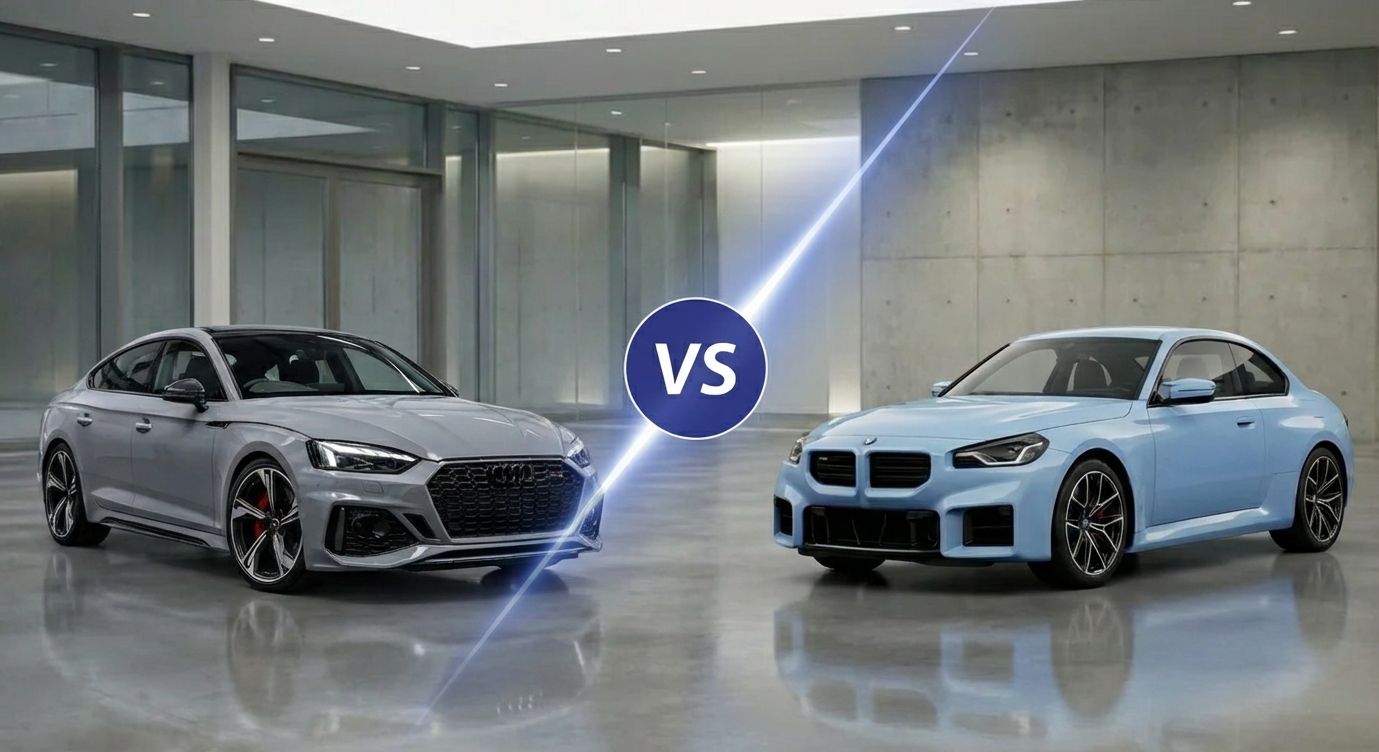
Audi RS 5 vs. BMW M2. A detailed comparison of performance, driving dynamics, and practicality. Find out which sports coupe is the right choice for you.
Apr 14, 2026