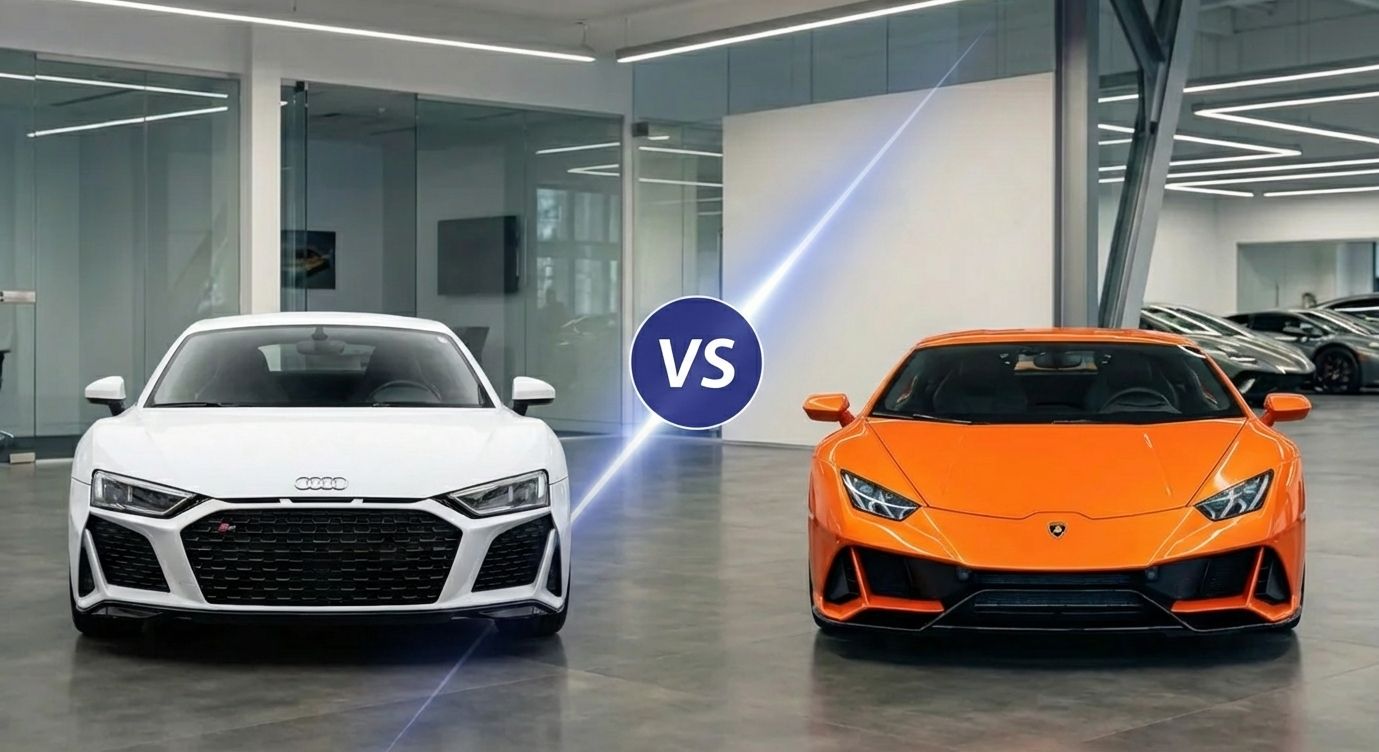
Audi R8 vs. Lamborghini Huracán: Complete comparison 2026
Detailed comparison of Audi R8 vs Lamborghini Huracán. We reveal the real differences, performance, and driving characteristics of these V10 supercars. Which one to choose?
Apr 14, 2026
Articles
Car battle
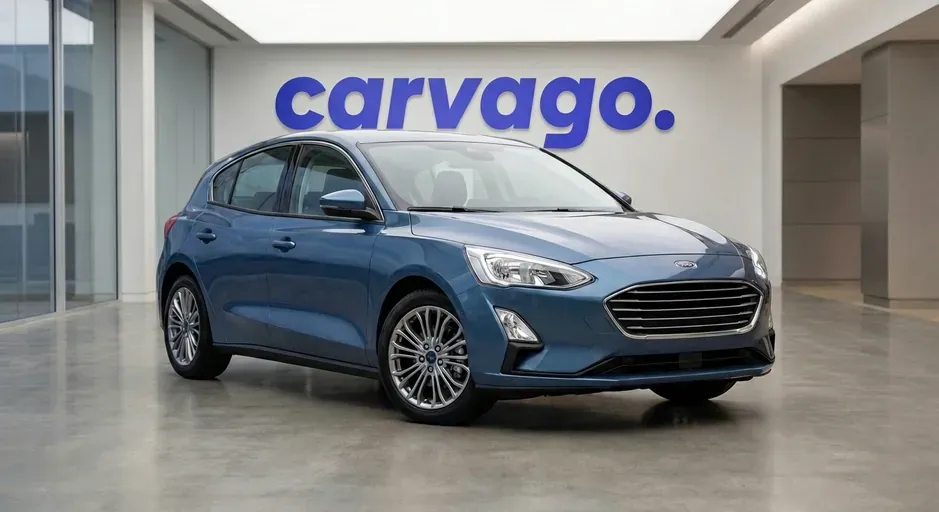
Volkswagen Golf vs. Ford Focus: a detailed comparison of the engine, equipment, and reliability. Find out which of these hatchbacks is the best choice for you.
April 13, 2026


Volkswagen Golf, the long-standing benchmark in the compact car class, is renowned for its quality, balanced driving characteristics, and wide range of versions. Against it stands the Ford Focus, which traditionally attracts with its excellent chassis, driving fun, and dynamic design. Let's see how these two icons stack up against each other in key areas.
Although the Volkswagen Golf and Ford Focus belong to the same compact car class, their latest generations approach the question of size differently. At first glance, it is clear that the Ford Focus is noticeably larger in all key exterior dimensions than its German rival. This is evident not only on paper but also in daily use – from maneuvering in the city to space for passengers.
The eighth-generation Volkswagen Golf maintains its traditionally moderate dimensions, making it a more agile companion for narrow city streets and tight parking spaces. In contrast, the fourth-generation Ford Focus has opted for growth, giving it an advantage in interior space. The longer wheelbase and greater width have a positive effect, especially on the comfort for rear-seat passengers and the overall feeling of airiness in the cabin.
The differences apply to both the hatchback and the more practical estate body styles. While the Golf is more compact and easier to handle, the Focus offers dimensions approaching those of cars in the next class up. The choice thus depends on the driver's priorities—whether they prefer agility and easy parking, or maximum space for passengers and luggage.
| Parameter | Volkswagen Golf Hatchback (Gen. VIII) | Ford Focus Hatchback (Gen. IV) | Volkswagen Golf Estate (Gen. VIII) | Ford Focus Estate (Gen. IV) |
|---|---|---|---|---|
| Length (mm) | 4284 | 4378 - 4387 | 4633 | 4667 - 4672 |
| Width (mm) | 1789 | 1825 | 1789 | 1825 |
| Height (mm) | 1491 | 1439 - 1452 | 1498 | 1459 - 1469 |
| Wheelbase (mm) | 2619 | 2700 | 2669 | 2700 |
Practicality and boot space are key factors in the compact class that often decide a purchase. Both the Volkswagen Golf and the Ford Focus try to appeal to families and active individuals alike, but each offers a slightly different approach to the use of interior space. While both models are very similar in their basic configuration, the differences become apparent when the rear seats are folded down, where one of the cars clearly shows its superiority.
In the hatchback body style, the eighth-generation Volkswagen Golf offers a solid 381 litres, a value that is easily sufficient for regular shopping and weekend trips. The fourth-generation Ford Focus is a close second with a volume of 375 litres (in pre-2022 facelift versions). After the facelift, however, the Focus's boot grew to 392 litres, slightly surpassing the Golf. But the crucial difference appears when maximum volume is needed. With the rear seats folded, the Golf offers 1237 litres, while the Focus excels with a capacity of up to 1354 litres. This difference of more than a hundred litres makes it a significantly more versatile helper when moving bulkier items. Care should be taken with the plug-in hybrid versions of the Golf (GTE, eHybrid), where the battery reduces the boot to just 273 litres.
For the estate versions, which are a popular choice for many drivers, the battle is even closer. The Volkswagen Golf Estate (Gen. VIII) boasts a huge boot space of 611 litres. The Ford Focus Estate (Gen. IV) is not far behind with a value of 608 litres, and after the 2022 facelift, it even boasts a top-class 635 litres. With the seats folded down, both models transform into small vans – the Golf offers 1642 litres and the Focus a little more, specifically 1653 litres. In this discipline, both cars are therefore on a virtually equal footing and represent the top of their class, capable of easily accommodating a pram as well as luggage for a long holiday.
| Parameter | Volkswagen Golf Hatchback (Gen 8) | Ford Focus Hatchback (Gen 4) | Volkswagen Golf Estate (Gen 8) | Ford Focus Estate (Gen 4) |
|---|---|---|---|---|
| Basic volume (litres) | 381 | 375 | 611 | 608 |
| Maximum volume (litres) | 1237 | 1354 | 1642 | 1653 |
When choosing a compact car, the ability to tow a trailer plays an important role for many drivers. Whether it's a weekend trip with a caravan or hauling materials for the garden, the differences in towing capacity between the Volkswagen Golf and the Ford Focus can be decisive. Both models offer a wide range of engines with different parameters, so it is important to focus on the specific version.
For the Volkswagen Golf VIII (from 2020), the towing capacity is very good across the entire range. The basic petrol engines like the 1.0 TSI (81 kW) can handle a trailer weighing 1300 kg. With the popular 1.5 TSI (110 kW) engine, you can tow up to 1500 kg, and the diesel 2.0 TDI versions can manage up to 1600 kg. The absolute king of towing is the Golf Alltrack version, which, thanks to its all-wheel drive and higher power output, can handle a braked trailer weighing up to 2000 kg, which is an exceptional value in this class.
The fourth-generation Ford Focus (from 2018) is a strong competitor to the Volkswagen, especially with its more powerful engines. The popular 1.0 EcoBoost engine (92 kW) can handle 1100 to 1300 kg, depending on the version, which is slightly less than a comparable Golf. Conversely, the more powerful 1.5 EcoBoost petrol engine (134 kW) can tow up to 1700 kg, and the 2.0 EcoBlue diesel engine can even manage 1800 kg, surpassing the standard Golf versions. The mild-hybrid variants of the Focus typically offer a capacity of around 1100 kg, but in newer models, this can increase to as much as 1500 kg.
Overall, both cars are sufficient for regular use with a light trailer. However, if you plan to tow a heavier caravan, the Ford Focus with a powerful diesel engine offers a slightly higher capacity. On the other hand, for those looking for the absolute maximum in a compact package, the Volkswagen Golf in the Alltrack version is an unbeatable choice.
| Model and Engine | Braked trailer weight (kg) | Unbraked trailer weight (kg) |
|---|---|---|
| Volkswagen Golf 1.5 TSI (110 kW) | 1500 | 670 |
| Volkswagen Golf 2.0 TDI (110 kW) | 1600 | 750 |
| Volkswagen Golf Alltrack 2.0 TDI (147 kW) | 2000 | 750 |
| Ford Focus 1.0 EcoBoost (92 kW) | 1100 - 1300 | 670 |
| Ford Focus 1.5 EcoBoost (134 kW) | 1500 - 1700 | 750 |
| Ford Focus 2.0 EcoBlue (110 kW) | 1600 - 1800 | 750 |
The Volkswagen Golf and Ford Focus approach their power units with slightly different philosophies, giving used car buyers a clear choice. With the eighth generation (and the end of the seventh), Volkswagen has focused heavily on electrification and technological advancement. Mild-hybrid eTSI engines and eHybrid plug-in hybrids have come to the forefront, complementing the proven TSI petrol and TDI diesel engines. Ford, on the other hand, relies on its award-winning three-cylinder 1.0 EcoBoost engines, which offer surprising dynamism even in their basic versions and have also been available with mild-hybrid technology since 2020. For drivers who cover high mileage, Ford has prepared its economical EcoBlue diesel engines. Both brands are thus responding to the downsizing trend, but each with its own characteristic signature.
The engine range for the eighth-generation Golf (from 2019) and the facelifted seventh generation (2017–2020) is exceptionally diverse. The foundation is the one-litre three-cylinder 1.0 TSI and the popular four-cylinder 1.5 TSI, which can be very economical thanks to its cylinder deactivation system (ACT). Volkswagen has advanced these units further with 48V mild-hybrid technology, creating the eTSI versions, which are exclusively paired with the DSG automatic transmission. For those interested in maximum economy and electric range, there are the eHybrid and the sportier GTE plug-in hybrid variants. The diesel option is represented by the reliable and refined 2.0 TDI engine, available in several power levels. At the top, as is tradition, are the sporty GTI and R versions with powerful turbocharged two-litre engines.
Important note: Older engines like the 1.2 TSI, 1.4 TSI, or 1.6 TDI belong to older generations (primarily the pre-facelift Golf VII) and are no longer offered in the latest models.
| Engine Type | Fuel | Power (kW) | Torque (Nm) | Transmission |
|---|---|---|---|---|
| 1.0 TSI | Petrol | 66 / 81 | 175 / 200 | 5MT / 6MT |
| 1.0 eTSI | Petrol (Mild-Hybrid) | 81 | 200 | 7DSG |
| 1.5 TSI | Petrol | 96 / 110 | 200 / 250 | 6MT |
| 1.5 eTSI | Petrol (Mild-Hybrid) | 96 / 110 | 250 | 7DSG |
| 1.4 eHybrid | Petrol (Plug-in Hybrid) | 150 (comb.) | 350 | 6DSG |
| 2.0 TDI | Diesel | 85 / 110 | 300 / 360 | 6MT / 7DSG |
| 2.0 TSI (GTI) | Petrol | 180 | 370 | 6MT / 7DSG |
| 2.0 TSI (R) | Petrol | 235 | 420 | 7DSG |
For the fourth-generation Focus (from 2018), Ford has based its lineup primarily on the award-winning three-cylinder 1.0 EcoBoost. This engine is available in several power variants and is renowned for its eagerness to rev and low fuel consumption. Since 2020, Ford has also offered it as a mild-hybrid (mHEV), which has further reduced fuel consumption and improved low-rpm response. In the first few years of production, a more powerful three-cylinder 1.5 EcoBoost was also available, which was later replaced by the one-litre mild-hybrid engines. For those interested in diesel, there are the modern 1.5 EcoBlue and 2.0 EcoBlue engines, which are characterized by quiet operation and low fuel consumption. The sporty ST version relies on a powerful 2.3 EcoBoost petrol engine or a high-performance 2.0 EcoBlue diesel.
Important note: Engines like the 1.6 Ti-VCT or 1.6 TDCi belonged to the previous third generation and are not found in models produced after 2018.
| Engine Type | Fuel | Power (kW) | Torque (Nm) | Transmission |
|---|---|---|---|---|
| 1.0 EcoBoost | Petrol | 63 / 74 / 92 | 170 | 6MT |
| 1.0 EcoBoost mHEV | Petrol (Mild-Hybrid) | 92 / 114 | 210 / 240 | 6MT / 7DCT |
| 1.5 EcoBoost | Petrol | 110 / 134 | 240 | 6MT / 8AT |
| 1.5 EcoBlue | Diesel | 70 / 88 | 270 / 300 | 6MT / 8AT |
| 2.0 EcoBlue | Diesel | 110 | 370 | 6MT / 8AT |
| 2.3 EcoBoost (ST) | Petrol | 206 | 420 | 6MT / 7AT |
| 2.0 EcoBlue (ST) | Diesel | 140 | 400 | 6MT |
Choosing the right engine is key to long-term satisfaction with a car. In the case of the Golf and Focus, the manufacturers' strategies differ: Volkswagen relies on the proven evolution of four-cylinder engines, while Ford is famous for its award-winning, yet technically bolder, three-cylinder engines. Our recommendations are based on a combination of performance, real-world fuel consumption, owner feedback, and mechanical reliability.
This engine represents the golden mean in the Golf's lineup and is the ideal choice for the vast majority of drivers. It is a refined four-cylinder that offers a perfect balance between sufficient performance for brisk driving and excellent fuel economy, especially in the modernised "Evo" version.
The three-cylinder 1.0 EcoBoost engine is a true legend, having collected countless international awards and defining the agile and fun character of the Focus. For those who drive mostly in and around the city but also want a spirited drive from time to time, the 125 horsepower version is the optimal choice.
The official consumption figures provided by manufacturers are one thing, but real-world driving and a driver's wallet are another. That's why we looked at practical data, which often better reflects the running costs to expect from both rivals. We primarily rely on data from hundreds of drivers who meticulously track their consumption on portals like Germany's Spritmonitor.de, giving us a much more accurate picture than the laboratory WLTP cycles. We are comparing the most sought-after engine options of the relevant generations on the used car market – the eighth-generation Volkswagen Golf (from 2020) and the fourth-generation Ford Focus (from 2018).
The following table shows the average real-world fuel consumption of the most common engine options for both models that you would consider in a car that is about four years old.
| Model and Engine | Average Real-World Consumption (l/100 km) |
|---|---|
| Volkswagen Golf 1.0 eTSI (81 kW) | 5.5 |
| Volkswagen Golf 1.5 eTSI (110 kW) | 6.1 |
| Volkswagen Golf 2.0 TDI (110 kW) | 5.1 |
| Ford Focus 1.0 EcoBoost Hybrid (92 kW) | 6.0 |
| Ford Focus 1.5 EcoBoost (110 kW) | 6.8 |
| Ford Focus 1.5 EcoBlue (88 kW) | 4.9 |
For petrol engines, Volkswagen's technology proves to be slightly more economical. The mild-hybrid eTSI engines in the Golf can achieve real-world consumption that is about half a litre lower than the comparably powerful EcoBoost engines in the Focus. The difference is particularly noticeable with the one-litre three-cylinder engines. While the Golf 1.0 eTSI can be driven at 5.5 l/100 km, the Focus 1.0 EcoBoost Hybrid averages 6 litres. This trend continues with the more powerful 1.5-litre engines, where the Golf wins again with an average of 6.1 l/100 km compared to the Focus's 6.8 l/100 km. However, it must be added that the consumption of small turbocharged engines is extremely dependent on driving style. They can be incredibly economical with calm driving, but their consumption increases noticeably at motorway speeds or in the city.
In the diesel engine category, the situation is more balanced and leans slightly in Ford's favour. Its 1.5 EcoBlue engine is a real fuel-sipper, and with an average consumption of 4.9 l/100 km, it slightly undercuts the 2.0 TDI two-litre unit in the Golf, which averages 5.1 l/100 km. For drivers who cover tens of thousands of kilometres a year, mostly on motorways, the diesel Focus is a slightly more economical choice.
So, which car is better for whom?
Although the differences in fuel consumption are measurable, they are not dramatic. Neither model is a "gas-guzzler" in any engine configuration. Therefore, fuel consumption should not be the sole deciding factor. Both cars offer modern and efficient power units, and the final choice will likely depend more on personal preferences regarding driving characteristics, design, and interior space.
A look at the used car market clearly shows that the Volkswagen Golf traditionally holds a higher price than its main competitor, the Ford Focus. This trend also applies to models that are approximately four years old, namely the eighth-generation Golf (from 2020) and the fourth-generation Focus (from 2018).
The Volkswagen Golf is perceived as a more premium choice on the used car market, which is reflected in its price. The prices of used eighth-generation cars, which have been on sale since early 2020, remain quite high. The cheapest units approach the €12,000 mark, but these are typically cars with high mileage and a basic diesel engine.
For well-maintained cars with reasonable mileage and a popular engine, such as the 1.5 TSI, expect to pay between €17,000 and €19,000. The average price for a 2020 model year is around €15,000. Of course, better-equipped versions, estates (Variant), and cars with a DSG automatic transmission are more expensive.
Factors influencing the price of the Golf:
The fourth-generation Ford Focus offers significantly more favourable prices compared to the Golf. This makes it an attractive option for drivers looking for a modern car that's great to drive but have a more limited budget. The price difference compared to a similar Golf can be as much as €2,000 to €3,000.
The cheapest used fourth-generation Focuses can be found for under €10,000, typically cars with higher mileage and the 1.5 EcoBlue diesel engine. Nicely equipped units with mileage under 100,000 km and a 1.0 or 1.5 EcoBoost petrol engine range from €12,000 to €19,000. For around €14,000, you can get, for example, a well-equipped 2019 model in the Vignale trim with a 1.5 EcoBoost engine and an automatic transmission.
Factors influencing the price of the Focus:
| Model | Approximate Price Range (2020-2022) | Key Features |
|---|---|---|
| Volkswagen Golf VIII | €14,000 - €23,000 | Higher residual value, premium feel, popular TSI and TDI engines. |
| Ford Focus IV | €10,000 - €19,000 | Better value for money, excellent driving characteristics, economical EcoBoost engines. |
Note: Prices are approximate and may vary depending on the specific condition, equipment, engine, and mileage of the vehicle.
While the Golf represents an investment in proven quality and image with less depreciation, the Focus scores with a significantly lower purchase price and offers comparable, if not better, utility value in some respects (e.g., driving characteristics). The choice, therefore, depends mainly on the buyer's priorities and financial means.
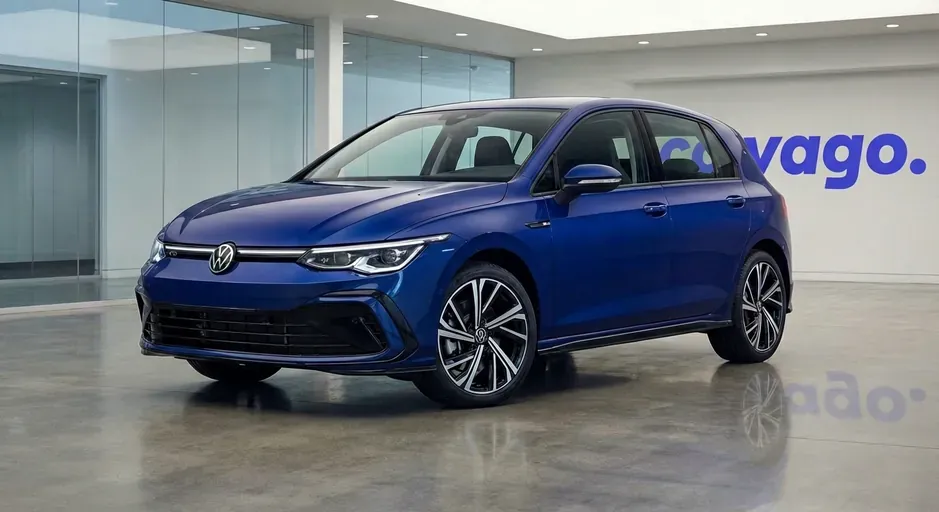
At first glance, it may seem that there is no difference in safety between the Volkswagen Golf and the Ford Focus – both boast a five-star rating from Euro NCAP. However, the context is key, especially the year in which the cars underwent testing. The Euro NCAP methodology is constantly becoming stricter, and therefore, percentage results from different years cannot be directly compared. A more recent test usually means that the car had to meet more demanding criteria, especially in the areas of assistance systems and the protection of vulnerable road users.
The eighth-generation Volkswagen Golf was last tested in 2022, under the significantly stricter rules introduced in 2020. Although its original five-star rating from 2019 was still valid, the automaker decided to have the car re-tested to prove its quality against new challenges. The updated Golf, for example, came with a standard center airbag between the front seats, which helps prevent head contact between occupants in a side impact. The results confirmed a top-tier level of safety – 88% for adult occupant protection, 87% for child occupant protection, 74% for vulnerable road user protection, and 82% for safety assist systems. This result demonstrates that the Golf features a modern and comprehensive package of active and passive safety features.
The fourth-generation Ford Focus earned its five stars in 2019. At the time, it achieved impressive numbers, including one of the best scores in its class for adult occupant protection – 96%. It performed as well as the Golf in child occupant protection (87%), while scoring 72% for pedestrian and cyclist protection and 75% for safety assist systems. Although this is an excellent result, it is important to note that the tests were conducted before the introduction of stricter protocols. These now place greater emphasis on features like autonomous emergency braking in more complex scenarios (e.g., turning across oncoming traffic) or driver monitoring, which were not evaluated as comprehensively at the time.
Although the Ford Focus excelled in adult occupant protection in 2019, the Volkswagen Golf's more recent 2022 test demonstrates that it meets more current and demanding safety standards. Its equipment, including the center airbag, and higher score for safety assist systems evaluated under a more modern methodology give it a slight advantage. For a used car buyer, this means the Golf offers a slightly more sophisticated and modern set of safety technologies that have been verified under more challenging conditions.
| Parameter | Volkswagen Golf | Ford Focus |
|---|---|---|
| Year of testing | 2022 | 2019 |
| Adult occupant protection | 88 % | 96 % |
| Child occupant protection | 87 % | 87 % |
| Vulnerable road user protection | 74 % | 72 % |
| Safety assist systems | 82 % | 75 % |
In addition to standard equipment, each model offers several unique features that can be decisive for a customer. While the Golf focuses on digital innovation and connectivity, the Focus scores with its variety of versions and traditionally excellent driving dynamics.
The eighth-generation Golf took a major step towards digitalization and modern technologies, which is immediately apparent upon entering the cabin.
The fourth-generation Focus stays true to its reputation as a driver's car, but adds unprecedented model line variability.
Advantages:
Disadvantages:
Advantages:
Disadvantages:
Based on our own CarAudit inspections, breakdown statistics, and feedback from owners, we have compiled an overview of the most common problems that used car buyers should look out for. Although both models are considered reliable, each has its specific weak points that are good to know about.
The eighth-generation Golf made a huge leap in digitalisation, which unfortunately had an impact on the initial reliability of the electronics. On the other hand, the mechanical foundation remains very robust.
Summary for the Golf: The problems are almost exclusively related to software and electronics, which mainly affected the first years of production. Most of these "teething problems" have already been resolved by updates. Mechanically, the Golf is still a very reliable car. Nevertheless, a thorough technical inspection of the car before purchase is crucial.
The fourth-generation Focus focused on improving driving characteristics and mechanical reliability. Problems with electronics are not as systemic as with the Golf, but other, more mechanical, minor issues appear.
Focus Summary: The Ford tends to suffer from minor mechanical and specific service issues (like the oil for the EcoBoost), which can have serious consequences if neglected. The electronics are less problematic than its competitor's. The key to satisfaction is a thorough inspection of the used car, focusing on its service history and engine condition.
When buying a used car, a thorough inspection is crucial and should not be underestimated, even with well-vetted models like these. Here are a few specific points to focus on for the Volkswagen Golf and Ford Focus to help you make the best choice.
The eighth-generation Golf introduced a revolutionary digital interior, which is also its most debated feature. Your attention should focus on this, as well as the proven mechanical components.
The fourth-generation Focus maintains its reputation as a fun-to-drive car. When choosing one, it's good to focus on the specifics of the EcoBoost engines and the condition of the chassis, which is often pushed to its limits.
The Ford Focus has long been considered the car with a better and more enjoyable chassis, offering more driving pleasure in corners. The Volkswagen Golf, on the other hand, excels in comfort and overall refinement, making it a great companion for long journeys. For drivers who want to enjoy the ride, the Focus is often the better choice.
Both models are very similar in terms of practicality. The Volkswagen Golf offers a slightly larger boot in its basic configuration (381 litres compared to the Focus's 375 litres). However, the Ford Focus often has a bit more legroom for rear passengers. For family use, both cars are very evenly matched, and the differences are minimal.
The Volkswagen Golf is generally perceived as the car with a higher-quality, more premium interior. It uses soft-touch plastics, and the overall finish feels more solid. The Ford Focus's interior is functional and well-designed, but the materials can feel a bit cheaper in a direct comparison.
Both cars are considered reliable if they are regularly serviced. Older 1.0 EcoBoost engines in the Focus have occasionally had clutch problems, while with TSI engines from Volkswagen, the condition of the timing belt/chain needs to be monitored. Costs for routine maintenance and spare parts are comparable for both models and are readily available thanks to a wide service network.
For family needs, both cars are an excellent choice, and the decision depends on your priorities. The Golf scores with a slightly larger boot and a higher-quality feel in the cabin. The Focus, on the other hand, offers more rear knee room and more enjoyable driving dynamics, which the driver may appreciate.
For the Volkswagen Golf, the popular and proven 1.5 TSI petrol engines offer a good compromise between performance and fuel economy. The Ford Focus is known for its 1.0 EcoBoost engines, which are surprisingly lively, and the four-cylinder 1.5 EcoBoost engines, which provide more dynamism. For drivers who cover high mileage, fuel-efficient diesel engines are available for both models.
Deciding between Volkswagen Golf and Ford Focus is a choice between comfort and driving fun, with both cars representing valid philosophies. Volkswagen Golf is ideal for those who prioritize a premium interior, high comfort, modern technology, and excellent residual value, seeking a refined and calm companion. Conversely, Ford Focus will appeal to drivers craving maximum fun behind the wheel, excellent driving dynamics, and great value for money, even at the cost of a simpler interior. Choose Volkswagen Golf if comfort and quality are key for you, or Ford Focus if driving pleasure and financial savings are the priority.
Sources: ADAC, mdcr.cz, garaz.cz, autorevue.cz, automagazin.cz, autoperiskop.cz
This article was prepared using artificial intelligence tools. The section guarantor is Petr Dušek.

Detailed comparison of Audi R8 vs Lamborghini Huracán. We reveal the real differences, performance, and driving characteristics of these V10 supercars. Which one to choose?
Apr 14, 2026

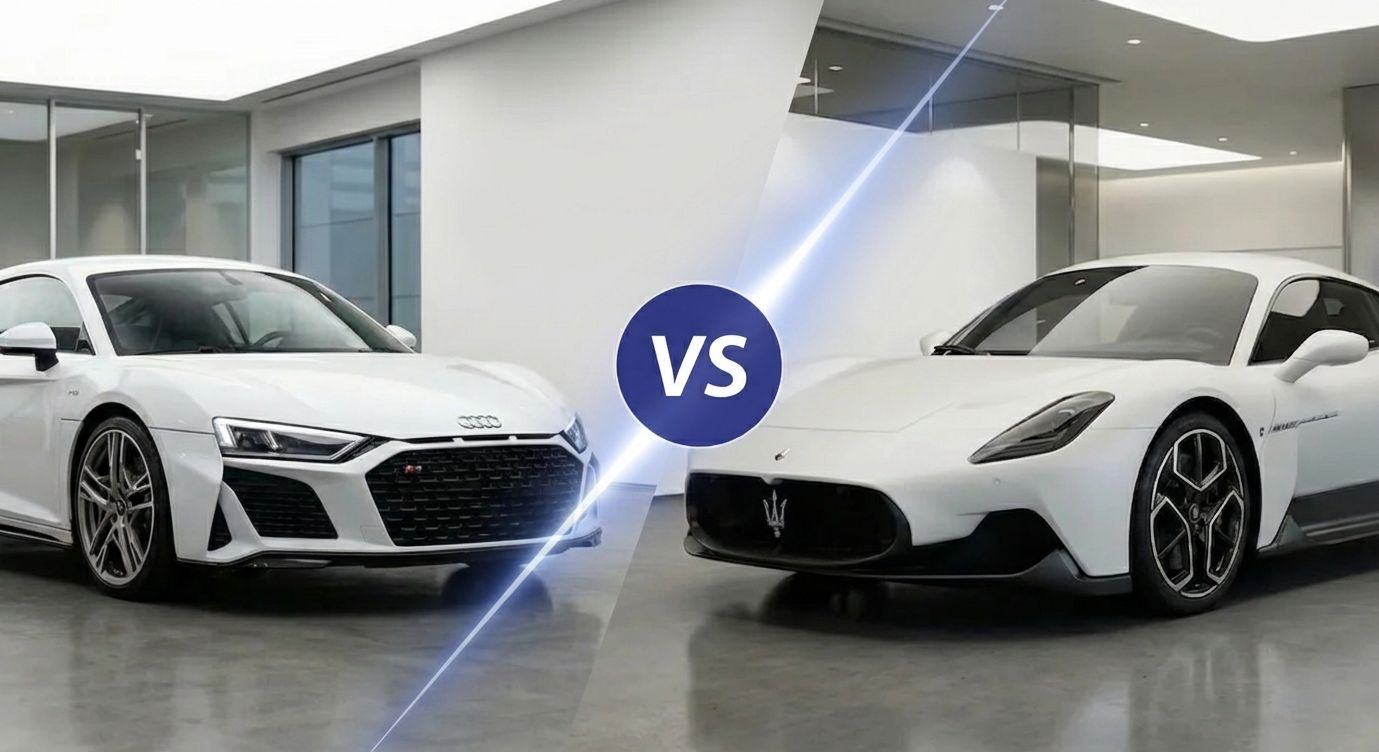
Audi R8 or Maserati MC20? Comparing performance, design, and handling. Our detailed test helps you choose the perfect supercar.
Apr 13, 2026

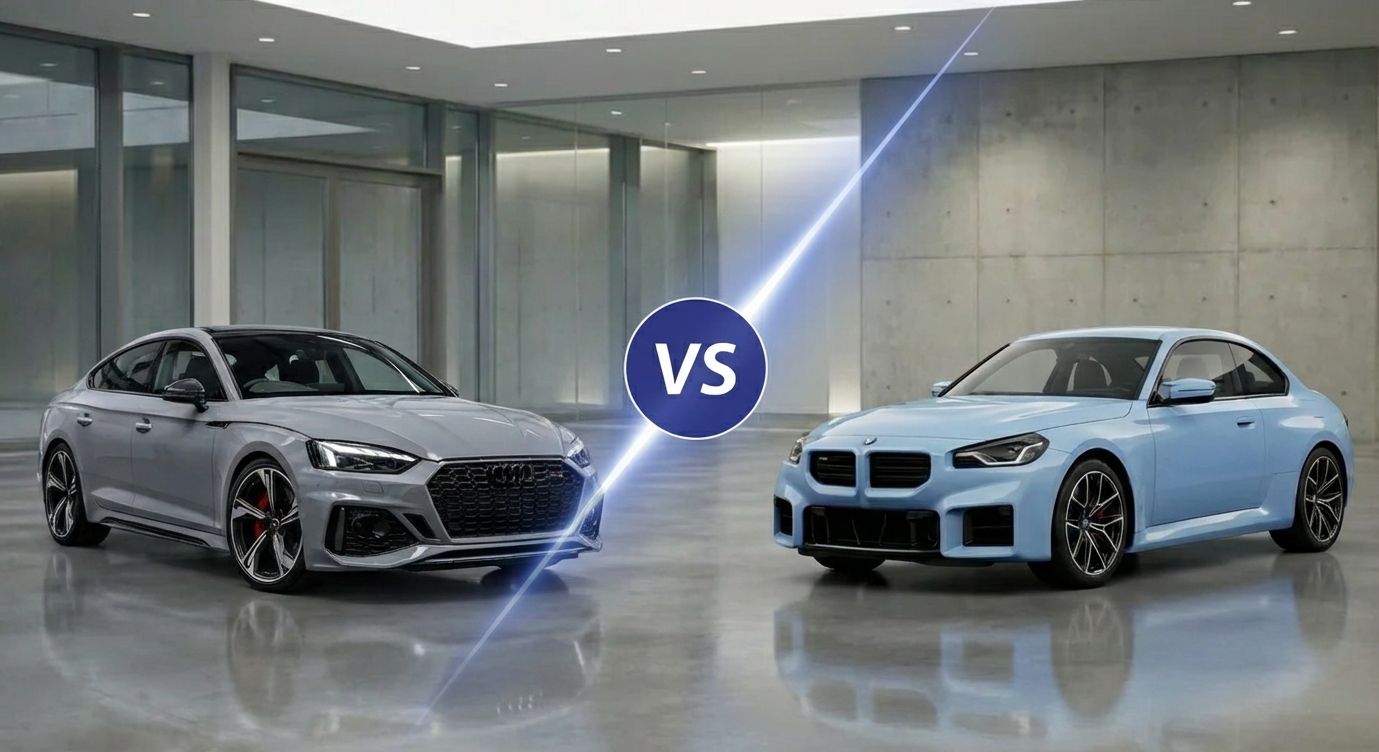
Audi RS 5 vs. BMW M2. A detailed comparison of performance, driving dynamics, and practicality. Find out which sports coupe is the right choice for you.
Apr 14, 2026