Audi R8 vs. Lamborghini Huracán: Complete comparison 2026
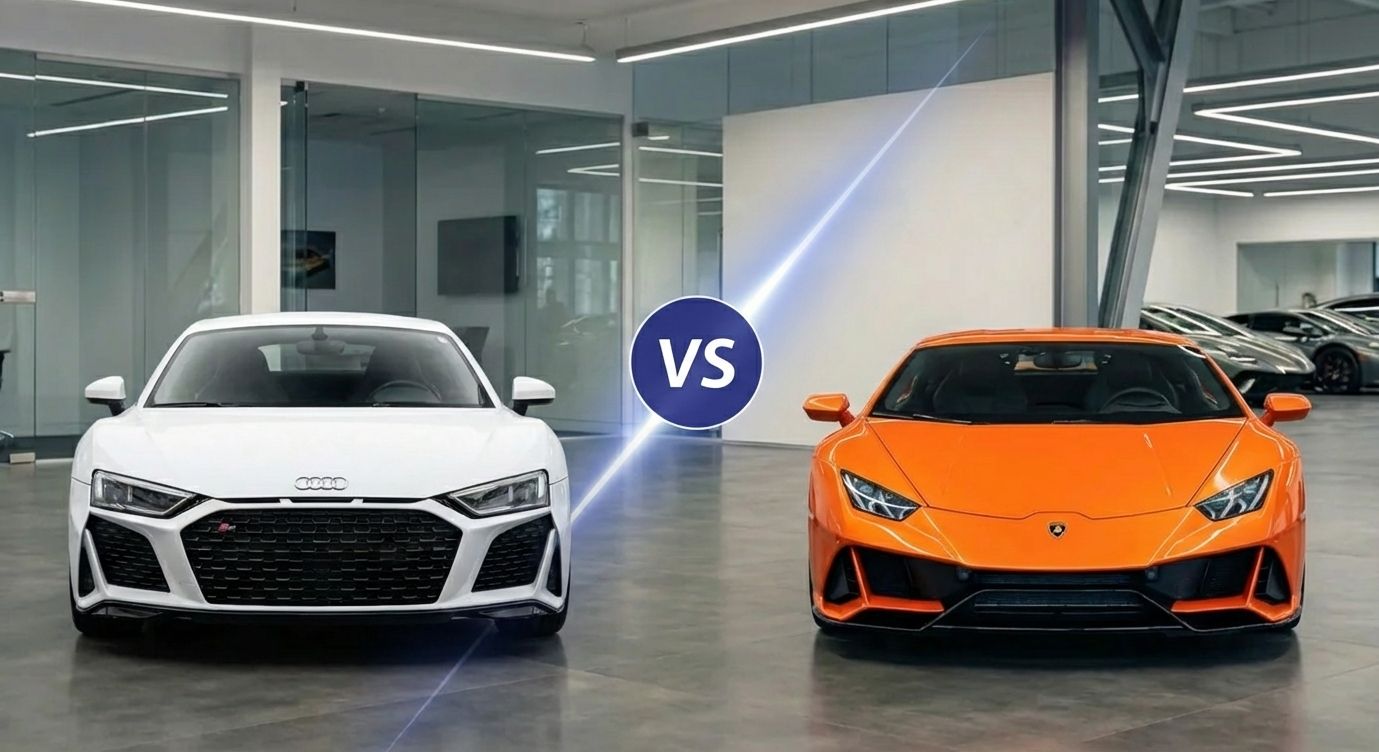
Detailed comparison of Audi R8 vs Lamborghini Huracán. We reveal the real differences, performance, and driving characteristics of these V10 supercars. Which one to choose?
Apr 14, 2026
Articles
Car battle
The ultimate comparison: Audi RS 5 (RS5) vs Porsche 718 Boxster. Discover real-world experiences, performance differences, and a clear verdict that will make choosing your used car easier.
May 2, 2026


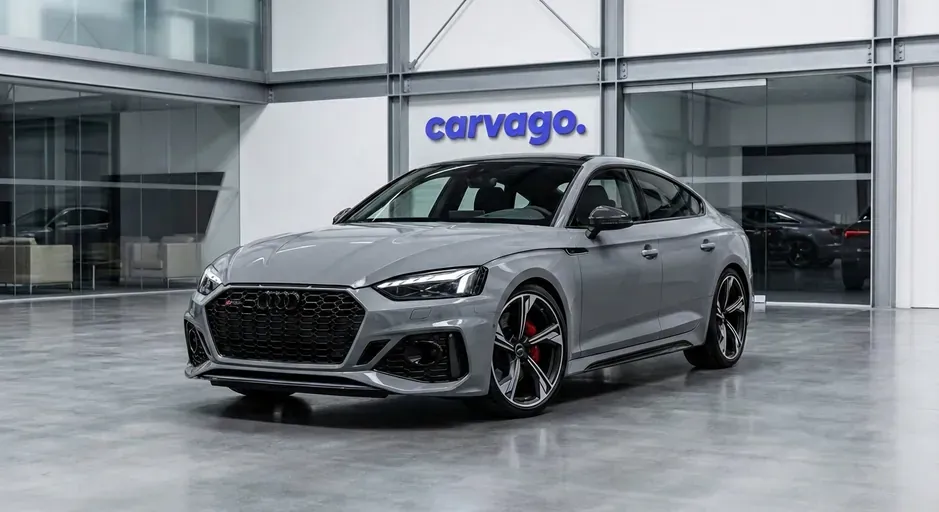
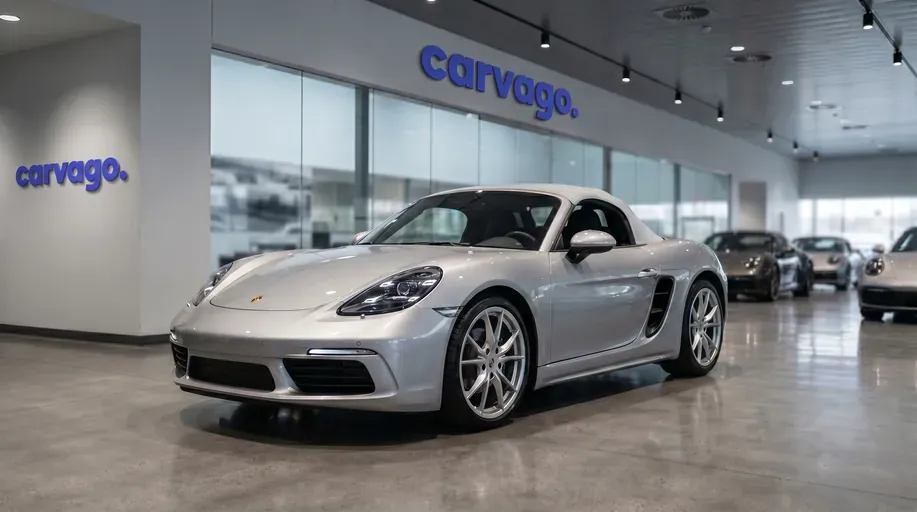
Audi RS 5, sold in Coupé and the more practical Sportback body styles, represents the uncompromising pinnacle of its model range, relying on the brutal power of a twin-turbocharged six-cylinder and the unshakable confidence of quattro all-wheel drive. On the other side of the barricade stands the Porsche 718 Boxster (often referred to by its internal development code 982), a purebred two-seater roadster with a mid-mounted engine that has long defined global standards for agility and the direct connection between driver and machine. Let's take a detailed look at whether, in this battle of attractive, approximately four-year-old used cars, the crushing speed and everyday usability of the muscular Audi will prevail, or if the lightness and purist open-top driving experience behind the wheel of the Porsche will win instead.
When comparing the exterior dimensions of these two sports cars, we encounter completely different automotive philosophies. While the Audi RS 5 figures as a muscular gran turismo (available in the F5 generation as both a Coupé and a more practical five-door Sportback, technically classified as a hatchback), the Porsche 718 Boxster (982 generation) is a classic compact mid-engine roadster. This fundamental difference is significantly reflected in the overall proportions of both models, which is crucial to consider when choosing from the market of four-year-old used cars.
The wheelbase and overall length of the car clearly show where the greatest practical difference lies. The Audi RS 5 Coupé measures 4,723 mm in length (the Sportback version even 4,783 mm), which is roughly 344 to 404 mm more than the compact Porsche. With a length of less than 4.4 meters and a short wheelbase of 2,475 mm, the Boxster maintains maximum agility. In the Audi, the long wheelbase (2,766 to 2,826 mm) guarantees excellent longitudinal stability at highway speeds and offers much-needed space for rear passengers, while the Porsche is strictly a two-seater and bets more on uncompromising agility in tight corners.
From the perspective of width and height, the Audi is noticeably more masculine. With a width of 1,866 mm, the RS 5 offers a tough and wide stance, but you will have to be more careful in narrow city streets than with the 65 mm narrower Porsche (1,801 mm). The Boxster, on the other hand, scores with its exceptionally low body profile. A height of only 1,262 to 1,281 mm means a fantastically low center of gravity, which is essential for the precise handling of a pure sports car. While the RS 5, at 1,372 to 1,399 mm, is still relatively low by the standards of regular cars, it looks more conventional next to the Porsche, which on the other hand makes daily entry and exit easier.
How do exterior dimensions affect the choice?
If you are looking for a versatile sports car that can easily handle the role of a daily companion with space for additional passengers and weekend luggage, the larger footprint of the Audi RS 5 is a clear advantage. On the other hand, the Porsche 718 Boxster, thanks to its more subtle dimensions, represents an ideal weekend toy. It is easier to park, and on twisty backroads, you can use its "pocket" dimensions and agility to the maximum.
| Parameter | Audi RS 5 Coupé | Audi RS 5 Hatchback | Porsche 718 Boxster Cabriolet |
|---|---|---|---|
| Width (mm) | 1866 | 1866 | 1801 |
| Length (mm) | 4723 | 4783 | 4379-4391 |
| Height (mm) | 1372 | 1399 | 1262-1281 |
| Wheelbase (mm) | 2766 | 2826 | 2475 |
When choosing a sports car, a crucial factor is often whether you plan to use it as a versatile daily driver or primarily as a weekend toy. The difference in luggage space concepts between Audi RS 5 and Porsche 718 Boxster is vast and accurately reflects the focus of both models. While the Audi embodies a powerful yet highly practical gran turismo that can easily handle the role of a family car, the Porsche is a purebred two-seater mid-engine roadster where cargo capacity had to give way to driving dynamics and aerodynamics.
Looking at models roughly four years old (represented by the F5 generation for Audi and the 982 generation for Porsche), the numbers speak for themselves. The Audi RS 5 offers a decent 410-liter trunk in its two-door Coupé version. Even more appealing for families is the five-door Sportback (Hatchback) variant, which provides 465 liters as standard. Furthermore, with the rear seats folded down, this space in the Sportback expands to an impressive 1,280 liters. In contrast, the Porsche 718 Boxster features a primary rear trunk with a modest volume of just 122 liters, a trade-off for the folding roof and the car's layout.
In practice, this means the Audi RS 5 effortlessly offers space for several extra suitcases and is fully sufficient for weekend shopping or longer holidays with more people. Thanks to the large loading opening of the Sportback model, you can even transport bulkier items. With the Porsche Boxster, you have to approach travel differently – 122 liters in the rear means you can pack at most two soft sports bags. The trunk dimensions thus clearly suggest that while the Audi can easily serve as the only car in the family, the Porsche is a perfect but strictly secondary leisure vehicle.
| Parameter | Audi RS 5 Coupé | Audi RS 5 Hatchback | Porsche 718 Boxster Cabriolet |
|---|---|---|---|
| Standard volume (liters) | 410 | 465 | 122 |
| Maximum volume with seats folded (liters) | - | 1280 | - |
While the Audi RS 5 provides full-fledged space for daily family use and long trips, the Porsche 718 Boxster requires minimalist packing and serves primarily as a purebred escape from reality.
When comparing the towing capacity of high-performance sports cars such as the Audi RS 5 and Porsche 718 Boxster, we encounter fundamental differences that significantly affect their practicality and everyday usability. If we focus on the generations most relevant to the market for roughly four-year-old used cars – namely the Audi RS 5 (F5 generation) and Porsche 718 Boxster (982 generation) – we find that both the standard and maximum trailer weight for both cars is exactly 0 kg. Neither of these sport-oriented models is factory-homologated for towing. Therefore, if you are looking for a way to hitch a trailer to the car to gain space for a few extra suitcases, sufficient for weekend shopping or a longer holiday, you will be disappointed in the case of these four-year-old used cars and will have no choice but to rely on the internal luggage space of the vehicles themselves.
However, a turning point comes with the brand-new generation of the Audi RS 5 (B10), which is taking over the role of the more spacious and family-oriented RS 4 model on the market. For this new model, the manufacturer surprisingly offers an excellent maximum braked trailer weight of 1,900 kg. This is the case despite the installation of modern hybrid technologies, for which permitted towing values are often reduced across the board. In contrast, the Porsche 718 Boxster continues to maintain its exclusively purist nature and does not allow the installation of a tow bar on absolutely any of its versions, not even the more powerful GTS or S variants.
From an overall perspective, this parameter provides a clear resolution for those interested in a used car. When buying a car approximately four years old, neither of them will serve as a towing vehicle. However, if the possibility of hitching a trailer is a decisive priority and you are willing to pay extra, the latest generation of the Audi RS 5 will serve as a great and the only sensible choice thanks to its unexpected versatility, while the Porsche Boxster will remain just a perfect driver's toy for afternoon drives.
| Model and engine | Braked trailer weight (kg) | Unbraked trailer weight (kg) |
|---|---|---|
| Audi RS 5 (B10 generation) | 1900 | - |
The engine options for both of these models represent two completely different approaches to high performance, which plays a key role when choosing a roughly four-year-old used car. Differences in powertrains affect not only overall dynamics and sound profile but also traction and everyday usability. The Audi RS 5 relies on brute force and crushing efficiency thanks to its single massive 2.9 TFSI engine with 331 kW. Conversely, the Porsche 718 Boxster offers a much more diverse range of units – from turbocharged flat-fours with 2.0 and 2.5-liter displacements to a purist naturally aspirated 4.0-liter flat-six. While Audi sends its power exclusively to all four wheels via an eight-speed torque-converter automatic, Porsche sticks to a more traditional sports concept with a mid-engine layout, rear-wheel drive, and gives the driver a choice between a precise manual gearbox and a fast dual-clutch automatic. This fundamental difference means that both cars target different driving needs.
For the Audi RS 5 (F5) generation, which perfectly matches the selection of young used cars (model years 2017 to 2024), the automaker chose the path of a single, yet ultimate engine option. Under the hood, you will always find an uncompromising twin-turbocharged 2.9 TFSI V6, in whose development Porsche itself participated. This unit provides a massive output of 331 kW (450 hp) and a staggering torque of 600 Nm, which is available across an unusually wide rev range. A manual transmission is not available; all power is carefully distributed exclusively through a fast eight-speed Tiptronic automatic transmission to the legendary quattro all-wheel-drive system. This technological package ensures breathtaking acceleration without the slightest loss of traction in any weather.
| Engine type | Fuel type | Power (kW) | Torque (Nm) | Transmission |
|---|---|---|---|---|
| 2.9 TFSI V6 | Petrol | 331 | 600 | 8-speed Tiptronic |
The open-top Porsche 718 Boxster (982 generation) offers drivers an incomparably richer selection of powertrains across the years 2020 to 2024. The base model and the driver-focused Boxster T version share a turbocharged 2.0-liter flat-four with 220 kW. The more powerful Boxster S variant relies on a 2.5-liter four-cylinder (257 kW) with an advanced variable geometry turbocharger. A true gem on the nearly-new car market is the top-tier GTS 4.0 engine, which replaced the older turbocharged GTS models in early 2020. It brings a naturally aspirated flat-six with 294 kW and a phenomenal acoustic experience. Depending on the original owner's preference, each engine could be paired with a six-speed manual transmission or a lightning-fast seven-speed PDK automatic, where torque slightly increased due to the durability of the clutches (for example, in the GTS 4.0 version, it jumped from 420 Nm to 430 Nm). It should be noted that production of the popular purist Boxster T version with the 2.0-liter engine definitely ended in July 2023. Those interested in this lightweight engine option must therefore choose more carefully from the four-year-old used car listings, as it is no longer available at all in newer model years.
| Engine type | Fuel type | Power (kW) | Torque (Nm) | Transmission |
|---|---|---|---|---|
| 2.0 Turbo (Base/T) | Petrol | 220 | 380 | 6MT / 7PDK |
| 2.5 Turbo (S) | Petrol | 257 | 420 | 6MT / 7PDK |
| 4.0 Naturally Aspirated (GTS 4.0) | Petrol | 294 | 420 / 430 | 6MT / 7PDK |
The greatest strength of the Audi RS 5 powertrain is its immediate dynamics and ability to deliver a shocking pace completely safely, supported by the full-bodied pull of the V6 and excellent traction. However, its disadvantage can be the lack of sensory interaction with the car and the absolute impossibility of customizing the transmission – for those interested in manual shifting, there is simply no functional alternative at Audi. In contrast, Porsche's mid-engine concept guarantees absolutely surgical handling. While the weakness of the smaller turbocharged four-cylinders in the Boxster is a slightly more artificial and less characterful sound, this minor handicap is fully resolved by the intoxicating naturally aspirated GTS 4.0 six-cylinder. If you fall into the group of drivers who devour highway miles and want a powerful all-wheel-drive car for year-round use and occasional trips to the mountains, the massive power of the Audi RS 5 will not disappoint you. If, however, you prefer an intense connection with the machine during weekend drives, love precise gear changes with a manual transmission, and appreciate the lightness of a rear-wheel-drive car, the diverse range of Porsche 718 Boxster engines will be a bullseye.
While the Audi RS 5 relies on crushing efficiency and a single universally potent V6 engine for any season, the Porsche 718 Boxster rewards true purists with a wide range of engines, led by the naturally aspirated six-cylinder and the option of a manual transmission.
Choosing the right engine is a key step for long-term satisfaction with a car, with our recommendations based on real-world experience, mechanical reliability, actual fuel consumption, and overall owner feedback. Although both cars represent the absolute sporting pinnacle of their classes, their approach to power units on the four-year-old used car market is diametrically different – Audi scores with the crushing impact of turbochargers and unrivaled everyday usability, while Porsche, within its range, allows you to opt for purist natural aspiration that emphasizes emotion and perfect mechanical feedback.
For the F5 generation models (from 2021–2023), this twin-turbocharged V6, developed in cooperation with Porsche, is the only, yet absolutely phenomenal choice. The engine impresses primarily with its massive 600 Nm of torque available from low revs, giving the car the character of a lightning-fast and unstoppable Gran Turismo. Technically, it excels in its excellent pairing with the eight-speed Tiptronic automatic transmission and quattro all-wheel drive. This unit is mechanically very robust, but its "Hot-V" layout (turbochargers located in the middle between the cylinder banks) produces a huge amount of heat. The main risk with used cars is therefore oil degradation – to maintain the long life of the turbochargers and prevent carbon buildup, it is absolutely critical to shorten the factory oil change intervals from 30,000 km to a maximum of 10,000 to 15,000 km. The engine is the ideal choice for drivers looking for uncompromising dynamics combined with year-round usability, safe overtaking in all conditions, and the ability to comfortably cover long highway distances with real-world fuel consumption around 10–12 liters.
While the base models of the 982 generation rely on turbocharged four-cylinder engines, for four-year-old cars (from 2020–2024) as a used purchase, we clearly recommend paying extra for the GTS 4.0 model with its naturally aspirated flat-six. It is the best this model range has to offer – it returns the iconic sound to the car and brings a wonderfully linear power delivery with a fantastic crescendo near the rev limiter. Thanks to the absence of turbochargers, the engine is mechanically simpler and extremely reliable in the long run; furthermore, it holds its value steadfastly on the used market. A potential specific of newer model years is the presence of a particulate filter (OPF), which requires you to warm up the car regularly and use it outside the city, otherwise there is a risk of it clogging. This engine is the absolute holy grail for purist drivers and enthusiasts who prefer instant throttle response, weekend drives on backroads, and a dynamic driving style. During calmer driving, it can also deactivate cylinders and surprise with fuel consumption dropping even below 10 liters per 100 kilometers.
The difference between official fuel consumption figures and reality is often vast for high-performance sports cars. While official figures might promise miracles thanks to standardized measurement methodologies, once you start utilizing the dynamic potential of these cars, the laws of physics cannot be cheated. To obtain an objective picture of the real operating costs of approximately four-year-old used cars, we based our findings on long-term data from owners themselves, recorded on the popular crowdsourced platform Spritmonitor.de.
| Model and engine | Average consumption (l/100 km) |
|---|---|
| Porsche 718 Boxster 2.0 (220 kW) | 8.7 |
| Porsche 718 Boxster S 2.5 (257 kW) | 9.5 |
| Audi RS 5 2.9 TFSI (331 kW) | 10.4 |
| Porsche 718 Boxster GTS 4.0 (294 kW) | 10.8 |
Looking closer at the data, several interesting trends can be observed. The turbocharged four-cylinder engines in the Porsche 718 Boxster models (2.0 and 2.5 versions) show decent overall efficiency, with the base two-liter easily staying below the 9 liters per 100 km mark in normal driving. At the same time, it confirms that downsizing isn't a cure-all – as soon as you start using the full potential of smaller turbo engines, consumption skyrockets. In contrast, the top-tier naturally aspirated 4.0-liter six-cylinder performs surprisingly reasonably with a real average of 10.8 liters, considering its massive power and displacement. The competing Audi RS 5, which relies on a heavier standard quattro all-wheel drive and a twin-turbocharged 2.9 TFSI six-cylinder, fluctuates around the 10.4-liter mark in long-term real-world use.
For the typical user, this carries a clear message. If you are looking for a sports car primarily for brisk weekend drives while also eyeing reasonable fuel costs, the base four-cylinder 718 Boxster represents an excellent compromise. Audi RS 5 owners, who, given the car's gran turismo nature, often use it for long highway trips or daily fast travel, must expect that comfort, huge power, and higher curb weight will take their toll with more frequent stops at the gas station. Conversely, drivers longing for the purist driving experience of the naturally aspirated engine in the GTS 4.0 version likely won't care about the slight extra cost for gasoline per hundred kilometers at all.
In conclusion, it must be stated that for used premium cars of the caliber of the Audi RS 5 or Porsche 718 Boxster, fuel consumption should not be the main decision-making factor. The price difference of one or two liters of gasoline is easily lost in the total annual cost of ownership – which includes authorized service, significantly more expensive insurance, carbon-ceramic brakes, or more frequent purchases of large sets of tires. The key to a successful purchase should therefore always be primarily your driving preferences, requirements for the number of seats in the cabin, and the overall desired character of the engine.
When looking at the market for nearly-new used cars around four years old (2021 to 2022 models), we encounter different price dynamics for both models, which faithfully reflect their market position and target group. While the Audi RS 5 represents the top specification of the A5 model range (B9 generation after facelift) and offers a fairly consistent price level, the Porsche 718 Boxster (982 generation) exists in a wide range of engine options from basic four-cylinders to naturally aspirated six-cylinders. This significantly stretches its price range on the used car market.
The market for used Audi RS 5 models is relatively straightforward. The body style (Coupé vs. Sportback) is not a major factor; instead, total mileage and optional equipment are. Buyers of these nearly-new models usually strictly require a clear service history and often an extended factory warranty.
For Porsche sports cars, models traditionally hold their value significantly better than standard luxury GTs. Depreciation is slower, but the final purchase price of a used car drastically depends on the specific engine under the rear hood.
| Price Parameter | Audi RS 5 (2.9 TFSI) | Porsche 718 Boxster (all versions) |
|---|---|---|
| Starting market price | ~ €62,000 | ~ €57,000 |
| Most common market value | €70,000 – €82,000 | €66,000 – €78,000 (2.0 / S versions) |
| Top / limited versions | up to €94,000 | up to €123,000 (GTS 4.0 / Spyder) |
| Depreciation curve | Medium-fast (typical premium GT) | Slow (especially for six-cylinder versions) |
Key Takeaways for Buyers:
While the Audi RS 5 offers a stable level of luxury and immense performance for your money in one clear price range, the Porsche 718 Boxster can cost you slightly less at the entry level, or conversely, diametrically more if you desire a prestigious and investment-attractive six-cylinder.
When evaluating the safety of premium cars, it is always essential to take into account the broader context and, above all, the year of testing. Although modern vehicles generally offer a high level of protection and often boast a five-star rating from Euro NCAP, its methodology is constantly evolving. The requirements for obtaining the maximum number of points are regularly tightened, which today involves complex frontal crash simulations, advanced cyclist detection, or emergency scenarios at intersections. Percentage results from older tests can therefore not be directly compared with the latest ones.
The Audi RS 5 model, which is based on the A4 and A5 family in terms of its shared platform, draws from the 2015 Euro NCAP rating, when this model range received a full five stars. According to the protocols at the time, the car achieved 89% for adult occupant protection, 87% for child protection, 75% for vulnerable road user protection, and 75% for safety assistance systems. These values demonstrate a very solid rigid construction and above-average active safety for that time. However, it is necessary to point out that due to the age of this test, the official validity of the five-star certificate expired in January 2022. Although the car remains very robust in terms of passive protection, its older generation of assistance systems would no longer be sufficient for a full score according to the strictest current standards.
In the case of the Porsche 718 Boxster, we encounter a situation that is quite typical for low-volume sports cars – Euro NCAP has never officially tested this model. For this reason, there are no standardized percentage ratings for it, and therefore only dashes are shown in the table for this car. However, the absence of a crash test does not mean compromises in the safety of the car itself. The model relies on an exceptionally rigid body with a strong windshield frame and pop-up roll bars in case of a rollover. In the context of the used car market, however, it is good to know that advanced active safety systems (such as lane keeping or automatic emergency braking) were not common in the standard equipment and, due to the purist focus of the roadster, often appeared only for a hefty surcharge.
In conclusion, it can be stated that the Audi RS 5 offers a more comprehensive and modern safety package in terms of standard equipment with a strong emphasis on accident prevention, making it a more confident and relaxed choice for daily traffic. The Porsche 718 Boxster, on the other hand, is the embodiment of a classic, more analog sports car that excels in active handling, strong brakes, and passive rigidity, but leaves the responsibility for handling crisis situations entirely in the hands of an alert driver.
| Parameter | Audi RS 5 | Porsche 718 Boxster |
|---|---|---|
| Year of testing | 2015 | Not tested |
| Adult occupant protection | 89 % | - |
| Child protection | 87 % | - |
| Vulnerable road user protection | 75 % | - |
| Safety assistance systems | 75 % | - |
While the Audi RS 5 provides robust protection with a proven (albeit older) crash test history and a solid range of assistance systems, the Porsche 718 Boxster relies primarily on precise driving characteristics, strong brakes, and the driver's own attention.
Beyond the standard equipment, each of these models offers much more than just basic functions, with both cars approaching added value and the driving experience in their own, completely different ways.
The Audi RS 5 represents the pinnacle of the A5 family, focusing on combining brutal performance with advanced technology and everyday usability.
The Porsche 718 Boxster is the embodiment of a purist roadster. Its main weapon is not absolute technological overkill, but rather mechanical perfection and an unrivalled connection between driver and car.
Great straight-line dynamics and maximum traction thanks to quattro all-wheel drive
High level of comfort and a luxurious interior suitable even for long journeys
Significantly better everyday practicality thanks to full-size rear seats and a larger trunk
Top-tier technology, premium materials, and a modern infotainment system
Also available as a highly practical five-door Sportback variant
Higher vehicle weight limits agility in tight corners
Less engaging and slightly more sterile driving experience compared to a purebred sports car
High costs for routine service, spare parts, and consumables (brakes, tires)
Audi RS 5 represents the perfect compromise between brutal speed and everyday usability without compromising on comfort. It is the ideal choice for drivers who want an extremely fast and safe car usable all year round, where a slightly more detached driving character is not an issue.
Phenomenal driving characteristics and center of gravity thanks to the mid-engine layout
Purist and highly addictive driving experience complemented by the option of open-top driving
Brilliantly tuned steering that provides perfect feedback from the road
Choice of a precise manual transmission or the fantastic PDK dual-clutch automatic
Traditionally excellent residual value on the used car market
Very limited practicality with space for only two passengers and smaller luggage compartments
Base turbocharged four-cylinder engines (2.0 and 2.5 liters) lack the charismatic sound of the older six-cylinder engines
The dashboard architecture and infotainment system already reveal the model's older date of origin
Extremely expensive optional equipment, which is reflected in the high purchase price even for used cars
Porsche 718 Boxster is the ultimate choice for automotive enthusiasts primarily looking for pure driving pleasure and a perfect connection with the machine on twisty backroads. It is a purebred sports car built for weekend drives, where users are happy to sacrifice space in exchange for unrivaled agility.
Based on our own inspections from comprehensive car audits, breakdown statistics, and long-term user experiences, we have compiled an overview of the most common problems that buyers of roughly four-year-old used cars should watch out for.
The second generation Audi RS 5 (B9) with the 2.9 TFSI V6 engine is considered a mechanically robust car, yet it has several weak points that require increased attention when buying a used one.
The V6 engine is mechanically very durable if you keep an eye on the cooling system and maintenance history. Expensive repairs are mainly a risk with worn adaptive suspension and neglected transmission service.
The 982 generation brought the transition to turbocharged engines, and although it is a superbly crafted car, it is not immune to some specific faults.
The 718 Boxster is an overall reliable sports car; the biggest concerns here are coolant leaks and failures of the expensive PADM active engine mounts.
When buying a used sports car, a thorough inspection is absolutely crucial because potential repairs to premium and high-performance models can become very expensive. Both vehicles have their specific weak points to watch out for, which is why a careful independent technical inspection of the car's condition is always recommended. Here are the main points to focus on during the test drive and inspection:
The Audi RS 5 is significantly more practical for everyday driving thanks to its 2+2 interior layout and full-sized luggage compartment. The Porsche 718 Boxster, on the other hand, is an uncompromising two-seater roadster that offers only limited storage space divided into two smaller trunks at the front and rear. Furthermore, the model with the rings in its emblem provides much more acoustic and suspension comfort on longer journeys.
Porsche dominates in the corners primarily due to its mid-engine layout, low curb weight, and brilliant steering feedback. The heavier Audi, by contrast, relies on the advanced quattro all-wheel-drive system, which guarantees unwavering traction and confidence regardless of the current weather. Thus, the Boxster provides the driver with a much purer and more playful experience, while its competitor excels in crushing and stable speed.
The turbocharged 2.9 V6 engine in the Audi boasts high power, and thanks to all-wheel drive, the car can handle the sprint from 0 to 100 km/h in less than four seconds. The base turbocharged four-cylinder engines in the Boxster lag slightly behind in pure dynamics, but the more powerful GTS 4.0 six-cylinder variants easily match the Audi's speed. However, the advantage of the heavier coupe remains its phenomenal launch from a standstill with minimal wheel spin under all circumstances.
Cars from Stuttgart, especially well-maintained 718 models, hold their residual value exceptionally well on the four-year-old used market and represent a relatively safe investment. The fast Audi experiences a much steeper depreciation curve in the first years of ownership, which is typical for premium touring cars. For a used car buyer, however, this means that the RS 5 can be purchased after a few years for a very attractive fraction of its original purchase price.
Both sports models require expensive premium servicing; however, the heavier Audi tends to wear out costly consumable parts, such as massive brake discs or wide tires, more quickly. Porsche service, on the other hand, often charges higher hourly rates, and the access to the mid-mounted boxer engine itself is more labor-intensive. The average real-world fuel consumption for both vehicles in normal combined driving ranges between 10 and 12 liters per 100 kilometers, but it rises dramatically during sporty driving.
Sources: ADAC, forbes.cz, denik.cz, autotechnik.cz, techfocus.cz, mesec.cz
This article was prepared using artificial intelligence tools. The section guarantor is Petr Dušek.

Detailed comparison of Audi R8 vs Lamborghini Huracán. We reveal the real differences, performance, and driving characteristics of these V10 supercars. Which one to choose?
Apr 14, 2026

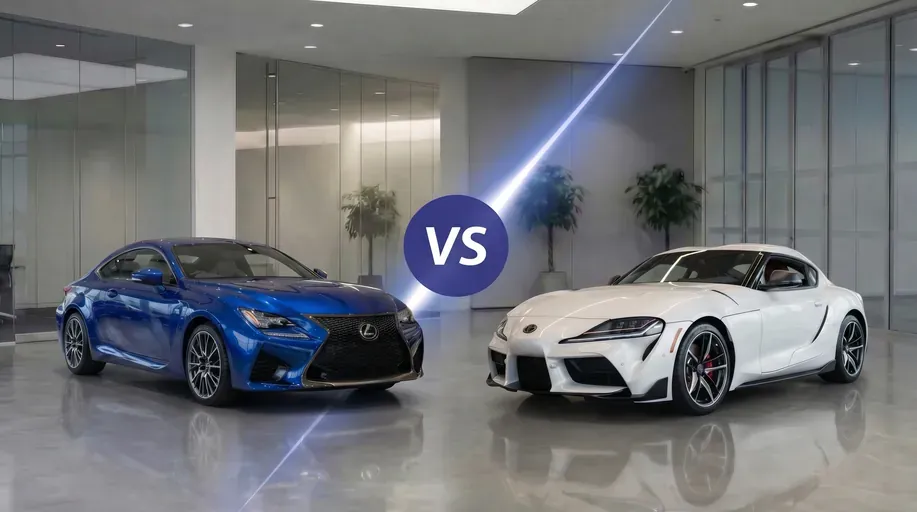
The Great Coupe Comparison: Lexus RC F vs Toyota GR Supra. A detailed look at performance, equipment, and real-world driving characteristics. Read our final verdict!
Oct 16, 2026

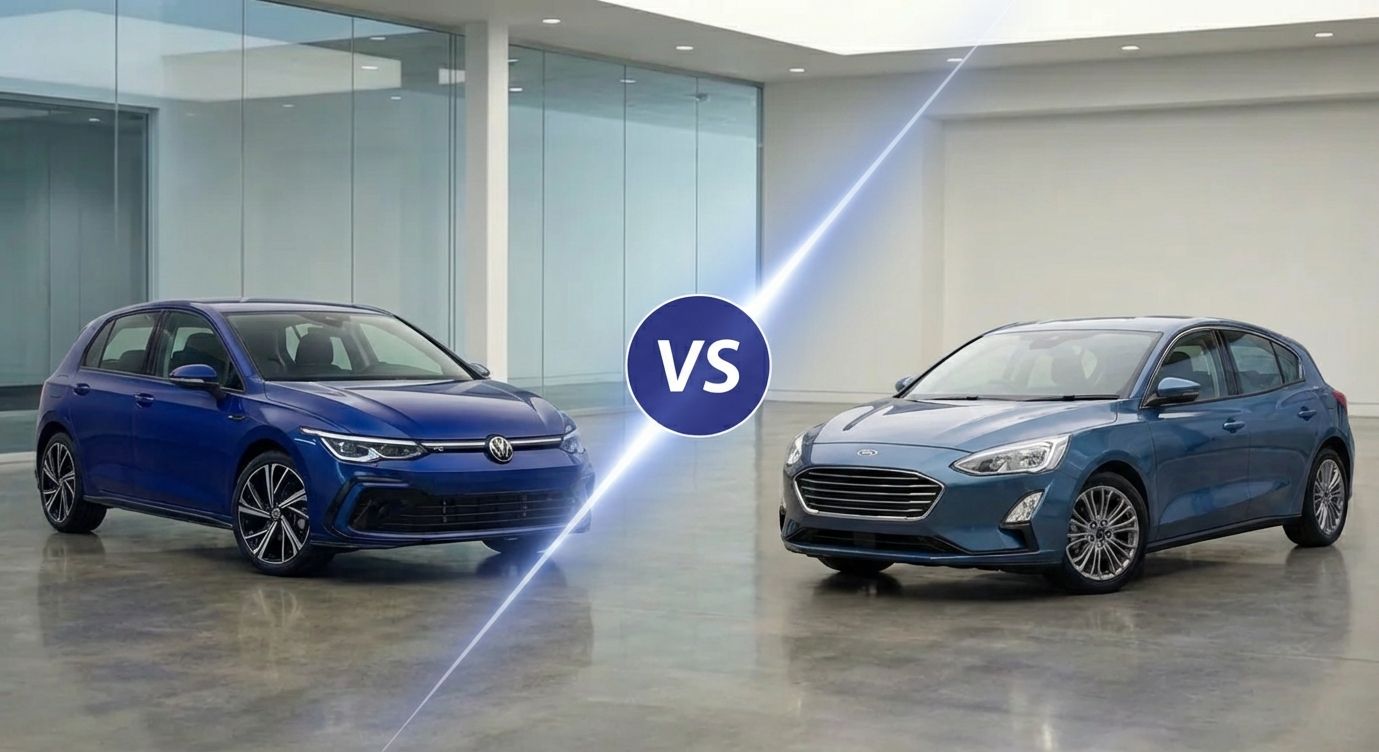
Volkswagen Golf vs. Ford Focus: a detailed comparison of the engine, equipment, and reliability. Find out which of these hatchbacks is the best choice for you.
Apr 13, 2026