Articles

Car battle

BMW M4 vs. Lexus RC F: Complete comparison 2026

Detailed comparison of the BMW M4 and Lexus RC F. Discover the key differences in engines, driving characteristics, and reliability. Read our verdict before you buy.

April 14, 2026

VS
BMW M4

BMW M4

Lexus RC F

Lexus RC F

Introduction

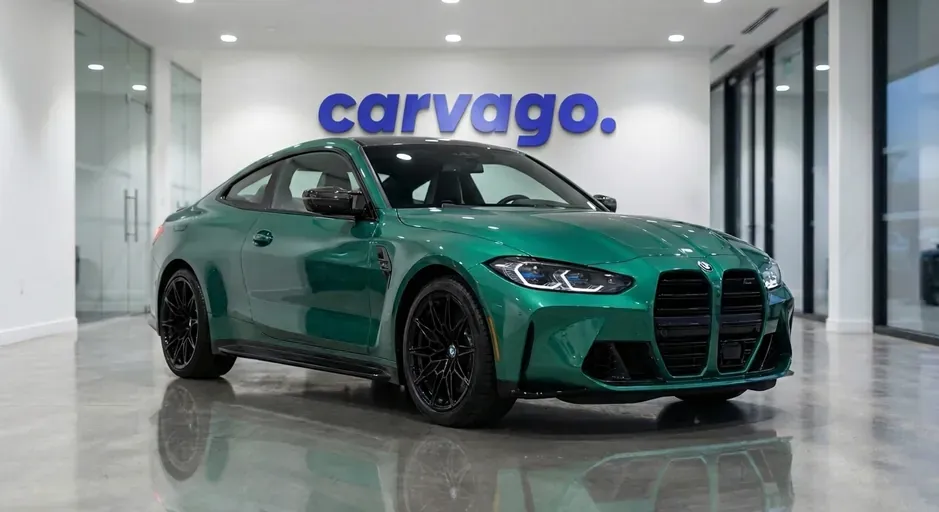
The BMW M4 is the epitome of German engineering, dominating the world of high-performance sports coupes thanks to its iconic turbocharged straight-six engine and uncompromisingly precise handling. On the other side of the barricade stands the Lexus RC F, a majestic Japanese challenger and one of the last of the Mohicans, proudly retaining a traditional naturally aspirated five-liter V8 combined with premium luxury and reliability. Let's take a detailed look at this captivating comparison of cold-blooded European efficiency versus emotive Japanese passion and find out which of these exceptional coupes represents the better choice.

Comparison of External Dimensions

Exterior Dimensions and Proportions

Looking at current models on the used car market (focusing on generations from roughly 2021 to 2024), it is immediately apparent that the BMW M4 (G82 generation) has grown significantly compared to its predecessor and visually dominates. With a total length of 4794 mm, the German representative is exactly 84 mm longer than the Japanese Lexus RC F, which measures 4710 mm. Even more pronounced is the difference in body width. The standard BMW M4 has a width of 1887 mm (up to 1921 mm for the CSL version), while the Lexus remains at a more conservative 1845 mm. This wider and longer build gives the BMW a substantially more aggressive stance and aids directional stability; however, it can be a hindrance in narrow city streets or older underground garages. In terms of everyday maneuverability and easier parking, the more compact Lexus RC F has a slight advantage, while the BMW wins in overall road presence.

A fundamental difference that defines the very character of both cars can be found in the wheelbase. The BMW M4 boasts a wheelbase of 2857 mm, while the Lexus RC F has a value of only 2730 mm. This massive difference of 127 mm in favor of the Munich coupe has a direct impact on interior space. While the rear seats in the Lexus are strictly for occasional use and serve primarily as storage for smaller luggage, the BMW can carry adult passengers relatively comfortably on shorter trips. Furthermore, the longer wheelbase provides the BMW with calmer and more stable behavior at high highway speeds. For drivers who require at least basic everyday practicality and the occasional transport of passengers from their sports car, the BMW M4 is clearly the more rational choice due to its significantly longer wheelbase.

Regarding overall height, both sports coupes stick to classic low proportions that lower the center of gravity and improve aerodynamics. The Lexus RC F has a height of 1390 mm, a value that falls almost exactly within the range of the BMW M4 Coupé (1386 to 1394 mm depending on the specific version and equipment). From the perspective of frontal drag and ground clearance, both cars are evenly matched. However, a significant difference is created by the optical illusion given by the width – since the BMW is significantly wider, it appears overall flatter and more "planted" on the road. It can therefore be stated that height does not play a significant role in deciding between these two cars, but proportionally, the BMW appears as a more uncompromising sports machine due to its wider track.

Dimensions Comparison Table

Below you will find a detailed comparison of physical dimensions for the available body variants from the relevant production period on the nearly-new used car market (2021–2024).

ParameterBMW M4 CoupéLexus RC F CoupéBMW M4 CabrioletLexus RC F Cabriolet
Width (mm)1887 - 192118451887-
Length (mm)479447104794-
Height (mm)1386 - 139413901395-
Wheelbase (mm)285727302857-

Trunk Volume

Trunk capacity is usually not the main reason for buying a high-performance sports car; however, for buyers who plan to use the car for daily driving or weekend trips for two, practicality plays a non-negligible role. While we are used to hundreds of liters of space and huge variability in standard family cars, the situation is different in the premium sports coupe segment of roughly four years of age (2021 and 2022 models). Both the BMW M4 and the Lexus RC F approach the question of practicality in slightly different ways, which can play a surprisingly important role when choosing the ideal used car.

The German representative, the BMW M4 (in the current G82 generation), offers a very solid basic trunk volume of 440 liters in its Coupé body style. This is a value that is easily sufficient for a large weekend shopping trip or packing luggage for a longer vacation for two. A huge advantage of the BMW is also the ability to fold down the rear seat backrests (split in a practical 40:20:40 ratio), allowing for the transport of longer items such as skis or bulkier sports equipment. This gives you valuable space for several extra suitcases. If you opt for the open-top variant (BMW M4 Cabriolet G83 generation), you will have to account for a certain compromise due to the folding mechanism of the soft top. With the roof down, the volume decreases to 300 liters, while with the roof up, you have a decent 385 liters available.

The Japanese competitor, the Lexus RC F (XC1 generation), offers a luggage capacity of 366 liters in its only available body style, the Coupé. While this space is perfectly adequate for normal daily needs and weekend luggage, you will encounter one major design limitation here. The Lexus RC F does not allow for the traditional folding of the rear seat backrests at all – only a narrow pass-through (the so-called ski-port) is available for carrying longer items. This means that the maximum transport capacity is strictly limited to those 366 liters. From this comparison, the BMW M4 emerges as the clear winner in terms of everyday family or travel usability and flexibility, while the Lexus RC F remains a traditional "old-school" coupé, where trunk volume and expandability are secondary considerations.

ParameterBMW M4 CoupéLexus RC F CoupéBMW M4 CabrioletLexus RC F Cabriolet
Base volume (l)440366385-
Max. volume with seats folded (l)Not specified (can be folded)366Not specified (can be folded)-

Leave it to Carvago CarAudit™

Order CarAudit™

Trailer Weights

When comparing top-tier sports coupés such as the BMW M4 (current G82/G83 generation from 2021 onwards) and the Lexus RC F (XC1 generation available on the used car market from roughly the same period), the question of towing capacity is resolved very uncompromisingly, which may surprise those interested in a car for daily use. Both models share a strict focus on driving performance at the expense of utility: neither of these cars is factory-homologated for towing any trailer. The standard and maximum weight for both braked and unbraked trailers is exactly 0 kg for both cars.

This technical hurdle applies without exception to all versions. Whether you choose the classic BMW M4, the sharper BMW M4 Competition variant, or the standard V8 Lexus RC F, you cannot install a tow bar on any of these models. The reason is the specific aerodynamics of the rear sections, where massive carbon diffusers and large sports exhaust systems physically leave no room for the installation of a tow hook. From a practical standpoint, this means that although the cars possess immense torque, you cannot attach a bike rack for a weekend trip, tow a small trailer with building materials, let alone use the car for towing a caravan on a long holiday. For potential buyers, this leads to a clear conclusion – if the ability to tow a trailer is a key parameter for you and you also require over 400 horsepower, classic sports coupés like the M4 and RC F are completely out of the question, and you will have to opt for more practical and heavier SUVs with similar engines.

Model and engineBraked trailer (kg)Unbraked trailer (kg)
BMW M400
Lexus RC F00

Overview of Most Common Motorizations

When comparing the engines of the BMW M4 and the Lexus RC F, two completely different worlds collide, which fundamentally affects the character of both cars and the preferences of potential buyers. While the BMW M4 relies on cutting-edge modern technology in the form of a turbocharged inline-six with the option of advanced all-wheel drive, the Lexus RC F remains one of the last representatives of the old school, hiding a traditional naturally aspirated V8 under the hood. This technical difference means that the BMW offers a more forceful pull in the mid-range and higher absolute power, while the Lexus excels with linear power delivery, instant throttle response, and a fantastic mechanical sound. For those in the used car market looking at vehicles approximately four years old (primarily 2021 and 2022 models), this represents a fundamental choice between efficient speed and a purist driving experience.

BMW M4: Turbochargers and All-Wheel Drive

The BMW M4 generation (code-named G82 and G83), which arrived on the market in early 2021, is characterized by a three-liter twin-turbocharged inline-six powered by M TwinPower Turbo technology. In its base coupé form, it has an output of 353 kW (480 hp) and is one of the few sports cars in this segment to offer a classic six-speed manual transmission. However, a much more sought-after version on the 4-year-old used car market is the M4 Competition variant, which increases power to an impressive 375 kW (510 hp) and is paired exclusively with a fast eight-speed automatic transmission. Since the summer of 2021, this version has also been offered with the advanced M xDrive all-wheel drive, which dramatically improves traction and standing acceleration. The absolute pinnacle of the range was the strictly limited M4 CSL edition (available during 2022), which pushed power to 405 kW (550 hp) and focused on extreme track performance. Although the older generation (F82) produced until 2020 with a seven-speed dual-clutch automatic can still be found, the more modern G82 units completely dominate with their specifications.

EngineFuelPower (kW)Torque (Nm)Transmission
3.0 M4 (G82)Petrol3535506MT
3.0 M4 CompetitionPetrol3756508AT
3.0 M4 CSLPetrol4056508AT

Lexus RC F: Classic Natural Aspiration Without Compromise

Under the hood of the Lexus RC F beats a naturally aspirated 5.0-liter V8 engine, which is an absolute rarity on today's used car market and is becoming a prized collector's item. From the perspective of the four-year-old used car market, we focus on vehicles manufactured after 2021, offered in specific trims such as Advantage, Carbon, Pure, or the uncompromisingly track-focused Track Edition. Due to stricter European emission standards, this majestic engine was slightly retuned – while models produced until 2018 offered 351 kW (477 hp), modernized versions from 2019 (and thus current four-year-old used cars) have 341 kW (464 hp) and 520 Nm of torque. Power is handled exclusively by an eight-speed automatic transmission sending power to the rear wheels. Although the RC F doesn't offer as many performance levels as its German competitor and lacks turbocharging or all-wheel drive, it perfectly compensates with a fantastic soundtrack and the exemplary long-term reliability of Japanese engineering.

EngineFuelPower (kW)Torque (Nm)Transmission
5.0 V8 (until 2018)Petrol3515308AT
5.0 V8 (from 2019)Petrol3415208AT

Final Recommendation

The decision between these two icons depends primarily on your driving style and long-term preferences:

  • For those seeking maximum dynamics and absolute speed: The BMW M4 Competition (especially with M xDrive) will satisfy drivers who demand uncompromising acceleration in all conditions, massive turbo thrust from the lowest revs, and technological dominance.
  • For purists and long-term owners: The Lexus RC F will appeal to enthusiasts looking for a purist high-revving engine. Its characteristic linear power delivery, reliability, and unique character form a combination that makes it a great choice with future collector potential.

Choosing the right engine is absolutely crucial for long-term satisfaction with the car. The following recommendations are based on real-world experience, performance parameters, fuel consumption, and overall operational reliability. While both cars fall into the high-performance coupe category, their approach to the powertrain is completely different. BMW relies on the latest turbocharging technologies to achieve maximum dynamics, while Lexus stubbornly sticks to the traditional school of large-displacement naturally aspirated V8s, which excel in extraordinary longevity and captivating character.

For the BMW M4, we recommend: 3.0 R6 TwinPower Turbo (Competition M xDrive) – 375 kW (510 hp)

The three-liter S58 inline-six with two turbochargers, paired with xDrive all-wheel drive and an eight-speed automatic, is the most logical choice for the G82 generation. If you are looking for a roughly four-year-old used car, focus on models manufactured between 07/2021 and 01/2024, which represent the ideal balance of current technology and a more acceptable price.

The S58 engine is a massive step forward in overall mechanical reliability – the manufacturer successfully resolved the known issues with the timing gear spinning on the crankshaft (the so-called "crank hub"), which plagued the previous S55 unit. The engine provides a crushing 510 hp and 650 Nm of torque, which kicks in from low revs. The xDrive system then ensures that you can easily transfer this enormous power to the road in rain or cold weather. Real-world combined fuel consumption can be kept around 11–12 l/100 km with sensible driving, which is an excellent result considering the brutal acceleration.

  • What to watch out for: The complex cooling system and all-wheel drive require precise servicing. For a used car, unconditionally check if the oil in the rear differential and transfer case has been faithfully changed. A warning sign is an unclear service history or signs of unauthorized chip tuning. Ask a mechanic to read the number of "Launch Control" starts from the diagnostics – an excessive number causes extreme wear on the entire transmission system and shortens the life of the driveshaft and axle shafts. Also, pay attention to expensive brake components.
  • Who it's ideal for: For dynamically minded drivers who want to use the car year-round as a universal "daily" tool and expect supercar acceleration on command.

For the Lexus RC F, we recommend: 5.0 V8 (Advantage/Carbon/Pure) – 341 kW (464 hp)

For lovers of the classics, the five-liter naturally aspirated V8 (2UR-GSE) under the hood of the Lexus RC F is an absolute gem. The updated European specification with 464 hp, available for model years from 01/2021 to 06/2025, represents a unique collector's item on today's used car market, as its production is definitively ending.

This engine, tuned in collaboration with specialists from Yamaha, offers a completely different experience than the overpowered BMW. The power delivery is perfectly linear, the 520 Nm torque peaks at 4800 rpm, and everything is accompanied by an unmistakable mechanical roar in the range above 6000 rpm. The greatest weapon of this V8 is its bulletproof durability and over-engineered nature. To save fuel during constant driving, it can also cleverly use the so-called Atkinson cycle. But don't expect miracles; in the city or during spirited driving, the average consumption easily exceeds 14 l/100 km.

  • What to watch out for: The engine itself does not suffer from any fatal design flaws and essentially only requires strict changes of high-quality oil and filters. However, a hidden risk when buying a used RC F stems from the car's high weight (over 1800 kg). The heavy body literally eats brakes and significantly stresses the chassis during aggressive driving at the limit. Therefore, carefully check the wear of the massive brake discs, the condition of the bushings, and any play in the axles on a lift.
  • Who it's ideal for: For automotive purists and connoisseurs who don't need to prove anything at traffic lights. They will appreciate the "old school" mechanical reliability, immediate throttle response, and the phenomenal sound of a naturally aspirated V8.

Real Fuel Consumption

Official fuel consumption figures for high-performance sports coupes often differ significantly from what drivers experience in real-world conditions. Laboratory promises rarely account for the fact that you will actually utilize the dynamic potential of these vehicles. To get a more accurate picture of the real appetite of both rivals, we drew data from owners themselves on the Spritmonitor community platform. Given the used car market, we focused on vehicles roughly four years old, namely the current BMW M4 (G82 generation) and the still relevant Lexus RC F (XC1 generation after facelift).

Model and EngineAverage Consumption (l/100 km)
BMW M4 Coupé 3.0L Inline-6 Twin-Turbo (353 kW)10.5
BMW M4 Competition 3.0L Inline-6 Twin-Turbo (375 kW)11.1
Lexus RC F 5.0L V8 Naturally Aspirated (341 kW)11.8

Looking at the real-world numbers, it is clear that the chosen powertrain concept plays a crucial role. The 3.0-liter turbocharged inline-six in the BMW M4 benefits from the advantages of modern turbocharging and can be surprisingly efficient during normal, steady driving. Average consumption for both the standard version and the more powerful Competition model ranges around 10.5 to 11 liters, which is an excellent result for a car with around five hundred horsepower. In contrast, the Lexus RC F hides a traditional naturally aspirated five-liter V8 under its hood. This purist engine demands a tax for its unmistakable character in the form of a consistently higher appetite, which rarely drops below 11.5 liters and averages close to the 12-liter mark per 100 kilometers. An interesting finding, however, remains that the difference between a turbocharged engine and a large-displacement naturally aspirated one is not as vast in the real world as many would expect. As soon as you start using the turbo engine's potential to the fullest, its consumption immediately catches up to the thirstier V8.

What does this mean for typical users? If you plan to use a sports coupe as a daily driver for commuting or frequently undertake long highway trips, the BMW M4 will offer noticeably friendlier operating costs and a longer real-world range per tank. It can "eat up" routine kilometers significantly more efficiently. On the other hand, Lexus RC F buyers usually view the car more as a weekend gem. In such a scenario, an extra liter or two of fuel plays no major role, and the reward for a slightly higher fuel budget is instant throttle response combined with the deep, mechanical sound of a naturally aspirated V8.

In conclusion, although the BMW M4 is the more efficient choice in real-world traffic and can better curb its appetite during calm travel, fuel consumption is unlikely to be the deciding factor in this class. When purchasing premium sports cars, emotions, personal preference for engine character, and overall driving dynamics take center stage, rather than an effort to achieve minor financial savings per kilometer driven.

Price Range and Used Car Offerings

Used Car Price Comparison

When searching for roughly four-year-old used cars (model years 2021–2022), two very different philosophies meet on the market. For the BMW M4, we focus on the current generation with the code name G82, which brought revolutionary design, modern technology, and optional all-wheel drive. In the case of the Lexus RC F, these are models after the significant 2019 facelift, which retained the classic concept. The market for these vehicles is diametrically different – while the German coupe is relatively well-represented, the Japanese V8 samurai is an exclusive rarity.

Estimated prices for approximately 4-year-old cars (model years 2021–2022)

ModelGeneration / VersionStarting PriceTypical Price for a Well-Equipped Example
BMW M4G82 (Competition / xDrive)from €69,000€77,000 – €90,000
Lexus RC FFacelift (since 2019)from €61,000€69,000 – €77,000

BMW M4 (G82 Generation): Wide Selection and High Demand

The market for used BMW M4 G82 generation cars is very rich. Customers can choose from a huge number of specifications, exterior colors, and drivetrain types.

  • Base versions with a manual transmission appear rather rarely; however, their prices on the European market start at approximately €69,000.
  • The most sought-after are the more powerful BMW M4 Competition models with an automatic transmission and especially with the M xDrive intelligent all-wheel drive. These cars, with reasonable mileage (around 30,000 – 50,000 km), most often sell in the range of €77,000 to €90,000.
  • The price of a used car depends heavily on optional equipment. Features like carbon bucket seats or optional carbon-ceramic brakes can significantly increase the vehicle's value.

Lexus RC F: Naturally Aspirated Rarity with Stable Value

While the BMW offering is broad and accessible, finding a roughly four-year-old Lexus RC F on the used market requires patience and often a willingness to search among international dealers.

  • Models from 2021 and 2022 benefit enormously from the aura of being "the last of its kind" thanks to the legendary naturally aspirated 5.0 V8 engine, which is gradually disappearing from the market.
  • Prices for standard, well-maintained versions start slightly above the €61,000 mark.
  • At the top of the range stands the extremely rare, track-focused Track Edition. It features a carbon hood, roof, titanium exhaust, and a fixed rear wing. If you come across such a collector's item on the market, be prepared for an amount significantly exceeding €102,000.

Who holds their value better?
Thanks to its rarity, reliability, and the disappearing concept of a large-displacement naturally aspirated engine, the Lexus RC F holds its residual value exceptionally well. For lovers of the classics, it represents a safe investment. The BMW M4 G82 offers more modern onboard technology and more crushing dynamics; however, as a used car, it faces slightly steeper initial depreciation due to high market saturation, which makes it a very good deal for a "four-year-old" buyer in terms of price-to-performance ratio.

Safety and Euro NCAP Rating

When comparing the safety of premium sports cars, customers often automatically expect a five-star rating in independent Euro NCAP tests. However, it is extremely important to consider the broader context and the specific year the testing took place. Euro NCAP safety protocols and assessment methodologies are constantly evolving and become significantly stricter every year. More complex simulations of frontal and side impacts, more detailed cyclist detection tests, and evaluations of vehicle reactions at obscured intersections are being introduced. For this reason, percentage results achieved in different years cannot be directly compared, as an older five-star result may no longer meet today's exceptionally demanding standards.

In the case of the BMW M4, one can look at the crash tests of the sister 4 Series (and by extension the technically related 3 Series), which took place in 2019. At that time, the car underwent a methodology including a modern approach to occupant protection and autonomous braking tests, earning a full five stars. The car's construction excelled particularly in adult occupant protection, where it achieved an impressive 97%. A high level was also confirmed for child occupant protection with a score of 83%. Protection for vulnerable road users, actively supported by a pop-up hood that reduces the risk of serious injury to pedestrians, was rated at a high 93%. Safety assistance systems earned a solid 72% in the test, with the standard Autonomous Emergency Braking (AEB) system demonstrating excellent functionality in avoiding collisions in urban traffic. These figures clearly demonstrate that BMW utilizes a very modern and highly safe architecture protecting both occupants and the surroundings.

Unlike its German competitor, the Lexus RC F was never officially tested by Euro NCAP during its production. This fact stems from the car's longer life cycle, whose basic platform has its roots in 2014, and from the specific, niche focus of this V8 model. Thus, there is no objective data from independent European crash tests for the Lexus RC F. However, this does not automatically mean it is an unsafe car. The vehicle is nevertheless equipped as standard with the robust Lexus Safety System+ package, which features many modern active safety elements. These include a pre-collision system with pedestrian detection, advanced adaptive cruise control, blind spot monitoring, and lane keep assist. However, it completely lacks certification of its crumple zones according to the latest and strictest European standards.

In conclusion, if a verifiable level of passive and active safety is an absolute priority for you, the BMW M4 represents a significantly more modern and transparent choice. Thanks to its excellent results in Euro NCAP tests, it offers clear proof of its high resilience and the functionality of all its safety systems. While the Lexus RC F brings a diverse range of smart assistance technologies within its equipment, its older platform without any official independent assessment simply means it falls behind from the perspective of current European safety standards.

Euro NCAP Results
ParameterBMW M4Lexus RC F
Year of testing2019-
Adult occupant protection97 %-
Child occupant protection83 %-
Vulnerable road user protection93 %-
Safety assistance systems72 %-

Comparison of Interesting Equipment Features

Beyond the standard equipment, each model offers more than just a basic package for getting from point A to point B, and both cars embody a completely different approach to technological and driving added value.

BMW M4: Extreme Personalization Options and Track Technologies

  • Drivetrain and Chassis: Models from recent years (G82 generation) offer the smart M xDrive all-wheel drive. This allows for much more confident traction and everyday usability in normal mode, but with the press of a button in the dashboard menu, the front axle can be completely disconnected, turning the car into a pure rear-wheel drive machine.
  • Driving Electronics and Telematics: The M Traction Control system offers an incredible 10 stages of rear-wheel slip adjustment, allowing the driver to limit the electronics precisely according to their experience. Also available is the M Drift Analyser software add-on, which records and subsequently scores the length and angle of a drift via the car's telemetry.
  • Interior and Seats: A prominent feature of the frequently seen optional equipment is the iconic M carbon bucket seats. Not only do they look fantastic and save weight, but they also have integrated cutouts for multi-point safety harnesses and a removable center seat cushion pad for more comfortable driving with a helmet.
  • Infotainment: The advanced iDrive system supports continuous online connectivity and fast Over-The-Air (OTA) vehicle updates. Using the bright red M1 and M2 buttons located directly on the steering wheel, one can quickly toggle between two completely and individually configured vehicle behavior profiles (concerning engine response, dampers, steering, and brake pedal firmness).

Lexus RC F: Purist Approach with a Naturally Aspirated Heart

  • Drivetrain and Mechanics: The most unique aspect of the entire car is the engine itself. Unlike its German competitors, Lexus has retained a naturally aspirated 5.0-liter V8 engine, which provides a perfectly linear throttle response and an unmistakable mechanical sound that requires no speaker enhancement in the cabin.
  • Smart Chassis: On the rear axle, you will find the optional Torque Vectoring Differential (TVD). This active differential offers three specific modes (Standard, Slalom, and Track) and actively distributes torque between the rear wheels using multi-plate clutches, significantly improving the robust car's willingness to turn.
  • Aerodynamics and sport packages: The standard Lexus RC F uses a smart active rear wing that automatically extends when exceeding 80 km/h. However, the more extreme Track Edition is highly valued on the used car market, adding a fixed rear wing, a lightweight carbon hood and roof, a titanium exhaust, and carbon-ceramic brakes.
  • Comfort and instrument cluster: The Japanese approach to luxury is evident in the precise craftsmanship with an emphasis on fine materials and comfort. A technological gem for daily commutes is the 17-speaker Mark Levinson system, whose surround sound clarity is unparalleled among sports coupes. The digital tachometer on the dashboard is a tribute to the legendary Lexus LFA supercar and dynamically changes graphics and colors according to the selected driving mode.
Comparison AreaBMW M4 (G82 Generation)Lexus RC F
Heart of the car and dynamics3.0L Twin-Turbo I6 (brutal power delivery and pull)5.0L Naturally Aspirated V8 (smooth modulation and character)
Approach to tractionPrecise electronics (10-stage traction) and optional xDriveMechanical TVD system for torque vectoring
Interior highlightUncompromising M carbon bucket seatsTop-tier soundproofing and premium Mark Levinson audio
Technological specialtyM Drive Professional with drift analyzer and telemetryDigital tachometer with sliding ring inspired by the LFA

Key Advantages and Disadvantages

BMW M4

Pros:

  • Extremely powerful twin-turbocharged inline-six with lightning-fast response and enormous performance potential across the entire rev range.
  • Incredibly precise handling and a stiff chassis that predispose the car to confident performance on both the race track and winding backroads.
  • Availability of the intelligent M xDrive all-wheel-drive system, which dramatically increases traction, standing-start acceleration, and year-round usability.
  • Top-tier iDrive infotainment system with a logical layout, fast response, and flawless connectivity.
  • Extensive options for personalizing the car's behavior, from damper stiffness and engine mapping to brake effectiveness and traction control levels.

Cons:

  • Highly polarizing front grille design with massive vertical kidneys that may not appeal to every buyer.
  • Noticeable increase in curb weight compared to previous generations, which is masked more by brute force and electronics than by lightweight construction.
  • Steering feedback is precise but feels somewhat synthetic and does not communicate with the driver as naturally as older models.
  • Unnecessarily complex on-board computer menus with many layers of settings, which can initially overwhelm the driver.

Lexus RC F

Pros:

  • Characterful naturally aspirated five-liter V8 with fantastic linear pull and an unmistakable mechanical sound.
  • Renowned Japanese reliability and absolutely precise interior craftsmanship using premium materials.
  • Excellent Gran Turismo characteristics – the suspension filters out bumps much better than its German competition, making it a great car for long distances.
  • Unique and sharp exterior design that ages slowly, looks exotic, and is guaranteed to attract attention on the road.

Cons:

  • Significantly outdated infotainment system, controlled by an unintuitive touchpad on the center console that distracts from driving.
  • Noticeably higher weight and older platform architecture, which disadvantages the car during spirited driving in technical sections and on the track.
  • The eight-speed automatic transmission does not match the speed, sharpness, or shifting intelligence offered by modern gearboxes in the BMW.
  • Significantly worse interior space – the rear seats are more for emergency use, and the cabin overall feels more cramped.

Common Problems and Owner Complaints

Based on long-term owner experiences, service reports, and our own inspections, we have compiled a detailed overview of the most common issues that buyers of used cars around four years old should watch out for.

BMW M4 (G82 Generation)

When looking for a four-year-old used BMW M4, we are talking about the current G82 generation (produced since 2021). Compared to the previous generation (F82), it is significantly more durable from a mechanical standpoint and no longer suffers from such fatal design flaws.

Engine (S58) and Drivetrain

  • Engine Reliability: The previous generation with the S55 engine was infamous for the risk of the crank hub spinning (the so-called crank hub issue), which could lead to engine destruction. The new three-liter S58 inline-six does not suffer from this defect and is mechanically extremely robust. No major chronic flaws have appeared so far.
  • Cooling System: In cars that were frequently and hard-driven on the race track, minor leaks in the charge air cooling system (intercooler) can occasionally occur.
  • Transmission: The older dual-clutch transmission was replaced by a classic ZF eight-speed automatic. This is a very reliable gearbox, but in extremely stressed cars, minor jolts or delays during shifts may occur over time. This problem is usually solved by a new software calibration or a timely transmission oil change.

Chassis and Brakes

  • Noisy Brakes: A very common owner complaint is loud squealing from the standard brakes (M Compound) during slow driving, typically when coming to a stop at an intersection. This is not a fault but a common characteristic of the harder compound of sport pads when they are not warmed up to operating temperature.
  • Brake Dust: Steel M brakes generate an enormous amount of brake dust, which can completely dirty the front wheels within a few dozen kilometers.

Electronics and Interior

  • Carbon Seats: The optional M Carbon bucket seats look fantastic but have a prominent fixed carbon piece between the driver's thighs. For normal daily use, this makes getting in and out quite uncomfortable.
  • Delicate leather: The fine optional Merino leather in the interior is extremely prone to scratches and scuffs (for example, from trouser zippers or harder buttons).
  • Wireless charger: The integrated charging pad for mobile phones tends to be very slow and usually heats the phone up extremely rather than actually charging it.

Summary for BMW M4:
The current generation M4 is a huge step forward mechanically and is considered a very reliable sports car. Most reported problems concern the specifics of uncompromising performance (squealing brakes, poorer ergonomics of carbon seats) rather than actual defects that would leave you stranded on the side of the road.

Lexus RC F (facelift)

The Lexus RC F model has been on the market since 2014, but for four-year-old used cars, we focus on models after the significant facelift. This Japanese muscle car may not impress with the latest touch technology, but it scores with the incredible longevity of its powertrain.

Engine (2UR-GSE)

  • Coolant leak (Valley Plate Leak): This is by far the most famous and expensive service pitfall of the otherwise fantastic naturally aspirated V8. The sealant under the intake manifold (in the "valley" between the cylinder heads) degrades over time due to constant temperature changes, and coolant begins to leak onto the engine block. Around the age of 4 to 6 years, this risk begins to increase. The part itself is cheap, but the repair requires removing the entire intake and the upper part of the engine, which is very financially demanding.
  • Fuel pump ticking: The high-pressure fuel pump makes a characteristic clicking or ticking sound when running. It scares many new owners, but it is a standard and harmless operational manifestation of direct injection.
  • Water pump: With increasing mileage and age, water pump failure occasionally occurs. If a Valley Plate leak problem is being addressed, it is often recommended to replace the water pump preventatively in one step.

Infotainment and electronics

  • Outdated controls: The infotainment is controlled via a touchpad (Lexus Remote Touch), which owners constantly complain about. Operating it while driving is frustrating, requires too much attention, and the system feels very outdated in terms of graphics and functionality compared to BMW.
  • Mark Levinson amplifier: In the top-of-the-line optional audio system, the amplifier can fail over time (due to weak solder joints), leading to complete silence in the cabin. Repair requires intervention by an electronics specialist.

Chassis and wear

  • High consumption of consumables: The RC F weighs over 1.8 tons. The price for this significant weight is reflected in accelerated tire wear and rapid wear of the expensive components of the large Brembo brake system.
  • Torque Vectoring Differential (TVD): If the purchased car is equipped with the optional torque vectoring differential (TVD), the car behaves significantly more agilely in corners. However, user data shows that if this complex system fails, repair or replacement costs climb to astronomical amounts.

Summary for Lexus RC F:
Lexus represents the old school of solid Japanese mechanics but requires careful maintenance. Potential buyers should primarily focus on a thorough check of the cooling system, monitor the level of the pink fluid, and prepare for slightly higher costs for chassis consumables proportional to the car's high weight.

Necessity of an independent inspection

Whether your heart leans towards turbocharged German precision or an atmospheric Japanese classic, you can only prevent expensive surprises after buying a used car with professional help. Our comprehensive car inspection ensures you don't buy a car blindly. Experienced mechanics through CarAudit will perform a thorough physical inspection, reveal any hidden leaks under the intake manifold, check the diagnostic memory, and test the car on a test drive so you have complete peace of mind when buying.

Tips for Buying a Used Car

When buying a used car, a thorough inspection is key. Especially with high-performance sports models, any neglect by the previous owner can lead to astronomical repair bills. Here are some specific points to focus on for these two models, with which an independent car technical condition check can help you.

When choosing a BMW M4:

  • Brake system condition: Pay special attention to cars equipped with optional carbon-ceramic brakes. Their replacement is extremely expensive. During inspection, look for chips on the edges of the discs or request they be weighed. For standard steel M brakes, thoroughly check the thickness of the discs and the smoothness of braking – cars are often driven on tracks and the brakes take a lot of punishment.
  • Modification history and chiptuning: BMW M4 models (whether the generation with the older S55 engine or the newer one with the S58) are very popular targets for performance tuners. Request a diagnostic printout to check if the engine control unit software has been overwritten. Unprofessional increases in turbocharger pressure put excessive strain on both the engine and transmission and can mean the loss of any factory warranty.
  • Radiators in the front of the car: Look closely through the openings in the front bumper. Both the oil and water radiators are located very low and are therefore prone to being punctured by flying stones. The protective grille may not catch everything, so look for signs of fluid leaks or significantly damaged fins.
  • Tire wear and wheel alignment: Race-tuned wheel camber naturally causes faster wear of the inner edges of both rear and front tires. Check the tread condition across the entire width – uneven or extreme wear can reveal poor alignment or the consequences of a hidden accident.
  • Transmission and differential function: For the 8-speed automatic in the newer generation (or the dual-clutch in older versions), there should be no harsh jolts or jerking when shifting under load. During slow driving at full lock (e.g., when parking), listen carefully for noises from the rear axle – clicking or humming indicates a worn M Active Differential.

When choosing a Lexus RC F:

  • Coolant leaks under the intake (Valley Plate Leak): Although the five-liter naturally aspirated V8 is legendarily reliable and can last hundreds of thousands of kilometers, its most well-known weakness is the seal under the intake manifold in the "valley" between the cylinder heads. A thorough physical inspection of a used car should include looking for dried traces of pinkish coolant on the engine block and checking for its loss in the expansion tank.
  • Water pump condition: Another area on the V8 engine that deserves inspection is the water pump. With the engine warmed up and running, listen for any unusual whining or bearing squealing from the front. A pink crust around the pump pulley indicates an impending need for replacement.
  • Vibrations during heavy braking: The Lexus RC F is a relatively heavy grand tourer coupe, which places enormous demands on the front brakes. During a test drive, try braking hard from highway speeds. If you feel significant vibrations in the steering wheel or brake pedal, the front steel discs are most likely warped.
  • Play in front control arms and tire wear: Lexus uses softer bushings in the front lower control arms from the factory, which leads to slight toe-out during heavy braking. This often results in very rapid wear of the inner edges of the front tires. On a lift, ensure that the play in the arm bushings is not beyond its service life.
  • Automatic transmission delays when cold: Although the classic 8-speed automatic from Aisin is very robust and smooth, it should not hesitate for long when selecting a gear from "P" to "D" or "R" in a completely cold car. If you feel a hard jerk when the clutch engages or if the transmission takes longer than 2 seconds to engage, the previous owner likely neglected the transmission oil change.

FAQ: Most Frequently Asked Questions

The Lexus RC F boasts a proper naturally aspirated five-liter V8, which offers a fantastic sound and linear power delivery that builds towards high RPMs. In contrast, the BMW M4 uses a twin-turbocharged inline-six, which, while not achieving the same acoustic purity, provides massive torque from the lowest revs. For lovers of old-school emotion, the Japanese V8 is unbeatable, while the German six-cylinder excels in brutal efficiency and power.

Thanks to its modern platform, significantly lower weight, and lightning-fast transmission, the BMW M4 is considerably faster in both acceleration and lap times. Its Japanese competitor has more of a comfortable Gran Turismo character, emphasized by its higher curb weight approaching the 1.8-ton mark. For uncompromising sporty driving and sharp track performance, the German car is objectively the much more capable choice.

Lexus has long dominated reliability rankings, and its robust naturally aspirated engine without complex turbochargers is considered a mechanical gem with minimal failure rates. Although BMW has significantly improved the durability of its current S58 six-cylinder, the presence of two turbochargers and more complex electronics represents a slightly higher long-term risk. From the perspective of future service costs, the Japanese coupe is the safer used car choice.

The German coupe has a more usable trunk with a capacity of 440 liters, while the RC F offers only 366 liters. BMW also provides slightly more space for rear-seat passengers and a more intuitive modern infotainment system. However, Lexus counters with fantastically comfortable seats and an exemplary tuned chassis that makes daily commuting a very relaxing experience.

The Lexus RC F strictly adheres to the tradition of classic sports cars and sends its power exclusively to the rear wheels. For the BMW M4 (G82 generation), customers of the top-tier Competition versions have the option of advanced M xDrive all-wheel drive, which can be switched to pure rear-wheel drive if needed. Thanks to all-wheel drive, the BMW is much more confident in the wet and represents a full-fledged car for year-round use.

Conclusion: Which Model to Choose?

Our Verdict

The battle between BMW M4 and Lexus RC F represents a clash of different engineering philosophies, where the choice depends on the intended use of the car. BMW M4 is ideal for those seeking uncompromising dynamics, brutal acceleration, modern technology, and practicality for everyday use with the option of all-wheel drive. Conversely, the Lexus RC F will appeal to automotive purists yearning for the character of a naturally aspirated V8, an emotional experience, reliability, and comfort for long journeys, with the bonus of collector potential. While the M4 excels in absolute speed and modern connectivity, the RC F offers a unique sound, a more compliant chassis, and exceptional value as a rare Gran Turismo. The decision thus lies in the preference between technological efficiency and raw emotions with long-term value.

Find your ideal car

Sources: ADAC, aktualne.cz, e15.cz, auto-mania.cz, dopravniinfo.cz, powerfan.cz

This article was prepared using artificial intelligence tools. The section guarantor is Petr Dušek.

Related articles

Car battle

Renault Mégane vs. Toyota Corolla: Complete comparison 2026

Detailed comparison: Renault Mégane vs Toyota Corolla. Discover the differences in engines, equipment, and reliability, and find out which used car is the best for you.

Apr 13, 2026

Car battle

BMW M2 vs. Mercedes-AMG C 63: Complete comparison 2026

BMW M2 vs Mercedes-AMG C 63: A detailed comparison of performance, driving, and price. Find out which sports coupé is the right choice for you in our test.

Apr 14, 2026

Car battle

Audi R8 vs. Lamborghini Huracán: Complete comparison 2026

Detailed comparison of Audi R8 vs Lamborghini Huracán. We reveal the real differences, performance, and driving characteristics of these V10 supercars. Which one to choose?

Apr 14, 2026

We accept online card payments as well as wire transfers.

visa payment provider logovisa-electron payment provider logomastercard payment provider logomaestro payment provider logodiners-club payment provider logodiscover payment provider logo