Car battle
Volkswagen Golf vs. Ford Focus: Complete comparison 2026
Volkswagen Golf vs. Ford Focus: a detailed comparison of the engine, equipment, and reliability. Find out which of these hatchbacks is the best choice for you.
Apr 13, 2026
Articles
Car battle
Detailed comparison: Renault Mégane vs Toyota Corolla. Discover the differences in engines, equipment, and reliability, and find out which used car is the best for you.
April 13, 2026
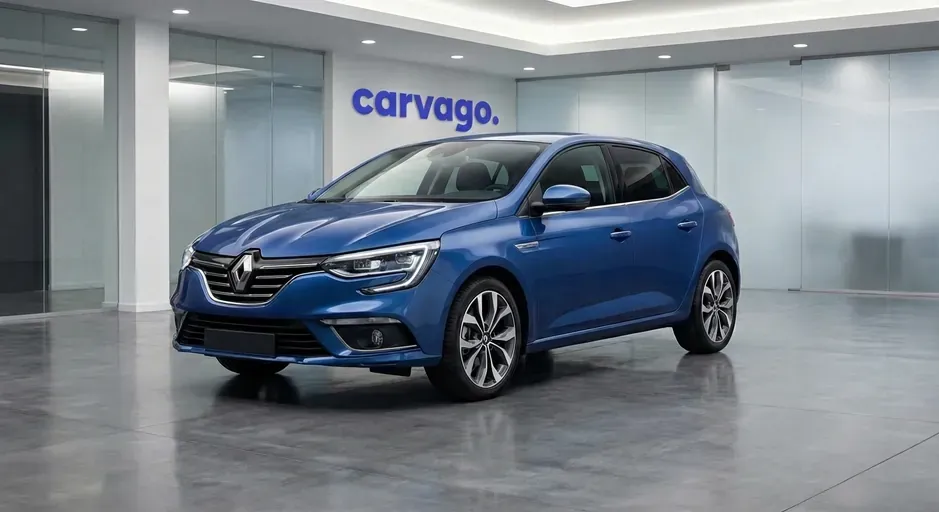
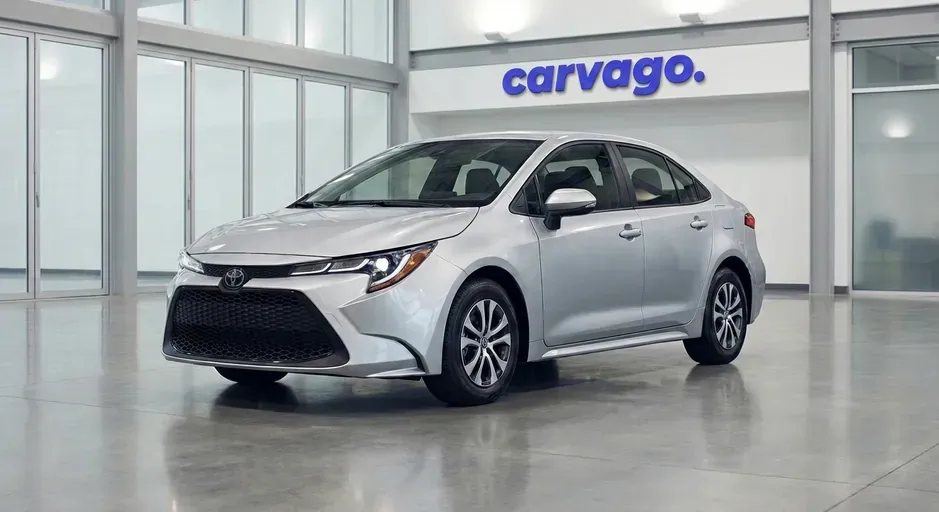
The Renault Mégane, which is also sold as the Mégane GrandCoupé in its sedan version in selected markets (and was formerly known as the Renault Fluence), represents the embodiment of French charm with a strong emphasis on driving comfort, rich equipment, and attractive design. Standing against it is the global bestseller, the Toyota Corolla – a car that previously bore the name Toyota Auris for its hatchback and estate variants in Europe, and which can also be found on the market today as the sister rebranded model Suzuki Swace – which is considered the absolute benchmark for long-term reliability and fuel efficiency thanks to its sophisticated hybrid powertrains. Let's take a detailed look at which of these two popular compacts offers a better price-to-utility ratio after approximately four years of operation, thus becoming a more sensible choice when buying a used family car.
Both models, the fourth-generation Renault Mégane and the E21-generation Toyota Corolla, are mainstays of the popular lower-middle class (C-segment). Although their proportions make them typical representatives of this category, a closer look at their exterior dimensions reveals several interesting differences. These differences are reflected not only in the overall stance of both cars on the road but also have a noticeable impact on interior space and maneuverability. While one car relies on a wider track and a more muscular appearance, the other opts for a slightly more elongated and narrower silhouette.
If we compare the basic hatchback variants, which are highly sought after on the used car market, the Toyota Corolla Hatchback, with a length of 4,370 mm, is 11 mm longer than the Renault Mégane Hatchback (4,359 mm). However, the French representative, at 1,814 mm, is a significant 24 mm wider than its Japanese competitor (1,790 mm). Looking at the more practical family estate versions, the Toyota Corolla Touring Sports outgrows its French rival, the Renault Mégane Grandtour (4,626 mm), with its 4,650 to 4,653 mm. The wider build of the Mégane provides a visual impression of greater robustness and offers valuable extra centimeters in the interior around the elbows and shoulders, while the narrower and longer profile of the Corolla ensures slightly easier navigation through narrow city streets and more comfortable parking.
However, a crucial parameter for the overall spaciousness of the cabin and comfort in the rear seats is the wheelbase. For hatchbacks, the Renault Mégane leads in this regard with a value of 2,669 mm, which is a substantial 29 mm more than the Toyota Corolla offers (2,640 mm). However, the situation changes with the more practical estate body styles; the Toyota Corolla Touring Sports scores with a generous 2,700 mm. Although Renault extended the wheelbase to as much as 2,712 mm in later estate models (especially in E-Tech versions and newer powertrains), earlier model years often shared the 2,669 mm wheelbase with the hatchback. For families who spend a lot of time on longer journeys and require maximum rear knee room, it will depend on the exact model year and specification of the Mégane, or they can play it safe with the Corolla Touring Sports and its consistently generous onboard space.
| Parameter | Renault Mégane Hatchback | Toyota Corolla Hatchback | Renault Mégane Estate | Toyota Corolla Estate |
|---|---|---|---|---|
| Length (mm) | 4359 | 4370 | 4626 | 4650 - 4653 |
| Width (mm) | 1814 | 1790 | 1814 | 1790 |
| Height (mm) | 1438 | 1435 | 1449 | 1435 |
| Wheelbase (mm) | 2669 | 2640 | 2669 - 2712 | 2700 |
The luggage compartment is a key factor for many drivers when choosing a car, whether it's for everyday shopping, transporting sports equipment, or packing for a long family vacation. Both the Renault Mégane (fourth generation) and the Toyota Corolla (E21 generation) represent very popular lower-middle-class choices on the market for approximately four-year-old used cars. However, both models approach interior spaciousness with a slightly different philosophy. While one relies on better storage space in its compact body, the other scores overwhelmingly with absolute volume in its extended family version.
In the shorter hatchback body variant, the Renault Mégane Hatchback offers a solid basic boot volume of 384 liters, which increases to 1247 liters after folding down the rear seats. The Toyota Corolla Hatchback is somewhat more modest in its basic compact layout. Its boot can hold 361 liters (in the most common 1.8 Hybrid powertrain), or only 313 liters in the more powerful 2.0 Hybrid version, where the storage space is partially reduced due to the different placement of the 12V battery. After completely folding down the seats, the Corolla provides a volume of approximately 1024 liters. For the average user, this means that the Mégane hatchback can accommodate one extra small suitcase and overall offers better usability for transporting bulkier items.
However, the situation radically changes with the more practical estate versions. The Renault Mégane Grandtour (referred to as Estate in the comparison) features a standard boot volume of 521 liters, which can be easily expanded to a decent 1,504 liters. But the Toyota Corolla Touring Sports clearly reigns supreme in the field of family utility. In the popular 1.8 hybrid motorization, it offers an impressive 598 liters (581 liters for the 2.0 Hybrid version), which is a capacity absolutely sufficient for weekend shopping and a longer holiday with a lot of equipment. After folding down the second row of backrests, its total volume increases up to 1,606 liters. For both brands, it is necessary to keep in mind that versions additionally equipped with batteries (for example, the plug-in hybrid Renault Mégane E-Tech) significantly limit the space under the roller blind – the basic volume of this French estate drops down to 389 liters.
From the perspective of overall practicality, this dimensional battle gives a fairly clear recommendation. If you are looking for an agile hatchback for the city, the Mégane will provide you with a slightly more appealing and deeper boot. But if you are choosing a full-fledged car for the family, the estate version from Toyota is the undoubted favorite thanks to its top-notch capacity. It will easily offer you space for several extra suitcases and transport absolutely everything you need for everyday family operation.
| Parameter | Renault Mégane Hatchback | Toyota Corolla Hatchback | Renault Mégane Estate | Toyota Corolla Estate |
|---|---|---|---|---|
| Basic volume (liters) | 384 | 361 | 521 | 598 |
| Max. volume after folding seats (liters) | 1247 | 1024 | 1504 | 1606 |
Towing capacity is often a decisive factor for families and DIYers who occasionally need to hook up a smaller load or a residential caravan behind their car. When choosing a roughly four-year-old used car from the current generations, you will encounter stark differences between the Renault Mégane and Toyota Corolla models. They stem from a different approach to powertrains, which has a fundamental impact on practical use.
The winner in brute strength is undoubtedly the Renault Mégane. Its purely combustion versions from 2020 to 2024, such as the popular TCe petrol engines (115–160 hp) or Blue dCi diesels, can tow a braked trailer weighing 1,600 to 1,850 kg on the towbar. Such capacity represents space for several extra suitcases, but it is primarily fully sufficient for towing a medium-sized caravan for a summer holiday or the safe transport of heavier building materials. However, you must be careful with modern battery alternatives: the plug-in hybrid Mégane E-Tech 160 can only tow a significantly more modest 750 kg, and the fully electric fifth generation (E-Tech Electric) offers a capacity limited to a mere 500 to 900 kg.
The Toyota Corolla approaches towing with much greater caution. Given that the market for nearly new used cars of this brand is safely dominated by economical hybrid motorizations (1.8 Hybrid and 2.0 Hybrid), you have to settle for a maximum braked trailer weight of only 750 kg. In practice, this means sufficient capacity for a small trailer for weekend shopping at a DIY store or the safe attachment of a heavier carrier for e-bikes. However, the hybrid Corolla is simply not built for transporting another car or a large caravan. If you still want to tow a bit more with the Corolla, the older and much rarer purely petrol 1.2T version managed an acceptable 1,300 kg.
From the point of view of towing power, a clear conclusion can be drawn. If you actively spend time at a cottage, transport heavy materials, or travel with a caravan, the classic combustion Renault Mégane is a much more versatile choice. The hybrid Toyota Corolla, on the other hand, is tuned primarily for everyday efficiency and is more suitable for users who only need to attach a small trailer very sporadically. (Note: Since exact data on the maximum weight of unbraked trailers for individual motorizations are not fully specified, the table only lists the available values for braked trailers. However, the legal maximum for an unbraked trailer up to 750 kg applies to both vehicles, which is often technically reduced to 450 kg for hybrid powertrains).
| Model and motorization | Braked weight of trailer (kg) | Unbraked weight of trailer (kg) |
|---|---|---|
| Renault Mégane IV (TCe, Blue dCi) | 1600 - 1850 | Not specified |
| Renault Mégane IV E-Tech Plug-in 160 | 750 | Not specified |
| Renault Mégane V E-Tech Electric | 500 - 900 | Not specified |
| Toyota Corolla E21 1.2T | 1300 | Not specified |
| Toyota Corolla E21 1.8 Hybrid / 2.0 Hybrid | 750 | Not specified |
When choosing between used Renault Mégane and Toyota Corolla models, motorizations play a key role, as each of the carmakers has chosen a completely different technical approach for its cars. While Renault relies on a diverse palette of traditional turbocharged combustion engines, exceptionally economical diesels, and modern plug-in hybrid or fully electric variants, Toyota is a global leader and pioneer in the field of full-hybrid technologies. For drivers looking for maximum efficiency in the city and smoothness of driving without the need for external charging, the Corolla offers an absolutely ideal solution in the form of its reliable hybrids. Conversely, the Mégane can appeal to a wider spectrum of drivers: from those with high mileage, for whom diesel makes sense, to advocates of new technologies choosing an advanced PHEV system or pure electricity. The decision thus depends primarily on your preferred driving profile and the frequency of highway journeys.
The engine lineup for the Renault Mégane (focusing on the fourth and the upcoming fifth electric generation in the market of roughly four-year-old used cars) covers practically all conceivable needs. The golden mean of the petrol range is the reliable turbocharged four-cylinder 1.3 TCe, available in versions with power outputs from 85 to 118 kW, which excels in refined operation and great flexibility. Those interested in diesel can still opt for the proven 1.5 Blue dCi unit, which guarantees some of the best fuel consumption figures in its class. Renault has also fully adapted to the era of electrification, and the E-Tech Plug-in 160 model is appearing on the used car market, combining a naturally aspirated 1.6-liter engine with an advanced multi-mode transmission and an electric motor. If you come across the fully electric Renault Mégane Generation V, you will have a choice between the EV40 and the more powerful EV60 versions with better range. Sport-oriented drivers will definitely be thrilled by the top-of-the-line R.S. model with the 1.8 TCe engine.
| Engine type | Fuel | Power (kW) | Torque (Nm) | Transmission |
|---|---|---|---|---|
| 1.3 TCe 115 / 140 / 160 | Petrol | 85 / 103 / 118 | 220 / 240 / 270 | 6MT / 7EDC |
| 1.8 R.S. TCe 280 / 300 | Petrol | 205 / 221 | 390 / 420 | 6MT / 6EDC |
| 1.5 Blue dCi 115 | Diesel | 85 | 260 | 6MT / 7EDC |
| 1.6 E-Tech Plug-in 160 | PHEV | 118 (system) | 144 + 205 | Multi-Mode |
| EV40 130hp | Electricity | 96 | 250 | 1-speed automatic |
| EV60 220hp | Electricity | 160 | 300 | 1-speed automatic |
The Toyota Corolla, on the other hand, builds its sales success and reliability primarily on its full hybrid powertrain (HEV), which eliminates any need to look for charging stations. In the market of four-year-old used cars, you will most often encounter the extremely economical and standard 1.8 Hybrid variant with a system output of 90 kW, which is a perfect choice for heavy urban and suburban traffic. For those looking for a more dynamic ride and frequently cruising in the left lane of highways, there is the more powerful 2.0 Hybrid reaching a solid 132 kW. Especially in older model years at the beginning of sales (production until 2021), it was still possible to buy the Corolla with a conventional turbocharged four-cylinder petrol engine 1.2T, however, this version was soon removed from the lineup, making it rather a marginal affair. Both main hybrid engines are always paired with a continuously variable planetary transmission e-CVT. You would look in vain for classic diesel engines in this car for understandable ecological reasons.
| Engine type | Fuel | Power (kW) | Torque (Nm) | Transmission |
|---|---|---|---|---|
| 1.2T (until 2021) | Petrol | 85 | 185 | 6MT / CVT |
| 1.8 Hybrid | HEV | 90 (system) | 142 + 163 (electric) | e-CVT |
| 2.0 Hybrid | HEV | 132 (system) | 190 + 202 (electric) | e-CVT |
Choosing the right engine is crucial for long-term satisfaction, and our recommendations are based on real-world performance, fuel consumption, owner feedback, and mechanical reliability. While the Renault Mégane in roughly four-year-old used cars relies primarily on sophisticated turbocharged petrol engines developed in cooperation with Mercedes-Benz, the Toyota Corolla takes the path of its renowned and market-unrivaled full hybrid technology. Interestingly, while Renault uses a gasoline particulate filter (GPF) for its petrol engines and relies on the strong torque of a turbocharger to achieve strict emission standards and dynamics, Toyota relies on natural aspiration combined with a sophisticated electric motor, giving each car a completely different driving character and service requirements.
This modern four-cylinder represents the absolute "golden mean" in the fourth-generation Mégane lineup. It is an engine that offers a great balance between refinement, good dynamics, and reasonable operating costs. Its main technical advantage is a smooth pull right from low revs and a real-world combined fuel consumption that is surprisingly low during normal driving, around 6 l/100 km. The timing drive is handled by a reliable chain. Although it is a mechanically very robust engine, oil quality is extremely important for its longevity – we recommend shortening the replacement interval to 15,000 km and strictly requiring the prescribed RN17 specification oil, which helps fight against carbon buildup on the valves. In terms of risks, pay close attention to the condition of the cooling system in these used cars. In earlier model years, leaks appeared around the plastic thermostat housing. Before buying, always carefully check the coolant level in the reservoir and look for pink or yellow traces of leaks around the block. Given that it is an all-aluminum engine without a sophisticated coolant level sensor, an unnoticed water leak can lead to very rapid and fatal overheating. This engine is ideal for drivers with a mixed route profile who will use the car for both regular suburban trips and highway journeys. However, for exclusively short urban "hopping" with a cold engine, this direct-injection petrol with a particulate filter is not the most suitable, as it would lead to filter clogging and oil dilution with petrol.
Although the weaker 1.8-litre hybrid is a legend of reliability for slower drivers, the more powerful 2.0-litre hybrid changes the character of the Corolla into a very pleasant, versatile, and dynamic car. This engine perfectly combines excellent fuel consumption (in reality, you can easily stay under 5.5 l/100 km) with a huge power reserve for safe overtaking, which eliminates the somewhat "rubbery" highway performance of the weaker version. A huge technical advantage of this two-litre engine is the dual injection system (D-4S). It combines indirect port injection and direct injection into the cylinders, which effectively and permanently prevents the dreaded carbon build-up on the intake valves – a common problem with modern engines. The e-CVT planetary gearbox lacks traditional friction clutches, making it mechanically practically immortal. The known risks and weak points of the transmission itself are almost zero here, yet as experienced used car buyers, pay attention to two things. Check the condition of the 12V traction battery (located in the back), which tends to discharge during frequent short trips or after standing for a long time at a dealership, and can leave you stranded. Absolutely crucial is checking the cooling fan grille of the main hybrid battery, which is located near the rear seats. If this filter is clogged with dust or hair, the battery cannot cool itself, overheats, and this drastically shortens its lifespan. Check the grille visually and make sure the previous owner cleaned it regularly. The two-litre hybrid is a perfect choice for highway mile-munchers, families, and drivers who demand both efficiency in traffic jams and the joy of a brisker drive, without having to compromise on bulletproof Japanese reliability.
When choosing a roughly four-year-old used car, it is good to keep in mind that the official fuel consumption figures provided by manufacturers often differ noticeably from everyday reality. Paper figures are generated under strictly defined laboratory conditions, and therefore, for a more accurate picture, it is always better to rely on the real-world experiences of the drivers themselves. For our comparison, we used data from the independent community portal Spritmonitor.de, where hundreds of thousands of motorists from all over Europe regularly enter their actual refuelling data. We focused exclusively on the current generations of both cars corresponding to roughly four years of age – namely the Renault Mégane IV and the Toyota Corolla (E21), which are among the most sought-after on the used car market.
| Model and engine | Average fuel consumption (l/100 km) |
|---|---|
| Toyota Corolla 1.8 Hybrid (90 kW) | 4.7 |
| Renault Mégane 1.5 Blue dCi 115 (85 kW) | 4.8 |
| Toyota Corolla 2.0 Hybrid (132 kW) | 5.2 |
| Renault Mégane 1.3 TCe 140 (103 kW) | 6.4 |
The interpretation of the data brings a very interesting comparison of two completely different technological approaches to reducing fuel consumption. It is clearly evident from the table that the Japanese full-hybrid system is exceptionally efficient in practice. The base 1.8 Hybrid engine in the Corolla can drive at an average of an excellent 4.7 l/100 km, which is a value even slightly better than that of the traditional and very economical French 1.5 Blue dCi diesel engine from Renault (4.8 l/100 km). The more powerful 2.0 Hybrid in the Toyota then asks for only about half a litre more, while offering significantly better dynamics and power reserve. On the other hand, the modern small-displacement turbocharged 1.3 TCe petrol engine in the Renault may please with exemplary refinement, but with a consumption of 6.4 l/100 km, it clearly shows that a small turbo engine without the help of an electric motor cannot fool physics and simply takes noticeably more fuel compared to its hybrid competition.
What do these values mean for the average user? If you spend the vast majority of your time driving around the city or in slow suburban traffic jams, the Toyota Corolla with its advanced hybrid drive will be the absolute king. The system here can effectively recuperate braking energy and drive a large part of the route purely on electricity, which brings consumption down to an absolute minimum. Conversely, highway travellers and sales representatives who regularly devour hundreds of kilometres at a steady high speed should definitely reach for the Renault Mégane model with the proven 1.5 Blue dCi diesel. The diesel engine does not lose its efficiency at highway limits and will offer a significantly longer range on a single tank. The petrol Renault Mégane 1.3 TCe, on the other hand, will be an ideal and reliable compromise for those who have a lower annual mileage, do not seek more complex diesel technology, and prefer a classic concept.
In conclusion, fuel consumption and the type of drive should play an absolutely crucial role when deciding between these two used cars. While the Toyota Corolla offers an uncompromisingly efficient petrol hybrid dominating in suburban and urban traffic, the Renault Mégane confidently counters with classic diesel certainty, which even today makes huge sense on long routes. Your final choice should therefore depend primarily on where and how you plan to drive the car most often.
When choosing a roughly four-year-old used car (ideally 2021–2022 model years), the different pricing strategies and perceptions of both brands on the used car market are fully evident. If we focus on the fourth-generation Renault Mégane (post-facelift) and the 12th-generation Toyota Corolla (E210), the main difference is the depreciation curve. While the French representative attracts with a great price-to-age ratio, the Japanese model benefits from the reputation of a highly reliable car that fiercely holds its value.
| Model | Starting price (€) | Average used price (€) | Top versions (€) |
|---|---|---|---|
| Renault Mégane IV | €12,000 | €16,000 | €20,000+ |
| Toyota Corolla (E210) | €16,000 | €21,000 | €27,000+ |
(Note: Prices are approximate and depend on mileage, engine, and trim level.)
The Renault Mégane is an exceptionally attractive choice on the used car market for buyers looking for a modern vehicle at the most favorable price. Faster depreciation in the first years of operation means that for a used car buyer, the French hatchback or estate (Grandtour) represents a very rational and economical purchase.
The Corolla is noticeably more expensive when bought at a used car dealership, but it holds its value much better than the vast majority of European competitors. The reason is the enormous demand for proven hybrid systems that promise longevity and minimal maintenance costs.
It depends primarily on the priorities of the future owner.
If you have a limited budget and want to get the newest possible car with good equipment and a successful engine for your money, the Renault Mégane is the clear winner, where the initial savings upon purchase are massive.
Conversely, the Toyota Corolla makes the most sense for those looking for a long-term investment and peace of mind. The higher initial costs of acquiring the used car will continuously pay off not only thanks to extremely low fuel consumption in the city, but above all during subsequent resale. The Corolla will lose only an absolute minimum of its value over the next five years.
Both models, the Renault Mégane and the Toyota Corolla, boast a maximum five-star rating in the safety tests of the independent organization Euro NCAP. However, it is crucial to put these results into the context of the time when the cars were actually tested. Euro NCAP methodology and requirements are constantly evolving and becoming stricter over the years, which means that percentage ratings from different years cannot be directly compared. While older tests focused primarily on passive safety and body rigidity during the impact itself, newer testing protocols place much greater emphasis on active safety assistants, improved sensors for cyclist detection, and more complex crisis scenarios at intersections.
The current fourth generation of the Renault Mégane underwent Euro NCAP crash tests in 2015, at the time of its official market launch. The car took home the full five stars at the time and demonstrated strengths in passive protection, primarily thanks to a reinforced high-strength steel platform. Although the Mégane was rated as an exceptionally safe family car in its time, from today's perspective, it must be taken into account that the validity of this five-star certification has officially expired due to the age of the test, and the car was not tested according to current, much stricter criteria for assistance systems.
The twelfth-generation Toyota Corolla completed Euro NCAP tests in 2019 and also received five stars. However, because it went through a four-year newer and significantly more demanding methodology, its overall results carry more weight in the context of the used car market. The test commissioners particularly appreciated the standard Toyota Safety Sense package. Its Autonomous Emergency Braking (AEB) reliably reacted not only to other vehicles at higher highway speeds but also successfully detected pedestrians and cyclists in demanding urban situations.
In terms of mechanical durability and occupant protection during the impact itself, both cars offer a solid and reliable structure. However, if state-of-the-art active prevention is a priority for you and you want a car whose assistance systems have demonstrably passed stricter and more current Euro NCAP tests, the Toyota Corolla with its 2019 tests is objectively a more modern and comprehensive choice that better meets today's safety standards.
| Parameter | Renault Mégane | Toyota Corolla |
|---|---|---|
| Year of testing | 2015 | 2019 |
| Adult occupant protection | 88 % | 95 % |
| Child occupant protection | 87 % | 84 % |
| Vulnerable road user protection | 71 % | 86 % |
| Safety assist systems | 71 % | 77 % |
In addition to standard equipment, each model offers something extra and approaches added value in its own specific way, making everyday life with the car easier.
Renault has long relied on innovative technologies and high user comfort, making both daily commuting and long journeys more pleasant.
The Japanese representative focuses on absolute smoothness, low operating costs, and surprisingly sophisticated driving characteristics thanks to its advanced architecture.
Advantages:
Disadvantages:
Advantages:
Disadvantages:
Based on long-term user experiences, service statistics, and findings from our own inspections, we have compiled an overview of the most common problems of both cars. If you are choosing a used car that is approximately four years old, it is important to focus not only on the service history but also on the specific weak points of the given generation. That is exactly why a thorough physical inspection of a used car is the best way to prevent unexpected investments.
The fourth generation of the Renault Mégane took a big step forward as part of its facelift, especially thanks to the deployment of the new 1.3 TCe petrol engine (developed in cooperation with Mercedes-Benz), which replaced the problematic older 1.2 TCe unit. Nevertheless, this car has its specifics that are good to watch out for.
Summary for Renault Mégane: In terms of engines, the Mégane with the 1.3 TCe unit is a very solid and reliable car. Most of the ailments are rather in the nature of minor imperfections (infotainment, chassis consumables). However, we recommend paying particularly close attention and getting an independent check of the car's technical condition when buying versions with the EDC automatic transmission.
The twelfth generation of the Toyota Corolla is a long-term benchmark of reliability and is one of the least risky cars on the used car market. Toyota has tuned the hybrid powertrain to absolute perfection, yet a few specific weaknesses can be found.
Summary for Toyota Corolla: The Toyota Corolla is an absolute safe bet when buying a used car. The vast majority of reported problems stem more from the nature of the hybrid's operation itself (easily discharged 12V battery, rusted unused brakes) rather than from expensive mechanical failures. It is an exceptionally durable and mechanically undemanding car.
When buying a used car, a thorough inspection is crucial. Here are a few specific points to focus on with these two models, which is why a detailed comprehensive car inspection by a professional, which will reveal the real technical condition, always pays off.
The Toyota Corolla offers significantly more economical operation thanks to its advanced full-hybrid engines, with which you can normally drive around 4.5 l/100 km. Although Renault has efficient petrol and diesel engines, it cannot match the Japanese hybrid in real-world city consumption. The Mégane E-Tech version only makes sense in terms of consumption as a plug-in hybrid if you charge it regularly.
In the hatchback versions, the Renault has a slight edge with a boot volume of 384 liters compared to 361 liters for the Toyota. However, if you are looking for a practical family estate, the Toyota Corolla Touring Sports wins with a capacity of 598 liters, while the Renault Mégane Grandtour offers a slightly more modest 521 liters.
The Toyota Corolla has long reigned supreme in used car reliability rankings, primarily thanks to its time-tested hybrid system without a traditional clutch or starter. The fourth-generation Renault Mégane is a mechanically solid car, but it can suffer more often from minor faults in the onboard electronics and infotainment. To minimize service costs, the Japanese model is a safer choice.
The Renault Mégane sticks to the French tradition and features a very compliant chassis that excellently and softly filters out common bumps. However, thanks to the modern TNGA platform and independent rear suspension on all versions, the Toyota Corolla combines high comfort with much more confident handling. Both cars are very comfortable, but the Toyota offers a better balance between shock absorption and cornering stability.
While the Toyota Corolla appears on the used car market almost exclusively with 1.8 or more dynamic 2.0-liter hybrid units, Renault covers a wider spectrum of traditional needs. With the Renault Mégane model, you can easily find classic turbocharged TCe petrol engines, very economical Blue dCi diesels, or the aforementioned plug-in hybrid. The choice thus depends on whether you prefer a modern hybrid for the city or a classic diesel engine for long highway journeys.
Sources: ADAC, svetmotoru.cz, lidovky.cz, autohome.cz, chytreauto.cz, motoristickydenik.cz
This article was prepared using artificial intelligence tools. The section guarantor is Petr Dušek.
Volkswagen Golf vs. Ford Focus: a detailed comparison of the engine, equipment, and reliability. Find out which of these hatchbacks is the best choice for you.
Apr 13, 2026
Mazda 3 vs. Toyota Corolla: Which bestseller is better? Our detailed comparison of engines, features, and handling will help you make your final choice.
Apr 13, 2026
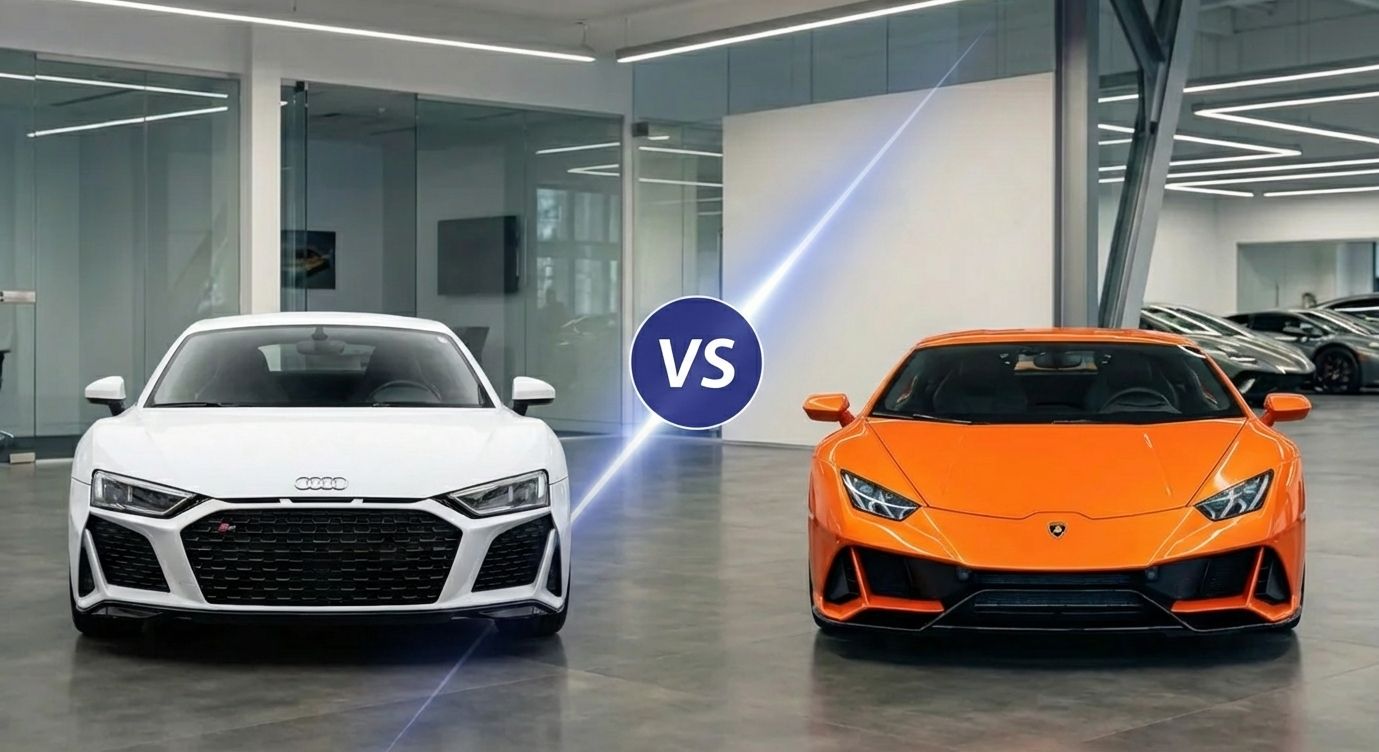
Detailed comparison of Audi R8 vs Lamborghini Huracán. We reveal the real differences, performance, and driving characteristics of these V10 supercars. Which one to choose?
Apr 14, 2026