Review Nissan Qashqai: What do owners and experts really say?
Nissan Qashqai review: real owner experiences, common faults, e-POWER picks, running costs and used prices — all you need before you buy.
October 18, 2026
Verdict at a Glance
Who it suits: Families and daily commuters wanting an elevated seating position, easy cabin access, and manageable urban dimensions.
Recommended engine: The e-POWER hybrid for city commuting, or the higher-output mild-hybrid petrol for motorway travel and towing.
What to avoid: Any vehicle without verified recall repairs—check by VIN—and early models with unresolved 12V battery discharge issues.
Introduction
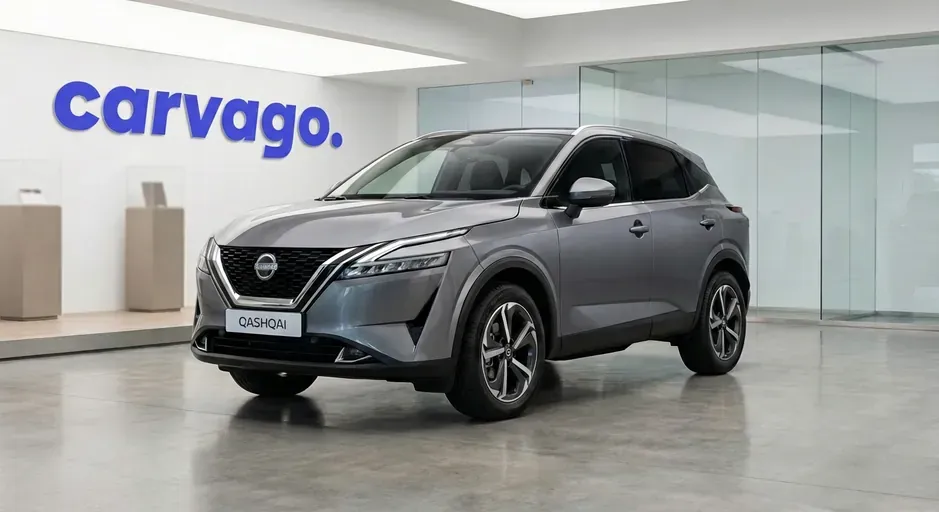
The Nissan Qashqai occupies a central position in the European compact crossover segment. This review focuses exclusively on the third generation (chassis code J12), which had its world premiere in February 2021, followed by initial European customer deliveries in summer 2021. Sold strictly as a five-door Nissan Qashqai SUV, the lineup launched with mild-hybrid petrol drivetrains before the brand added its distinctive series-hybrid setup, with customer handovers of the hybrid Nissan Qashqai starting in September 2022.
A mid-cycle refresh arrived three years later. Nissan revealed the updated model on 17 April 2024, began series production on 23 May 2024, and initiated European customer handovers in summer 2024. Sunderland production of an updated, higher-efficiency hybrid variant followed in July 2025.
Aimed primarily at family buyers and everyday commuters, the third-generation Nissan Qashqai appeals to drivers who want an elevated seating position, easy cabin access, and manageable dimensions for suburban errands and tight parking spaces.
Owner Experiences: Common Faults and Recalls
On European roads, the third-generation Nissan Qashqai has largely left behind the mechanical engine troubles of its predecessor, yet owner forums and professional endurance tests point to teething troubles focused primarily on electrical systems and software. Long-term durability data for the refreshed range introduced in May 2024 and the revised e-POWER hybrid launched in July 2025 remains limited due to their recency.
12V Battery Discharge and Infotainment Freezing
The most frequent complaint among owners of both the petrol Nissan Qashqai mild hybrid and the e-POWER hybrid—particularly on models produced between 2022 and 2024—involves premature depletion of the low-voltage auxiliary 12V battery. Owners report that if the crossover remains parked for several consecutive days or operates predominantly on short urban trips, the auxiliary battery drops below its operational threshold. When this occurs, the on-board computers fail to cycle the vehicle's high-voltage contactors, displaying multiple cascade errors such as lighting malfunctions or key detection failures and preventing the car from starting. Authorised workshops have addressed this through control module and gateway software updates to eliminate parasitic standby draw, alongside fitting upgraded replacement batteries in persistent cases.
On pre-facelift vehicles produced between 2021 and early 2024, owners report frequent software lockups on the central touchscreen. Symptoms include display freezing, delayed touch inputs, occasional black screens on startup, and connection dropouts when running wireless smartphone integration alongside native navigation. While holding down the volume knob initiates a temporary system reset, permanent fixes required dealership firmware reflashes.
Verified Safety Recalls
Official recall campaigns on European registries cover several specific hardware and software components across different production phases:
Traction Battery Controller Software: Announced in August 2026 for the hybrid Nissan Qashqai e-POWER built from 8 July 2025 to 20 May 2026 (affecting over 53,000 vehicles worldwide). Due to software calibration, the lithium-ion battery controller may not reliably detect cell anomalies, which can trigger a fail-safe mode that limits engine power, stops charging, or causes an unexpected loss of propulsion. Authorised dealers reprogram the battery management software.
Engine Bay Fuel Line Chafing: Announced in October 2025 for petrol mild hybrid models built between 4 May 2021 and 17 October 2024 (covering 390,595 vehicles globally). Friction between the fuel pipe and its retaining clip can cause wear, creating a risk of fuel leakage and fire. Workshops inspect the pipe to fit an anti-abrasion sleeve or replace abraded lines with an updated assembly.
Battery State-of-Charge Calculation: Announced in March and April 2025 for vehicles built between September 2021 and January 2024 across European markets. A software error caused fluctuating battery charge calculations, leading to starting failure or potential power loss. Dealers resolve the issue by reprogramming the management system.
Steering Wheel Hands-On Mat: Announced in February 2024 for models manufactured between 6 May 2021 and 27 September 2022 equipped with optional driver assistance. A damaged capacitive mat inside the steering wheel could falsely register hands on the rim, failing to issue warnings to the driver. Technicians inspect the wheel's serial number and replace affected assemblies.
🔍 What to check before buying
Check official recall status by VIN: Contact a franchised dealer to confirm that mandatory campaigns—including the fuel pipe inspection, steering wheel sensor check, and traction battery software updates—have been completed.
Test 12V battery health: Check terminal resting voltage and ensure the electrical system starts cleanly without cascade error warnings or delayed system wake-ups.
Inspect the central display: On pre-facelift models, operate the infotainment system continuously during the test drive, verify wireless smartphone stability, and shift into reverse several times to assess reversing camera response.
Inspect the engine bay for coolant seepage: On petrol mild hybrid variants, inspect the plastic thermostat housing and expansion tank for hairline cracking or dried coolant residue.
Engines: Which One to Choose
The third-generation Nissan Qashqai eliminated diesel engines entirely, relying on a four-cylinder turbocharged petrol unit with 12V mild-hybrid assistance alongside a distinctive series-hybrid system. The line-up offers front-wheel drive across all variants, with all-wheel drive reserved exclusively for the more powerful mild-hybrid automatic.
Engine
Fuel
Power
Drivetrain
Gearbox
Model years
1.3 DiG-T MHEV
Petrol Mild Hybrid
103 kW (140 hp)
Front-wheel drive
6-speed manual
2021–present
1.3 DiG-T MHEV
Petrol Mild Hybrid
116 kW (158 hp)
Front-wheel drive
6-speed manual
2021–present
1.3 DiG-T MHEV
Petrol Mild Hybrid
116 kW (158 hp)
Front-wheel drive
Automatic
2021–present
1.3 DiG-T MHEV
Petrol Mild Hybrid
116 kW (158 hp)
All-wheel drive
Automatic
2021–present
1.5 VC-T e-POWER
Full Hybrid
140 kW (190 hp)
Front-wheel drive
Automatic
2022–2025
1.5 e-POWER
Full Hybrid
151 kW (205 hp)
Front-wheel drive
Automatic
2025–present
Which engine to choose
For urban commuting and stop-start traffic, the hybrid Nissan Qashqai e-POWER is the most suitable match. Because the petrol engine acts strictly as an onboard generator while an electric motor drives the wheels directly, it provides step-less pull-away and quiet low-speed manners without the need to plug in.
Drivers with mixed daily routines who prefer mechanical simplicity should consider the petrol Nissan Qashqai mild hybrid. The base output paired with the manual gearbox delivers adequate everyday pace for family duties, while the higher-output petrol automatic reduces driving effort in congested conditions, albeit with noticeable low-rpm turbo hesitation before boost arrives.
For frequent long-distance motorway travel, the higher-output mild-hybrid petrol remains the preferable option. At continuous high cruising speeds, its conventional mechanical drive operates in its comfort zone, whereas the series-hybrid generator revs noticeably under sustained high load.
Buyers who regularly tow trailers or face poor winter road conditions should look toward the higher-output petrol variants. The mild-hybrid engine allows the highest braked towing limits of the range, and opting for the Nissan Qashqai 4x4 provides effective all-weather traction. By contrast, the e-POWER hybrid has a substantially lower towing allowance and cannot be paired with all-wheel drive.
For recurring mechanical concerns, electrical quirks, and official recall notices affecting these powertrains, refer to the owner experiences section.
Space & Practicality
Dimension
SUV
Length
4,425 mm
Width (excluding mirrors)
1,835 mm
Height
1,625 mm
Wheelbase
2,665 mm
Boot volume (standard, seats up / folded)
504 / 1,447 l
Boot volume (with subwoofer or spare wheel, seats up / folded)
479 / 1,422 l
Rear doors open to nearly ninety degrees, making passenger access and installing child seats straightforward. The Nissan Qashqai SUV accommodates two tall adults in the back with sufficient headroom and knee clearance, though carrying three passengers abreast is tight across the shoulders, and the flat bench cushion offers minimal lateral thigh support on long journeys. Cabin variability is limited because the rear bench is fixed in place and does not slide fore or aft. Cargo loading is simplified by a wide boot opening and an asymmetric split-folding seatback. On higher trims fitted with modular dual luggage boards, the cargo floor sits flush with the boot sill, eliminating the step when the seatbacks are folded flat while providing concealed storage sections underneath.
What the Tests Say
Professional evaluations of the Nissan Qashqai highlight composed motorway compliance and dependable high-speed stability. The chassis tracks securely during sudden avoidance manoeuvres with well-contained body roll. However, low-speed compliance over sharp urban potholes and transverse ridges is firm, and testers note that fitting optional larger wheels introduces low-speed vertical fidget over uneven surfaces. Steering is light, direct, and predictable around town, though it conveys minimal feedback from the road surface when cornering briskly. Acoustic insulation is effective, particularly in the hybrid Nissan Qashqai, where additional firewall damping and decoupled engine revs keep the cabin quiet under typical loads.
Interior ergonomics score well thanks to physical climate controls beneath the central display. Dashboard fit and finish are solid, with tactile materials such as Alcantara appearing on higher trims. Cost-cutting remains evident in places, including thinner padding on the rear door armrests and exposed wiring near the rear-view mirror.
Facelift Updates and Tester Consensus
Testers agree that the crossover prioritises safe, secure roadholding over agility, while opinions diverge on secondary ride comfort across uneven tarmac depending on the wheel size fitted. The facelift introduced a responsive Google built-in infotainment interface and enhanced cabin insulation, though testers noted that the wireless smartphone charging pad tends to run warm during prolonged operation.
Prices and Market Offer
All charts in this section are drawn from Carvago's listings of the entire Nissan Qashqai model family, including earlier generations represented in the data rather than only the reviewed generation. Because vehicles are grouped strictly by manufacture year, the supplied data does not establish a separate price level for the third generation alone. Across the broader model range on offer today, the median asking price stands at €17,500 for 2019 examples, compared to €30,000 for 2024 cars and €32,200 for 2025 builds.
Between April 2026 and September 2026, active Nissan Qashqai listings ranged from 14,582 cars in April to a peak of 15,458 in May. The chart below tracks these monthly listing counts over the period.
Nissan Qashqai - availability over time
Active listings over time
Month
Nissan Qashqai
2026-04
14 582
2026-05
15 458
2026-06
15 157
2026-07
15 230
2026-08
14 615
2026-09
14 871
Source Carvago
With the count closing at 14,871 in September 2026, inventory has moved within a narrow range, offering buyers a steady and stable selection of vehicles to choose from.
Among listings advertised today, the median asking price for a vehicle built in 2019 is €17,500, whereas one built in 2025 stands at a median asking price of €32,200. The chart details how these figures compare across consecutive build years.
Nissan Qashqai - median price by model year
Median advertised price by year of manufacture
Model year
Nissan Qashqai
2019
17 500
2020
18 600
2021
20 500
2022
23 700
2023
27 000
2024
30 000
2025
32 200
2026
31 900
Source Carvago
Buyers exploring older options see a median asking price of €18,600 for a 2020 car and €23,700 for a 2022 car. Across the newest model years, the median asking price reaches €32,200 for 2025 listings, while 2026 models record a median of €31,900.
This depreciation curve tracks how the Nissan Qashqai loses value as it ages, shedding roughly 25% of its initial residual value over its first three years. The sharpest single-year decline happens right away, with an 11% loss in the first year alone.
Nissan Qashqai - value loss by age
Residual value by vehicle age
Vehicle age
Nissan Qashqai
New
31 700
1 yr
28 200
2 yrs
25 900
3 yrs
23 900
4 yrs
22 000
5 yrs
19 200
6 yrs
17 800
7 yrs
16 100
Source Carvago
Across the seven years shown, the model sheds approximately 49% of its starting residual value. The pace of annual value loss eases to around 8% per year between ages one and four, marking the period where depreciation levels off after the steep initial drop.
Active listings show how inventory was divided across fuel types from April to September 2026, with petrol leading throughout and reaching 10,808 cars in September 2026 while hybrid options stood at 2,979.
Nissan Qashqai - supply by fuel over time
Supply composition by fuel type
Petrol
Diesel
Hybrid
Electric
LPG
Month
Petrol
Diesel
Hybrid
Electric
LPG
2026-04
10 541
1 182
2 809
5
9
2026-05
11 261
1 272
2 875
7
6
2026-06
11 002
1 188
2 908
10
7
2026-07
11 020
1 173
2 977
9
11
2026-08
10 665
994
2 897
11
8
2026-09
10 808
1 031
2 979
9
4
Source Carvago
Petrol and hybrid variants form nearly the entire available selection, whereas diesel accounted for only 1,031 listings in September 2026 and electric models numbered just 9. In practical terms, buyers will have abundant petrol and hybrid vehicles to compare, but very little choice among alternative powertrains.
Between April 2026 and September 2026, the average asking price for the Nissan Qashqai hovered within a very narrow band, starting at €25,300 in April 2026.
Nissan Qashqai - price trend over time
Average price development over time
Month
Nissan Qashqai
2026-04
25 300
2026-05
25 100
2026-06
25 300
2026-07
25 100
2026-08
25 300
2026-09
25 200
Source Carvago
Prices fluctuated between €25,100 and €25,300 across the period before ending at €25,200 in September 2026, reflecting minimal overall movement.
Smooth, quiet electric-driven manners around town with the hybrid powertrain
Wide-opening rear doors that make passenger access and child seat installation easy
Composed high-speed motorway stability combined with effective sound insulation
Cons
Auxiliary battery discharge issues and touchscreen freezing on pre-facelift models
Firm low-speed ride over sharp potholes, exacerbated by optional larger wheels
Fixed rear seat bench that lacks fore-and-aft sliding adjustment
Frequently asked questions
Is the third-generation model reliable?
The third-generation Nissan Qashqai is mechanically reliable, but pre-facelift cars frequently suffer from auxiliary 12V battery drain and touchscreen freezes. Verify that control-module software updates have been performed by an authorised workshop.
Which engine is best suited for daily driving?
For urban driving, the hybrid Nissan Qashqai e-POWER is best suited due to smooth electric propulsion, though its petrol generator revs under sustained motorway load. Motorway commuters and drivers needing to tow should select the higher-output mild-hybrid petrol instead.
What should you check before buying a used example?
Check that all recall campaigns have been completed by verifying the VIN with an authorised dealer. A pre-purchase inspection such as CarAudit will also confirm the health of the 12V battery and screen responsiveness.
Is all-wheel drive available on this crossover?
All-wheel drive is available exclusively on the higher-output mild-hybrid petrol paired with an automatic gearbox. Front-wheel drive is standard across the rest of the range, and the e-POWER hybrid cannot be optioned with all-wheel drive.