Ford Puma vs. Nissan Juke: Complete comparison 2026
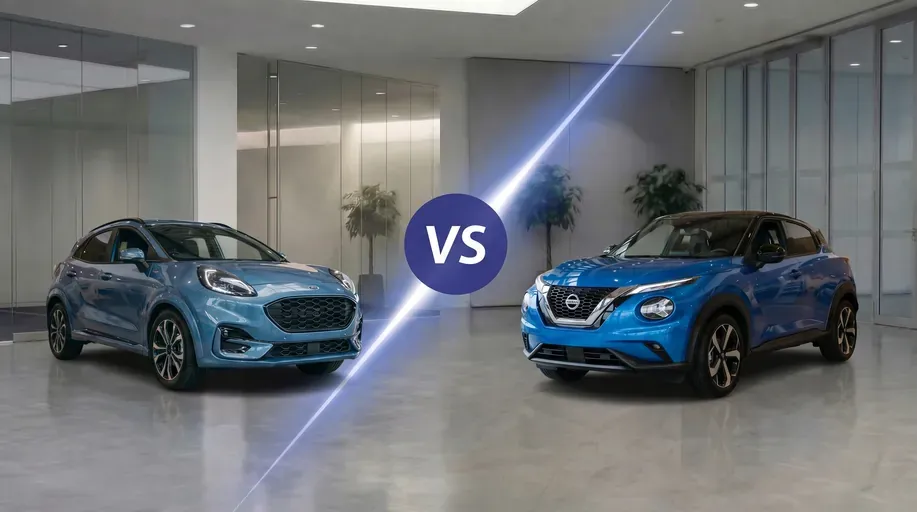
Are you deciding between the Ford Puma and the Nissan Juke? We bring you a detailed comparison of both SUVs, real-world experience with used cars, and a clear verdict for your choice.
Oct 16, 2026
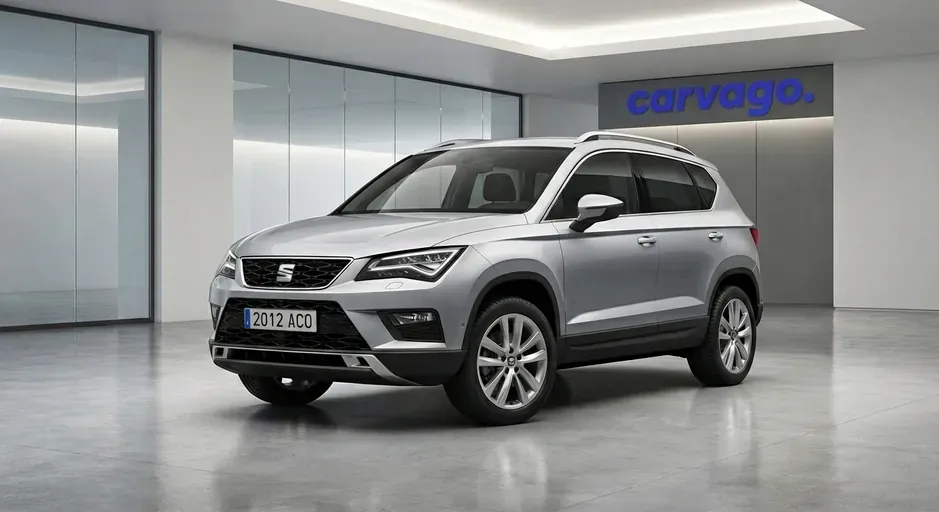
Detailed comparison of Hyundai Tucson vs SEAT Ateca. Looking for the ideal used SUV? Find out everything about reliability, space, and equipment in our final verdict.
October 16, 2026


Hyundai Tucson, which was also known as the Hyundai ix35 in its second generation and on selected markets, represents an exceptionally successful family SUV worldwide, attracting drivers with its distinctive design and rich technological equipment. Standing against it is the Seat Ateca, whose purely sporty and high-performance variant is sold under a separate brand as the Cupra Ateca, and which scores points primarily with its precise handling, extraordinary practicality, and confident European style. In the following direct comparison, we will take a detailed look at the key differences between these two popular cars to find out which one will become the ideal choice for your daily journeys.
Although the Hyundai Tucson and Seat Ateca both belong to the popular compact SUV category, their exterior proportions show two completely different approaches. If we focus on models roughly four years old, i.e., the current third-generation Tucson (from 2020) and the facelifted Seat Ateca (also from 2020), we quickly find that the Korean representative is significantly bulkier, while the Spanish model relies on a more compact and athletic build.
The biggest difference you will notice is when looking at the overall length of both cars. The Hyundai Tucson measures 4500 to 4510 mm in length, making it roughly 120 to 130 mm longer than the Seat Ateca (4381 mm). In daily practice, this brings two different experiences. The shorter Ateca excels in urban environments – it's easier to judge distances and fits into smaller parallel parking spaces. The Tucson, on the other hand, takes up more space but rewards you with a much more mature and prestigious look that gives the feeling of driving a car from a higher class.
The wheelbase plays a crucial role in passenger comfort. The Tucson offers a wheelbase of 2680 mm, which is approximately 42 to 50 mm more than the Ateca (2630–2638 mm). This difference on paper translates into significantly more knee room for passengers in the second row. The Tucson is also 24 mm wider and almost 50 mm taller. As a result, its cabin feels airier and offers more shoulder and headroom, albeit at the cost of slightly reduced maneuverability in narrow underground garages.
So, how do these dimensions affect the final choice? The Seat Ateca is the perfect choice for those looking for a practical yet still agile SUV that is a joy to maneuver in narrow city streets. The Hyundai Tucson, conversely, makes more sense for families who spend more time on longer journeys, require more generous interior space, and appreciate an overall more robust silhouette.
| Parameter | Hyundai Tucson SUV | Seat Ateca SUV |
|---|---|---|
| Width (mm) | 1865 | 1841 |
| Length (mm) | 4500 - 4510 | 4381 |
| Height (mm) | 1650 | 1601 - 1611 |
| Wheelbase (mm) | 2680 | 2630 - 2638 |
Luggage space is often a decisive factor when choosing a family car. Whether you're planning a regular weekend shopping trip or a long holiday with a pile of suitcases and a stroller, every extra litre simply counts. In this regard, the Hyundai Tucson and SEAT Ateca, especially if we focus on models roughly four years old (generations and facelifts sold around 2020–2022), differ quite significantly and target slightly different user needs.
The South Korean third-generation Hyundai Tucson is a true champion of spaciousness in its class. In its standard configuration, it offers an impressive boot capacity of up to 620 litres if you opt for the purely internal combustion versions (1.6 T-GDI). If you choose one of the electrified variants, the capacity drops slightly due to battery storage – to 546 to 577 litres for mild hybrids and 558 litres for the plug-in hybrid version. With the rear backrests folded down, the maximum volume for the internal combustion versions reaches an excellent 1,799 litres. In contrast, the Spanish SEAT Ateca from the 2020 model years onwards provides a basic volume of 510 litres. However, if you choose the all-wheel-drive version (4Drive), this figure decreases to 485 litres. The maximum transport capacity of the Ateca with the seats folded down is 1,604 litres.
In practice, this difference means that you can easily fit space for several extra suitcases in the Tucson, which you will especially appreciate when packing for a two-week family trip to the seaside. While the Ateca lags slightly in absolute numbers, its luggage compartment has an excellent regular shape with minimal dead space. For the daily and weekend needs of a family of four, its boot is still perfectly sufficient for weekend shopping and longer holidays.
| Parameter | Hyundai Tucson SUV | SEAT Ateca SUV |
|---|---|---|
| Basic volume (litres) | 546 - 620 | 485 - 510 |
| Maximum volume with seats folded (litres) | 1721 - 1799 | 1579 - 1604 |
While the third-generation Hyundai Tucson scores with a massive space of up to 620 litres and is ideal for more demanding families, the SEAT Ateca offers a more modest but very usable 510 litres, which will suffice for the vast majority of users without any problems.
A vehicle's ability to tow a trailer is a key factor for drivers who regularly set off on holiday with a caravan, own a boat, or need to transport heavier loads. Although both popular SUVs are very practical for everyday life, looking at the maximum braked trailer weight reveals significant differences that could fundamentally influence your final decision. Since official data for unbraked trailers for these generations is not always fully specified by the manufacturer in basic tables, it usually stays at the legislative maximum of 750 kg, while it may drop slightly for lighter versions and smaller engines.
At around four years old, we are talking about the modern third generation of the Hyundai Tucson on the used car market (sold since 2020). For most traditional internal combustion and mild-hybrid engines (1.6 T-GDI and 1.6 CRDi), it offers a uniform standard and maximum towing capacity of 1650 kg. This value is perfectly sufficient for standard trailers and lighter family caravans. However, if you are considering the more eco-friendly plug-in hybrid (PHEV) or full hybrid (HEV) versions, expect a reduced capacity. Due to the additional weight of the built-in batteries, the maximum trailer weight drops to 1350 kg, and for some of the latest model years, even down to 1210 kg.
The Seat Ateca offers a much wider range of values and will particularly please those who need to tow truly heavy loads. The basic three-cylinder 1.0 TSI handles a more modest 1300 kg, but for the popular 1.5 TSI engine, which is frequently found on the used car market, the capacity already rises to a very solid 1600 to 1900 kg. The real top performer is the 2.0 TDI diesel engine (or the more powerful 2.0 TSI petrol), which can tow up to 2100 kg. Such a value easily offers room for a few extra suitcases hidden in a large caravan, is sufficient for weekend shopping as well as longer holidays, and is not intimidated by the transport of bulky construction materials.
Which car to choose?
If towing power is your number one priority and you plan to frequently hitch up a heavier caravan or utility trailer, the Seat Ateca with the more powerful two-litre engine will offer you a noticeably larger reserve and higher flexibility. The Hyundai Tucson, on the other hand, is ideal for all common situations, but requires a certain compromise in terms of towing capacity when choosing an electrified variant.
| Model and engine | Braked trailer (kg) | Unbraked trailer (kg) |
|---|---|---|
| Hyundai Tucson 1.6 T-GDI / 1.6 CRDi (3rd generation) | 1510 – 1650 | up to 750 |
| Hyundai Tucson 1.6 T-GDI Hybrid / PHEV (3rd generation) | 1210 – 1650 | up to 750 |
| Seat Ateca 1.0 TSI | 1300 | 680 – 750 |
| Seat Ateca 1.5 TSI ACT | 1600 – 1900 | up to 750 |
| Seat Ateca 1.6 TDI / 2.0 TDI | 1500 – 2100 | up to 750 |
| Seat Ateca 2.0 TSI | 1900 | up to 750 |
Both compared SUVs offer a very sophisticated range of engines, but they approach their ideal powertrain from completely different angles. While the Seat Ateca relies primarily on proven group engines focused on traditional combustion technologies without complex electrification, the third-generation Hyundai Tucson clearly follows the path of modern hybrid solutions. Under the hood of the Korean car, you will therefore find a mild-hybrid, full hybrid (HEV), or plug-in hybrid (PHEV) variant for almost every engine, promising above-average efficiency. The Spanish Ateca, on the other hand, scores with its popular TSI petrol engines and renowned fuel-efficient TDI diesels, which customers appreciate for their mechanical simplicity, long-term reliability, and perfect pairing with DSG dual-clutch automatics. For those interested in an approximately four-year-old used car (typically from 2021 to 2022), the choice is very transparent: if you desire innovation and electrified powertrains suitable for quiet and economical city driving, the Tucson will be the better candidate. If you prefer proven mechanics and brisk highway travel without having to rely on high-capacity batteries, the Ateca will meet your expectations perfectly.
Under the hood of the 3rd generation Hyundai Tucson (produced since late 2020), advanced 1.6-liter four-cylinder technology takes center stage, having undergone extensive electrification in most engine versions. The standard turbocharged 1.6 T-GDI petrol engine very often appears on the used car market in a variant with a 48V mild-hybrid system, which helps slightly reduce consumption and ensures overall smoother responses after pressing the pedal. For maximum efficiency and noticeably higher dynamics, Hyundai also offers full hybrid (Hybrid) and plug-in hybrid (Plug-in-Hybrid) models with a system output reaching an impressive 195 kW. These technologically more advanced cars are always paired with a smooth-shifting six-speed torque converter automatic. If you regularly cover really long distances, the economical 1.6 CRDi diesel makes great sense, which also uses mild-hybrid assistance in its more powerful variants. In addition to classic dual-clutch transmissions (DCT), you can also find an innovative intelligent manual transmission (iMT) with an electronically controlled clutch in the Tucson. It is worth noting that for cars approximately 4 years old, you will no longer find the older naturally aspirated petrol or robust two-liter diesel engines that were the domain of the previous generation.
| Engine Type | Fuel | Power (kW) | Torque (Nm) | Transmission |
|---|---|---|---|---|
| 1.6 T-GDI | Petrol | 110 | 250 | 6MT / 7DCT |
| 1.6 T-GDI 48V-Mildhybrid | Petrol / Mild-hybrid | 110 / 132 | 250 / 265 | 6iMT / 7DCT |
| 1.6 CRDi | Diesel | 85 | 280 | 6MT |
| 1.6 CRDi 48V-Mildhybrid | Diesel / Mild-hybrid | 100 | 320 | 6iMT / 7DCT |
| 1.6 T-GDI Hybrid | Petrol / Full-hybrid | 169 | 350 | 6AT |
| 1.6 T-GDI Plug-in-Hybrid | Petrol / Plug-in hybrid | 195 | 350 | 6AT |
The engine range for the Seat Ateca, focused primarily on facelifted models introduced from mid-2020 for younger used cars, relies firmly on proven Volkswagen Group units. All variants here are built purely on traditional internal combustion engines, which makes decision-making easier for many drivers and guarantees familiarity for service centers. The basic three-cylinder 1.0 TSI handles quieter suburban traffic very well and with solid fuel economy. However, most families and drivers with a more diverse route profile prefer the popular, refined 1.5 TSI ACT four-cylinder with a clever cylinder deactivation system. For those who require real dynamics and road confidence from a family SUV, the Ateca offers the top-of-the-line 2.0 TSI petrol engine, which appears on the market exclusively in conjunction with the sophisticated 4Drive all-wheel drive. The proven approach is also reflected in the diesel section, represented only by the legendary powerful 2.0 TDI units in two power levels. Except for the basic one-liter, you have a free hand with most engines to choose between a perfectly precise six-speed manual gearbox and a responsive seven-speed DSG automatic.
| Engine Type | Fuel | Power (kW) | Torque (Nm) | Transmission |
|---|---|---|---|---|
| 1.0 TSI | Petrol | 81 | 200 | 6MT |
| 1.5 TSI ACT | Petrol | 110 | 250 | 6MT / 7DSG |
| 2.0 TSI | Petrol | 140 | 320 | 7DSG |
| 2.0 TDI | Diesel | 85 | 300 | 6MT |
| 2.0 TDI | Diesel | 110 | 340 / 360 | 6MT / 7DSG |
While the Hyundai Tucson excels with an above-standard range of efficient hybrid powertrains for fans of the latest technology, the Seat Ateca will delight proponents of traditional and proven mechanics, where powerful four-cylinders and renowned DSG automatic transmissions take center stage.
Choosing the right engine is an absolutely key factor for your long-term satisfaction with a used car. Our recommendations are therefore based not only on spec-sheet performance parameters but primarily on real-world fuel consumption, service reliability, and long-term feedback from owners and mechanics.
Looking at cars approximately four years old (produced around 2022), we see completely different approaches from these competitors. The Korean Hyundai Tucson 3rd generation (available since late 2020) built its strategy on comprehensive electrification and relies primarily on a single displacement for its gasoline internal combustion engine – 1.6 liters. This block is tuned to various stages of electrification in the lineup, from mild-hybrid to plug-in hybrid. Interestingly, thanks to this strict unification, Hyundai managed to optimize the space for batteries in the floor so cleverly that hybrid models lose only a minimal amount of trunk space. In contrast, the Spanish SEAT Ateca, whose facelifted version is highly sought after on the used car market, maintains the VW Group's more traditional mechanical approach. It still gives customers a choice from a much wider range of classic displacements without full-hybrid complexities, making it a safe bet for more conservative types.
The full-hybrid version (HEV) represents the most mature choice within the third generation of the Tucson (available since 12/20). It combines a turbocharged four-cylinder gasoline engine with a full-fledged electric motor, creating a perfectly tuned system that can move the large SUV very confidently.
This turbocharged four-cylinder gasoline engine is the "golden middle ground" in the category of four-year-old used cars, which suits the vast majority of drivers much better with its parameters than the basic one-liter three-cylinder and makes more financial sense than the more expensive two-liter diesels.
Official fuel consumption values provided by manufacturers in technical certificates and promotional materials are often very optimistic due to laboratory measurement conditions and are hardly achievable in everyday real-world driving. When choosing an approximately four-year-old used car, it is therefore much more useful to rely on actual figures recorded over the long term by drivers themselves. To compare relevant generations on the used car market – the third generation for the Hyundai Tucson (from 2020) and the facelifted version of the 5FP generation for the SEAT Ateca (from 2020) – we drew from aggregated data from the community portal Spritmonitor.de, where thousands of European motorists record every refueling.
| Model and engine | Average consumption (l/100 km) |
|---|---|
| SEAT Ateca 2.0 TDI | 5.3 |
| Hyundai Tucson 1.6 CRDi 48V-Mildhybrid | 5.6 |
| Hyundai Tucson 1.6 T-GDI Hybrid (HEV) | 6.1 |
| SEAT Ateca 1.0 TSI | 6.2 |
| SEAT Ateca 1.5 TSI ACT | 6.3 |
| Hyundai Tucson 1.6 T-GDI 48V-Mildhybrid | 6.7 |
| Hyundai Tucson 1.6 T-GDI | 6.8 |
| SEAT Ateca 2.0 TSI | 8.2 |
A detailed look at real-world consumption clearly shows the different technological paths of the two brands. Traditional diesel engines continue to be the most economical choice – the group's 2.0 TDI in the SEAT Ateca can average 5.3 liters, comfortably beating the mild-hybrid diesel 1.6-liter engine of its Korean competitor. A surprising finding, though common for heavier SUV bodies today, is that the tiny turbocharged three-cylinder 1.0 TSI in the Ateca does not bring any radical savings compared to the modern four-cylinder 1.5 TSI ACT (equipped with clever cylinder deactivation). In practice, the difference is only a single tenth of a liter, while the more powerful engine offers incomparably more refined performance and the necessary power reserve. The classic 1.6 T-GDI petrol engine in the Hyundai model is not as good in terms of efficiency, and despite electrification with a 48V system, its real-world consumption rarely falls below the six-and-a-half-liter mark.
For the typical driver who combines commuting from the suburbs to the city with weekend trips and keeps an eye on the family budget, the popular 1.5 TSI petrol engine in the Ateca is the favorite. For city traffic, however, the sophisticated full hybrid powertrain in the Hyundai Tucson (HEV) also makes a lot of sense, effectively pushing consumption down to the levels of small cars during city crawling. In contrast, for long-distance highway travelers with high mileage, it is still worth opting for the diesel unit from the Spanish brand. Overall, fuel consumption plays an important role in this duel. Except for the advanced full hybrid versions, the SEAT Ateca can offer slightly lower operating costs than a similarly powerful Hyundai Tucson, thanks to more sophisticated group internal combustion engine technology and their lower mechanical load.
When choosing a roughly 4-year-old used SUV (model years 2021 and 2022), both models belong to generations that remain highly relevant on today's market. The Hyundai Tucson represents its fourth generation (NX4), which introduced a revolutionary design, while the Seat Ateca offers a facelifted version of its first generation, relying on proven VW Group technology and a sportier look. Both cars target a similar clientele; however, their depreciation and the range of equipment available on the used car market differ slightly.
The supply of used Tucsons from 2021 and 2022 is exceptionally diverse on the Czech market, which keeps starting prices pleasantly low. Furthermore, the South Korean SUV often benefits from a five-year factory warranty with unlimited mileage – 2022 models are thus still under warranty for second owners, which is a significant financial benefit.
Thanks to its more conservative design and the fact that it is a direct sibling to the popular Škoda Karoq and VW Tiguan, the Ateca holds its value exceptionally well. The popularity of reliable VW Group engines means slightly higher entry prices compared to the Tucson.
| Model | Starting Price (approx. 100,000 km) | Average Price (better equipment, automatic) | Top Versions (N-Line / FR, hybrid / 4x4) |
|---|---|---|---|
| Hyundai Tucson | from €16,000 | €21,000 – €25,000 | €27,000 – €31,000 |
| Seat Ateca | from €18,000 | €21,000 – €26,000 | €28,000 – €31,000 |
The prices listed are indicative and reflect average offers on the Czech market for vehicles with a clear origin and documented service history.
You can buy a base Hyundai Tucson for less and often get the bonus of a remaining factory warranty, while the Seat Ateca holds its value slightly better thanks to VW Group technology, which is reflected in the higher prices of well-maintained used cars.
Although both models earned the maximum five-star rating from Euro NCAP safety tests, it is absolutely crucial to consider the year of testing when comparing them as used cars. The Euro NCAP methodology is constantly evolving and becoming stricter, which in practice means that percentage scores from different years cannot be directly and fairly compared. What was enough for a full star rating in the past would often not be enough for a five-star rating in today's tests.
| Parameter | Hyundai Tucson | Seat Ateca |
|---|---|---|
| Year of testing | 2021 | 2016 |
| Adult occupant protection | 86 % | 93 % |
| Child occupant protection | 87 % | 84 % |
| Vulnerable road users protection | 66 % | 71 % |
| Safety assist systems | 70 % | 60 % |
The seemingly higher scores of the Seat Ateca for adult occupant and vulnerable road user protection do not indicate that the Spanish model is objectively safer. Rather, it is a result of the milder methodology at the time. Hyundai Tucson, on the other hand, faced more demanding and sophisticated tests at its launch. Its assistance systems are better at avoiding collisions and actively intervening in steering, an area that older regulations did not focus on as much.
In overall comparison, while both models offer a robust body and a high level of passive safety, the Hyundai Tucson clearly has the upper hand. In its favor is a much more modern and comprehensive package of safety equipment and active assistants, which faithfully corresponds to today's high standards for protecting the whole family and the surroundings.
Although the Seat Ateca remains a proven and reliable car in terms of raw passive safety, the newer platform of the Hyundai Tucson offers used family car buyers incomparably better protection in the form of modern and more responsive assistance systems.
Beyond standard equipment, each model offers more than just basic functions, with both cars taking their own distinct approach to added value, technology, and user comfort. While the South Korean representative bets on avant-garde technology and unmistakable design, the Spanish SUV stands out with its driver-focused approach and group practicality.
The fourth generation of the Hyundai Tucson (with model years after 2020 dominating the used car market) is a technological showcase for the automaker, bringing features to its class that were until recently reserved only for premium segments.
Following its facelift in 2020, the SEAT Ateca offers the best of Volkswagen Group technology, wrapped in a more emotive Spanish coat with an emphasis on excellent driving performance.
Futuristic and distinctive exterior design with a characteristic light signature
Exceptionally spacious interior and above-average luggage compartment (up to 616 liters for standard versions)
Wide range of electrified powertrains, including an efficient full-hybrid and plug-in hybrid
High-quality interior with premium materials and advanced driver assistance systems
Benefit of a long five-year factory warranty with no mileage limit
Heavy reliance on touch controls, including the absence of physical buttons for the climate control panel
Vague steering and less agile driving dynamics tuned strictly for comfort
Extravagant looks may not appeal to more conservative buyers in the long run
Higher real-world fuel consumption for base gasoline engines without hybrid assistance
Hyundai Tucson is the perfect choice for families and modern-minded drivers looking for maximum comfort, rich technological equipment, and unmistakable style. Thanks to its extensive range of hybrid powertrains and generous interior space, it excels as a versatile and safe family SUV for long journeys.
Great driving characteristics with a sportier setup and precise, communicative steering
Excellent dashboard ergonomics, retaining traditional physical buttons and controls
More compact exterior dimensions, which significantly facilitate maneuvering and parking in the city
Proven, dynamic, and efficient VW Group engines (especially the popular 1.5 TSI and 2.0 TDI)
Generally lower purchase price on the four-year-old used car market compared to the Tucson
Conceptually older interior design, which feels slightly dated compared to modern competitors
Stiffer suspension tuning, which can reduce ride comfort on broken country roads
Modest luggage compartment (510 liters, and only 485 liters for the 4x4 version)
Complete absence of advanced full-hybrid or plug-in hybrid powertrains in the lineup
The Seat Ateca will primarily appeal to drivers who demand agile road behavior, confidence in corners, and traditional, clear control ergonomics from their SUV. It is a pragmatic, driver-focused car with reliable VW Group technology that makes sense for daily commuting and weekend trips.
Based on long-term user experience, service reports, and our own data provided by a comprehensive independent technical inspection of the car, we have compiled a detailed overview of the most common faults you may encounter with these popular SUVs.
The fourth-generation Hyundai Tucson (NX4) is generally considered a very reliable car; however, like many modern vehicles, its teething problems primarily revolve around advanced electronics.
Mechanically, the Tucson is a robust and reliable vehicle. Most reported complications fall into the category of finicky software and infotainment; for internal combustion versions, it is necessary to ensure proper regeneration of the GPF filter.
The Seat Ateca shares its chassis platform and group technology with the Volkswagen Tiguan or Škoda Karoq, which makes it stand out for parts availability, but at the same time, it suffers from the same typical ailments.
The Ateca pays the price for the well-known problems of the MIB3 system. The powertrains themselves are durable if service intervals are followed; only the condition of the dry dual-clutch transmissions in weaker engine versions requires increased attention before purchase.
When buying a used car, a thorough inspection is key, and every comprehensive car audit should focus on specific weak points. Here are several specific points to focus on during the test drive and inspection of these two models.
The Tucson has a significantly larger trunk, which, depending on the chosen engine, holds 546 to 620 liters. Seat offers a solid 510 liters for the front-wheel-drive version, while for the 4Drive all-wheel drive, the volume drops to 485 liters. For families with high luggage demands, the Korean SUV is the better candidate.
The Seat Ateca has long been considered one of the best-driving compact SUVs on the market thanks to its stiffer chassis, less body roll, and precise steering. The Tucson, on the other hand, is tuned more for maximum comfort and smoothness, which you will appreciate during calm travel. For more enthusiastic drivers looking for feedback, the Spanish model is the clear choice.
Hyundai clearly dominates in this area because, in addition to internal combustion engines with mild-hybrid technology, it also offers a full hybrid (HEV) and a plug-in hybrid (PHEV). The Seat Ateca sticks more to traditional and proven TSI gasoline and TDI diesel engines without significant electrification. If you are looking for an efficient full-hybrid primarily for city traffic, choose the Tucson.
The current generation Tucson offers a very futuristic interior with large displays and a touch panel for climate control. The Ateca, by contrast, bets on a more conservative but time-tested approach with classic physical buttons and a logical layout. The Seat will thus better suit proponents of traditional and fast ergonomics, while the Hyundai will excite lovers of modern digital trends.
Both cars are among the more reliable choices on the used car market with well-tested technology. However, Hyundai has a major advantage in its five-year factory warranty with no mileage limit, so a four-year-old car often still has its original coverage. Seat standardly provided a shorter warranty, although robust parts from the Volkswagen Group ensure very solid longevity even after years.
Sources: ADAC, lidovky.cz, auto.cz, autoweb.cz, automix.cz, carfans.cz
This article was prepared using artificial intelligence tools. The section guarantor is Petr Dušek.

Are you deciding between the Ford Puma and the Nissan Juke? We bring you a detailed comparison of both SUVs, real-world experience with used cars, and a clear verdict for your choice.
Oct 16, 2026

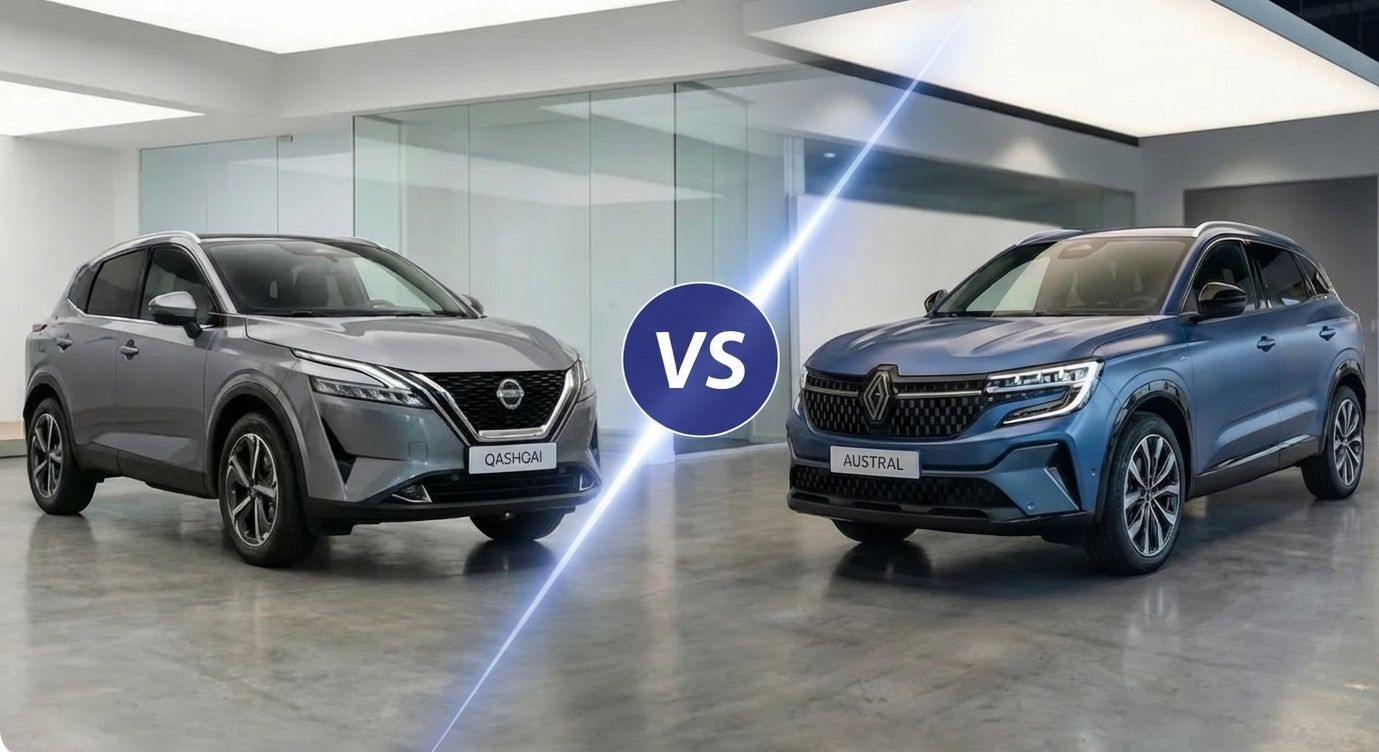
Nissan Qashqai vs. Renault Austral: A detailed comparison to help you choose. We compare design, engines, prices, and deliver a clear verdict.
Oct 16, 2026

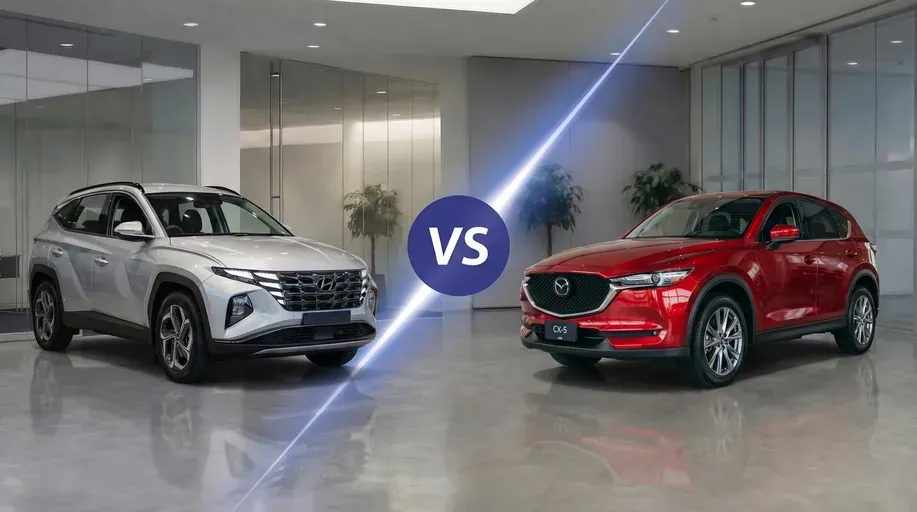
Detailed comparison of used Hyundai Tucson and Mazda CX-5. Real-world experience, equipment comparison, and a detailed verdict to help you choose the right SUV.
Oct 16, 2026