Articles

Car battle

Ford Puma vs. Nissan Juke: Complete comparison 2026

Are you deciding between the Ford Puma and the Nissan Juke? We bring you a detailed comparison of both SUVs, real-world experience with used cars, and a clear verdict for your choice.

April 19, 2026

VS
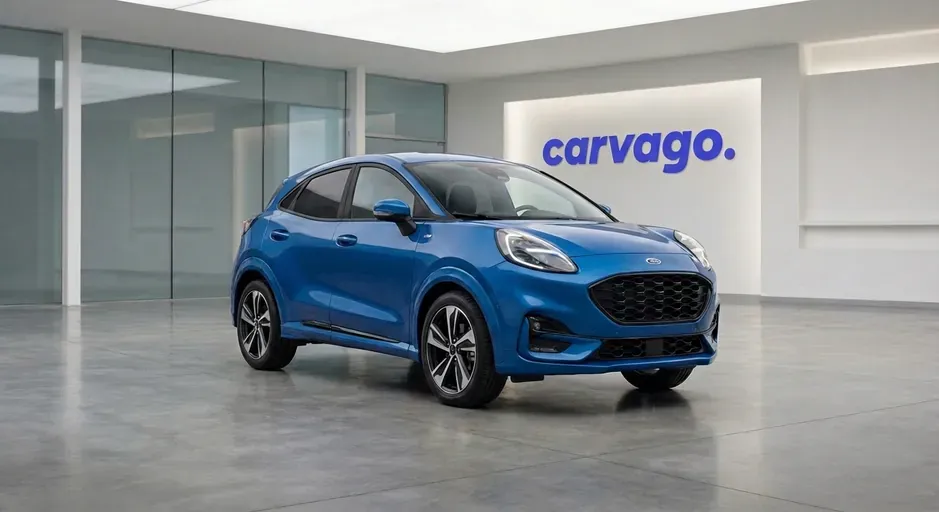
Ford Puma

Ford Puma

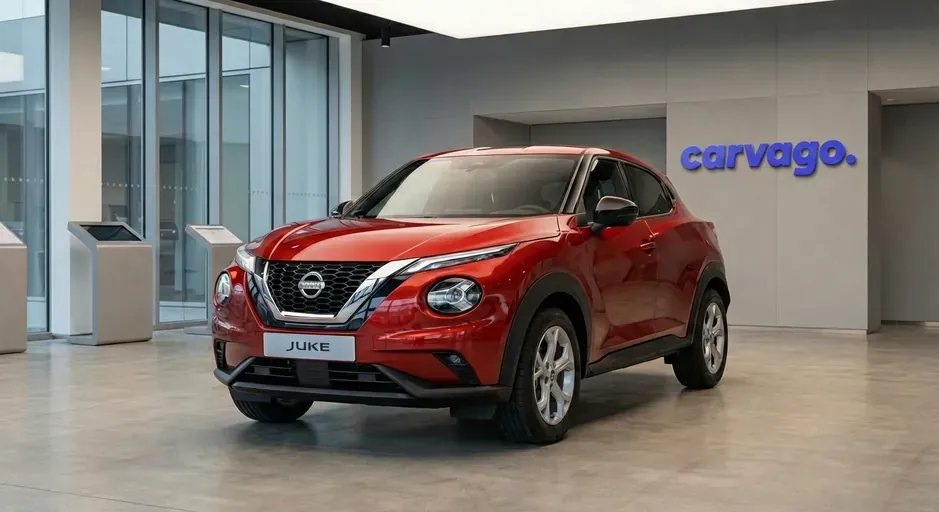
Nissan Juke

Nissan Juke

Introduction

Ford Puma, revived as a modern urban crossover, impresses on the used car market not only with its exceptionally agile driving characteristics but also with unexpected practicality, led by the clever washable MegaBox space under the boot floor. Its direct challenger is the Nissan Juke, a pioneer of the small lifestyle SUV segment, which even in its more mature and spacious second generation retains its typically extravagant, unmistakable design. Let's take a detailed look together at which of these two popular and roughly four-year-old models represents the smarter choice for your daily travels.

Comparison of External Dimensions

Looking at the exterior dimensions, it is clear that both the Ford Puma and the Nissan Juke target the same audience – drivers looking for a compact, agile, and stylish city crossover. If we focus on models roughly four years old, i.e., the current generations of both cars (Puma 2nd generation from 2020 and Juke F16 generation from 2019), we find minimal differences in their overall footprint, but all the more interesting differences in proportions that define their overall character.

In terms of overall length and width, both cars stick to the proven B-SUV segment format. The standard Ford Puma measures 4,186 mm in length (with the sporty ST versions reaching up to 4,266 mm), while the Nissan Juke offers a uniform length of 4,210 mm. In terms of width, it is a complete tie, as the Puma, at 1,805 mm, is only a negligible 5 mm wider than its Japanese competitor. From the perspective of maneuverability in heavy city traffic and parking in tight spaces, both cars offer a practically identical and very user-friendly experience.

The main difference, which you will also notice visually, lies in the height and wheelbase. With a height of up to 1,595 mm, the Nissan Juke is significantly taller than the Ford Puma, whose height ranges between 1,520 and 1,555 mm depending on the engine and chassis setup. This height difference gives the Nissan a more robust appearance and provides slightly more headroom. Another undeniable advantage for the Juke is its wheelbase, which measures a generous 2,636 mm, a full 48 mm more than the Puma (2,588 mm). In practice, this lead translates into slightly more generous legroom for rear-seat passengers.

From the perspective of exterior dimensions, the choice largely depends on your preference regarding the car's stance. The Ford Puma opts for a sportier, wider-stanced, and lower silhouette, which, despite the shorter wheelbase, benefits from very clever interior packaging. The Nissan Juke, on the other hand, leans towards a more traditional SUV feel – prioritizing higher ground clearance and, thanks to the longer wheelbase, offering a slightly airier cabin in the longitudinal direction, which you will appreciate especially if you frequently carry adult passengers in the back.
ParameterFord Puma SUVNissan Juke SUV
Width (mm)18051800
Length (mm)4186 - 42664210
Height (mm)1520 - 15551593 - 1595
Wheelbase (mm)25882636

Trunk Volume

When it comes to choosing a compact city crossover, luggage capacity often plays a decisive role. It significantly affects not only family use but also overall daily practicality. Both compared models from roughly four-year-old production – although primarily targeting style and agility in the city – offer very solid parameters in this regard. However, the difference in total volume and clever boot solutions can ultimately decide whether you can easily pack gear for a weekend trip or if you'll have to make compromises.

The second-generation Ford Puma (from 2020) is a clear champion in this class in terms of basic space. It offers a generous luggage compartment with a volume of 456 litres, which is a great value for a compact SUV. Furthermore, the Puma's secret weapon is the unique underfloor storage space called the MegaBox. This deep and washable compartment adds an extra 80 litres, has its own drain plug, and is absolutely ideal for transporting muddy boots or taller items that wouldn't otherwise fit under the parcel shelf. After folding down the rear seats, you get a volume of 1,216 litres. A huge advantage is the fact that even the widespread mild-hybrid powertrains do not limit this generous luggage space in any way.

The current F16 generation Nissan Juke (from late 2019) brings a slightly smaller but still very competitive basic volume of 422 litres. In practice, this space is fully sufficient for a regular family shop or holiday luggage for two to three people. However, the Juke unexpectedly scores after folding the seats, where it can offer a maximum capacity of up to 1,305 litres – thus offering space for several extra suitcases and a clear advantage when moving bulkier items. But be careful when choosing a powertrain on the used car market: if you go for the full hybrid version (1.6 Hybrid), the basic boot volume shrinks to a below-average 354 litres due to the battery placement.

ParameterFord Puma SUVNissan Juke SUV
Basic volume (litres)456422
Max. volume with seats folded (litres)12161305

Magic with space 📦

Overall, the Ford Puma offers a more usable basic luggage space thanks to the practical MegaBox, but if you transport long loads and fold the rear seats more often, the Nissan Juke will surprise you with its maximum capacity.

Discover the true condition of the car thanks to an independent inspection

Order CarAudit™

Trailer Weights

Trailer weight is an important parameter for anyone planning to head out with a caravan or who occasionally needs to transport bulky cargo or garden waste. When comparing approximately four-year-old representatives from the used car market – the second-generation Ford Puma (produced since 2020) and the Nissan Juke generation F16 (since 2019) – we encounter minor but significant differences in overall towing capacity. The Nissan Juke is a slightly more capable workhorse in this regard, as its standard 1.0 DIG-T petrol version can tow a braked trailer with a maximum weight of up to 1,250 kg. This value is quite sufficient for weekend shopping of bulkier materials, provides space for a few extra suitcases in a tow box, and can easily handle a lighter caravan for a longer holiday.

In contrast, the Ford Puma with the most common 1.0 EcoBoost engines and mild-hybrid variants can handle a braked trailer in the range of 900 to 1,100 kg, depending on the specific equipment and chosen gearbox. Both models also similarly limit their towing capabilities for specific variants. For example, with the Nissan Juke's newer 1.6 Hybrid engine, the maximum braked trailer weight drops to 750 kg, and the same limit (750 kg) applies to the sporty Ford Puma ST with the 1.5 EcoBoost engine. For unbraked trailers, both cars stay within the usual average for their class, where the Ford Puma offers a capacity of around 640 to 665 kg and the Nissan Juke can carry 648 kg.

As a result, this means that for general utility needs and towing light trailers, both cars will serve you reliably. However, if you plan to tow heavier loads or a larger trailer more frequently, the Nissan Juke with a standard internal combustion engine will provide you with greater confidence and a wider range of uses thanks to its higher capacity.

Model and engineBraked trailer weight (kg)Unbraked trailer weight (kg)
Ford Puma 1.0 EcoBoost / Hybrid900 - 1100640 - 665
Ford Puma 1.5 EcoBlue1100640 - 665
Ford Puma 1.5 EcoBoost ST750640 - 665
Nissan Juke 1.0 DIG-T1250648
Nissan Juke 1.6 Hybrid750500 - 648

Overview of Most Common Motorizations

When choosing a used city crossover, the right engine choice plays a key role, whether it's about driving dynamics, fuel consumption, or long-term reliability. The Ford Puma and Nissan Juke take very different approaches to their powertrains. Ford relies on a wide and variable range of its award-winning 1.0 EcoBoost three-cylinder engines (from 70 kW to 125 kW), which it often and very successfully supplements with mild-hybrid technology for better response and lower consumption. For enthusiasts, it also adds a full-blooded ST sports version with 147 kW. The Nissan Juke, on the other hand, is significantly more conservative. For a long time, it relied solely on a single petrol unit, the 1.0 DIG-T (84 to 86 kW), and only in 2022 did it add a very efficient 1.6 Hybrid full-hybrid system with a combined output of 105 kW to the range. While Ford targets a wider spectrum of drivers, including those with a sportier mindset, Nissan will primarily suit calmer users looking for simplicity and, in the case of the hybrid version, excellent city fuel economy.

Ford Puma

The range of powertrains for the second-generation Ford Puma is primarily based on agile three-cylinder engines. The pure petrol 1.0 EcoBoost is rather marginal on the used car market, as the main focus has been captured by the mild-hybrid versions (mHEV) with outputs of 92 kW, 114 kW, and later 125 kW. These engines offer a great compromise between lively performance and reasonable running costs. If you come across the 1.5 EcoBlue diesel engine (88 kW) while searching for a younger used car, keep in mind that it was produced only between 2020 and 2021 and subsequently disappeared from the range entirely. For drivers covering long highway distances, it is therefore a rare but very interesting find. The absolute pinnacle for lovers of spirited driving is the ST sports version with a 1.5 EcoBoost engine and an impressive 147 kW of power.

Engine typeFuel typePower (kW)Torque (Nm)Transmission
1.0 EcoBoostPetrol70 / 92170 / 2006MT
1.0 EcoBoost HybridPetrol (mHEV)92 / 114 / 125210 / 240 / 2486MT / 7DCT
1.5 EcoBlueDiesel882856MT
1.5 EcoBoost STPetrol1473206MT

Nissan Juke

The second generation of the Nissan Juke (F16) opted for a significantly simplified engine range. Initially, only in 2019 and 2020, the car was supplied exclusively with a 1.0-litre DIG-T petrol engine with 86 kW (117 hp). However, due to stricter emission standards, this variant quickly gave way to a slightly less powerful but cleaner version. Especially with used cars around four years old, you will therefore most often come across the modified 84 kW (114 hp) variant, which forms the dominant part of the market and can be found with both a manual and a dual-clutch automatic (DCT). For those who primarily move in city traffic jams, the 1.6 Hybrid full-hybrid version makes a lot of sense. This went on sale during 2022 and, thanks to the clever combination of an internal combustion engine, an electric motor, and a unique multi-mode gearbox, guarantees exceptionally low fuel consumption.

Engine typeFuel typePower (kW)Torque (Nm)Transmission
1.0 DIG-T 114Petrol842006MT / 7DCT
1.0 DIG-T 117Petrol862006MT / 7DCT
1.6 HybridPetrol (FHEV)105148 + 205 (el.)4AMT

Variability vs. A Safe Bet ⚖️

While the Ford Puma impresses with a diverse range of lively mild-hybrids and will please dynamically minded drivers, the Nissan Juke scores points with a clear-cut range that, with its full-hybrid system, makes a lot of sense for driving through congested cities.

Choosing the right engine is a key factor for long-term satisfaction with your car, and this is doubly true for used vehicles. Our recommendations for these roughly four-year-old crossovers are based on a combination of everyday dynamics, real-world fuel consumption, reliability, and operating costs. Interestingly, although both manufacturers rely on turbocharged one-liter three-cylinder engines, they have approached them differently from a technical standpoint – while Ford opted for advanced mild-hybrid technology in the Puma to mask "turbo lag," Nissan offers a more mechanically straightforward and simpler design with the Juke.

For the Ford Puma, we recommend: 1.0 EcoBoost Hybrid (92 kW / 125 hp)

This mild-hybrid three-cylinder is an absolute bullseye and represents the most sensible choice on the used car market from the years 2020 to 2024. Thanks to the 48V starter-generator, it offers excellent flexibility even from low RPMs, reliably filling in the turbocharger lag, and real-world fuel consumption easily stays around 5.5 to 6 liters per 100 km. A huge technical plus is the fact that Ford switched to a reliable timing chain for the camshaft drive in this generation of the engine, elegantly eliminating previous problems with the failing main timing belt bathed in oil.

  • What to watch out for: Although the main timing is reliably handled by a chain, the oil pump is still driven by a "wet" belt. It is therefore crucial to strictly follow oil change intervals (ideally shortened to 15,000 km / 1 year) and use only the oil specified by the manufacturer. Unsuitable or overdue oil will gradually degrade the belt, leading to a clogged oil pickup and fatal engine damage.
  • Who it's for: For the vast majority of drivers looking for an agile and economical car for both the city and the highway. Those who might miss the extra power can confidently go for the stronger 114 kW (155 hp) version, which shares the same technical basis and is just as reliable mechanically.

For the Nissan Juke, we recommend: 1.0 DIG-T 114 (84 kW / 114 hp)

While the more powerful 1.6 Hybrid engine didn't hit the market until during 2022 and you'll hardly come across it in older used cars, the proven 1.0 DIG-T three-cylinder forms a reliable foundation that fortunately does not follow in the footsteps of its problematic predecessors (the older 1.2 DIG-T engines). This unit features a massive timing chain with no known stretching issues. The engine offers pleasant and smooth operation with sufficient dynamics for everyday driving. However, we strongly recommend pairing it with a six-speed manual transmission. The seven-speed dual-clutch automatic transmission (DCT) is often criticized by many owners for hesitation and unpleasant jerking during slow starts or parking.

  • What to watch out for: The engine uses direct fuel injection, which naturally makes it more prone to carbon buildup on the intake valves – especially if the car is used primarily for short trips around town. Check if the engine idles unevenly or loses power. The best prevention is occasional highway driving at higher RPMs, regular refueling with high-quality additivated fuel, or adding fuel system cleaners.
  • Who it's for: For calmer drivers and people commuting from suburban areas. If you choose a manual transmission for a used car, the Juke will reward you with low-maintenance operation without the traps of expensive servicing. If you come across the older 1.0 DIG-T 117 version from 2019–2020 in used car lots, don't hesitate – the exact same design and service rules apply to it.

Real Fuel Consumption

Official fuel consumption figures measured in laboratories are one thing, but real-world experience on the road is often different. For the most accurate and objective comparison of actual operating costs, we most often turn to data directly from drivers themselves. Our main source in this regard is the independent German portal Spritmonitor.de. The following comparison is based on thousands of kilometers driven in normal traffic and reflects average values for the second-generation Ford Puma and the current Nissan Juke (F16) at approximately four years of age.

Data source: Spritmonitor.de and

Model and engineAverage consumption (l/100 km)
Diesel engines
Ford Puma 1.5 EcoBlue 88 kW5.2
Full hybrid engines
Nissan Juke 1.6 Hybrid 105 kW5.3
Petrol and mild-hybrid engines
Ford Puma 1.0 EcoBoost Hybrid 92 kW6.1
Nissan Juke 1.0 DIG-T 114 (84 kW)6.4

Several interesting trends emerge from the data above:

  • Diesel King: The title of the most economical car in our comparison was narrowly won by the diesel Ford Puma 1.5 EcoBlue, which in reality asks for just over five liters.
  • Hybrid Efficiency: For Nissan, the peak of economy is represented by the advanced full-hybrid 1.6 Hybrid system. Its consumption almost matches the diesel Puma, but it achieves this in a completely different way – through exceptionally efficient driving using electricity at lower speeds.
  • Battle of the Base Three-Cylinders: Regarding the more common petrol engines, the mild-hybrid assistance in the Ford Puma (1.0 EcoBoost Hybrid) delivers slightly better results than the conventional turbocharged three-cylinder 1.0 DIG-T under the hood of the Nissan Juke.
  • The Myth of Small Turbo Engines: Neither car confirms the idea that small petrol displacements automatically guarantee extremely low fuel consumption. During more dynamic driving or steady highway speeds, the real-world average of both base petrol engines easily exceeds six liters per hundred kilometers.

For typical users, these results mean a clear choice depending on their lifestyle. Customers spending most of their time in morning traffic jams or city streets should strongly consider the Juke with a full-hybrid powertrain, which feels right at home in urban areas and minimizes expensive petrol combustion. Conversely, drivers regularly commuting longer distances or covering many highway miles will most appreciate the economical diesel Puma. For budget-conscious buyers looking for the ideal compromise with a more favorable used car purchase price, the base one-liter mild-hybrid from Ford makes the most sense, offering reasonable operating costs and pleasant dynamics.

Overall, it can be said that fuel consumption will play a fairly significant role when choosing between the two crossovers. Although neither car will explicitly ruin you at the gas station, the different approaches of the two manufacturers require thought about where you will use the car most often. The Nissan Juke bets on a modern, sophisticated hybrid designed for the city for its most economical variant, while the Ford Puma scores with versatile mild-hybrids and also offers a traditional, very economical diesel, which is slowly disappearing from the market but is all the more desirable as a used car.

Price Range and Used Car Offerings

Used Car Price Range: Ford Puma vs. Nissan Juke

The used car market in the small city crossover category is very active. If we focus on models approximately four years old (years of manufacture 2021 and 2022), we find that both the Ford Puma and Nissan Juke hold their value quite well. Both cars target a similar clientele, but their price structure and availability on the used market differ slightly.

Ford Puma (2021–2022)

The Puma benefits from Ford's strong brand presence, which means a relatively wide selection of used cars for potential buyers.

  • Price start: The cheapest units from 2021 and 2022, powered by basic versions of the 1.0 EcoBoost engine and with higher mileage, start around €11,100 to €12,300.
  • The sweet spot: Most popular mild-hybrid versions (mHEV) in Titanium trim, or the dynamically styled ST-Line package (with mileage up to 50,000 km), most often range between €13,200 and €15,600.
  • Top versions: Nearly new cars in premium ST-Line X trim or models with automatic transmissions reach the €16,500 mark. (The high-performance Puma ST with the 1.5 EcoBoost engine is a separate, significantly more expensive chapter).

Nissan Juke (2nd generation, 2021–2022)

The second generation of the Nissan Juke (internally designated F16) relies on a bold, extravagant design, which is positively reflected in its stable residual value. Compared to the Ford, there are slightly fewer units available on the used market.

  • Price start: Basic trim levels, typically Acenta with a manual transmission and the 1.0 DIG-T engine, can be purchased for approximately €11,900 to €13,600.
  • The sweet spot: Better-equipped and highly sought-after models, especially in N-Connecta or stylish N-Design trims, commonly sell for prices around €14,400 to €17,300.
  • Top versions: Vehicles in the highest trim (Tekna), equipped with the DCT dual-clutch automatic transmission and minimal mileage, are usually valued by owners at €17,700 to €19,800.

Overview of Indicative Used Car Prices (approx. 4 years old)

Model (Year of manufacture 2021–2022)Indicative price fromMost common price rangePrice up to (standard versions)
Ford Puma€11,100€13,200 – €15,600€16,500
Nissan Juke€11,900€14,400 – €17,300€19,800

Key Factors for Selection

  • Availability and choice: Due to a higher number of new cars sold, the Ford Puma has a slight advantage on the used market. This gives buyers a better bargaining position and a wider range of specific specifications and colors to choose from.
  • Engine options: For a used Puma, the 1.0 EcoBoost three-cylinder (often equipped with mild-hybrid technology), proven for its price and reliability, dominates. The Nissan Juke from the same period relies almost exclusively on the 1.0 DIG-T unit developed by the Renault-Nissan alliance, making the engine choice easy for buyers.
  • Surcharges for automatics: For both vehicles, automatic transmissions are highly valued and sought after in the used market. Cars without a clutch pedal tend to be on average €1,200 to €2,100 more expensive than comparable manual specifications.

Price Battle 💰

Both models in the city crossover segment move in similar price ranges as four-year-old used cars; however, the Ford Puma tends to be slightly cheaper to purchase due to a wider market supply. Conversely, the Nissan Juke successfully maintains a slightly higher residual value even after years, especially for better-equipped versions with automatic transmissions.

Safety and Euro NCAP Rating

Stricter Standards and Testing Context

At their market launch, both cars could boast a maximum five-star rating in independent Euro NCAP crash tests. When comparing the safety of used vehicles, however, it is absolutely crucial to take into account the context and the year in which the measurement took place. Euro NCAP protocols are constantly evolving and becoming stricter, with increasing emphasis on active accident prevention, advanced intersection scenarios, obstacle detection, or side impact protection. Percentage results from different years cannot be directly compared – a car that achieves four stars in the latest, stricter tests may in practice be better equipped and safer than a five-star winner from previous years.

The Ford Puma originally underwent Euro NCAP crash tests in 2019, when it received a full five stars. However, due to its extraordinary market popularity, the organization decided to subject the car to re-testing in 2022 according to new, much more demanding methodologies. This step clearly showed how quickly standards are moving – due to the missing center airbag between the front seats and stricter rules for active assistants, the Puma's rating was adjusted to a solid four stars. In these uncompromising 2022 tests, the Puma achieved 75% for adult protection, 84% for child protection, 70% for vulnerable road user protection, and 69% in the safety assist category. Despite losing one star, it confirmed that its collision-avoidance braking with pedestrian detection and lane-keeping assist function at a very high level.

The second generation of the Nissan Juke underwent Euro NCAP tests in December 2019 and took home an excellent five stars. The car's architecture and clever use of ultra-high-strength steel ensured great structural rigidity. According to the protocols of the time, the Juke achieved an extraordinary 94% for adult passenger protection and 85% for child protection. Vulnerable road user protection was rated at 81%, thanks in part to sophisticated radar and camera systems, and safety assist systems received 73%. However, it must be emphasized that the Juke did not undergo an additional re-test according to the stricter 2022 rules. Its top percentage ratings thus reflect the requirements of 2019 and cannot be simply placed alongside the fresher figures from Ford.

ParameterFord PumaNissan Juke
Year of testing2022 (re-test)2019
Adult occupant protection75%94%
Child occupant protection84%85%
Vulnerable road user protection70%81%
Safety assist systems69%73%

In conclusion, both cars provide very robust occupant protection and a rich range of assistance features supplied as standard across trim levels. Nissan Juke boasts impressive "on-paper" figures from 2019, but the Ford Puma's 2022 results offer a much more accurate picture of how the car stands up to current safety ideals. As someone interested in an approximately four-year-old used car, you will see a different number of stars in the advertisements, but in real-world traffic, you will get a comparably top-tier modern safety standard with both models.

🛡️ Safety without compromise on both fronts

Both cars protect the occupants at an excellent level – the Nissan Juke impresses with a great score from 2019, while the Ford Puma has the advantage that its construction stood up with respect even when tested against the strictest modern standards.

Comparison of Interesting Equipment Features

In addition to standard equipment, each model offers several unique features and innovative solutions that define their approach to value and could be key to your decision.

Ford Puma: Smart Practicality and Sporty Genes

With the Puma, Ford has leveraged decades of experience in family car development to bring unprecedented versatility combined with a sporty character to the small crossover segment.

  • Innovative MegaBox: An unrivaled advantage of the Puma is the 80-liter washable compartment located under the trunk floor. It has its own drain plug, so you can carry muddy boots, sports equipment, or plants in it and then simply rinse it out with water. It also allows for the transport of tall items upright (up to 115 cm).
  • Practical Interior Care: The brand considered daily wear and tear and offered zip-off seat covers on selected trim levels. These can be easily removed and machine-washed, or eventually replaced with a new design.
  • Unexpected Comfort: In Titanium and higher trims, you can find lumbar massage seats for both driver and passenger in four-year-old used cars. This is an exceptional feature in this class of vehicle.
  • Mild-Hybrid Technology and Driving Experience: The Puma was one of the first Fords to extensively deploy fuel-efficient 48V mild-hybrid (mHEV) EcoBoost engines. These are perfectly complemented by the extremely popular ST-Line package, which brings a sport-tuned suspension, stiffer steering, and a more aggressive look.
  • Digital Cockpit and Telematics: The modern interior concept is highlighted by a 12.3-inch fully digital instrument cluster. Additionally, the car is equipped with a FordPass Connect onboard modem, which can, among other things, receive Local Hazard Information warnings before you even notice them.

Nissan Juke: Extravagant Style and Advanced Assistance

With the second generation of the Juke, Nissan bet on cutting-edge digital technology and a bold style aimed primarily at younger customers and design enthusiasts.

  • Bose Personal Plus Audio System: For true music lovers, the Juke offers a unique sound system that includes speakers integrated directly into the front seat headrests (UltraNearfield). This creates a perfectly immersive and customizable 360-degree sound experience.
  • Advanced ProPILOT System: The Juke's technological edge is represented by the ProPILOT assistance system (available for versions with automatic transmission). It can automatically keep the car in the center of the lane, handle stop-and-go traffic, and smoothly regulate the distance from the vehicle ahead.
  • Connectivity and Remote Access: At the heart of the infotainment is an eight-inch display with the NissanConnect interface. It supports wireless OTA (Over-The-Air) map updates, and via a phone app, you can remotely check the car's status or find exactly where you parked.
  • Monoform Sport Seats and N-Design: Right from the base model, the Juke impresses with sporty front seats with integrated headrests. If you come across the N-Design trim, you can look forward to premium materials, including Alcantara or leather upholstery extending across the entire dashboard and door panels.
  • Iconic Full-LED Lighting: The eccentric look is enhanced by the typical split headlight design. In the second generation, the main round headlights feature standard Full-LED technology complemented by a unique Y-shaped light signature, giving the car an unmistakable expression.

Key Advantages and Disadvantages

Ford Puma

Pros

Excellent driving characteristics among the absolute best in the small SUV class

Innovative luggage compartment solution with the practical and washable MegaBox

Economical yet lively 1.0 EcoBoost mild-hybrid engines

Attractive and dynamic appearance

Quick and precise steering that brings joy to driving

Cons

Stiffer chassis tuning, which reduces comfort on broken roads (especially in ST-Line versions with larger wheels)

Significantly limited legroom and headroom in the rear seats

The interior, carried over from the Fiesta model, contains a higher proportion of harder plastics

The SYNC 3 infotainment system looks somewhat graphically outdated compared to the latest competition

The Ford Puma is ideal for drivers who demand fun behind the wheel and agile driving performance from a compact crossover. Thanks to the clever trunk with the MegaBox, it also surprises with an unexpected level of practicality, although the rear seats do not offer much space for adult passengers.

Nissan Juke

Pros

Extravagant and original design that reliably attracts attention on the road

Significant intergenerational improvement in spaciousness and materials used in the interior

Very comfortable front seats, with a unique Bose audio system built into the headrests in higher trim levels

Excellent safety ratings and a rich standard equipment of safety assistants

Cons

Very limited range of powertrains among used cars (dominated only by weaker one-liter three-cylinder DIG-T engines)

Slower response and occasional jerking of the seven-speed dual-clutch automatic transmission when crawling in traffic

Poor rear-quarter visibility caused by the massive C-pillar and sloping roofline

Low ride comfort when choosing the otherwise design-attractive 19-inch alloy wheels

The second-generation Nissan Juke primarily targets those for whom distinctive style, modern technology, and solid craftsmanship are priorities. It represents an excellent choice for stylish city driving and daily commuting, but the narrow range of engines and less intuitive automatic transmission slightly limit it for more demanding use.

Common Problems and Owner Complaints

Based on long-term user experience, service reports, official recalls, and findings from each of our comprehensive car audits, we have compiled an overview of the most common problems for Ford Puma and Nissan Juke models around four years old.

In the Ford Puma, serious mechanical failure occurs rarely; most owner complaints are directed more towards minor software and electronic bugs.

  • Infotainment and electronics: Owners often report the SYNC 3 system screen freezing or problems with phone pairing via Bluetooth and Apple CarPlay dropouts. Most of these issues are successfully resolved by wireless or service software updates.
  • Engine and mild-hybrid (1.0 EcoBoost): Four-year-old used cars already have the redesigned generation of this engine under the hood (the so-called mHEV with a timing chain), which does not suffer from the fatal defects of older versions with a belt-in-oil. However, in early years of the mild-hybrid versions, software bugs appeared that drained the 48V battery, and a recall was issued for its poor grounding, which posed a risk of a short circuit.
  • Automatic transmission: If you choose the version with the seven-speed dual-clutch automatic (DCT), expect that when driving in traffic jams or slow crawling, its performance may be slightly jerky and the transmission occasionally gets confused when downshifting.
  • Interior workmanship: A frequent complaint is the occasional creaking of plastics inside the car, especially in the area of the door panels and around the center console when driving over bumps.

Ford Puma: Software ailments and minor creaking

The Ford Puma is a mechanically above-average reliable car. The main ailments are the occasionally unpredictable SYNC 3 system, minor jerking of the automatic transmission at low speeds, and slightly poorer acoustic fitment of interior plastics.

The second generation of the Nissan Juke represents a solid choice in terms of reliability, yet it suffers from several "teething problems" that mainly concern the coordination of the powertrain and on-board electronics.

  • Engine (1.0 DIG-T): Drivers very often complain about reluctant and delayed responses to the accelerator pedal, especially with a cold engine. The so-called "turbo lag" is noticeable at lower revs. The situation in some cars was significantly improved by remapping the engine at an authorized service center.
  • Dual-clutch transmission: Similar to the Ford, the seven-speed DCT automatic in the Nissan is not among the smoothest on the market. Typical are jerky starts and the transmission hesitating to shift when the car is just lightly coasting to an intersection.
  • NissanConnect Infotainment: The multimedia system often suffers from slower touch responses immediately after starting the car. Users also report occasional spontaneous disconnections of the Android Auto and Apple CarPlay interfaces.
  • Bodywork and workmanship: Higher aerodynamic noise around the massive A-pillars and mirrors at highway speeds is among the frequent comments from users. Early model years (2019/2020) were also hit by a recall due to faulty child locks on the rear doors, which could fail. This is also why a thorough independent inspection of the car's technical condition before the final purchase is always appropriate.

Nissan Juke: Hesitant engine performance and noisier ride

The Nissan Juke does not suffer from major hardware failures, but buyers should be prepared for noticeable turbo lag, a slower infotainment startup, and occasionally jerky performance of the dual-clutch automatic transmission during a test drive.

Tips for Buying a Used Car

When buying a used car, a thorough inspection is key. Both small SUVs being compared have their own specifics and weak points that are worth focusing on in detail before purchasing. For maximum certainty and risk elimination, we always recommend an independent physical car inspection, which will reveal any hidden defects and confirm the actual technical condition.

When choosing a Ford Puma:

  • Mild-hybrid system (MHEV) and Start-Stop: Most used Ford Puma cars from recent years are equipped with a 1.0 EcoBoost mild-hybrid three-cylinder engine. During the test drive, verify the smoothness of the electric motor's assistance and the functionality of the Start-Stop system. If the engine does not shut off after stopping at an intersection, or if the trip computer reports limited functions, it may signal an excessively degraded 12V or 48V battery.
  • SYNC 3 infotainment response: Test the speed of the touchscreen and pair your phone (Apple CarPlay / Android Auto). On older software versions, this system can suffer from freezing, restarts, or Bluetooth connection drops. Check for delays in the menu and ensure the system responds smoothly to commands.
  • Manual transmission and clutch bite point: If you are buying a version with a manual gearbox, closely monitor the operation of the clutch pedal. If the clutch bites too high at the end of the pedal travel, or if it slips during sharp acceleration, it is nearing the end of its lifespan. Additionally, the gear lever movement must be precise and without resistance or metallic sounds.
  • Chassis condition (especially for the ST-Line version): The popular ST-Line trim has a specific, stiffer sports suspension that takes a beating on rough roads. During the test drive, look for bumps or cobblestones and listen for any dull knocking sounds from the front axle. This most often indicates prematurely worn stabilizer links or play in the steering joints.

When choosing a Nissan Juke:

  • DCT dual-clutch transmission behavior: For versions with the seven-speed automatic, focus on stop-and-go traffic and very slow starts from a standstill during the test drive. The transmission should shift smoothly and without significant jerking. Jerky or confused starts can mean a worn clutch pack or, in the better case, the need for a transmission software update.
  • Cold start performance of the 1.0 DIG-T engine: This one-liter three-cylinder sometimes suffers from irregular idling or slight hesitation during steady acceleration until it reaches operating temperature. Therefore, insist on starting the test drive with a completely cold engine (the hood should be cool to the touch) and carefully observe the smoothness of the power delivery in the first minutes of driving.
  • Interior build quality and rattling: Owners of the second-generation Nissan Juke (F16) occasionally complained about noises coming from the dashboard, the area around the center console, and the door panels in the first years of production. Drive over a series of speed bumps or a railway crossing with the radio turned down and listen to how the cabin reacts to body torsion.
  • Faster wear of rear brakes: User experience suggests that the Juke tends to have above-average wear on the rear brake pads and discs. During a visual inspection, check the thickness of the pad friction material and the condition of the discs. When braking from higher speeds, listen for any squealing or the characteristic humming of worn-out brakes coming from the rear axle.
  • Functionality of the NissanConnect system and cameras: Similar to the Ford, the Nissan's onboard system can show delays in used cars. Focus specifically on the operation of the parking cameras. Shift into reverse several times in a row and verify that the image (or the 360° camera system) appears on the display immediately and without stuttering or connection drops.

FAQ: Most Frequently Asked Questions

Ford Puma offers a larger and more practical luggage space with a total volume of 456 liters, mainly thanks to the innovative deep and washable MegaBox compartment hidden under the floor. Nissan lags only slightly behind with a capacity of 422 liters, however, it does not offer such a variable solution for the safe transport of tall items.

The Ford Puma has long been rated by motoring journalists and drivers alike as the best-driving car in its class, thanks to its sportier-tuned chassis and precise steering. While the Nissan Juke is stable and confident on the road, it does not reach the same level of agility and driving fun as its American competitor.

The Puma relies on exceptionally efficient one-liter three-cylinder EcoBoost engines, which are almost always paired with mild-hybrid technology for reduced fuel consumption and better flexibility. In contrast, the Juke offers a classic one-liter three-cylinder DIG-T without electrification, or a full hybrid system combined with a 1.6-liter naturally aspirated petrol engine.

The second-generation Nissan Juke has grown significantly compared to its predecessor and provides rear passengers with very solid knee and headroom. In the Ford, taller adults may feel a bit more cramped in the back seats, which is the price for the dynamically sloping roofline.

Given that both cars belong to the small city crossover segment, they may be at their capacity limit for a family of four with older children on longer holidays. However, as cars for smaller families with young children or as second family cars, they are absolutely ideal thanks to their compact dimensions and clever layout.

Conclusion: Which Model to Choose?

Our Verdict

Choosing between a roughly four-year-old Ford Puma and a Nissan Juke depends primarily on whether you prefer a driving experience or rather original style and space in a city crossover. With its precise steering, lively mild-hybrid engines, and ingeniously designed trunk with a washable MegaBox, the Ford Puma is an ideal choice for those looking for an exceptionally agile car that brings joy to everyday driving. On the other hand, the Nissan Juke scores with its unmistakable extravagant design, airier cabin with more rear legroom, and the option of an economical full-hybrid powertrain, making it a great companion for calmer drivers in busy urban environments. Whether you opt for the sportier and more versatile approach of the American representative or the more robust and distinctive look of the Japanese pioneer, both models represent a very reliable, safe, and attractive choice on the used car market.

Find your ideal car

Sources: ADAC, auto.cz, mdcr.cz, mobilmania.cz, autosalon.tv, motoristickydenik.cz

This article was prepared using artificial intelligence tools. The section guarantor is Petr Dušek.

Related articles

Car battle

Peugeot 3008 vs. Toyota RAV4: Complete comparison 2026

Detailed comparison of Peugeot 3008 vs Toyota RAV4. Discover real-world experiences with used cars, a comparison of fuel consumption, reliability, and a verdict that will make your choice easier.

Apr 2, 2026

Car battle

Ford Kuga vs. Peugeot 3008: Complete Comparison 2025

Ford Kuga vs Peugeot 3008: Which family SUV is better? A detailed comparison, real-world insights, and a clear verdict to help you choose.

Apr 13, 2026

Car battle

Kia Stonic vs. Seat Arona: Complete comparison 2026

Kia Stonic or Seat Arona? We compare their engines, reliability, and practicality. Find out which used SUV is a better fit for you.

Apr 8, 2026

We accept online card payments as well as wire transfers.

visa payment provider logovisa-electron payment provider logomastercard payment provider logomaestro payment provider logodiners-club payment provider logodiscover payment provider logo