
Car battle
Volvo XC40 vs. Volkswagen T-Roc: Complete comparison 2026
Undecided between a Volvo XC40 and a VW T-Roc? Our comparison will help you choose. Discover the main differences, real-world impressions, and a clear verdict.
Apr 14, 2026
Articles
Car battle
Kia Stonic or Seat Arona? We compare their engines, reliability, and practicality. Find out which used SUV is a better fit for you.
April 8, 2026
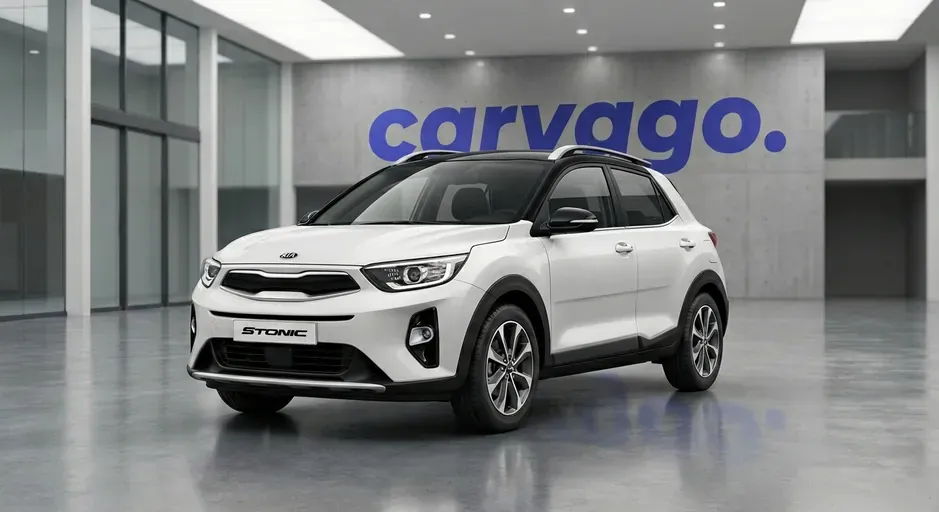
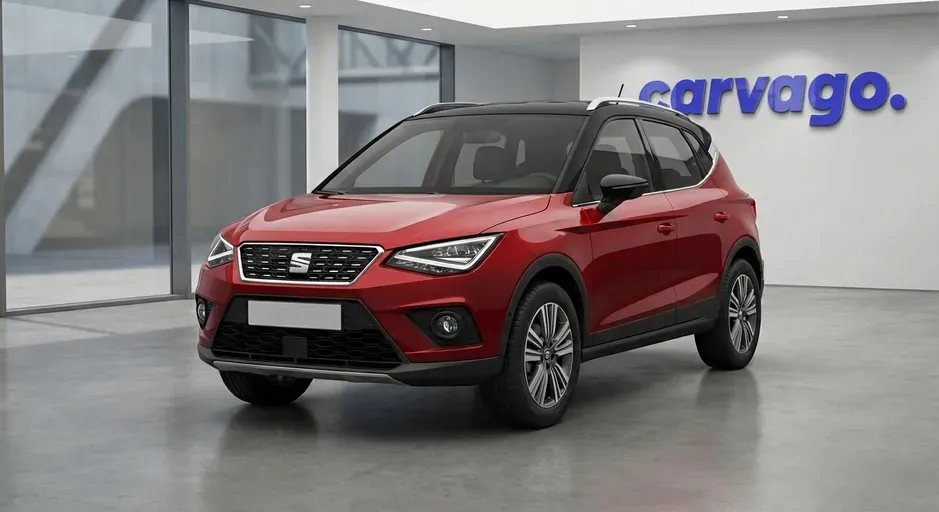
The Kia Stonic, a stylish and distinctive crossover from South Korea, has gained attention for its attractive design and agile city driving characteristics. It is pitted against its Spanish competitor, the Seat Arona, which entices with a more spacious interior, practicality, and the dynamic driving performance typical of its brand. In this comparison, we will take a detailed look at the key differences between these two popular models to help you determine which one better suits your needs.
At first glance, the Kia Stonic and Seat Arona are very similar in size. Both cars belong to the compact urban SUV category, where individual centimetres often determine practicality. The differences in length are minimal – the Stonic measures 4140 mm, while the Arona measured 4138 mm before its 2021 facelift and 4153 mm after. In practice, this difference is negligible and affects neither city parking nor interior space.
More significant differences can be found when looking at width and height. The Seat Arona is a noticeable 20 mm wider, which can contribute to a slightly better sense of spaciousness at shoulder level. However, the key difference is in height – the Arona is up to 47 mm taller than the Stonic. This gives it a more classic SUV stance and promises more headroom for the occupants. The Kia Stonic, on the other hand, is lower, giving it a sportier look that is more reminiscent of a raised hatchback.
Conversely, the Kia scores points with a 14 mm longer wheelbase. Although this is a small difference, it could theoretically mean a little more knee room for rear-seat passengers. The choice between these two cars in terms of exterior dimensions thus depends on personal preference: do you prefer the higher seating position and more robust appearance of the Arona, or the more dynamic profile of the Stonic?
| Parameter | Kia Stonic SUV (2017-2024) | Seat Arona SUV (2017-2024) |
|---|---|---|
| Width (mm) | 1760 | 1780 |
| Length (mm) | 4140 | 4138 - 4153 |
| Height (mm) | 1505 | 1537 - 1552 |
| Wheelbase (mm) | 2580 | 2566 |
In the compact SUV category, where the Kia Stonic and Seat Arona compete for customers, practicality and boot size play a key role. And it is here that one of the most significant differences between these two models becomes apparent. While both cars offer enough space for daily needs, families and active individuals will feel the difference in favour of the Spanish competitor.
The Seat Arona, in most of its versions, offers a generous basic boot capacity of 400 litres. This is an above-average figure in its class, easily accommodating a large weekly shop, a baby stroller, or luggage for a family holiday. In contrast, the Kia Stonic provides a basic capacity of 352 litres. Although this is not a bad figure, the difference of almost 50 litres is noticeable in practice and can mean one less travel bag. However, it is worth noting that the Seat Arona versions powered by compressed natural gas (TGI) have their boot capacity reduced to just 282 litres due to the gas tanks.
The Seat Arona's advantage continues even after folding down the rear seats, which creates space for transporting bulkier items. In this configuration, the Arona offers up to 1280 litres, making it a very capable assistant for moving furniture or sports equipment. The Kia Stonic achieves a maximum volume of 1155 litres in this discipline. The difference of more than 100 litres again confirms that if maximum transport capacity is your priority, the Arona is the clear choice.
| Parameter | Kia Stonic SUV | Seat Arona SUV |
|---|---|---|
| Basic capacity (litres) | 352 | 400 |
| Max. capacity with seats folded (litres) | 1155 | 1280 |
When it comes to the practicality of towing a trailer, a clear difference emerges between the two cars. The Seat Arona generally offers a higher towing capacity, making it a more versatile partner for owners of small caravans, boats, or trailers with materials. The Kia Stonic, on the other hand, is more suited for occasional towing of light unbraked trailers.
The most powerful engine options for the Seat Arona, specifically the 1.5 TSI (110 kW) four-cylinder petrol engine and the older 1.6 TDI diesel variants, can handle a braked trailer weighing up to 1200 kg. The very popular 1.0 TSI three-cylinder engine can manage a respectable 1000 to 1100 kg, depending on its power output. However, it is crucial to note that the 1.0 TGI version running on compressed natural gas (CNG) is not approved for a tow hitch at all and cannot tow any trailer.
The Kia Stonic lags slightly in this regard. After the 2020 update, the values for most engine options were reduced. The popular turbocharged 1.0 T-GDI engine, whether in the 74 kW version or as a mild-hybrid with 88 kW, can tow a braked trailer weighing 900 kg. The basic naturally aspirated 1.2 MPi engine is similar, with a rating of 910 kg. If you were looking for a Stonic with better towing capacity, you would have to look for older models up to 2020, where the 1.6 CRDi diesel version and some variants of the 1.0 T-GDI offered up to 1110 kg.
In practice, the 200 to 300 kg difference in favour of the Arona means the ability to tow a larger and heavier load. While the Stonic can easily handle a trailer for garden waste, the Arona can also manage a small caravan for weekend trips.
| Model and Engine | Braked Trailer Weight (kg) | Unbraked Trailer Weight (kg) |
|---|---|---|
| Kia Stonic 1.0 T-GDI / MHEV (from 2020) | 900 | 450 |
| Kia Stonic 1.2 MPi (from 2020) | 910 | 450 |
| Kia Stonic 1.0 T-GDI / 1.6 CRDi (up to 2020) | 1110 | 450 |
| Seat Arona 1.0 TSI (81 kW) | 1100 | 620 |
| Seat Arona 1.5 TSI (110 kW) | 1200 | 640 |
| Seat Arona 1.0 TGI (CNG) | 0 | 0 |
When choosing an engine for the Kia Stonic or Seat Arona, you are deciding between slightly different philosophies. While both models primarily rely on economical turbocharged three-cylinder petrol engines, each offers something extra. After its 2020 update, Kia introduced mild-hybrid technology to reduce fuel consumption, whereas Seat counters with a unique compressed natural gas (CNG) version for the lowest possible running costs, as well as a more powerful four-cylinder engine for more performance-oriented drivers. It's important to note that on the used car market, you can still find diesel engines for both models, although their sales were discontinued around 2020.
The engine lineup for the Stonic is straightforward and focused on economy. The base engine for more relaxed drivers is the naturally aspirated 1.2 DPI four-cylinder, which is an ideal choice for city driving due to its simplicity and reliability. However, the main role is played by the turbocharged 1.0 T-GDI three-cylinder, available in two power outputs. After the 2020 facelift, the more powerful version (88 kW) came standard with a 48V mild-hybrid system, which assists with acceleration and reduces fuel consumption. This system was paired with either an intelligent manual transmission (iMT) or a seven-speed DCT automatic. For those interested in maximum economy on long journeys, the 1.6 CRDi diesel engine is also available on the used car market, though its production ended in 2020.
| Engine Type | Fuel | Power (kW) | Torque (Nm) | Transmission |
|---|---|---|---|---|
| 1.2 DPI | Petrol | 62 | 118 | 5MT |
| 1.0 T-GDI | Petrol | 74 | 172 | 6MT |
| 1.0 T-GDI 48V | Petrol (Mild-Hybrid) | 88 | 172 / 200 | 6iMT / 7DCT |
| 1.6 CRDi | Diesel | 85 / 100 | 280 / 320 | 6MT / 7DCT |
Note: The 1.6 CRDi diesel engine was offered until 2020.
The Seat Arona uses proven Volkswagen Group technology, which is reflected in its wide and well-developed range of engines. The core of the range is the 1.0 TSI three-cylinder, which was offered in several power levels, most commonly with 70 kW (95 hp) and 81 kW (110 hp). For those looking for significantly better dynamics, there is the powerful 1.5 TSI unit with 110 kW (150 hp), which offers confident acceleration and flexibility. An absolute unique in the segment is the 1.0 TGI version running on natural gas (CNG), which targets drivers with high annual mileage who demand minimal fuel costs. Similar to the Stonic, the Arona was also available with a 1.6 TDI diesel engine in its early years of production, but it was later removed from the lineup.
| Engine Type | Fuel | Power (kW) | Torque (Nm) | Transmission |
|---|---|---|---|---|
| 1.0 TSI | Petrol | 70 | 175 | 5MT |
| 1.0 TSI | Petrol | 81 / 85 | 200 | 6MT / 7DSG |
| 1.5 TSI | Petrol | 110 | 250 | 7DSG |
| 1.0 TGI | CNG / Petrol | 66 | 160 | 6MT |
| 1.6 TDI | Diesel | 70 / 85 | 250 | 5MT / 7DSG |
Note: The 1.6 TDI diesel engine was offered until 2020. The 1.0 TGI CNG version was available until approximately 2023.
Choosing the right engine is key to long-term satisfaction with a car. Each of the two small crossovers relies on modern turbocharged three-cylinder petrol engines, which, despite their small displacement, offer surprising performance thanks to the turbocharger. The recommendations for both models are based on a combination of performance, real-world fuel consumption, owner feedback, and mechanical reliability.
In the engine lineup for the Kia Stonic, the turbocharged one-litre three-cylinder version with 88 kW (120 hp) is the ideal choice, offering the best combination of performance and running costs. After 2020, this unit was also supplemented with a 48V mild-hybrid system, which contributes to lower fuel consumption in the city and smoother operation of the start-stop system.
In the case of the Seat Arona, the best choice is the proven VW Group 1.0 TSI engine. The 81 kW (110 hp) version, which replaced the earlier 85 kW variant, represents the golden mean in the lineup and is perfectly adequate for the lightweight Arona.
The on-paper consumption figures provided by manufacturers are often more like a fantasy. Real-world driving shows how the cars truly perform, which is why we looked at data from drivers themselves. We sourced our information from the German portal Spritmonitor.de, which collects real-world consumption data from thousands of owners. This allows us to get an accurate picture of how much the Kia Stonic and Seat Arona consume in everyday life.
A direct comparison of popular engine options relevant to the used car market shows that both models are very close in their petrol versions. The differences are in the order of tenths of a litre, which in practice means a minimal impact on the wallet. The difference is more pronounced with diesel units, and the CNG-powered Arona is a specific chapter in itself.
| Model and Engine | Average Real-world Consumption (l/100 km) |
|---|---|
| Kia Stonic 1.0 T-GDI (88 kW) | 6.3 |
| Kia Stonic 1.2 CVVT/DPI (62 kW) | 6.8 |
| Kia Stonic 1.6 CRDi (81-85 kW) | 5.1 |
| Seat Arona 1.0 TSI (70-85 kW) | 6.1 |
| Seat Arona 1.5 TSI (110 kW) | 6.4 |
| Seat Arona 1.6 TDI (70-85 kW) | 5.0 |
| Seat Arona 1.0 TGI (66 kW, CNG) | 4.0 (kg/100 km) |
The table shows that the basic turbocharged three-cylinders, the 1.0 T-GDI in the Kia and the 1.0 TSI in the Seat, are practically evenly matched rivals. With an average of around 6.1 l/100 km, the Arona has a slight edge over the Stonic, which consumes approximately 6.3 l/100 km. However, this minor difference can easily be offset by the driver's style. An interesting finding is that the more powerful four-cylinder 1.5 TSI in the Arona is not much thirstier than the one-litre three-cylinder, with its real-world consumption hovering around 6.4 l/100 km. In contrast, the naturally aspirated 1.2 DPI engine in the Stonic is the least economical choice and is better suited for calm drivers on short city routes, where its simplicity can be an advantage.
For drivers who cover a large number of kilometres, diesel engines remain the clear choice. Both the 1.6 CRDi in the Stonic and the 1.6 TDI in the Arona boast real-world consumption of around 5.0 l/100 km, making them masters of long-distance travel.
However, the absolute winner in terms of running costs is the Seat Arona in the 1.0 TGI version running on compressed natural gas (CNG). With an average consumption of around 4.0 kg/100 km, it offers unbeatably cheap driving. Owners, however, must contend with a smaller luggage compartment (reduced from 400 to 282 litres due to the tanks) and a sparser network of filling stations.
For the typical user who combines city driving with occasional trips, the decision between the petrol versions of both cars will be very close in terms of consumption. The key role here will be played more by the specific offers on the used car market and personal preferences. However, if the main criterion is the lowest cost per kilometre, the Seat Arona TGI has no competition in this duel.
When deciding between a Kia Stonic and a Seat Arona on the used car market, price plays a key role. Both models hold their value relatively well, but there are differences between them that could influence your final decision. The price range for both cars depends mainly on the year of manufacture, mileage, engine, and equipment level.
The Kia Stonic is valued on the used car market for its reliability and, above all, its still-valid seven-year factory warranty, which on four-year-old cars still offers significant coverage. This has a positive effect on its residual value.
The Seat Arona, technically related to the Škoda Kamiq and VW T-Cross, is also very popular on the used car market. Its prices are comparable to the Stonic's but can vary depending on attractive equipment, such as the sporty FR trim.
Looking at the price ranges, it's clear that neither car is significantly cheaper. The Kia Stonic holds its value thanks to its reputation and long warranty, making it a safe bet with less risk of unexpected expenses. The Seat Arona, on the other hand, often offers a more attractive design and sportier versions at a similar price point.
The final choice will therefore depend on the buyer's priorities. If peace of mind thanks to the factory warranty is the main criterion, the Stonic may have a slight advantage. However, if you are looking for a car with a more lively character and don't mind a slightly smaller selection on the market, the Arona is more than a capable competitor. In both cases, the prices for well-maintained, low-mileage cars are very similar.
Although both cars boast a five-star rating from the independent Euro NCAP organization, it is crucial to look at the details, especially the year the tests were conducted. The methodology for crash tests is constantly becoming stricter, and results from different years are not directly comparable. A more recent test usually means the car had to meet more demanding criteria for both occupant protection and active assistance systems.
The Kia Stonic underwent Euro NCAP tests in 2017. It's important to mention that it received a dual rating at the time. In its standard equipment, it only achieved three stars. It only received the full five stars with the optional "Advanced Driving Assistance Pack" safety package. With this package, it achieved an excellent score of 93% for adult occupant protection and 84% for child protection. In the categories of vulnerable road user (pedestrian) protection and safety assist systems, the scores were 71% and 59%, respectively. However, the validity of this rating has since expired, meaning the car has not been re-tested according to the current, much stricter standards.
The Seat Arona was also first tested in 2017, when it also received five stars. Unlike the Stonic, however, it underwent a facelift and was subsequently re-tested in 2022 under a significantly stricter methodology. Even under these demanding conditions, the Arona maintained its five-star rating, confirming its high safety standard. The scores in the individual categories were as follows: 83% for adult occupant protection, 83% for child protection, 65% for vulnerable road user protection, and 70% for safety assist systems. The more recent test and better rating in the area of safety assistants give the Arona an advantage from a modern safety perspective.
Although both cars offered top-tier safety at the time of their launch, the clear winner in this category is the Seat Arona. Its five-star rating from 2022 was obtained under much stricter rules that place greater emphasis on advanced assistance systems and protection in more complex types of impacts. The Stonic's rating is good, but it is outdated, and its lower score in assistance systems highlights the technological progress that the Arona has managed to implement.
| Parameter | Kia Stonic | Seat Arona |
|---|---|---|
| Year of testing | 2017 | 2022 |
| Adult Occupant Protection | 93% | 83% |
| Child Occupant Protection | 84% | 83% |
| Vulnerable Road User Protection | 71% | 65% |
| Safety Assist Systems | 59% | 70% |
In addition to standard equipment, each model offers several unique features that can be decisive for the customer. While Kia focuses on a sporty design and mild-hybrid technology, Seat counters with full digitalization and advanced connectivity.
In the used car market, the Kia Stonic presents itself as a crossover with a distinctive, sporty design and a range of features that make daily life with the car easier.
After its 2021 facelift, the Seat Arona focused on massive digitalization of the interior and features that connect the car to the online world and the driver's smartphone.
Based on our own CarAudit inspections, breakdown statistics, and feedback from owners, we have compiled an overview of the most common problems that used car buyers should watch out for. Neither model suffers from major and expensive faults, but a few weaker points can still be found.
The Kia Stonic is considered a mechanically very reliable and solidly built car, which is confirmed by its long factory warranty. Most problems relate to minor issues in the electronics rather than key mechanical parts.
Summary for Kia Stonic: Problems are mainly limited to minor electronic annoyances that do not prevent operation. From a mechanical point of view, it is a very reliable car, especially with naturally aspirated engines. A careful technical inspection of the car before purchase should reveal any anomalies.
The Seat Arona shares its technology with other VW Group models, which means similar strengths and weaknesses. Compared to the Stonic, there are several known mechanical problems that are good to focus on.
Summary for Seat Arona: The Arona can trouble its owners with several known mechanical problems, especially with the DSG gearbox and brakes. However, most of them are well-known and solvable. An independent inspection of the car's technical condition is particularly important here for peace of mind.
When buying a used car, a thorough inspection is key, and you shouldn't underestimate it even with relatively new and reliable crossovers. Here are a few specific points to focus on with the Kia Stonic and Seat Arona to avoid potential problems.
The Kia Stonic is considered a reliable car, yet it pays to focus on a few key areas that will reveal the condition of a particular unit. A careful physical inspection of the used car is always the foundation.
The Seat Arona shares technology with other VW Group models, which means proven engines but also some known potential problems. A comprehensive vehicle check will give you certainty about its condition.
The Seat Arona offers a more practical luggage compartment with a volume of 400 litres. The Kia Stonic has a slightly smaller boot, specifically 352 litres. When the rear seats are folded down, the difference increases in favour of the Arona (1280 vs. 1155 litres).
Both cars are very similar in terms of fuel consumption, ranging between 5 and 6 litres per 100 km depending on the engine. The Kia Stonic may have a slight advantage with lower CO2 emissions. Additionally, some versions of the Stonic feature mild-hybrid technology, which can further reduce consumption.
The Seat Arona is generally considered a sportier car with more dynamic driving characteristics. It also offers more powerful engines that provide better acceleration. While the Kia Stonic lags slightly in a direct performance comparison, its dynamics are perfectly adequate for everyday driving.
For family use, the Seat Arona is the more practical choice, primarily due to its larger luggage compartment and more spacious interior overall. The Kia Stonic is more of a compact crossover suitable for couples or small families who do not need maximum space.
Both brands are considered reliable, but Kia is the clear leader here thanks to its unique seven-year new car warranty. Seat offers a standard three-year warranty. In terms of long-term costs and peace of mind, the Kia can be a more attractive option for many buyers.
Sources: ADAC, auto.cz, denik.cz, chytreauto.cz, autoexpress.cz, autickari.cz
This article was prepared using artificial intelligence tools. The section guarantor is Petr Dušek.
Undecided between a Volvo XC40 and a VW T-Roc? Our comparison will help you choose. Discover the main differences, real-world impressions, and a clear verdict.
Apr 14, 2026

Hyundai Tucson vs. Kia Sportage: A detailed comparison of design, engines, and practicality to help you choose. Read our final verdict.
Apr 13, 2026
Peugeot 3008 vs Renault Austral. Which SUV is better? Detailed comparison, real-world data, and the final verdict will help you choose.
Apr 13, 2026