Car battle
Peugeot 3008 vs Renault Austral: Complete Comparison 2025
Peugeot 3008 vs Renault Austral. Which SUV is better? Detailed comparison, real-world data, and the final verdict will help you choose.
Apr 13, 2026
Articles
Car battle
Detailed comparison of Peugeot 3008 vs Toyota RAV4. Discover real-world experiences with used cars, a comparison of fuel consumption, reliability, and a verdict that will make your choice easier.
April 2, 2026
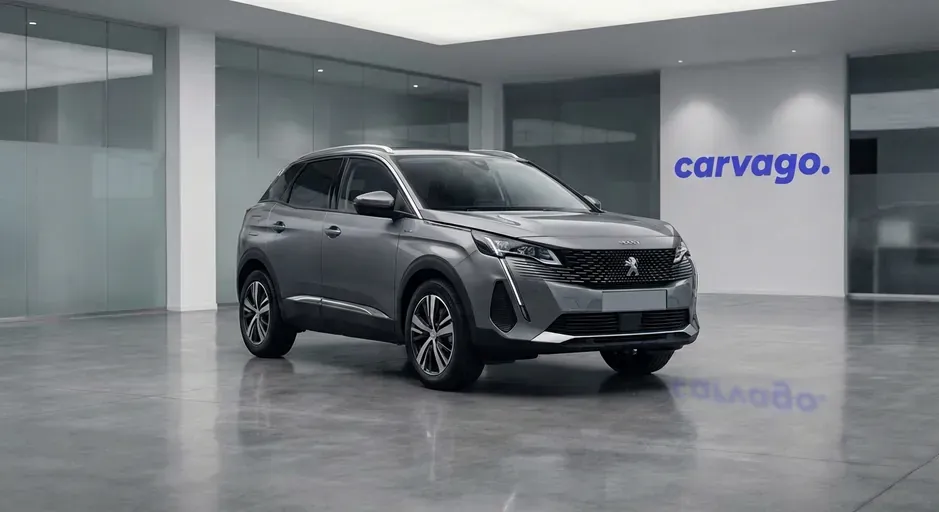
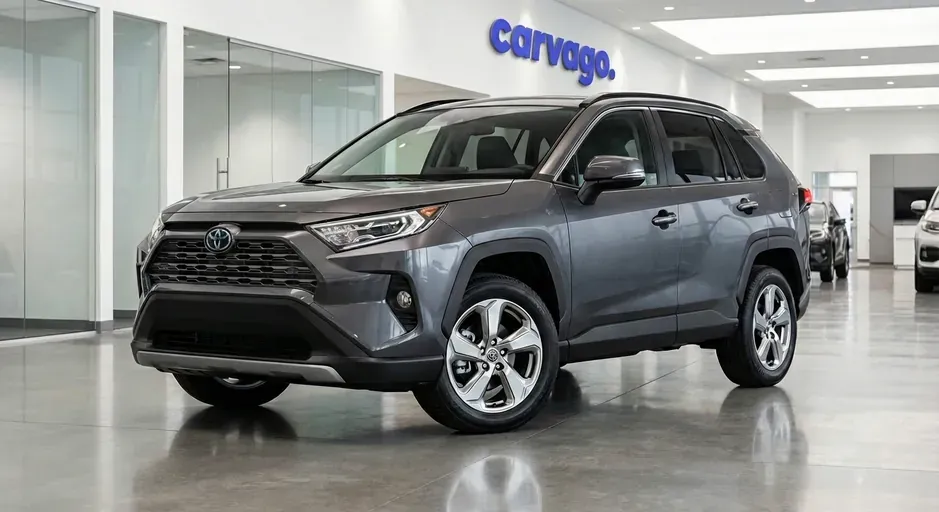
The French Peugeot 3008 appeals to European drivers primarily with its avant-garde design and innovative i-Cockpit driver's station, making it one of the most distinctive representatives in the compact SUV category. On the other side stands the benchmark of this class, the Japanese Toyota RAV4, which has long scored points for its renowned reliability and advanced hybrid technology; in our market, its plug-in hybrid variant is also known under the rebadged name Suzuki Across. Let's now take a detailed look at how these two strong competitors fare in a direct comparison and which one represents the better choice for your daily journeys.
When comparing exterior dimensions in the market for roughly four-year-old used cars, the popular second generation of the Peugeot 3008 and the fifth generation (XA5) of the Toyota RAV4 face off. Although both cars target the highly competitive category of mid-sized family SUVs, their approach to body construction is different. The Toyota RAV4 is at first glance a larger and more robust vehicle, which is clearly confirmed by the data itself. At 4,600 mm, the Japanese SUV is a significant 153 mm longer than its French competitor. In practice, this means that the Toyota offers a more generous transport capacity, while the Peugeot 3008 retains the advantage of better maneuverability in narrow city streets.
While the difference in overall length is quite substantial, the wheelbase and width of both models are much closer. The wheelbase, which is a key parameter for the cabin's longitudinal space, differs by a negligible 15 mm in favor of the Toyota. The Peugeot 3008 manages to conjure surprisingly good passenger space from its shorter body. Conversely, the Toyota noticeably dominates in height, exceeding the French car by 61 mm (1,685 mm compared to 1,624 mm for the Peugeot). This higher profile not only gives the RAV4 a more traditional "off-road" stance but also provides a more upright seating position and easier entry.
From a user perspective, these differences define the daily usability of both cars. The more compact proportions of the Peugeot 3008 represent a huge advantage when parallel parking in crowded city centers or navigating tight underground garages. The Toyota RAV4, on the other hand, will appeal to buyers who prefer a more majestic appearance, a greater sense of security from a taller body, and don't mind that the car takes up a bit more space in the parking lot.
| Parameter | Peugeot 3008 SUV | Toyota RAV4 SUV |
|---|---|---|
| Width (mm) | 1841 | 1855 |
| Length (mm) | 4447 | 4600 |
| Height (mm) | 1624 | 1685 |
| Wheelbase (mm) | 2675 | 2690 |
When choosing a family SUV, trunk capacity often plays a key role, and it is here that the different approaches of the two automakers are fully revealed. While the Toyota RAV4 bets on maximum practicality and generous space for the needs of larger families, the Peugeot 3008 focuses more on distinctive style and everyday drivability, which is reflected in its somewhat more modest transport capacities. The difference in trunk size can be a deciding factor, especially if you regularly transport bulky cargo, strollers, sports equipment, or if you often head out on long family vacations.
In terms of exact figures, the widely available fifth-generation Toyota RAV4 offers an impressive base trunk volume of 580 liters in its standard version. This is a full 60 liters more than the second-generation Peugeot 3008, which has a base volume of 520 liters. After folding the rear backrests, this difference deepens even further – the Toyota can accommodate a respectable 1,690 liters, while the Peugeot offers 1,482 liters, representing a significant difference of 208 liters in favor of the Japanese car. Major differences then exist among used plug-in hybrid (PHEV) powertrains, where the lower part of the trunk is occupied by traction batteries. In the Toyota RAV4 PHEV, the trunk retains a very solid 520 liters (and 1,604 liters when folded); in contrast, the base capacity of the Peugeot 3008 PHEV shrinks dramatically to just 395 liters (and 1,357 liters when folded), which is a value more on par with standard hatchbacks.
In practice, these values mean that the Toyota RAV4 easily provides space for several extra suitcases and confidently handles packing for a two-week vacation with the whole family. The Peugeot 3008, with its internal combustion engines, is undoubtedly sufficient for regular weekend shopping and longer vacations for couples or smaller families, but with its plug-in hybrid version, you will have to think much more carefully about luggage arrangement. In conclusion, for buyers looking for maximum transport capacity where every liter of space is invaluable, the Toyota RAV4 represents a clearly more generous and practical choice.
| Parameter | Peugeot 3008 SUV | Toyota RAV4 SUV |
|---|---|---|
| Base volume (liters) | 520 | 580 |
| Max. volume with seats folded (liters) | 1482 | 1690 |
Towing capacity is an often overlooked but key parameter for many drivers – whether they plan on weekend material hauling, towing a boat, or traveling with a heavy caravan. Both popular family SUVs approach this discipline differently, and their capabilities vary fundamentally, primarily depending on the chosen engine.
The second-generation Peugeot 3008 can handle a braked trailer weighing from 1,150 kg to 2,000 kg on its tow bar. Standard 1.2 PureTech petrol engines offer a towing capacity of 1,150 to 1,400 kg, while the most powerful 2.0 BlueHDi diesel versions can handle up to a two-tonne load. This is easily sufficient even for a large caravan and longer holidays. However, those interested in modern plug-in hybrid models must be careful. The installation of heavy batteries in these models reduces the maximum permitted load to 1,250 kg. For a standard trailer and weekend shopping at a DIY store, it is still more than sufficient, but you will hit limits when towing heavier trailers.
The fifth-generation Toyota RAV4 also has its maximum at 2,000 kg, which applies to the classic conventional version with a two-litre petrol engine. However, most buyers of this Japanese model opt for the hybrid powertrain, where it is very important to monitor the type of drive. The RAV4 2.5 Hybrid with front-wheel drive only can pull just 800 kg and is also limited for unbraked trailers (a mere 480 kg). But if you go for the variant with intelligent all-wheel drive (AWD-i), the capacity increases significantly, and the car can handle a braked trailer weighing 1,650 kg. Toyota's more powerful plug-in hybrid variant can then handle a solid 1,500 kg.
Overall, if towing a heavy caravan or trailer is a priority for you and you insist on an electrified powertrain, the Toyota RAV4 hybrid with all-wheel drive will be a much better workhorse. The hybrid Peugeot lags significantly in this area and is more suitable only for occasional towing of a light trailer with garden waste. On the other hand, the French model clearly dominates with its powerful and economical BlueHDi diesel engines, which will satisfy even the most demanding travelers.
| Model and engine | Braked trailer weight (kg) | Unbraked trailer weight (kg) |
|---|---|---|
| Peugeot 3008 1.2 PureTech 130 | 1150 - 1400 | 735 |
| Peugeot 3008 1.5 BlueHDi 130 | 1300 - 1500 | 750 |
| Peugeot 3008 1.6 Plug-In Hybrid 225/300 | 1250 | 750 |
| Peugeot 3008 2.0 BlueHDi 150/180 | 1640 - 2000 | 750 |
| Toyota RAV4 2.0 | 2000 | 750 |
| Toyota RAV4 2.5 Hybrid 2WD | 800 | 480 |
| Toyota RAV4 2.5 Hybrid AWD | 1650 | 750 |
| Toyota RAV4 2.5 Plug-in Hybrid | 1500 | 750 |
While the Peugeot 3008 and Toyota RAV4 share similar dimensions and target audiences, their approach to engines could not be more different. The difference in power units is crucial for buyers because it directly affects fuel consumption, the car's dynamic response, and long-term reliability. Peugeot bets on a downsizing strategy with smaller turbocharged engines, such as the 1.2 PureTech petrol or 1.5 BlueHDi diesel, which it complements with very powerful plug-in hybrids in the highest specifications. In contrast, the Toyota RAV4 prefers larger-displacement naturally aspirated engines paired with a sophisticated self-charging hybrid system, whereby the brand is completely abandoning traditional diesel engines. This philosophical difference means that while the French representative appeals to drivers looking for classic petrol engines or diesel for long motorway journeys, the Japanese SUV aims for excellent efficiency in urban and suburban traffic.
The second-generation Peugeot 3008 offers a fairly diverse range of engines. The cornerstone is the turbocharged 1.2 PureTech three-cylinder petrol engine with 96 kW, while the diesel alternative is the economical 1.5 BlueHDi four-cylinder with the same 96 kW output. The top of the range consists of powerful Plug-In Hybrid versions with a 1.6-litre engine and a combined output of 165 kW for the front-wheel-drive version, or even 220 kW in the Hybrid4 version with all-wheel drive. When looking for a used car around four years old, it is important to mention that the more powerful conventional engines (namely the 1.6 PureTech 180 petrol and 2.0 BlueHDi 180 diesel) were phased out in 2020 and 2021. Therefore, you will no longer find them in newer model years on the used car market, meaning that more dynamic driving is now provided exclusively by plug-in hybrid systems.
| Engine type | Fuel | Power (kW) | Torque (Nm) | Transmission |
|---|---|---|---|---|
| 1.2 PureTech 130 | Petrol | 96 | 230 | 6-speed manual / 8-speed automatic |
| 1.5 BlueHDi 130 | Diesel | 96 | 300 | 6-speed manual / 8-speed automatic |
| 1.6 PureTech 180 (discontinued ~2021) | Petrol | 133 | 250 | 8-speed automatic |
| 1.6 Plug-In Hybrid 225 | Plug-in Hybrid | 165 | 360 | 8-speed automatic |
| 1.6 Plug-In Hybrid4 300 | Plug-in Hybrid | 220 | 520 | 8-speed automatic |
The fifth-generation Toyota RAV4, on the other hand, has a significantly simpler engine range, stemming from its absolute commitment to hybrid technology. The vast majority of the used car market consists of the advanced hybrid system, which combines a 2.5-litre naturally aspirated four-cylinder with an electric motor. The front-wheel-drive version offers a solid combined output of 160 kW, while the variant with AWD-i intelligent all-wheel drive (which also has a separate rear electric motor) reaches 163 kW. The absolute pinnacle and also the most efficient variant is the 2.5 Plug-in Hybrid model with a staggering 225 kW output. Although the model was offered until 2020 with a standard 2.0 VVT-iE naturally aspirated petrol engine with 129 kW, it can no longer be expected within our monitored market of approximately four-year-old vehicles – it was completely replaced in Europe by hybrid versions.
| Engine type | Fuel | Power (kW) | Torque (Nm)* | Transmission |
|---|---|---|---|---|
| 2.0 VVT-iE (discontinued ~2020) | Petrol | 129 | 208 | 6-speed manual / CVT |
| 2.5 Hybrid FWD | Hybrid | 160 | 221 | e-CVT |
| 2.5 Hybrid AWD-i | Hybrid | 163 | 221 | e-CVT |
| 2.5 Plug-in Hybrid | Plug-in Hybrid | 225 | 227 | e-CVT |
*For Toyota hybrid engines, the table primarily lists the torque of the internal combustion engine, which is further assisted by powerful electric motors that add additional torque and ensure immediate throttle response.
Peugeot's strength remains the option of a classic diesel engine, which even today serves drivers who spend most of their time on motorways with high annual mileage perfectly. The small 1.2 PureTech petrol engine, on the other hand, will serve drivers with a more limited budget, though it lags behind the Toyota in terms of dynamics. The Toyota RAV4 dominates thanks to the velvety smoothness and exceptional reliability of its hybrid powertrain, whose only weakness may be the specific sound of the e-CVT gearbox during sharp acceleration. The final recommendation is therefore clear: Customers focused on motorway travel or a more limited budget should go for a diesel Peugeot 3008. Conversely, those looking for an excellent balance of fuel consumption, long-term reliability, and a calm ride with the family around town and its surroundings will find the Toyota RAV4 to be the ideal partner.
Choosing the right engine is absolutely crucial for long-term satisfaction and keeping service costs low in a used car. Both manufacturers approach the powertrain for their SUVs quite differently. While Toyota, with the RAV4 (XA5 generation), relies almost exclusively on its constantly refined naturally aspirated hybrid, which commonly handles hundreds of thousands of kilometres even with the original batteries, the Peugeot 3008 relies on the traditional European school of small-displacement internal combustion engines. An interesting fact from the examined data on engine availability is that with the Peugeot 3008, among roughly four-year-old used cars, you will completely lose out on the legendary and highly reliable two-litre diesel (2.0 BlueHDi), the production of which ended in late 2020. Those interested in a Peugeot must therefore look for alternatives in newer units, while Toyota is dominated by one stable, massive hybrid system. Our recommendations for an ideal four-year-old used car therefore reflect mechanical reliability, real-world performance, and owner feedback.
Since the excellent two-litre diesel is no longer available in four-year-old used cars, the 1.5 BlueHDi four-cylinder diesel becomes the most rational choice for the 3008 model.
In the case of the Toyota RAV4, there isn't much to think about in the market for roughly four-year-old cars – the naturally aspirated 2.5 Hybrid with both indirect and direct injection is an absolute staple and the clear choice.
As is often the case in the automotive world, official fuel consumption figures provided by manufacturers often differ quite significantly from everyday reality on the roads. To get the most accurate picture of the true appetite of both these popular SUVs, we have therefore turned to user data from the independent portal Spritmonitor.de, where thousands of drivers from all over Europe record their refuelling over the long term. We focused on models roughly four years old, which in the used car market corresponds to the most frequently requested generations – the Peugeot 3008 after its facelift (2nd generation) and the Toyota RAV4 in its current XA5 generation.
| Model and engine | Average consumption (l/100 km) |
|---|---|
| Petrol engines | |
| Peugeot 3008 1.2 PureTech 130 | 6.2 |
| Toyota RAV4 2.0 Valvematic | 6.2 |
| Diesel engines | |
| Peugeot 3008 1.5 BlueHDi 130 | 5.2 |
| Hybrid engines (HEV) | |
| Toyota RAV4 2.5 Hybrid | 5.6 |
| Plug-in hybrid engines (PHEV) | |
| Toyota RAV4 2.5 Plug-in Hybrid | 1.0* |
(Note: For plug-in hybrids, real-world consumption is extremely dependent on the frequency of charging from the grid. When driving with a discharged battery, fuel consumption increases significantly.)
A closer look at real-world data reveals very interesting trends. While the small turbocharged three-cylinder 1.2 PureTech in the Peugeot 3008 tries to impress on paper with its low displacement, it has to work under higher load in a relatively heavy and aerodynamically bulkier SUV. The result is a real-world consumption of around 6.2 l/100 km, which in practice means that popular downsizing brings no significant savings here compared to Toyota's classic naturally aspirated two-litre (also 6.2 l/100 km). However, the full-hybrid powertrain of the Toyota RAV4 (2.5 Hybrid) is an absolute masterpiece. Despite a massive 2.5-litre naturally aspirated four-cylinder engine and high combined power, the RAV4 can drive for a fantastic 5.6 l/100 km. For proponents of traditional highway cruisers, however, Peugeot's 1.5 BlueHDi diesel engine makes a lot of sense. With an average of 5.2 l/100 km, it is the most economical variant for long distances.
What does this mean for a typical used car buyer? If you are looking for a spacious family SUV primarily for city and suburban driving, the Toyota RAV4 with full-hybrid drive is absolutely unbeatable in terms of consumption. Not only can it save fuel in traffic jams, but unlike plug-in hybrids, it does not require plugging into a socket. Conversely, for traveling sales representatives or families covering tens of thousands of highway kilometres per year, the diesel Peugeot 3008 will be a much more reliable partner, as its consumption does not increase nearly as much at steady highway speeds. For plug-in hybrids of both brands, only one rule applies – they only make sense if you have a charger at home and at work.
In conclusion, it can be said with certainty that fuel consumption definitely acts as a key factor in the final decision-making process for these two rivals. While the French Peugeot plays it safe and can perfectly satisfy more traditionally minded drivers with its excellent diesel, the Japanese Toyota dominantly prevails with the technological superiority of its classic hybrid. It is this hybrid that makes the RAV4 the most versatile and long-term efficient choice for the vast majority of average users.
When choosing a roughly four-year-old used car (models with production years 2021 to 2022), you will encounter a completely different market approach to both models. While the French SUV attracts with a very affordable purchase price due to faster depreciation, the Japanese representative is considered a benchmark in price stability, making it a more expensive used car but with the certainty of much lower financial loss upon resale.
The Peugeot 3008 after the 2020 modernization represents an excellent price-to-utility ratio on the used car market. The faster depreciation of French cars works in favour of second-hand buyers.
The Toyota RAV4 is extremely sought after on both the Czech and pan-European markets, especially in its hybrid versions with all-wheel drive. Its price drop is almost minimal.
| Model | Starting price of used car | Average price (good equipment) | Top versions (PHEV) |
|---|---|---|---|
| Peugeot 3008 | from ~ €17,000 | ~ €22,000 | €26,000 – €35,000 |
| Toyota RAV4 | from ~ €25,000 | ~ €35,000 | €41,000 and more |
Final verdict on prices:
For a buyer with a strictly limited budget looking for a modern, stylish, and well-equipped family SUV, the Peugeot 3008 is undoubtedly a better buy among used cars. For the same money, you can get a significantly younger or better-equipped vehicle. The Toyota RAV4, on the other hand, requires a noticeably higher initial investment, a large part of which will be returned – it rewards with above-standard reliability and the fact that even after another five years of operation, it will retain a much larger share of its market value.
Both cars can boast a maximum five-star rating in independent Euro NCAP crash tests. However, when evaluating the safety of used cars, it is crucial to put these results into the context of the year in which the tests were conducted. The Euro NCAP methodology is constantly evolving and becoming stricter. Percentage results from different years cannot be directly compared because newer tests place much greater emphasis on active assistance systems, protection of vulnerable road users, and simulate more demanding accident scenarios, such as cyclist detection or collisions at intersections.
The second-generation Peugeot 3008, which forms the core of the four-year-old used car market, underwent crash tests in 2016. The vehicle earned a five-star rating with solid protection for adult occupants (86%) and children (85%). However, given the more lenient standards of that time, it achieved lower percentage results in pedestrian protection (67%) and particularly in the safety assist category (58%). Although basic systems such as autonomous emergency braking are available, from today's perspective, the car's electronic architecture no longer covers the most modern requirements for advanced active safety. Furthermore, due to the age of the original tests, the official validity of the certification under current and significantly stricter Euro NCAP rules has already expired.
The fifth-generation Toyota RAV4 was tested in 2019, under noticeably stricter protocols. Even in this more demanding environment, the car excelled and easily secured five stars. Adult protection reached an excellent 93% and child protection 87%. A significant generational leap is evident in the protection of vulnerable road users (85%) and safety assist systems (77%). The RAV4 model benefited from the advanced Toyota Safety Sense package as standard, which was able to reliably react to pedestrians and cyclists in both day and night conditions, earning it valuable extra points in the rigorous assessment of assistance systems.
| Parameter | Peugeot 3008 | Toyota RAV4 |
|---|---|---|
| Year of testing | 2016 | 2019 |
| Adult occupant protection | 86 % | 93 % |
| Child occupant protection | 85 % | 87 % |
| Vulnerable road user protection | 67 % | 85 % |
| Safety assist systems | 58 % | 77 % |
In terms of overall safety, the Toyota RAV4 offers a more modern and comprehensive package. Although both cars protect their occupants very well during an actual impact, the Japanese SUV was tested according to stricter standards and possesses substantially more advanced active assistants that can prevent accidents more effectively. For those interested in a roughly four-year-old used car, the RAV4 represents a safer choice that better corresponds to newer standards of both passive and active safety.
In addition to standard equipment, each model offers several unique features that may be decisive for the customer, with both cars approaching added value quite differently. While the French representative bets on avant-garde technology and a sense of luxury, its Japanese competitor embraces maximum functionality and both off-road and everyday durability.
Advantages:
Disadvantages:
Advantages:
Disadvantages:
Based on our own CarAudit inspections, breakdown statistics from service centers, and long-term user experience, we have compiled an overview of the most common problems that buyers of roughly four-year-old used cars should watch out for.
The French SUV attracts with its very stylish design and comfortable interior, but under the surface, it hides several technical pitfalls that require increased attention when choosing a used car.
The Japanese model is considered a global benchmark for reliability, especially regarding the durability of its hybrid powertrain. Nevertheless, even it has not completely escaped specific ailments that are worth focusing on in used cars.
The Peugeot 3008 is a slightly riskier representative in terms of reliability. While it feels more modern and luxurious, the known weaknesses of its power units (wet belts in the PureTech petrol engines, chains in the BlueHDi diesels, and emission systems) call for caution. These cars do not necessarily need to be dismissed, but they require a completely transparent, documented service history and shortened service intervals. A comprehensive car inspection is an absolutely essential step for a used French SUV, helping you avoid buying a "money pit."
The Toyota RAV4 confidently confirms its long-standing reputation as a mechanical "workhorse." Its naturally aspirated petrol engines and sophisticated e-CVT transmissions are trouble-free. A major and expensive risk for used cars is de facto only the corrosion of the high-voltage connector of the rear electric motor in 4x4 versions (if the car was driven in areas where roads are salted). Other issues are mostly minor trifles, making the RAV4 an exceptionally safe and rational choice.
When buying a used car, a thorough inspection is key, and both models have their specific weak points that must be watched for during the viewing and test drive. For maximum peace of mind when purchasing examples that are roughly four years old or older, a professional physical inspection of the used car is always worthwhile, as it can reveal hidden defects. Here are the key points to focus on.
The Toyota RAV4 offers a significantly larger trunk with a basic volume of 580 liters. The Peugeot 3008 has a volume of 520 liters, while in the plug-in hybrid version, this space is reduced to just 395 liters. For family travel with a larger amount of luggage, the Japanese model is the more practical choice.
Toyota RAV4 excels with its proven full-hybrid technology, which is exceptionally reliable, holds its value well, and requires no external charging. The Peugeot 3008 counters with classic petrol engines, efficient BlueHDi diesels, and powerful plug-in hybrids. When buying a used car, the Toyota is generally considered a safer bet for long-term reliability with a minimum of serious defects.
The Peugeot 3008 bets on the futuristic i-Cockpit with a small steering wheel and high-mounted dials, which looks premium but may not ergonomically suit every body type. The Toyota RAV4 has a more traditional, robust interior with excellent visibility and logically placed physical buttons. While the Peugeot impresses with French design and materials, the Toyota leads in overall user-friendliness.
In city and suburban traffic, the Toyota RAV4 is extremely efficient thanks to its self-charging hybrid, easily achieving consumption around 5 to 6 l/100 km. With the Peugeot 3008, you get low consumption with the diesel engine on the highway, or with the plug-in hybrid if you charge it strictly every day. However, if you don't charge the plug-in hybrid Peugeot, its consumption will be significantly higher than that of the hybrid Toyota.
For mountain areas and poor traction, the Toyota RAV4 is a much better candidate as it offers the sophisticated AWD-i intelligent all-wheel drive. Standard versions of the Peugeot 3008 only have front-wheel drive and rely solely on the Grip Control electronic stability system. You can only get a full-fledged 4WD Peugeot in the most expensive Hybrid4 plug-in hybrid specification.
Sources: ADAC, denik.cz, mdcr.cz, auto-mania.cz, dopravniinfo.cz, rallylife.cz
This article was prepared using artificial intelligence tools. The section guarantor is Petr Dušek.
Peugeot 3008 vs Renault Austral. Which SUV is better? Detailed comparison, real-world data, and the final verdict will help you choose.
Apr 13, 2026
Detailed comparison of Jaguar E-Pace vs Volvo XC40. Explore performance, equipment, and our verdict to help you choose the best compact premium SUV.
Apr 14, 2026
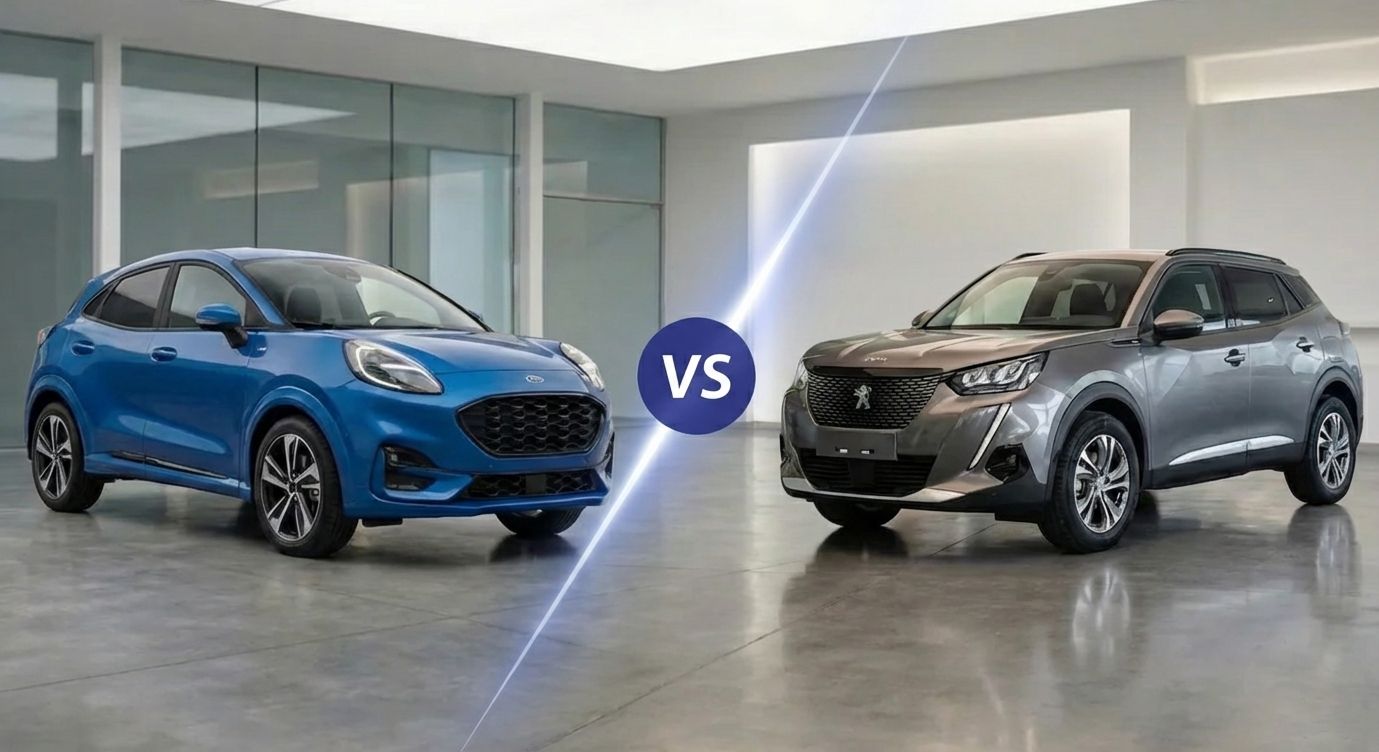
Ford Puma vs Peugeot 2008: Which crossover should you choose? Our detailed comparison, real-world insights, and verdict will help you decide.
Apr 13, 2026