Car battle
Audi Q3 vs. BMW X1: A Complete 2025 Comparison
Audi Q3 vs BMW X1: Detailed comparison of design, performance, and practicality. Find out which premium SUV is the right choice for you in our verdict.
Apr 14, 2026
Articles
Car battle
Ford Puma vs Peugeot 2008: Which crossover should you choose? Our detailed comparison, real-world insights, and verdict will help you decide.
April 13, 2026
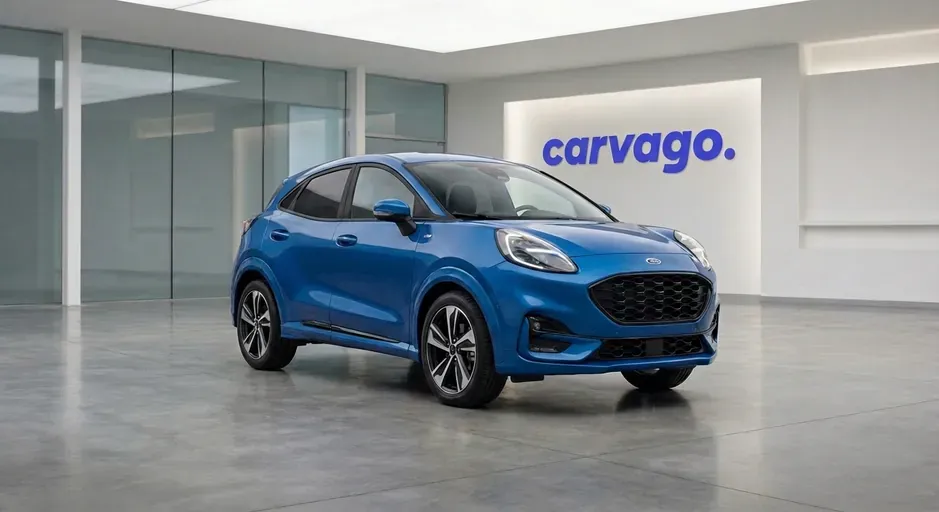
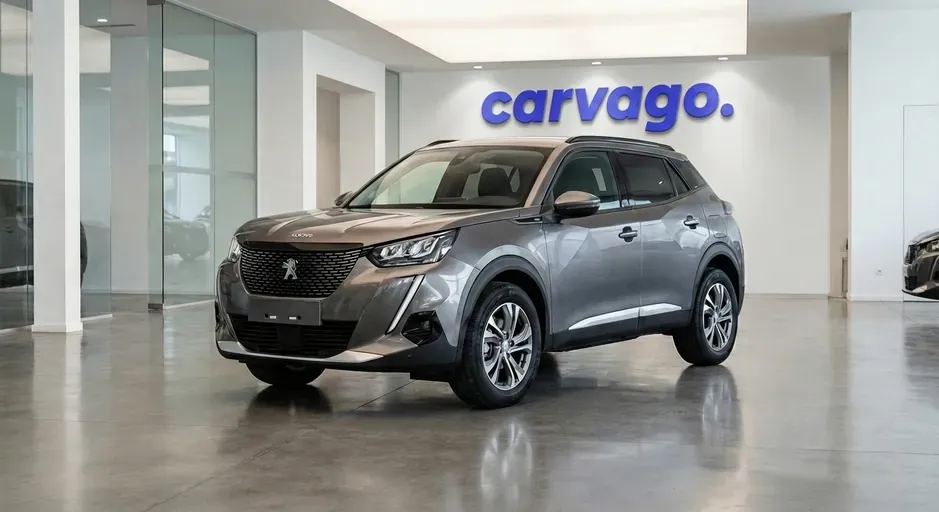
The Ford Puma is a stylish crossover that has revived a well-known name from the past, betting on a sporty design and agile driving characteristics. It stands against the Peugeot 2008, which captivates with its bold, futuristic look and modern interior featuring the i-Cockpit layout. Both of these popular small SUVs target the same customers, but they do so in completely different ways, which promises an interesting comparison.
At first glance at the Ford Puma and Peugeot 2008, a fundamental difference in their concepts is apparent. The Peugeot 2008 is an overall larger car, with its dimensions pushing the boundaries of the compact class. The Ford Puma, on the other hand, remains true to the definition of a compact crossover, which gives it an advantage in tight urban conditions.
The biggest difference is in the length of the body. The Peugeot 2008 measures 4300 mm in length, while the Puma ranges between 4186–4207 mm. The ten-centimetre difference is noticeably reflected not only in the interior space but also in the more confident stance of the French car on the road. The wheelbase of the Peugeot is also longer (2605 mm vs. 2588 mm for the Puma), which usually promises more legroom for rear passengers and a smoother ride on the motorway.
The Ford Puma counters with a wider body. At 1805 mm, it surpasses the Peugeot 2008 (1770 mm) by a significant 3.5 centimetres. This can mean slightly more shoulder room and a more robust appearance, but also less leeway in narrow parking spaces. The height of both cars is almost identical, with a slight edge for the Puma, but this has no practical effect on headroom. The choice between these two models in terms of dimensions thus depends on priorities – whether you prefer interior spaciousness and the feel of a larger car (Peugeot 2008), or agility and easier manoeuvrability in the city (Ford Puma).
| Parameter | Ford Puma SUV | Peugeot 2008 SUV |
|---|---|---|
| Length (mm) | 4186 - 4207 | 4300 |
| Width (mm) | 1805 | 1770 |
| Height (mm) | 1534 - 1536 | 1530 |
| Wheelbase (mm) | 2588 | 2605 |
Practicality is key in the small SUV segment, and the size of the luggage compartment plays a crucial role when choosing a family car. At first glance, it might seem that the Ford Puma and Peugeot 2008 are very similar in this regard, but the reality reveals interesting differences. Each model approaches the use of space a little differently, which can be decisive depending on your needs.
The Ford Puma in its second generation (from 2020) offers a very competitive volume of 456 litres with the seats in their standard configuration. Its secret weapon, however, is the innovative "MegaBox" compartment under the boot floor. This 80-litre, waterproof tub with a drain plug is ideal for transporting dirty or wet items, such as wellington boots or sports equipment, without soiling the rest of the luggage space. In contrast, the second-generation Peugeot 2008 (also from 2020) initially offered a more modest 405 litres, with newer versions (from 2023) increasing the volume to a still slightly smaller 434 litres.
The situation changes dramatically when the rear seats are folded down. Here, the Peugeot 2008 clearly dominates with a maximum volume of up to 1467 litres, making it a champion for moving bulky loads. The Ford Puma lags behind in this respect with a maximum capacity of 1216 litres. For buyers, this means a clear choice: the Puma excels in everyday practicality and clever solutions for an active lifestyle, while the 2008 offers significantly more space for occasionally transporting large items.
| Parameter | Ford Puma SUV | Peugeot 2008 SUV |
|---|---|---|
| Basic volume (litres) | 456 | 405 - 434 |
| Max. volume with seats folded (litres) | 1216 | 1467 |
When it comes to towing capacity, the differences between the two models are significant and could be a deciding factor for some buyers. Simply put, the Peugeot 2008 is the more capable vehicle in this discipline. Most of its second-generation combustion engines, whether the 1.2 PureTech petrol or the 1.5 BlueHDi diesel, can handle a braked trailer weighing up to 1200 kg. In practice, this means it can easily tow a small caravan, a trailer with a motorbike, or a fully loaded trailer with building materials.
In contrast, the Ford Puma offers more variable, but generally lower, figures. The most common 1.0 EcoBoost mild-hybrid engines can handle between 900 and 1100 kg, depending on the version. The same maximum value of 1100 kg was also offered by the now less common 1.5 EcoBlue diesel engine. A major limitation applies to the sporty ST version, which can only tow 750 kg, making it suitable mainly for light unbraked trailers. More importantly, the all-electric Peugeot e-2008 cannot officially tow any trailer.
For those who plan to use a tow bar regularly, the Peugeot 2008 with a combustion engine is the clear choice. The Ford Puma will suffice for occasional towing of smaller trailers, but it is necessary to carefully check the technical certificate of the specific engine version.
| Model and engine | Braked trailer weight (kg) | Unbraked trailer weight (kg) |
|---|---|---|
| Ford Puma 1.0 EcoBoost (70-92 kW) | 900 - 1100 | 620 - 640 |
| Ford Puma 1.0 EcoBoost Hybrid (92-114 kW) | 900 - 1100 | 640 - 695 |
| Ford Puma 1.5 EcoBlue (88 kW) | 1100 | 695 |
| Ford Puma 1.5 EcoBoost ST (147 kW) | 750 | 750 |
| Peugeot 2008 1.2 PureTech (74-114 kW) | 1200 | 580 - 600 |
| Peugeot 2008 1.5 BlueHDi (75-96 kW) | 1200 | 600 |
| Peugeot 2008 1.2 Hybrid (100 kW) | 1100 | 600 |
|---|---|---|
| Peugeot e-2008 (electric) | 0 | 0 |
When it comes to engine selection, the Ford Puma and Peugeot 2008 take completely different paths. Ford has bet almost everything on one card – the award-winning one-litre, three-cylinder EcoBoost engine, which in the vast majority of cases is supported by mild-hybrid technology. The goal is to offer fun driving characteristics with favourable fuel consumption. In contrast, the Peugeot 2008 comes with a much wider range that will satisfy almost everyone: from economical PureTech petrol engines and BlueHDi diesel units for high-mileage drivers to the fully electric e-2008 version for fans of modern technology. The choice thus clearly depends on preferences and how the car will be used.
The heart of the Ford Puma is almost exclusively the turbocharged 1.0 EcoBoost three-cylinder engine. For the used car market, the most relevant versions are those with the mild-hybrid system (mHEV), which helps reduce fuel consumption and improves acceleration dynamics. The base version offers 92 kW (125 hp), and the more powerful, very brisk variant provides 114 kW (155 hp). For drivers who crave a sporty ride, there is the top ST version with a 1.5 EcoBoost engine producing 147 kW (200 hp). Between 2020 and 2021, a 1.5 EcoBlue diesel engine was also briefly on sale, which is now an interesting choice for those looking for an economical used car for long journeys. A six-speed manual gearbox is standard, but a seven-speed dual-clutch automatic is also available.
| Engine Type | Fuel | Power (kW) | Torque (Nm) | Transmission |
|---|---|---|---|---|
| 1.0 EcoBoost Hybrid | Petrol | 92 | 210 | 6-speed manual / 7-speed auto |
| 1.0 EcoBoost Hybrid | Petrol | 114 | 240 | 6-speed manual / 7-speed auto |
| 1.5 EcoBoost ST | Petrol | 147 | 320 | 6-speed manual |
| 1.5 EcoBlue | Diesel | 88 | 270 | 6-speed manual |
The Peugeot 2008 is built on diversity. The foundation is the 1.2 PureTech three-cylinder petrol engine, available in three power levels: 74 kW (100 hp), 96 kW (130 hp), and the top 114 kW (155 hp), with the latter available only with the eight-speed EAT8 automatic transmission. For drivers with high annual mileage, there is the 1.5 BlueHDi four-cylinder diesel, most often in the 96 kW (130 hp) version with an automatic transmission, which offers an excellent compromise between dynamics and fuel economy. The key ace up its sleeve, however, is the fully electric e-2008 version with 100 kW (136 hp), which was available from the very beginning and is an ideal choice for urban and suburban driving.
| Engine Type | Fuel | Power (kW) | Torque (Nm) | Transmission |
|---|---|---|---|---|
| 1.2 PureTech | Petrol | 74 | 205 | 6-speed manual |
| 1.2 PureTech | Petrol | 96 | 230 | 6-speed manual / 8-speed auto |
| 1.2 PureTech | Petrol | 114 | 240 | 8-speed auto |
| 1.5 BlueHDi | Diesel | 96 | 300 | 8-speed auto |
| e-2008 | Electric | 100 | 260 | Automatic |
Summary and Recommendations
Choosing the right engine is absolutely key to long-term satisfaction with a car. In the following lines, we will therefore advise you on which power units for the Ford Puma and Peugeot 2008 are the best choice on the used car market in terms of performance, real-world fuel consumption, owner feedback, and mechanical reliability. While Ford bet almost exclusively on the acclaimed but technically more complex 1.0 EcoBoost mild-hybrid three-cylinder engines for the Puma, Peugeot offered a broader, but also riskier, range for the 2008 model. It included 1.2 PureTech petrol three-cylinders, economical 1.5 BlueHDi diesels, and the purely electric e-2008 version. However, diesel engines gradually faded into the background for both brands in this generation.
The ideal choice for the Ford Puma appears to be the mild-hybrid one-litre three-cylinder engine in the 92 kW (125 hp) version. It represents an optimal compromise between purchase price, running costs, and dynamics. Thanks to the 48V mild-hybrid system, which assists the combustion engine during acceleration, the car is pleasantly lively even from low revs and is well-suited for both city driving and longer journeys.
In the case of the Peugeot 2008, the choice is more complex, but the best compromise between performance and affordability is the turbocharged 1.2 PureTech three-cylinder engine with 96 kW (130 hp). The engine provides the car with confident performance, quiet operation, and, in combination with the eight-speed automatic transmission, a comfortable ride. However, its purchase is associated with the need for careful inspection and honest servicing.
Official fuel consumption figures, measured under laboratory conditions of the WLTP cycle, are one thing; real-world operation and actual fuel costs are another. That's why we looked at data from drivers themselves, primarily from databases like Germany's Spritmonitor.de, to find out how the Ford Puma and Peugeot 2008 perform in everyday life. The differences between the stated and actual consumption can be significant and depend on driving style, route profile, and vehicle load.
The following table shows the average real-world consumption for the most common engine versions of both models from generations relevant to the used car market (from around the 2020 model year).
| Model and Engine | Average Real-World Consumption (l/100 km) |
|---|---|
| Ford Puma 1.0 EcoBoost Hybrid (92 kW/125 hp) | 6.1 |
| Ford Puma 1.5 EcoBlue (88 kW/120 hp) | 5.2 |
| Peugeot 2008 1.2 PureTech (96 kW/130 hp) | 6.5 |
| Peugeot 2008 1.5 BlueHDi (96 kW/130 hp) | 5.5 |
The data clearly shows several interesting trends. In the petrol engine category, the Ford Puma with its mild-hybrid system has a slight edge. Its one-litre EcoBoost Hybrid is more economical in the real world than Peugeot's 1.2 PureTech three-cylinder, by about 0.4 litres per 100 km. Ford's mild-hybrid technology demonstrably helps reduce consumption, especially in urban and suburban traffic. Conversely, the PureTech engine's consumption is more sensitive to driving style and can easily increase with more dynamic driving.
With diesel engines, the situation is more balanced, but with a slight advantage for Ford. Its 1.5 EcoBlue unit proves to be slightly more economical on average than the comparable 1.5 BlueHDi from Peugeot. Both engines are an excellent choice for drivers who regularly cover long motorway distances, where their consumption drops most significantly. In real-world combined operation, however, the Puma averages a few tenths of a litre lower.
For the typical user, this means that if they are looking for the most economical petrol crossover for mixed driving, the Ford Puma is likely a slightly better choice. For drivers with high annual mileage, both diesels are excellent, but here too, Ford has a slight edge. However, the fuel consumption is not so dramatically different as to be the sole deciding factor. Both cars offer modern and relatively economical power units, and the final choice will depend more on personal preferences in design, comfort, and driving characteristics.
When deciding between the Ford Puma and the Peugeot 2008, the price of a used car plays a key role. Both models are popular crossovers, but their price tags on the used car market can vary depending on the year of manufacture, equipment, engine, and overall condition. Let's take a look at how they stand on the Czech used car market.
Generally, the Ford Puma and Peugeot 2008 are in very similar price ranges at used car dealerships, which makes the decision even more interesting.
Several factors determine the price differences between the two models:
As a result, both models are very close in price. The deciding factor for a buyer will often be not just the specific price offer, but also personal preferences regarding design, driving characteristics, and interior space, where the two cars differ more.
When it comes to safety, both the Ford Puma and the Peugeot 2008 boast high ratings from the Euro NCAP organization. However, it is crucial to place these ratings in the correct context, as testing protocols are constantly becoming stricter over time. A direct comparison of percentage results from different years may not be entirely telling. A car tested under newer, more stringent rules might score fewer points yet be safer in the real world than an older car with a higher score.
The Ford Puma was originally tested in 2019, when it received five stars. However, in 2022, it underwent new, more demanding testing under stricter protocols, which resulted in a four-star rating. This result does not reflect the Puma becoming a less safe car, but rather that the standards for assistance systems and the protection of vulnerable road users have advanced. Even with four stars, the Puma offers a solid level of protection. In the subcategories, it achieved 75% for adult occupant protection, 84% for child protection, 70% for vulnerable road user protection, and 69% for safety assist systems. This newer rating provides a more relevant picture of its capabilities in the context of modern safety expectations.
The Peugeot 2008 underwent Euro NCAP crash tests in 2019 and came away with two ratings. In its standard equipment, it received four stars, but with the optional "Safety Pack," it achieved a full five stars. For comparison, the five-star version is the relevant one, achieving excellent results: 93% for adult protection, 84% for child protection, 73% for vulnerable road users, and 73% for safety assist systems. However, it should be emphasized that this rating was conducted under older and less demanding rules than the Puma's more recent test. Furthermore, according to Euro NCAP rules, the validity of the 2019 rating expired at the beginning of 2026.
Although the Peugeot 2008 with the optional package achieved better percentage results on paper and five stars, its test is older. The Ford Puma, on the other hand, was tested against more modern and stricter criteria, making its four-star rating from 2022 a more current indicator of safety. For a used car buyer, both models offer a high standard of protection, but the Puma's valid rating better reflects its readiness for the challenges of modern traffic and its sophistication in active safety.
| Parameter | Ford Puma | Peugeot 2008 (with Safety Pack) |
|---|---|---|
| Year of testing | 2022 | 2019 |
| Adult occupant protection | 75 % | 93 % |
| Child occupant protection | 84 % | 84 % |
| Vulnerable road user protection | 70 % | 73 % |
| Safety assist systems | 69 % | 73 % |
In addition to standard equipment, each model offers several unique features that can be decisive for a customer, as they focus on different aspects of daily use and driving experience.
The Ford Puma attracts with its clever solutions and agile driving characteristics, which stem from its technical foundation in the popular Fiesta model.
The Peugeot 2008 focuses on bold design and modern technologies that create the impression of a higher-category vehicle.
Advantages:
Disadvantages:
Advantages:
Disadvantages:
Based on our own CarAudit inspections, reliability statistics, and owner feedback, we have compiled an overview of the most common problems that used car buyers should watch out for. Although both models are popular in the small SUV segment, they have not escaped some typical issues.
The Ford Puma generally has a decent reputation, but a few areas require increased attention when buying a used car. The problems mainly concern the EcoBoost engine and the electronics.
Summary for the Ford Puma: Most of the Puma's problems are more of an annoying nature. However, a thorough technical inspection of the car and a check of its service history are key, especially because of the 1.0 EcoBoost engine and its specific maintenance requirements.
The second generation of the Peugeot 2008 is a big leap in design and technology, but unfortunately, it struggles with several more serious and well-known problems, especially with its petrol engines.
Summary for the Peugeot 2008: While the Ford Puma faces more minor inconveniences, the 1.2 PureTech engine in the Peugeot 2008 poses a serious risk of expensive repairs. An independent inspection of the car's technical condition is an absolute must here, with a special focus on the documented history of oil changes and the condition of the timing belt. Electrical faults are more of a nuisance, but they can spoil the overall impression of an otherwise well-made car.
When buying a used car, a thorough inspection is key. Even though these are relatively modern crossovers, both models have their specific areas that are good to focus on to prevent expensive repairs in the future.
The Ford Puma has a slightly larger boot on paper (456 litres) than the Peugeot 2008 (434 litres). However, the Puma's main advantage is the innovative 'MegaBox' – a deep, washable compartment under the boot floor, ideal for transporting wet or dirty items. The Peugeot 2008 counters with a more regular shape and a low loading sill, which makes handling heavy luggage easier.
The Ford Puma is aimed at drivers who enjoy a dynamic ride, offering precise steering and an agile chassis that minimises body roll in corners. The Peugeot 2008, on the other hand, prioritises comfort; its suspension absorbs bumps better and provides a more relaxed and comfortable driving experience overall. The choice, therefore, depends on whether you prefer sportiness or comfort.
Thanks to its longer wheelbase and larger overall body, the Peugeot 2008 is more spacious for rear-seat passengers. It offers more legroom and headroom, which adult passengers will appreciate, especially on longer journeys. The Ford Puma is a bit tighter in the back and is more suitable for children or shorter distances.
Both models use three-cylinder turbocharged engines, which can have their quirks. With Peugeot's 1.2 PureTech engines, there have been past reports of problems with the timing belt, which runs in an oil bath and can disintegrate. With Ford's 1.0 EcoBoost engines, it is important to adhere to service intervals and use the correct type of oil to prevent problems with carbon deposits.
The Peugeot 2008 relies on its signature i-Cockpit with a small steering wheel and a raised digital instrument cluster, which feels very futuristic and original. The Ford Puma has a more traditionally designed interior, which is ergonomically clear but can seem less imaginative compared to the Peugeot. The choice depends on personal taste and a willingness to get used to the unconventional layout.
Sources: ADAC, motor1.com, carbuyer.co.uk, thetruthaboutcars.com, caranddriver.com, chargedevs.com
This article was prepared using artificial intelligence tools. The section guarantor is Petr Dušek.
Audi Q3 vs BMW X1: Detailed comparison of design, performance, and practicality. Find out which premium SUV is the right choice for you in our verdict.
Apr 14, 2026
BMW X1 vs. Volvo XC40: Which premium SUV is better for you? Our detailed comparison and verdict will help you make the final decision.
Apr 14, 2026
Detailed comparison of used SUVs Citroën C3 Aircross and Suzuki Vitara. Find out the differences in engines, equipment, or reliability and read our final verdict.
Apr 13, 2026