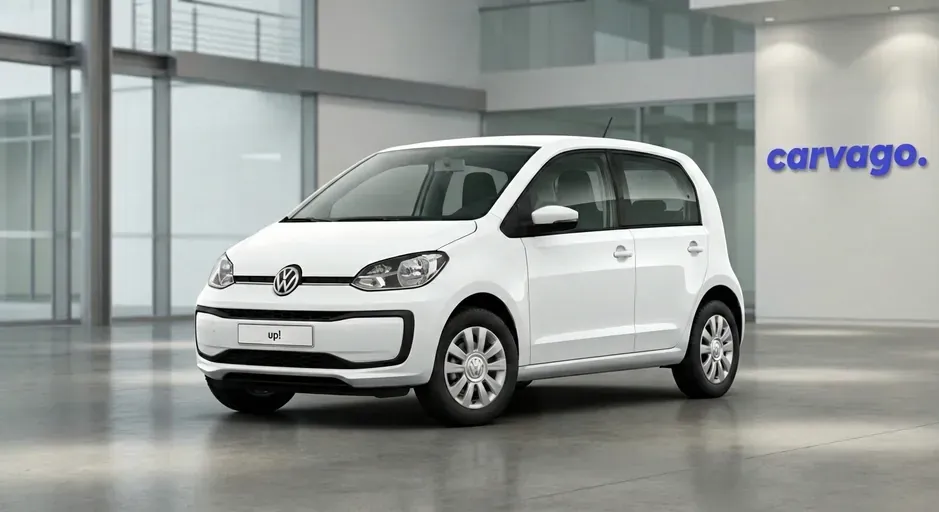
Review
Review Volkswagen up!: What do owners and experts really say?
Volkswagen up! review: real owner experience, common faults, running costs, engine picks and used prices — everything you need to know.
Oct 24, 2026
MINI Cooper review: real owner feedback, electric and petrol specs, practicality, running costs, and expert verdict on the new generation.
October 28, 2026
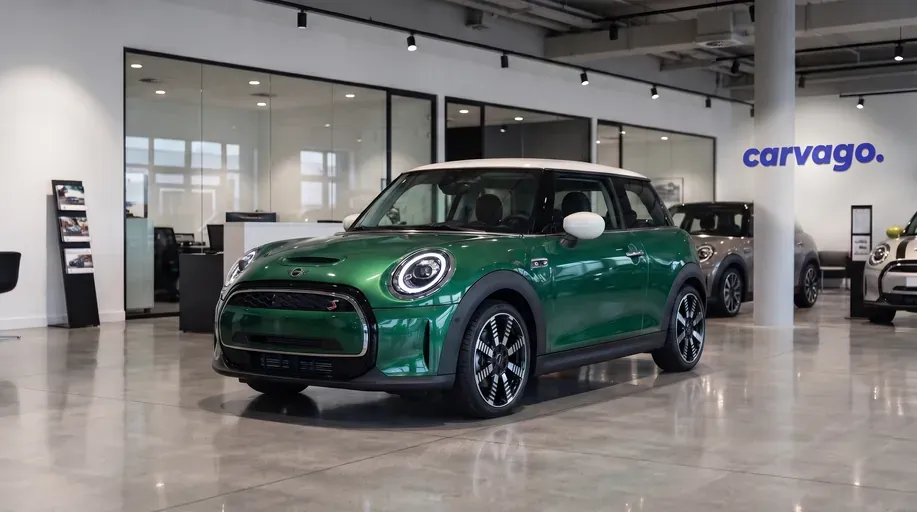
The fourth modern generation of the MINI Cooper represents a dual-track approach to the premium small-car segment. Officially retiring the standalone "Hatch" moniker, this iteration unites all-electric and petrol-powered variants under the Cooper nameplate. It primarily targets urban commuters, style-conscious private buyers, and drivers seeking premium cabin technology in a compact footprint.
This review covers vehicles produced from 2023 to the present. First European customer deliveries began in April 2024 for the petrol three-door, followed by the all-electric three-door in May 2024 and the petrol five-door in July 2024. Range additions followed with John Cooper Works versions in October 2024 and an entry-level petrol option that entered European production in July 2026. As of October 2026, the lineup remains in its initial production phase, with no mid-cycle facelift introduced to date.
The model is sold in two distinct body formats: a traditional three-door MINI Cooper hatchback available with either combustion engines or an electric powertrain, and a longer five-door combustion hatchback designed for buyers needing easier rear-seat access.
Because customer deliveries of the current generation MINI Cooper commenced in spring 2024, long-term mechanical reliability is not yet established. Fleet mileage across Europe remains relatively low, and early ownership reports indicate that neither the petrol engines and dual-clutch gearboxes nor the electric drive units have developed widespread mechanical wear patterns. Instead, owner feedback and workshop visits have been dominated by early software glitches and several European manufacturer safety recalls.
Tests describe noticeable software sluggishness, occasional display freezes, and stuttering camera feeds on early production cars. When a freeze occurs, access to the speedometer readouts and cabin temperature settings is temporarily lost until the system reboots.
Owners report intermittent wireless smartphone connectivity drops and occasional telematics outages. Holding down the physical audio volume toggle for thirty seconds triggers a soft reset when the display becomes unresponsive. While over-the-air software updates released since late 2025 have resolved severe system crashes, occasional input latency on early builds remains a known characteristic.
Several official safety recall campaigns have been registered across European safety databases:
Inside, where fitted on higher trims, the textured woven textile on the dashboard and door cards is more vulnerable to dust accumulation, liquid staining, and snagged threads than traditional smooth plastic surfaces, requiring cautious cleaning. When purchasing a used example, verifying that all recall work has been documented and having the car examined via an independent CarAudit inspection helps confirm its condition.
The fourth-generation MINI Cooper lineup divides its powertrain options between turbocharged combustion engines and dedicated battery-electric configurations, dropping manual gearboxes entirely in favour of automatic transmissions across the range. Every variant delivers drive exclusively to the front wheels.
| Engine | Fuel | Power | Gearbox | Model years |
|---|---|---|---|---|
| 1.5 Cooper One | Petrol | 90 kW (122 hp) | 7-speed automatic | 2026–present |
| 1.5 Cooper C | Petrol | 115 kW (156 hp) | 7-speed automatic | 2024–present |
| 2.0 Cooper S | Petrol | 150 kW (204 hp) | 7-speed automatic | 2024–present |
| 2.0 John Cooper Works | Petrol | 170 kW (231 hp) | 7-speed automatic | 2025–present |
| Cooper E | Electric | 135 kW (184 hp) | Single-speed automatic | 2024–present |
| Cooper SE | Electric | 160 kW (218 hp) | Single-speed automatic | 2024–present |
| John Cooper Works Electric | Electric | 190 kW (258 hp) | Single-speed automatic | 2025–present |
For city commuting and short everyday journeys, the entry-level three-cylinder petrol MINI Cooper in Cooper One or Cooper C guise delivers responsive low-speed acceleration suited to stop-and-go driving. Urban drivers who can install a home wallbox or charge at work will find the electric MINI Cooper in Cooper E specification an agile urban commuter, combining prompt electric response with quiet low-speed progress.
For mixed everyday use spanning suburban errands and open country roads, the three-cylinder Cooper C represents the most balanced petrol specification, offering sufficient mid-range flexibility for routine driving. Buyers seeking an electric model for mixed use are better served stepping up to the Cooper SE, which provides greater motor output and higher battery storage capacity for extended driving radius between charges.
Drivers who routinely travel long motorway distances should bypass the three-cylinder engines in favour of the four-cylinder Cooper S. The larger petrol unit provides relaxed high-speed cruising, lower operating stress at motorway speeds, and effective reserve punch for overtaking.
Buyers planning to tow trailers or transport heavy loads on a hitch should note that this generation of the hatchback has no approved towing homologation across either combustion or electric variants.
Keen drivers seeking focused performance have two distinct options in the John Cooper Works models. The petrol John Cooper Works is the only variant in the range fitted with standard steering-wheel shift paddles to grant manual gear control over the dual-clutch transmission, while the John Cooper Works Electric serves buyers wanting maximum outright straight-line acceleration in a zero-emission package.
For detailed reliability records, verified recalls, and owner-reported faults across both powertrain architectures, refer to the owner experiences section.
| Parameter | 3-Door Petrol | 3-Door Electric | 5-Door Petrol |
|---|---|---|---|
| Length (mm) | 3,876 | 3,858 | 4,036 |
| Width (mm) | 1,744 | 1,756 | 1,744 |
| Height (mm) | 1,432 | 1,460 | 1,464 |
| Wheelbase (mm) | 2,495 | 2,526 | 2,567 |
| Boot capacity (seats up / folded, l) | 210 / 725 | 210 / 800 | 275 / 925 |
Figures do not apply to convertible body styles.
The three-door MINI Cooper hatchback uses a four-seat arrangement where rear passenger space is restricted. Climbing into the back requires squeezing past the front seats, and the rear bench is best suited to children or shorter adults on brief journeys. The bespoke chassis of the electric MINI Cooper yields slightly more maximum cargo volume with the seats lowered, but rear legroom remains similarly constrained.
Buyers needing everyday family capability are better served by the five-door MINI Cooper, which adds dedicated rear doors, three rear seat belts, and noticeably better knee clearance. Both body styles include a standard 60:40 split-folding rear backrest to extend cargo capacity, though neither configuration provides a sliding rear bench. Practical cabin oddment storage is modest across all variants, relying on compact door bins and a slim central storage tray.
Road tests describe the suspension tuning across the MINI Cooper Hatchback line-up as decidedly firm. Direct steering and minimal body roll deliver agile cornering and strong grip, though road ruts, expansion joints, and patched surfaces transmit directly into the body. The heavier electric MINI Cooper exhibits a fidgety vertical motion over motorway crests, whereas petrol MINI Cooper models feel lighter on their feet. Both powertrains operate quietly under normal load, though tyre roar becomes prominent on coarse asphalt.
Inside, testers praise the tactile knitted textile dashboard where fitted on higher trims, but note the widespread use of hard plastics on lower panels. The central circular touchscreen draws considerable criticism for ergonomics. Because there is no traditional instrument cluster behind the steering wheel, speed readouts, climate settings, and assistance menus are concentrated on a single display. Testers find its crowded graphics and small touch targets distracting on the move, making the optional head-up display strongly recommended.
Professional tests agree that the chassis delivers agile handling and safe roadholding, but they also converge on its clear compromises: an uncompromisingly stiff ride and fiddly digital controls that sacrifice everyday usability for visual minimalism.
All market charts in this section are drawn from Carvago listings of the entire MINI Cooper model family, including earlier generations represented in the data, rather than isolating the newest generation alone. Consequently, this data does not establish a separate price level for the reviewed generation. Across the advertised model years, the median asking price sits at 21 800 EUR for 2021 cars and 26 800 EUR for 2024 cars, with secondary market desirability heavily shaped by body style and optional specification packs.
The chart below tracks advertised Mini Hatch listings per month from April to September 2026, rising from 4,074 in April to a peak of 4,437 in July.
Active listings over time
| Month | Mini Hatch |
|---|---|
| 2026-04 | 4 074 |
| 2026-05 | 4 332 |
| 2026-06 | 4 396 |
| 2026-07 | 4 437 |
| 2026-08 | 4 245 |
| 2026-09 | 3 982 |
Source Carvago
Supply contracted over the final two months to reach 3,982 listings in September 2026, but overall volume remained close to the 4,000 mark throughout, giving buyers substantial choice.
Among cars advertised today, the median asking price of listings built in 2019 is €17,900, while the median asking price of listings built in 2026 is €29,900. The chart below illustrates these median asking prices across each recorded model year.
Median advertised price by year of manufacture
| Model year | Mini Hatch |
|---|---|
| 2019 | 17 900 |
| 2020 | 19 400 |
| 2021 | 21 800 |
| 2022 | 22 900 |
| 2023 | 24 900 |
| 2024 | 26 800 |
| 2025 | 24 900 |
| 2026 | 29 900 |
Source Carvago
Buyers focusing on earlier model years face a median asking price of €17,900 for 2019 listings and €19,400 for 2020. Asking prices do not increase strictly with each newer model year, as 2025 listings show a median asking price of €24,900 compared to €26,800 for 2024 models, with 2026 examples commanding €29,900.
This depreciation curve shows how the Mini Hatch loses residual value as it ages. The steepest decline occurs early, with the car shedding roughly 19% of its residual value by age one and 28% by age three, as illustrated below.
Residual value by vehicle age
| Vehicle age | Mini Hatch |
|---|---|
| New | 38 800 |
| 1 yr | 31 500 |
| 2 yrs | 28 800 |
| 3 yrs | 28 000 |
| 4 yrs | 26 200 |
| 5 yrs | 23 800 |
| 6 yrs | 22 000 |
| 7 yrs | 19 800 |
Source Carvago
Over the seven-year span shown, the model sheds approximately 49% of its residual value overall. The sharpest drop occurs in the first year, after which annual losses moderate considerably, particularly between ages two and three.
Between April and September 2026, petrol models accounted for the vast majority of active listings, reaching a peak of 4,241 in July 2026 before declining to 3,813 in September 2026. The chart below shows how advertised listing counts across each fuel type developed over this six-month window.
Supply composition by fuel type
Petrol
Diesel
Hybrid
Electric
LPG
| Month | Petrol | Diesel | Hybrid | Electric | LPG |
|---|---|---|---|---|---|
| 2026-04 | 3 876 | 173 | 0 | 25 | 0 |
| 2026-05 | 4 136 | 161 | 0 | 35 | 0 |
| 2026-06 | 4 204 | 153 | 2 | 37 | 0 |
| 2026-07 | 4 241 | 153 | 3 | 39 | 0 |
| 2026-08 | 4 068 | 138 | 3 | 34 | 0 |
| 2026-09 | 3 813 | 122 | 3 | 36 | 1 |
Source Carvago
In September 2026, petrol dominated the cars on offer with 3,813 listings, while diesel provided 122 and electric just 36. Buyers browsing the market will find their realistic choice is overwhelmingly petrol-powered, with alternative powertrains making up only a tiny fraction of available inventory.
The chart shows the monthly average asking price for the Mini Hatch from April 2026 to September 2026, beginning at €18,000.
Average price development over time
| Month | Mini Hatch |
|---|---|
| 2026-04 | 18 000 |
| 2026-05 | 18 100 |
| 2026-06 | 18 100 |
| 2026-07 | 17 900 |
| 2026-08 | 17 900 |
| 2026-09 | 18 200 |
Source Carvago
Across the period, the average asking price moved between €17,900 and €18,200, finishing just over 1% above where it began. This variation is minimal relative to the overall price level, indicating little movement across the six months.
Agile handling with direct steering and minimal body roll
Broad powertrain selection across responsive petrol and all-electric variants
Distinctive cabin styling featuring tactile woven dashboard textiles
Uncompromisingly firm ride comfort over uneven surfaces and coarse-road tyre roar
Overly centralised touchscreen controls with no traditional instrument cluster
Cramped rear passenger seating and modest boot capacity in three-door models
Long-term mechanical reliability is not yet established due to low fleet mileage, though no widespread mechanical defects have appeared. Primary early concerns centre on central screen software glitches and safety recalls, making verified campaign completion essential.
The petrol Cooper C offers the best balance for mixed daily driving, while the electric MINI Cooper suits urban commuters with home charging. For frequent long-distance motorway travel, the four-cylinder Cooper S is the preferable choice.
Check the vehicle's VIN with an authorised retailer to confirm all safety recall work has been completed. Additionally, test the central display responsiveness from a cold start and arrange an independent CarAudit inspection.
The three-door model has restricted rear space and four seats, suiting only occasional passenger use. Buyers needing everyday family practicality should choose the five-door MINI Cooper for its dedicated rear doors and extra seat.
Sources: press.bmwgroup.com, mini.co.uk, adac.de, ec.europa.eu, autocar.co.uk
This article was prepared using artificial intelligence tools. The section guarantor is Petr Dušek.
Volkswagen up! review: real owner experience, common faults, running costs, engine picks and used prices — everything you need to know.
Oct 24, 2026
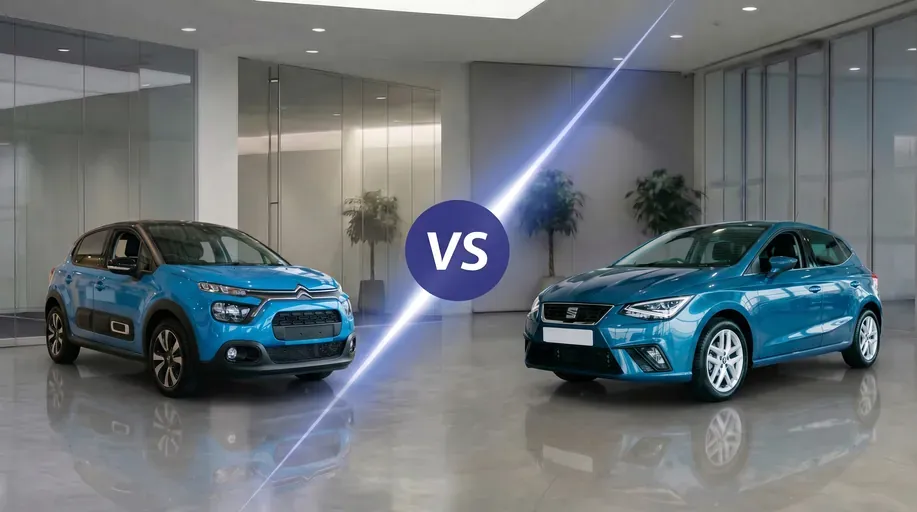
Detailed comparison of Citroën C3 vs Seat Ibiza. We reveal real-world experiences with used cars, differences in engines and equipment. Find out which hatchback is the better choice.
Oct 16, 2026
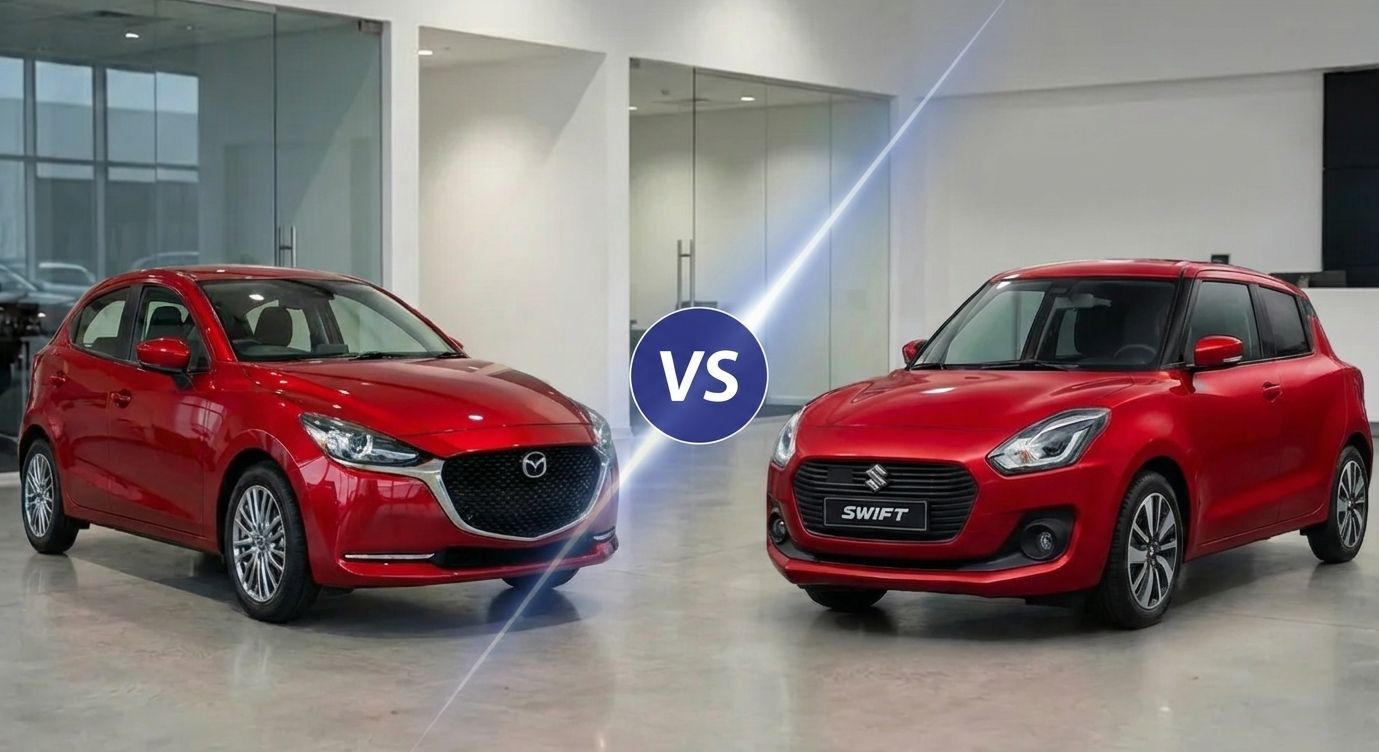
Detailed comparison of Mazda 2 vs Suzuki Swift. Are you looking for the ideal city hatchback? Find out the differences in driving characteristics, fuel consumption, and read our verdict.
Apr 8, 2026