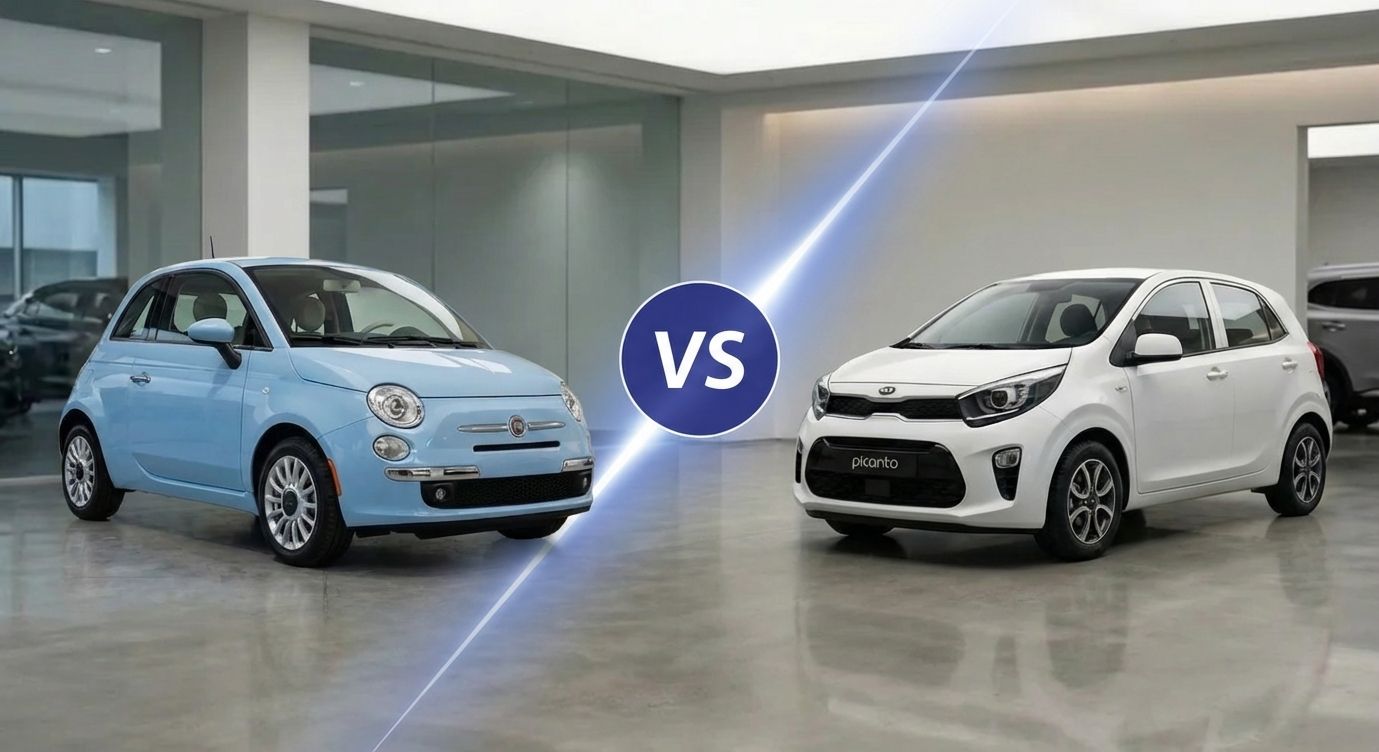
Car battle
Fiat 500 vs. Kia Picanto: Complete comparison 2026
Fiat 500 or Kia Picanto? Our detailed comparison will help you choose the right city car. Detailed tests, features, and verdict.
Apr 14, 2026
Articles
Car battle
Detailed comparison of Mazda 2 vs Suzuki Swift. Are you looking for the ideal city hatchback? Find out the differences in driving characteristics, fuel consumption, and read our verdict.
April 8, 2026
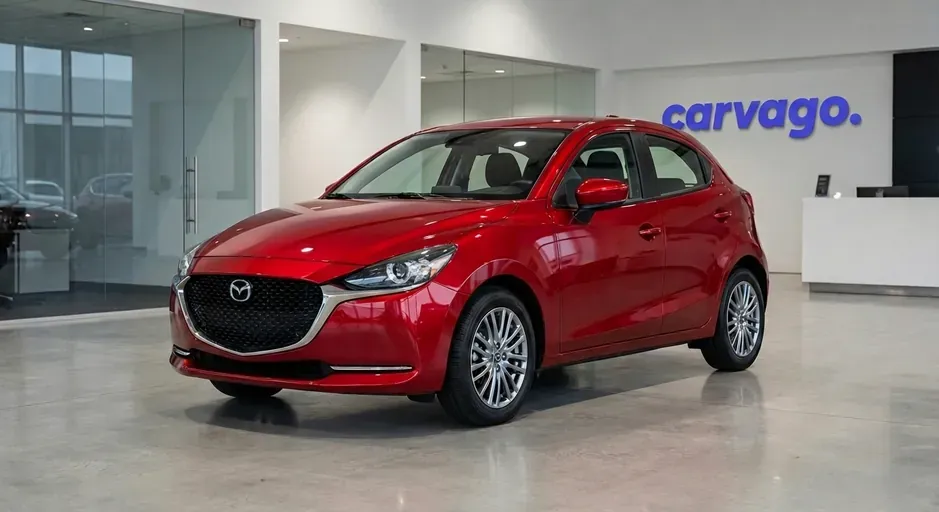
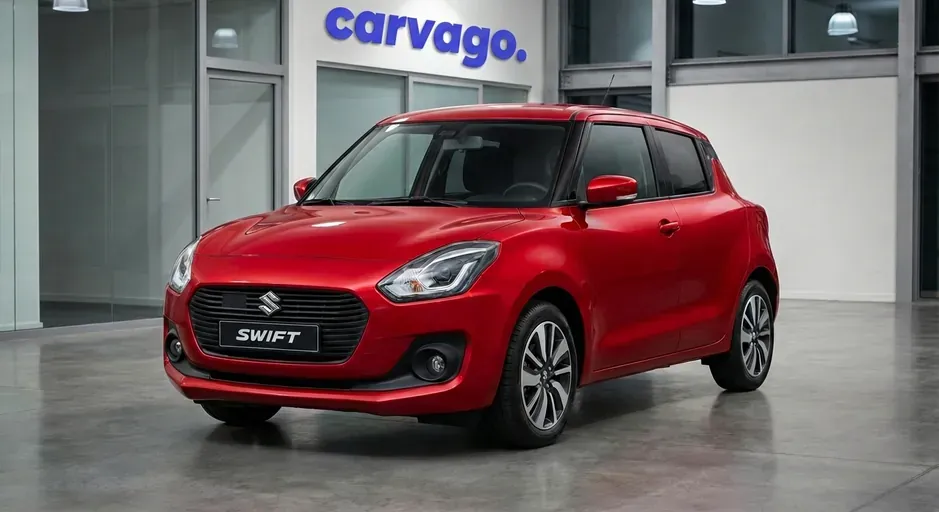
The Mazda 2, historically known in some markets as the Mazda Demio, or sold in Europe in its newer hybrid version as a rebadged Toyota Yaris, is an elegant city hatchback that relies on an unexpectedly premium interior and precise, sportier driving dynamics. Standing against it is the Suzuki Swift, a light and playful model available in specific markets under the name Maruti Suzuki Swift, which wins drivers' hearts primarily with its extraordinary agility, reliability, and very low running costs. Let's take a detailed look at how these two traditional Japanese rivals from the small car segment perform in a direct comparison and which of them represents a smarter choice on the used car market.
When comparing the exterior dimensions of these two representatives of the small car segment (B-segment), we encounter two quite different design philosophies. While the Mazda 2 tries to approach more mature compact cars with its exterior dimensions and emphasizes flowing elegance, the Suzuki Swift stays true to its roots and maintains ultra-compact proportions that make it an ideal nimble car for city traffic. If you are looking for an approximately four-year-old car on the used market (i.e., models around 2022), you will primarily encounter the classic combustion generation designated DJ1 for Mazda (or the newer hybrid variant sharing technology with the Toyota Yaris), while for Suzuki, it is the exceptionally popular sixth generation.
In the longitudinal direction, the difference between the cars is apparent at first glance. The standard version of the Mazda 2 reaches a length of 4065 to 4080 mm, outgrowing the Suzuki Swift (with a length of 3840 to 3890 mm) by nearly 20 centimeters. This significant difference naturally translates into the wheelbase, which is 120 mm longer in the Mazda (2570 mm compared to 2450 mm for the Suzuki). In practice, this means that the Mazda 2 will offer slightly better directional stability at higher highway speeds and noticeably more legroom in the rear seats. The Suzuki Swift, on the other hand, benefits from its shortened bodywork with unrivaled agility, allowing you to park in gaps that you would regretfully have to pass by with other cars.
An interesting twist, however, comes when looking at the body width. Although the Suzuki Swift is an overall shorter car, with a width of 1735 mm, it surpasses the regular combustion versions of the Mazda 2 (1695 mm) by a noticeable 40 millimeters. This fact has two positive impacts: the Swift looks visually wider and almost sporty on the road, while also offering the crew an unexpectedly airy feeling in the interior around the shoulder area. In terms of height, the two models do not compete much, as they both hover around the 1.5-meter mark. Overall, the Mazda 2 is more suitable for drivers who prefer a longer body structure with a calmer ride outside the city, while the Suzuki Swift will be appreciated by those who need the smallest possible footprint with maximum utilization of interior width.
| Parameter | Mazda 2 Hatchback | Suzuki Swift Hatchback |
|---|---|---|
| Width (mm) | 1695 - 1745 | 1735 |
| Length (mm) | 3940 - 4080 | 3840 - 3890 |
| Height (mm) | 1495 - 1515 | 1480 - 1505 |
| Wheelbase (mm) | 2560 - 2570 | 2450 |
Trunk volume is often one of the deciding factors for small city hatchbacks, especially if the car serves not only for daily commuting but also as a practical helper for weekend shopping or occasional trips for two. Looking at approximately four-year-old cars, which are among the attractive and sought-after choices on the used market, both Japanese models stick rather to the traditional standards of their class. Nevertheless, between the Mazda 2 (primarily the widespread DJ1 generation) and the Suzuki Swift (6th generation), we find substantial differences that can fundamentally affect daily usability.
In its basic configuration, the Mazda 2 offers a trunk volume of 280 liters, surpassing the Suzuki Swift with its 265 liters by 15 liters. Although this difference may seem negligible at first glance, in practice, it easily represents space for one extra small sports or travel bag. However, a significantly different situation arises when maximum capacity is needed after folding down the rear seats. The Mazda 2 can conjure up a storage space with a respectable volume of up to 950 liters, while the Suzuki Swift ends at a much more modest value of 579 liters. From the perspective of the current used car offering, it is also interesting to mention the newer full-hybrid variant, the Mazda 2 Hybrid (ZV generation), which arrived on the market as a technological twin of the Toyota Yaris and offers 286 liters as standard. For the Suzuki Swift, on the other hand, it is pleasing that the installation of the very popular mild-hybrid technology (SHVS) does not cut any valuable liters from the trunk, and the capacity remains completely identical to the purely gasoline versions.
Overall, it can be summarized that if you primarily require enough space for regular shopping or two pieces of hand luggage from a small, agile car, the Suzuki Swift will fully suit you. However, if you are looking for a slightly more flexible car and suspect that you will occasionally need to transport bulkier cargo after folding down the seats, the Mazda 2 becomes a noticeably more reasonable and practical choice thanks to its huge lead in maximum transport capacity.
| Parameter | Mazda 2 Hatchback | Suzuki Swift Hatchback |
|---|---|---|
| Base volume (liters) | 280 | 265 |
| Max volume with seats folded down (liters) | 950 | 579 |
Although small city cars are not usually typical towing vehicles, the ability to attach a trailer is an important factor for many owners. Whether it's hauling garden waste, transporting building materials, or just installing a bike rack on the tow hitch, the trailer weight fundamentally affects the overall practicality of the car. When comparing approximately four-year-old used cars from 2020 to 2022, the sixth-generation Suzuki Swift comes out slightly better in this battle, as despite its compact dimensions, it can tow a surprisingly heavier load.
Standard and maximum capacities
The standard combustion version of the Mazda 2 (DJ1 generation) can handle a braked trailer with a maximum weight of 900 kg. In contrast, the competing Suzuki Swift offers a maximum braked trailer capacity of exactly 1000 kg for its most widespread motorizations (such as the 1.2 Dualjet or the turbocharged 1.0 Boosterjet). However, an interesting twist comes with unbraked trailers, which are the most common for regular domestic use. Here, the Mazda 2 leads with a solid capacity of 500 kg, while the Suzuki Swift has to make do with a limit of just 400 kg.
Watch out for hybrid and sports variants
When choosing a specific used car, you need to be careful with alternative drives. While the popular mild-hybrid engines in the Suzuki Swift fully retain their maximum towing capacity of 1000 kg, for the fully hybrid Mazda 2 Hybrid model (ZV generation), which is a technological twin of the Toyota Yaris, the maximum weight of both braked and unbraked trailers drops to just 450 kg. The sports variant, the Suzuki Swift Sport, officially does not support a tow hitch for trailers at all due to the different design of the bumpers and exhaust.
Final summary
In everyday life, these parameters mean noticeable differences in what you can afford to transport. The standard models of both cars represent a solution fully sufficient for regular weekend shopping of bulkier goods and transporting things to the cottage. If you plan to tow heavier braked trailers or smaller caravans, the Suzuki Swift will provide a valuable reserve with its one-ton capacity. Conversely, for owners of regular small unbraked trailers, the classic Mazda 2 is paradoxically a better choice, as it can carry 100 kg more (room for a few extra bulky items). However, if your favorite is the economical Mazda 2 in the Hybrid version, you will have to limit yourself to only the very lightest loads or settle exclusively for using a rear bike rack.
| Model and motorization | Braked weight of trailer (kg) | Unbraked weight of trailer (kg) |
|---|---|---|
| Mazda 2 1.5 SKYACTIV-G / e-SKYACTIV-G (DJ1) | 900 | 500 |
| Mazda 2 Hybrid (ZV) | 450 | 450 |
| Suzuki Swift 1.0 / 1.2 Dualjet (6. Gen) | 1000 | 400 |
| Suzuki Swift 1.2 Dualjet Hybrid (6. Gen) | 1000 | 400 |
The basic approach to motorizations differs significantly between the two Japanese automakers, although both today rely primarily on gasoline power and electrification. While Mazda sticks to its philosophy of larger naturally aspirated four-cylinder engines with a high compression ratio and complements them with a separate fully hybrid model, Suzuki relies on the extremely low weight of its cars combined with smaller mild-hybrid units. For buyers in the used car market, this means a clear choice: if you are looking for an uncomplicated city car focused on the lowest possible fuel consumption, Suzuki's mild-hybrid engines with the car's featherweight will thrill you. Mazda, on the other hand, will appeal to drivers who appreciate the mechanical refinement of larger engines, and for typical city driving, it offers a top-notch full hybrid. Furthermore, Suzuki holds one absolutely unique first in this segment – a reliable all-wheel drive can be purchased with the base engine, which is an absolute rarity for such small cars.
For roughly four-year-old used cars (DJ1 generation and the newer ZV), the offer revolves exclusively around 1.5-liter gasoline engines. The 1.5 SKYACTIV-D (77 kW) diesel motorization, available in the first years of the DJ1 generation (production ended in 2018), was completely removed from the lineup and you will no longer find it in younger used cars. The backbone of the portfolio is the classic naturally aspirated SKYACTIV-G four-cylinder, which later transitioned to mild-hybrid technology under the designation e-SKYACTIV-G M Hybrid. The base version provides an output of 55 kW (75 hp), however, the mid-range variant with an output of 66 kW (90 hp) is much more popular and user-friendly. This can be paired with either a precise six-speed manual or an automatic transmission. The peak of the classic range is the dynamic version with an output of 85 kW (115 hp). A very specific model is the Mazda 2 Hybrid (ZV generation, sold since 2022), which is a technological twin of the Toyota Yaris. It uses a three-cylinder full-hybrid system with a system output of 85 kW (116 hp) connected to an e-CVT planetary gearbox, which excels in extreme efficiency, especially in city traffic.
| Engine type | Fuel | Power (kW) | Torque (Nm) | Transmission |
|---|---|---|---|---|
| 1.5 SKYACTIV-G 75 | Gasoline | 55 | 143 | 6MT |
| 1.5 (e-)SKYACTIV-G 90 | Gasoline / Mild-hybrid | 66 | 151 | 6MT / 6AT |
| 1.5 e-SKYACTIV-G 115 | Gasoline / Mild-hybrid | 85 | 151 | 6MT |
| 1.5 Hybrid (ZV) | Gasoline (Full-hybrid) | 85 | 120 | e-CVT |
| 1.5 SKYACTIV-D (up to 2018) | Diesel | 77 | 220 | 6MT |
The sixth generation of the Suzuki Swift (produced until 2024) significantly optimized and fully electrified its engine lineup around 2020. The turbocharged 1.0 Boosterjet three-cylinder and the naturally aspirated 1.2 Dualjet four-cylinder without hybrid assistance completely disappeared from the lineup for newer used cars (production of both versions ended during 2020). The standard and absolutely most widespread engine on the market for roughly four-year-old cars thus became the reliable naturally aspirated 1.2 Dualjet Hybrid four-cylinder with an output of 61 kW (83 hp). Although its power doesn't seem dazzling on paper, thanks to the car's exceptionally low curb weight (often under 950 kg), the Swift is surprisingly agile. The engine can be combined with a five-speed manual or a CVT automatic, and as one of the few in this class, also with ALLGRIP all-wheel drive. For sports enthusiasts, the acclaimed Suzuki Swift Sport version is available, powered since 2020 by an electrified 1.4 Boosterjet Hybrid four-cylinder with 95 kW (129 hp) and 235 Nm of torque. It is mated exclusively to a six-speed manual and represents one of the most affordable and fun hot hatches on the market.
| Engine Type | Fuel | Power (kW) | Torque (Nm) | Transmission |
|---|---|---|---|---|
| 1.2 Dualjet Hybrid | Petrol (Mild-hybrid) | 61 | 107 | 5MT / CVT |
| 1.2 Dualjet Hybrid ALLGRIP | Petrol (Mild-hybrid) | 61 | 107 | 5MT |
| 1.4 Boosterjet Hybrid (Sport) | Petrol (Mild-hybrid) | 95 | 235 | 6MT |
| 1.2 Dualjet (up to 2020) | Petrol | 66 | 120 | 5MT / CVT |
| 1.0 Boosterjet (up to 2020) | Petrol | 82 | 170 | 5MT / 6AT |
Choosing the right engine is a key factor for long-term satisfaction with a used car. Our recommendations are based on real-world experience, mechanical reliability, and actual fuel consumption. Both compared cars – the Mazda 2 and the Suzuki Swift – are essentially rare phenomena on the market for roughly four-year-old used cars (around the 2022 production year). While most competitors have long since switched to 1.0-liter turbocharged three-cylinders, these Japanese manufacturers have taken the path of honest naturally aspirated four-cylinders, now standardly supported by mild-hybrid technology. You thus get refined operation, excellent fuel economy, and avoid the risks associated with delicate turbochargers. Earlier diesel engines (such as the 1.5 SKYACTIV-D in the Mazda or the 1.3 DDiS in the Suzuki), which appeared in older generations, are no longer found in the lineup of approximately four-year-old cars, and considering their more problematic reputation in small city cars, their absence is actually a major advantage.
Official paper fuel consumption figures provided by manufacturers often differ in real-world driving, which is why it is crucial to rely on the experiences of the drivers themselves when choosing a used car. The data below is drawn from long-term statistics of the popular community portal Spritmonitor.de, where thousands of owners record their actual refuelings. We focused exclusively on generations and engine types typical for roughly four-year-old cars (manufactured around 2020 to 2022), which are the most relevant for today's used car market. Although diesel engines (1.4 CD in Mazda or 1.3 DDiS in Suzuki) also appeared in older generations of both models, they have completely disappeared in the modern era of city cars. Today's battle for the lowest fuel consumption takes place purely between highly efficient petrol and hybrid units.
Source: Spritmonitor.de
| Model and engine | Average consumption (l/100 km) |
|---|---|
| Petrol engines (without electrification) | |
| Mazda 2 1.5 SKYACTIV-G 75 (DJ1) | 4.8 |
| Suzuki Swift 1.0 Boosterjet (6th generation) | 5.0 |
| Mazda 2 1.5 SKYACTIV-G 90 (DJ1) | 5.4 |
| Mild-hybrid and full hybrid engines | |
| Mazda 2 Hybrid (ZV) | 3.9 |
| Mazda 2 1.5 e-SKYACTIV-G 90 M Hybrid (DJ1) | 4.7 |
| Suzuki Swift 1.2 Dualjet Hybrid (6th generation) | 5.0 |
| Suzuki Swift Sport 1.4 Boosterjet Hybrid (6th generation) | 5.6 |
When interpreting real-world data, several interesting trends can be observed. A surprising finding for many buyers may be the fact that the small-displacement turbocharged three-cylinder 1.0 Boosterjet from Suzuki does not bring significant fuel savings in practice compared to the larger naturally aspirated four-cylinder 1.5 SKYACTIV-G from Mazda. This shows the strength of Mazda's philosophy, which, instead of downsizing and adding turbochargers, optimized friction losses and compression ratios of its traditional engines. Thanks to this, the basic Mazda 2 can drive well below the five-liter mark even without the help of an electric motor.
The absolute winner in efficiency is the Mazda 2 Hybrid (ZV generation), which fully utilizes the proven hybrid technology taken from the Toyota Yaris, thanks to which it pushes real-world consumption below 4 liters. Suzuki Swift in its newer model years bet on the widespread deployment of mild-hybrid technology (Dualjet Hybrid), which effectively reduces emissions and helps primarily in the city. In combined real-world driving, it stays at a very reliable 5 liters per 100 km. Also worth mentioning is the sporty Suzuki Swift Sport with the 1.4 Boosterjet Hybrid engine, where an average of 5.6 l/100 km is a fantastic result given the dynamics provided.
For a typical driver moving in heavy city traffic, the fully hybrid Mazda 2 (ZV) is by far the best solution, where crawling in traffic jams brings consumption down to an absolute minimum. If, on the other hand, you commute more often from suburban areas or regularly use country roads, you will appreciate the linear delivery of the naturally aspirated Mazda 2 (DJ1) or the agility of the Suzuki Swift, which can be exemplarily efficient even without complex full hybrid assistance.
In conclusion, it can be said with certainty that real-world consumption should not play the role of a "tiebreaker" in the final choice between the Mazda 2 and the Suzuki Swift. Both cars belong to the absolute top of the small car segment in terms of operating costs and save their owner's wallet as much as possible. Your decision should therefore be based more on the preferred driving characteristics, interior space requirements, or sympathy for the design.
Looking at the used car market with an approximate age of four years (production years 2021–2022), both the Mazda 2 and Suzuki Swift represent highly sought-after items in the small city car segment (B-segment). Although both Japanese automakers target a similar customer, their pricing policy and depreciation on the used car market differ quite significantly.
While the sixth-generation Suzuki Swift scores with an excellent price-to-value ratio, the Mazda 2 (in its third generation after a significant facelift) holds a higher residual value thanks to a more premium interior finish and a reputation for almost indestructible engineering.
| Model (MY 2021–2022) | Starting price (basic equipment/higher mileage) | Average price (good condition, medium equipment) | Highest price (top equipment, automatic, 4x4) |
|---|---|---|---|
| Mazda 2 (1.5 Skyactiv-G) | From approx. €11,000 | €13,000 – €14,000 | Up to €16,000 |
| Suzuki Swift (1.2 DualJet MHEV) | From approx. €10,000 | €11,000 – €13,000 | Up to €15,000 (Swift Sport even more) |
With four-year-old used Mazda 2s (DJ/DL generation), you will mostly encounter naturally aspirated four-cylinder 1.5 Skyactiv-G engines. The prices of these cars drop only very slowly. The reason is not only the attractive Kodo design but also the fact that Mazda prices its small cars slightly higher from the start than the mainstream competition.
_(Note: It is important not to confuse the traditional Mazda 2 with the Mazda 2 Hybrid model, which arrived on the market in 2022 as a rebadged Toyota Yaris and whose prices on the used car market usually start significantly above €16,000.) _
The Suzuki Swift from 2021–2022 clearly dominates the used car market in terms of availability. During this period, the vast majority of cars already featured mild-hybrid technology combined with the 1.2 DualJet engine. The Swift as a used car loses value slightly faster than the Mazda, making it a very rational and economical choice.
When evaluating the safety of used cars, it is often customary to rely primarily on whether the car received a five-star rating in Euro NCAP tests, but it is crucial to perceive the entire context and the year of testing. Test protocols and methodology are constantly evolving and becoming stricter over time. A car that shone at the top of the rankings years ago might not pass at all today due to the lack of cyclist detection, the absence of central airbags, or advanced autonomous braking at intersections. Percentage scores from different years therefore cannot be directly compared, and the validity of original certificates usually expires after about six years for this reason.
The Mazda 2 underwent its Euro NCAP tests in 2015, taking away the full five stars. Its strengths included, in particular, adult occupant protection and above-average pedestrian protection. Although this certification expired at the beginning of 2022 due to developments in the field of safety, the robustness of its bodywork remains undeniable. The lower percentage score for safety assistants reflects the fact that high-speed autonomous braking was missing from the standard equipment – however, this was typical for small cars of that time.
The Suzuki Swift (the relevant generation from 2017 to 2023) was tested by Euro NCAP in 2017 under a slightly newer methodology. In its basic version, this model received only a three-star rating, which increased to four stars only with the optional Radar Brake Support package containing autonomous emergency braking. The car thus lost points mainly in the category of standard safety assistants and, compared to the Mazda, also demonstrated slightly lower passive protection for both child occupants and vulnerable road users.
| Parameter | Mazda 2 | Suzuki Swift |
|---|---|---|
| Year of testing | 2015 | 2017 |
| Adult occupant protection | 86% | 83% |
| Child occupant protection | 78% | 75% |
| Vulnerable road users protection | 84% | 69% |
| Safety assist systems | 64% | 25% |
Note to the table: The values correspond to the methodologies in the years of testing. For the Suzuki Swift model, we state the percentages from the standard equipment (3-star rating).
Final safety verdict:
Although neither of these cars meets the strictest current standards for active accident prevention anymore, from the perspective of traditional passive safety, the Mazda 2 shows slightly better results. It offers sturdier and more secure protection during the impact itself, even for pedestrians in the event of a collision. The Suzuki Swift lags slightly behind in the field of passive protection, and to maximize safety, it is crucial to look for a unit on the used car market that was equipped with the advanced brake assist package by the original owner.
In addition to standard equipment, both models offer much more than just basic features, and each takes its own, entirely distinctive approach to added value for the driver and passengers.
Pros:
Cons:
Pros:
Cons:
Based on our own inspections, long-term user experiences, failure rate statistics, and the outputs provided by our comprehensive car inspection, we have compiled an overview of the most common problems. This overview focuses on models roughly four years old, where used car buyers should pay close attention.
Roughly four-year-old Mazda 2 models (DJ/DL generation after the facelift) are considered highly sought-after goods on the used car market, primarily due to their durable engineering. Nevertheless, a few typical ailments appear in them that are good to focus on.
Summary for the Mazda 2: This model represents an above-average reliable choice. Mechanical failures of the engine or transmission are very rare, and problems are mostly limited to cosmetic paint defects or minor electronic issues.
The four-year-old Suzuki Swift (6th generation) is, much like its Japanese rival, renowned for its technical reliability, but given its price targeting, owners must expect compromises in materials and comfort.
Summary for the Suzuki Swift: It is an incredibly tough and reliable car that won't leave you stranded on the road. Most of the mentioned shortcomings stem from the lower perceived quality of the materials used and weaker underbody rust protection, not from design flaws.
When buying a used car, a thorough inspection is crucial. Here are a few specific points to focus on with these two Japanese models, which are otherwise among very reliable used cars, but have their specific weak spots associated with their focus on city driving.
The Mazda 2 offers a slightly larger trunk space with a volume of 280 liters compared to 265 liters in the Suzuki Swift. Although both values are slightly below average for the class, they are perfectly sufficient for regular daily shopping. After folding down the rear backrests, both cars offer solid versatility for transporting larger items.
Both models are among the most fun-to-drive small cars on the market. The Suzuki Swift benefits from an extremely low weight of under 900 kg, which gives it fantastic agility and a feeling of lightness in tight corners. The Mazda, on the other hand, scores with precise steering, an excellent gearshift feel, and generally more mature chassis behavior on highways and country roads.
Both Japanese automakers are synonymous with above-average mechanical durability and, with regular maintenance, usually do not suffer from any serious technical faults. They benefit primarily from the use of proven naturally aspirated gasoline engines, which do not carry the risk of expensive turbocharger repairs. However, the Mazda features more premium materials in the interior, which resist wear better even after several years of use.
The Swift wins slightly in this discipline thanks to its featherweight and the standard efficient mild-hybrid system, making it easy to achieve consumption below 5 l/100 km. The Mazda with Skyactiv engine technology is also among very economical cars, but its real-world consumption is roughly half a liter higher. However, for daily weaving through the city, both cars are an excellent choice from an economic perspective.
The Suzuki Swift provides surprisingly more headroom and legroom in the back, despite its extremely compact exterior dimensions. Due to its sporty sloping roof and dynamic design, the Mazda has more limited space in the rear, so it can feel somewhat cramped for taller adult passengers. Therefore, if you plan to fully occupy the second row of seats more often, the Swift will be a more practical and comfortable option.
Sources: ADAC, novinky.cz, lidovky.cz, smartmania.cz, autotechnik.cz, automotorista.cz
This article was prepared using artificial intelligence tools. The section guarantor is Petr Dušek.
Fiat 500 or Kia Picanto? Our detailed comparison will help you choose the right city car. Detailed tests, features, and verdict.
Apr 14, 2026
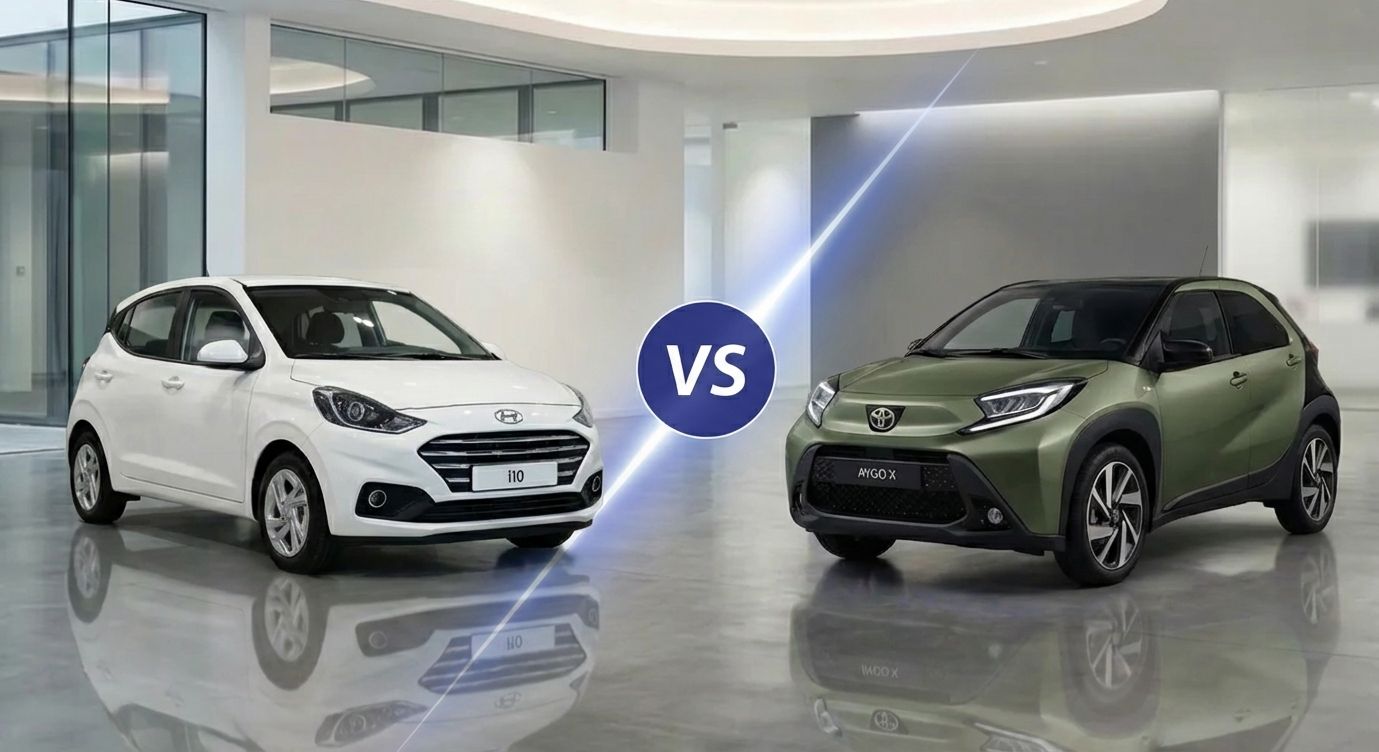
Hyundai i10 vs. Toyota Aygo X: A detailed comparison, real-world insights, and a verdict to help you choose the right small city car.
Apr 2, 2026
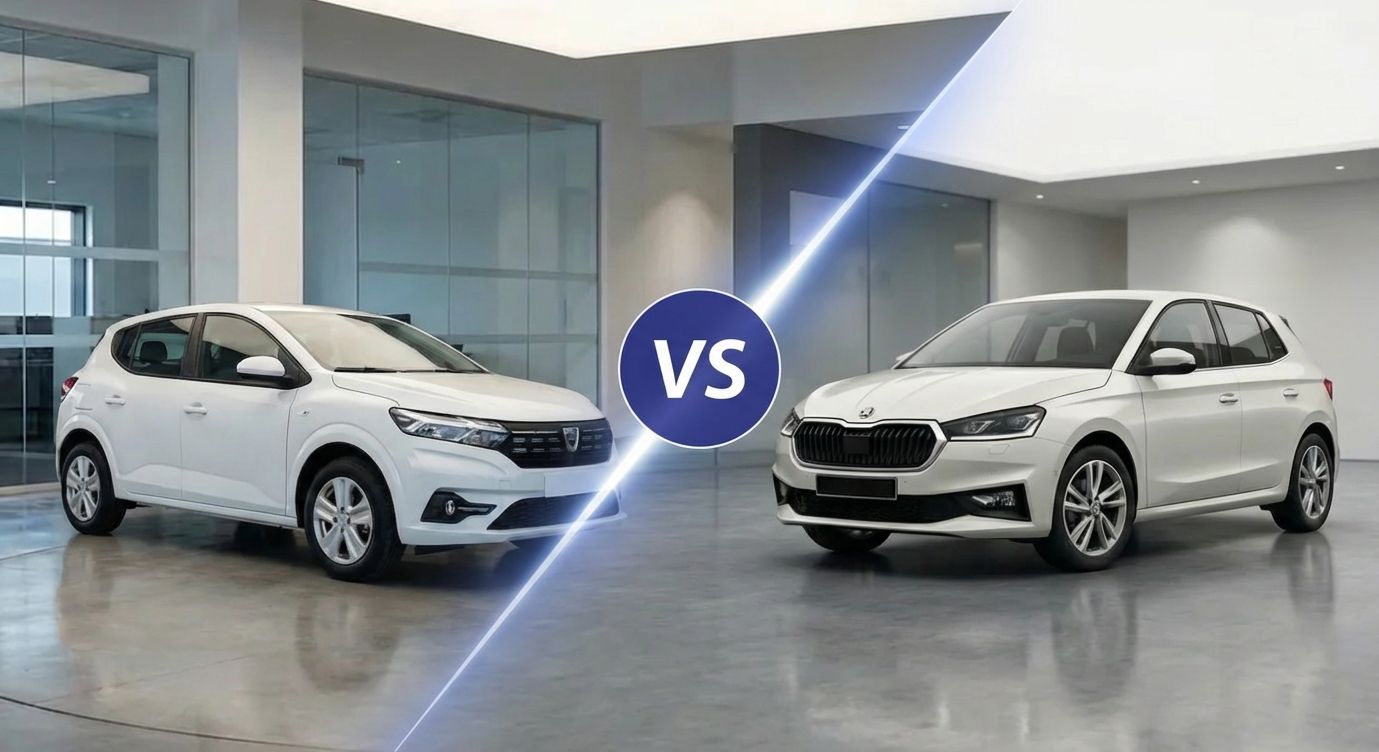
Dacia Sandero vs. Škoda Fabia: Which car is better? We compare engines, equipment, and price. Our detailed verdict will help you choose.
Apr 14, 2026