Car battle
Hyundai i20 vs. Suzuki Swift: Complete Comparison 2025
Hyundai i20 vs Suzuki Swift: Which hatchback is better? Our detailed comparison of equipment, ride, and price will help you choose. Read the verdict.
Apr 13, 2026
Articles
Car battle
Fiat 500 or Kia Picanto? Our detailed comparison will help you choose the right city car. Detailed tests, features, and verdict.
April 14, 2026
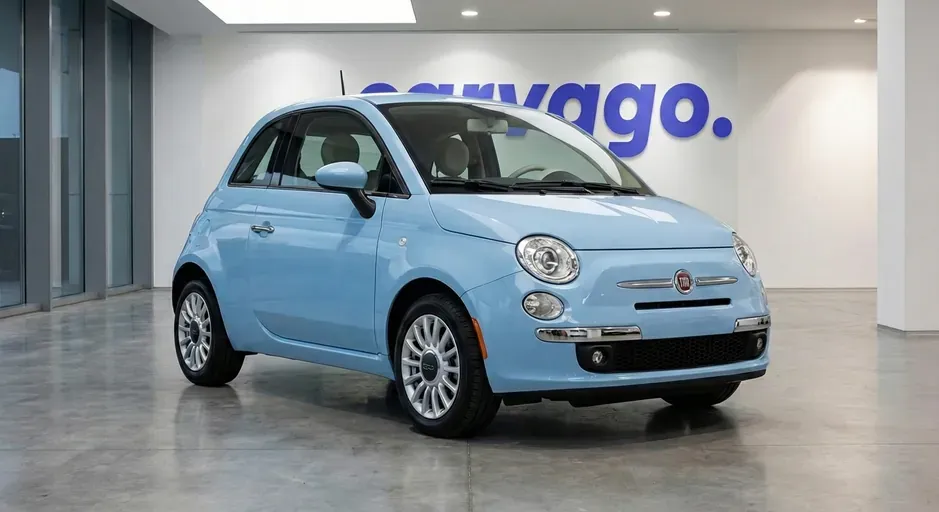
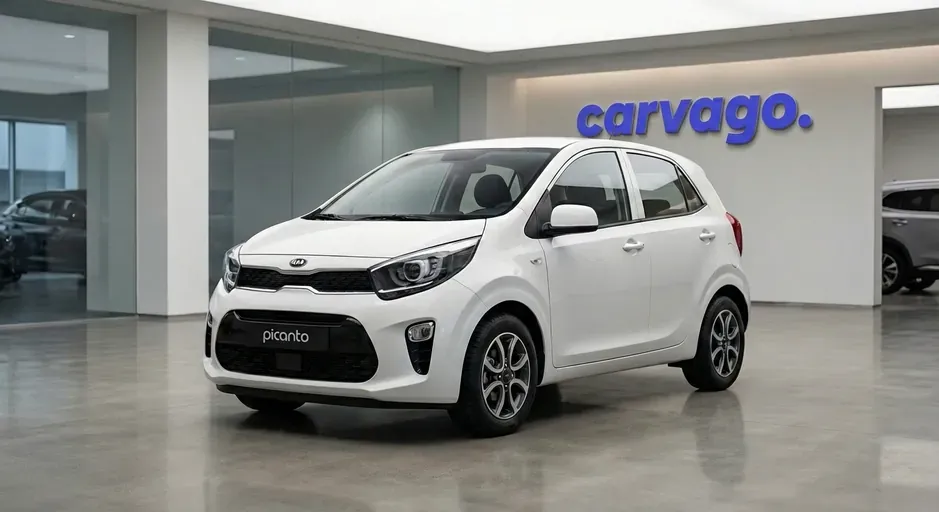
The Fiat 500 is a stylish Italian icon that charms with its retro design and status as a fashion accessory, while the Kia Picanto, also known as the Kia Morning in some markets, represents a practical and affordable alternative from South Korea with an emphasis on utility. In this comparison, we will look at the key differences between these two popular city cars to help you decide which one better suits your needs.
At first glance, the Fiat 500 and the Kia Picanto are similar – both are small, agile masters of city streets. However, a look at the dimension tables reveals that each adopts a slightly different strategy for utilising its compact body. These differences in millimetres are more significant in practice than they might seem.
While the Fiat 500 (in the 312 generation after the 2015 facelift) is a noticeable 3 cm wider, the Kia Picanto (JA generation from 2017) is almost 3 cm longer. The Fiat's wider body can contribute to a feeling of greater robustness and stability in corners, while the Picanto's narrower profile is a slight advantage when weaving through narrow streets or parking in tight garages. However, the differences in length and height are almost negligible and play a minimal role in real-world parking.
The key and most fundamental difference lies in the wheelbase. Here, the Kia Picanto outclasses its Italian rival by a full 100 mm (10 cm). A longer wheelbase means the wheels are pushed further into the corners of the body, which directly translates into noticeably more space for the crew, especially for the knee room of rear-seat passengers. While the Fiat 500 is primarily a stylish car for two, the Kia Picanto's design offers a much more usable interior, making it a more practical choice for those who occasionally need to carry more than one passenger.
| Parameter | Fiat 500 Hatchback (2015-2024) | Kia Picanto Hatchback (2017-2023) |
|---|---|---|
| Length (mm) | 3571 | 3595 |
| Width (mm) | 1627 | 1595 |
| Height (mm) | 1488 | 1485 |
| Wheelbase (mm) | 2300 | 2400 |
Practicality is key in the city car segment, and the size of the boot often determines how well a car will serve for daily shopping or weekend trips. This is where one of the biggest differences between the stylish Fiat 500 and the pragmatically designed Kia Picanto becomes apparent. While Fiat bets on design and emotion, Kia focuses on maximising the use of available space.
The third-generation Kia Picanto (JA), produced since 2017, is the clear winner in this discipline. It offers a basic luggage compartment volume of 255 litres, which is an excellent value for its class. With the rear seats folded down, the space expands to an impressive 1010 litres. This makes the Picanto a much more versatile helper, capable of handling not only a week's shopping for the whole family but also transporting bulkier items.
In contrast, the Fiat 500, whether in the conventional or mild-hybrid version of the 312 generation, sticks to more modest figures. Its boot holds 185 litres in its basic configuration, a significant 70 litres less than its competitor. With the seats folded down, it offers a maximum of 550 litres. This space is sufficient for regular city errands and smaller purchases, but it quickly reaches its limits when you need to transport something larger. The LPG versions are an exception, where the gas tank reduces the boot volume to just 165 litres.
| Parameter | Fiat 500 Hatchback | Kia Picanto Hatchback |
|---|---|---|
| Basic volume (litres) | 185 | 255 |
| Maximum volume (seats folded, litres) | 550 | 1010 |
In short, if the size and versatility of the luggage compartment are a priority for you, the Kia Picanto is undoubtedly the better choice. It offers space that approaches that of cars a class above. The Fiat 500, on the other hand, is the choice for those who prefer iconic style and for whom a smaller boot is simply sufficient for their needs.
Although the ability to tow a trailer is not usually a priority for minicars, the differences between the Fiat 500 and the Kia Picanto in this discipline are vast and can be a deciding factor for some buyers. Whether you need to haul garden waste or attach a small trailer for your hobbies, one of these cars will meet your needs, while the other will leave you high and dry.
The Fiat 500, specifically its internal combustion engine versions produced until around 2020, surprises with its solid practicality. Most engine options, including the popular petrol 1.2 8V, can handle a braked trailer weighing up to 800 kg and an unbraked one up to 400 kg. This is sufficient for a light caravan, a trailer with a motorbike, or a small load. However, it is crucial to realise that the newer mild-hybrid and fully electric versions, which have been appearing on the used car market since 2020, are generally not homologated for towing a trailer.
On the other hand, there is the third-generation Kia Picanto (JA), produced since 2017. The situation with this model is completely different – it is generally not approved for towing trailers at all. Therefore, if you plan to use a tow hitch, the modern Picanto is not an option for you. Those interested in towing with a Kia will have to look for the older, second generation (TA, 2011–2017), which could tow up to 700 kg, but this is a less common choice on the market for four-year-old cars.
For the buyer, the choice is clear. If you anticipate even occasional use of a trailer, the internal combustion version of the Fiat 500 is the only, and surprisingly capable, solution. The modern Kia Picanto completely lacks this function.
| Model and engine | Braked trailer weight (kg) | Unbraked trailer weight (kg) |
|---|---|---|
| Fiat 500 1.2 8V | 800 | 400 |
| Fiat 500 0.9 TwinAir | 800 | 400 |
| Fiat 500 1.0 Hybrid | Not approved | Not approved |
|---|---|---|
| Kia Picanto 1.0 DPi (from 2017) | Not approved | Not approved |
| Kia Picanto 1.0 (2011-2017) | 700 | 400 |
When it comes to engine choices, the Fiat 500 and Kia Picanto take completely different paths. While Fiat focuses on style and, in recent years, mild-hybrid technology, Kia offers a more traditional, yet proven and broader, range of naturally aspirated and turbocharged engines. This difference in philosophy fundamentally affects both the driving experience and running costs, and it is a key factor when deciding between these two city cars.
The engine lineup for the Fiat 500 has undergone a significant transformation in recent years. For used cars that are several years old, two petrol engines are typical. The icon is undoubtedly the turbocharged two-cylinder 0.9 TwinAir, which gives the car an unmistakable, slightly gutsy sound and surprising dynamism. Alongside it was the proven and reliable four-cylinder 1.2 8V, which represents a safe bet on simplicity and low service costs. Since 2020, the main engine has been the modern 1.0 GSE Mild-Hybrid, which replaced the older units and brought a reduction in fuel consumption, especially in urban traffic. The 1.3 Multijet diesel engine was discontinued around 2018 and is therefore only available in older model years.
| Engine Type | Fuel | Power (kW) | Torque (Nm) | Transmission |
|---|---|---|---|---|
| 1.0 GSE Mild-Hybrid | Petrol | 51 | 92 | 6-speed manual |
| 1.2 8V | Petrol | 51 | 102 | 5-speed manual / 5-speed automated |
| 0.9 8V TwinAir | Petrol | 63 | 145 | 5-speed manual / 5-speed automated |
| 0.9 8V TwinAir Turbo | Petrol | 77 | 145 | 6-speed manual |
| 1.3 16V Multijet | Diesel | 70 | 200 | 5-speed manual |
The third-generation Kia Picanto (JA) offers a clearer and more traditionally conceived range of engines, which nevertheless appeals to a wide spectrum of drivers. The base is the economical three-cylinder 1.0 DPi, ideal for city driving. For those who venture outside the city more often, there is the more powerful four-cylinder 1.2 DPi, which provides better dynamics and more refined operation. The top of the range and the choice for enthusiastic drivers is the turbocharged three-cylinder 1.0 T-GDI, which turns the Picanto into an unexpectedly brisk and fun car. Most engines are available with both manual and automated manual (AMT) transmissions.
| Engine Type | Fuel | Power (kW) | Torque (Nm) | Transmission |
|---|---|---|---|---|
| 1.0 DPi | Petrol | 49 | 96 | 5-speed manual / 5-speed automated |
| 1.2 DPi | Petrol | 62 | 122 | 5-speed manual / 5-speed automated |
| 1.0 T-GDI | Petrol | 74 | 172 | 5-speed manual |
Summary and Recommendations:
Choosing the right engine is key to long-term satisfaction. In the smallest city car segment, where the Fiat 500 and Kia Picanto compete, we fortunately still encounter simple and proven technology. Both models have primarily relied on naturally aspirated petrol engines, which is great news for reliability and low service costs. While Fiat opted for modern mild-hybrid technology after 2020, Kia remained faithful to classic engines with indirect injection, which are considered a safe bet.
The best choice for the Fiat 500 in recent years is undoubtedly the one-litre three-cylinder with mild-hybrid assistance, which replaced the legendary but outdated 1.2 FIRE engine in 2020. This new power unit from the Firefly family represents an ideal compromise for urban and suburban driving.
While the basic one-litre three-cylinder in the Picanto is sufficient for undemanding short trips, we consider the more powerful 1.2 MPI four-cylinder (designated as 1.25 CVVT or DPi in some model years) to be the optimal and most versatile choice. This engine elevates the usability of the small Picanto to a whole new level.
The paper consumption figures provided by manufacturers are one thing, but the day-to-day reality on the road is often different. To get the most accurate picture of the actual running costs of the Fiat 500 and Kia Picanto, we looked at data from drivers themselves, who meticulously record every refuelling on portals like the German Spritmonitor.de. It is from these hundreds of real-world experiences that we can see how both cars perform in normal operation.
In the battle of small engines, which are key for these cars, interesting differences emerge. The post-facelift Fiat 500 relies primarily on a mild-hybrid one-litre three-cylinder, while the Kia Picanto offers proven naturally aspirated engines and, previously, a turbocharged version.
| Model and engine | Average real-world consumption (l/100 km) |
|---|---|
| Fiat 500 1.0 Hybrid (70 hp) | 5.3 - 5.8 |
| Fiat 500 1.2 8V (69 hp) | 5.2 - 5.9 |
| Kia Picanto 1.0 DPi (67 hp) | 5.2 - 5.7 |
| Kia Picanto 1.2 DPi (84 hp) | 5.8 - 6.2 |
| Kia Picanto 1.0 T-GDI (100 hp) | 6.1 - 6.9 |
The table shows that the basic engines of both models are very similar in terms of consumption. The Fiat 500 with mild-hybrid technology can be particularly economical in the city, where the assistance of the electric motor is most noticeable. Its long-term average is around 5.8 l/100 km, but with a calm driving style outside the city, it's not a problem to get under five litres. In contrast, the older but still popular 1.2 8V four-cylinder in the Fiat has a very similar appetite, averaging between 5.2 and 5.9 litres.
The Kia Picanto with the basic 1.0 DPi engine keeps pace with the Fiat, with real-world consumption ranging between 5.2 and 5.7 litres. The more powerful 1.2 DPi version is slightly thirstier, which is the price for better dynamics, and in reality, it averages 6.0 l/100 km. The least economical variant, as expected, is the turbocharged 1.0 T-GDI three-cylinder, which can consume almost 7 litres during more dynamic driving.
For drivers who spend most of their time in the city, the mild-hybrid Fiat 500 may be slightly more advantageous thanks to more efficient recuperation and start-up assistance. On longer journeys, the differences between the basic naturally aspirated engines of both cars blur. In the end, however, fuel consumption is not a major issue for either of these models, and the differences are so small that they should not be the main deciding factor. The choice will therefore depend more on preferences regarding dynamics, equipment, and design.
A look at the used car market clearly shows that the Fiat 500 and Kia Picanto target slightly different customer groups, also in terms of price. Although both models fall into the same category of city minicars, their price tags can vary significantly, reflecting their image and market position.
The Fiat 500 is not just a car; it's a fashion accessory. And this is reflected in its residual value. Used models aged three to five years generally hold their value better than many competitors in their class.
The Kia Picanto is the epitome of a sensible choice. It offers modern technology and reliability in a practical package, all at a very attractive price on the used car market.
| Model | Common price range (3-5 years old) | Key factor |
|---|---|---|
| Fiat 500 | €10,000 – €13,000 | Style and image |
| Kia Picanto | €7,000 – €11,000 | Price/utility ratio |
| Fiat 500 | €10,000 – €13,000 | Iconic design and image |
|---|---|---|
| Kia Picanto | €7,000 – €11,000 | Practicality and value for money |
If your main criterion is budget and you're looking for the most utility for the least amount of money, the Kia Picanto is the clear winner. It offers a more modern and practical car for a lower price. However, if you prefer style, image, and are willing to pay extra for a timeless design, the Fiat 500 is unlikely to disappoint, and its higher purchase price will be offset by a slower depreciation in value.
Although both cars have received star ratings in Euro NCAP crash tests in the past, it is crucial to look at the context and the year of testing. The Euro NCAP methodology is constantly being tightened, so a direct comparison of percentage results from different years is not meaningful. Newer tests place much greater emphasis on active safety assistants and the protection of vulnerable road users.
For a relevant comparison, it is necessary to focus on the fully electric Fiat 500e, which was tested in 2021 under significantly stricter rules than the older combustion model or the Picanto. It received a solid four stars, which confirms its modern construction. It achieved 76% in adult protection and an even better 80% in child protection. A score of 67% for the protection of vulnerable road users (pedestrians, cyclists) and 67% for safety assistance systems proves that the Fiat 500e is equipped with modern technologies, such as autonomous emergency braking, which are standard today.
The Kia Picanto last underwent Euro NCAP tests in 2017. At that time, it received a dual rating: three stars in standard equipment and four stars with the optional safety package. However, it is crucial to state that this rating expired at the beginning of 2024. This means that from the perspective of current Euro NCAP requirements, the car no longer meets the necessary standards to be awarded these stars. Although adult occupant protection was rated highly in 2017 (87% with the package), it now lags significantly behind today's requirements in the areas of assistance systems (47%) and pedestrian protection (54%).
In the area of safety, the winner is clear. The Fiat 500e offers a more modern and demonstrably higher level of protection, confirmed by its more recent 2021 test conducted under stricter criteria. It has more advanced assistance systems and an overall more robust construction designed for current safety challenges. The Kia Picanto's safety rating is outdated and has expired, indicating that it does not offer a comparable level of protection compared to newer cars.
| Parameter | Fiat 500 (electric) | Kia Picanto (with safety pack) |
|---|---|---|
| Year of testing | 2021 | 2017 (rating expired) |
| Adult Occupant Protection | 76 % | 87 % |
| Child Occupant Protection | 80 % | 64 % |
| Vulnerable Road User Protection | 67 % | 54 % |
| Safety Assist | 67 % | 47 % |
In addition to standard equipment, each model offers several unique features that can be decisive for the customer. While the Fiat 500 focuses on style and emotion, the Kia Picanto concentrates on practicality and modern technology.
The Fiat 500 is much more than just a car; it's a fashion accessory. Its strength lies not only in its driving characteristics but in its unique style and personalization options, which are unparalleled in this class.
The Kia Picanto takes the opposite approach. It doesn't try to be a retro icon at all costs, but offers maximum utility, modern technology, and practicality in a small and affordable package.
Advantages:
Disadvantages:
Advantages:
Disadvantages:
Based on our own CarAudit inspections, breakdown statistics, and service data, we have compiled an overview of the most common problems that used car buyers should watch out for. Although both cars are considered relatively reliable, each has its specific weak spots.
The Fiat 500 is a stylish car, but its mechanics, especially in older and higher-mileage examples, require attention. Problems are not unheard of even in newer models, albeit to a lesser extent.
Summary for Fiat 500: The main risk is the Dualogic gearbox and various electronic faults. These are mostly nuisances, but repairing the gearbox can significantly strain the budget.
The Kia Picanto has built a reputation as a reliable and low-maintenance car, which is confirmed by statistics and owner experiences. Most problems are of a minor nature.
Summary for Kia Picanto: Problems are rather exceptional and usually not expensive to fix. Thanks to its simple technology and long warranty, the Picanto is a very safe choice in terms of reliability.
When buying a used car, a thorough inspection is key, and these two reliable small cars are no exception. Here are a few specific points to focus on for the Fiat 500 and the Kia Picanto.
For daily city driving, the Kia Picanto is more practical. It offers five doors and five seats, making entry and transport of more passengers easier. The Fiat 500 is only a three-door, four-seater, which limits its practicality, especially for families.
The Kia Picanto has a significantly larger boot. It provides 255 litres of volume, while the Fiat 500 offers only 185 litres. With the rear seats folded down, the difference becomes even greater, with the Picanto offering up to 1010 litres, which is almost double that of the Fiat.
Generally, the Kia Picanto can be expected to have slightly lower running costs. It has slightly higher stated fuel consumption, but it tends to be more reliable and has a longer warranty (typically 7 years compared to 3 for the Fiat). The Fiat 500 may have slightly lower fuel consumption, but its reliability is not rated as highly.
The Kia Picanto has a reputation for being more reliable than the Fiat 500. It consistently ranks better in reliability statistics and is supported by a longer factory warranty. The Fiat 500 is more prone to both minor and major faults.
The Fiat 500 is an ideal choice for individuals or couples looking for a stylish and iconic city car who don't place a high emphasis on maximum practicality. The Kia Picanto, on the other hand, is a more sensible choice for those who need a practical, reliable, and more spacious small car with low running costs, including small families.
Sources: ADAC, e15.cz, mdcr.cz, fdrive.cz, autoexpress.cz, mesec.cz
This article was prepared using artificial intelligence tools. The section guarantor is Petr Dušek.
Hyundai i20 vs Suzuki Swift: Which hatchback is better? Our detailed comparison of equipment, ride, and price will help you choose. Read the verdict.
Apr 13, 2026
Škoda Fabia vs. Toyota Yaris. A detailed comparison of engines, features, and prices. Find out which of these popular small cars is the right one for you.
Apr 13, 2026
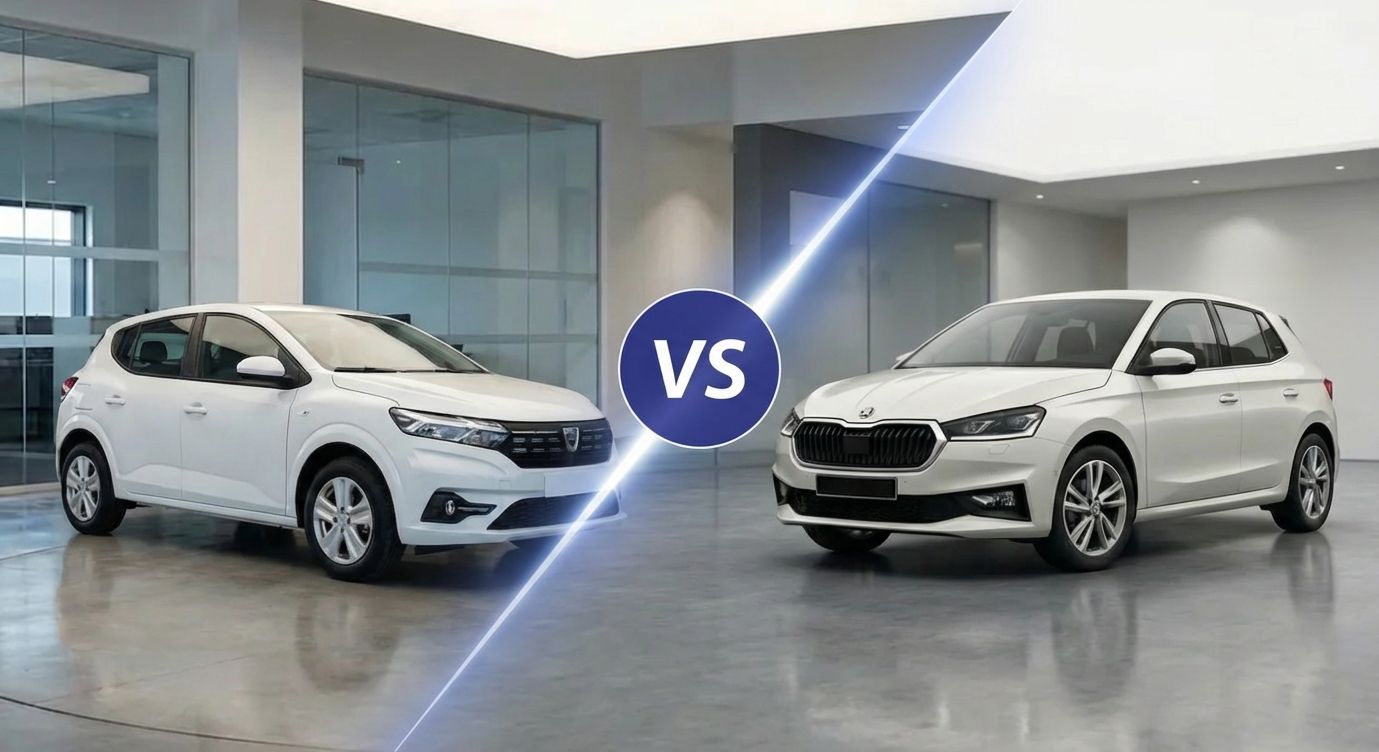
Dacia Sandero vs. Škoda Fabia: Which car is better? We compare engines, equipment, and price. Our detailed verdict will help you choose.
Apr 14, 2026