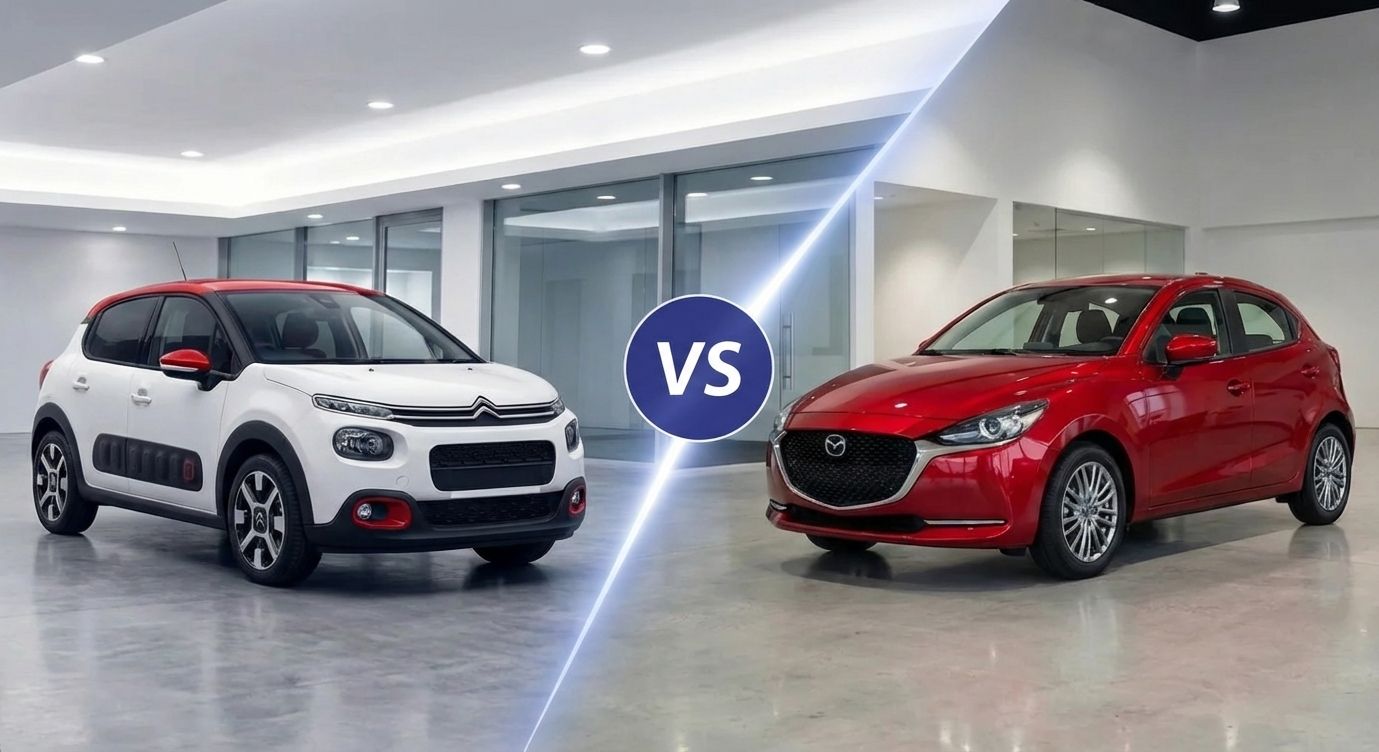
Citroën C3 vs. Mazda 2: Complete comparison 2026
Detailed comparison of Citroën C3 vs. Mazda 2 (Mazda2). We offer real-world driving experiences, an equipment overview, engine comparison, and a clear verdict for the right choice.
Apr 13, 2026
Articles
Car battle
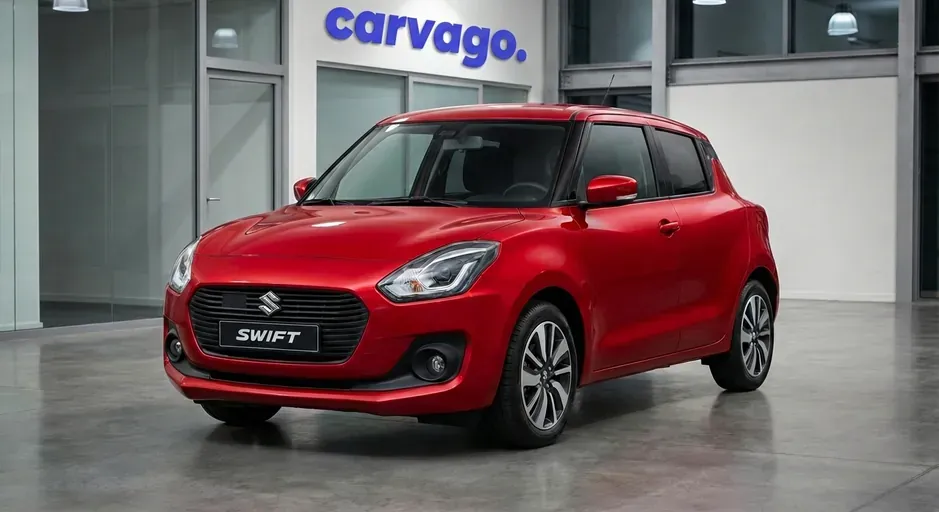
Hyundai i20 vs Suzuki Swift: Which hatchback is better? Our detailed comparison of equipment, ride, and price will help you choose. Read the verdict.
April 13, 2026


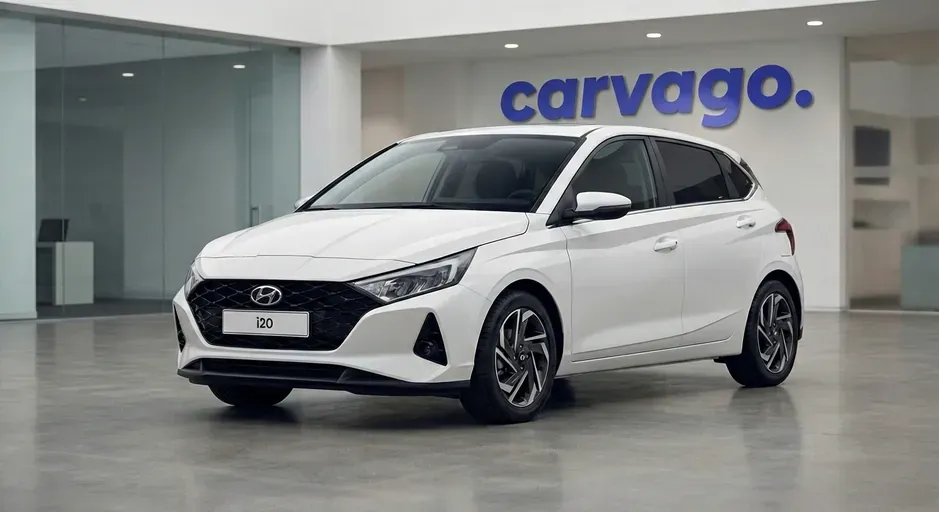
The Hyundai i20, a stylish and technologically advanced representative from South Korea, constantly strives to push the boundaries of what a small car can offer. Against it stands the Japanese Suzuki Swift, known for its playful handling, fuel-efficient engines, and surprising practicality in a compact package. Let's take a detailed look at how these two icons of the small car segment fare in a direct comparison.
Even at first glance at the Hyundai i20 and the Suzuki Swift, it is clear that although both models fall into the small car segment, their dimensions are aimed at slightly different customers. The third-generation Hyundai i20 (from 2020) is larger in all key parameters than its Japanese competitor, the sixth-generation Swift (from 2017). This difference is most pronounced in length, where the i20 outgrows the Swift by a full 20 centimetres.
This fact has a major impact on practicality. While the Suzuki Swift's compact dimensions give it an advantage when weaving through narrow city streets and looking for a parking space, the Hyundai i20 offers significantly more interior space. The longer body and, above all, the 130 mm longer wheelbase have a positive effect on crew comfort, especially in the rear seats, where the i20 provides noticeably more legroom.
The difference is also noticeable in the width, where the i20 has an extra 40 mm. This contributes to a feeling of airiness in the cabin and greater shoulder room for passengers. In contrast, the Suzuki Swift has the upper hand in height, which may suit taller people looking for easier entry and more headroom. As a result, the Hyundai i20's dimensions are closer to those of cars on the borderline between the small and lower-middle segment, while the Suzuki Swift remains true to the definition of an agile and compact city car.
| Parameter | Hyundai i20 (3rd generation) | Suzuki Swift (6th generation) |
|---|---|---|
| Length (mm) | 4040 | 3840 |
| Width (mm) | 1775 | 1735 |
| Height (mm) | 1450 | 1480 - 1505 |
| Wheelbase (mm) | 2580 | 2450 |
Practicality and usability in daily operation are key factors when choosing a car in the small hatchback segment. And it is here that the Hyundai i20 and Suzuki Swift differ significantly. While both models target a similar customer, their approach to boot space reveals different priorities. The Hyundai i20 places a much greater emphasis on carrying capacity, making it a more practical choice for smaller families or those who frequently carry bulkier loads.
The latest generation Hyundai i20 (from 2020) offers a generous 352 litres in its standard configuration, which is one of the best values in its class. This is significantly more than the 265 litres provided by the Suzuki Swift (generation from 2017). The difference of almost 90 litres in practice means space for one extra suitcase or more comfortable storage for a large weekend shopping trip. The i20's advantage continues even after folding down the rear seats, when its volume increases to 1165 litres, while the Swift offers a maximum of 947 litres.
However, it is important to be aware of the mild-hybrid versions. While the presence of hybrid technology does not affect the boot volume in the Swift, in the Hyundai i20 (48V version) the battery reduces the basic volume to just 262 litres. In this configuration, the practical advantage of the i20 is completely lost and its volume is on par with the Swift. For the buyer, this means a clear choice: if maximum space is a priority, it is better to go for the purely petrol version of the i20. If, on the other hand, a mild-hybrid is in the running, the two cars are essentially equal in terms of the boot.
| Parameter | Hyundai i20 Hatchback | Suzuki Swift Hatchback |
|---|---|---|
| Basic volume (litres) | 352 (262 for mild-hybrid) | 265 |
| Maximum volume with seats folded (litres) | 1165 (1075 for mild-hybrid) | 947 |
Although the ability to tow a trailer may not be a key parameter for small city hatchbacks, for some customers it can be an important factor. Whether you need to haul away garden waste or attach a small trailer for your hobbies, the differences between the Hyundai i20 and Suzuki Swift are more significant than you might think.
The Hyundai i20, especially in its third generation (from 2020), offers surprisingly high versatility in this regard. With the turbocharged 1.0 T-GDI engine, it can tow a braked trailer weighing up to 1110 kg, regardless of whether you opt for the standard or mild-hybrid version. This is a value that is close to cars a class above. Even the sporty i20 N version retains the same towing capacity, which is very unusual in the hot hatch category. The basic naturally aspirated 1.2 engine has a limit set at a still respectable 910 kg.
The sixth-generation Suzuki Swift (from 2017) takes a simpler and more consistent approach to towing capacity. Most common engines, including the popular 1.2 Dualjet and the turbocharged 1.0 Boosterjet (including hybrid variants), can handle a braked trailer weighing an even 1000 kg. The problem, however, arises with the Swift Sport version, which is not homologated for a tow bar from the factory and its towing capacity is therefore zero.
As a result, if you are looking for the highest possible towing utility in this class, the Hyundai i20 with the 1.0 T-GDI engine is the clear winner. The Suzuki Swift offers a solid standard, but it can't match the top engines of its Korean rival and, in the sports version, completely loses the ability to attach anything.
| Model and Engine | Braked trailer weight (kg) | Unbraked trailer weight (kg) |
|---|---|---|
| Hyundai i20 1.0 T-GDI (from 2020) | 1110 | 450 |
| Hyundai i20 1.2 (from 2020) | 910 | 450 |
| Hyundai i20 N (from 2021) | 1110 | 450 |
|---|---|---|
| Suzuki Swift 1.2 Dualjet (from 2017) | 1000 | 400 |
| Suzuki Swift 1.0 Boosterjet (2017-2020) | 1000 | 400 |
| Suzuki Swift Sport 1.4 Boosterjet (from 2018) | 0 | 0 |
When it comes to engine selection, the Hyundai i20 and Suzuki Swift take different paths. While the i20 primarily relies on turbocharged engines with an optional mild-hybrid system, the Swift has based almost its entire range on an economical naturally aspirated engine, which is paired with mild-hybrid technology as standard. For the buyer, this means a choice between the dynamics and modern technology of the Hyundai, and the simplicity, low fuel consumption, and reliability of the Suzuki.
While Hyundai completely abandoned diesel engines for the third-generation i20 (from 2020), Suzuki said goodbye to the turbocharged one-litre three-cylinder Boosterjet during the production of the sixth-generation Swift (2017-2024). Therefore, for those interested in a used car, the model year they are considering is crucial.
The engine range for the third-generation i20 is straightforward but covers a wide spectrum of drivers. The base is the naturally aspirated four-cylinder 1.2 MPI, which is ideal for calmer driving and shorter trips. However, the main role is played by the turbocharged three-cylinder 1.0 T-GDI, available in two power variants. This engine can also be paired with a 48V mild-hybrid system, which helps reduce fuel consumption and emissions. A special feature is the intelligent Manual Transmission (iMT), which can automatically shift to neutral and "coast" when the accelerator is released. At the absolute top is the hot version, the i20 N, with a powerful turbocharged 1.6 T-GDI four-cylinder engine, aimed at driving enthusiasts.
| Engine Type | Fuel | Power (kW) | Torque (Nm) | Transmission |
|---|---|---|---|---|
| 1.2 MPI | Petrol | 62 | 118 | 5MT |
| 1.0 T-GDI | Petrol | 74 | 172 | 6MT / 7DCT |
| 1.0 T-GDI 48V | Mild-Hybrid | 74 | 172 | 6iMT / 7DCT |
| 1.0 T-GDI 48V | Mild-Hybrid | 88 | 172 | 6iMT / 7DCT |
| 1.6 T-GDI (i20 N) | Petrol | 150 | 275 | 6MT |
The sixth-generation Suzuki Swift adheres to the philosophy of low weight and maximum efficiency. Until 2020, the lively turbocharged three-cylinder 1.0 Boosterjet was available, representing a more dynamic choice. After the facelift, however, the range was narrowed down to a single engine – the naturally aspirated four-cylinder 1.2 Dualjet, which has been paired with a 12V mild-hybrid system as standard since 2020. While this engine doesn't dazzle with performance, thanks to the car's low weight (often under 900 kg), it provides sufficient agility for city driving and boasts excellent fuel economy. A unique feature in the segment is the option of Allgrip all-wheel drive. For sport-oriented drivers, there is the Swift Sport with the turbocharged 1.4 Boosterjet engine, which was also supplemented with a 48V mild-hybrid system from 2020.
| Engine Type | Fuel | Power (kW) | Torque (Nm) | Transmission |
|---|---|---|---|---|
| 1.2 Dualjet (until 2020) | Petrol | 66 | 120 | 5MT / CVT |
| 1.0 Boosterjet (until 2020) | Petrol | 82 | 170 | 5MT / 6AT |
| 1.2 Dualjet Hybrid (from 2020) | Mild-Hybrid | 61 | 107 | 5MT / CVT |
| 1.4 Boosterjet (Sport, until 2020) | Petrol | 103 | 230 | 6MT |
| 1.4 Boosterjet Hybrid (Sport, from 2020) | Mild-Hybrid | 95 | 235 | 6MT |
Choosing the right engine is key to long-term satisfaction with a car. In this section, we will focus on the recommended engine options for the Hyundai i20 and Suzuki Swift, with our advice based on a combination of performance, real-world fuel consumption, owner feedback, and mechanical reliability.
The golden mean in the range for the third-generation Hyundai i20 (from 2020) is the turbocharged 1.0 T-GDI three-cylinder, ideally paired with the 48V mild-hybrid system. This combination represents an excellent compromise between modern technology, sufficient performance, and favourable fuel consumption, making it a versatile choice for most drivers.
For the sixth-generation Suzuki Swift (especially after the 2020 facelift), the best choice is unequivocally the naturally aspirated 1.2 Dualjet four-cylinder engine with the SHVS mild-hybrid system. This engine perfectly embodies the Swift's philosophy: simplicity, low weight, fuel efficiency, and, above all, legendary reliability.
On-paper fuel consumption figures are one thing, but real-world driving is another. That's why we looked at data from drivers themselves, primarily from the German portal Spritmonitor.de, to find out how both cars perform in daily life. The differences are more significant than they might seem at first glance and clearly point to the different philosophies of the two brands. Suzuki benefits from its low weight, while Hyundai relies on more modern but complex technology.
The following table shows the average real-world fuel consumption for the most common engine options of the generations relevant to the used car market for vehicles around four years old – that is, the third-generation Hyundai i20 (from 2020) and the sixth-generation Suzuki Swift (from 2017).
| Model and Engine | Average Real-World Consumption (l/100 km) |
|---|---|
| Hyundai i20 1.2 MPi (62 kW) | 6.2 |
| Hyundai i20 1.0 T-GDI (74 kW) | 6.4 |
| Hyundai i20 1.0 T-GDI 48V-Hybrid (74 kW) | 6.1 |
| Suzuki Swift 1.2 Dualjet (66 kW) | 5.1 |
| Suzuki Swift 1.0 Boosterjet (82 kW) | 5.6 |
| Suzuki Swift 1.2 Dualjet Hybrid (61 kW) | 4.9 |
| Suzuki Swift Sport 1.4 Boosterjet Hybrid (95 kW) | 6.2 |
It is clear from the table that the Suzuki Swift is more fuel-efficient across all comparable engine options. Its naturally aspirated 1.2 Dualjet engine, especially with mild-hybrid assistance, is the clear winner in the low consumption category. In reality, it can be driven well below five litres per 100 km, which is an excellent result for a petrol engine without a full hybrid system. The turbocharged 1.0 Boosterjet three-cylinder is a bit thirstier, but it still maintains a very reasonable level of consumption while offering better performance.
The Hyundai i20 lags slightly behind with its engines. The base naturally aspirated 1.2 MPi engine is more than a litre thirstier in real-world driving than its Suzuki counterpart. The turbocharged 1.0 T-GDI three-cylinder also consumes more fuel than the 1.0 Boosterjet. While the 48V mild-hybrid system does reduce consumption by a few tenths of a litre, it doesn't reach the levels of the Suzuki. Surprisingly, the sporty Swift Sport with the 1.4 Boosterjet engine is quite economical, with its real-world consumption matching that of the base engine in the i20.
For drivers who primarily operate in city and suburban traffic, the fuel efficiency of the Suzuki Swift will be a noticeable advantage for the family budget. The Hyundai i20 is not outright inefficient, but it loses in a direct comparison. Therefore, if fuel consumption is one of your main criteria, the Swift is the clear and convincing choice in this duel.
When looking at the prices of used cars, it becomes clear that the Hyundai i20 is often a more affordable choice than the Suzuki Swift. This difference is apparent across various model years and trim levels, giving the i20 a slight advantage for buyers on a tighter budget.
When comparing models that are approximately four years old, specifically the 2021 model year, a clear price difference is evident. The average price of a used Hyundai i20 from 2021 is around €11,000. In contrast, a Suzuki Swift of the same year has an average price of approximately €13,000.
This trend is confirmed by other offers on the market:
The higher purchase price of a used Swift suggests that it holds its value better. This can be an advantage when it comes to reselling it later. On the other hand, for a used car buyer, the lower price of the i20 represents an immediate saving and access to a potentially newer or better-equipped car for the same money.
Conclusion: If your main criterion is the lowest possible purchase price, the Hyundai i20 will likely be the more attractive option. It offers a modern car for a more favourable price. However, if you are thinking about long-term ownership and future resale, the Suzuki Swift deserves your attention due to its higher resale value, even if you have to pay a bit more for it initially.
When evaluating safety, it's crucial to realise that a direct comparison of Euro NCAP stars between cars tested in different years can be misleading. The testing protocols are constantly becoming stricter, and what was enough for five stars a few years ago might result in a worse outcome today. This is also the case in the duel between the Hyundai i20 and the Suzuki Swift. While both cars offer a solid level of passive safety, the difference in testing dates reveals significant disparities in modern assistance systems.
The third-generation Hyundai i20 underwent Euro NCAP crash tests in 2021 and came away with a respectable four-star rating. This result was achieved under stricter rules that place greater emphasis on active safety and the protection of vulnerable road users. The results showed a balanced performance across categories, with very good child protection (82%) and solid adult (76%) and pedestrian (76%) protection. The score for assistance systems (67%) is standard for a modern small car, which already offers technologies like autonomous emergency braking and a lane-keeping system as standard.
The current generation of the Suzuki Swift was tested in 2017 and received a dual rating. In its standard equipment, it achieved three stars, while with the optional safety package (Radar Brake Support), it received four stars. For comparison, we will focus on the standard, more common version. Although it offered very good protection for adult occupants (83%), it lagged significantly in the assistance systems category, where it scored only 25%. This is because at the time of the test, advanced assistance systems were not standard to the same extent as they are today. Although occupant protection in an actual accident is decent, the car's ability to prevent an accident is limited from today's perspective.
Although older tests credited the Swift with comparable adult protection, the winner in overall modern safety is the Hyundai i20. Its 2021 test was conducted according to more demanding criteria, and the car proved to be better equipped to actively prevent accidents, which is a key aspect of modern safety. Its significantly higher score in the assistance systems and vulnerable road user protection categories gives it a clear advantage.
| Parameter | Hyundai i20 | Suzuki Swift |
|---|---|---|
| Year of testing | 2021 | 2017 |
| Overall rating | ⭐⭐⭐⭐ | ⭐⭐⭐ (standard equipment) |
| Adult occupant protection | 76 % | 83 % |
| Child occupant protection | 82 % | 75 % |
| Vulnerable road user protection | 76 % | 69 % |
| Assistance systems | 67 % | 25 % |
In addition to standard equipment, each model offers several unique features that may be decisive for the customer. While Hyundai focuses on digital technologies and sporty derivatives, Suzuki counters with clever technology that is unique in its class.
The third-generation Hyundai i20 (from 2020) presents itself as a technologically advanced car with a strong sporting legacy. Its interesting features are aimed primarily at modern users and enthusiastic drivers.
The Suzuki Swift has long been based on low weight, fun driving characteristics, and smart solutions. Its biggest trump cards are practical and quite exceptional in the small car segment.
Pros:
Cons:
Pros:
Cons:
Based on our own CarAudit inspections, breakdown statistics, and service bulletins, we have compiled an overview of the most common problems that buyers of used Hyundai i20 and Suzuki Swift cars should watch out for. Although both models are considered reliable, no car is completely flawless.
The third-generation i20 brought a significant shift in design and technology, but with it came several specific problems, especially in the first years of production.
Summary for the Hyundai i20: Most problems affect early models and can often be resolved with a software update or as part of a recall. Before buying, it's crucial to check the service history and ensure that all recommended procedures have been carried out. A thorough technical inspection of the car, focusing on the mild-hybrid system and listening to the engine when cold, is definitely in order.
The Suzuki Swift has long held a reputation as a very reliable and mechanically simple car. The 2017 generation continues this trend, although a few typical minor flaws can be found.
Summary for the Suzuki Swift: The Swift is a mechanically very robust and reliable car. Most of the recorded problems were related to recalls, which should have already been resolved on cars being sold. Potential buyers should mainly focus on checking the service history and the condition of the chassis. A comprehensive vehicle inspection will reveal any signs of neglected maintenance.
When buying a used car, a thorough inspection is key. Even with relatively reliable models like the Hyundai i20 and Suzuki Swift, there are specific points to focus on to prevent potential future complications.
The Hyundai i20 is larger overall and offers a significantly more spacious boot with a volume of 352 litres. The Suzuki Swift is more compact, and its boot holds 265 litres. If maximum space for cargo and passengers is your priority, the i20 is the better choice.
The Suzuki Swift is generally considered a more agile and fun-to-drive car, thanks to its lower weight and sportier-tuned chassis. The Hyundai i20, on the other hand, focuses more on comfort and a quieter ride. For enthusiastic drivers looking for a playful experience, the Swift is likely the better choice.
Thanks to its lower weight and often mild-hybrid technology, the Suzuki Swift typically has lower fuel consumption. In combined cycle, the Swift's consumption is around 4.4 l/100 km. The Hyundai i20 tends to have slightly higher consumption, averaging between 5.1 and 5.3 l/100 km.
Both models are considered relatively reliable. Regular service costs are comparable, although the prices of some specific parts may differ. Regular maintenance and verifying the service history of a specific used car are important.
The Hyundai i20 generally offers a wider range of engines and, in comparable versions, tends to have more power and torque. For example, the one-litre turbocharged engine in the i20 provides noticeably better dynamics than the naturally aspirated engines in the Swift. For drivers who prefer a brisker ride and a power reserve, the i20 is the more powerful choice.
Both cars offer standard safety equipment for their respective generations. However, in some higher trim levels, the Hyundai i20 offered more advanced assistance systems and, in certain model years, a higher number of airbags. It is always a good idea to check the specific equipment of a particular used car.
The choice between Hyundai i20 and Suzuki Swift depends on your priorities: the i20 is a rational choice for those looking for a spacious, comfortable, and technologically advanced car suitable even as the sole family car for longer journeys. It offers a larger boot, better sound insulation, and a more modern interior. In contrast, the Swift will appeal to drivers desiring an agile and fun ride with minimal running costs, ideal for city driving. It stands out with low fuel consumption, renowned reliability, and a unique 4x4 drive option. Your decision should reflect whether you prioritize practicality and comfort, or driving experience and economy.
Sources: ADAC, whatcar.com, topgear.com, motortrend.com, caranddriver.com, evobsession.com
This article was prepared using artificial intelligence tools. The section guarantor is Petr Dušek.

Detailed comparison of Citroën C3 vs. Mazda 2 (Mazda2). We offer real-world driving experiences, an equipment overview, engine comparison, and a clear verdict for the right choice.
Apr 13, 2026

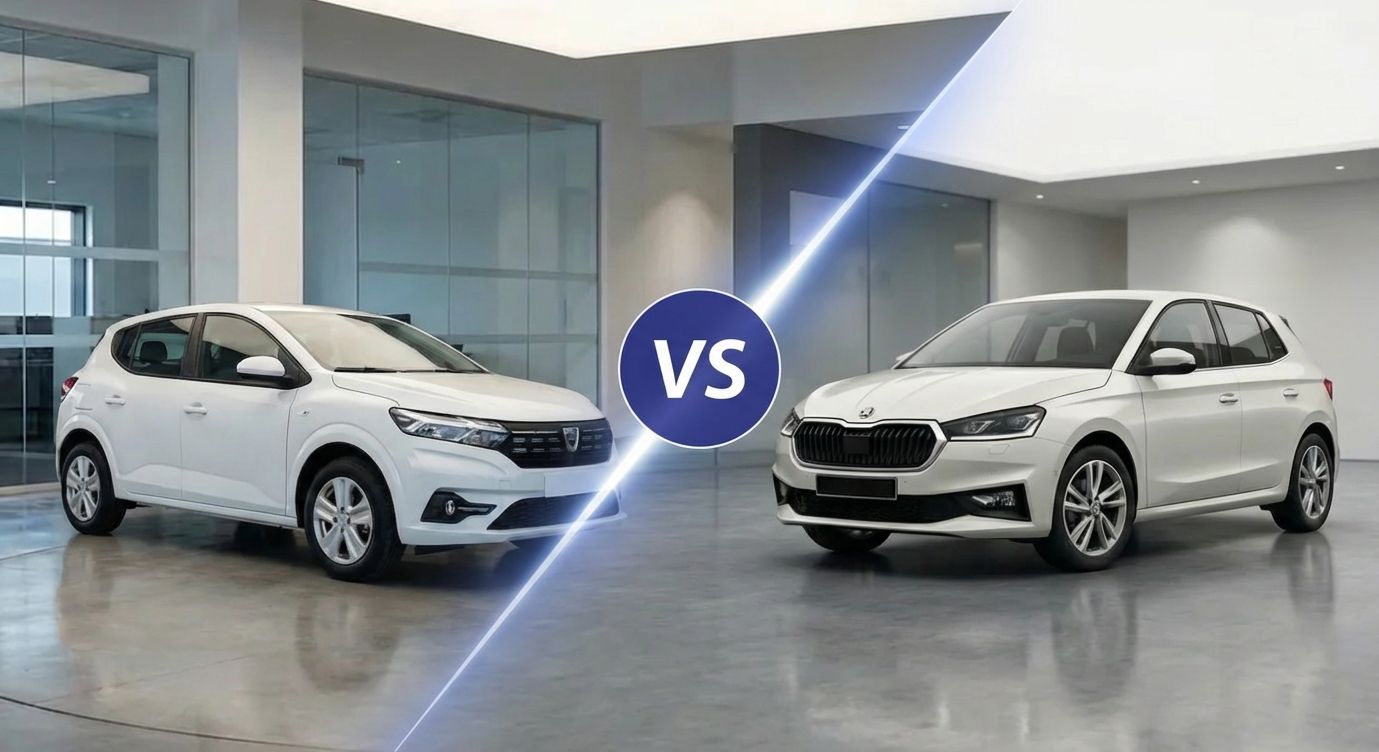
Dacia Sandero vs. Škoda Fabia: Which car is better? We compare engines, equipment, and price. Our detailed verdict will help you choose.
Apr 14, 2026

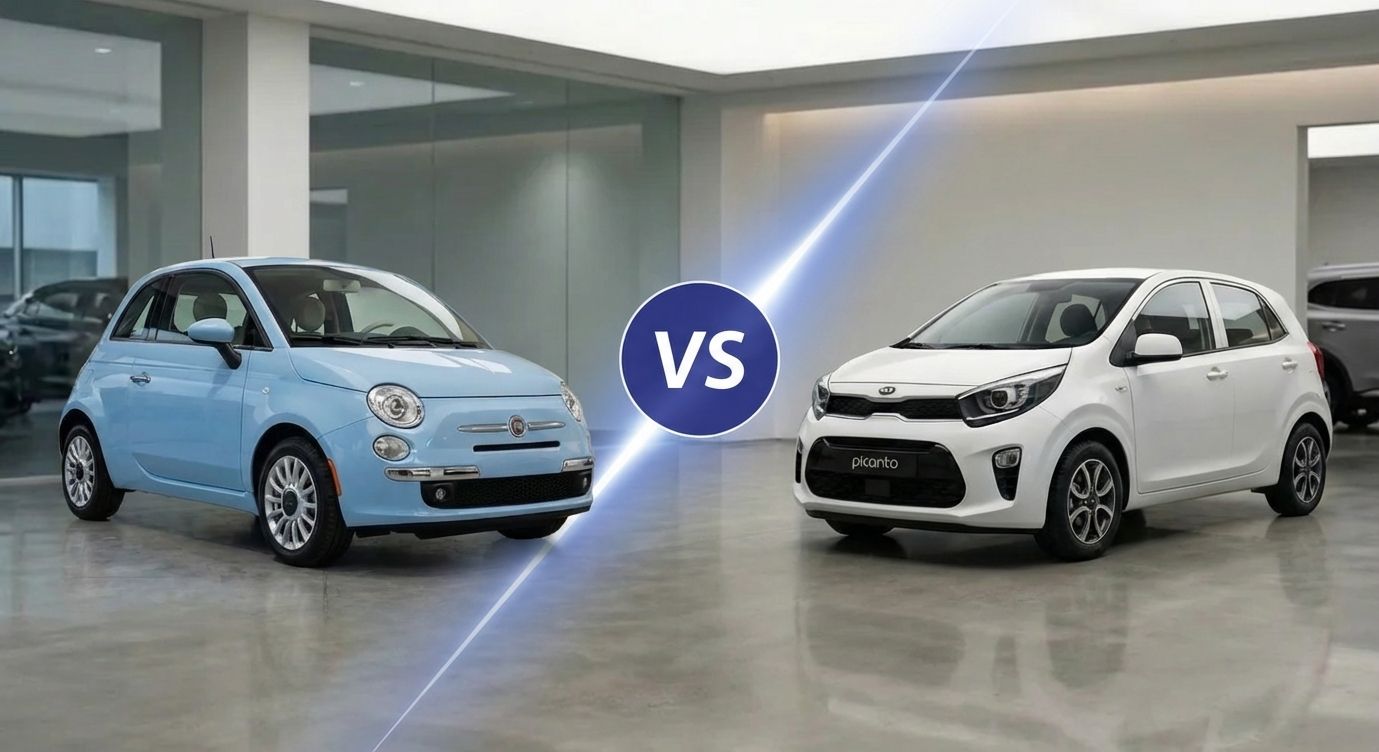
Fiat 500 or Kia Picanto? Our detailed comparison will help you choose the right city car. Detailed tests, features, and verdict.
Apr 14, 2026