Car battle
Škoda Fabia vs. Toyota Yaris: Complete Comparison 2025
Škoda Fabia vs. Toyota Yaris. A detailed comparison of engines, features, and prices. Find out which of these popular small cars is the right one for you.
Apr 13, 2026
Articles
Car battle
Detailed comparison of Citroën C3 vs. Mazda 2 (Mazda2). We offer real-world driving experiences, an equipment overview, engine comparison, and a clear verdict for the right choice.
April 13, 2026
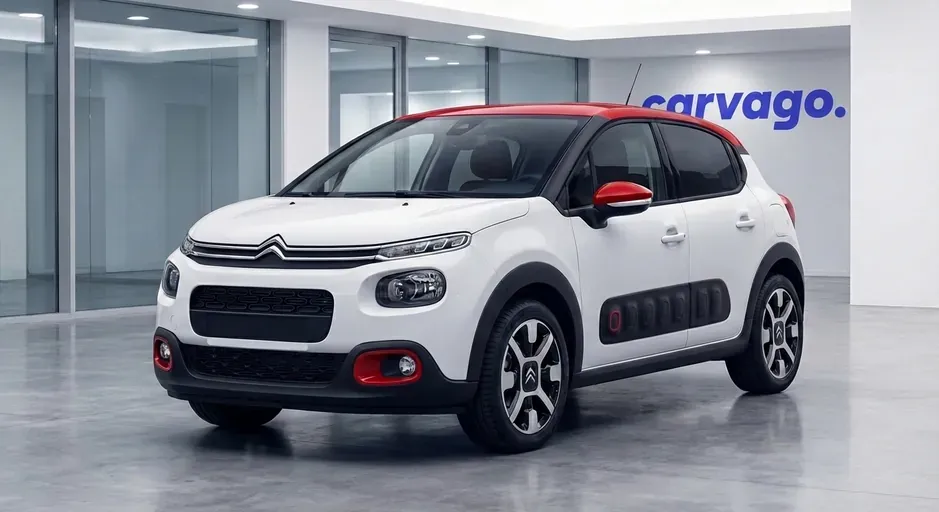
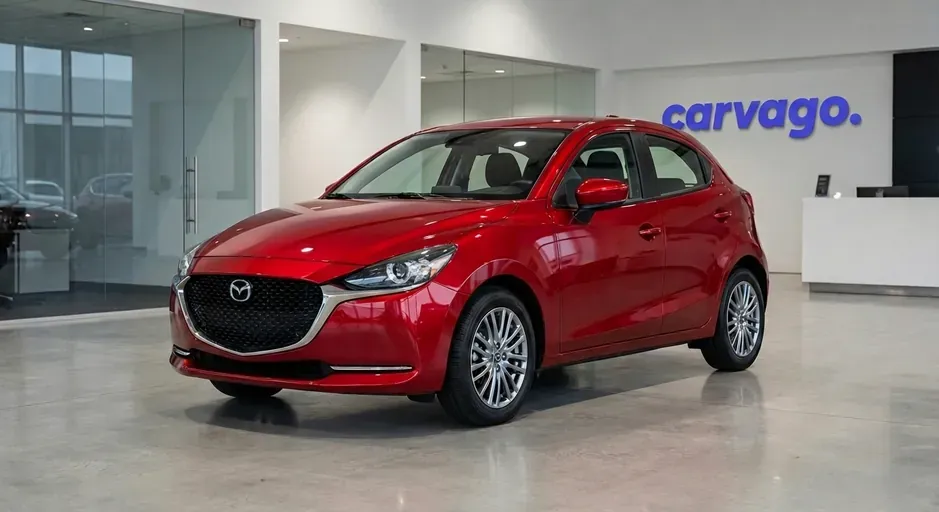
The French Citroën C3 attracts with its unmistakable, playful design featuring typical body protection elements and an extraordinary emphasis on comfort, making it an ideal companion for city traffic. In contrast, the Japanese Mazda 2, historically and in selected markets also known as the Mazda Demio, targets more enthusiastic drivers looking for precise handling, a sportier flair, and reliable naturally aspirated technology. Let's take a detailed look at which of these two differently tuned compact hatchbacks will be the best choice for your daily commutes on the used car market.
Looking at the exterior dimensions, both manufacturers stick to the traditional values of the small car segment, yet each chooses a slightly different approach to body construction. If you are looking for a roughly four-year-old used car, you will be choosing from the very popular third generation of the C3 at Citroën, while at Mazda you will mostly encounter the classic model with the internal designation DJ1 (or the concurrently sold hybrid version ZV derived from the Toyota Yaris). The traditional Mazda 2 is, with its length of 4065 mm (up to 4080 mm depending on the year), almost 70 mm longer than its French competitor, which measures exactly 3996 mm. In terms of parallel parking in cramped city streets, this dimensional difference means that you will find a spot slightly more easily with the shorter Citroën, although overall maneuverability remains excellent for both cars.
The situation is more interesting regarding width, where the Citroën C3 shows its clear advantages. With a value of 1749 mm, it surpasses the classic combustion version of the Mazda 2 (1695 mm) by a noticeable 54 mm. This difference translates positively into the interior space, where the occupants in the French car will appreciate more shoulder room and an overall airier feel in the front of the cabin. In contrast, the narrower build of the classic Mazda is focused more on exterior compactness, which, while slightly limiting the comfort of two larger adults sitting side by side, represents an advantage for a purely city driver when navigating narrow one-way streets and underground garage entrances.
The Japanese representative, on the other hand, scores in the wheelbase parameter, which is key for longitudinal spaciousness. With a value of up to 2570 mm, the Mazda 2 surpasses its French rival with its 2539 mm by 31 mm. A longer wheelbase contributes not only to more confident directional stability at highway speeds but also to some extent compensates rear passengers for the shorter overall width with slightly better knee room. Based on these numbers, a clear conclusion can be drawn: if you are looking for a car with maximum comfort and a wider interior for the city, the Citroën makes more sense, while the Mazda 2 will appeal to those who prefer a more stable stance on the road and don't mind a slightly more cramped feeling on board.
| Parameter | Citroën C3 Hatchback | Mazda 2 Hatchback |
|---|---|---|
| Length (mm) | 3996 | 3940 - 4080 |
| Width (mm) | 1749 | 1695 - 1745 |
| Height (mm) | 1474 | 1495 - 1515 |
| Wheelbase (mm) | 2539 | 2560 - 2570 |
Trunk space is often a key parameter in the small city car segment, deciding the daily family usability and overall practicality of the car. Whether you plan on regularly carrying groceries, children's items, or luggage for trips, every extra liter can significantly make life easier. When choosing a roughly four-year-old used car, both hatchbacks differ slightly in this regard, not only in the basic specification numbers but also in flexibility after folding down the rear seats.
The basic layout plays more into the hands of the French model. The third-generation Citroën C3 offers exactly 300 liters, which represents a solid average for the given segment. In practice, this means space for a few extra suitcases compared to absolute mini cars, and this volume is easily sufficient for weekend shopping and longer holidays for two. The Mazda 2 (DJ1 generation) has a slightly more modest trunk with a volume of 280 liters. It is worth mentioning the full hybrid variant Mazda 2 Hybrid, where the construction differs slightly and the trunk provides a capacity of 286 liters. A twenty-liter difference in the base means that you can fit roughly one more standard sports bag into the Citroën.
However, the situation turns interestingly when you need to transport a larger load and decide to fold down the rear backrests. While the Citroën C3 reaches a maximum transport capacity of 922 liters in such a configuration, the Mazda 2 conjures an excellent 950 liters from its interior. As a result, this forms a clear conclusion: the Citroën C3 is slightly more welcoming and voluminous for the normal daily routine with passengers in the back, while the Mazda 2 surprises with better usability if only two passengers are traveling in the car with the need to transport longer or bulkier items.
| Parameter | Citroën C3 Hatchback | Mazda 2 Hatchback |
|---|---|---|
| Base volume (liters) | 300 | 280 |
| Max volume with seats folded down (liters) | 922 | 950 |
The ability to tow a trailer is usually not the most important parameter for small city hatchbacks, but for many buyers, a towing hitch represents a key element of daily practicality. Whether it's for moving or simply attaching a bike rack, differences in homologated weights can decide the overall usability of the car. Focusing on models roughly four years old (highly sought after on the used car market), we encounter quite fundamental differences between the third-generation Citroën C3 and the Mazda 2 (DJ1 and ZV generations).
Mazda 2 in its standard petrol versions (the 1.5 Skyactiv-G and e-Skyactiv-G engines) is a pleasant surprise in its class. It allows for towing a braked trailer with a weight of up to 900 kg. This value is fully sufficient for weekend shopping for bulkier materials as well as for longer holidays with a lighter caravan. However, those interested in the full-hybrid Mazda 2 Hybrid (ZV generation) must be very careful, as shared technology with other models and technical limits reduce the towing capacity to just 450 kg.
The French competitor, the third-generation Citroën C3, is significantly worse across the board in terms of towing power. The basic naturally aspirated three-cylinder PureTech 83 can handle a braked trailer with a maximum weight of 450 kg. If you choose the more powerful turbocharged PureTech 110 variant or the BlueHDi 100 diesel four-cylinder, the limit moves only very slightly, to a range of 450 to 600 kg (always depending on the specific equipment and year of manufacture).
In practice, these values mean that the petrol Mazda 2 will provide you with safe space on a trailer for several extra suitcases without any worries about overloading the vehicle-trailer combination. The Citroën C3 (along with the hybrid version of the Mazda), on the other hand, is mainly suitable only for transporting the lightest loads or garden waste. Therefore, if you know you will be using a trailer regularly, the Mazda 2 with a classic internal combustion engine will clearly be the more practical and versatile choice.
(Note: Manufacturers do not provide exact values for unbraked trailers in the available homologation data for these specific generations, which is why the corresponding column in the table for this category is empty).
| Model and motorization | Braked weight of trailer (kg) | Unbraked weight of trailer (kg) |
|---|---|---|
| Citroën C3 1.2 PureTech 83 (3rd Gen) | 450 | - |
| Citroën C3 1.2 PureTech 110 (3rd Gen) | 450 - 600 | - |
| Citroën C3 1.5 BlueHDi 100 (3rd Gen) | 600 | - |
| Mazda 2 1.5 Skyactiv-G / e-Skyactiv-G (DJ1) | 900 | - |
| Mazda 2 1.5 Hybrid (ZV) | 450 | - |
The engine options for the Citroën C3 and Mazda 2 represent two different approaches to small city and compact cars, which has a fundamental impact on fuel consumption, reliability, and overall driving performance. The French representative relies primarily on modern, small-displacement turbocharged PureTech three-cylinders and hasn't given up on the very economical BlueHDi diesel variant. In contrast, the Japanese automaker stubbornly defends the philosophy of refined naturally aspirated four-cylinders. With the third-generation Mazda 2 (DJ), you get reliable units with a higher compression ratio, combined with mild-hybrid assistance in newer models [2.14]. Additionally, Mazda recently expanded its range with a full-hybrid model derived from the Toyota Yaris, providing a great alternative for driving in heavy city traffic. If you are a buyer in the used car market looking for vehicles approximately 4 years old, you will encounter very distinct differences in the technology of both models.
The Citroën C3 offers a simplified range of powertrains focusing on city agility and trouble-free daily life. The standard for most used cars is the naturally aspirated 1.2 PureTech petrol three-cylinder with 61 kW (83 hp), which won't set the world on fire but is perfectly adequate for short trips and calmer drivers. A higher level of dynamics is offered by its turbocharged version with 81 kW (110 hp), which, thanks to 205 Nm of torque, accelerates very pleasantly and is also available with a reliable Japanese six-speed EAT6 automatic. For this segment, the presence of a diesel engine in this generation is a welcome addition. The 1.5 BlueHDi four-cylinder turbodiesel with 75 kW (102 hp) and 250 Nm of torque is relatively rare but absolutely ideal for buyers who cover longer distances daily – it rewards them with unrivaled fuel consumption.
| Engine type | Fuel | Power (kW) | Torque (Nm) | Transmission |
|---|---|---|---|---|
| 1.2 PureTech 83 | Petrol | 61 | 118 | 5MT |
| 1.2 PureTech 110 | Petrol | 81 | 205 | 6MT / 6AT |
| 1.5 BlueHDi 100 | Diesel | 75 | 250 | 5MT / 6MT |
The Mazda 2 has long gone its own way, and in the internal DJ generation (on the used market until 2024), it offers exclusively 1.5-liter Skyactiv-G petrol four-cylinders. These can be purchased in several power levels, most commonly with 55 kW (75 hp), 66 kW (90 hp), and 85 kW (115 hp). In younger examples, you will encounter the "e-Skyactiv-G" upgrade, or the Mazda M Hybrid (mild-hybrid) system, which smoothes the torque curve (up to 151 Nm) and reduces real-world fuel consumption [2.14]. These naturally aspirated engines are characterized by linear power delivery, a willingness to rev, and top-tier long-term mechanical durability. For those who move primarily in large cities, the Mazda 2 Hybrid (ZV) has also existed since 2022. This car completely adopts the advanced hybrid system with 85 kW (116 hp) and a planetary e-CVT gearbox from the Toyota Yaris, ensuring record fuel savings while maintaining reliability.
| Engine type | Fuel | Power (kW) | Torque (Nm) | Transmission |
|---|---|---|---|---|
| 1.5 e-Skyactiv-G 75 | Petrol / MHEV | 55 | 135 | 6MT |
| 1.5 e-Skyactiv-G 90 | Petrol / MHEV | 66 | 148 / 151 | 6MT / 6AT |
| 1.5 e-Skyactiv-G 115 | Petrol / MHEV | 85 | 148 / 151 | 6MT |
| 1.5 Hybrid (ZV) | Full-Hybrid | 85 (comb.) | 120 (ICE) + 141 (electric motor) | e-CVT |
Final recommendations depend primarily on your driving profile. Budget-conscious drivers will appreciate the simple, naturally aspirated Citroën C3, but if you cover high highway mileages, the rare BlueHDi diesel version in the French car is unrivaled. On the other hand, drivers focused on precise shifting, an honest naturally aspirated engine, and long, worry-free engine life should reach for the classic four-cylinder Mazda 2 (DJ) without hesitation. However, if you spend 90% of your time crawling in traffic jams, it's worth paying extra for the full hybrid Mazda 2 produced by Toyota.
Choosing the right engine is absolutely key to long-term satisfaction with the car, and our recommendations for roughly four-year-old used cars are based on a balance of performance, real-world fuel consumption, and proven mechanical reliability. When comparing these two models, we encounter a fascinating clash of two completely different technical philosophies. While the Citroën C3 (3rd generation) relies on the downsizing trend with small-displacement turbocharged three-cylinder engines, the Mazda 2 (DJ1 generation) stubbornly and successfully paves the way for traditional naturally aspirated four-cylinders supported by modern mild-hybrid technology.
When choosing a used car, it's important to realize that official fuel consumption figures provided by manufacturers in catalogs often differ significantly from real-world driving. Laboratory tests, even though they use the newer WLTP standard, still cannot fully simulate daily commuting dynamics, the influence of weather, traffic jams, or vehicle load. To get the most accurate picture, we used data from the independent community portal Spritmonitor.de for comparing the real-world consumption of approximately four-year-old models (generations current for the used market around 2022), where hundreds of drivers regularly record their actual fuel expenses.
| Model and Engine | Average Consumption (l/100 km) | Source |
|---|---|---|
| Mazda 2 1.5 e-SKYACTIV-G 90 (Gasoline) | 5.4 | Spritmonitor.de |
| Mazda 2 1.5 SKYACTIV-G 75 (Gasoline) | 5.5 | Spritmonitor.de |
| Citroën C3 1.2 PureTech 83 (Gasoline) | 5.8 | Spritmonitor.de |
| Citroën C3 1.2 PureTech 110 (Gasoline) | 6.5 | Spritmonitor.de |
| Citroën C3 1.5 BlueHDi 100 (Diesel) | 4.5 | Spritmonitor.de |
| Mazda 2 1.5 Hybrid (Hybrid) | 4.6 | Spritmonitor.de |
From the collected data, several interesting trends can be observed. The Japanese automaker, with its philosophy of honest naturally aspirated four-cylinder engines, shows that there really is no substitute for displacement, even when it comes to fuel efficiency. The 1.5-litre engines in the Mazda 2 actually show lower average consumption than the smaller turbocharged three-cylinder engines in the Citroën C3. This clearly confirms the rule that a small turbo engine (especially in the more powerful 110 hp PureTech version) cannot save as much fuel in the real world as the official figures promise. As soon as the three-cylinder in the C3 is pushed a little, its appetite grows noticeably. Conversely, the full hybrid version of the Mazda 2 (the technological twin of the Toyota Yaris) and the BlueHDi diesel engine in the Citroën C3 are fighting for the title of absolute king of efficiency, with values well below the five litres per hundred kilometres mark.
For average users, these data lead to fairly clear recommendations. If you are looking for a car primarily for city and suburban use, the naturally aspirated petrol versions of the Mazda 2 (often supplemented by mild-hybrid technology) offer an excellent compromise between long-term reliability and low operating costs. For drivers who spend a lot of time in traffic jams and move from traffic light to traffic light, the Mazda 2 Hybrid is an absolutely unrivalled choice, as it can drive largely on electricity alone in the city. Buyers with a tighter budget who plan frequent and longer trips even with a small car should instead consider the diesel Citroën C3. Thanks to its BlueHDi engine, it is a typical motorway fuel-sipper, a characteristic that is slowly disappearing in the small car segment due to the decline of diesels.
In conclusion, fuel efficiency should definitely be among the key factors for purchase in this specific comparison. While the Mazda 2 excels with highly efficient naturally aspirated engines and a top-tier full hybrid system ideal for heavy traffic, the Citroën C3 makes economic sense primarily for those looking for an exceptionally economical diesel unit for regular longer commutes. However, if we look at the most popular petrol engines of both brands, the Mazda 2 emerges as the clear winner in terms of real-world operating efficiency.
When choosing a used car approximately 4 years old (model years 2021 and 2022), you will encounter a completely different market situation for these two models. While the French representative attracts with high availability and a very favourable purchase price, the Japanese hatchback scores with low depreciation and overall investment stability.
| Model (Age approx. 4 years) | Average Used Price | Most Common Price Range | Used Market Supply |
|---|---|---|---|
| Citroën C3 (2021–2022) | €10,000 | €9,000 – €11,000 | Very abundant |
| Mazda 2 (2021–2022) | €12,000 | €11,000 – €13,000 | Considerably limited |
The third-generation Citroën C3 (post-facelift) is exceptionally widespread on the used car market. Thanks to the favourable prices of new vehicles and its popularity with both private and small corporate customers, you can choose from a vast number of variants, colours, and equipment levels in the listings.
The Mazda 2 has long held a reputation as one of the most reliable and driver-focused cars in its class. However, given the higher purchase price of a new car and overall lower sales figures in Europe, it is more of a rarity on the used market.
Key Insight for Buyers:
If your priority is the best age-to-price ratio, the Citroën C3 is a perfectly logical choice with easy availability. However, if you are not looking at every penny and prefer a car that holds its value excellently, and you don't mind a more difficult search for a suitable unit, the Mazda 2 is worth it in the long run despite the higher price tag.
Although five-star Euro NCAP ratings can be found in connection with these models (especially due to their derivatives or newer hybrid versions), for an objective comparison of used cars, it is necessary to strongly emphasize the context and the year of testing of the base models themselves. The protocols of the independent Euro NCAP organization are constantly evolving and becoming stricter over time. Today's standards include completely new frontal crash simulations, sophisticated cyclist detection, and complex intersection scenarios. For this reason, percentage scores from different historical years cannot be directly compared, as older models were not subjected to these new, rigorous tests.
The third-generation Citroën C3 underwent Euro NCAP crash tests in 2017. The car benefited from its robust construction, which was confirmed by an excellent score of 88% for adult occupant protection and 83% for child protection. However, ratings in the vulnerable road users category (59%) and safety assist systems (58%) clearly point to the use of an older generation of safety features. Testing was conducted according to older protocols that did not require the full presence of modern advanced active accident prevention systems.
The Mazda 2 underwent Euro NCAP testing even earlier, specifically in 2015. Despite the age of this test, the model recorded excellent results in adult protection (86%) and above-average pedestrian protection for that time with a score of 84%. Child occupant protection reached 78%, and safety assists earned 64%. It is important to note that Euro NCAP certifications usually expire after six to seven years due to rapid technological development. Although this means that the assistance equipment of a 2015 car no longer meets the most modern standards, the passive safety of both cars remains at a high level for a roughly four-year-old used vehicle.
In conclusion, both cars offer a reliable level of passive safety given their age and segment, but they do not offer the comprehensive active safety packages we are accustomed to in brand-new cars. The Mazda 2 emerges from this historical comparison as a slightly more modern and balanced choice, primarily due to significantly better protection for vulnerable road users. Conversely, the Citroën C3 offers a slightly higher percentage score in child passenger protection, which may be a deciding factor for family-oriented buyers.
| Parameter | Citroën C3 | Mazda 2 |
|---|---|---|
| Year of testing | 2017 | 2015 |
| Adult occupant protection | 88 % | 86 % |
| Child occupant protection | 83 % | 78 % |
| Vulnerable road users protection | 59 % | 84 % |
| Safety assist systems | 58 % | 64 % |
In addition to standard equipment, each model offers several unique features and clever solutions that underline their completely different approach to the driver, passengers, and the overall daily travel experience.
The French automaker focused primarily on isolating the occupants from the stress of the outside world and offering a distinctive, easily recognizable style.
The Japanese model follows the path of driving pleasure (Jinba Ittai philosophy) and more premium technologies borrowed from its larger siblings.
Advantages:
Disadvantages:
Advantages:
Disadvantages:
Based on our own CarAudit inspections, breakdown statistics, and long-term practical experience, we have compiled an overview of the most common problems that buyers of roughly four-year-old used cars should watch out for. Although general statistics reveal a lot, we always strongly recommend that the final decision be preceded by a detailed physical inspection of the car.
The Citroën C3 is a very successful car in terms of driving comfort and design, but due to the 1.2 PureTech engine, it requires extreme caution when buying used. If the vehicle is carefully maintained and has had the timing belt addressed in time, it can serve well. However, one must expect occasional electronic quirks and minor noises from the chassis.
From the perspective of mechanical durability, the Mazda 2 is one of the safest and most reliable purchases in its class. Its engines and transmissions are robust and do not suffer from fatal defects. The challenges associated with this car are mostly cosmetic (more delicate paint), and in the long run, the used car will pay off if you invest in protecting the chassis parts against corrosion in time.
When buying a used car, a thorough inspection is key. Both cars have their specifics and weak points to watch out for within their respective generations. Here are some specific points to focus on for these two models, while we always recommend not underestimating a detailed used car inspection by experts.
The Citroën has a slightly more spacious boot with a basic volume of 300 litres, which is a very decent value for the small car class. The Japanese competitor lags only slightly behind, providing a volume of 280 litres, but it has a slightly higher loading lip and a less regular shape. However, both models are perfectly adequate for regular weekly shopping or commuting to work.
The French representative clearly dominates in the area of comfort thanks to its softer suspension and special wide Advanced Comfort seats. Mazda, on the other hand, bets on a stiffer suspension tuning, which gives the driver a better overview of what is happening under the wheels but filters sharp bumps less effectively. If you are looking for a smooth and calm ride on broken city roads, the C3 is the better choice.
In terms of driving characteristics on winding country roads, the Mazda clearly stands out thanks to its very precise steering, excellent gear shifting, and more sportily tuned chassis. It offers immediate response and driving pleasure that is unique in this automotive category. The Citroën leans significantly more during sharper cornering, and its steering feels more detached.
The Japanese model uses proven naturally aspirated Skyactiv-G four-cylinder engines, which are considered exceptionally reliable, durable, and low-maintenance. In contrast, with Citroën's 1.2 PureTech petrol engines, it is necessary to strictly follow oil change intervals and check the condition of the timing belt, which can degrade. From the perspective of long-term peace of mind and service costs, the Asian car is the safer choice.
Both cars are among the fuel-efficient representatives of their class, with which you can normally drive around 5 to 6 liters per 100 kilometers in combined operation. The advanced naturally aspirated engine in the Mazda maintains a very stable consumption even during more spirited driving or on the highway. The turbocharged three-cylinder engines in the Citroën can be highly efficient during smooth driving, but at highway speeds or under heavier loads, their appetite grows faster.
Sources: ADAC, lidovky.cz, svetmotoru.cz, autohome.cz, smartmania.cz, autohit.cz
This article was prepared using artificial intelligence tools. The section guarantor is Petr Dušek.
Škoda Fabia vs. Toyota Yaris. A detailed comparison of engines, features, and prices. Find out which of these popular small cars is the right one for you.
Apr 13, 2026
Dacia Sandero vs. Škoda Fabia: Which car is better? We compare engines, equipment, and price. Our detailed verdict will help you choose.
Apr 14, 2026
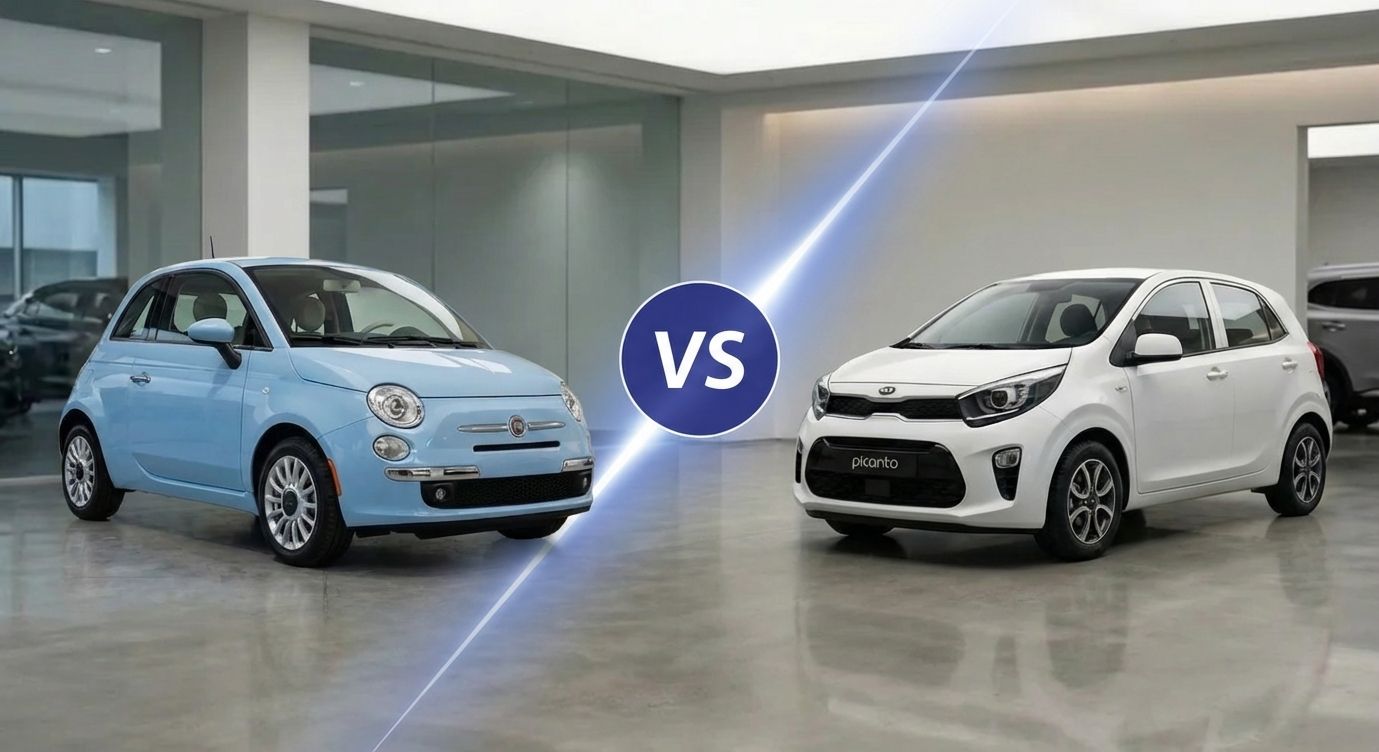
Fiat 500 or Kia Picanto? Our detailed comparison will help you choose the right city car. Detailed tests, features, and verdict.
Apr 14, 2026