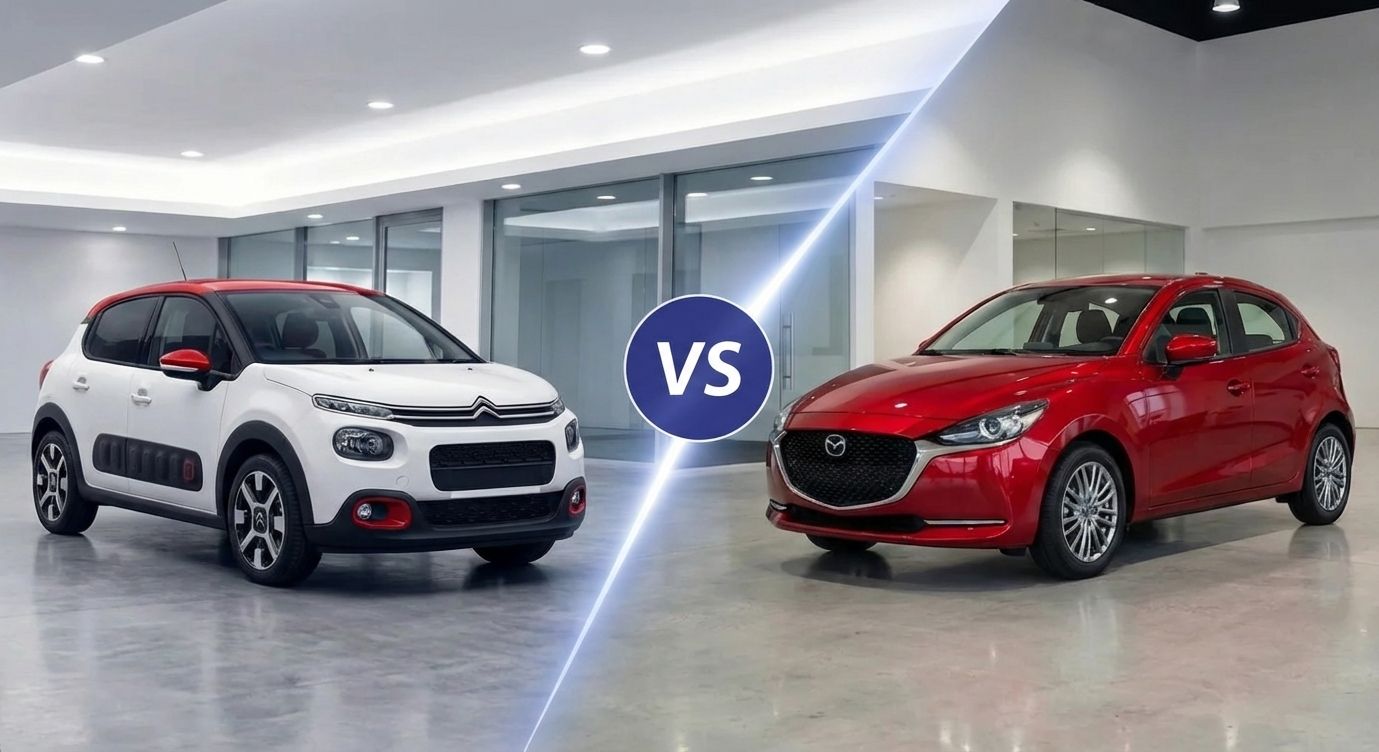
Citroën C3 vs. Mazda 2: Complete comparison 2026
Detailed comparison of Citroën C3 vs. Mazda 2 (Mazda2). We offer real-world driving experiences, an equipment overview, engine comparison, and a clear verdict for the right choice.
Apr 13, 2026
Articles
Car battle
Škoda Fabia vs. Toyota Yaris. A detailed comparison of engines, features, and prices. Find out which of these popular small cars is the right one for you.
April 13, 2026


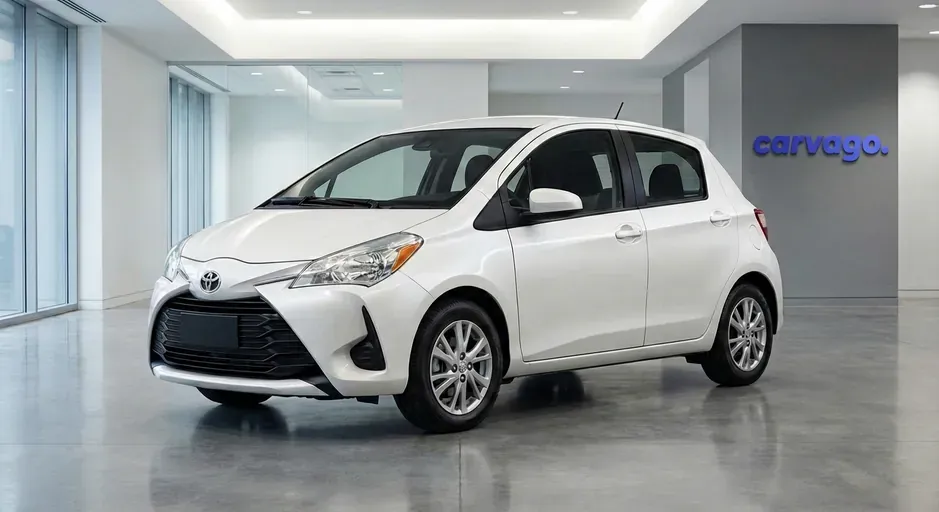
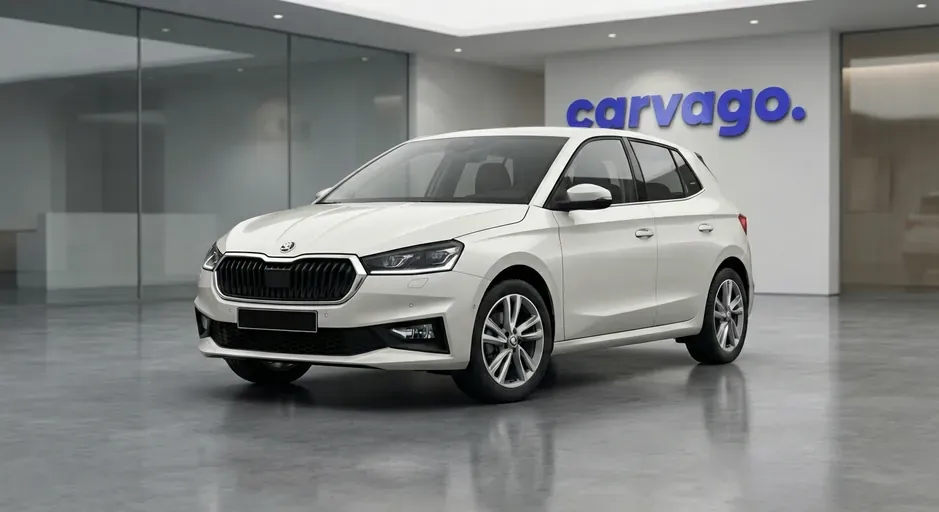
The Škoda Fabia has long been one of the most popular cars on Czech roads and a benchmark in the small car category, appealing with its practicality and affordability. Standing against it is the globally successful Toyota Yaris, which wins over customers with its renowned reliability, efficient hybrid powertrains, and was also known in some markets under names like Vitz or Echo. Let's take a detailed look at how these two rivals fare in a head-to-head comparison.
Looking at the exterior dimensions, the main difference between the two cars is clear, especially in their latest generations. While the Toyota Yaris maintains its philosophy as a compact city car, the Škoda Fabia has grown significantly in its fourth generation, pushing the boundaries of the subcompact class. This makes it one of the largest representatives in its segment.
The third-generation Fabia (produced until 2021) is much closer in size to the Yaris. So, if you're looking for an older used car, the differences won't be as dramatic. However, with the arrival of the fourth generation, the Fabia has become a substantially longer and wider car, which is mainly reflected in the spaciousness of the interior and the boot. For those looking for maximum utility in a small package, Škoda also offers a practical Combi (estate) version, for which Toyota has no direct competitor.
The biggest difference is in the length. The fourth-generation Škoda Fabia measures 4,108 mm, surpassing the Toyota Yaris (3,940 mm) by a noticeable 17 centimetres. In practice, this means not only more legroom for rear passengers but also a larger boot. On the other hand, the Yaris, thanks to its shorter body, retains an advantage when parking in crowded city streets. In older generations, the difference was smaller – the third-generation Fabia (3,997 mm) was only five centimetres longer than the Yaris of that time (3,945 mm).
We see a similar trend in width. The new Fabia, at 1,780 mm, is among the widest cars in its class, contributing to better stability and a feeling of airiness in the interior. The Yaris also widened between generations to 1,745 mm, but it still lags behind its Czech competitor. So, if you often travel with more people, the wider Fabia will offer noticeably more shoulder room comfort.
While the Fabia grew in length and width, it actually lost some height between generations, and at 1,459 mm, it has a sportier look. The Yaris is slightly taller at 1,500 mm, which can make getting in a bit easier and offer a better sense of headroom.
However, the most important figure for interior space is the wheelbase. Here, the latest generations of both models are surprisingly close. The Fabia IV has a wheelbase of 2,564 mm and the Yaris has 2,560 mm. Both values are above average for the segment and guarantee enough knee room for rear passengers. It is here that both models have made the most progress compared to their predecessors, becoming fully-fledged cars even for longer journeys with four people.
| Parameter | Škoda Fabia Hatchback (IV. gen, from 2021) | Škoda Fabia Hatchback (III. gen, 2014-2021) | Škoda Fabia Combi (III. gen, 2015-2022) | Toyota Yaris Hatchback (XP21, from 2020) | Toyota Yaris Hatchback (XP13, 2011-2020) |
|---|---|---|---|---|---|
| Length (mm) | 4108 | 3992–3997 | 4257–4262 | 3940 | 3885–3950 |
| Width (mm) | 1780 | 1732 | 1732 | 1745 | 1695 |
| Height (mm) | 1459 | 1452–1482 | 1467–1488 | 1500 | 1510 |
| Wheelbase (mm) | 2564 | 2470 | 2470 | 2560 | 2510 |
If practicality and boot size are key factors for you when choosing a car, then this battle is decided before the first measurement. The Škoda Fabia, true to its tradition, offers a significantly larger and more usable boot in both generations than the Toyota Yaris. This difference can be a deciding factor, especially for families who need to easily pack a pram, a weekend's shopping, or luggage for a holiday.
Even the third-generation Fabia hatchback (produced from 2014–2021) comes with a generous basic volume of 330 litres. This is a significant 44 litres more than what both the third (XP13) and fourth generation Toyota Yaris (XP21) offer, which maintains a value of 286 litres. With the arrival of the fourth-generation Fabia in 2021, the lead grew even further – the boot expanded to a class-leading 380 litres, which is almost a record value in the small car class. A difference of almost 100 litres in favour of the latest Fabia already means space for several extra bags in practice.
Škoda then confirms its absolute dominance with the third-generation Combi version. It offers an incredible basic volume of 530 litres, a figure that many cars a class above can envy. After folding down the rear seats, the Fabia Combi becomes a small van with a volume of 1395 litres. Toyota does not offer an estate body style for the Yaris in these generations, so if you need maximum space, the Fabia Combi is the clear and only choice in this duel.
| Parameter | Škoda Fabia Hatchback | Toyota Yaris Hatchback | Škoda Fabia Combi (3rd gen) |
|---|---|---|---|
| Basic volume (litres) | 330 (3rd gen) / 380 (4th gen) | 286 (3rd & 4th gen) | 530 |
| Max. volume with seats folded (litres) | 1150 (3rd gen) / 1190 (4th gen) | 768 (3rd gen) / 935 (4th gen) | 1395 |
If the ability to tow a trailer is important to you, the Škoda Fabia is clearly the more practical choice. The differences in towing capacity between these two models are significant and can be a deciding factor for many buyers. While the Fabia can even handle a small caravan, the Yaris is much more limited in this regard.
The Škoda Fabia, especially in its third and fourth generations, offers very solid figures. The basic 1.0 MPI engines can handle a braked trailer weighing 800 kg. With the turbocharged 1.0 TSI engines, this value increases to 1000 to 1100 kg, which is comfortably sufficient for most unbraked trailers for work around the house and for braked trailers with a smaller load. The top-of-the-line 1.5 TSI engine in the fourth generation can even handle 1200 kg.
In contrast, the Toyota Yaris lags behind the Fabia in this respect. Its third and fourth-generation petrol versions (XP13 and XP21) can usually handle a braked trailer weighing from 730 to 850 kg. However, the key difference lies with the hybrid variants. While the older third-generation Yaris Hybrid could not officially tow a trailer at all, the newer fourth generation can be fitted with a tow hitch, but with a very low limit of just 450 kg. This is only enough for the lightest trailers, for example, for hauling garden waste.
For the buyer, this means a clear conclusion: if you plan to regularly tow anything heavier than a small unbraked trailer, the Škoda Fabia is an incomparably better and more versatile choice. The Toyota Yaris, especially in its popular hybrid version, serves more as a city car for which towing a trailer is a marginal and very limited affair.
| Model and Engine | Braked trailer weight (kg) | Unbraked trailer weight (kg) |
|---|---|---|
| Škoda Fabia 1.0 MPI (59 kW) | 800 | 580 |
| Škoda Fabia 1.0 TSI (81 kW) | 1100 | 610 |
| Škoda Fabia 1.5 TSI (110 kW) | 1200 | 630 |
| Toyota Yaris 1.5 (92 kW) | 850 | 550 |
| Toyota Yaris 1.5 Hybrid (68 kW) | 450 | 450 |
Choosing an engine for the Škoda Fabia and Toyota Yaris is a key decision that will fundamentally affect not only the dynamics but also the running costs. These two models take completely different approaches to propulsion. In its fourth generation, the Škoda Fabia has relied exclusively on petrol engines, from economical naturally aspirated units to powerful turbocharged four-cylinders. The Toyota Yaris, on the other hand, dominates with its sophisticated full hybrid system, which is synonymous with low consumption, and complements it with conventional petrol engines. The choice is thus between the proven and wide range of petrol engines in the Fabia and the technologically advanced hybrid drive of the Yaris, which aims for maximum efficiency.
The fourth-generation Škoda Fabia (from 2021) has completely abandoned diesel engines and any form of electrification, offering a purely petrol lineup. The base is formed by the naturally aspirated three-cylinder 1.0 MPI engines with outputs of 48 and 59 kW, which are an ideal choice for calm drivers who mainly navigate the city. They are reliable and low-maintenance.
The golden mean is represented by the turbocharged three-cylinder 1.0 TSI engines, available in 70 and 81 kW variants. These engines provide the car with excellent dynamics while maintaining favourable fuel consumption and are available with both manual and dual-clutch DSG automatic transmissions. For the most demanding drivers, there is the top-of-the-line four-cylinder 1.5 TSI with an output of 110 kW, exclusively paired with a seven-speed DSG automatic, which transforms the Fabia into a brisk and comfortable motorway car. It is important to mention that the production of the practical Combi (estate) version ended with the arrival of this generation.
| Engine Type | Fuel | Power (kW) | Torque (Nm) | Transmission |
|---|---|---|---|---|
| 1.0 MPI | Petrol | 48 | 93 | 5-speed manual |
| 1.0 MPI | Petrol | 59 | 93 | 5-speed manual |
| 1.0 TSI | Petrol | 70 | 175 | 5-speed manual |
| 1.0 TSI | Petrol | 81 | 200 | 6-speed manual / 7-speed DSG |
| 1.5 TSI | Petrol | 110 | 250 | 7-speed DSG |
The Toyota Yaris XP21 generation (from 2020) builds its success primarily on its hybrid drive. The basic 1.5 Hybrid version with a combined output of 85 kW (116 hp) is a perfect choice for city and suburban traffic, where it can run with extremely low fuel consumption and even purely on electricity. In 2024, the range was expanded with a more powerful Hybrid 130 variant with an output of 96 kW (130 hp). All hybrids are paired with an e-CVT automatic transmission.
For those who won't make use of the hybrid drive, Toyota also has conventional petrol engines in reserve. The basic three-cylinder 1.0 VVT-i with an output of 53 kW is intended for less demanding drivers. A significantly livelier alternative is the 1.5 Dynamic Force engine with an output of 92 kW, available with both manual and CVT automatic transmissions. A special chapter is the sporty GR Yaris version with a turbocharged 1.6 engine and all-wheel drive, which, however, stands outside a direct comparison with the standard Fabia.
| Engine Type | Fuel | Power (kW) | Torque (Nm) | Transmission |
|---|---|---|---|---|
| 1.0 VVT-i | Petrol | 53 | 93 | 5-speed manual |
| 1.5 Dynamic Force | Petrol | 92 | 153 | 6-speed manual / CVT |
| 1.5 Hybrid 116 | Petrol/Electric | 85 (comb.) | 120 (combustion) + 141 (electric) | e-CVT |
| 1.5 Hybrid 130 | Petrol/Electric | 96 (comb.) | 120 (combustion) + 185 (electric) | e-CVT |
Choosing the right engine is crucial for long-term satisfaction with a car. Each of these two models approaches propulsion differently – the Fabia relies on proven turbocharged petrol engines, while the Yaris dominates with its sophisticated hybrid system. Our recommendations are based on a combination of performance, real-world fuel consumption, owner feedback, and mechanical reliability.
The turbocharged three-cylinder 1.0 TSI in its more powerful version represents an ideal compromise between dynamics and running costs. This engine, available in both the third and fourth generations of the Fabia, is an excellent choice for drivers who travel not only in the city but also on longer journeys on country roads and motorways.
The hybrid system is a discipline in which Toyota has no competition, and in the fourth-generation Yaris (from 2020), it has been perfected. The combination of a 1.5-litre naturally aspirated three-cylinder engine and an electric motor is synonymous with reliability and incredibly low fuel consumption, especially in urban and suburban traffic.
Official fuel consumption figures are one thing, but real-world operation and the experiences of actual drivers are another. Laboratory values can be tempting, but data from platforms like Germany's Spritmonitor.de, where thousands of motorists contribute, reveal the truth about how cars perform in daily use. It is in this discipline that the biggest differences between the Škoda Fabia and the Toyota Yaris are revealed, especially when looking at the relevant generations for the used car market – the fourth-generation Fabia (from 2021) and Yaris (from 2020), supplemented by the final model years of their predecessors.
A comparison of the most common engine options shows that each model relies on a different strategy to save fuel. While the Fabia depends on modern turbocharged engines and an economical naturally aspirated base, the Yaris triumphs with its hybrid system.
| Model and Engine | Average Real-World Consumption (l/100 km) |
|---|---|
| Škoda Fabia 1.0 MPI (59 kW) | 5.6 |
| Škoda Fabia 1.0 TSI (70/81 kW) | 5.8 |
| Škoda Fabia 1.5 TSI (110 kW) | 6.3 |
| Toyota Yaris 1.5 Dynamic Force (92 kW) | 5.9 |
| Toyota Yaris 1.5 Hybrid (85 kW) | 4.2 |
From the table, it is clear that the battle for fuel economy has a clear winner: the Toyota Yaris with a hybrid drive. An average consumption of around 4.2 l/100 km is a figure that the Fabia's conventional combustion engines can hardly match. The magic of the hybrid is fully revealed in the city, where it can often use pure electric power for long stretches, dramatically reducing consumption in traffic jams and during slow-moving commutes.
Škoda Fabia, on the other hand, offers a wider range of traditional petrol engines. The basic 1.0 MPI with 59 kW of power is an ideal choice for drivers who mainly drive in the city and for short distances. Its real-world fuel consumption is around 5.6 l/100 km, and thanks to its simple design with indirect injection, it doesn't suffer from carbon build-up during frequent cold starts.
The turbocharged 1.0 TSI engines (most often in 70 kW or 81 kW versions) are great all-rounders. They offer noticeably better dynamics than the MPI and are particularly economical outside the city and on the motorway, where their real-world consumption stays below 6 litres. In the city, however, their appetite can increase with more dynamic driving. The top-of-the-range 1.5 TSI engine is the choice for those who want a power reserve and can expect an average consumption of slightly over 6 litres.
On Toyota's side, in addition to the hybrid, there is also the naturally aspirated three-cylinder 1.5 Dynamic Force. Although it has a larger displacement, its high thermal efficiency makes it a direct competitor to the TSI engines in the Fabia, with a consumption of around 5.9 l/100 km. Compared to the turbocharged unit, it lacks low-end torque, but for calmer drivers, it is a reliable and economical choice.
For the typical city driver, the Yaris Hybrid is clearly the best choice. The fuel savings will be most significant here. For long motorway journeys, the differences blur, and the 1.0 TSI engines in the Fabia come to the fore, offering better flexibility and refinement at higher speeds. Whether fuel consumption is the deciding factor depends purely on the intended use of the vehicle. For urban and suburban driving, the Yaris Hybrid dominates, while in other disciplines, the Fabia is more than a worthy competitor.
A look at the price tags of used cars clearly reveals the fundamental difference between the two models. The Škoda Fabia is generally considered the more affordable option, while the Toyota Yaris, especially in its hybrid version, holds its value better and sells for higher prices. The differences are noticeable in both newer and older generations relevant to the used car market.
Fabia IV (from 2021): The latest generation, which is still new to the used car market, ranges in price from approximately 12,000 € for basic models with lower equipment levels to almost 20,000 € for nearly new, well-equipped examples with more powerful TSI engines. This is a modern car whose price depends mainly on mileage, equipment, and engine type.
Fabia III (2014–2021): The third generation is massively widespread on the used car market and offers a huge selection. Prices here start at around 6,000 € for older models (before the 2018 facelift) with higher mileage. Well-preserved examples after the modernisation, typically four to five years old, can be found in the range of 8,000 € to 12,000 €, which makes them a very attractive choice in terms of value for money.
Yaris IV (from 2020): The fourth-generation Yaris holds its price very confidently as a used car. The main reason is the dominance of the hybrid powertrain, which is in demand for its economy and reliability. The prices of used models rarely drop below 14,000 €. Typically, two to three-year-old cars with a hybrid system sell in the range of 16,000 € to 20,000 €. Purely petrol versions are cheaper and their price can approach that of better-equipped Fabias, but their availability on the market is significantly smaller.
Yaris III (post-facelift 2017–2020): Even with the older generation, the hybrid versions are more expensive. While basic petrol models from 2017-2018 can be purchased for prices around 10,000 €, you should be prepared to pay between 12,000 € and 14,000 € for a well-maintained hybrid. The Toyota brand's reputation for reliability plays a key role here in maintaining a high residual value.
| Model and Generation | Typical Price Range (approx. 4-year-old cars) | Key Factors Affecting Price |
|---|---|---|
| Škoda Fabia IV (from 2021) | 12,000 € - 18,000 € | Equipment, engine (TSI vs. MPI), mileage |
| Škoda Fabia III (2018-2021) | 8,000 € - 12,000 € | Very wide selection, Combi version, equipment |
| Toyota Yaris IV (from 2020) | 15,000 € - 20,000 € | Dominance of the more expensive hybrid powertrain |
| Toyota Yaris III (2017-2020) | 10,000 € - 14,000 € | Hybrid version significantly more expensive, reputation for reliability |
If your main criteria are the lowest possible purchase price and a wide selection, the clear winner is the Škoda Fabia, especially its third generation after the facelift. It offers a modern car for very reasonable money. The Toyota Yaris is an investment for those who prefer a hybrid powertrain, appreciate legendary reliability, and are willing to pay a premium for these benefits, both at the time of purchase and in the expected higher resale price in the future.
When deciding to buy a car, safety is a key factor, and in this respect, both the Škoda Fabia and the Toyota Yaris perform excellently on paper. Both models boast the highest five-star rating from the independent organisation Euro NCAP. However, it is important to look at the results in more detail, as the test protocols are constantly being tightened and the year of the test plays a significant role. A direct comparison of percentage scores between different years can therefore be misleading.
The fourth-generation Škoda Fabia underwent Euro NCAP crash tests in 2021, under the stricter rules introduced in 2020. Achieving five stars is a confirmation of the high standard the car sets in its class. In the individual categories, the Fabia scored 85% for adult occupant protection and 81% for child protection. These values demonstrate the robust body structure and the effectiveness of the restraint systems. In the area of protecting vulnerable road users, such as pedestrians and cyclists, the car received 70%. The score for assistance systems, which actively help prevent accidents, was 71%.
The Toyota Yaris was tested a year earlier, in 2020, when new, more demanding testing procedures came into effect. The Yaris also received a full five-star rating and even excelled in some respects. It received 86% for adult occupant protection and 81% for child protection. In the assessment of vulnerable road user protection, it achieved 78%, which is a very good result. It performed exceptionally well in the safety assist systems category, where it scored 85%. This indicates a rich standard equipment list that includes advanced technologies such as an emergency braking system with pedestrian and cyclist detection, and a central airbag between the front seats, which was a novelty at the time of the test.
Although both cars are at the top of their segment in terms of safety, a closer look reveals that the Toyota Yaris has a slight edge. It was tested a year earlier, but under the newly tightened rules, where it shone particularly in the safety assist systems category. Its standard equipment at the time of the test was a step ahead in this regard. The Škoda Fabia, tested a year later, is still one of the safest cars in its class and offers excellent occupant protection. The difference in favour of the Yaris is mainly due to a more advanced and comprehensive set of standardly supplied driver assistants, which play an increasingly important role in accident prevention.
| Parameter | Škoda Fabia | Toyota Yaris |
|---|---|---|
| Year of testing | 2021 | 2020 |
| Adult occupant protection | 85 % | 86 % |
| Child occupant protection | 81 % | 81 % |
| Vulnerable road user protection | 70 % | 78 % |
| Safety assist systems | 71 % | 85 % |
In addition to standard equipment, each model offers several unique features that can be decisive for the customer. While Škoda focuses on everyday practicality, Toyota concentrates on its standard hybrid technology and advanced safety systems.
The fourth-generation Fabia (from 2021) builds on the brand's traditional values and adds modern technology. Its greatest weapon is its well-thought-out practicality, which Škoda calls "Simply Clever".
The fourth-generation Toyota Yaris (from 2020) chose a different strategy. It focuses on the technological sophistication of the powertrain and comprehensive safety equipment, which was in many cases part of the standard package.
Advantages:
Disadvantages:
Pros:
Cons:
Based on our own CarAudit inspections, breakdown statistics, and service data, we have compiled an overview of the most common problems that buyers of used Škoda Fabia and Toyota Yaris cars should watch out for. Both cars are among the most reliable in their class, but neither is completely flawless.
The fourth-generation Fabia, built on the modern MQB A0 platform, is still a relatively new car, but some typical problems have already emerged that are worth mentioning. Overall, however, it is considered reliable.
Summary for the Fabia: The problems are more related to minor electronic glitches, which can often be resolved with a software update. The car's mechanical foundation is proven and reliable.
The Toyota Yaris has a long-standing reputation as one of the most reliable cars in its class, and the fourth generation continues this trend. However, even it can have specific problems.
Summary for the Yaris: The Yaris confirms its reputation as a reliable car. Most of the reported problems are software bugs that can be fixed at a service center and do not affect key mechanical components. The hybrid system is a safe bet.
When buying a used car, a thorough inspection is key and should not be underestimated, even with relatively new and reliable models. Here are a few specific points to focus on with the fourth-generation Fabia and the Yaris.
The Škoda Fabia is longer overall, which has a positive effect on the boot space, which has a volume of 380 liters. The Toyota Yaris, on the other hand, offers a boot with a volume of 286 liters. This makes the Fabia a more practical choice for families or for those who often transport bulkier cargo.
Both models are known for their high reliability and low running costs, making them a great choice on the used car market. The Toyota Yaris has a long-standing reputation for excellence, and its hybrid version in particular is considered extremely reliable. The Škoda Fabia, in turn, is popular due to its wide service network and the availability of spare parts in the Czech Republic.
The Toyota Yaris has an advantage thanks to its hybrid technology, which offers very low fuel consumption, especially in city traffic, where it is around 3.8 l/100 km. The Škoda Fabia relies on modern turbocharged TSI petrol engines, which are economical mainly when driving outside the city. Even so, the Yaris is more fuel-efficient on average.
The Škoda Fabia is often praised for its confident and comfortable chassis, which handles longer journeys well and feels more mature. The Toyota Yaris is more agile in the city thanks to its more compact dimensions and smaller turning circle. The Yaris's longer wheelbase contributes to better absorption of bumps.
The Toyota Yaris is often recommended for city driving, mainly due to its agility and smaller exterior dimensions. The hybrid version also excels in low consumption during frequent starts and stops in traffic. While the Fabia is also a good city car, the Yaris has a slight edge in this environment.
The choice between Škoda Fabia and Toyota Yaris depends on personal priorities, as both cars excel in different areas. Škoda Fabia is a triumph of rationality and practicality, ideal for those seeking maximum spaciousness, a large boot, and comfort for longer highway journeys, functioning as a versatile family car. In contrast, the Toyota Yaris is a master of efficiency and reliability, with a hybrid powertrain that is unbeatably economical in city traffic and boasts low operating costs. It is thus a perfect choice for drivers who primarily drive in the city and prioritize fuel economy, agility, and minimal service worries.
Sources: ADAC, whatcar.com, evo.co.uk, roadandtrack.com, automobilemag.com, electriccarsreport.com
This article was prepared using artificial intelligence tools. The section guarantor is Petr Dušek.

Detailed comparison of Citroën C3 vs. Mazda 2 (Mazda2). We offer real-world driving experiences, an equipment overview, engine comparison, and a clear verdict for the right choice.
Apr 13, 2026

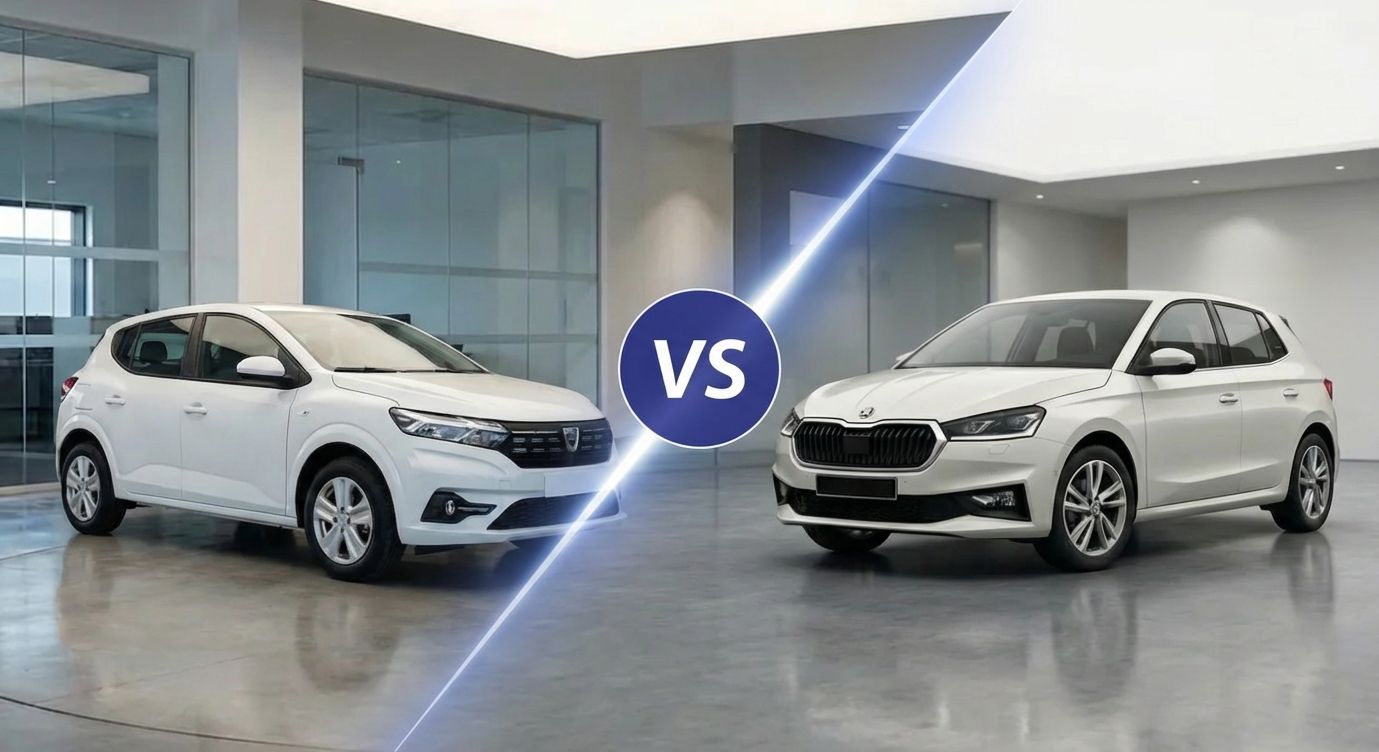
Dacia Sandero vs. Škoda Fabia: Which car is better? We compare engines, equipment, and price. Our detailed verdict will help you choose.
Apr 14, 2026

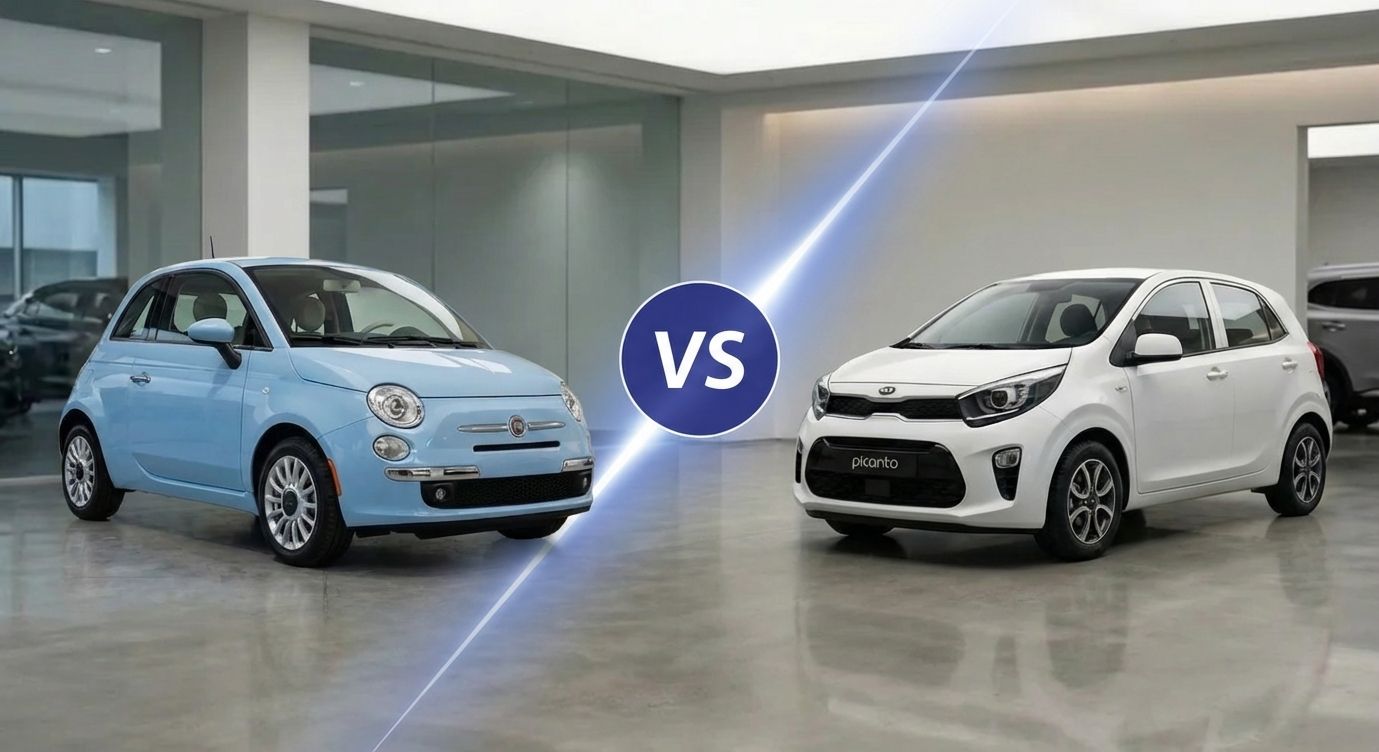
Fiat 500 or Kia Picanto? Our detailed comparison will help you choose the right city car. Detailed tests, features, and verdict.
Apr 14, 2026