Articles

Car battle

Dacia Sandero vs. Škoda Fabia: Complete comparison 2026

Dacia Sandero vs. Škoda Fabia: Which car is better? We compare engines, equipment, and price. Our detailed verdict will help you choose.

April 14, 2026

VS
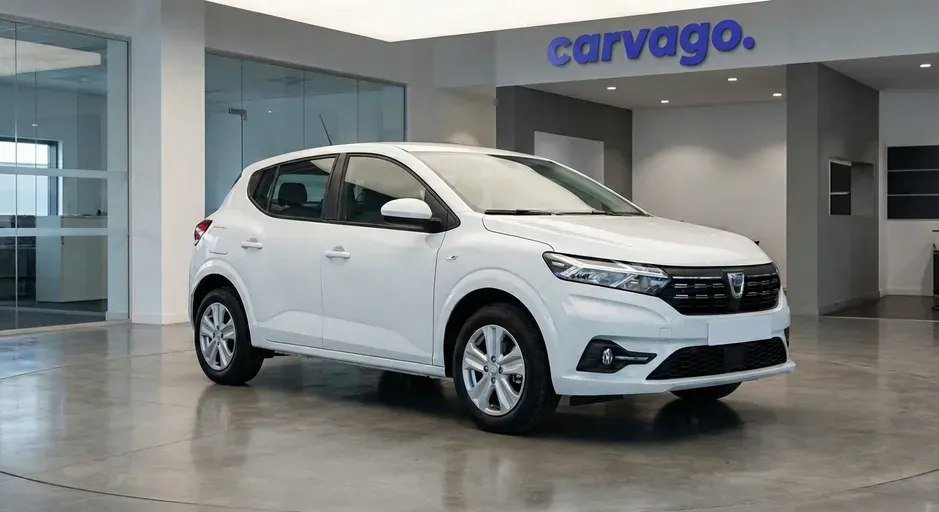
Dacia Sandero

Dacia Sandero

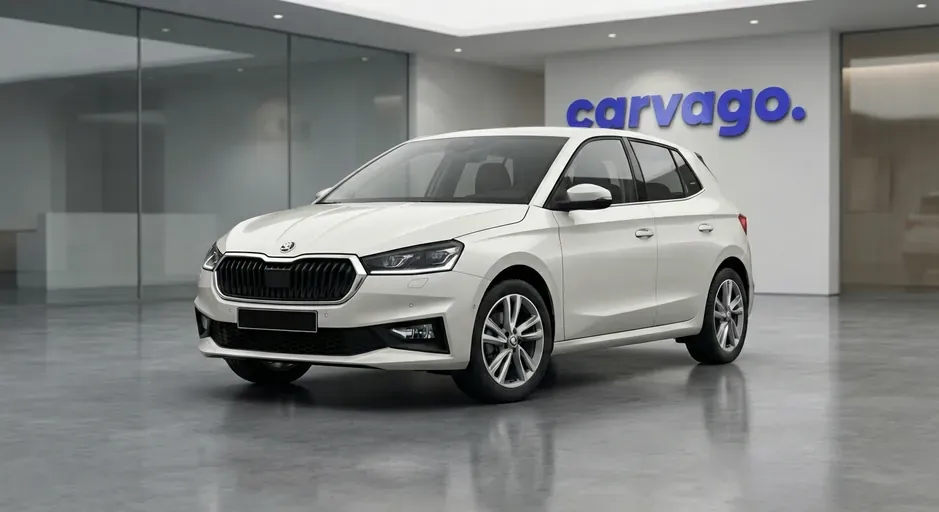
Škoda Fabia

Škoda Fabia

Introduction

The Dacia Sandero, also known as the Renault Sandero in some parts of the world, has built a reputation as an affordable and practical hatchback. It faces off against the domestic stalwart, the Škoda Fabia, which has long been one of the most popular cars on the Czech market, relying on proven technology and quality. This showdown will reveal which of these two small-car bestsellers offers the better combination of features and value for money.

Comparison of External Dimensions

Exterior Dimensions: Sandero Bets on Width, Fabia on Length

Looking at the exterior dimensions table, it's clear that both cars are among the largest representatives of their segment. With the arrival of the third-generation Dacia Sandero and the fourth-generation Škoda Fabia, their proportions have changed significantly. While the Fabia was typically shorter and narrower in the past, the new generation has pushed it to the top of its class in terms of length. Nevertheless, the Sandero holds one key trump card – its above-average width.

The biggest difference between the two models is in the body width. At 1848 mm, the Dacia Sandero is almost 7 centimetres wider than the Škoda Fabia (1780 mm). This parameter directly translates into interior space, and passengers, especially in the rear seats, will feel noticeably more shoulder room in the Sandero. For families or those who frequently carry more passengers, this is a significant advantage.

Conversely, the Škoda Fabia has outgrown the Sandero in overall length, albeit only slightly. With a length of 4108 mm, it is 2 cm longer than the standard Sandero (4088 mm). However, the Dacia's longer wheelbase (2604 mm compared to 2564 mm for the Fabia) promises generous legroom for rear passengers. The Sandero also scores points for its height, which makes getting in easier and provides a more airy feel in the cabin. The Stepway version is a few centimetres taller still, bringing it closer to the crossover category.

Comparison of Basic Dimensions

ParameterDacia Sandero Hatchback (3rd gen)Dacia Sandero Stepway (3rd gen)Škoda Fabia Hatchback (4th gen)Škoda Fabia Combi (3rd gen)
Length (mm)4088409941084257 - 4262
Width (mm)1848184817801732
Height (mm)14991535 - 158614591467 - 1488
Wheelbase (mm)2604260425642470

Trunk Volume

Boot Volume: Fabia at the Top of its Class, Sandero a Close Second

When choosing a practical car for everyday use, the size of the luggage compartment plays a key role. Whether it's for weekly shopping, family trips, or transporting sports equipment, every litre counts. In this respect, the Škoda Fabia and the Dacia Sandero present themselves as strong players, but with a clear hierarchy. While both cars offer enough space for everyday needs, the latest generation of the Fabia raises the bar for practicality significantly higher.

The biggest difference is noticeable in the latest generations of both models, which are the most relevant for the used car market. The fourth-generation Škoda Fabia (from 2021) comes with an impressive 380-litre boot. This is a figure that not only surpasses most competitors in the small car segment but also boldly challenges some models in the class above. In contrast, the third-generation Dacia Sandero (from 2021) offers a still very respectable 328 litres. The 52-litre difference in practice means space for one small suitcase or several extra shopping bags.

With the rear seats folded down, the difference narrows slightly, but the Fabia still maintains its lead. It offers a total of 1190 litres, while the Sandero provides 1108 litres. For buyers looking for the maximum possible space in a small package, it is also important to mention the older third-generation Fabia in the Combi variant (produced until 2022). It offered an unbeatable 530 litres in its basic configuration and up to 1395 litres with the seats folded down, making it the king of practicality among used cars. The Sandero does not offer an estate version.

ParameterDacia Sandero Hatchback (3rd gen)Škoda Fabia Hatchback (4th gen)Škoda Fabia Combi (3rd gen)
Basic volume (litres)328380530
Maximum volume with seats folded (litres)110811901395

Leave it to Carvago CarAudit™

Order CarAudit™

Trailer Weights

Towing Capacity: Fabia Offers a Wider Range, Sandero is More Consistent

The ability to tow a trailer is a practical feature that can be crucial for many drivers. And it is in this discipline that the Dacia Sandero and Škoda Fabia differ more than it might seem at first glance. Choosing the right version is absolutely essential here, as the towing capacity is directly dependent on the selected engine.

With the Dacia Sandero third generation (from 2021), the situation is relatively simple. Most popular engines, such as the turbocharged TCe 90 or the LPG version TCe 100 ECO-G, can handle a braked trailer weighing up to 1100 kg. This is a solid figure that is easily sufficient for a small caravan or a trailer with building materials. The only exception is the basic naturally aspirated SCe 65 engine, whose limit is a noticeably lower 980 kg.

The Škoda Fabia fourth generation (also from 2021), on the other hand, shows much greater differences between individual engines. At the very bottom of the range are the naturally aspirated 1.0 MPI versions, which can only manage 800 kg. This is enough for a light trailer for garden waste, but not much more. A significant improvement comes with the turbocharged units. The weaker 1.0 TSI (70 kW) can tow 1000 kg, while the more powerful variant (81 kW) matches the Sandero with 1100 kg. However, the absolute winner is the top-of-the-range 1.5 TSI (110 kW) engine, which can handle a trailer weighing up to 1200 kg, an above-average figure in the small car segment.

As a result, if you are looking for a reliable workhorse for everyday towing, the Dacia Sandero with the TCe engine offers consistent and sufficient performance. While the Škoda Fabia lags behind in its basic versions, with the more powerful TSI engines, it can not only match the Sandero but, in the case of the 1.5 TSI variant, significantly surpass it.

Model and EngineBraked trailer weight (kg)Unbraked trailer weight (kg)
Dacia Sandero SCe 65 (49 kW)980525
Dacia Sandero TCe 90 / TCe 100 ECO-G (67-74 kW)1100580 - 595
Škoda Fabia 1.0 MPI (59 kW)800550
Škoda Fabia 1.0 TSI (70 kW)1000590
Škoda Fabia 1.0 TSI (81 kW)1100610
Škoda Fabia 1.5 TSI (110 kW)1200620

Overview of Most Common Motorizations

Engine Comparison: Pragmatic Simplicity vs. Modern Technology

Looking at the engine range, two completely different approaches clearly emerge. The Dacia Sandero bets on simplicity, proven technology, and above all, on unbeatable low running costs thanks to the factory LPG version. The Škoda Fabia, on the other hand, counters with a wider and more modern range of engines from the Volkswagen Group, offering greater refinement, better dynamics, and the option of the more advanced DSG automatic transmission. The choice between these two cars is therefore not just about price, but also about the philosophy you expect from a power unit.

Dacia Sandero: The King of Low Costs

In the latest generation of the Sandero (from 2021), Dacia has simplified its range and completely abandoned the diesel engines that were still available in the previous generation (e.g., the reliable 1.5 Blue dCi). The base is the naturally aspirated three-cylinder SCe 65, whose performance is mainly sufficient for calm city driving.

The core of the range are the turbocharged three-cylinder TCe 90 and especially the TCe 100 ECO-G version that runs on both petrol and LPG. The factory LPG conversion is the Sandero's main trump card. Thanks to the low price of LPG and two tanks (50 l for petrol, 40 l for LPG), it offers a huge theoretical range of over 1300 km and unbeatable costs per kilometre. The most powerful engine is the TCe 110, which is, however, reserved mainly for the Stepway version and gives the Sandero decent dynamics. For the TCe 90 engine, in addition to the manual, a CVT automatic transmission is also available.

Engine TypeFuelPower (kW)Torque (Nm)Transmission
1.0 SCe 65Petrol49955MT
1.0 TCe 90Petrol671606MT / CVT
1.0 TCe 100 ECO-GPetrol / LPG74 (LPG) / 67 (Petrol)170 (LPG) / 160 (Petrol)6MT
1.0 TCe 110Petrol812006MT
1.5 Blue dCi 95*Diesel702205MT

*Note: The 1.5 Blue dCi engine was only available in the 2nd generation (until 2020) and is still a sought-after economical option in the current used car market.

Škoda Fabia: Wider Choice and More Advanced Technology

The Škoda Fabia in its fourth generation (from 2021), much like the Sandero, has completely given up on diesel engines. The basic power unit is the naturally aspirated three-cylinder 1.0 MPI with an output of 59 kW (80 hp), which is ideal for city traffic and short trips where it quickly warms up to operating temperature.

The greatest demand is for the turbocharged three-cylinder 1.0 TSI engines, which are offered in two power variants: 70 kW (95 hp) and 81 kW (110 hp). These engines provide the Fabia with noticeably better dynamics and, thanks to the torque available at low revs, are more flexible and also more suitable for motorway driving. The absolute top of the range, which Dacia cannot compete with, is the four-cylinder 1.5 TSI engine with an output of 110 kW (150 hp). It turns the Fabia into a small and very fast hatchback. A major advantage of the Fabia is also the choice between a five-speed and six-speed manual or a seven-speed dual-clutch DSG transmission, which shifts faster and more smoothly than the CVT in the Sandero.

Engine TypeFuelPower (kW)Torque (Nm)Transmission
1.0 MPI EVOPetrol59935MT
1.0 TSI EVOPetrol701755MT
1.0 TSI EVOPetrol812006MT / 7DSG
1.5 TSI EVOPetrol1102507DSG

The Verdict for Drivers

  • For the Frugal and High-Mileage Drivers: The clear choice is the Dacia Sandero TCe 100 ECO-G. The running costs with LPG are extremely low, and the factory installation guarantees reliability. It's a pragmatic and smart choice.
  • For Drivers Who Prefer Dynamics: The Škoda Fabia with the 1.0 TSI 81 kW engine offers a great compromise between performance and fuel consumption. For those who want a truly brisk small car, there is the unbeatable 1.5 TSI.
  • For the City: Both basic naturally aspirated engines, the Sandero SCe 65 and the Fabia 1.0 MPI, will do a good job. However, the Fabia is slightly more refined.
  • For Fans of Automatics: If you desire an automatic transmission, the Škoda Fabia and its 7-speed DSG represents a more technically advanced and pleasant choice than the CVT-type automatic in the Sandero.

Choosing the right engine is crucial for long-term satisfaction with a car. Our recommendations are based on a combination of performance, real-world fuel consumption, feedback from owners, and mechanical reliability. In the battle between the Dacia Sandero and the Škoda Fabia, two completely different approaches to power units face off – Dacia bets on extremely economical operation thanks to LPG, while Škoda counters with the refinement and dynamics of a turbocharged petrol engine.

For the Dacia Sandero, we recommend: TCe 100 ECO-G (74 kW)

For the third-generation Dacia Sandero (from 2021), the factory LPG version designated TCe 100 ECO-G is clearly the best choice. This turbocharged one-litre three-cylinder engine perfectly embodies the brand's philosophy – to offer maximum utility value for minimal cost. With an output of 74 kW (101 hp) and 170 Nm of torque when running on gas, it provides perfectly adequate dynamics for normal driving in and out of the city.

  • Why is it the best choice? The main argument is the unbeatable running costs. Real-world consumption is around 7.5 litres of LPG per 100 km, which, with gas being half the price of petrol, means savings that conventional engines cannot compete with. Thanks to a 40-litre LPG tank and a full-sized 50-litre petrol tank, the total theoretical range exceeds 1300 km.
  • Technical advantages: The engine uses indirect fuel injection, which is an advantage in terms of long-term reliability. Furthermore, no carbon deposits form when running on LPG, making the engine suitable for frequent short trips. Compared to the petrol-only TCe 90 version, it has slightly higher power and torque on gas, which has a positive effect on flexibility.
  • Known risks: No major risks are known. It is a proven unit, and the factory-installed LPG system is generally considered very reliable. You just need to account for regular inspections of the gas system, which are financially inexpensive. The gas tank is located in place of the spare wheel.
  • Who is it ideal for? For drivers who prioritise the lowest possible running costs but don't want to give up the dynamics of a turbocharged engine. It is an ideal all-rounder for family transport, commuting to work, and longer journeys.

For the Škoda Fabia, we recommend: 1.0 TSI (81 kW/110 hp)

In the fourth-generation Škoda Fabia (from 2021), the turbocharged three-cylinder 1.0 TSI from the EVO series with 81 kW (110 hp) represents the golden mean. Unlike the basic MPI engine, it offers significantly better dynamics and flexibility, which is useful not only on the motorway but also for everyday overtaking on country roads.

  • Why is it the best choice? This engine represents an ideal compromise between performance, refinement, and consumption. Compared to the weaker 70kW version, it has a six-speed manual gearbox (or a seven-speed DSG automatic), which helps maintain low revs at higher speeds, thus reducing consumption and noise. The refinement is at a very high level for a three-cylinder engine.
  • Technical advantages: The EVO generation engine uses modern technologies such as plasma coating on the cylinders to reduce friction and a turbocharger with variable vane geometry, which contributes to better response and efficiency. In real-world driving, consumption is easily kept between 5.5 and 6.5 litres per 100 km.
  • Known risks: Direct injection engines (TSI) can be more prone to carbon build-up, especially with frequent short trips with a cold engine. Prevention includes using high-quality fuel and occasionally driving the car at higher revs on a longer route. Some VW Group cars may experience problems with the start-stop system, often related to the battery's condition.
  • Who is it ideal for? For the driver looking for a mature driving experience in a small car. The Fabia with this engine is confident on the motorway, agile in the city, and economical on country roads. It is an excellent choice for those who drive frequently and on longer journeys and will appreciate the power reserve and higher level of driving comfort.

Real Fuel Consumption

Real-world Consumption: Does LPG or the Economical TSI Triumph?

The paper consumption figures provided by manufacturers are one thing, but real-world operation is another. That's why we looked at data from real drivers, which often reveals a much more accurate picture of running costs. Data from platforms like Germany's Spritmonitor.de show how both cars perform in the hands of their owners in daily use. We focused primarily on the latest generations of both models, which are relevant to the used car market.

The following table compares the average real-world consumption of the most common engine versions for the third-generation Dacia Sandero (from 2021) and the fourth-generation Škoda Fabia (from 2021).

Model and Engine VersionAverage Real-world Consumption (l/100 km)
Dacia Sandero 1.0 SCe 65 (49 kW)5.3
Dacia Sandero 1.0 TCe 90 (67 kW)5.4
Dacia Sandero 1.0 TCe 100 ECO-G5.5 (petrol) / 7.0 (LPG)
Škoda Fabia 1.0 MPI (59 kW)5.2
Škoda Fabia 1.0 TSI (70/81 kW)5.5
Škoda Fabia 1.5 TSI (110 kW)5.8

From the table, it is clear that in the case of petrol-only engines, both rivals are very evenly matched. The basic naturally aspirated three-cylinder engines (SCe in the Sandero and MPI in the Fabia) require an almost identical amount of fuel and feel most at home in the city and on country roads. The turbocharged one-litre TCe and TSI engines, which represent the golden mean, show almost identical consumption of around 5.5 litres. At motorway speeds, they can be slightly more economical than their naturally aspirated siblings.

The biggest difference comes with Dacia's unique weapon – the factory-installed LPG conversion on the TCe 100 ECO-G engine. Although the gas consumption in litres is higher (around 7 l/100 km), thanks to its significantly lower price, the cost per kilometre drops to a level that the petrol Fabia cannot compete with. For drivers with high annual mileage, this is an absolutely key argument. Conversely, Škoda scores points for those looking for performance. Its 1.5 TSI engine offers confident dynamics with still very reasonable consumption under six litres, an area where the Sandero has no answer. Diesel engines have disappeared from the offerings of both models in recent years, so those interested in diesel must look to older generations.

As a result, if you don't plan to run on LPG, consumption should not be the deciding factor. Both cars are exemplarily economical in their petrol versions. The decision will therefore depend more on whether you prefer the unbeatable low running costs of the Sandero with LPG, or the wider range and more powerful engine options of the Fabia.

Price Range and Used Car Offerings

Used Car Price Range: Dacia as the Price Champion

When looking at the used car market, the battle between the Dacia Sandero and Škoda Fabia is primarily about money. Here, Dacia confirms its reputation and clearly wins as the more affordable choice. The price difference is noticeable and will be a key factor for many buyers.

Dacia Sandero: Low Price as the Main Argument

Used third-generation Dacia Sandero models, which arrived on the market in 2021, can be purchased for very attractive prices. Models from the first years of production (2021-2022) with reasonable mileage are in the price range of from €9,000 to €12,000.

  • Basic version: The cheapest are usually the basic variants with the naturally aspirated SCe engine.
  • Popular Stepway: The more sought-after and slightly more expensive version is the Stepway, with plastic body cladding and higher ground clearance. The prices of these models are more often in the upper half of the mentioned range.
  • Factory-fitted LPG: A major advantage and a common feature of Sanderos are the versions with a factory conversion to LPG, which promise low running costs. These models hold their value slightly better.

Škoda Fabia: A safe bet for a higher price

The fourth-generation Škoda Fabia, also introduced in 2021, holds its value significantly better as a used car. Its price tag reflects the brand's strong position on the Czech market, perceived quality, and more advanced technology. Comparably old and used Fabias are usually sold for prices from €12,000 to €16,000.

  • Higher residual value: The Fabia is traditionally seen as an investment that holds its value better, which is also reflected in the used car market.
  • Richer equipment: The price of used Fabias is often increased by higher trim levels (e.g., Style) and optional features that are not as common in the Sandero.
  • More powerful engines: More powerful turbocharged TSI engines, which are more expensive than the basic engines, appear more frequently in the used car market.
ModelApproximate price range (2021-2022)
Dacia Sandero€9,000 - €12,000
Škoda Fabia€12,000 - €16,000

The result is a simple rule: if your main criterion is the lowest possible purchase price, the Dacia Sandero is the clear winner. For the price of a basic used Fabia, you can often get a better-equipped and newer Sandero. On the other hand, if you are willing to pay extra for image, technology, and the assumption of a higher residual value, the Škoda Fabia will be your choice.

Safety and Euro NCAP Rating

Safety: A battle of stars in Euro NCAP tests

When choosing a new car, safety plays a key role, and one of the main guides are the crash tests of the Euro NCAP organization. Although both models belong to the same category of small cars, their results and approach to safety differ dramatically. However, it is important to perceive the results in the context of the time – the testing methodology is constantly being tightened and percentage ratings from different years cannot be directly compared. In this case, however, we have an ideal situation, as both cars were tested in the same year.

Dacia Sandero: Two stars as a compromise

The third-generation Dacia Sandero, specifically the Stepway version, underwent Euro NCAP tests in 2021 and received a rating of just two stars. This result reflects the brand's philosophy, which aims for affordability, and this is also reflected in the safety equipment. While adult (70%) and child (72%) protection achieved solid, though not top-notch, values, weaknesses were shown in the categories of vulnerable road user protection (41%) and assistance systems (42%). The main reason for the low score is the absence of more advanced assistants – the emergency braking system only reacts to cars, not pedestrians or cyclists, and the car also lacks a lane-keeping system. Passive safety is therefore at a decent level, but in the area of active safety, the Sandero lags significantly behind its more modern competitors.

Škoda Fabia: Five stars and the status of a class leader

The fourth-generation Škoda Fabia underwent Euro NCAP tests in the same year as the Sandero, i.e. 2021, but the result is completely the opposite. It received the maximum number of five stars and ranked among the safest cars in its class. The Fabia achieved excellent results in all monitored categories: adult occupant protection was rated at 85%, child protection at 81%, vulnerable road user protection at 70%, and safety assistance systems at 71%. These values demonstrate the maturity of the design built on the modern MQB-A0 platform and the presence of a wide range of assistance systems that were previously only available in higher-class cars.

Verdict: A clear victory for Škoda

The safety comparison is clear in this case. Although the Dacia Sandero offers an acceptable level of protection in the event of an accident, its low rating is due to a limited set of modern assistance systems designed to prevent accidents. The Škoda Fabia, on the other hand, represents the top of the segment, both in terms of passive and, above all, active safety. For customers for whom safety is an absolute priority, the Škoda Fabia is the clear choice, offering more comprehensive and modern protection for the crew and surroundings.
ParameterDacia SanderoŠkoda Fabia
Year of testing20212021
Adult occupant protection70 %85 %
Child protection72 %81 %
Vulnerable road user protection41 %70 %
Safety assistance systems42 %71 %

Comparison of Interesting Equipment Features

In addition to the standard equipment, each of the models offers several unique features that may be decisive for the customer, and each of them approaches added value in its own way.

Dacia Sandero: Smart simplicity and practicality

Dacia focuses on smart and affordable solutions that make everyday life easier without unnecessarily increasing the price of the car.

  • Media Control and Media Nav: The basic versions offer the smart Media Control system. Instead of an expensive display, there is an integrated smartphone holder. After downloading a free application, the phone turns into an on-board system with navigation, radio and music playback. Higher trims then have a full-fledged 8-inch Media Nav touchscreen display with Apple CarPlay and Android Auto support.
  • Modular roof rails: On the Stepway version, Dacia offers a brilliantly simple feature. The longitudinal roof rails can be converted into transverse roof racks with a load capacity of up to 80 kg in a matter of moments using a key. This eliminates the need to buy expensive accessories for transporting bikes or a roof box.
  • Factory-fitted LPG system: Dacia is one of the few manufacturers to offer a factory conversion to LPG (Liquefied Petroleum Gas). This fuel significantly reduces running costs and, thanks to two tanks (for petrol and gas), gives the car a range of over 1000 km.
  • Integrated bag hook: On the passenger's side of the centre tunnel, there is a practical fold-out hook where you can hang your handbag or a small shopping bag to prevent your things from spilling onto the floor.

Škoda Fabia: Practicality and Technology for the More Demanding

Škoda builds on its tradition of "Simply Clever" solutions and offers technologies that were previously more common in higher-class cars.

  • Simply Clever features: The Fabia is literally packed with clever details. These include the iconic ice scraper in the fuel filler cap (now with a gauge for checking tyre tread depth), an umbrella hidden in the driver's door, or a removable rubbish bin in the door compartment.
  • Virtual Cockpit: In higher trim levels, a fully digital instrument cluster with a 10.25-inch screen is available. This allows the driver to customise the information display according to their preferences, including showing the navigation map directly in their line of sight.
  • Advanced assistance systems: The Fabia can be equipped with the "Assisted Drive 2.0" package, which combines adaptive cruise control, lane assist, and other systems, offering semi-autonomous driving, which is still above standard in this segment.
  • Dual-zone climate control and rear seat vents: Unlike the Sandero, the Fabia offers the option of dual-zone Climatronic automatic air conditioning and separate ventilation outlets for rear passengers, which significantly increases comfort on longer journeys.
  • Sophisticated aerodynamics: The Fabia boasts one of the best drag coefficients in its class (Cd from 0.28). This was achieved, among other things, by active shutters in the front bumper that open only when the engine needs cooling. The result is lower fuel consumption and less aerodynamic noise at higher speeds.

Key Advantages and Disadvantages

Dacia Sandero

Advantages:

  • Unbeatable price/value ratio: The Sandero offers a modern car at a price that the competition struggles to match, even in the used car market.
  • Low running costs: Thanks to simple technology and available spare parts, servicing and overall operation are financially undemanding.
  • Factory LPG version: A very popular and reliable variant with an LPG system significantly reduces fuel costs and offers a long range.
  • Spacious interior and boot: For its class, the Sandero provides ample space for passengers and a solid luggage compartment volume (328 litres).
  • Comfortable chassis: The chassis is tuned for comfort and absorbs bumps well, which is particularly pleasant in the city and on lower-quality roads.
  • Simplicity and reliability: Proven technology without unnecessary complexities contributes to the car's overall reliability.

Disadvantages:

  • Cheaper interior materials: The cabin features noticeable hard plastics and simpler workmanship, which corresponds to the car's low price.
  • Weaker base engine: The naturally aspirated 1.0 SCe engine is primarily suitable for city driving; it lacks power for brisker driving and on motorways.
  • Limited range of assistance systems: Compared to the Fabia, the Sandero does not offer such advanced safety and assistance systems.
  • Poorer soundproofing: At higher speeds, more aerodynamic and chassis noise penetrates the interior.
  • Lower Euro NCAP test rating: The third-generation Sandero received only two stars out of five, mainly due to the absence of modern assistance systems.

Škoda Fabia

Advantages:

  • High-quality workmanship and materials: The Fabia's interior has a more premium feel thanks to better materials and more precise panel fit.
  • Larger and more practical boot space: The fourth generation offers a top-in-class boot capacity of 380 litres, the most in the small car segment.
  • Wider range of engines and equipment: The Fabia provides a greater choice of more powerful engines and a richer selection of optional equipment, including advanced technologies.
  • More advanced driving characteristics and safety: Thanks to the modern MQB-A0 platform, the Fabia offers more confident and agile handling and a higher level of passive and active safety.
  • Availability of the Combi version (3rd generation): The third generation with the practical estate body, which neither the Sandero nor the new Fabia offers, is still in demand on the used car market.
  • Simply Clever features: Practical solutions like the ice scraper in the fuel filler cap, the umbrella in the door, or various holders make daily use of the car easier.

Disadvantages:

  • Significantly higher purchase price: Both new and used, the Fabia is noticeably more expensive than a comparably equipped Sandero.
  • Discontinuation of the Combi version: With the arrival of the fourth generation (from 2021), Škoda stopped offering the popular and practical estate variant.
  • Higher service costs: The prices of original parts and service work are generally higher than for the Dacia brand.
  • Chassis sensitivity on large wheels: On low-profile tyres (typically on higher trims), the chassis can be less comfortable on uneven surfaces.

Common Problems and Owner Complaints

What to Watch Out For: The Most Common Problems and Recalls

Based on our own CarAudit inspections, breakdown statistics, and owner feedback, we have compiled an overview of the most common problems that used car buyers should look out for. Although both models are considered relatively reliable, no car is flawless.

Dacia Sandero (3rd generation, from 2020)

The third-generation Sandero has made a huge leap in quality and technology, but it still remains true to its philosophy of simplicity. This has a positive effect on overall reliability, but a few typical problems can still be found.

  • Electronics and Infotainment: The most commonly reported issues relate to minor software bugs. The Media Display infotainment can sometimes freeze or respond slowly, which is usually resolved by restarting the system or a software update at a service center. Some units may show false warnings from assistance systems (e.g., blind-spot monitoring), especially in bad weather.
  • 1.0 TCe Engine and LPG: The turbocharged three-cylinder engine is generally reliable, but with factory LPG versions, attention should be paid to the smoothness of cold starts. Some owners report slight jerking before the engine warms up and switches to gas. Regular inspection and maintenance of the LPG system, including filter changes, are important. Some engines may produce a rattling sound from the turbocharger, which is a known characteristic that usually does not affect functionality.
  • Chassis and Gearbox: The chassis is robust, but the stabilizer links are usually the first to make noise, with a knocking sound when driving over bumps. The manual gearbox can have a slightly "rubbery" feel and occasionally difficult reverse gear engagement. This is not a defect, but rather a characteristic of its design.
  • Recalls: Recalls were issued for 2020–2021 models due to a possible fuel leak from the high-pressure system and for cracks in the hood latch that could lead to it opening while driving. For cars manufactured in 2023, the welding of the LPG tank was checked. It is crucial to verify that these checks have been performed on the specific vehicle.

Summary for the Sandero: The problems with the Dacia Sandero are mostly minor and do not concern major mechanical parts. However, a thorough physical inspection of the used car and a check of its service history are essential, especially for LPG versions.

Škoda Fabia (3rd generation, 2014–2021)

The third-generation Fabia is a proven and very popular car that benefits from the established technology of the VW Group. Despite its high reliability, specific faults can appear after years of use.

  • DSG Gearbox (DQ200): The seven-speed dual-clutch gearbox with dry clutches (DQ200) is the most common source of potential problems. After exceeding 100,000 km, clutch wear (jerking when starting off) or a mechatronics failure may occur, manifesting as jerky shifting or complete failure. Repairs can be expensive. A thorough test drive focusing on smooth shifting is recommended.
  • TSI Engines: The four-cylinder 1.2 TSI engines (until the 2017 facelift) are considered very reliable. The newer three-cylinder 1.0 TSI engines are also durable, but some owners complain about rougher running and knocking sounds when cold, which may be related to the clutch in manual gearbox versions. For both engine types, timely oil changes are key.
  • Infotainment and Electronics: The Swing and Amundsen systems can sometimes suffer from software bugs – freezing, spontaneous reboots, or problems connecting a phone via MirrorLink/SmartLink. Most of these issues are resolved by a software update at an authorized service center.
  • Chassis and Bodywork: The chassis is durable, but similar to the Sandero, the stabilizer links can wear out prematurely. In isolated cases, initial corrosion may appear on the fifth door around the license plate light.

Summary for the Fabia: The Škoda Fabia is mechanically very robust; the biggest risk is the automatic DSG gearbox at higher mileage. The petrol engines are reliable but require diligent servicing. A comprehensive vehicle check should focus primarily on the condition of the gearbox and electronics.

Tips for Buying a Used Car

A thorough inspection is crucial when buying a used car, and you shouldn't underestimate it even with these affordable models. Both Dacia and Škoda have specific areas to focus on when choosing a used car to avoid any future surprises. A careful physical inspection of the car is always the best prevention.

When Choosing a Dacia Sandero

The third-generation Dacia Sandero (from 2020) is generally considered a reliable car, but simple technology doesn't mean an absence of potential problems.

  • Factory-Fitted LPG Versions: Thoroughly check the functionality of the gas system. During the test drive, switch between petrol and LPG several times. The system should respond immediately, without jerking or the engine stalling. Any hesitation could indicate a problem with the LPG injectors or the control unit.
  • Gearbox and Clutch: Manual gearboxes in some units can be mechanically noisier, which is more of a characteristic than a fault. However, during the test drive, focus on shifting precision and smooth clutch engagement. For the rarer versions with a CVT automatic gearbox, watch to see if it slips during acceleration and responds smoothly. Any jerky behavior is a warning sign.
  • Electronics and Infotainment: Test all the functions of the Media Display infotainment system. Check the response speed, phone pairing via Bluetooth, and the functionality of Apple CarPlay/Android Auto. Software bugs can sometimes occur, which are resolved with an update, but a freezing system could also indicate a hardware problem.
  • Chassis and Axle Noise: The Sandero's chassis is robust, but listen for any knocking from the front axle when driving over bumps. The stabilizer links can wear out more frequently, which is fortunately a cheap and easy repair. Their condition is part of any thorough technical inspection of the car.

When Choosing a Škoda Fabia

The third-generation Škoda Fabia (2014–2021) is a proven and well-built car, yet it has a few weak spots worth checking.

  • Automatic DSG Gearbox: If you are considering a version with the seven-speed DSG gearbox with dry clutches (DQ200), be particularly cautious. During the test drive, watch for any jerking, vibrations, or hesitant shifting, especially when driving slowly in traffic. These gearboxes are more prone to clutch wear, and replacement can be costly.
  • 1.0 TSI vs. 1.2 TSI Engines: The older four-cylinder 1.2 TSI engines (until the 2017 modernization) are often considered a more reliable and refined choice. With the newer three-cylinder 1.0 TSI engines, some owners experience faster clutch wear due to the need to rev the engine more. During a test drive, check if the clutch slips when engaging.
  • Fifth door corrosion: On pre-facelift models, initial corrosion may appear around the rear license plate light. Carefully inspect the entire area under the plastic trim. This is a known weakness that can be easily resolved with timely intervention.
  • Chassis and steering: When driving over bumps, listen for any dull thuds from the front axle. Worn stabilizer rods are often to blame, similar to the Sandero. Also, during a test drive on a straight road, let go of the steering wheel for a moment – the car should hold its course without needing constant corrections. A thorough inspection of the used car will reveal any play in the steering.

FAQ: Most Frequently Asked Questions

The Škoda Fabia offers a slightly larger boot with a basic volume of 380 litres. The Dacia Sandero has a boot volume of 328 litres, which, however, is considered more usable by some tests due to its shape. After folding the seats, both models offer significantly more space, but a step is created in both.

The Škoda Fabia offers a wider and more powerful range of engines, with outputs ranging from approximately 80 to 150 horsepower. The Dacia Sandero focuses on more economical and simpler engines, including an LPG version, with outputs typically up to 110 horsepower. The Fabia thus offers better dynamics and acceleration, especially in its more powerful variants.

For longer journeys and motorway driving, the Škoda Fabia is generally considered more comfortable. It offers a more refined ride, better soundproofing, and often higher-quality interior materials. The Sandero is great for city traffic and shorter routes, but on the motorway, its performance can be somewhat less refined.

Both brands are considered reliable, but Škoda has a slight advantage in reliability ratings across all models. In terms of build quality, the Fabia feels more premium due to the use of higher-quality materials in the interior. However, the modern Sandero has made great strides in quality and no longer feels like a strictly 'budget' car.

Both models can serve a small family well, but the Škoda Fabia has the advantage of a larger boot. The Dacia Sandero, on the other hand, can offer slightly more space for rear passengers, especially in terms of width and legroom. The choice therefore depends on the preference between luggage space and passenger space.

Conclusion: Which Model to Choose?

Our Verdict

The battle between Dacia Sandero and Škoda Fabia has no clear winner; the choice depends on priorities and budget. Dacia Sandero is the king of value for money, ideal for those looking for the lowest purchase and running costs, spaciousness, and simplicity, albeit at the cost of cheaper materials and lower safety. Conversely, Škoda Fabia represents a more mature and sophisticated alternative with premium safety, higher quality craftsmanship, a larger boot, and better driving characteristics, which, however, is reflected in a higher price. Choose Dacia Sandero if money and low costs are key for you, or Škoda Fabia if you prioritize safety, quality, and comfort and are willing to pay extra.

Find your ideal car

Sources: ADAC, svetmotoru.cz, auto.cz, dopravniinfo.cz, autotechnik.cz, automotodrom.cz

This article was prepared using artificial intelligence tools. The section guarantor is Petr Dušek.

Related articles

Car battle

Citroën C3 vs. Mazda 2: Complete comparison 2026

Detailed comparison of Citroën C3 vs. Mazda 2 (Mazda2). We offer real-world driving experiences, an equipment overview, engine comparison, and a clear verdict for the right choice.

Apr 13, 2026

Car battle

Fiat 500 vs. Kia Picanto: Complete comparison 2026

Fiat 500 or Kia Picanto? Our detailed comparison will help you choose the right city car. Detailed tests, features, and verdict.

Apr 14, 2026

Car battle

Hyundai i10 vs. Toyota Aygo X: Complete comparison 2026

Hyundai i10 vs. Toyota Aygo X: A detailed comparison, real-world insights, and a verdict to help you choose the right small city car.

Apr 2, 2026

We accept online card payments as well as wire transfers.

visa payment provider logovisa-electron payment provider logomastercard payment provider logomaestro payment provider logodiners-club payment provider logodiscover payment provider logo