Car battle
Hyundai i20 vs. Suzuki Swift: Complete Comparison 2025
Hyundai i20 vs Suzuki Swift: Which hatchback is better? Our detailed comparison of equipment, ride, and price will help you choose. Read the verdict.
Apr 13, 2026
Articles
Car battle
Hyundai i10 vs. Toyota Aygo X: A detailed comparison, real-world insights, and a verdict to help you choose the right small city car.
April 2, 2026
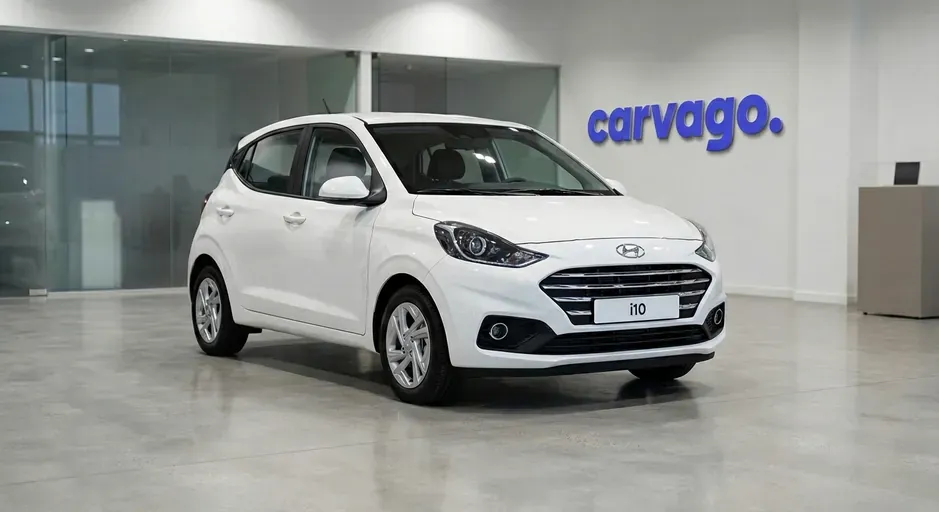
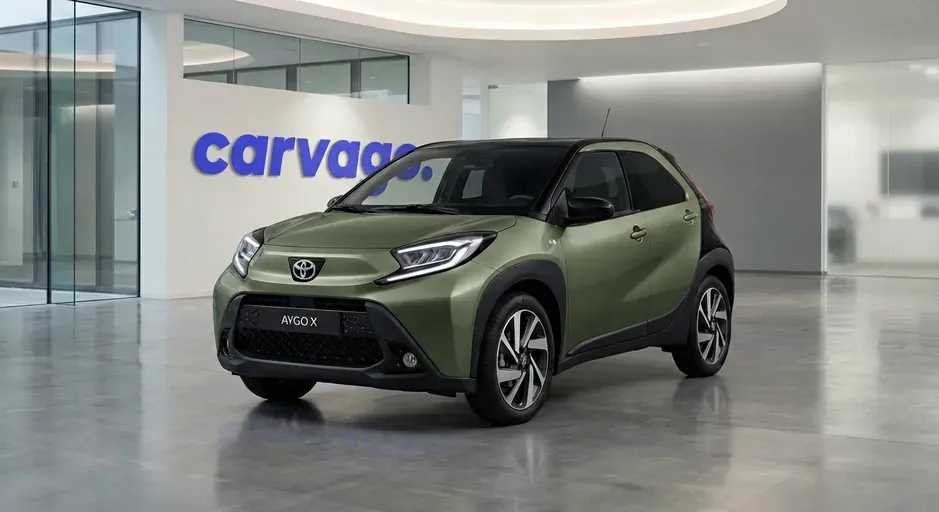
The Hyundai i10, a practical and well-equipped representative of city cars, challenges the Toyota Aygo X with its bold crossover design and playful character. Dive into our detailed comparison to help you decide which of these two small giants is the right one for you.
Looking at the exterior dimensions, the fundamental difference in the concept of both cars is immediately apparent. While the Hyundai i10 is a typical example of a classic city hatchback, the Toyota Aygo X confidently plays the part of a small crossover. This difference is reflected in all key parameters and fundamentally affects both practicality and driving performance.
The Toyota Aygo X is slightly larger in all respects than its Korean competitor. With a length of 3700 mm, it surpasses the i10 by about 3 centimetres, which is a negligible difference in this category and will have a minimal effect on parking. It is more noticeable in width, where the Aygo X offers 5.5 cm more, promising a slightly more spacious interior in the shoulder area. However, the most dramatic difference is in height – the Toyota is more than 7 centimetres taller, which, along with a 12.5 cm longer wheelbase, enhances its robust stance and makes getting in easier.
For the driver, this means a clear choice. The Hyundai i10 remains true to the traditional values of the smallest cars – it is maximally compact and agile, ideal for weaving through narrow streets and finding tiny parking spots. In contrast, the Aygo X offers the feel of a larger car with a better view thanks to a higher seating position, which many drivers will appreciate in the city. Its larger dimensions give it a more mature look on the road, but at the cost of slightly less agility compared to the i10.
| Parameter | Hyundai i10 (3rd generation) | Toyota Aygo X |
|---|---|---|
| Length (mm) | 3670 - 3675 | 3700 |
| Width (mm) | 1680 | 1740 |
| Height (mm) | 1480 - 1483 | 1525 |
| Wheelbase (mm) | 2425 | 2430 |
When choosing a small city car, practicality and boot size often play a decisive role. And it is in this discipline that one of the key differences between the Hyundai i10 and the Toyota Aygo X becomes apparent. While both models are designed primarily for navigating narrow streets, the Hyundai i10 maintains a slight lead in cargo capacity, making it a slightly more versatile companion.
If we look at the specific numbers, the third-generation Hyundai i10 has a basic boot volume of 252 litres. This is a very respectable figure for its class. In contrast, the Toyota Aygo X offers only slightly less, specifically 231 litres. The 21-litre difference is not dramatic in practice, but it still means space for one extra shopping bag in favour of the Hyundai.
The i10's lead increases when the rear seats are folded down. In this case, the Hyundai offers up to 1050 litres, allowing for the transport of even quite bulky items. The Toyota Aygo X reaches a value of 829 litres in this configuration. Although this is also sufficient for occasional needs, the Hyundai i10's larger and more usable space makes it a more practical car for those who expect maximum flexibility from their small car.
| Parameter | Hyundai i10 Hatchback | Toyota Aygo X |
|---|---|---|
| Basic volume (litres) | 252 | 231 |
| Max. volume with folded seats (litres) | 1050 | 829 |
When choosing a city car, trailer weight is not usually among the main criteria. However, there is a fundamental difference between the Hyundai i10 and the Toyota Aygo X in this regard, which may be decisive for some buyers. While the i10 offers at least a basic level of versatility for occasional towing, the Aygo X completely excludes this option.
The third-generation Hyundai i10 (from 2020) is capable of towing a braked trailer weighing up to 300 kg and an unbraked one up to 450 kg. These are not figures that would allow you to tow a caravan, but for practical needs, such as taking garden waste or materials from a DIY store on a small trailer, it is perfectly sufficient. This capability gives the car an extra practical dimension.
On the other hand, the Toyota Aygo X is not approved for towing a trailer at all. Its towing capacity is officially zero for both braked and unbraked trailers. The Aygo X is therefore a pure city specialist, designed exclusively for transporting people and cargo inside the car. So, if you are even theoretically considering that you might need to attach a trailer to your car someday, the Aygo X is not a suitable choice for you, and the clear winner in this comparison is the Hyundai i10.
| Model and Engine | Braked Trailer Weight (kg) | Unbraked Trailer Weight (kg) |
|---|---|---|
| Hyundai i10 (3rd generation) | 300 | 450 |
| Toyota Aygo X (1st generation) | 0 (not approved) | 0 (not approved) |
When it comes to engine choice, the paths of the Hyundai i10 and Toyota Aygo X diverge completely. While Hyundai offers customers a choice of several petrol engines, including a sporty turbocharged version, Toyota bets on simplicity and offers a single, time-tested naturally aspirated unit. This different strategy clearly targets different types of drivers. The choice is thus between the wider customisation options of the i10 and the straightforward, economy- and reliability-focused offering of the Aygo X.
For the third generation of the i10 (from 2020), Hyundai offers an exclusively petrol engine lineup that can satisfy both calm drivers who primarily navigate the city and those who require a more spirited ride. The base is the 1.0 MPi three-cylinder, ideal for urban traffic. The golden mean is the 1.2 MPi four-cylinder, which provides more refinement and power for driving outside the city. The top of the range is the turbocharged 1.0 T-GDI three-cylinder for the sporty N Line version, which turns the small hatchback into a surprisingly agile car. All engines are paired with a five-speed manual transmission as standard, with a five-speed automated manual transmission (AMT) also available for the naturally aspirated variants.
| Engine Type | Fuel | Power (kW) | Torque (Nm) | Transmission |
|---|---|---|---|---|
| 1.0 MPi | Petrol | 49 | 96 | 5MT / 5AMT |
| 1.2 MPi | Petrol | 62 | 118 | 5MT / 5AMT |
| 1.0 T-GDI | Petrol | 74 | 172 | 5MT |
Toyota has taken a completely different approach for its smallest crossover, the Aygo X (produced since 2022), offering only a single engine. It is the naturally aspirated 1.0-litre 1.0 VVT-i three-cylinder, which is an evolution of the reliable and economical unit known from previous generations. With 53 kW of power, it is primarily intended for urban and suburban driving, where it rewards with low consumption. Customers can choose between a five-speed manual transmission and an S-CVT continuously variable automatic transmission, which offers a smoother ride than the competitor's automated manual.
| Engine Type | Fuel | Power (kW) | Torque (Nm) | Transmission |
|---|---|---|---|---|
| 1.0 VVT-i | Petrol | 53 | 93 | 5MT / S-CVT |
Choosing the right engine is key to long-term satisfaction with the car. Our recommendations are based on a combination of performance, real-world fuel consumption, owner feedback, and mechanical reliability. In the smallest car segment, where both models compete, simplicity and low running costs are paramount. Hyundai offers more options here, while Toyota bets on a single, but proven, card.
While the basic one-litre three-cylinder is sufficient for purely urban driving, the 1.2-litre four-cylinder represents the ideal compromise and the best choice in the range. Its main advantage is noticeably greater refinement and smoother running, which you will appreciate not only in the city but especially on occasional trips outside of it. The engine picks up more readily from low revs and has more power on the motorway, so you feel safer when overtaking.
With the Aygo X, Toyota has simplified the choice to a single possible engine. But that's not a problem at all, because it is one of the most reliable and economical units in its class. The engine, designated 1KR-FE, is time-tested and has been refined to near perfection. Its characteristic three-cylinder sound is audible at higher revs, but it suits the car's character.
The official fuel consumption figures provided by manufacturers are one thing, but the actual numbers from real-world driving can be different. To get the most accurate picture, we looked at data from drivers themselves, primarily from databases like the German Spritmonitor.de. For cars like the Hyundai i10 and Toyota Aygo X, which are aimed at city driving, real-world consumption is a key factor for low running costs. This comparison pits the third-generation i10 (from 2020) against the newer Aygo X (from 2022).
Both models are very similar in their base engine configurations and confirm their reputation as extremely fuel-efficient cars. The differences are minimal, but they do exist and can play a role when choosing a specific version.
| Model and Engine | Average Real-World Consumption (l/100 km) |
|---|---|
| Toyota Aygo X 1.0 VVT-i (53 kW) | 5.1 |
| Hyundai i10 1.0 MPi (49 kW) | 5.4 |
| Hyundai i10 1.2 MPi (62 kW) | 5.8 |
| Hyundai i10 1.0 T-GDI (74 kW) | 5.9 |
As the table shows, the most fuel-efficient car in this comparison is the Toyota Aygo X. Its simple and time-tested 1.0 VVT-i naturally aspirated three-cylinder engine averages just over five litres per 100 km. With a light foot, it's possible to drive for even less, while on the motorway, consumption can rise to six litres.
The Hyundai i10 offers a wider range of engines. The basic 1.0 MPi three-cylinder is only a few tenths of a litre thirstier than the engine in the Aygo and is perfectly suited for city driving. Those who often drive outside the city or with more passengers will appreciate the four-cylinder 1.2 MPi alternative. It provides noticeably better dynamics and a more refined operation, which comes at the cost of about half a litre more in consumption. At the top of the range is the turbocharged 1.0 T-GDI three-cylinder, which offers the best performance, but its consumption is most dependent on driving style. In calm driving, it can get close to the naturally aspirated versions, but when using its potential, it will ask for more fuel, averaging just under the six-litre mark.
For the typical user looking for a car primarily for the city and shorter trips, the fuel consumption of both models is excellent. The differences between the Aygo X and the basic i10 are negligible in practice, and fuel running costs will be almost identical. Therefore, consumption should not be the main deciding factor. The choice is more likely to come down to whether you prefer the simplicity and slightly lower consumption of the Aygo X, or the wider choice of engines and the option of a more powerful four-cylinder or turbocharged variant with the Hyundai i10.
When looking at the price tags of used cars, a fundamental difference between the two models becomes clear. The Hyundai i10, as a longer-established model on the market, generally offers a wider price range and more affordable entry-level versions. In contrast, the Toyota Aygo X, being a newer car with a crossover concept, holds a slightly higher price, reflecting its more modern design and richer standard equipment.
The third-generation Hyundai i10, produced since 2020, is well-established in the used car market. This allows potential buyers to choose from a larger number of cars with varying mileage and equipment levels.
The Toyota Aygo X entered the market in 2022, so in the used car market, we encounter newer vehicles. Its price is slightly higher on average, which is due not only to the model's novelty but also to its richer standard safety and comfort equipment.
| Model | Approximate Price Range (approx. 4-year-old cars) | Key Price Factors |
|---|---|---|
| Hyundai i10 | €9,000 - €12,000 | Lower starting price, wider selection, price is highly dependent on engine and equipment. |
| Toyota Aygo X | €10,000 - €13,000 | Newer model, richer standard equipment, attractive crossover design. |
When evaluating safety, it is important to realise that although both cars have undergone Euro NCAP crash tests, their results are not directly comparable. The protocols and difficulty of the tests become stricter over time, and therefore a more recent rating often means meeting more stringent criteria.
The third-generation Hyundai i10 was tested by Euro NCAP in 2020 and received a three-star rating. While this may seem disappointing, it's important to consider that the tests were conducted under a stricter methodology. The car performed well in child occupant protection (75%) but showed weaknesses in adult occupant protection (69%) and vulnerable road user protection (52%). The score for safety assist systems was 59%. Euro NCAP criticized, for example, the protection of the driver's chest in a frontal impact and the absence of a center airbag. Nevertheless, the i10 is equipped with the modern Hyundai SmartSense safety package, which includes Forward Collision-Avoidance Assist (FCA) with pedestrian detection, Lane Keeping Assist (LKA), and Driver Attention Warning (DAW).
The Toyota Aygo X underwent Euro NCAP testing in 2022 and came away with a solid four-star rating. This result, achieved under newer and more demanding criteria, is very good for the city car segment. The Aygo X excelled particularly in the safety assist systems category, where it scored 81%, a testament to its advanced safety equipment. Adult and child occupant protection were both rated at 78%, and vulnerable road user protection at 74%. The standard equipment on all versions includes the Toyota Safety Sense package, which features a Pre-Collision System with pedestrian and cyclist detection, Intelligent Adaptive Cruise Control, and Lane Trace Assist.
Although neither car achieved a full five-star rating, the Toyota Aygo X emerges from this comparison as the safer choice. It was tested two years later under stricter standards, and its results, especially in the areas of modern assistance systems and vulnerable road user protection, are more convincing. While the Hyundai i10 offers a decent suite of safety assistants, its lower score in occupant protection and older test date put it at a slight disadvantage.
| Parameter | Hyundai i10 | Toyota Aygo X |
|---|---|---|
| Year of Testing | 2020 | 2022 |
| Adult Occupant Protection | 69 % | 78 % |
| Child Occupant Protection | 75 % | 78 % |
| Vulnerable Road User Protection | 52 % | 74 % |
| Safety Assist Systems | 59 % | 81 % |
In addition to standard equipment, each model offers several unique features that can be decisive for the customer. While Hyundai focuses on comfort features from higher classes and a sporty touch, Toyota counters with a unique style and features for urban fun.
The Hyundai i10 aims to bring features previously reserved for more expensive cars into the smallest segment. It focuses on practicality, modern technology, and for more demanding drivers, it also offers a sporty version that is not just about looks.
The Toyota Aygo X abandons the traditional minicar concept and comes with a recipe for an urban crossover. A higher body, robust design, and several clever ideas make it a stylish and unmistakable vehicle for the urban jungle.
Advantages:
Disadvantages:
Advantages:
Disadvantages:
Based on our own CarAudit inspections, breakdown statistics, and user feedback, we have compiled an overview of the most common problems that used car buyers should watch out for. Neither of these city cars suffers from major and expensive faults, but a few recurring issues are worth mentioning.
The third-generation i10 maintains its reputation as a reliable car, but a few areas require extra attention when buying a used one. Most of the problems are of a minor nature.
Summary for the Hyundai i10: The problems are mostly minor and can be solved without large investments. The key is to check the condition of the clutch and the functionality of all electronics before buying.
The Toyota Aygo X benefits from the brand's reputation for reliability and uses proven technology. Nevertheless, it has had a few typical teething problems and recalls.
Summary for Toyota Aygo X: This is a very reliable car whose main potential weakness is the clutch life in city driving. Minor infotainment issues are usually solvable with software updates. It is absolutely essential to check the recall history before purchasing.
A thorough inspection is key when buying a used car and should not be underestimated, even with relatively reliable small cars. Here are a few specific points to focus on for these two models.
The Hyundai i10 offers a more spacious interior overall, especially in the rear seats, where adults can sit more comfortably. Additionally, the i10 is homologated for five passengers, while the Toyota Aygo X can only carry four. This makes the i10 a more practical choice for those who occasionally need to transport more passengers.
The Hyundai i10 has a larger boot with a capacity of 252 litres. The Toyota Aygo X offers slightly less, specifically 231 litres. Although the difference is not dramatic, the i10 provides more space for shopping or luggage.
Both cars are very economical. According to data from real users, the Toyota Aygo X has a slightly lower average fuel consumption (approx. 5.1 l/100 km) compared to the basic Hyundai i10 (approx. 5.4 l/100 km). Fuel running costs will be very low for both models, with a slight advantage for the Toyota.
The Hyundai i10 is often rated as the car with better and more enjoyable driving characteristics. It also offers a wider range of engines, including more powerful variants that provide better acceleration than the single engine available for the Aygo X. The Aygo X, on the other hand, is fully focused on calm and economical city driving.
Both brands are renowned for their reliability, and the differences are minimal. Breakdown statistics from the German TÜV show that the Toyota Aygo has a slightly lower percentage of faults in the 1-3 year and 4-5 year old vehicle categories. However, the Hyundai i10 is still a highly reliable car.
For small families, the Hyundai i10 is clearly the more suitable choice. The reason is its more spacious interior with room for five passengers and a larger boot. The Toyota Aygo X is more of an ideal choice for individuals or couples who do not need as much interior space.
Sources: ADAC, idnes.cz, lidovky.cz, techfocus.cz, autozive.cz, autosport.cz
This article was prepared using artificial intelligence tools. The section guarantor is Petr Dušek.
Hyundai i20 vs Suzuki Swift: Which hatchback is better? Our detailed comparison of equipment, ride, and price will help you choose. Read the verdict.
Apr 13, 2026
Škoda Fabia vs. Toyota Yaris. A detailed comparison of engines, features, and prices. Find out which of these popular small cars is the right one for you.
Apr 13, 2026
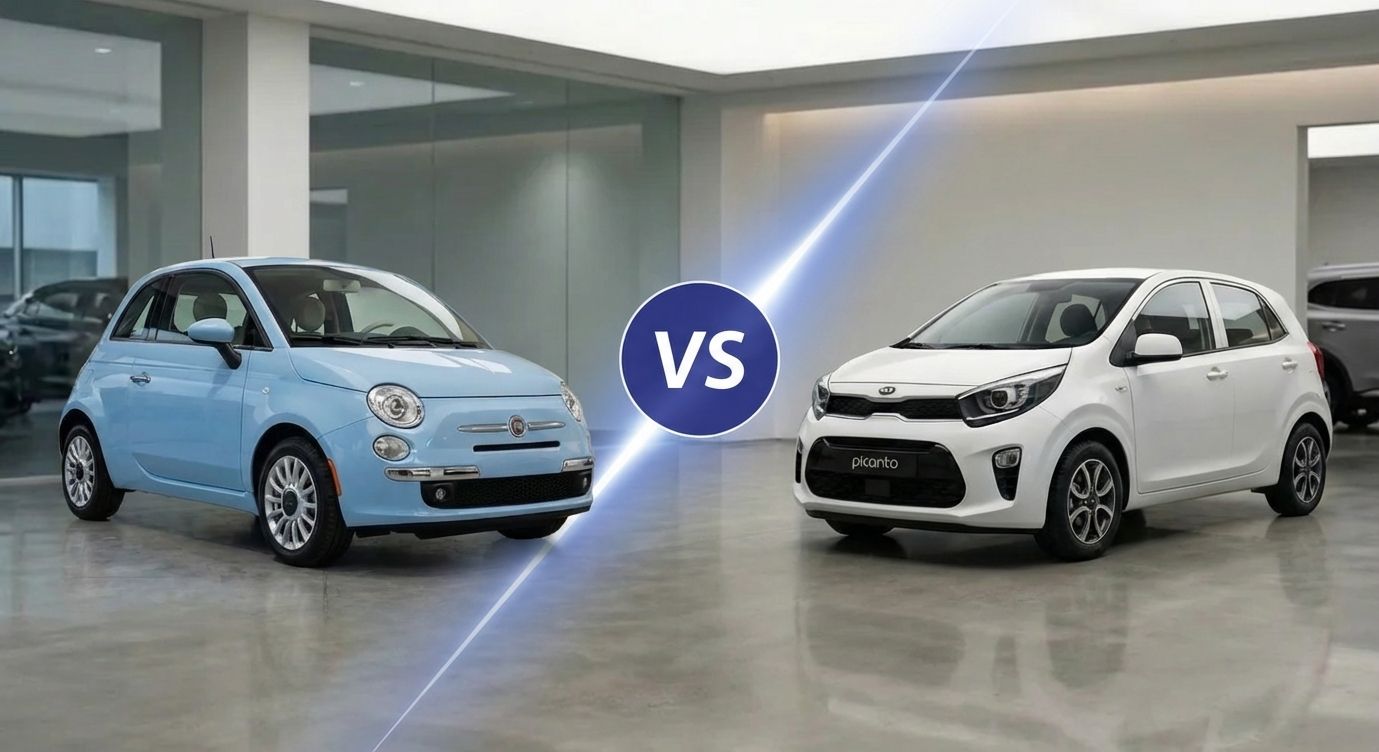
Fiat 500 or Kia Picanto? Our detailed comparison will help you choose the right city car. Detailed tests, features, and verdict.
Apr 14, 2026