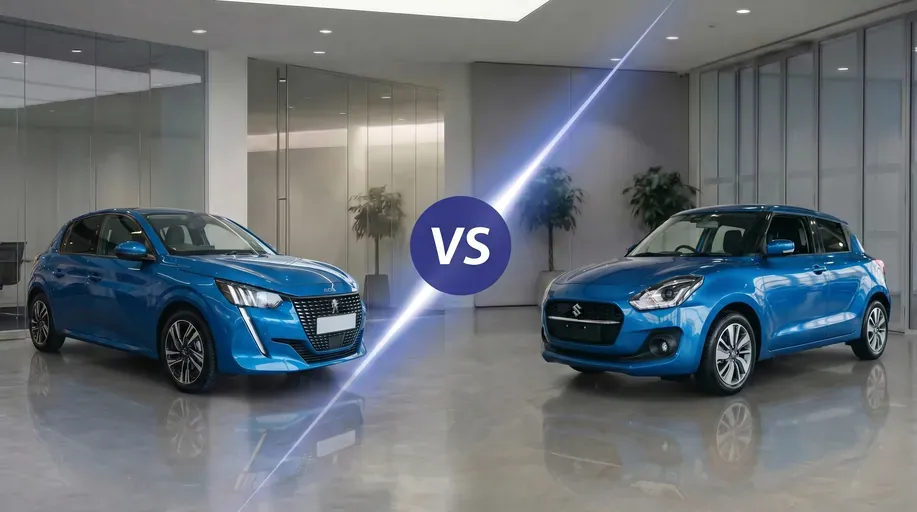
Car battle
Peugeot 208 vs. Suzuki Swift: Complete comparison 2026
Detailed comparison: Peugeot 208 vs. Suzuki Swift. Which used hatchback has better fuel economy, reliability, and equipment? We will help you choose in our verdict.
May 10, 2026
Articles
Car battle
Detailed comparison of Citroën C3 vs Seat Ibiza. We reveal real-world experiences with used cars, differences in engines and equipment. Find out which hatchback is the better choice.
May 21, 2026
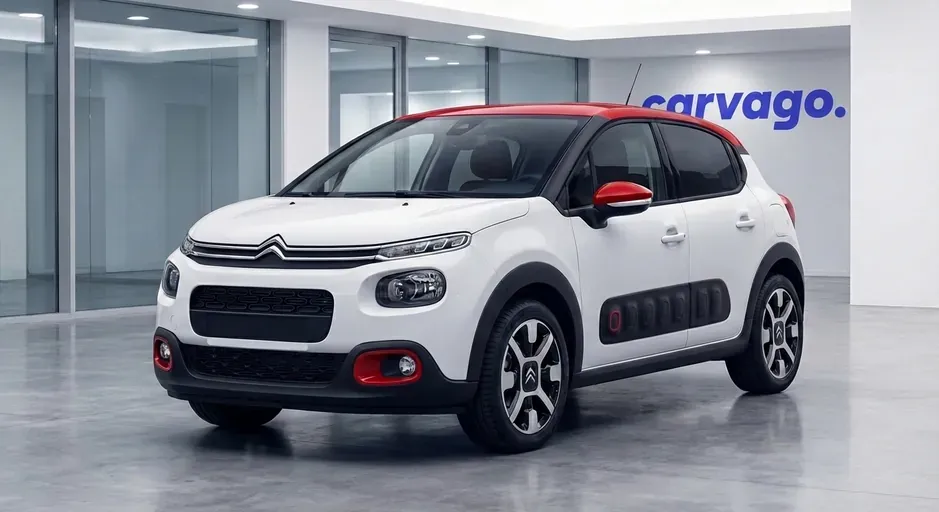
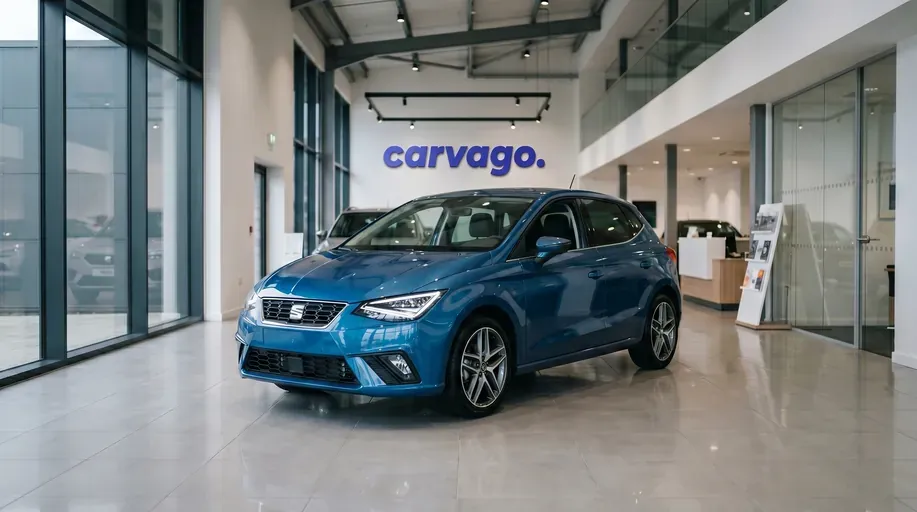
The Citroën C3 is a stylish and comfort-oriented French hatchback that easily catches the eye on the road with its unmistakable design and emphasis on a comfortable ride. Standing against it is the SEAT Ibiza, a spirited Spanish representative utilizing reliable Volkswagen Group technology, which attracts drivers primarily with its more dynamic appearance and sharper handling. Let's take a detailed look at which of these popular B-segment cars offers a better price-to-value ratio on the used car market for your daily commutes.
When choosing a roughly four-year-old used car, we focus on the modern generations of both models, which are most commonly found on the market. For the Citroën C3, it is the popular third generation (produced between 2017 and 2024), while the Seat Ibiza is represented by the current generation with the code name KJ (from 2017 to the present). Although both cars fall into the same category of small city hatchbacks, in terms of physical proportions, they are deceptive and represent two different philosophies. The Seat Ibiza is 63 mm longer (measuring 4059 mm) and 31 mm wider than its French competitor. In practice, this means that the Spanish car offers a more mature feel in its proportions and a slightly airier interior in the shoulder area. In contrast, the more compact length of 3996 mm for the Citroën C3 represents an indisputable advantage in the daily struggle for narrow parking spaces in crowded city streets.
While the Seat scores in overall body length and width, the Citroën C3 clearly takes the lead in the vertical direction. With a height of 1474 mm, it is a significant 27 to 30 mm taller than the Ibiza. This difference has a direct impact on passenger comfort – the Citroën is simply a bit easier to get into, and the driver benefits from a slightly higher seating position, which improves the overall view of city traffic. The Seat, on the other hand, with a height not exceeding 1447 mm, maintains a sportier, low-slung stance.
The wheelbase also plays a crucial role in overall driving performance, being one of the most important parameters for interior space and driving stability. The Seat Ibiza has a wheelbase of 2564 mm, which is 25 mm more than the Citroën C3 (2539 mm). The larger distance between the wheels of the Spanish hatchback, combined with its wider stance, ensures more confident cornering and much better directional stability at highway speeds. The exterior dimensions thus clearly define the ideal owner: the dimensional build of the Seat Ibiza favors drivers looking for more mature driving characteristics and who will more frequently use the space for rear passengers, while the taller and shorter Citroën C3 acts as an exceptionally agile and user-friendly companion primarily for urban mobility.
| Parameter | Citroën C3 Hatchback | Seat Ibiza Hatchback |
|---|---|---|
| Width (mm) | 1749 | 1780 |
| Length (mm) | 3996 | 4059 |
| Height (mm) | 1474 | 1444 - 1447 |
| Wheelbase (mm) | 2539 | 2564 |
Luggage space is often a deciding factor for small city hatchbacks, especially if the car is to serve as the main or even the only car in the family. Although these cars are primarily intended for the city, a difference of a few dozen liters can mean a thin line between comfortably packing for a weekend holiday and having to make painful compromises. In terms of everyday practicality, every centimeter counts, and both manufacturers have approached this task slightly differently.
The third-generation Citroën C3 (manufactured between 2017–2024, which ideally covers the four-year-old used car market) offers a luggage compartment with a volume of 300 liters in its basic configuration. This value represents a solid class average, which is quite sufficient for a regular weekend shopping trip or a shorter trip for two. After folding the rear backrests, the transport capacity can be increased up to 922 liters. The shape of the trunk is relatively regular, however, it is necessary to count on a slightly higher loading sill and the fact that a completely flat surface is not created after folding the seats.
The current fifth-generation Seat Ibiza (designated as KJ, on the market since 2017), on the other hand, is the embodiment of spatial generosity and makes the most of the shared VW Group platform. Its trunk holds a great 355 liters in its standard state, which for the average user means real space for several extra suitcases and a value that catches up with cars from a higher segment. The maximum volume after folding the rear seats is a generous 1165 liters. However, be careful when choosing specific engines – if you go for the more ecological variant on compressed natural gas (1.0 TGI), the trunk volume will decrease to a below-average 262 liters (or 1072 liters after folding the seats) due to the installation of tanks.
In a direct comparison of practicality, the Seat Ibiza emerges as the clear winner. If you are looking for a car that can withstand even larger transport challenges or weekend family trips, the volume lead of the Spanish model is very noticeable in practice.
| Parameter | Citroën C3 Hatchback | Seat Ibiza Hatchback |
|---|---|---|
| Basic volume (liters) | 300 l | 355 l |
| Maximum volume after folding seats (liters) | 922 l | 1165 l |
While the Citroën C3 offers a rather average trunk ideal for city shopping, the Seat Ibiza with a volume of 355 liters can easily handle the role of a smaller family car, in which you can pack everything you need for a holiday.
Trailer weight, or towing capacity, is an often overlooked parameter in the small city hatchback segment. Yet it is precisely this that fundamentally affects the overall practicality for drivers with an active lifestyle. If we compare roughly four-year-old used cars of both models – namely the third-generation Citroën C3 and the Seat Ibiza generation KJ – we encounter a completely different technical approach from both manufacturers.
The Citroën C3 is very reserved in terms of towing and offers rather limited basic values. The standard braked trailer weight for the entry-level 1.2 PureTech 83 petrol engine is a modest 450 kg. More powerful versions with the turbocharged 1.2 PureTech 110 engine or the 1.5 BlueHDi 100 diesel unit (usually in conjunction with the Stop&Start system) push this limit to a maximum of 600 kg. In the case of an unbraked trailer, the structural ceiling for the French model is a limit of 450 kg across all power units.
The Seat Ibiza, on the other hand, is designed much more robustly and pleases with a significant towing reserve. Even with the basic naturally aspirated 1.0 MPI three-cylinder, you can safely hitch a braked trailer weighing 800 kg. The popular turbocharged 1.0 TSI engines push the maximum possible load to 1,000 to 1,100 kg. The pinnacle is the powerful 1.5 TSI four-cylinder, with which the Ibiza can tow a respectable 1,200 kg on the hook. This is naturally seconded by a more generous limit for unbraked trailers, the value of which for the Seat ranges from approximately 560 to 610 kg. However, you must be careful with the eco-friendly 1.0 TGI version (compressed natural gas drive). This variant lacks the necessary homologation and the installation of a tow bar is not permitted, so towing capacity values are completely absent.
While the capacity of the Citroën C3 is primarily suitable for a light trailer with leaves or as a stable base for a bicycle rack, the Seat Ibiza pushes the boundaries of the class with its tolerable load. Its higher payload easily creates welcome space for a few extra suitcases in a heavier cargo trailer, and in terms of travel, the more stable Spanish car is uncompromisingly sufficient for weekend shopping as well as a longer holiday with a hitched caravan.
Summary: If you occasionally require your car to stand up to the role of both a work and family workhorse, the Seat Ibiza, which easily surpasses the magic one-ton mark, is an incomparably more practical choice than its French competitor.
| Model and motorization | Braked weight of trailer (kg) | Unbraked weight of trailer (kg) |
|---|---|---|
| Citroën C3 1.2 PureTech 83 (61 kW) | 450 | 450 |
| Citroën C3 1.2 PureTech 110 (81 kW) | 450 - 600 | 450 |
| Citroën C3 1.5 BlueHDi 100 (75 kW) | 600 | 450 |
| Seat Ibiza 1.0 MPI (59 kW) | 800 | 560 |
| Seat Ibiza 1.0 TSI (70 - 85 kW) | 1000 - 1100 | 570 - 590 |
| Seat Ibiza 1.5 TSI (110 kW) | 1200 | 610 |
When choosing a roughly four-year-old used car in terms of engines, you will encounter two quite different engineering approaches. While the French representative relies primarily on proven turbocharged PureTech three-cylinders with great low-end pull and still offers an economical diesel for high-mileage drivers, the Spanish competitor (benefiting from the advanced Volkswagen Group platform) counters with a slightly wider range, including lightning-fast DSG dual-clutch automatics and a powerful petrol four-cylinder. Both cars feature naturally aspirated petrol three-cylinders as their base engines. While these are exceptionally reliable and ideal for cheap city commuting, they quickly run out of steam on the highway or when fully loaded. A significant difference between the two models arises as soon as you desire dynamics – the Ibiza will satisfy even sportier drivers with its top-of-the-line 1.5 TSI engine producing 110 kW, while the C3 maintains a rather calm, strictly comfort-oriented character, with a power ceiling of 81 kW.
Under the hood of a roughly four-year-old Citroën C3, the PureTech petrol engine family plays the leading role. The absolute base is the naturally aspirated 1.2 PureTech 83 three-cylinder with 61 kW, which is low-maintenance and perfectly suited for defensive driving in suburban traffic. However, if you leave the city limits more often, the modern turbocharged 1.2 PureTech 110 (81 kW) version makes much more sense. It gives the lightweight car decent flexibility and, on the used market, can be paired with a traditional, smooth-shifting six-speed EAT6 torque converter automatic, which perfectly complements the soft and supple suspension. A significant rarity and advantage in the small car segment is the availability of the 1.5 BlueHDi 100 (75 kW) diesel four-cylinder. Despite the general retreat of diesels among small hatchbacks, the C3 kept it throughout the current generation's life cycle, and it excels with outstanding fuel economy for highway mile-munchers.
| Engine | Fuel | Power (kW) | Torque (Nm) | Transmission |
|---|---|---|---|---|
| 1.2 PureTech 83 | Petrol | 61 | 118 | 5MT |
| 1.2 PureTech 110 | Petrol | 81 | 205 | 6MT / 6EAT |
| 1.5 BlueHDi 100 | Diesel | 75 | 250 | 6MT |
For roughly four-year-old used cars, the SEAT Ibiza relies exclusively on the popular EVO family of group engines, covering a very wide range of drivers. The most affordable choice is the 1.0 MPI (59 kW) naturally aspirated engine. While it doesn't dazzle with its paper specs, it scores points for absolute reliability and minimal maintenance requirements. The center of attention and the absolute ideal in terms of operation and performance is the turbocharged 1.0 TSI three-cylinder, available on the market in 70 kW or the more powerful 81 kW versions. For both variants of the turbocharged one-liter, the popular and fast seven-speed DSG automatic could be chosen. For more demanding drivers, the Ibiza has a powerful, very refined 1.5 TSI four-cylinder with an impressive 110 kW up its sleeve, turning it into a very brisk ride. An alternative for maximum cost reduction is the 1.0 TGI (66 kW) variant running on compressed natural gas (CNG). If you were to long for the popular and time-tested 1.6 TDI (70 kW) diesels in the Ibiza, you will only find them in older listings – since the summer of 2020, the manufacturer quietly phased this engine out of the price lists for good.
| Engine | Fuel | Power (kW) | Torque (Nm) | Transmission |
|---|---|---|---|---|
| 1.0 MPI | Petrol | 59 | 93 | 5MT |
| 1.0 TSI | Petrol | 70 / 81 | 175 / 200 | 5MT / 6MT / 7DSG |
| 1.5 TSI | Petrol | 110 | 250 | 7DSG |
| 1.0 TGI | Petrol / CNG | 66 | 160 | 6MT |
| 1.6 TDI | Diesel | 70 | 250 | 5MT / 7DSG |
While the Citroën C3 pragmatically scores points with the availability of an economical diesel and focuses more on calm and comfortable travel, the SEAT Ibiza will please those of you who appreciate lightning-fast DSG dual-clutch automatics and want a more powerful drive with the available 1.5 TSI four-cylinder.
Choosing the right engine is a key step for long-term satisfaction with a car, which is why our recommendations are based on real-world experience with performance, fuel consumption, owner feedback, and mechanical reliability. While the Citroën C3, in the case of roughly four-year-old used cars, relies primarily on the somewhat controversial but very driver-friendly PureTech three-cylinder engines, the Seat Ibiza from the same period benefits from the excellent and exceptionally reliable EA211 engine family. It is very interesting that even though both models offer power-wise similar 1.0 and 1.2-liter three-cylinders, their design approach differs fundamentally – the French unit uses a specific timing belt immersed in engine oil (a so-called "wet belt"), while the Spanish competitor with VW Group technology sticks to a classic dry belt, which completely changes the rules of the game for regular maintenance.
This turbocharged three-cylinder is the best compromise for daily use that you will find under the hood of the third-generation Citroën C3. Compared to the weaker naturally aspirated version, it offers confident driving dynamics and doesn't lose its breath even on highway inclines.
In the case of the fifth-generation Seat Ibiza (type KJ), the turbocharged 1.0 TSI three-cylinder is the absolute king of the range and belongs to the very best that can be purchased on the four-year-old used car market in the small car segment.
When choosing a used car, it is important to keep in mind that official fuel consumption figures provided by manufacturers often deviate from what you will experience in real-world traffic. Laboratory measurements and standardized tests cannot always accurately simulate the dynamics of daily commuting, traffic jams, or the influence of weather. For the most accurate comparison, we have used data from drivers themselves from the independent community portal Spritmonitor.de. We focused on roughly four-year-old used cars (manufactured around 2022), which are currently among the most sought-after on the secondary market – namely the third generation of the Citroën C3 and the fifth generation of the Seat Ibiza (KJ).
| Model and engine | Average consumption (l/100 km) | Source |
|---|---|---|
| Naturally aspirated petrol engines | ||
| Citroën C3 1.2 PureTech 83 | 5,8 | Spritmonitor.de |
| Seat Ibiza 1.0 MPI | 5,9 | Spritmonitor.de |
| Turbocharged petrol engines | ||
| Seat Ibiza 1.0 TSI | 5,7 | Spritmonitor.de |
| Citroën C3 1.2 PureTech 110 | 6,2 | Spritmonitor.de |
| Seat Ibiza 1.5 TSI | 6,2 | Spritmonitor.de |
| Diesel engines | ||
| Citroën C3 1.5 BlueHDi 100 | 4,5 | Spritmonitor.de |
Several very interesting trends can be read from the collected user data. A surprising finding is that the entry-level naturally aspirated three-cylinder engines (1.2 PureTech 83 in the Citroën and 1.0 MPI in the Seat) bring practically no fuel savings compared to their turbocharged siblings. As soon as these weaker engines leave the undemanding urban environment and have to face highway speeds or higher loads, their real-world consumption grows noticeably. Conversely, the modern turbocharged 1.0 TSI engine under the hood of the Seat Ibiza proves to be an excellent and economical all-rounder, which, even with higher power, manages to drive at an average of an excellent 5,7 liters per hundred kilometers. Citroën's three-cylinder turbo engine, the 1.2 PureTech 110, is slightly thirstier in the real world and, surprisingly, its consumption is close to the much more powerful 1.5 TSI four-cylinder in the Spanish car. The absolute king of efficiency remains the 1.5 BlueHDi diesel engine in the Citroën C3, which easily maintains an average of around 4,5 l/100 km.
Clear recommendations follow from these findings for the average user. If you are primarily a city driver or looking for an undemanding car with a limited budget, the basic naturally aspirated versions will suit you perfectly, and the minimal differences in consumption will not threaten your wallet. For drivers who regularly commute longer distances and combine country roads with highways, it makes huge sense to go for the Seat Ibiza with the 1.0 TSI engine. This unit offers significantly better dynamics and flexibility while maintaining excellent fuel consumption. For highway travelers with a very high annual mileage, the economical diesel in the Citroën C3 is a strong attraction, as Seat dropped diesel engines from standard versions in the monitored fifth generation shortly after its launch.
In conclusion, fuel consumption itself is unlikely to be the pivotal factor that tips the purchase in favor of one brand or the other. Fuel costs are relatively balanced for both competitors. Far more crucial will be the right choice of engine tailored exactly to your driving profile – while the Seat scores with its brilliantly tuned 1.0 TSI, Citroën keeps an ace up its sleeve in the form of a legendarily economical diesel drive for a specific clientele.
When looking at the market for roughly four-year-old used cars (primarily 2021 and 2022 models), a clear difference in the residual value of both models is evident. While Citroën traditionally targets maximum affordability for a wide audience, SEAT maintains its price significantly higher thanks to the use of more advanced Volkswagen Group technology.
The third generation of the Citroën C3 represents a very attractive budget choice on the used car market with a rapid initial price drop.
Following its modernization, the SEAT Ibiza offers noticeably more mature driving characteristics and a more spacious interior, which, however, is reflected in a higher purchase price at used car dealerships.
| Model | Starting price (base) | Price of a well-equipped unit | Value loss |
|---|---|---|---|
| Citroën C3 | ~ €7,600 | ~ €11,500 | Faster price decline |
| SEAT Ibiza | ~ €7,800 | ~ €14,400 | Slower, holds its value |
In conclusion, the Citroën C3 offers an unrivaled price-to-car ratio in terms of age. With the Spanish SEAT, on the other hand, buyers pay extra for advanced technology, a wider range of more powerful engines, and sportier chassis tuning, which holds its market value better.
While the Citroën C3 attracts budget-oriented buyers with a low starting price below the €8,200 mark, the SEAT Ibiza will particularly please those customers who don't mind paying extra for more sophisticated driving characteristics and a slower loss of vehicle value.
When comparing the safety of used cars, buyers often automatically focus on achieving a five-star Euro NCAP rating. While this goal is a deciding factor for many drivers, it is absolutely essential to place the results in the correct temporal context. The methodology and testing protocols of independent tests have been constantly evolving and tightening over the years. Euro NCAP has gradually introduced stricter frontal crash simulations, more sophisticated cyclist detection, and emergency scenarios at intersections. For this reason, percentage scores from different years cannot be directly compared, as a car with a high rating from earlier years would face much more demanding obstacles in today's tests.
The third-generation Citroën C3 last underwent crash tests in 2017, when it earned a four-star rating by the standards of the time. The results show very decent basic passive protection for the occupants, but from today's perspective, the car in its basic trim lacks more advanced active safety systems, such as standard-fit autonomous emergency braking. This was noticeably reflected in the lower percentage rating for safety assistants at the time. Furthermore, given the date of the original test, the Euro NCAP safety certification for this model has already formally expired.
In contrast, the Seat Ibiza underwent a demanding re-evaluation in 2022, where it confidently defended its full five-star rating even under the strictest current rules. The new protocols include, for example, a collision with a mobile barrier or the investigation of the so-called "far-side" impact, which monitors the potential collision of the driver's and passenger's heads during a side impact. Although the Ibiza's percentage gains may seem comparable to the Citroën at first glance, they were actually achieved under disproportionately tougher conditions. The score thus reliably reflects a very modern rigid construction and the presence of the latest assistance features in the standard equipment.
From the overall comparison of both vehicles, it is clear that the Seat Ibiza provides a significantly more modern and comprehensive safety standard. While the Citroën C3 relies on an older structural design and a now-invalid certification, the Spanish hatchback offers substantially more advanced technology and better occupant protection according to current requirements, thanks to successfully passing the 2022 tests.
| Parameter | Citroën C3 | Seat Ibiza |
|---|---|---|
| Year of testing | 2017 | 2022 |
| Adult protection | 88 % | 83 % |
| Child protection | 83 % | 82 % |
| Vulnerable road users protection | 59 % | 66 % |
| Safety assist systems | 58 % | 70 % |
By successfully passing the exceptionally strict 2022 Euro NCAP tests, the Seat Ibiza represents a significantly safer and more technologically advanced choice for everyday driving.
In addition to standard equipment, each of the models offers several unique features that can be decisive for the customer during the final selection. Both cars bring customers much more than just basic mobility, with each of them forging its own distinct approach to added value and everyday use.
In the small car class, Citroën does not try to play a sporty note but focuses on what it has historically excelled at – absolute comfort, originality, and stress-free travel.
The Spanish representative benefits from advanced group technology and targets drivers who require a modern digital environment, precise ergonomics, and appreciate a more dynamic performance behind the wheel.
Exceptionally comfortable chassis and soft seats (Advanced Comfort technology)
Original and distinctive design with practical Airbump protective elements
Very favorable purchase price and available spare parts on the used car market
Economical 1.2 PureTech petrol engines ideal for the city
Wide range of exterior and interior personalization options
More pronounced body roll in corners due to overly soft suspension
Slower infotainment response and impractical climate control via the touchscreen
Limited legroom for rear-seat passengers
Older platform does not provide such mature driving characteristics at higher speeds
The Citroën C3 is an ideal choice for calmer drivers looking for maximum comfort, excellent bump absorption, and original style for city driving. It will primarily appeal to buyers who prefer a smooth ride and unconventional French charm over sportier cornering.
Excellent driving characteristics and agile steering thanks to the modern MQB A0 group platform
One of the most spacious interiors in its class with an above-average luggage compartment (355 liters)
Reliable, dynamic, and at the same time economical 1.0 TSI engines
Advanced infotainment with good connectivity and more intuitive button ergonomics
Overall maturity of the car, thanks to which the Ibiza holds its own even on longer highway trips
Firmer suspension tuning, which reduces comfort on broken roads (especially with larger wheels)
Slightly higher purchase price for used cars compared to French competitors
In lower trim levels, you will find a larger amount of cheap hard plastics
Subjectively more conservative design that doesn't stand out as much on the road
The Seat Ibiza will appeal to more demanding drivers who want to enjoy driving while needing a practical car for daily commuting. Thanks to its mature and confident driving characteristics, it represents a great compromise between an agile city car and a full-fledged hatchback for a small family.
Based on our own data from the CarAudit service, through which we perform an independent inspection of a car's technical condition before its sale, and in conjunction with breakdown statistics and long-term owner experience, we have compiled an overview of the most common problems that buyers of used cars around four years old should watch out for.
The third-generation Citroën C3 is a popular and comfortable city car, for which we recommend great caution when choosing a petrol engine and a thorough check of the onboard electronics.
The key to a reliable Citroën C3 is, above all, a documented and completely transparent service history. Otherwise, with the 1.2 PureTech petrol unit, you risk an expensive repair of clogged lubrication.
The fifth generation of the SEAT Ibiza shares modern Group technology with the Volkswagen Polo and Škoda Fabia models, which ensures solid mechanical reliability, but at the same time, it suffers from typical ailments of the MQB A0 platform.
The Ibiza is considered a reliable car, where mostly only minor technical and electronic quirks are a risk. When buying, pay the most attention to the smooth operation of the automatic transmission and the condition of the cooling system.
When buying a used car, a thorough inspection is key. Here are some specific points to focus on for these two models. Whichever one you choose, an independent technical inspection performed by an expert can save you a lot of money on future hidden defects.
Seat Ibiza offers a significantly larger luggage space with a volume of 355 liters, which is one of the best values in its class. Citroën C3 has a smaller trunk with a capacity of 300 liters and also has a slightly higher loading sill. For frequent transport of larger luggage or family shopping, the Spanish car is much more practical.
The Citroën C3 clearly stands out with its soft suspension and wide seats, thanks to which it absorbs city bumps excellently and offers above-average comfort. The Seat Ibiza, on the other hand, has a stiffer chassis tuned more for sportiness, which ensures excellent stability in corners but is harder on potholes. If you prefer a smooth and calm ride, the French model is the better choice.
In terms of long-term reliability of used cars, the VW Group 1.0 TSI engines in the Seat Ibiza fare better, as they are considered very durable and trouble-free. The Citroën C3 uses 1.2 PureTech units, where it is essential to strictly follow oil change intervals and monitor the condition of the timing belt immersed in oil. The Spanish competitor is thus a slightly safer choice with fewer risks in terms of gasoline engines.
The Seat Ibiza benefits from the modern MQB A0 platform and a long wheelbase, which ensures surprisingly generous interior space and plenty of legroom and headroom for rear passengers. In the Citroën C3, adult passengers in the back will feel more cramped, especially in the knee area. For regular travel with four adults, the Ibiza is the clear winner.
Both cars are very economical in terms of operating costs and are suitable for daily commuting. With one-liter gasoline engines, you can easily stay between 5.5 and 6 liters per 100 kilometers in real combined driving for both models. Differences in consumption are thus minimal and depend more on the driver's driving style and the chosen equipment.
Sources: ADAC, denik.cz, mdcr.cz, autoweb.cz, emobility.cz, motorsportrevue.cz
This article was prepared using artificial intelligence tools. The section guarantor is Petr Dušek.
Detailed comparison: Peugeot 208 vs. Suzuki Swift. Which used hatchback has better fuel economy, reliability, and equipment? We will help you choose in our verdict.
May 10, 2026
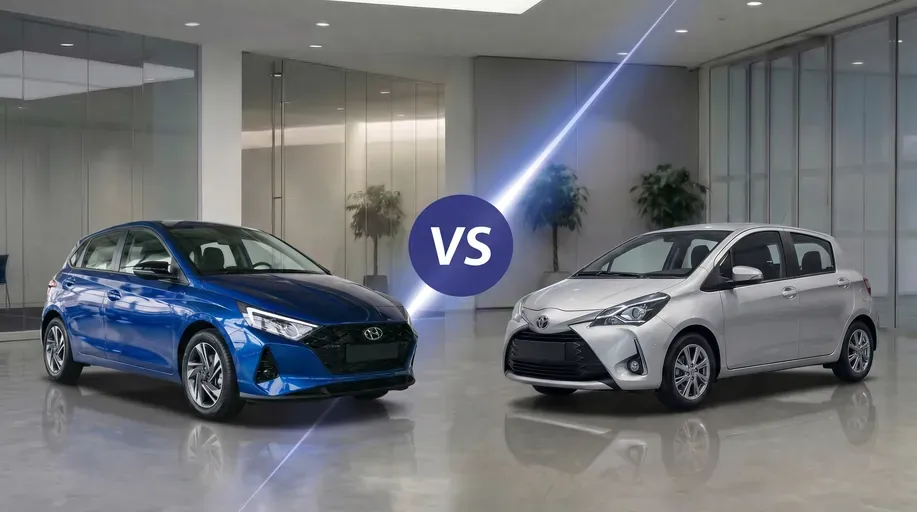
Detailed comparison of Hyundai i20 vs Toyota Yaris. Read our verdict and discover real-world data on fuel consumption, reliability, and equipment of these used cars.
Apr 18, 2026
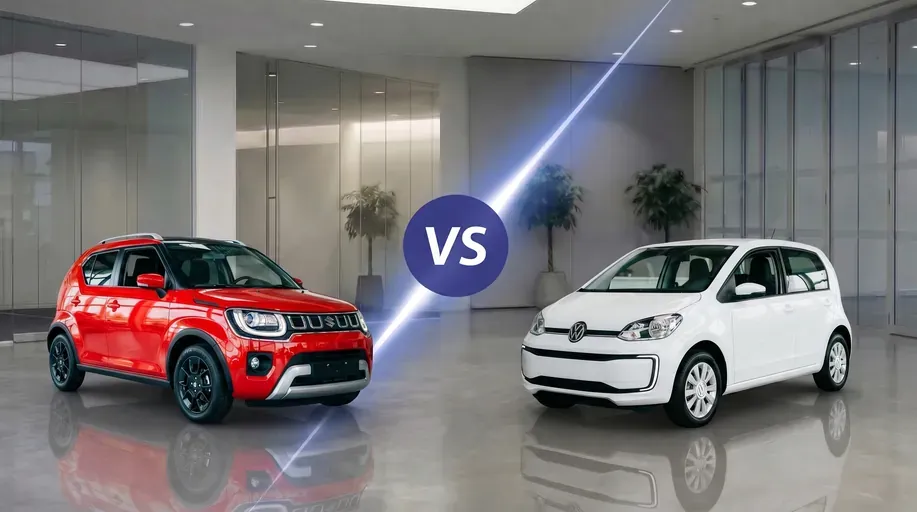
Detailed comparison of the Suzuki Ignis and Volkswagen up! (VW up!). Find out which used city car offers better reliability, real-world fuel consumption, and a clear verdict.
Apr 17, 2026