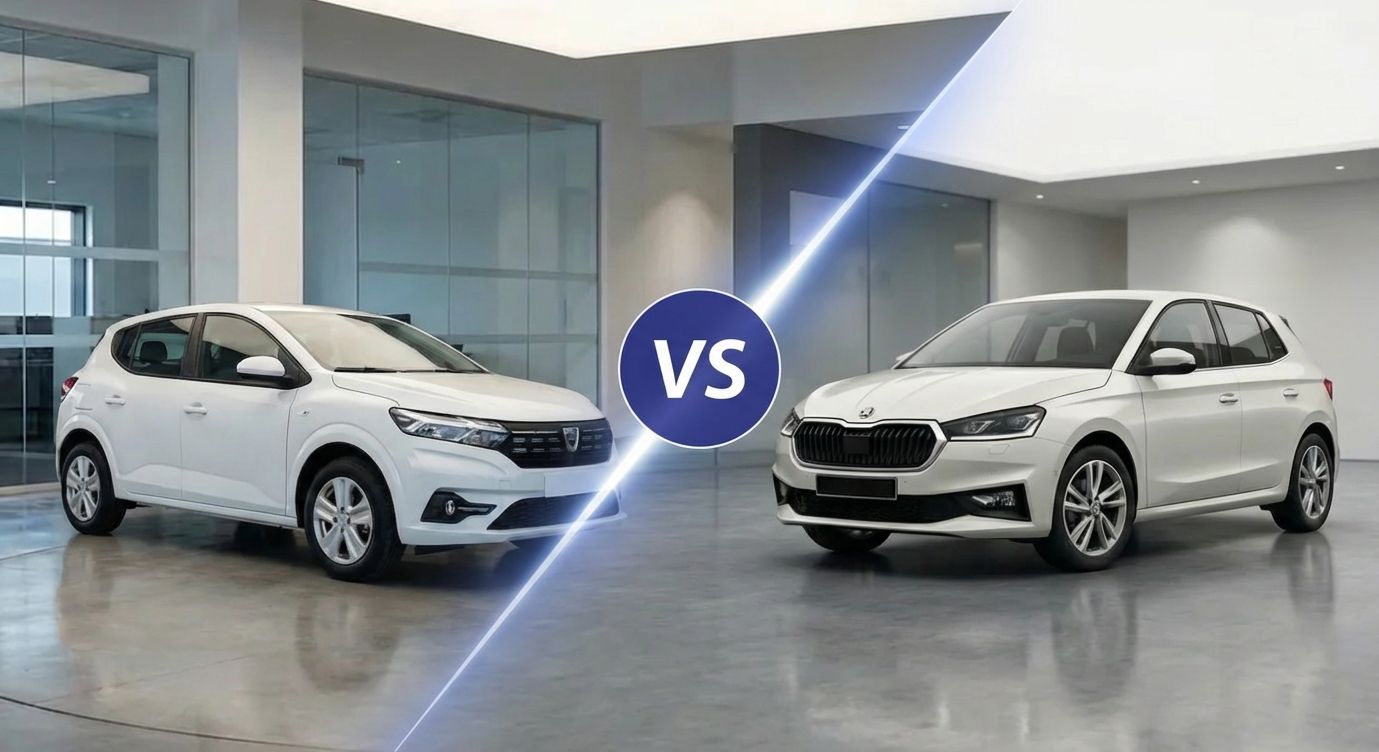
Car battle
Dacia Sandero vs. Škoda Fabia: Complete comparison 2026
Dacia Sandero vs. Škoda Fabia: Which car is better? We compare engines, equipment, and price. Our detailed verdict will help you choose.
Apr 14, 2026
Articles
Car battle
Detailed comparison of Hyundai i20 vs Toyota Yaris. Read our verdict and discover real-world data on fuel consumption, reliability, and equipment of these used cars.
April 18, 2026
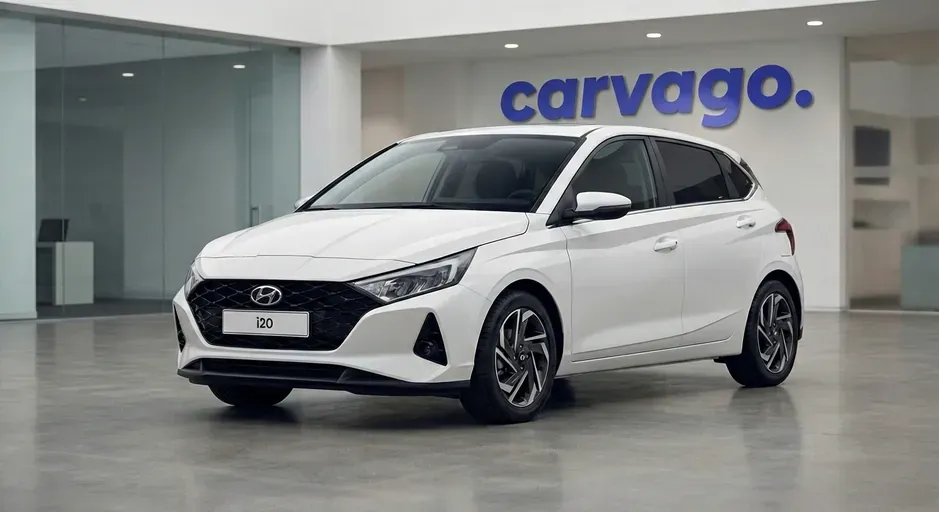
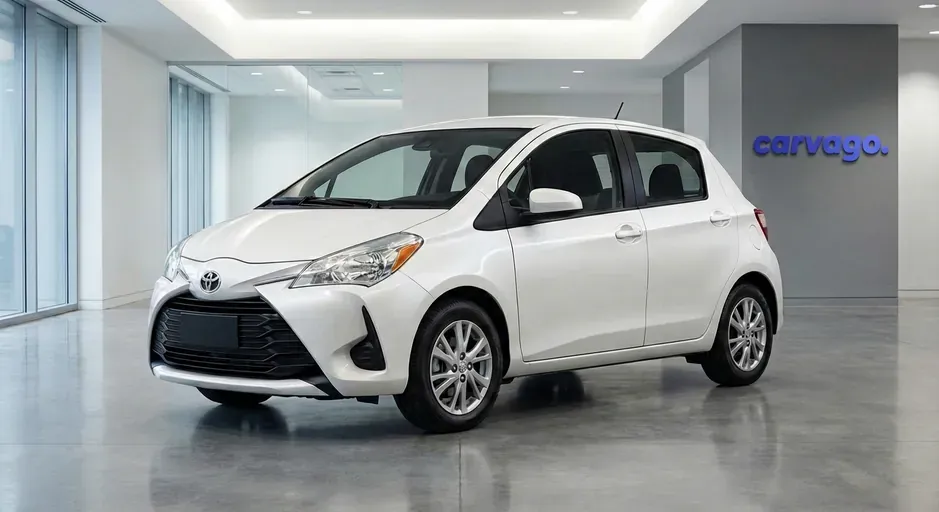
Hyundai i20, also known as the Elite i20 in some markets, is a stylish and technologically advanced hatchback that has established a strong position among small city cars over the years. Standing against it is the popular Toyota Yaris, a car globally renowned for its reliability and efficiency, which in the past or abroad was also sold under the names Toyota Vitz or Echo, and whose current hybrid technology is also available in Europe as the Mazda2 Hybrid. Let's take a detailed look at how these two popular B-segment representatives fare in a direct comparison and which of them represents a smarter choice for a used car purchase.
When looking at the exterior dimensions of roughly four-year-old used cars (the third-generation Hyundai i20 and the Toyota Yaris XP21 generation), we find that although both cars compete for customers' favor in the same small car segment, their overall philosophy differs slightly. While Hyundai tries to approach more mature compact cars from a higher class with its dynamic proportions, both visually and factually, the Toyota Yaris maintains a strictly urban character and bets on the shortest possible footprint, which facilitates daily maneuvering.
The most significant difference between the two models is the overall body length. The standard Hyundai i20 measures 4040 mm in length, which means it is exactly 100 mm longer than the standard Toyota Yaris (3940 mm). Furthermore, the South Korean representative is 30 mm wider and benefits from a 20 mm longer wheelbase (2580 mm compared to 2560 mm for the Toyota). In practice, these larger dimensions mean that the i20 gives a more stable and "planted" impression on the road. The longer wheelbase then becomes a key advantage in terms of interior layout, as it provides significantly more generous legroom for rear-seat passengers.
However, the Toyota Yaris successfully counters in the height parameter, where it exceeds its rival by 50 mm (1500 mm vs. 1450 mm). The taller body construction ensures slightly more comfortable and upright entry while providing more airiness in the head area for front passengers. Combined with the shorter overall length, the taller build makes the Yaris an absolute champion for weaving through tight city traffic and parallel parking in narrow gaps. In terms of overall choice, your personal priorities decide: for maximum agility and city parking, the shorter Yaris will be the ideal choice, while the wider and longer Hyundai i20 offers a more mature and stable alternative for drivers who more frequently hit the highways or regularly carry adult passengers in the back.
| Parameter | Hyundai i20 Hatchback | Toyota Yaris Hatchback |
|---|---|---|
| Width (mm) | 1775 | 1745 - 1805 |
| Length (mm) | 4040 - 4075 | 3940 - 3995 |
| Height (mm) | 1440 - 1455 | 1455 - 1500 |
| Wheelbase (mm) | 2580 | 2560 |
When choosing a compact B-segment car, luggage space often plays a key role, not only for daily shopping trips but also in terms of overall family usability and weekend travel. Although the Hyundai i20 and Toyota Yaris belong to the same automotive class, their approach to interior layout differs significantly. For many buyers in the used car market, this difference can be a major deciding factor. While one model aims for maximum transport capacity, the other prioritizes more compact exterior dimensions, which you will appreciate especially when parking in the city.
The 3rd generation Hyundai i20 (produced since 2020) is considered one of the clear leaders in its class regarding luggage space. In its standard configuration, it offers a respectable 352 litres, which is perfectly sufficient for weekend shopping and luggage for a longer holiday. Once you fold down the rear seatbacks, you get up to 1,165 litres of usable space. However, those interested in the fuel-efficient 48V mild-hybrid (MHEV) versions should take note. In these powertrains, the auxiliary battery is located under the boot floor, which takes up precious space and reduces the basic capacity to 262 litres and the maximum value to 1,075 litres.
The rival Toyota Yaris XP21 generation (also available since 2020) offers more modest parameters, stemming from its shorter rear section and overall sportier body style. The basic boot volume is 286 litres, and after folding the seats, it grows to a maximum of 768 litres. A major advantage of the Toyota Yaris, however, is that its popular and widely sold full-hybrid version does not reduce the boot space any further. The battery module found its ideal place under the rear seats, so the owner does not lose valuable litres or space for a few extra suitcases, which sometimes happens with partially electrified competitors.
| Parameter | Hyundai i20 Hatchback | Toyota Yaris Hatchback |
|---|---|---|
| Basic volume (litres) | 352 (262 for MHEV version) | 286 |
| Max. volume with seats folded (litres) | 1165 (1075 for MHEV version) | 768 |
The Hyundai i20 with a pure internal combustion engine clearly wins in terms of boot size; however, if you are looking for an efficient hybrid without compromising on luggage space, the Toyota Yaris represents a brilliantly engineered alternative.
The ability to tow a trailer is not always a given for small city hatchbacks, but for many buyers, it represents a key factor in terms of overall practicality. Whether you plan to transport garden waste or are considering a light caravan, the differences between four-year-old used cars (generations produced since 2020) in this class can be vast. A comparison of the Hyundai i20 and Toyota Yaris models shows a completely different approach by manufacturers to overall utility value.
The third-generation Hyundai i20 is surprisingly capable in this discipline and can even take on the role of a small workhorse. The standard naturally aspirated 1.2 engine can tow a braked trailer weighing between 610 and 910 kg. However, the maximum is offered by the turbocharged 1.0 T-GDI three-cylinder engines (including the 48V mild-hybrid versions) and the sporty i20 N variant, which boast a maximum capacity of up to 1,110 kg. In practice, this means space for several extra suitcases, or it is a value perfectly sufficient for a smaller caravan, transporting a motorcycle, or a heavier trailer with wood for the cottage.
The Toyota Yaris (XP21 generation), on the other hand, primarily reflects its focus on the most efficient city operation possible, which takes a significant toll on towing capacity. The highest values are achieved by the standard 1.5 petrol engine, which can tow a braked trailer weighing a maximum of 850 kg. For the base 1.0-litre engine, this value drops to 750 kg. However, the biggest compromise for those interested in a tow bar may be the most sought-after hybrid powertrain (1.5 Hybrid 116), whose braked capacity is limited to just 450 kg. The unbraked trailer limit for standard versions of both competitors is the same at 450 kg.
In practice, these tabular differences mean that while the Hyundai i20 easily allows for the full use of a braked cargo trailer even for longer holidays, the hybrid Yaris serves at most for installing a bike rack adapter or hauling the lightest garden waste. If a tow bar and the ability to pull heavier loads are a necessity for you, the South Korean representative simply represents an incomparably more versatile and practical choice.
| Model and Engine | Braked Trailer (kg) | Unbraked Trailer (kg) |
|---|---|---|
| Hyundai i20 1.2 (3rd Gen, 58-62 kW) | 610-910 | 450 |
| Hyundai i20 1.0 T-GDI (3rd Gen, 74-88 kW) | 910-1110 | 450 |
| Hyundai i20 1.0 T-GDI 48V (3rd Gen, 74-88 kW) | 1110 | 450 |
| Hyundai i20 N (3rd Gen, 150 kW) | 1110 | 450 |
| Toyota Yaris 1.0 (XP21, 53 kW) | 750 | 450 |
| Toyota Yaris 1.5 (XP21, 92 kW) | 850 | 450 |
| Toyota Yaris 1.5 Hybrid (XP21, 68 kW) | 450 | 450 |
When comparing the engine options of the Hyundai i20 and Toyota Yaris, the different approaches of both manufacturers to modern urban mobility are fully revealed. If you are looking for a nearly new car approximately four years old (generations launched around 2020), you should know that you will no longer find diesel engines in either model. Due to strict emission standards, diesel units have been definitively phased out in this segment. Hyundai has bet primarily on turbocharged petrol three-cylinders with the option of 48V mild-hybrid assistance, which helps reduce consumption and slightly improves acceleration. In contrast, the Toyota Yaris leads the way in the field of the most advanced full-hybrid drive. While it uses a naturally aspirated engine, thanks to a powerful electric motor, it can handle pure electric operation at low speeds. For drivers spending time in city traffic jams, the Yaris represents the benchmark for operational efficiency, while the Hyundai i20 will attract those interested in a more classic feel with a fast dual-clutch transmission or powerful turbo engines for more frequent motorway trips.
Under the hood of the 3rd generation Hyundai i20 (code name BC3, from 2020), you will find pure petrol engines focused on the ideal compromise between liveliness and economy. While 1.1 CRDi and 1.4 CRDi diesel units were very popular in previous generations, they have completely disappeared from the current range of nearly new used cars. The entry point is now the very reliable naturally aspirated 1.2 MPI four-cylinder, which with its 62 kW will ideally suit undemanding drivers without great ambitions. However, the main pillar of sales is the turbocharged 1.0 T-GDI three-cylinder (74 kW). If you are looking for maximum savings in a modern package, an 88 kW variant equipped with a mild-hybrid system is also available. This can effectively recuperate energy and switch off the engine during "coasting". A complete unique on the market is the hot hatch i20 N, which with its powerful turbocharged 1.6 T-GDI four-cylinder and limited-slip differential directly targets the hearts of purebred enthusiasts.
| Engine type | Fuel type | Power (kW) | Torque (Nm) | Transmission |
|---|---|---|---|---|
| 1.2 MPI | Petrol | 62 | 118 | 5MT |
| 1.0 T-GDI | Petrol | 74 | 171 | 6MT / 7DCT |
| 1.0 T-GDI 48V-Hybrid | Petrol (Mild-hybrid) | 88 | 200 | 6iMT / 7DCT |
| 1.6 T-GDI (i20 N) | Petrol | 150 | 275 | 6MT |
Similar to Hyundai, the Toyota Yaris XP21 generation (from 2020) has also completely said goodbye to the legendary diesel engines (1.4 D-4D) in the nearly new car market and put all its eggs in one basket: a three-cylinder architecture with a huge portion of efficiency. The base is a naturally aspirated 1.0 VVT-i engine (53 kW), intended more for courier services and undemanding users. The golden middle ground among classic internal combustion engines is the larger 1.5 VVT-i (92 kW). However, the main reason people buy this car is the 1.5 Hybrid 116 unit. The refined system connects the combustion engine with an electric motor via the proven e-CVT planetary gearbox. In city traffic, this model can achieve consumption well below 4 litres per hundred kilometres. In the market for the youngest used cars, a more powerful Hybrid 130 version can also be found from 2024. A special chapter is the legendary homologation "rocket" GR Yaris 1.6 Turbo, which as the only car in this segment brings permanent all-wheel drive and extreme power of 192 kW with a manual transmission.
| Engine type | Fuel type | Power (kW) | Torque (Nm) | Transmission |
|---|---|---|---|---|
| 1.0 VVT-i | Petrol | 53 | 93 | 5MT |
| 1.5 VVT-i | Petrol | 92 | 153 | 6MT / CVT |
| 1.5 Hybrid 116 | Petrol (Full-hybrid) | 85 | 120 (combustion) | e-CVT |
| 1.5 Hybrid 130 | Petrol (Full-hybrid) | 96 | 120 (combustion) | e-CVT |
| 1.6 Turbo (GR Yaris) | Petrol | 192 | 360 | 6MT |
While the Toyota Yaris triumphs in city traffic thanks to its fantastically efficient and maintenance-free full-hybrid, the Hyundai i20 appeals to more traditionally minded drivers with its wide range of dynamic turbo engines and lightning-fast dual-clutch automatic.
Choosing the right engine is crucial for long-term satisfaction, which is why our recommendations are based on real-world operating experience, fuel consumption, owner feedback, and mechanical reliability. Both carmakers take different approaches with their roughly four-year-old models (the third-generation i20 and the XP21 generation Yaris) – while Hyundai tunes its turbocharged three-cylinders for a more traditional, slightly sportier feel and gives customers a wide choice of manual and automatic transmissions, Toyota dominates the market with its highly sophisticated and extremely fuel-efficient full hybrid powertrain for its flagship model.
This turbocharged one-liter three-cylinder (available for the 3rd generation since 2020) is an ideal compromise between daily dynamics and reasonable operating costs on the used car market. It can be found in both a standard pure petrol version and a 1.0 T-GDI 48V-Hybrid variant with mild-hybrid technology, which further smooths out the start-stop system and slightly reduces emissions.
The fourth generation of the Yaris (XP21 generation, on the market since 2020) saw a huge generational leap with the deployment of the completely new 1.5 Dynamic Force three-cylinder powertrain. With this engine, Toyota has created an absolute benchmark and a technological gem in the small city car segment.
Official fuel consumption figures for modern cars often differ from reality, especially depending on the driver's style and the route profile. For the most accurate comparison, we have used real-world data from hundreds of drivers from the popular community portal Spritmonitor.de. Given the demand on the used car market, we focused on models roughly four years old, namely the current third-generation Hyundai i20 (from 2020) and the fourth-generation Toyota Yaris (XP21, also from 2020). The results clearly show that the chosen engine and the overall technological sophistication of the car have a fundamental impact on your wallet.
| Model and engine | Average consumption (l/100 km) |
|---|---|
| Toyota Yaris 1.5 Hybrid 116 | 4.2 |
| Toyota Yaris 1.5 | 5.4 |
| Toyota Yaris 1.0 | 5.6 |
| Hyundai i20 1.0 T-GDI 48V-Hybrid | 5.8 |
| Hyundai i20 1.2 | 6.0 |
| Hyundai i20 1.0 T-GDI | 6.2 |
A detailed interpretation of this data clearly shows Toyota's technological dominance in the field of operational efficiency. The undisputed champion of this comparison is the full hybrid version of the Yaris with the 1.5 Hybrid 116 engine, which averages around 4.2 l/100 km. In purely urban and suburban traffic, this figure can be pushed even lower. An interesting paradox with Toyota is also the fact that the more powerful and larger 1.5-liter naturally aspirated engine shows lower real-world consumption than the basic 1.0-liter three-cylinder, where drivers logically have to push the engine harder to maintain pace.
The Hyundai i20, on the other hand, represents a typical example of the current trend – small-displacement turbocharged engines simply aren't as economical in the real world as laboratory tests might suggest. The standard turbocharged 1.0 T-GDI version averages over six liters of fuel. The resulting consumption is only slightly improved by the more expensive 48V mild-hybrid variant of the same unit. A perfectly adequate choice for the Korean car is thus the basic 1.2 naturally aspirated four-cylinder, which is exceptionally simple in design and averages exactly 6 liters of gasoline without suffering from the whims of more complex technology. Although very economical diesel engines were offered for both cars in older generations (1.4 D-4D for Toyota, 1.1 and 1.4 CRDi for Hyundai), they have completely disappeared from the market in modern four-year-old iterations due to emissions regulations.
What do these values mean for a typical used car buyer? If you spend most of your time in heavy city traffic, often crawl in traffic jams, or regularly commute on longer suburban routes, the Toyota Yaris with a full hybrid powertrain is the absolute ideal. Although its purchase price on the used market is higher, the extremely low fuel consumption ensures that your additional investment will pay off relatively quickly. On the other hand, if you are carefully watching your initial budget and looking for a car primarily for quiet commuting on rural roads with minimal stops, the naturally aspirated versions of the Hyundai i20 1.2 or Toyota Yaris 1.5 make a lot of sense.
In summary, fuel consumption will be a very strong argument when deciding between the Hyundai i20 and the Toyota Yaris. While neither of these cars is outright inefficient, if everyday running costs are your most important metric, the technologically sophisticated Yaris Hybrid simply has no competition in its class. The Hyundai i20, conversely, makes economic sense primarily if you benefit from its more favorable purchase price on the secondary market and slightly more frequent visits to the gas station do not represent a major obstacle for you.
Looking at the used car market – focusing on cars roughly 4 years old (2021–2022 models) that belong to the current generations of both models – we find quite significant differences in purchase costs. The Toyota Yaris traditionally holds its value much better than most direct competitors, aided by its renowned reliability and high demand for its fuel-efficient hybrid powertrain. The Hyundai i20, on the other hand, appeals to buyers looking for the best possible value for money.
A used Hyundai i20 from 2021 to 2022 represents a very affordable choice. Prices for standard but well-equipped versions with the reliable 1.2i naturally aspirated engine or the 1.0 T-GDI turbocharged three-cylinder start on the market at around €11,000 to €12,000.
If you are aiming for more attractive examples with very low mileage, higher trim levels, the DCT dual-clutch automatic transmission, or the sporty N Line version, expect to pay roughly €13,000 to €15,000. Only nearly new stock cars tend to exceed this limit.
The Toyota Yaris is noticeably more expensive on the used market. If you look at the basic, pure petrol engines (typically the 1.5 Dynamic Force), four-year-old cars start at approximately €14,000.
However, the vast majority of those interested in this Japanese hatchback prefer the full hybrid powertrain (1.5 Hybrid). For these models, prices typically range from €15,000 to €18,000, depending on the specific equipment (Selection or Premiere Edition versions are very popular, for example) and a verifiable service history.
Note: We do not include the extremely powerful and sought-after GR Yaris sports version in this standard price comparison, as used examples command prices approaching (and often exceeding) €40,000 and represent a specific car for enthusiasts.
| Model | Starting price of used cars | Average price (better equipped versions / hybrid) |
|---|---|---|
| Hyundai i20 | from €11,000 | €13,000 – €15,000 |
| Toyota Yaris | from €14,000 | €15,000 – €18,000 |
While the Hyundai i20 scores with a much more friendly purchase price on the used market, the Toyota Yaris requires a higher initial capital, which it will partially return to you over time through slower depreciation and lower operating costs for the hybrid version.
Although models from both manufacturers have historically commonly achieved prestigious five-star Euro NCAP ratings, when choosing a used car from recent years, it is extremely important to view the results in a broader context and take the testing year itself into account. The methodology and safety protocols of this independent organization are constantly evolving and becoming stricter, which means that percentage scores from different years cannot be fairly compared directly. While in the past, excellent structural body resistance was enough for a maximum rating, tests in recent years place a huge emphasis on the presence and reliability of advanced assistance systems – from cyclist and pedestrian detection to automatic braking when turning at intersections.
The current generation of the Hyundai i20 underwent Euro NCAP crash tests in 2021 with an overall result of four stars. The car lost valuable points mainly in the category of advanced safety assistants (67%), where the newly tightened requirements for the accuracy and reaction speed of autonomous elements were fully reflected. Despite the absence of a fifth star, the i20 demonstrates high passive safety with excellent structural integrity of the cabin and very reliably protects both adult occupants (76%) and child passengers (82%). It is therefore still an excellent and above-average safe hatchback for daily use, whose overall grade largely only reflects the stricter bar for evaluating modern electronics.
The fourth-generation Toyota Yaris entered testing in 2020 and made history as the first car on the market to undergo completely new and radically redesigned Euro NCAP protocols. These newly included a significantly more demanding frontal collision with a moving deformable barrier and stricter metrics for side impacts. The Yaris excelled confidently in this difficult test and received a maximum rating of five stars. The positive result was supported not only by a new center airbag (which actively prevents the heads of front passengers from colliding during a side impact) but also by the highly effective Toyota Safety Sense safety package, which handles even complex situations such as detecting oncoming vehicles when turning as standard equipment.
From the perspective of an overall comparison, both models represent exceptionally safe companions on the road that will not let their occupants down in critical situations. However, if your absolute priority is maximum adult protection and the most comprehensive active accident prevention, the winner of this comparison is the Toyota Yaris. With its five-star achievement from the tightened tests, it offers a safety standard that is a step more advanced according to current European standards.
| Parameter | Hyundai i20 | Toyota Yaris |
|---|---|---|
| Year of testing | 2021 | 2020 |
| Adult occupant protection | 76 % | 86 % |
| Child occupant protection | 82 % | 81 % |
| Vulnerable road users protection | 76 % | 78 % |
| Safety assist systems | 67 % | 85 % |
Although both models provide robust occupant protection for their class, the Toyota Yaris, thanks to its excellent assistance systems and five-star rating from the tightened tests, represents a technologically more advanced choice for the most demanding buyers.
In addition to standard equipment, each of the models offers several unique features that can be decisive for the customer, and each takes a completely different approach to offering drivers maximum added value.
In its third generation, the South Korean representative attracts primarily with its sharp-edged design, vast interior space, and advanced digital technologies borrowed from higher-class vehicles.
The fourth generation of the Toyota Yaris builds on decades of experience with electrification. It focuses on unprecedented efficiency in the city, extraordinary safety even in the base trim, and surprisingly agile driving characteristics.
One of the most spacious interiors in the small car class
Generous luggage compartment with a capacity of 352 liters
Modern and fast infotainment system with clear graphics
Five-year factory warranty with unlimited mileage (often still valid for young used cars)
Very favorable price-to-value ratio
Higher proportion of hard-touch plastics in the interior
Stiffer chassis tuning on better-equipped versions (especially N Line) with larger wheels
The basic naturally aspirated 1.2 MPI engine is insufficient for more spirited driving outside the city
Mild-hybrid powertrains do not achieve the same fuel savings as Toyota's full hybrid system
The Hyundai i20 represents an exceptionally practical choice for those looking for a versatile everyday car with an emphasis on generous interior space and modern digital equipment. Thanks to its long warranty and lower purchase price, it is an ideal affordable car for young families or pragmatically minded drivers.
Unbeatable fuel consumption thanks to an exceptionally efficient full hybrid powertrain
Renowned long-term brand reliability and low service costs
Very agile and fun driving characteristics thanks to the rigid TNGA platform
Advanced standard safety equipment (Toyota Safety Sense package) even in the base model
Holds its value excellently, which means a high residual value for resale
Cramped space in the rear seats and a narrower rear door opening
Significantly smaller luggage compartment with a capacity of only 286 liters
More outdated graphics and slower response of the original infotainment system
Higher purchase price on the used car market compared to competitors
The Toyota Yaris is a perfect solution primarily for city and suburban drivers who prioritize the lowest possible fuel consumption, long-term reliability, and easy parking. The car will be most appreciated by individuals or couples who don't mind compromises in spaciousness but demand an agile, safe, and technologically advanced hatchback.
Based on data from service reports, long-term owner experiences, and insights from our own comprehensive car audit, we have compiled an overview of the most common problems for both compared models from the generations produced since 2020.
The third generation Hyundai i20 (designated as BC3) is mechanically very solid, but specific shortcomings may appear in some engines and onboard systems.
The third-generation i20 does not suffer from fatal defects, but the turbocharged three-cylinder requires high-quality fuel and timely oil changes to prevent carbonization and timing chain wear.
The fourth generation Toyota Yaris (XP210) is considered one of the most reliable cars on the market. The hybrid system itself works flawlessly in the long term, so most owner complaints are directed elsewhere.
The fourth-generation Yaris is exceptionally durable both mechanically and electronically. The only blemish is the known susceptibility of the auxiliary 12V battery to rapid discharge during exclusively city operation.
When buying a used car, a thorough inspection is key. Although both models are considered reliable on the used car market, each has its own specifics that are worth focusing on during a test drive and visual inspection. To ensure you are not buying a pig in a poke, it always makes sense to have a thorough used car inspection by an experienced mechanic.
Hyundai i20 offers a significantly larger luggage space with a volume of 352 liters. Toyota Yaris has a smaller trunk with a capacity of 286 liters, which is due to its shorter body and focus more on city traffic. For more frequent transport of larger loads and family shopping, the i20 model is a much more practical choice.
The Toyota Yaris is the absolute leader in fuel consumption, especially if you choose its renowned hybrid powertrain, with which you can drive in the city even under 4 l/100 km. The Hyundai i20 with mild-hybrid engines is also very efficient, but it cannot match Toyota's full hybrid system in real-world traffic. If you are looking for maximum fuel savings in a used car, the Yaris is the clear winner.
Both brands boast above-average reliability, but the Toyota Yaris has long dominated global breakdown statistics with an absolute minimum of defects. However, the Hyundai i20 is a very robust car, where for four-year-old used cars, you can often still use the remainder of the five-year factory warranty. In any case, you will encounter a minimum of expensive technical problems with both competitors.
The Hyundai i20 provides rear passengers with noticeably more legroom and headroom thanks to its longer wheelbase and cleverly designed interior space. The Toyota Yaris has rather cramped rear seats, which is perfectly sufficient for children, but may not be comfortable for adult passengers on long journeys. As a more full-fledged car for four adults, the Hyundai serves better.
Both cars received the maximum possible rating in strict Euro NCAP crash tests and have very rich safety equipment even in the basic version. However, the fourth generation of the Yaris was one of the first to bring a center airbag between the front seats, setting new safety standards in the class. The Hyundai i20 successfully counters with excellently tuned active assistance systems and a very strong body structure.
Sources: ADAC, forbes.cz, e15.cz, auto-mania.cz, techfocus.cz, csas.cz
This article was prepared using artificial intelligence tools. The section guarantor is Petr Dušek.
Dacia Sandero vs. Škoda Fabia: Which car is better? We compare engines, equipment, and price. Our detailed verdict will help you choose.
Apr 14, 2026
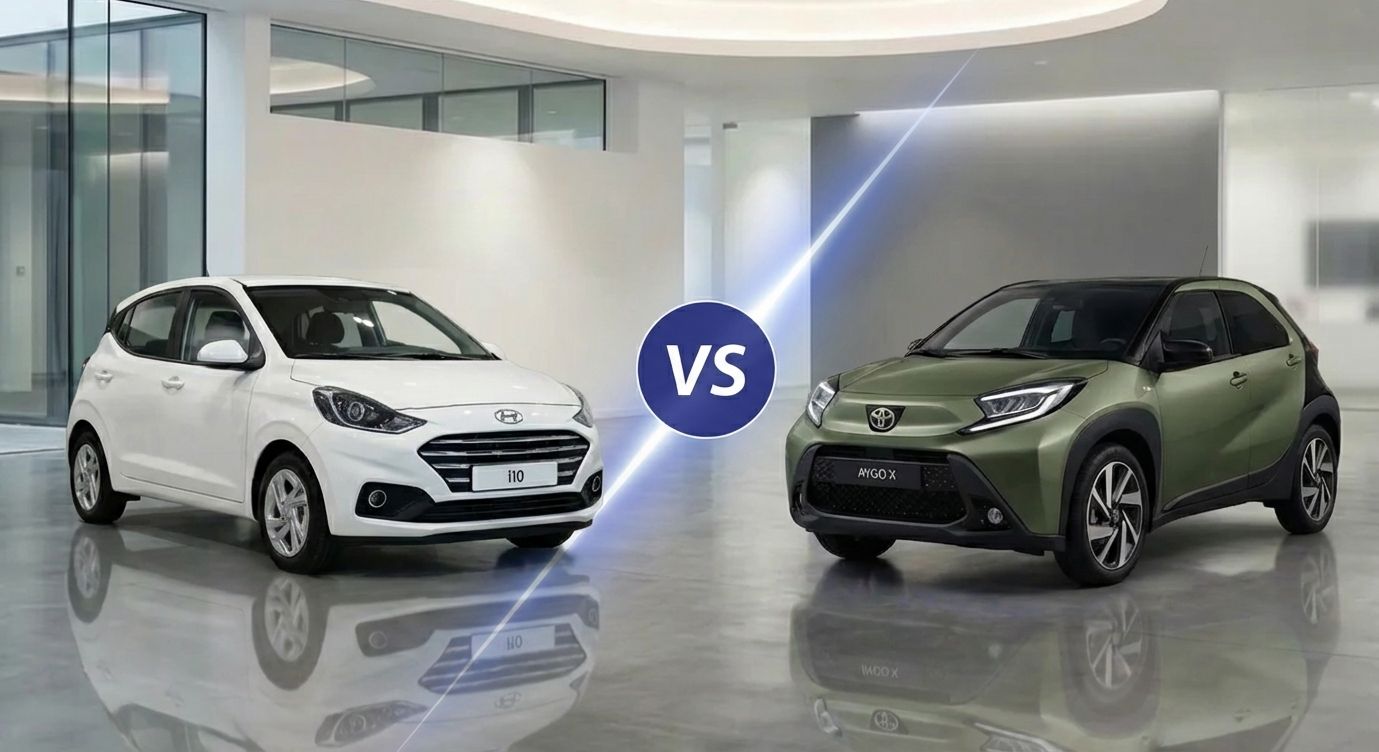
Hyundai i10 vs. Toyota Aygo X: A detailed comparison, real-world insights, and a verdict to help you choose the right small city car.
Apr 2, 2026
Hyundai i20 vs Suzuki Swift: Which hatchback is better? Our detailed comparison of equipment, ride, and price will help you choose. Read the verdict.
Apr 13, 2026