Review
Review Cupra Born: What do owners and experts really say?
Cupra Born review: real owner experience, battery range, common faults, running costs and used prices — everything you need before you buy.
Oct 17, 2026
MG4 EV review: real owner experience, real-world range, common faults, running costs and prices — everything you need before you buy.
October 25, 2026
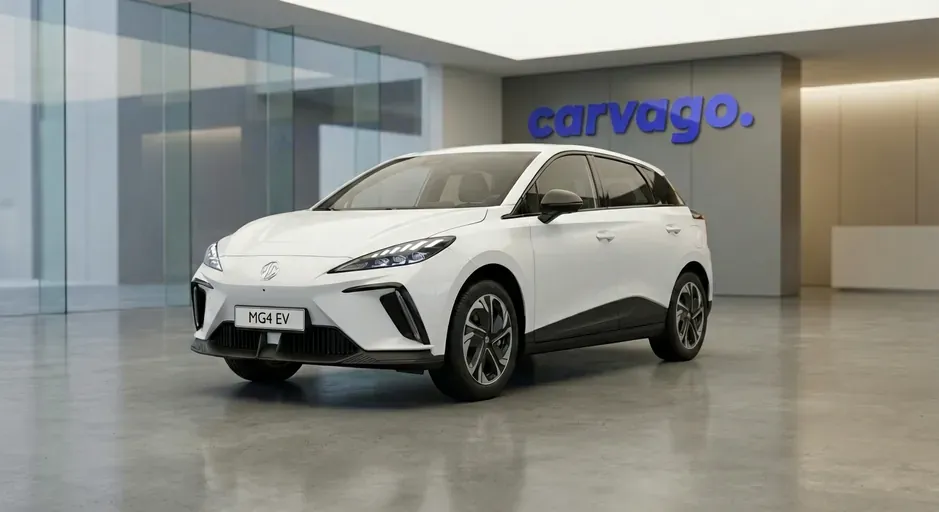
The electric MG4 hatchback sits in the competitive European C-segment, engineered as a compact five-door family car on a dedicated rear-wheel-drive electric architecture. Following its European premiere in June 2022, order books opened in August 2022, and initial customer deliveries began in autumn 2022. This review examines the first-generation model family across its European production run from 2022 through 2026.
The model range expanded steadily, introducing a high-performance all-wheel-drive dual-motor derivative in July 2023 and an extended-range rear-wheel-drive version in August 2023. A mid-cycle refresh premiered in January 2026, with customer deliveries starting in spring 2026. Alongside it, a separate front-wheel-drive city variant arrived in European showrooms in spring 2026 to serve entry-level buyers.
The MG4 primarily attracts private commuters, small families, and fleet users seeking a traditional compact hatchback footprint rather than a bulky crossover. It offers a practical layout for urban navigation alongside the road manners of a dedicated electric platform.
Real-world reliability data for the MG4 shows a vehicle that is fundamentally sound in its primary high-voltage architecture, but early production years required several software refinements and minor hardware updates. With European deliveries beginning in late 2022 and a refreshed version arriving in early 2026, long-term durability data for the newest updates is still developing, but the common trouble spots on earlier cars are well documented.
Statutory safety recalls have been minimal across Europe, with no official safety campaigns registered through European authorities during 2025 or 2026. The single formal safety recall for the model was announced in January 2023 for vehicles built between 1 June 2022 and 31 October 2022. The official defect notice stated that affected vehicles could superlock while still in running mode when coming to a stop, locking the doors from both the inside and outside, disabling the remote key, and preventing window operation. Authorised workshops resolved the issue by applying a software update to the Body Control Module. In Continental Europe, vehicles from this initial production window were updated prior to delivery or during regular scheduled servicing.
Tests and owner reports identify a weeping rear drive unit on early single-motor rear-wheel-drive versions, primarily those produced between late 2022 and July 2023. Under sustained load or high thermal expansion, gear oil could vent through the original top breather assembly, leaving oil mist or droplets on the casing and undertray. Authorised repairers typically resolve this by installing a revised breather pipe kit and checking transmission fluid levels.
Tests also describe a high-speed aerodynamic flutter on vehicles built between 2022 and 2024. At motorway speeds between 100 km/h and 130 km/h, the flexible composite undertray panel could deflect under airflow due to flexible central mounting points, creating noticeable cabin buffeting and floorpan vibration. A manufacturer service bulletin addressed this by fitting upgraded fasteners and undertray stiffening brackets. Additionally, tests note that because regenerative braking handles the majority of everyday deceleration, the mechanical rear brake discs are prone to surface corrosion, groove scoring, and glazing if not subjected to occasional firm braking.
Owners report occasional unprovoked discharge of the 12V auxiliary battery on early models. In some cases, this occurred when telematics and body control modules failed to enter low-power sleep mode after the car was parked, occasionally leaving the vehicle unable to engage drive. Updated control gateway software has resolved these parasitic drain issues. Owners also describe sporadic infotainment freezing and smartphone mirroring disconnects on initial software builds, which typically improve once the central screen firmware is brought up to date.
Tests describe early calibrations of the Lane Keep Assist system on 2022 to 2024 builds as overly sensitive, occasionally executing sudden steering tugs toward the centre line on narrow secondary roads. While safety regulators determined this did not meet the criteria for a mandatory safety recall because the driver can override or deactivate the assistance, updated driver-assistance software calibrations released by the manufacturer significantly soften steering torque interventions.
The electric MG4 is built on a dedicated rear-wheel-drive platform, with all-wheel drive reserved for the high-performance dual-motor variant, while a separate city variant uses front-wheel drive. Across its production cycle, the line-up offers three battery capacities and multiple power outputs, each paired with a single-speed automatic transmission.
| Engine | Fuel | Power | Transmission | Drivetrain | Model years |
|---|---|---|---|---|---|
| 51 kWh | Electric | 125 kW (170 hp) | Automatic | Rear-wheel drive | 2022–2026 |
| 64 kWh | Electric | 150 kW (204 hp) | Automatic | Rear-wheel drive | 2022–2026 |
| 64 kWh | Electric | 140 kW (190 hp) | Automatic | Rear-wheel drive | 2026–present |
| 77 kWh Extended Range | Electric | 180 kW (245 hp) | Automatic | Rear-wheel drive | 2023–2025 |
| 77 kWh Extended Range | Electric | 180 kW (245 hp) | Automatic | Rear-wheel drive | 2026–present |
| 64 kWh XPOWER | Electric | 320 kW (435 hp) | Automatic | All-wheel drive | 2023–2025 |
| 64 kWh XPOWER | Electric | 320 kW (435 hp) | Automatic | All-wheel drive | 2026–present |
Owners report that real-world range varies noticeably with weather and driving conditions. In winter, low ambient temperatures and cabin heating reduce driving range compared to mild summer use. On long trips, fast-charging performance remains consistent, though achieving optimal charging speeds in colder climates depends on ensuring the battery is preheated before plugging into a rapid charger.
The dedicated electric platform gives the MG4 EV an entirely flat rear floor with no central tunnel, preserving foot space across the fixed bench. Outboard passengers have adequate knee room and headroom for adults, though the underfloor battery elevates the seating base slightly, which reduces under-thigh support. Rear passengers also do without dedicated central ventilation outlets. Everyday practicality relies on the rear luggage compartment, as the electric MG4 hatchback provides no front storage compartment beneath the bonnet. Loading cargo is assisted by a wide tailgate opening and an asymmetrically split-folding rear bench, with higher trims offering an adjustable twin-level boot floor that levels the load sill and provides hidden space for charging cables.
| Dimension | Pre-facelift (2022–2025) | Facelift (2026–present) |
|---|---|---|
| Length (mm) | 4,287 | 4,287 |
| Width (mm) | 1,836 | 1,836 |
| Height (mm) | 1,504–1,516 | 1,516 |
| Wheelbase (mm) | 2,705 | 2,705 |
| Boot volume, seats up / folded (l) | 363 / 1,177 | 388 / 1,164 |
Standard pre-facelift capacity is shown above; boot volume decreases on versions fitted with the integrated subwoofer and two-level cargo floor. A front storage compartment is not offered on any version.
On the road, the rear-wheel-drive electric MG4 earns consistent praise for agile turn-in, balanced chassis dynamics, and minimal body lean. The suspension handles undulating asphalt well, though the underlying setup is taut: versions on larger alloy wheels transfer sharp tarmac joints, potholes, and manhole covers into the cabin. In contrast, testers penalised the high-performance dual-motor all-wheel-drive model for chassis imbalance, noting that inadequate damping control and tyre grip lead to pronounced cornering understeer. Powertrain acoustics are muted, though tyre roar over coarse asphalt and wind flutter around the door mirrors become apparent at cruising speeds.
Early cabins showed clear evidence of cost control. Pre-facelift cars featured brittle, scratch-prone plastics, short front seat cushions lacking thigh support, and a sluggish touchscreen interface. The mid-cycle refresh addressed these operational complaints, replacing budget materials with soft-touch mouldings, adding physical climate toggles, and fitting a faster display.
Professional testers agree on the agility of the rear-wheel-drive chassis, but diverge on secondary ride comfort: some consider it supple, while others note vertical float over high-speed undulations. All agree that the rear-driven MG4 provides the most cohesive chassis balance in the range.
All the charts in this section are drawn from Carvago's listings of the whole MG4 model family, including other generations represented in the data, not only the reviewed generation, so this overview does not establish a separate price level for the reviewed generation alone. Across available listings, the median asking price sits at €21,000 for 2022 models and €22,900 for 2023 examples. For more recent production, 2024 cars record a median asking price of €30,000, compared to €26,900 for 2025 listings and €28,500 for 2026 vehicles.
The chart traces advertised MG4 listings over six months, moving from 1,066 vehicles in April 2026 down to 830 in September 2026.
Active listings over time
| Month | MG4 |
|---|---|
| 2026-04 | 1 066 |
| 2026-05 | 950 |
| 2026-06 | 895 |
| 2026-07 | 892 |
| 2026-08 | 891 |
| 2026-09 | 830 |
Source Carvago
Although the volume of active advertisements decreased across this period, buyers still have several hundred cars to choose from each month.
The chart below outlines the median asking price of used cars advertised today across model years, where vehicles built in 2022 show a median asking price of €21,000 compared to €30,000 for those built in 2024.
Median advertised price by year of manufacture
| Model year | MG4 |
|---|---|
| 2022 | 21 000 |
| 2023 | 22 900 |
| 2024 | 30 000 |
| 2025 | 26 900 |
| 2026 | 28 500 |
Source Carvago
Prices do not follow an unbroken rise across newer model years: buyers looking at 2022 and 2023 cars see median asking prices of €21,000 and €22,900, whereas 2024 listings stand at €30,000, above the €26,900 recorded for 2025 and €28,500 for 2026.
This depreciation curve illustrates how the model's residual value declines with vehicle age, dropping by 22% in the first year and shedding 28% by age three. The progression across the years is tracked in the chart below.
Residual value by vehicle age
| Vehicle age | MG4 |
|---|---|
| New | 25 400 |
| 1 yr | 19 800 |
| 2 yrs | 18 700 |
| 3 yrs | 18 400 |
| 4 yrs | 16 800 |
| 5 yrs | 13 900 |
| 6 yrs | 12 500 |
| 7 yrs | 10 600 |
Source Carvago
Across the seven-year span shown, the model sheds 58% of its initial residual value. The steepest annual decline occurs between ages zero and one, after which the rate of loss slows considerably through age three before steepening again in later years.
Across the six months from April to September 2026, active listings for the model were exclusively electric, declining from 1,066 advertised cars in April to 830 in September. The chart illustrates how these monthly listing counts developed over the period.
Supply composition by fuel type
| Month | Electric |
|---|---|
| 2026-04 | 1 066 |
| 2026-05 | 950 |
| 2026-06 | 895 |
| 2026-07 | 892 |
| 2026-08 | 891 |
| 2026-09 | 830 |
Source Carvago
With electric vehicles accounting for all 830 advertised cars in September 2026 and zero petrol, diesel, or hybrid alternatives recorded, prospective buyers will find only fully electric options on the market.
The chart tracks the average asking price for the MG4 from April 2026 to September 2026, opening at €23,700.
Average price development over time
| Month | MG4 |
|---|---|
| 2026-04 | 23 700 |
| 2026-05 | 24 300 |
| 2026-06 | 24 700 |
| 2026-07 | 25 000 |
| 2026-08 | 25 100 |
| 2026-09 | 25 000 |
Source Carvago
Across the six months, the average asking price rose to a high of €25,100 in August 2026 before edging down to €25,000 in September 2026, representing an overall increase of approximately 5.5%.
Agile handling and balanced chassis dynamics on rear-wheel-drive versions
Flat cabin floor preserves foot space for rear passengers
Consistent rapid-charging performance on long journeys
Sluggish touchscreen interface and overly sensitive lane-assist interventions on early builds
Taut ride transmits sharp potholes and road joints on larger alloy wheels
Complete absence of a front luggage compartment beneath the bonnet
The MG4 is fundamentally sound in its primary high-voltage architecture, with minimal statutory recalls recorded across Europe. However, early production cars occasionally suffered from auxiliary battery drain and minor infotainment software bugs, making documented dealer updates essential.
Vehicles built from the 2026 refresh are the most refined choice due to upgraded cabin materials and updated software calibrations. If choosing an earlier model year, verify that dealer updates and workshop remedies were completed.
The extended-range rear-wheel-drive electric MG4 is best suited for motorway travel, offering longer intervals between charging stops alongside composed road manners. The all-wheel-drive derivative offers rapid acceleration, but its firmer ride and higher consumption make it less practical over long distances.
Inspect the rear drive unit for oil weeping and verify on a test drive that the undertray does not vibrate at motorway speeds. In addition, check the rear brake discs for heavy corrosion and confirm all dealer software updates have been installed.
Sources: mgmotor.eu, adac.de, check-vehicle-recalls.service.gov.uk, autocar.co.uk, autoexpress.co.uk
This article was prepared using artificial intelligence tools. The section guarantor is Petr Dušek.
Cupra Born review: real owner experience, battery range, common faults, running costs and used prices — everything you need before you buy.
Oct 17, 2026
Hyundai Ioniq 6 review: real owner experience, real-world range, charging speeds, known issues and prices — everything to know before you buy.
Oct 25, 2026
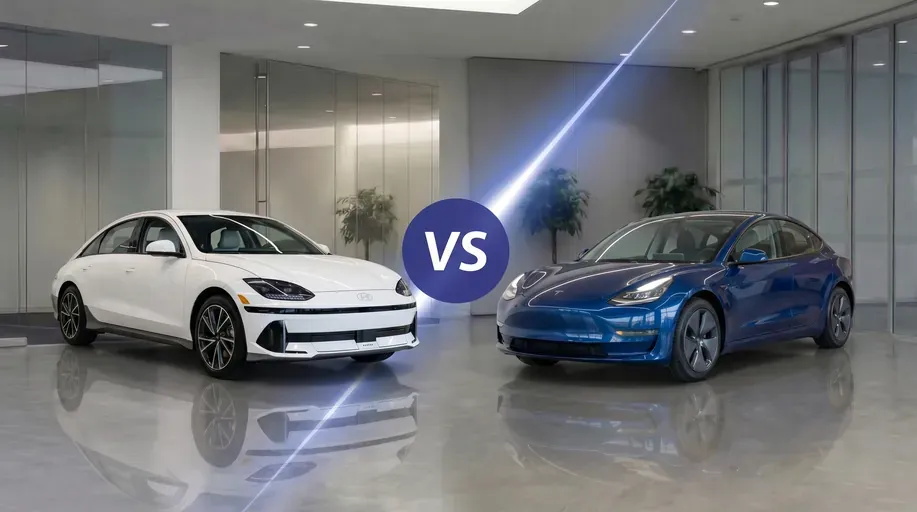
Hyundai Ioniq 6 vs. Tesla Model 3: Which electric car is better? A detailed comparison of range, equipment, and driving characteristics with a final verdict for your choice.
May 9, 2026