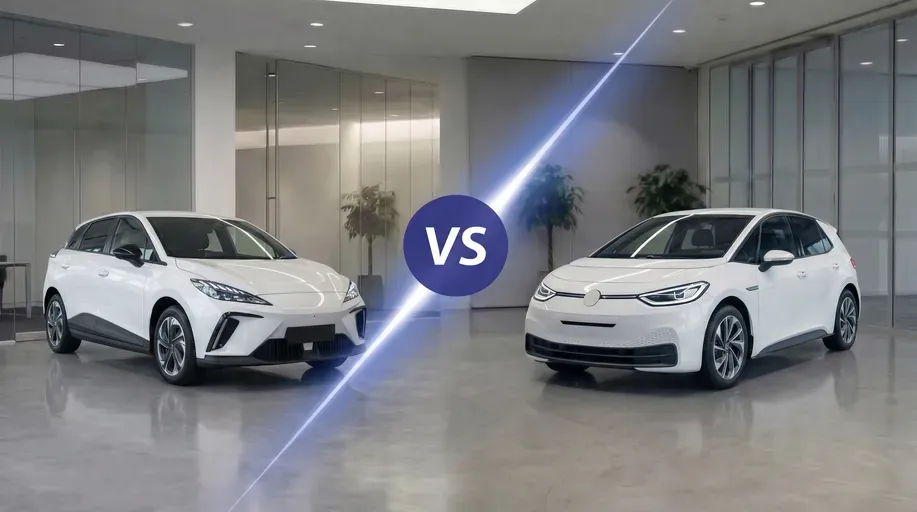
Car battle
MG4 vs. Volkswagen ID.3: Complete comparison 2026
Detailed comparison of the MG4 and Volkswagen ID.3 (VW ID.3) electric vehicles. Which hatchback offers better range, price, and features? Read our final verdict.
May 13, 2026
Articles
Review
Cupra Born review: real owner experience, battery range, common faults, running costs and used prices — everything you need before you buy.
October 17, 2026
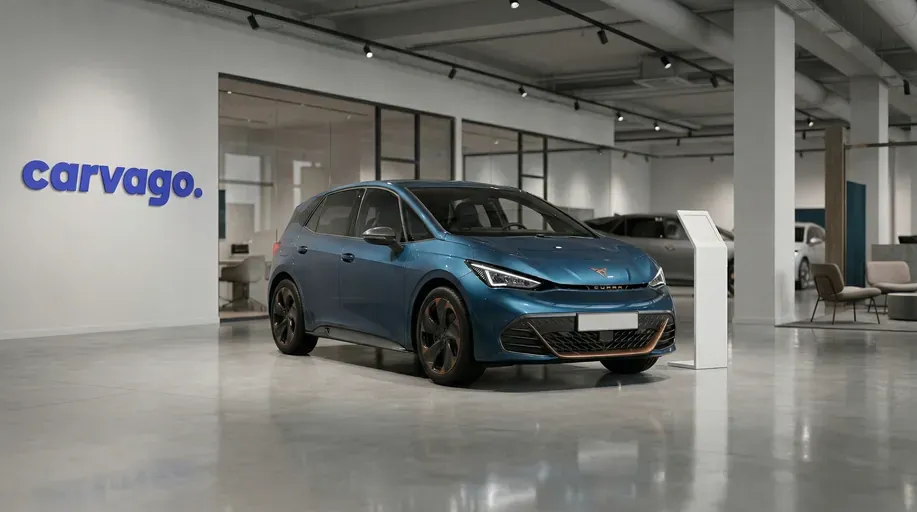
The Cupra Born represents the brand’s first dedicated battery-electric vehicle, competing directly in the compact family segment. Available exclusively as a five-door hatchback, it serves as a design-led, driver-focused entry among European electric compacts.
This review evaluates the first generation. Series production began in September 2021, and European customer deliveries got underway in March 2022. Cupra expanded the line-up in July 2024 when deliveries of the performance-oriented Born VZ commenced. A mid-cycle facelift was premiered in March 2026, with updated cars arriving in European showrooms from July 2026 featuring redesigned front styling and refreshed equipment.
The electric Cupra Born hatchback is aimed at private commuters and company car drivers who want manageable exterior dimensions and distinctive styling, offering an alternative to more conservative hatchbacks in the zero-emission market.
Because the first-generation Cupra Born arrived in European showrooms in early 2022, long-term multi-year reliability across high mileages is not yet established. However, real-world ownership data and workshop records from the initial production years show clear patterns regarding high-voltage hardware revisions, software stability, and drivetrain wear.
The most critical maintenance item for used buyers involves official safety recalls on the high-voltage traction battery. In March 2026, a worldwide recall was issued for vehicles manufactured between 7 February 2022 and 21 April 2024. Certain cell modules that do not meet factory specifications can cause range degradation, illuminate a yellow warning lamp, and present an increased thermal load that could lead to a vehicle fire. Authorized workshops perform a software diagnostic evaluation across charging states and replace any out-of-specification cell modules. Two smaller actions announced in February 2026 addressed defective high-voltage battery modules prone to capacity loss and overheating on narrower production windows (built between 31 August and 13 September 2023, and between 9 February 2023 and 30 December 2025). Additionally, a July 2026 recall for model year 2026 vehicles addressed a driver seat frame screw fastening that could loosen and impair restraint protection during an impact.
On the mechanical side, owners report a repeated issue with metallic clicking from the rear axle, primarily on 2022–2024 models. The noise typically presents as a distinct single metallic click or clunk when pulling away, switching between reverse and forward, or transitioning off regenerative braking. This sound originates from tolerance micro-play at the spline interface connecting the rear wheel hub to the constant-velocity driveshaft. Authorized service bulletins specify removing the driveshafts, cleaning the splines, and applying a specialized retaining paste before re-torquing. Some owners note that the clicking noise can return after 8,000 to 15,000 km, requiring repeated bonding applications or replacement driveshafts.
Software reliability and cabin electronics represent the other major area of driver complaints on pre-facelift cars built before 2024. Owners report central touchscreen latency, random reboots of the digital instrument cluster, and occasional black screens on startup. Installing factory software updates resolved the majority of system freezes and communication crashes, though the underlying operational lag remained inherent to early hardware until upgraded infotainment arrived with the performance flagship in 2024 and the mid-cycle facelift in 2026. Outside the cabin, owners frequently report that the motorized charging flap actuator can bind or seize, particularly in freezing or wet weather. On early models, software communication glitches could also prevent the car from waking for scheduled off-peak charging.
| Subject | Affected Production Window | Scope & Fault Mechanism | Workshop Remedy |
|---|---|---|---|
| High-voltage battery modules | 7 Feb 2022 – 21 Apr 2024 | Out-of-spec cells causing range loss, warning light, and thermal risk (Worldwide) | Diagnostic evaluation; physical module replacement if out of tolerance |
| High-voltage battery module | 31 Aug 2023 – 13 Sep 2023 | Defective module causing capacity loss and overheating risk (Worldwide) | Direct replacement of affected battery modules |
| High-voltage battery module | 9 Feb 2023 – 30 Dec 2025 | Defective module causing warning alerts and thermal overload risk (Europe) | Direct inspection and module replacement |
| Driver seat frame screw | Model Year 2026 | Fastening screw may loosen, reducing occupant restraint effectiveness (Europe) | Inspection and tightening of seat frame bolted connection |
| Rear driveshaft splines | 2022–2024 models | Micro-play between hub and driveshaft spline causing metallic clicking | Spline cleaning and application of bonding compound |
The electric Cupra Born relies on a rear-mounted permanent magnet synchronous motor paired with a single-speed automatic transmission. Depending on the model year and battery configuration, the rear-wheel-drive hatchback was sold in standard, performance-enhanced e-Boost, or high-output VZ specifications.
| Engine | Fuel | Power | Gearbox | Model years |
|---|---|---|---|---|
| Born 58 kWh | Electric | 150 kW (204 hp) | Automatic (1-speed) | 2021–2024 |
| Born e-Boost 58 kWh | Electric | 170 kW (231 hp) | Automatic (1-speed) | 2022–2024 |
| Born e-Boost 77 kWh | Electric | 170 kW (231 hp) | Automatic (1-speed) | 2022–2024 |
| Born 60 kWh | Electric | 150 kW (204 hp) | Automatic (1-speed) | 2025–2026 |
| Born 60 kWh | Electric | 170 kW (231 hp) | Automatic (1-speed) | 2024–2026 |
| Born 79 kWh | Electric | 170 kW (231 hp) | Automatic (1-speed) | 2024–2026 |
| Born VZ 79 kWh | Electric | 240 kW (326 hp) | Automatic (1-speed) | 2024–2026 |
| Born 58 kWh | Electric | 140 kW (190 hp) | Automatic (1-speed) | 2026–present |
| Born 79 kWh | Electric | 170 kW (231 hp) | Automatic (1-speed) | 2026–present |
| Born VZ 79 kWh | Electric | 240 kW (326 hp) | Automatic (1-speed) | 2026–present |
Short trips in town and daily suburban commuting suit the standard battery pack paired with either the base motor or the e-Boost setup. The lighter battery keeps the Cupra Born agile in urban manoeuvres while delivering prompt throttle response from a standstill. As a used car, the early base motor offers sensible performance for city driving, although overtaking punch tapers off towards higher motorway speeds.
For mixed driving, the e-Boost variants strike a balanced compromise between acceleration and driving range. Full e-Boost output is delivered in short bursts via throttle kickdown or the steering-wheel button, provided the battery is warm and sufficiently charged. Regular motorway commuters should seek out the larger battery pack for fewer charging stops.
Drivers seeking maximum performance should consider the Born VZ, which provides stronger passing power, a raised top speed, and standard steering-wheel paddles for variable regenerative braking.
For detailed information on motor reliability, battery recalls, and software updates, refer to the owner experiences section.
Owner reports and professional tests show that seasonal temperatures noticeably affect real-world driving range. In cold winter conditions, increased cabin heating demands and reduced battery cell efficiency cause a clear drop in range compared to mild summer weather. Pre-conditioning the interior and battery while connected to a wallbox helps limit this winter loss.
Charging performance is dependable under normal conditions. On rapid direct-current chargers, the highest charging speeds are achieved when plugging in at a low state of charge, with the rate gradually tapering as the battery fills. Routine alternating-current charging provides predictable overnight replenishment.
| Dimension / Capacity | Pre-facelift (2021–2026) | Facelift (2026+) |
|---|---|---|
| Length (mm) | 4,324 | 4,336 |
| Width without mirrors (mm) | 1,809 | 1,809 |
| Height (mm) | 1,540 | 1,540 |
| Wheelbase (mm) | 2,766 | 2,766 |
| Boot capacity (seats up / folded, l) | 385 / 1,267 | 385 / 1,267 |
Exterior height figures do not reflect the slightly lowered sports suspension of the performance VZ version.
Thanks to its dedicated electric architecture and long wheelbase, the electric Cupra Born hatchback provides ample knee room and foot space for rear passengers. Because the traction battery is positioned beneath the floor, the rear bench sits relatively low and flat, which limits under-thigh support for taller passengers on longer trips. Most model variants seat five occupants, though early pre-facelift examples equipped with the largest battery pack were homologated strictly as four-seaters.
Daily practicality is anchored by a fixed rear bench with a 60:40 split-folding backrest, while on higher trims a folding rear centre armrest with a load-through ski hatch is standard. At the rear, an adjustable false floor provides dedicated storage for charging cables, retaining its function even when the optional premium subwoofer is fitted, though the car lacks a front luggage compartment under the bonnet. For transport and hauling duties, the model carries no type approval for towing trailers, and roof loads are likewise unapproved.
Professional road tests broadly agree that the electric Cupra Born rides with surprising suppleness for a car styled with sporting intent. Versions on smaller wheels absorb broken urban surfaces with noticeably greater composure, whereas larger wheel options generate audible road roar on coarse asphalt despite otherwise disciplined wind and motor sealing. Through bends, the chassis feels agile, direct, and well-balanced, aided by low body roll and neat front-end grip. Testers consistently note, however, that an overly cautious stability control system cuts power abruptly on corner exits, blunting spirited driving, while the brake pedal feels somewhat spongy under foot.
Inside, the Cupra Born earns praise for standard deeply bolstered sports seats, tactile upper dashboard surfaces, and distinctive copper accents that create a more characterful environment than its platform siblings. Even so, hard plastics remain prominent across the lower cabin and door cards. The primary source of unanimous criticism centres on ergonomics: capacitive steering-wheel pads invite accidental inputs during tight cornering, and the unlit touch sliders on early production years make night-time temperature adjustments needlessly clumsy. Standard from the 2024 performance model onwards and across the 2026 facelift range, updated interior hardware introduced illuminated climate sliders and a larger central display that resolved the most glaring launch flaws, although testers observed that minor interface pauses can still surface.
All charts in this section are drawn from Carvago’s listings across the whole model family, including any other generations represented in the platform data rather than only the reviewed generation. Across current listings for the electric Cupra Born, the median asking price starts at €24,000 for 2021 models and rises steadily through €25,000 for 2022, €27,900 for 2023, and €31,800 for 2024. The newest examples reach a median asking price of €36,900 for 2025 and €38,600 for 2026. This data establishes price levels across build years but does not isolate separate valuations for specific generation updates.
Between April 2026 and September 2026, the number of advertised Cupra Born models moved between a high of 3,611 cars in April and a low of 2,937 in June, as detailed in the monthly count below.
Active listings over time
| Month | Cupra Born |
|---|---|
| 2026-04 | 3 611 |
| 2026-05 | 3 079 |
| 2026-06 | 2 937 |
| 2026-07 | 3 420 |
| 2026-08 | 3 289 |
| 2026-09 | 3 364 |
Source Carvago
Closing at 3,364 listings in September 2026 after shifting up and down over the observed period, the model provides buyers with plenty of choice alongside recurring month-to-month inventory changes.
The median asking price of cars advertised today built in 2021 is €24,000. For cars advertised today built in 2026, the median asking price is €38,600, with medians higher for each subsequent build year.
Median advertised price by year of manufacture
| Model year | Cupra Born |
|---|---|
| 2021 | 24 000 |
| 2022 | 25 000 |
| 2023 | 27 900 |
| 2024 | 31 800 |
| 2025 | 36 900 |
| 2026 | 38 600 |
Source Carvago
Buyers considering earlier model years face a median asking price of €24,000 for cars advertised today built in 2021, or €25,000 for those built in 2022. For the most recent models, the median asking price of cars advertised today is €36,900 for 2025 examples and €38,600 for 2026 examples.
This depreciation curve tracks how the Cupra Born's residual value declines as it ages, showing a loss of roughly 28% across its first two years. The sharpest drop occurs during this initial period, as seen in the progression below.
Residual value by vehicle age
| Vehicle age | Cupra Born |
|---|---|
| New | 38 500 |
| 1 yr | 33 600 |
| 2 yrs | 27 600 |
| 3 yrs | 25 600 |
| 4 yrs | 24 700 |
| 5 yrs | 21 000 |
| 6 yrs | 17 800 |
| 7 yrs | 15 900 |
Source Carvago
Across seven years of vehicle age, the model sheds around 59% of its residual value overall. The rate of loss levels off considerably between three and four years of age, where year-over-year depreciation moderates to under 4%.
Across the six tracked months, advertised listings consisted entirely of electric cars, starting at 3611 vehicles in April 2026 and finishing at 3364 in September 2026.
Supply composition by fuel type
| Month | Electric |
|---|---|
| 2026-04 | 3 611 |
| 2026-05 | 3 079 |
| 2026-06 | 2 937 |
| 2026-07 | 3 420 |
| 2026-08 | 3 289 |
| 2026-09 | 3 364 |
Source Carvago
In September 2026, all 3364 recorded listings were electric models, with 0 petrol, diesel, or hybrid options advertised, meaning buyers will find exclusively electric choices on the market.
Between April 2026 and September 2026, the average asking price for the Cupra Born started at €28,100 and reached a peak of €29,900. The chart below outlines the monthly advertised values across this period.
Average price development over time
| Month | Cupra Born |
|---|---|
| 2026-04 | 28 100 |
| 2026-05 | 28 900 |
| 2026-06 | 29 400 |
| 2026-07 | 29 900 |
| 2026-08 | 29 800 |
| 2026-09 | 29 700 |
Source Carvago
After rising to €29,900 in July 2026, the average dipped slightly to finish at €29,700 in September. Across the six months shown, overall movement was modest, ending less than 6% above the initial April figure.
Agile chassis with neat front-end grip paired with a supple ride
Distinctive cabin styling with supportive, deeply bolstered sports seats
Ample rear legroom and foot space on a manageable compact footprint
Fussy ergonomics featuring capacitive steering-wheel buttons and unlit climate sliders on early cars
Pre-facelift large-battery models restricted to four seats, alongside zero towing capability
Repeated high-voltage battery module recalls on earlier production years requiring checks by VIN
Long-term reliability is not yet established due to the car's age, but early production years have faced official safety recalls regarding high-voltage battery modules. Buyers should check the vehicle by its VIN to confirm all factory campaigns and software updates have been completed.
The e-Boost variant with the larger battery strikes the most balanced compromise between performance and longer-distance driving range. Buyers who regularly carry three rear passengers should note that early pre-facelift models (2022–2023) with this battery pack were homologated strictly as four-seaters.
Verify that all battery cell recalls and software updates are documented, and test the motorized charge port flap to ensure it does not stick. On the road, listen for metallic clicking noises from the rear wheel hubs when transitioning between forward and reverse or pulling away.
No, the Cupra Born carries zero type-approved towing capacity and cannot tow trailers. Roof transportation is also not approved by the manufacturer, restricting external luggage to approved rear accessory bike carriers.
Sources: cupra.com, adac.de, autocar.co.uk, autoexpress.co.uk, whatcar.com
This article was prepared using artificial intelligence tools. The section guarantor is Petr Dušek.
Detailed comparison of the MG4 and Volkswagen ID.3 (VW ID.3) electric vehicles. Which hatchback offers better range, price, and features? Read our final verdict.
May 13, 2026
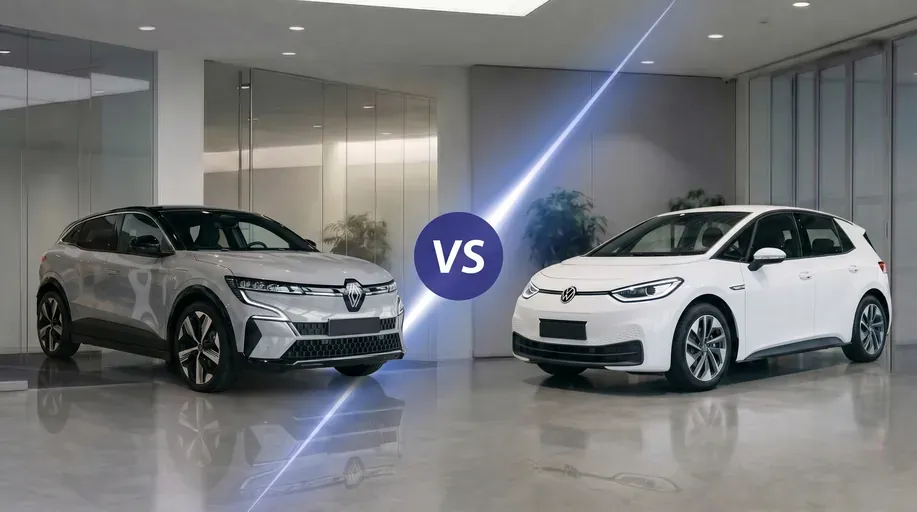
Detailed comparison of Renault Mégane E-Tech vs Volkswagen ID.3. Discover real-world range, differences in equipment, and driving characteristics. Read our final verdict.
May 7, 2026
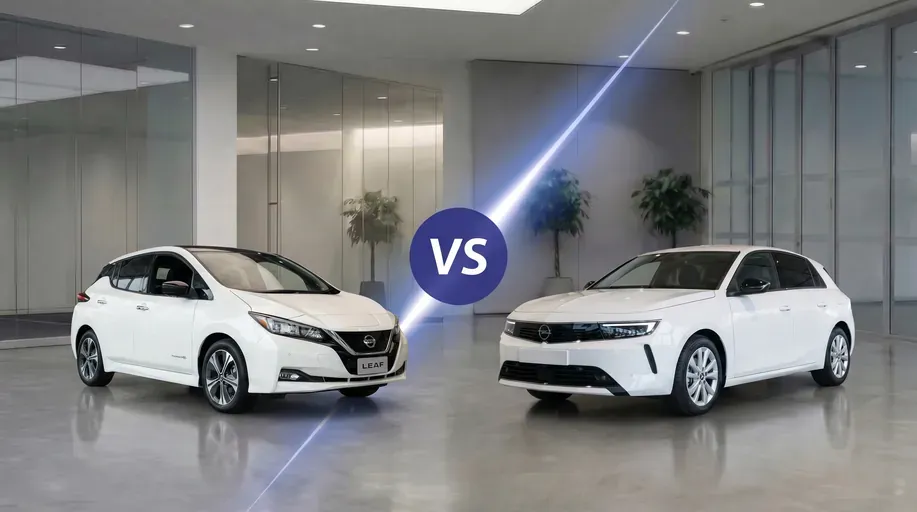
Detailed comparison of the Nissan Leaf and Opel Astra Electric. Find out the real-world range, differences in equipment, and read our verdict for choosing the ideal electric car.
Oct 16, 2026