Articles

Car battle

Nissan Leaf vs. Opel Astra Electric: Complete comparison 2026

Detailed comparison of the Nissan Leaf and Opel Astra Electric. Find out the real-world range, differences in equipment, and read our verdict for choosing the ideal electric car.

May 2, 2026

VS
Nissan Leaf

Nissan Leaf

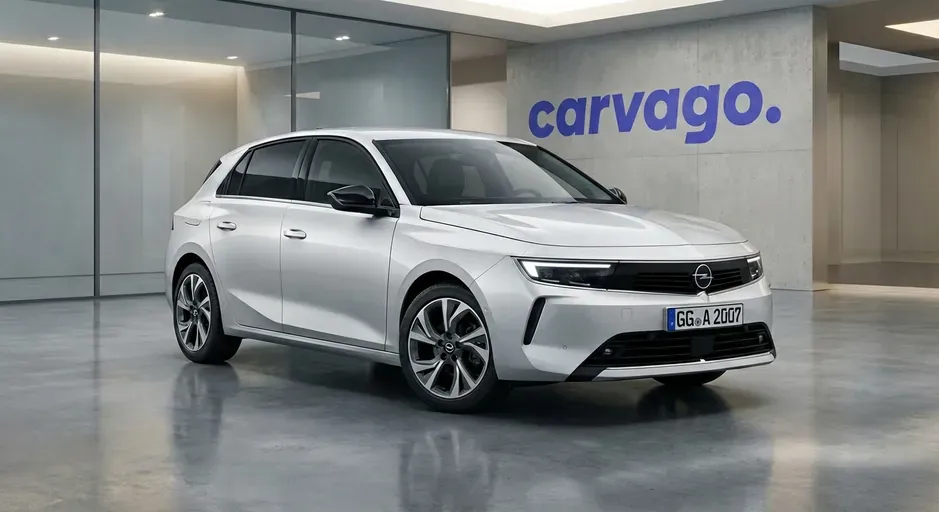
Opel Astra Electric

Opel Astra Electric

Introduction

In today's comparison, we take a look at the proven second-generation Nissan Leaf, which has long been considered one of the main pioneers of affordable family electromobility on the global market. Its challenger will be the modern Opel Astra Electric, which is sold in the British Isles under the name Vauxhall Astra Electric and was also known as the Astra-e in the early stages of its introduction. The following lines will reveal in detail which of these two attractive electric models represents a better and more practical choice for your daily travel on the current market for nearly new used cars.

Comparison of External Dimensions

When looking at the exterior dimensions of the Nissan Leaf and the Opel Astra Electric, we encounter an interesting contrast between two different approaches to design and proportions in the used electric vehicle market. If we focus on the generations that currently make the most sense in the four-year-old used car market, we will be comparing the successful ZE1 generation Nissan Leaf (produced from 2018 to 2024) and a representative of the more modern wave in the form of the L generation Opel Astra Electric (available since 2023). While the Nissan sticks to a more traditional and slightly taller body concept, the Opel plays on the note of dynamics, being wider, set lower to the ground, and, unlike its Japanese rival, offering two body styles.

If we place the basic five-door hatchbacks side by side, we find that at 4490 mm, the Nissan Leaf is 116 mm longer than the Astra Electric, which measures 4374 mm. However, the Opel more than compensates for this deficit with its width – it measures 1860 mm, which is a significant 72 mm more than the Nissan (1788 mm). In practice, this means the Astra provides passengers with noticeably more shoulder room and feels more stable. On the other hand, the Nissan's narrower body will be more pleasant when parking in tight urban spaces. The Leaf also scores with its significantly taller body (1530 to 1545 mm), making it easier to get into, while the sportier Astra is lower overall at 1488 mm.

As for the wheelbase, which primarily determines the longitudinal space for the occupants, the Nissan hatchback offers a very respectable 2700 mm. The Opel Astra hatchback lags slightly behind here with a value of 2675 mm. However, the situation changes dramatically if you opt for the practical Opel Astra Electric Sports Tourer (estate) variant. This version stretches to 4642 mm in length, and its wheelbase grows to 2732 mm. This gives the Opel a major competitive advantage. For families or drivers who need to carry more cargo while also requiring generous rear legroom, the estate version represents a solution that the Nissan Leaf, with its single available body style, cannot match.

ParameterNissan Leaf HatchbackOpel Astra Electric HatchbackOpel Astra Electric Estate
Length (mm)449043744642
Width (mm)178818601859 - 1860
Height (mm)1530 - 154514881481 - 1498
Wheelbase (mm)270026752732

Trunk Volume

The luggage compartment is a key parameter for many people interested in a used electric car, whether you're planning regular shopping trips or family outings. When comparing the Nissan Leaf (ZE1 generation) and the more modern Opel Astra Electric (L generation), we encounter very different approaches to interior space. While the Leaf sticks exclusively to a traditional five-door body style and relies on an unexpectedly deep trunk, the Astra Electric gives customers a choice between a compact hatchback and a highly practical estate. The availability of multiple body styles completely changes the game for everyday family use.

If we put both hatchback versions side by side, the older Nissan Leaf surprisingly wins in terms of base volume. It offers a generous 394 to 435 liters (depending on the traction battery capacity and the possible installation of a premium audio system subwoofer). In contrast, the Astra Electric suffers slightly from the overall component layout, which has reduced the base capacity of the electric hatchback to 352 liters. A difference of at least 42 liters in favor of the Nissan means, in practice, space for several shopping bags or an extra piece of carry-on luggage. However, Opel fully makes up for its loss when you fold down the rear seats – its more modern platform allows for a generous 1,268 liters compared to the rather modest 790 liters of the Leaf.

Opel's biggest trump card on the used car market, however, is the availability of the extended estate body style (marketed as the Sports Tourer), to which Nissan has no answer with the Leaf model. The Opel Astra Electric estate brings a great base trunk volume of 516 liters and even an impressive 1,553 liters after fully folding down the backrests. For users looking for enough space for weekend shopping as well as longer holidays, and who need to regularly transport bulky sports equipment or a stroller, this electric variant is the clear favorite.

ParameterNissan Leaf HatchbackOpel Astra Electric HatchbackOpel Astra Electric Estate
Base volume (liters)394 – 435352516
Maximum volume with seats folded (liters)7901,2681,553

Family ideal or city practical? 🧳

While the Nissan Leaf surprises with a deeper and more voluminous trunk in the standard hatchback version, the Opel Astra Electric clearly dominates thanks to its overall usability after folding the seats and, above all, thanks to the unrivaled family estate version. If you are looking for a used electric car for frequent travel with lots of luggage, the electric Astra estate is the incomparably more practical choice of the two.

Trailer Weights

When it comes to towing trailers, electric vehicles often face technical and homologation limitations. This is exactly the case with the compared models Nissan Leaf and Opel Astra Electric. For prospective buyers planning to tow a caravan or transport heavier construction materials, the trailer weight is an absolutely key parameter that defines the overall practicality of the car.

When looking at four-year-old used cars, you will most often encounter the second-generation Nissan Leaf (designated ZE1, typically models with 40 and 62 kWh batteries). Unfortunately, this model has no officially approved towing capacity for either braked or unbraked trailers, so the exact figure is 0 kg in both cases. The situation is identical for the all-electric Opel Astra (the latest generation L, available from roughly 2023), where factory specifications also do not allow for towing a conventional trailer (maximum weight 0 kg).

This fact represents a significant practical limitation. If space for a few extra suitcases in a trailer was previously a standard for you, which was perfectly sufficient for weekend shopping or longer holidays, you will unfortunately be out of luck with the all-electric versions of these cars. At most, you can rely on homologated bike racks mounted on the tow bar, provided the manufacturer supports this optional equipment for the given model. However, a fundamental difference arises if you include other versions of the Opel Astra in your selection. Generation L offers strong alternatives in the form of internal combustion or hybrid powertrains. For example, the 1.6 Turbo Hybrid plug-in hybrid version can tow a braked trailer weighing 1,330 to 1,450 kg, and the 1.5 Diesel engine can handle a reliable maximum of 1,550 kg.

In conclusion, it can be summarized that the all-electric Nissan Leaf and Opel Astra Electric models are not built for towing trailers. If a tow bar is a key factor in your choice, you will have to opt for hybrid or conventional internal combustion variants of the Opel, while the electric Nissan Leaf will have to be excluded from your shortlist entirely.

(Note: Since the all-electric versions of both models do not have an approved towing weight, for context, the table lists the values for the available hybrid and internal combustion engines of the current generation Opel Astra L, which fully support this function.)
Model and engineBraked trailer (kg)Unbraked trailer (kg)
Opel Astra 1.2 DI Turbo Hybrid 48V (L)1100 - 1150-
Opel Astra 1.6 Turbo Hybrid (L)1330 - 1450-
Opel Astra 1.5 Diesel (L)1500 - 1550-

Overview of Most Common Motorizations

When comparing the powertrains of the Nissan Leaf and Opel Astra Electric, buyers are presented with two distinct philosophies in the fully electric vehicle segment. While the Nissan Leaf relies on choice, offering both a sensible base for city commuting and a more powerful variant for longer trips, the Opel Astra Electric opts for a unified approach with a single, thoroughly optimized powertrain. Both cars feature front-wheel drive exclusively and a single-speed automatic transmission, but they differ in performance and the technologies used. The Nissan Leaf (in the ZE1 generation, ideal for the used car market) provides 110 kW in the version with a 40kWh battery, while the more powerful e+ version offers up to 160 kW and a larger 62kWh battery. The Astra Electric, on the other hand, arrives with a single modern electric motor producing 115 kW, drawing energy from a 54kWh battery. The Nissan's strength is clearly the option to pay extra for a more dynamic drive, but its older design uses passive battery cooling and a CHAdeMO connector. Although the Astra does not offer a sportier derivative, it scores points with modern liquid battery cooling and standard European CCS charging. For highway drivers and acceleration-oriented drivers, the Leaf e+ will be more appealing; for those looking for a long-term efficient compromise, the Astra Electric makes much more sense.

Nissan Leaf

For the Nissan Leaf, the ZE1 generation (produced between 2018 and 2024) is absolutely pivotal for the market of approximately four-year-old used cars. It offered customers a choice of two fully electric powertrains. The standard version is equipped with a 40 kWh battery and an electric motor tuned to 110 kW (150 hp) with 320 Nm of torque, making it an ideal choice for budget-oriented drivers and suburban commuting. For those requiring higher performance and longer range without frequent charging, the manufacturer expanded the range in 2019 with the Leaf e+ version featuring a larger 62kWh battery. This top-of-the-line model boosted power to an impressive 160 kW (217 hp) and torque to 340 Nm. Both variants transfer their power to the wheels via a reliable 1-speed automatic transmission. As the production year data clearly shows, both of these powertrains ended their run in 2024 and can no longer be purchased as brand new. They have already been replaced on the scene by the new ZE2 generation (equipped with 52 kWh and 75 kWh batteries); however, the recently discontinued 40kWh and 62kWh variants now form the backbone of a very attractively priced used EV market.

Motor typeFuelPower (kW)Torque (Nm)Transmission
Electric motor (40 kWh)Electricity1103201AT
Electric motor (62 kWh)Electricity1603401AT

Opel Astra Electric

The Opel Astra Electric belongs to the brand-new, current L generation and, unlike its Japanese competitor, offers (for nearly-new and used cars since its launch in 2023) a completely clear, worry-free choice – only a single powertrain. Under the hood of this car, we find a modern electric motor with a peak output of 115 kW (156 hp) and a pleasant 270 Nm of torque. The drive system is permanently paired with a lithium-ion battery with a gross capacity of 54 kWh (around 51 kWh net usable capacity). Simply put, the Astra Electric does not try to break any dynamic records at traffic lights; its strength lies primarily in its carefully optimized, smooth power delivery and very low electricity consumption. This is particularly important for high-mileage drivers. The powertrain also utilizes a standard single-speed reduction gear. Given its recent introduction in 2023, this 115kW specification remains on sale for current model years across all trim levels (e.g., Edition, GS, or Ultimate) and represents a highly modern, though logically less powerful, choice in the young EV market.

Motor typeFuelPower (kW)Torque (Nm)Transmission
Electric motor (54 kWh)Electricity1152701AT

Electric performance or efficient certainty? ⚡

While the Nissan Leaf entices with the option of a much more powerful 160kW version for better acceleration, the Opel Astra Electric scores with a highly efficient 115kW powertrain with modern thermal management, which will satisfy rational drivers in the long run.

When choosing a used electric car, it is crucial to consider not only the gross battery capacity but also the overall efficiency and thermal management technology. The right choice is essential for your long-term satisfaction, range, and reliability. While the Nissan Leaf relies on a robust architecture with passive cooling, the Opel Astra Electric (which only partially falls into the 4-year-old category as its production started in the second half of 2023) brings a modern system with a heat pump and the European charging standard. Our recommendations are based on real-world performance, consumption, and practical daily usability.

For the Nissan Leaf, we recommend: Electric motor e+ 160 kW (62 kWh)

For the ZE1 generation (available until the end of 2024), the e+ version with the larger 62 kWh battery is the clear winner in terms of versatility in the four-year-old used car market.

  • Why it's the best choice: The larger battery offers a rated range of over 385 km (WLTP), which translates to a reliable 300 km in the real world. This fundamentally addresses the main drawback of the smaller 40 kWh version, which would leave you much more dependent on charging stations. Furthermore, Nissan's powertrain is considered mechanically bulletproof and extremely reliable.
  • Technical advantages: 340 Nm of torque provides the car with great flexibility, and with 160 kW (217 hp), the Leaf e+ is a very dynamic car. The e-Pedal technology for comfortable one-pedal driving also works excellently here.
  • Known risks and weaknesses: The main shortcoming to keep in mind with a used unit is the passive battery cooling (so-called "Rapidgate"). During multiple DC fast charging sessions in a single day, the battery overheats, and the car radically limits the charging power. Similarly, European support for the CHAdeMO standard is declining. When buying the car, always insist on reading the battery's "State of Health" (SOH) diagnostics to reveal if the previous owner damaged the battery through repeated overheating.
  • Who it's for: A perfect car for those who commute from the suburbs and primarily charge the car at home via overnight AC charging. If you don't plan on spending your weekends constantly crisscrossing Europe on motorways, the Leaf will offer you a huge portion of quiet and carefree comfort.

For the Opel Astra Electric, we recommend: Electric motor 115 kW (54 kWh)

The fully electric Astra of the latest generation L was launched at the end of 2023, so you will mostly encounter nearly new cars on the used market. It offers only a single powertrain, but one that is exceptionally cleverly built.

  • Why it's the best choice: Opel's corporate philosophy followed the path of maximum efficiency instead of senselessly increasing battery sizes. With a smaller and therefore significantly lighter 54 kWh battery (approx. 51 kWh usable), the Astra can travel up to 416 km (WLTP) on a single charge, effectively matching or even surpassing the more powerful version of the Nissan Leaf.
  • Technical advantages: The 115 kW (156 hp) powertrain ensures very linear, smooth operation that saves energy. Consumption can easily be kept around an excellent 14.5–15.5 kWh/100 km. Unlike the Leaf, a CCS connector, a standard heat pump, and active liquid thermal management of the battery are a matter of course here, maintaining a steady charging power of up to 100 kW.
  • Known risks and weaknesses: This is very fresh technology, so no serious chronic defects have been reported yet. However, when choosing a nearly new used car, we recommend checking the underbody on a lift to rule out any punctures to the battery casing and thoroughly clicking through the Pure Panel onboard system, which occasionally froze in early software versions and required an update.
  • Who it's for: A great car for drivers who want the benefits of electromobility in a more conservative package. Its fast charging, efficiency, and stable chassis mean it is well-prepared even for family motorway trips and can fulfill the role of a family's only car significantly better than the older Leaf design.

Real Fuel Consumption

For every car, official fuel or electricity consumption figures provided by the manufacturer often differ in real-world driving. For electric cars and modern internal combustion engines, average consumption depends heavily on driving style, ambient temperature, and route profile. For the most accurate comparison of used cars approximately four years old, we used long-term user data from the popular portal Spritmonitor.de, which better reflects the daily practice of ordinary drivers.

Model and engineAverage consumption
Opel Astra Electric 54 kWh16.1 kWh/100 km
Nissan Leaf 40 kWh (ZE1)16.5 kWh/100 km
Nissan Leaf 62 kWh (ZE1)18.5 kWh/100 km
Opel Astra 1.5 Diesel 96 kW5.1 l/100 km
Opel Astra 1.2 Turbo 96 kW6.1 l/100 km
Opel Astra 1.6 PHEV 133 kW4.5 l/100 km + electricity

A detailed look at the real-world data highlights several key trends:

  • Electrical efficiency: In the purely electric duel, the Opel Astra Electric is slightly more economical. Thanks to a newer platform and much better aerodynamics, it can push average consumption just above the 16 kWh/100 km mark. The Nissan Leaf in its basic 40kWh version requires only a little more, but with an older type of thermal management and a heavier 62kWh battery, the average rises noticeably and approaches 18.5 kWh/100 km.
  • Impact of weight on consumption: A surprising finding is that buying an electric car with a giant battery (as with the Leaf 62 kWh) doesn't just mean the advantage of a longer range, but results in a significant penalty in consumption itself, because you are constantly carrying dozens of kilograms of extra dead weight.
  • Diesel vs. Petrol in the Astra: Although the Astra Electric is the main competitor for the Leaf, Opel also offers traditional powertrains for the same L generation. Real-world data proves that the compact diesel (1.5 CDTI) with an impressive 5.1 l/100 km clearly beats the turbocharged three-cylinder petrol engine, making it a much more efficient choice for highway travel.
  • Hybrid trap: The plug-in hybrid Astra in the real world – where not every owner diligently charges the battery daily – shows an average fuel consumption of over 4.5 liters, which clearly shows how misleading laboratory values starting with a "1" can be.

For typical users, this means the decision depends on the primary mode of use. If you move mainly in the city and on suburban routes, both electric cars are exceptionally economical. Furthermore, the Nissan Leaf features on the used car market as an affordable choice for family commuting and shopping, making it a great target for drivers on a tighter budget. However, the Opel Astra Electric, thanks to its more modern construction, ensures better efficiency at higher speeds and also offers the modern CCS charging standard, making it more versatile and pleasant on longer journeys. Traditional highway flyers and sales reps with huge annual mileage will likely reach for the diesel Astra instead.

In conclusion, fuel and electricity consumption is a very strong decision-making factor in this comparison. While the Nissan Leaf scores as a more affordable and generation-proven everyday electric car, the Opel Astra in its fully electric variant brings a bit more refined efficiency. If you are looking for a car purely based on electricity efficiency and advanced range management, the Opel is a step ahead.

Price Range and Used Car Offerings

When choosing a used electric car, the age and technological generation of the vehicle play a crucial role. The second-generation Nissan Leaf is a true staple on the market, which is reflected in the wide selection and very attractive prices for roughly four-year-old models. In contrast, the Opel Astra Electric entered the market much later (in 2023), so currently available used models are significantly younger, which naturally pushes their purchase price into higher brackets.

Nissan Leaf (2nd generation, 2021–2022)

The Nissan Leaf is among the most common and well-known electric cars on the used market. Four-year-old vehicles (2021 and 2022 models) today represent a very affordable entry point into the world of clean mobility.

  • Price range: You will commonly come across well-maintained models in the range of €14,000 to €20,000.
  • Influence of battery capacity: Vehicles with the basic 40 kWh battery can easily be found near the lower end of the price range. Upgraded versions designated as e+ with a larger 62 kWh battery, which offer a significantly longer range and higher performance, are at the upper end of the price spectrum.
  • Depreciation: The Leaf loses value slightly faster due to the absence of active battery cooling and the use of the older CHAdeMO charging standard. For second-hand buyers, however, this is a huge advantage, as they get a spacious and reliable car for a fraction of the original price.

Opel Astra Electric (2023–2024)

The Electric Astra is still a relative newcomer from the perspective of the used car market. Given that the first units only began rolling off the production lines during 2023, the used market consists mainly of nearly new cars with minimal mileage.

  • Price range: The cheapest used units start at roughly €25,000, while better-equipped versions (for example, in the popular GS trim) can reach €31,000.
  • Residual value: Thanks to its more modern architecture, efficient drivetrain with a 54 kWh battery, and the European CCS standard connector for fast charging, the Astra Electric holds its value much more reliably.
  • Market supply: Compared to the Nissan, the supply is still significantly more limited. Vehicles are often sold directly by dealers as returned cars from operating leases or as former demonstrator models.

Market Value Summary

ModelTypical production yearsEstimated price fromEstimated price toMarket supply
Nissan Leaf (40/62 kWh)2021 – 2022€14,000€20,000Very wide
Opel Astra Electric2023 – 2024€25,000€31,000Limited / Nearly new cars

The prices listed correspond to average market amounts in Central Europe for vehicles with normal mileage and a corresponding service history.

Budget or modern technology? ⚡

The Nissan Leaf clearly wins on affordability and represents a great choice for more modest budgets, while the significantly more expensive Opel Astra Electric attracts with more modern technology, faster charging, and the status of an almost new car.

Safety and Euro NCAP Rating

When evaluating the safety of used vehicles, it is crucial to focus not only on the number of stars awarded in Euro NCAP tests but, above all, on the context and the year of testing. The crash test methodology is constantly becoming more stringent over the years and requires the introduction of increasingly smarter technologies. For this reason, percentage results from different time periods cannot be simply and directly compared. While older models focused primarily on passive protection during the impact itself, current protocols place extreme emphasis on sophisticated assistants, accident prevention at intersections, and advanced protection for cyclists or pedestrians.

Nissan Leaf

The second generation of the Nissan Leaf underwent a series of safety tests in 2018 and earned the maximum possible rating of five stars. At that time, it was the very first vehicle tested under the newly expanded protocol, which for the first time included cyclist detection for autonomous emergency braking (AEB) systems in standard tests. The car dominated then with an excellent score of 93% for adult protection and 86% for child protection. Protection of vulnerable road users and safety assistants both scored 71%. However, the validity of this extraordinary result is now of an older date, and logically, given market development, the car lacks some systems required by the latest standards.

Opel Astra Electric

The electric Astra (and with it the entire model family of the current generation) was tested in 2022 and received a very solid four stars. This rating already reflects the much stricter testing criteria of today. The German car missed out on a full five-star rating mainly due to the absence of a center airbag – a safety feature that is becoming standard in the latest vehicles and prevents the heads of front passengers from colliding in a side impact. At the same time, it lost several points for not having all the latest assistance features for avoiding accidents at intersections. The resulting percentages were 80% for adults, 82% for children, 67% for vulnerable road users, and 66% for assistance systems.

Final Safety Comparison

Although the Nissan Leaf's results look significantly more attractive on paper, the four-year difference in the development of testing methodologies must be taken into account. While the Opel Astra Electric lost valuable points in the stricter tables due to the missing center airbag, in real-world traffic it benefits from a structurally more modern platform and a more comprehensive range of active safety features that better meet today's tough safety demands on crowded roads.

ParameterNissan LeafOpel Astra Electric
Year of testing20182022
Adult occupant protection93 %80 %
Child occupant protection86 %82 %
Vulnerable road users protection71 %67 %
Safety assistance systems71 %66 %

Stricter standards take precedence 🛡️

Despite the tempting five-star result of the 2018 Nissan Leaf, the structurally newer Opel Astra Electric (tested in 2022) represents more advanced safety standards and offers more comprehensive technological protection by today's measures.

Comparison of Interesting Equipment Features

Both vehicles offer much more than just basic equipment, with each model having its own specific approach to offering added value to the driver and making daily life with an electric car more pleasant.

Nissan Leaf: A pioneer with unique controls and bidirectional charging

  • Innovative driving (e-Pedal): One of the most iconic features of this model. This system allows the driver to accelerate, decelerate, and come to a complete stop using only the accelerator pedal. It significantly simplifies driving in city traffic jams, reduces driver fatigue, and maximizes regenerative braking energy.
  • Advanced assistance (ProPILOT): A suite of semi-autonomous driving technologies that helps keep the vehicle centered in its lane and at a safe distance from cars ahead. The system can bring the car to a complete stop in a traffic jam and smoothly start moving again at the push of a button.
  • Bidirectional charging (V2G/V2H): Thanks to the use of the CHAdeMO standard, the Leaf is one of the few available cars on the used market that actually supports Vehicle-to-Grid (V2G) and Vehicle-to-Home (V2H) technologies. The car can thus function as a giant home battery and return energy to the grid during peak hours or power the entire house.
  • Connectivity and remote access: Using the NissanConnect mobile app, the user can remotely turn on the heating or air conditioning before departure, which saves range energy in an electric car if the vehicle is currently plugged in.

Opel Astra Electric: German precision and a modern digital world

  • Digital cockpit (Pure Panel): A completely new dashboard architecture brings a wide-angle, driver-oriented digital shield that seamlessly connects the instrument panel with the infotainment screen. Opel is leading the way in "digital detox" here, but a smart move is the retention of physical buttons for key functions such as climate control.
  • Ergonomics and comfort (AGR seats): A typical and highly valued feature of the Opel brand. Front seats certified by the independent German association for healthy backs (AGR) offer excellent orthopedic support, the possibility of extending the seat cushion, ventilation, and massage functions. Thanks to this, the electric Astra is unexpectedly comfortable even on long journeys.
  • Top-tier lighting (Intelli-Lux LED Pixel Light): Advanced adaptive headlights that use a total of 168 individual LED segments in higher trim levels. These can quickly and precisely mask oncoming vehicles and those in front of you, so you can drive with high beams on at all times without the risk of dazzling others.
  • Heat pump for winter efficiency: Unlike some older or cheaper electric cars, the electric Astra can rely on the presence of a heat pump, which fundamentally reduces the energy consumption required for heating the cabin. In the winter months, this means a much smaller reduction in real-world range.

Key Advantages and Disadvantages

Nissan Leaf

Pros

Significant affordability on the used car market thanks to the long presence of the second generation on the market

Generous luggage space with a volume of up to 435 liters for the standard version

Innovative e-Pedal system, which allows for smooth control and stopping of the car using only one pedal

Years of proven reliability of the electric drive and durable mechanics

Comfortably tuned chassis that excellently dampens bumps in city traffic

Cons

Outdated CHAdeMO fast-charging standard, support for which is gradually disappearing at modern charging stations

Absence of active liquid battery cooling, which causes slower charging during long highway trips

Noticeably older generation of infotainment with slower responses and worse graphics

Limited options for adjusting the driving position, which may bother taller drivers

Nissan Leaf is a proven and affordable choice for drivers looking for a practical electric car primarily for daily commuting and suburban driving. Thanks to its large trunk and reliable technology, it represents a great entry into the world of electromobility for those who don't mind the older charging system and don't plan frequent trips across Europe.

Opel Astra Electric

Pros

Use of the widespread European CCS fast-charging standard (power up to 100 kW)

Advanced active liquid battery thermal management, which guarantees stable charging performance and longer life

Highly modern interior with the Pure Panel digital cockpit and excellent ergonomics

Very quiet and refined driving performance with confident handling and precise steering

Higher overall operating efficiency supported by the standard heat pump

Cons

Noticeably higher purchase price on the used car market, given the much more recent market launch of the model

Smaller luggage space (352 liters for the hatchback version) compared to classic internal combustion versions and the Leaf

Less knee room for rear-seat passengers due to the compromises of the shared platform

Currently more limited selection of specific used vehicles on the market

The Opel Astra Electric will appeal to more demanding drivers who want a modern and technologically advanced electric car that, with its more conservative approach, resembles a classic vehicle. Thanks to modern CCS charging and high-quality battery cooling, it is much better suited for tackling longer routes, albeit at the cost of a higher initial investment and a smaller trunk in the hatchback version.

Common Problems and Owner Complaints

Based on long-term user experience, service statistics, recall reports, and findings from our own inspections, such as the independent technical car inspection, we have compiled an overview of the most common problems you should focus on before buying either electric car.

In the case of the Nissan Leaf (in its current ZE1 generation produced since 2018), powertrain reliability and build quality are strong points, however, the specific battery design brings known pitfalls.

  • Battery and Cooling (so-called Rapidgate): A fundamental weakness of the Leaf is the absence of active liquid cooling for the traction battery. The battery relies solely on passive air cooling, which leads to rapid overheating during repeated fast charging (DC) on longer trips or in hot summer months. The control unit then drastically limits the charging power to prevent cell damage.
  • Capacity Degradation: Due to simpler thermal management, the Leaf experiences slightly faster degradation of overall battery capacity compared to liquid-cooled competitors. This particularly affects units that were frequently and aggressively charged at fast-charging stations.
  • Obsolescent CHAdeMO Connector: Even in the latest model years, the car still uses the Japanese CHAdeMO standard for DC fast charging. However, European infrastructure is moving en masse to the CCS standard, which means CHAdeMO cables will become scarcer or completely absent at new stations.
  • Electronics and Assistants: Service reports and recalls indicate occasional problems with the rear parking camera, which can experience image dropouts. Users also complain about the excessive sensitivity of the Automatic Emergency Braking (AEB) system, which can cause unexpected phantom braking.
  • Front Axle Wear: Under the weight of the heavy electric powertrain and batteries, the front strut top mounts wear out relatively early, and play develops in the suspension. During a test drive, this manifests as a dull thumping from the front wheels when driving over bumps.

Nissan Leaf: Proven, but with battery compromises

From a mechanical standpoint, it is an above-average reliable car ideal for daily city commuting. However, the absence of active battery cooling and the fading support for the CHAdeMO connector make it an unsuitable candidate for frequent long motorway journeys.

The Opel Astra Electric (generation L, offered as a pure electric vehicle since 2023) is a relatively fresh representative on the used car market. The mechanics from the Stellantis group are rated as very robust; the problems with this model are primarily concentrated in the area of software and digitalization.

  • Infotainment Software Bugs: Like most modern cars with a new digital architecture, the Astra from the first years of production struggles with software "teething troubles." These include occasional freezing of the central display, unexpected system restarts while driving, or glitches during wireless smartphone mirroring. In the vast majority of cases, these shortcomings are successfully resolved by uploading software updates at an authorized service center.
  • Charging Communication: The charging hardware itself (11kW onboard charger) is mechanically reliable, however, users sometimes record errors in the initial communication between the vehicle and public AC stations of certain brands. The situation usually only requires disconnecting and reconnecting the cable.
  • Assistance Systems: According to driver feedback, the lane-keeping assistant can be overly zealous, and steering interventions are unnecessarily aggressive. The traffic sign recognition camera system also shows minor inaccuracies, occasionally providing an incorrect speed limit.
  • Minor Interior Rattles: Although the interior materials are of high quality and the AGR-certified seats guarantee excellent comfort, minor rattles or resonances from harder plastics in the door panels may appear on particularly rough asphalt.

Opel Astra Electric: Solid foundation with software ailments

The electric Astra builds on proven group hardware that does not suffer from serious mechanical defects or rapid range degradation. Most recorded complaints are limited to infotainment software hesitations, which the manufacturer is gradually eliminating through updates.

Tips for Buying a Used Car

When buying a used car, a thorough inspection is key. Although electric cars are in many ways mechanically simpler and more reliable than cars with internal combustion engines, both models have their specifics and hidden pitfalls. A thorough physical inspection of the car can thus protect you from unexpected expenses. Here are some specific points to focus on for these two models.

When choosing a Nissan Leaf:

  • Battery capacity and health (SOH): The Nissan Leaf (2nd generation) relies on passive air cooling for the battery. This means that frequent fast charging (via the CHAdeMO connector) on hot summer days can accelerate cell degradation. Always check the battery health indicator directly on the instrument cluster, or even better, read the exact data via OBD diagnostics.
  • Corrosion and brake system condition: Thanks to the e-Pedal function, which utilizes strong recuperation from the electric motor, owners use conventional brakes only minimally. During the test drive, brake sharply and listen for any grinding noises. Visually check if the brake discs are deeply rusted or if the brake calipers are seized.
  • Front axle and chassis: When driving slowly over speed bumps or cobblestones, listen for any knocking from the front axle. The Leaf may have worn stabilizer links or upper strut mounts. For absolute certainty, a comprehensive car inspection on a lift is ideal.
  • Charging port and locking mechanism: Open the charging door at the front of the car and check both the Type 2 and CHAdeMO connectors. The rubber and seals around the ports must not be cracked to prevent rainwater from leaking into the connectors. Also, test whether the cable locks without problems after being plugged in and unlocks smoothly after charging is finished.
  • Infotainment and navigation speed: Nissan's on-board system can be slower on older software versions. Test the display's responsiveness, try setting a route in the navigation, and check the reliability of mobile phone pairing.

When choosing an Opel Astra Electric:

  • Pure Panel system functionality: The Stellantis Group's entertainment system and digital instruments can have a tendency to freeze or load slowly after starting the car in early units. During the drive, try switching between different menus, activate Apple CarPlay or Android Auto, and make sure the screen does not flicker anywhere.
  • Heat pump performance: A heat pump is crucial for winter range. Turn the heating to maximum power – hot air should start flowing into the cabin very quickly without the current consumption indicator shooting up to extreme values. If the heating starts slowly, there may be a fault in the pump circuit.
  • Interior build quality on uneven surfaces: The Astra Electric is excellently soundproofed, which makes any potential noises in the cabin stand out even more. When driving on a rough road, focus on any creaking of harder plastics, especially in the area of the center tunnel, dashboard, and door panels.
  • High-voltage battery and charging status: Although the 54 kWh battery is liquid-cooled and shows good stability, you should still check the estimated range at the current charge percentage to rule out anomalies. Whether the battery shows signs of excessive wear is best revealed by a certified technical car inspection, including expert diagnostics.
  • Assistance systems and sensors: The Astra is equipped with modern driving assistants. During the test drive, check the functioning of the adaptive cruise control and lane-keeping assist. Ensure that the sensors in the front grille and windshield are not damaged by stone chips, which could cause error messages or system failures.

FAQ: Most Frequently Asked Questions

The Opel Astra Electric, with its 54kWh battery, offers a real-world combined range of around 350 km thanks to excellent energy efficiency. The Nissan Leaf offers two versions, with the larger 62kWh variant covering a similar distance, while the basic 40kWh version realistically covers only about 230 km.

The Opel Astra Electric uses the modern European CCS standard with a charging power of up to 100 kW, allowing for easy and fast charging at most public stations. In contrast, the Nissan Leaf relies on the older CHAdeMO connector, support for which is gradually declining at new charging stations in Europe.

The Nissan Leaf has an above-standard luggage compartment for its class with a volume of 420 litres (or 400 litres for the e+ version with the larger battery). The Opel Astra Electric offers a slightly smaller 352 litres in the hatchback body style, but if you choose the more practical estate version (Sports Tourer), you get a volume of 516 litres.

The Opel Astra Electric has a significant technological advantage thanks to modern active liquid cooling, which keeps the battery at an ideal temperature and extends its lifespan. The Nissan Leaf uses only passive air cooling, which often leads to rapid battery overheating and a drastic slowdown in charging during longer trips (known as "Rapidgate").

For longer and more frequent travel, the Opel Astra Electric is clearly more suitable, primarily due to better thermal management, lower motorway consumption, and a more accessible network of CCS fast chargers. The Nissan Leaf is better suited as a reliable car for suburban commuting, where the lack of modern battery cooling and a CCS connector is not such a problem.

Conclusion: Which Model to Choose?

Sources: ADAC, garaz.cz, novinky.cz, dopravniinfo.cz, hybrid.cz, fastcars.cz

This article was prepared using artificial intelligence tools. The section guarantor is Petr Dušek.

Related articles

Car battle

Cupra Born vs. Peugeot e-308: Complete comparison 2026

Are you choosing between the Cupra Born and the Peugeot e-308? We bring you a detailed comparison of both electric vehicles. Discover the real-world range, equipment, and read our verdict!

Apr 13, 2026

Car battle

MG4 vs. Opel Astra Electric: Complete comparison 2026

Deciding between the MG4 and the Opel Astra Electric? Our detailed comparison of range, price, and equipment will help you choose the right electric hatchback for you.

Apr 14, 2026

Car battle

BMW i4 vs. Volkswagen ID.7: Complete comparison 2026

Comparison of the BMW i4 and Volkswagen ID.7. Find out which electric car has better real-world range, equipment, and driving comfort. Read our final verdict.

Apr 14, 2026

We accept online card payments as well as wire transfers.

visa payment provider logovisa-electron payment provider logomastercard payment provider logomaestro payment provider logodiners-club payment provider logodiscover payment provider logo