MG4 vs. Peugeot e-308: Complete comparison 2026
Detailed comparison of the MG4 and Peugeot e-308. We compared the real-world range, equipment, and driving characteristics of both electric vehicles. Read our verdict before you buy!
Apr 13, 2026
Articles
Car battle
Are you choosing between the Cupra Born and the Peugeot e-308? We bring you a detailed comparison of both electric vehicles. Discover the real-world range, equipment, and read our verdict!
April 13, 2026


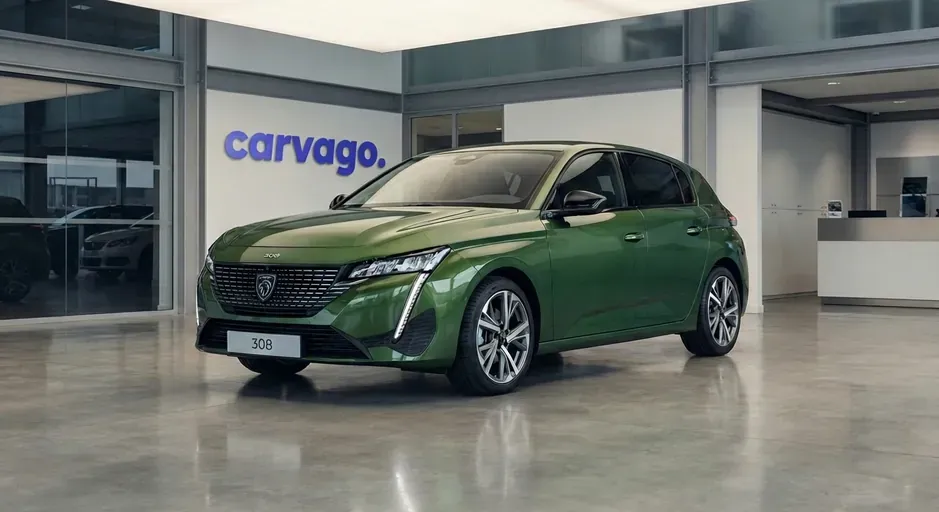
Cupra Born, originally introduced under the concept name SEAT el-Born, is a dynamically tuned fully electric hatchback that targets enthusiastic drivers with its sporty character and advanced rear-wheel drive. Its French challenger is the elegant Peugeot e-308, which is available on the market not only as a classic five-door model but also in a highly practical estate body version under the designation e-308 SW. Let's take a detailed look at how these two attractive electric cars fare in a direct comparison and which of them represents a better choice on the used car market for your daily travel a few years after production.
When looking at the exterior dimensions of the Cupra Born and Peugeot e-308 models, the different design philosophies of the two carmakers are fully revealed. While the Spanish representative uses an exclusively all-electric platform (MEB), its French competitor stands on a multi-energy architecture adapted for battery storage. This technical foundation fundamentally influences the overall proportions – Cupra bets on a taller and shorter body structure focused on maximum interior space, while Peugeot maintains the traditional, elegant, and low-slung silhouette of a classic hatchback or practical estate. The decision between these two cars thus fundamentally depends on whether you prefer modern proportions developed specifically for electric vehicles or a more conservative automotive design.
In terms of exterior dimensions themselves, the Peugeot e-308 in the hatchback version, with a length of 4 367 mm, is 43 mm longer than the Cupra Born (4 324 mm). The French model is also 43 mm wider (1 852 mm compared to 1 809 mm), giving it a sportier and more aggressive stance on the road. However, a fundamental difference can be found in the vehicle height – the Cupra Born measures 1 540 mm, making it a full 102 mm taller than the e-308 (1 438 mm). For the driver, this means in practice that in the Born model, they will experience a slightly higher, almost crossover-like seating position with a better view and more headroom. Peugeot, on the other hand, will please lovers of a traditional sporty driving position and, thanks to its lower silhouette, can benefit from better aerodynamics at highway speeds.
A key parameter for interior space is the wheelbase, where the Cupra Born clearly demonstrates the greatest advantage of its dedicated platform. With a value of 2 766 mm, it surpasses the e-308 hatchback (2 675 mm) by a very noticeable 91 mm. Thanks to this, the Spanish car offers significantly more legroom for rear passengers despite its overall shorter body, making it an excellent and agile car for parking in tight city streets. However, the Peugeot e-308 has a strong ace up its sleeve – as one of the few in this class, it offers an SW (Estate) variant. This features an impressive total length of 4 636 mm and an extended wheelbase of 2 732 mm, making it an ideal choice for families with high demands for luggage space, for whom the basic hatchback simply won't suffice.
| Parameter | Cupra Born Hatchback | Peugeot e-308 Hatchback | Peugeot e-308 Estate |
|---|---|---|---|
| Width (mm) | 1809 | 1852 | 1852 |
| Length (mm) | 4324 | 4367 | 4636 |
| Height (mm) | 1540 | 1438 | 1438 |
| Wheelbase (mm) | 2766 | 2675 | 2732 |
Luggage capacity plays a key role when choosing an everyday family car, especially in the popular compact class. Both the Cupra Born and the Peugeot 308 (including the fully electric e-308 version) approach spaciousness differently, which is a crucial factor in the market for used cars approximately four years old. While the Spanish electric car relies on a single hatchback body style, its French competitor gives buyers a choice and scores points by offering an exceptionally practical estate version.
When it comes to the classic five-door hatchback, the Cupra Born offers a base luggage capacity of 385 litres, which can be increased to 1,267 litres with the rear seats fully folded. This value is comfortably sufficient for weekend shopping and regular travel for two. However, the competing Peugeot e-308 (along with its related 3rd generation plug-in hybrid models) has a slightly smaller volume due to the placement of the traction battery under the floor. Compared to the purely internal combustion versions of the Peugeot 308, which boast a generous 412 litres, the electrified hatchback has to settle for 361 litres. In real life, the difference of less than 25 litres in favour of Cupra means space for an extra soft travel bag, although with the seats fully folded, both cars level out at a practically identical 1,270 litres.
A fundamental change comes when a family requires uncompromising luggage volume. In such a case, Peugeot dominates with its extended Estate version (known as SW). The electric estate offers a generous 548 litres in its basic configuration. With an impressive 1,574 litres after folding the seats, it can easily swallow a bulky stroller, several large suitcases for a long holiday by the sea, or even flat-pack boxes from a furniture store.
| Parameter | Cupra Born Hatchback | Peugeot e-308 Hatchback | Peugeot e-308 Estate |
|---|---|---|---|
| Base capacity (litres) | 385 | 361 | 548 |
| Maximum capacity with seats folded (litres) | 1267 | 1271 | 1574 |
While the Cupra Born offers a slightly more usable base luggage compartment in the hatchback body, if you need to load up the family and all their gear, the exceptionally practical Peugeot e-308 estate version is the clear winner.
The ability to tow a trailer often plays a decisive role for drivers who need a practical and versatile vehicle. If we compare the purely electric Cupra Born and Peugeot e-308 models (which represent used cars on the market with an average age of around four years), we encounter the same fundamental limitation in both. Both the Cupra Born and the fully electric Peugeot e-308 are not homologated by the manufacturer for towing a trailer, and therefore the towing capacity for both vehicles is exactly 0 kg. Owners of these electric vehicles can use a tow bar at most for mounting a bicycle rack.
However, if we consider the wider range of the third-generation Peugeot 308 family with classic internal combustion or plug-in hybrid engines, the situation changes drastically. The base 1.2 PureTech petrol engine offers a standard towing capacity for a braked trailer in the range of 1200 to 1300 kg (and around 660 kg for an unbraked trailer). For more demanding users, there is the economical 1.5 BlueHDi diesel version, with which you can reach a maximum capacity of 1600 kg. The range naturally also includes modern plug-in hybrids, where the additional weight of the traction battery slightly reduces the towing capacity, but with values of 1315 to 1500 kg, it is still an excellent compromise.
In practice, these values mean a huge difference in the car's usability. While both compared electric vehicles without homologation limit you purely to what fits in the car's trunk itself, the internal combustion or hybrid versions of the Peugeot 308 can handle a trailer sufficient for a weekend trip to a hardware store as well as provide generous space for several extra suitcases. The most powerful versions are even well-prepared for towing a medium-sized caravan for a longer holiday. As a result, this fact places the internal combustion Peugeot 308 in the role of an incomparably more practical family helper, while those interested in the Cupra Born or the electric e-308 must accept the fact that moving larger loads with these models is out of the question. Therefore, the table below intentionally does not include electric vehicles with zero capacity, but focuses purely on the relevant internal combustion and hybrid versions of the third-generation Peugeot 308.
| Model and engine | Braked trailer weight (kg) | Unbraked trailer weight (kg) |
|---|---|---|
| Peugeot 308 1.2 Hybrid (100 kW) | 1100-1150 | 660 |
| Peugeot 308 1.2 PureTech 130 (96 kW) | 1200-1300 | 660 |
| Peugeot 308 1.5 BlueHDi 130 (96 kW) | 1500-1600 | 680-710 |
| Peugeot 308 1.6 Plug-In Hybrid (110-133 kW) | 1315-1500 | 710-750 |
The fundamental difference between the Cupra Born and the Peugeot 308 (including its purely electric e-308 version) lies primarily in their architectures and overall approach to powertrains. This difference is crucial for buyers: while the Spanish car was developed from the very beginning exclusively as a battery electric vehicle (BEV) on the dedicated MEB platform with rear-wheel drive, the French hatchback and estate rely on the flexible EMP2 multi-energy platform. Thanks to this, customers on the used car market can choose from across the entire spectrum of technologies at Peugeot. From the classic turbocharged 1.2 PureTech three-cylinder petrol engine to the economical 1.5 BlueHDi four-cylinder diesel, through to modern plug-in hybrids or the purely electric e-308 variant with 115 kW. Cupra, on the other hand, offers no internal combustion compromises and attracts buyers exclusively with electric powertrains with outputs starting at 150 kW, placing a strong emphasis on a sporty driving experience.
The Cupra Born features a clear and exclusively electric range of powertrains, which, with its parameters, targets drivers with a desire for dynamics. On the market for approximately four-year-old used cars (the model has been produced since late 2021 as part of the 1st generation), you will most often encounter the standard variant equipped with a 58kWh battery, which offers a generous output of 150 kW (204 hp). Those looking for a sharper throttle response can search for the more powerful e-Boost version, which delivers up to 170 kW (231 hp) and was available with both the lighter 58kWh and the larger 77kWh battery for a longer driving range. In terms of technology, all these specifications boast an instantaneous torque of 310 Nm, which drives exclusively the rear wheels through a single-speed automatic transmission, giving the car an unexpectedly playful character.
From the database of available versions, it is evident that the brand-new top-of-the-line VZ powertrain with a massive output of 240 kW (326 hp) only enriched the market in the first half of 2024, and therefore it is currently extremely rare in the range of classic four-year-old used cars.
| Engine type | Fuel | Power (kW) | Torque (Nm) | Transmission |
|---|---|---|---|---|
| Born (58 kWh) | Electricity | 150 | 310 | 1AT (RWD) |
| Born e-Boost (58 kWh) | Electricity | 170 | 310 | 1AT (RWD) |
| Born e-Boost (77 kWh) | Electricity | 170 | 310 | 1AT (RWD) |
| Born VZ (79 kWh)* | Electricity | 240 | 545 | 1AT (RWD) |
*The VZ version is only available from 2024 and is almost impossible to find among typical four-year-old used cars.
While Cupra takes a purely electric path, the 3rd generation Peugeot 308 (produced since 2021) approaches powertrains with maximum versatility. The direct competitor to the Born here is the e-308 model. It uses a 115 kW (156 hp) electric motor located on the front axle and draws energy from a 54kWh battery. It is a car tuned more for smooth, quiet, and very efficient daily driving, though dynamically it lags behind the rear-wheel-drive Cupra.
Looking at the availability tables, it is extremely interesting to observe the generational shift in Peugeot engines. Powerful and larger-displacement older combustion engines like the turbocharged 1.6 THP petrol four-cylinder or the 2.0 BlueHDi diesel, which were common in previous generations, have completely given way to modern electrification. Today, the backbone of the combustion range consists of smaller engines – the 1.2 PureTech petrol and the 1.5 BlueHDi diesel (both with 96 kW). The role of the most powerful models in the 3rd generation has been taken over exclusively by advanced plug-in hybrids (PHEV) with a combined output of up to 165 kW (225 hp). A new addition for models from the turn of 2023 and 2024 is also the 1.2 Hybrid 136 mild-hybrid unit, which is paired with a new electrified dual-clutch transmission, the e-DSC6.
| Engine type | Fuel | Power (kW) | Torque (Nm) | Transmission |
|---|---|---|---|---|
| 1.2 PureTech 130 | Petrol | 96 | 230 | 6MT / 8AT (EAT8) |
| 1.5 BlueHDi 130 | Diesel | 96 | 300 | 8AT (EAT8) |
| 1.2 Hybrid 136 | Mild-hybrid | 100 | 230 | 6AT (e-DSC6) |
| 1.6 PHEV 180 | Plug-in hybrid | 132 | 360 | 8AT (e-EAT8) |
| 1.6 PHEV 225 | Plug-in hybrid | 165 | 360 | 8AT (e-EAT8) |
| e-308 156* | Electricity | 115 | 260 | 1AT (FWD) |
*The purely electric e-308 powertrain only entered the market during 2023, so it is currently in the minority in used car dealerships compared to traditional and hybrid 3rd generation powertrains.
In terms of overall assessment, we encounter clear strengths and weaknesses in both cars shaped by their concepts. The privilege of the Cupra Born is its precise, low center of gravity thanks to the large batteries built into the floor, and especially the sportier weight distribution resulting from the rear-engine, rear-wheel-drive (RWD) layout. Its only weakness is the fact that it gives no choice other than strictly battery-electric propulsion.
The Peugeot 308 / e-308 brings peace and peace of mind. For fans of electromobility, the e-308 may have weaker acceleration on paper and "only" front-wheel drive, but it compensates for this with fantastically optimized consumption of around 12.7 kWh/100 km. Furthermore, if you find that an electric car does not yet fit your lifestyle, Peugeot calmly offers you a plug-in hybrid compromise or a diesel engine tailored for long highway trips on the same body, making it an incredibly flexible car in the field of four-year-old used vehicles.
Recommendation for buyers: If you are a driver oriented towards high performance, precise handling, and don't mind switching to a fully electric model operating mainly in areas with a good charging network, the Cupra Born is made for you. For drivers who appreciate an exceptionally comfortable ride but need versatility – whether it's high highway mileage (where the 1.5 BlueHDi shines) or daily city commutes without worrying about range outside of charging infrastructure (PHEV variants), the Peugeot 308 family makes perfect sense.
The Cupra Born captivates drivers longing for a powerful rear-wheel-drive car with a pure electric experience, while the Peugeot 308 excels with absolute freedom of choice between traditional combustion engines, plug-in hybrids, and the comfort-oriented electric e-308 version.
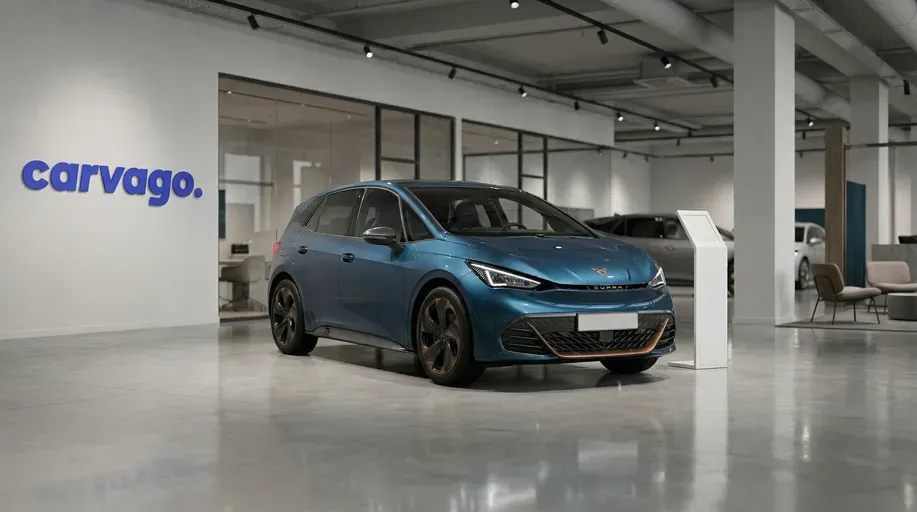
Choosing the right powertrain is absolutely crucial for long-term satisfaction with a car, and our recommendations are always based on performance, real-world energy consumption, owner feedback, and long-term mechanical and software reliability. When comparing the two cars, you encounter two different worlds of technical approach to electrification. The Cupra Born uses the Volkswagen Group's dedicated electric platform (MEB) with rear-wheel drive, making it a fun and dynamic hatchback with excellent torque transfer to the road. In contrast, the Peugeot e-308 is built on the flexible EMP2 platform with front-wheel drive and focuses on extreme efficiency – its electric motor, designed in collaboration with the Japanese company Nidec, scores points primarily for its quiet operation and exceptionally low consumption, significantly aided by the standard-fit heat pump.
From the wide range of the Cupra Born model, the variant with the standard 58kWh battery and 150 kW (204 hp) output makes by far the most sense on the used car market. According to our data, this basic configuration was available from 2021 to 2024, perfectly covering the market for attractive three- to four-year-old used cars and representing the most logical choice on the secondary market in terms of price-to-value ratio.
Since the electric Peugeot e-308 is available exclusively with a single powertrain option (which has been offered on the market since late 2023), the choice for those interested in this French model is clear. Given the production years, you will exclusively encounter very recent used cars, typically in top condition. Under the hood lies the proven Stellantis Group electric motor with 115 kW (156 hp) combined with a battery with a usable capacity of 50.8 kWh (54 kWh gross).
The difference between official laboratory values and the real world is often vast, both for internal combustion engine vehicles and modern electric cars. While the figures in the catalogue always look tempting, actual consumption depends primarily on driving style, route profile, and the season. To get an objective picture, we relied on long-term data from real drivers on the Spritmonitor.de platform. We included models representing roughly four-year-old used cars in the comparison – for the all-electric Cupra Born, this is its first generation to date, while for Peugeot, we focus on the current third generation of the 308 model, which, in addition to the electric e-308 variant, offers classic internal combustion and plug-in hybrid versions for direct comparison.
| Model and engine | Average consumption (l/100 km) |
|---|---|
| Peugeot 308 1.5 BlueHDi 130 | 5.2 |
| Peugeot 308 1.2 PureTech 130 | 6.6 |
| Peugeot 308 1.6 PHEV 180 | 3.8 |
| Peugeot e-308 156 (electric car) | 16.8 kWh |
| Cupra Born 58 kWh (electric car) | 17.5 kWh |
| Cupra Born 77 kWh (electric car) | 18.2 kWh |
A look at the collected data reveals several interesting trends, especially when comparing conventional engines with alternative ones. The biggest surprise is the 1.2 PureTech three-cylinder petrol engine in the Peugeot. Although it promises low consumption on paper, in real-world traffic – especially on the motorway or when the car is fully loaded – this small turbo engine is far from saving fuel as much as one might expect. In comparison, the 1.5 BlueHDi diesel unit clearly demonstrates its efficiency and easily beats its petrol sibling on all fronts. The fully electric variants then play in a league of their own. Despite its sportier and more aggressive character, the Cupra Born is relatively economical, although the larger 77kWh battery takes a small toll on overall consumption due to its significantly higher weight. However, the competing Peugeot e-308 emerges from this pair as a slightly more efficient choice in terms of pure electricity consumption, primarily thanks to its excellent aerodynamics.
What does this mean for everyday users? If you are one of those drivers who spend a lot of time in city traffic jams or commute shorter distances at suburban speeds, battery models like the Peugeot e-308 or Cupra Born will offer you excellent savings on daily operating costs and a smooth ride. From the perspective of motorway travellers and budget-oriented drivers with a high annual mileage, the diesel Peugeot 308 remains the clear king in our line-up, providing an unbeatable ratio of high range and cost per kilometre. In the end, consumption itself will likely not be the main factor when deciding directly between the electric Peugeot and the Cupra. The real-world operating differences in electricity consumption are so small here that the final purchase will probably be decided by the different design, driving dynamics requirements, or the available battery capacity.
When choosing a roughly four-year-old electric car, the situation for both models differs quite fundamentally in terms of their history. While the first generation of the Cupra Born has been on the scene since 2021, giving buyers on the used car market a rich selection of attractively priced vehicles, the fully electric Peugeot e-308 (derived from the third generation of the classic "308") only went on sale during 2023. This time shift has a major impact on market prices and the actual supply in used car dealerships.
The sporty Spanish twin of the Volkswagen ID.3 is a much easier target from the perspective of buying a typical used car. Customers can fully benefit from the initial depreciation that these electric cars have already undergone.
The French competitor relies on the attractive body of the third-generation 308 hatchback, but as a pure electric car, it is relatively new to the market. Looking for a four-year-old car in the case of the e-308 version is therefore logically impossible for now.
| Indicator | Cupra Born | Peugeot e-308 |
|---|---|---|
| Typical year in used market | 2021 – 2022 | 2023 – 2024 |
| Approximate price from | ~ €23,000 | ~ €27,000 |
| Most common price for standard equipment | €25,000 – €29,000 | €29,000 – €33,000 |
| Depreciation rate (amortization) | Higher (sharp drop in value already occurred) | Lower (mostly nearly new cars still on the market) |
| Selection on the used market | Wide and diverse | Still noticeably limited |
Thanks to its earlier market launch, a used Cupra Born offers a much better value-for-money ratio in terms of depreciation, while with the Peugeot e-308, you are essentially buying a nearly new car with a longer valid warranty for a slightly higher amount.
When choosing a modern electric vehicle, customers often rely on the fact that cars automatically receive five-star Euro NCAP ratings. However, even with this pair, it is essential to consider the broader context and the year of testing. The agency's safety protocols are constantly evolving and becoming stricter, meaning that percentage scores from different years cannot be compared directly. Newer methodologies include much more rigorous frontal impact simulations, improved cyclist detection, more thorough protection for vulnerable road users, and complex evasive maneuvers at intersections. For the compared pair, the Cupra Born and Peugeot e-308, this temporal and methodological difference is absolutely fundamental.
The Cupra Born boasts a completely fresh and top-tier five-star rating. Although it was first tested back in 2022, the manufacturer had it reassessed in 2025 according to the latest and significantly more demanding Euro NCAP protocols. The car easily defended its full star rating, achieving an excellent 89% for adult occupant protection and 87% for child occupant protection. The model also achieved very good results in the areas of vulnerable road user protection (76%) and safety assist systems (76%). These results clearly demonstrate an exceptionally high level of active and passive safety, significantly supported by the presence of a center airbag and advanced sensors for automatic emergency braking.
The Peugeot e-308, on the other hand, represents a different situation from a certification perspective. The fully electric e-308 variant itself has not yet been officially and directly tested by Euro NCAP. However, the standard internal combustion engine version of the Peugeot 308 underwent testing in 2022, where it received only four out of five possible stars. At the time, the agency criticized the car mainly for the absence of a center airbag and the use of older generations of certain safety assistants compared to contemporary competitors. Since official measured data for the purely electric e-308 model is missing, its values cannot be guaranteed with certainty, and its scores cannot be included in the comparison table.
In terms of the most modern safety standards and overall confidence, the Cupra Born emerges as the clear winner from this comparison. Successfully defending its full five stars in the extremely strict 2025 testing means that its protective features and assistance systems are demonstrably at the highest possible level and can keep pace even with much newer vehicles. While the Peugeot e-308 undoubtedly benefits from a modern platform, the lack of a dedicated test for the electric version and the only four-star score of its combustion sibling from 2022 put it at a disadvantage.
| Parameter | Cupra Born | Peugeot e-308 |
|---|---|---|
| Year of testing | 2025 | Not tested |
| Adult occupant protection | 89 % | - |
| Child occupant protection | 87 % | - |
| Vulnerable road user protection | 76 % | - |
| Safety assist systems | 76 % | - |
While the Cupra Born confidently defended its full five stars in the strictest test for 2025, the electric Peugeot e-308 is still waiting for its own official safety certificate.
In addition to standard equipment, each model offers several unique features that can be decisive for a customer when choosing a used electric car. While the Spanish representative targets drivers looking for emotion and dynamics, the French competitor builds on unique interior architecture and family practicality.
Rear-wheel drive and sportier chassis tuning guarantee excellent and fun driving characteristics
Option of a larger battery capacity (up to 77 kWh) ensuring a real-world range of around 500 km
Generous interior space, especially for rear-seat passengers, thanks to the pure electric MEB platform
Fast DC charging with power up to 170 kW (on versions with the larger battery), which speeds up long-distance travel
Distinctive and aggressive exterior design that sets it apart from more conservative competition on the road
Unintuitive infotainment controls and touch pads on the steering wheel that distract from driving
Lack of a front trunk (frunk) for easy storage of charging cables
Presence of cheaper hard plastics in some parts of the interior lowers the overall impression
The Cupra Born is an ideal electric car for drivers looking for a more dynamic driving experience and a sporty look in a compact package. Thanks to rear-wheel drive, excellent agility, and the availability of larger batteries, it perfectly combines fun on backroads with a practical range for longer trips, despite minor compromises in infotainment ergonomics.
Premium interior craftsmanship with high-quality materials and an attractive i-Cockpit layout
Availability in an exceptionally practical estate (SW) body style, which is a rarity among compact electric cars
Highly efficient powertrain ensuring low average electricity consumption
Very comfortable and quiet chassis tuning that brilliantly filters out bumps during daily commuting
Limited battery offering (only 51 kWh usable capacity) means a shorter maximum range compared to [Cupra](https://carvago.com/en/cars/cupra)
The specific driving position due to the i-Cockpit may not suit everyone and can obscure the instrument cluster
Slower maximum DC fast charging speed, which is limited to 100 kW
Significantly less legroom for rear-seat passengers compared to platforms developed purely for electric vehicles
The Peugeot e-308 will primarily appeal to customers who appreciate French elegance, top-tier interior materials, and a focus on maximum driving comfort in a used car. While the SW variant makes it a great choice for smaller families requiring more luggage space, buyers must accept the smaller battery capacity and slower charging compared to pure electric competitors.
Based on long-term owner experience, service reports, and hundreds of inspections included in our independent car condition audit, we have compiled a detailed overview of the most common problems. You will find out what to look out for when choosing these used electric cars.
Cupra Born shares the proven MEB architecture with models like the Volkswagen ID.3, which guarantees great interior space and driving characteristics, but also brings typical "teething troubles" of the first generation of group electric vehicles.
The mechanical and electrical foundation of the car is highly reliable. However, the overall impression and daily life can occasionally be complicated by a moody infotainment system and striking onboard electronics, which the manufacturer is trying to fix with frequent updates.
The electric Peugeot e-308 has been on the market for a relatively short time, so long-term data from technical inspections is still being collected. However, areas requiring the future owner's attention are already clearly emerging.
The electric drive from the Stellantis group does not yet show fatal or expensive defects. However, future owners should expect slightly confused software and thoroughly check the condition of the rear brakes, which rust intensely, before purchasing.
When buying a used car, a thorough inspection is key. Although both are modern electric vehicles, where concerns about complex internal combustion engines or gearboxes are eliminated, both models have their specifics and potential weak points. Before you make a final decision, a professional comprehensive car audit will greatly help you uncover hidden defects.
On the used car market, the Cupra Born offers the option of a larger 77kWh battery, with which the homologated range exceeds 540 kilometres. The Peugeot e-308 relies entirely on a smaller 54kWh battery, which provides a standard range of around 410 kilometres. However, if you compare the e-308 with the basic 58kWh battery of the Spanish representative, the real-world driving ranges are very close.
In terms of dynamics and fun behind the wheel, the Cupra Born has the upper hand, benefiting from rear-wheel drive and a stiffer, sportier suspension setup. The Peugeot e-308, on the other hand, is a typical front-wheel drive car, where the designers placed maximum emphasis on a quiet, smooth, and comfortable ride.
The Peugeot e-308 bets on the specific i-Cockpit with a small, low-set steering wheel and a raised instrument cluster, which looks premium but may not suit every body type ergonomically. The Cupra, by contrast, offers a more conventional driving position, though its infotainment and integrated touch surfaces may require more practice to operate.
The Cupra Born supports fast charging of up to 170 kW for the version with the largest battery, and 120 kW for the standard variant. The Peugeot e-308 has its DC charging power limited to a maximum of 100 kW. However, due to the different sizes of the batteries themselves, both cars can get from 10 to 80% capacity in a comparable 30 to 35 minutes.
While the Cupra Born will primarily appeal to enthusiastic drivers looking for sporty driving characteristics, playful rear-wheel drive, and a dynamic design developed purely for an electric platform, the Peugeot e-308 represents the embodiment of French elegance focused on maximum comfort and extraordinary energy efficiency. Thanks to a wider range of battery capacities and excellent agility, the Spanish hatchback is an ideal choice for those who want to enjoy their daily commute behind the wheel, while also benefiting from generous space in the rear seats. On the other hand, Peugeot makes perfect sense for users with a calmer driving style and families, for whom its unique and highly practical estate (SW) body variant represents an absolutely unrivaled and versatile choice on the used electric car market.
Sources: ADAC, e15.cz, svetmotoru.cz, auto-mania.cz, emobility.cz, autoskola-testy.cz
This article was prepared using artificial intelligence tools. The section guarantor is Petr Dušek.

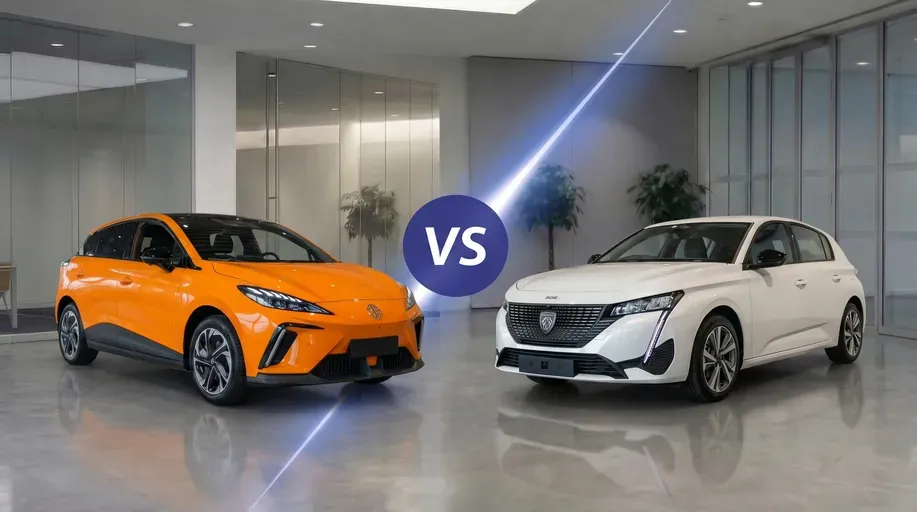
Detailed comparison of the MG4 and Peugeot e-308. We compared the real-world range, equipment, and driving characteristics of both electric vehicles. Read our verdict before you buy!
Apr 13, 2026

MG4 EV vs Renault Mégane E-Tech Electric comparison. A detailed look at range, equipment, and real-world experience. Read our verdict and make your choice easier!
Apr 13, 2026

Comparison of the BMW i4 and Volkswagen ID.7. Find out which electric car has better real-world range, equipment, and driving comfort. Read our final verdict.
Apr 14, 2026