Car battle
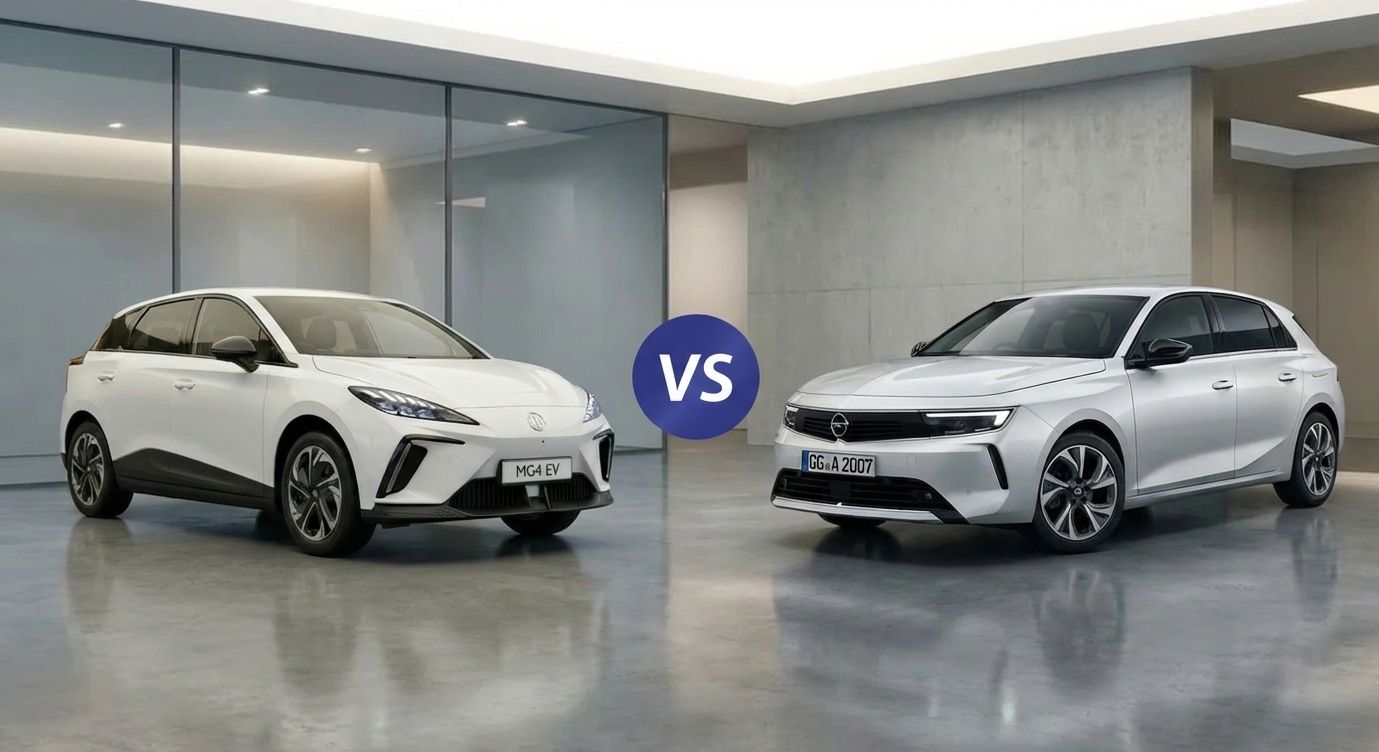
MG4 vs. Opel Astra Electric: Complete comparison 2026
Deciding between the MG4 and the Opel Astra Electric? Our detailed comparison of range, price, and equipment will help you choose the right electric hatchback for you.
Apr 14, 2026
Articles
Car battle
Detailed comparison of the MG4 and Peugeot e-308. We compared the real-world range, equipment, and driving characteristics of both electric vehicles. Read our verdict before you buy!
April 13, 2026
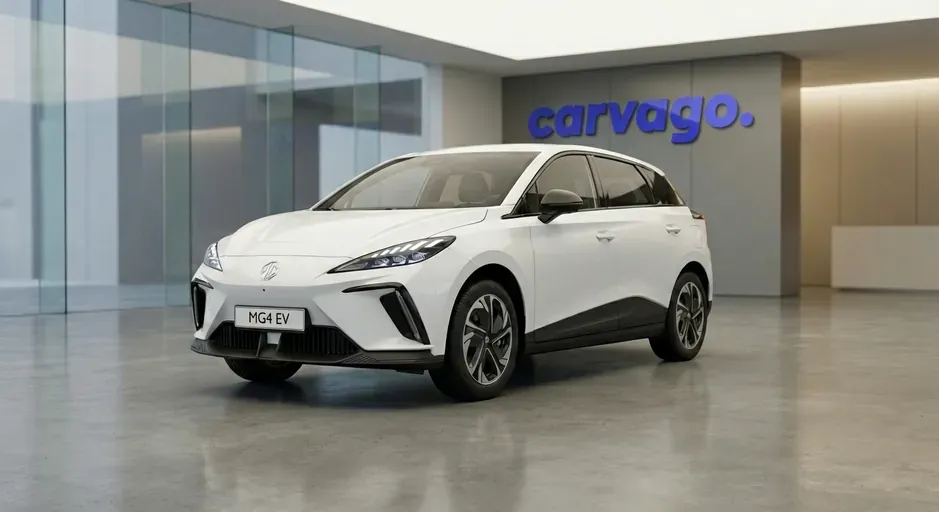
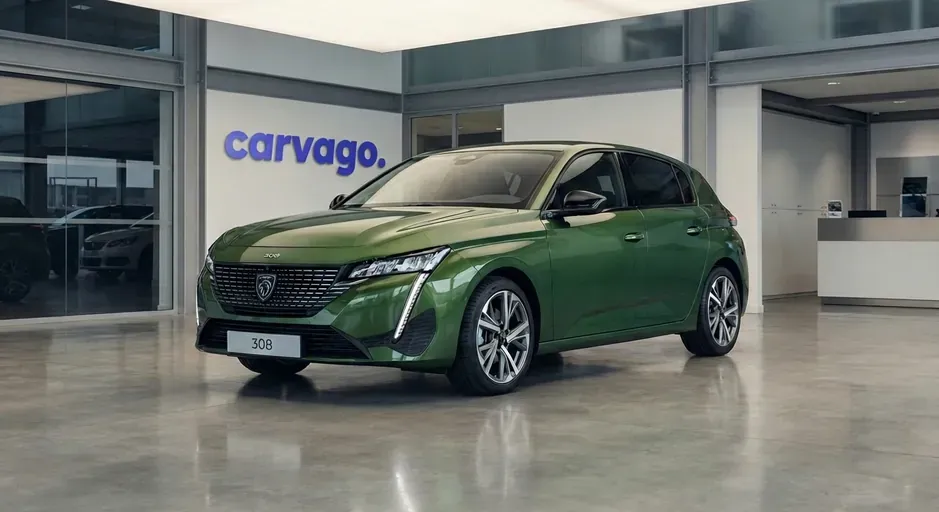
The Chinese electric MG4 hatchback, also known in selected markets as the MG4 EV or by its original name MG Mulan, revitalizes the compact class with its innovative rear-wheel-drive platform and exceptionally attractive price-to-performance ratio. Standing against it is the French Peugeot e-308, a fully electric version of the popular European model, which attracts customers with its aggressive exterior design, high level of comfort, and premium-finished interior with the signature i-Cockpit layout. In the following detailed comparison, we will examine technical specifications, practicality, and the overall driving impression in detail to help you decide which of these two differently conceived electric vehicles will be the better choice for your daily travels.
The exterior dimensions of both cars beautifully illustrate the different approaches to their construction. While the Peugeot e-308 is based on a multi-energy platform (EMP2), which must also accommodate internal combustion engines, the MG4 was developed from the start as a pure electric vehicle. This fundamentally affects the proportions of both hatchbacks. The Peugeot e-308, with a length of 4367 mm, is 80 mm longer than the MG4. Nevertheless, the MG4 benefits from its dedicated electric platform and offers a wheelbase of 2705 mm, which is 30 mm more than its French competitor (2675 mm). In practice, this means that the MG4 has extremely short body overhangs and can offer slightly more generous longitudinal space for the occupants from a smaller footprint.
Another significant difference can be found when looking at the height of both cars. The Peugeot e-308 maintains a very low, sporty, and dynamic build with a height of just 1438 mm. The MG4, on the other hand, is nearly 8 centimeters taller (reaching 1504 to 1516 mm), which makes getting in slightly easier and gives the car a somewhat crossover-like character. The width of both vehicles is fully comparable. At 1852 mm, the Peugeot is only slightly wider than the MG4. In narrow city streets, both cars will maneuver very similarly, although the slightly shorter MG4 will offer a slight advantage when looking for a parallel parking spot.
However, a completely decisive factor for many buyers may be the overall range of body styles. While the MG4 is available exclusively as a classic five-door hatchback, Peugeot has a strong ace up its sleeve in the form of the practical estate labeled e-308 SW. With its length of 4636 mm and extended wheelbase of 2732 mm, it confidently surpasses the Chinese challenger. The French estate thus represents an ideal choice for those primarily looking for a family car with a generous luggage compartment, while the MG4 targets individuals and smaller families looking for an agile car for daily driving.
| Parameter | MG4 Hatchback | Peugeot e-308 Hatchback | Peugeot e-308 Estate |
|---|---|---|---|
| Width (mm) | 1836 | 1852 | 1852 |
| Length (mm) | 4287 | 4367 | 4636 |
| Height (mm) | 1504-1516 | 1438 | 1438 |
| Wheelbase (mm) | 2705 | 2675 | 2732 |
When choosing a used family electric car, the size and usability of the luggage compartment often play a decisive role. If we compare models roughly four years old – namely the first-generation MG4 and the third-generation Peugeot 308 (in the fully electric e-308 version) – we find that both cars in the hatchback version are surprisingly similar in their paper specifications. While the MG4 offers a basic trunk volume of 363 liters, its French competitor counters with an almost identical value of 361 liters. For a typical weekend grocery run or storing two carry-on suitcases, both values are fully sufficient. In the context of the compact class, however, this is rather slightly below average, which is a direct consequence of placing the large traction battery in the floor.
A fundamental difference appears when you need to transport bulkier cargo or regularly load a stroller. While the MG4 is available on the market exclusively as a five-door hatchback, where you get a maximum volume of 1177 liters after fully folding the rear seats, Peugeot emphasizes greater flexibility with its platform. Even the e-308 hatchback can offer 1271 liters after folding the rear backrests, surpassing its Chinese-British rival by about a hundred liters and scoring with better overall usability.
The real trump card for family-oriented buyers, however, is the estate body variant of the Peugeot, traditionally designated as the e-308 SW. It boasts a very generous basic volume of 548 liters by battery vehicle standards. In practice, this means plenty of room for several extra suitcases and stress-free packing for a longer summer holiday. After folding the backrests, the volume of the SW version increases to a top-tier 1574 liters, with the huge advantage of a long and almost perfectly flat loading area. The choice is ultimately clear: for agile movement around the city, both hatchbacks serve very similarly, but as soon as you need to move house or travel fully loaded, the Peugeot estate is unbeatable.
| Parameter | MG4 Hatchback | Peugeot e-308 Hatchback | MG4 Estate | Peugeot e-308 Estate |
|---|---|---|---|---|
| Base volume (liters) | 363 L | 361 L | - | 548 L |
| Max volume with seats folded down (liters) | 1177 L | 1271 L | - | 1574 L |
While the short versions of both cars offer almost identical luggage space, the existence of the practical Peugeot e-308 SW makes it a much more versatile choice for family use and transporting bulkier items.
The ability to tow a trailer is often a decisive factor for drivers looking for a practical solution for transporting larger items. When comparing these two compact electric cars, you will encounter one absolutely fundamental difference. With the first generation of the MG4 model (available since 2022), you have a standard and maximum towing weight of exactly 500 kg, for both braked and unbraked trailers. While this capacity is not intended for heavy caravans, it provides a very welcome space for a few extra suitcases, or is perfectly sufficient for a weekend purchase of building materials or hauling garden waste. In contrast, the purely electric Peugeot e-308 does not allow trailer towing at all; the relevant data is completely missing for it, and its legal towing capacity is 0 kg. Interestingly, for the same car with a different powertrain – for example, the third-generation Peugeot 308 1.6 PHEV plug-in hybrid version – the towing capacity ranges between 1,315 and 1,500 kg. However, the electric platform of the e-308 model has taken its toll in this regard, and owners must rely purely on the internal trunk volume. The conclusion is simple: if you are one of those motorists for whom even the occasional attachment of a small trailer for a longer holiday is a necessity, the MG4 is the only sustainable and functional choice of the two.
| Model and motorization | Braked weight of trailer (kg) | Unbraked weight of trailer (kg) |
|---|---|---|
| MG4 Electric / EV (1st generation) | 500 | 500 |
While the MG4 and Peugeot e-308 target a very similar group of drivers, their philosophies under the hood differ fundamentally. The MG4 is built on a dedicated electric platform (MSP), which brings advantages in the form of ideal weight distribution, rear-wheel drive, and a wide range of purely electric power outputs. In contrast, the third-generation Peugeot 308 (introduced at the turn of 2021 and 2022) utilizes the universal EMP2 platform. The purely electric e-308 model is thus just the tip of the iceberg in a rich offering that includes economical diesels, petrol engines, and advanced plug-in hybrids (PHEV). For those interested in a used car about four years old, this presents an interesting decision: the MG4 scores as a perfect modern electric vehicle, while the Peugeot leaves the door open for drivers who need internal combustion flexibility.
Since its market launch in 2022, the MG4 has offered exclusively fully electric powertrains. The base is formed by the version with a 51kWh battery (125 kW), which is an ideal and affordable entry ticket into the world of electromobility. If you spend more time outside the city, variants with a larger battery come into play – Long Range (64 kWh and 150 kW) or Extended Range (77 kWh and 180 kW). The absolute extreme in the used car market is the XPower version. It features two electric motors, all-wheel drive (AWD), a massive output of 320 kW (435 hp), and 600 Nm of torque. Furthermore, all standard versions boast fun rear-wheel drive, which is a real rarity in this class of hatchbacks.
| Powertrain | Fuel | Power (kW) | Torque (Nm) | Transmission |
|---|---|---|---|---|
| Electric motor (51 kWh) | Electricity | 125 | 250 | 1-speed automatic |
| Electric motor (64 kWh) | Electricity | 150 | 250 | 1-speed automatic |
| Electric motor (77 kWh) | Electricity | 180 | 350 | 1-speed automatic |
| XPower AWD (64 kWh) | Electricity | 320 | 600 | 1-speed automatic |
The purely electric Peugeot e-308 entered the market only during 2023 with a 54 kWh battery and a refined electric motor with an output of 115 kW (156 hp). It is tuned primarily for a smooth, elegant, and quiet ride. However, most available third-generation used cars from 2022 and 2023 hide internal combustion engines. Please note that purely internal combustion versions such as the 1.2 PureTech three-cylinder and the most powerful plug-in hybrid 1.6 PHEV 225 were gradually withdrawn from the market starting in 2024 to make room for modern mild-hybrid systems (1.2 Hybrid 136). However, the reliable 1.5 BlueHDi diesel engine remained in the lineup for a surprisingly long time, making it a staple for fleet and high-mileage customers.
| Powertrain | Fuel | Power (kW) | Torque (Nm) | Transmission |
|---|---|---|---|---|
| 1.2 PureTech 130 | Petrol | 96 | 230 | 6-speed manual / 8-speed EAT8 |
| 1.5 BlueHDi 130 | Diesel | 96 | 300 | 6-speed manual / 8-speed EAT8 |
| 1.2 Hybrid 136 | Mild-Hybrid | 100 | 230 | 6-speed e-DSC6 |
| 1.6 Plug-In Hybrid 180 | PHEV | 132 | 360 | 8-speed e-EAT8 |
| 1.6 Plug-In Hybrid 225 | PHEV | 165 | 360 | 8-speed e-EAT8 |
| e-308 156 | Electricity | 115 | 270 | 1-speed automatic |
Which path to choose?
If you desire an electric vehicle exclusively and have a limited budget, the MG4 is unbeatable in terms of price/performance ratio. Standard versions will please you with the great response of rear-wheel drive, while the XPower will thrill sports car fans. On the other hand, the Peugeot 308 embodies the choice of reason for those who do not want to force themselves into full electrification. For highway travelers, the 1.5 BlueHDi diesel will be a great fit, while Plug-In Hybrid models are perfect for regular combined routes, allowing you to drive on electricity alone during the work week. The purely electric e-308 is then ideal for those interested in French charm and first-class comfort without local emissions.
While the MG4 dominates the used car market with its sophisticated purely electric platform and rear-wheel drive, the Peugeot 308 family offers the comfortable certainty of choice – from a reliable diesel to plug-in hybrids.
Choosing the right powertrain is absolutely crucial for long-term satisfaction with a car, which is why our recommendations are based on real-world experience with performance, range, owner feedback, and mechanical reliability. While the MG4 (available since 2022) uses a pure electric platform with rear-wheel drive and a 50:50 weight distribution, giving it an unexpectedly sporty character, the Peugeot e-308 (on the market since 2023) stands on a modified platform for internal combustion cars with front-wheel drive. From a used car market perspective, it is interesting that MG offers a wide range of batteries and power outputs with an emphasis on dynamics and price-to-performance ratio, while Peugeot has bet everything on a single, albeit extremely efficient, powertrain where soundproofing and maximum travel comfort take center stage.
This powertrain, available in the 1st generation primarily under the Comfort and Luxury trim levels (commonly from 2022–2025), represents the ideal middle ground in the MG4 lineup. The 150 kW output guarantees excellent dynamics, and the rear-wheel drive gives the hatchback surprisingly playful and agile handling characteristics. The larger 64 kWh battery uses NMC chemistry and provides a trouble-free real-world range of around 350 km. Furthermore, it handles up to 135 kW at fast-charging stations, allowing you to top up to 80% in less than half an hour. The mechanical reliability of this drive is above average and shows no serious chronic defects.
The main risks with older used cars are hidden not in the hardware, but in the software – early versions of the infotainment can be slow and occasionally freeze, which is particularly frustrating because the air conditioning is also controlled via the touchscreen. During a test drive of a used car, click through the on-board system menus thoroughly, check its smoothness, and always demand that the dealer or authorized service center uploads the latest available software version before the sale, which fundamentally improves stability. This configuration is a great choice for more dynamically minded drivers who don't mind slightly cheaper interior materials and are looking for a very capable and fun car for both city and longer highway trips.
For the fully electric version of the e-308, which has been rolling off the 3rd generation production lines since late 2023, the manufacturer offers no other electric powertrain, which clearly simplifies your choice on the used car market. This is a 115 kW unit where you shouldn't expect to be pinned to your seat – acceleration from zero to one hundred takes about 9.5 seconds. However, its greatest technical advantage is phenomenal refinement, silky smooth operation, and excellent efficiency. Despite the battery capacity being smaller by today's standards (54 kWh), the e-308 can easily cover a real-world 300 km on a single charge thanks to very low consumption. Fast charging is limited to 100 kW, but for such a small battery, this is a sufficient value.
The biggest pitfall with a used unit can be the size of the battery itself. A smaller battery means that any natural capacity degradation will manifest much sooner as an unpleasant limitation of range on long trips. Therefore, when buying, always insist on being presented with a report from a certified battery state measurement (SOH – State of Health). Other specifics include the absence of strong recuperation for so-called "one-pedal" driving; you will have to slow the vehicle down using the traditional brake pedal. The Peugeot e-308 is an ideal and very elegant choice for calm drivers spending most of their time on suburban routes, who prioritize premium cabin craftsmanship and top-tier travel comfort over sporty performance.
Differences between officially stated consumption and real-world operation plague electric vehicles just as they did internal combustion engines in the past. The stated range according to the WLTP methodology often assumes ideal conditions, while reality depends on the route profile, outdoor temperature, and driving style. To provide the most accurate picture, we analyzed real user data from the Spritmonitor.de platform and specialized databases focused on electromobility. With the used car market in mind, where we focus on vehicles approximately four years old, we compared the values for the first generation of the MG4 model (production from 2022) and the purely electric variants of the third-generation Peugeot 308 (available from 2023).
| Model and powertrain | Average consumption (kWh/100 km) |
|---|---|
| Peugeot e-308 156 (115 kW) | 15.4 |
| MG4 Electric (125 / 150 kW) | 16.5 |
| MG4 Electric Extended Range (180 kW) | 16.5 |
Looking at these values, it is clear that the classic "diesel versus petrol" dilemma is completely eliminated for these models, replaced by a battle for overall aerodynamics and drivetrain efficiency. Real-world data reveals one rather surprising finding: although the MG4 was developed from the ground up as a pure-bred electric vehicle, the Peugeot e-308, which uses a shared multi-energy platform, is slightly more economical in everyday use. The French representative benefits greatly from a very efficient 115 kW electric motor and achieves one of the best operating values in its class, with an average of approximately 15.4 kWh/100 km. MG4 cars in standard versions with battery capacities of 51 or 64 kWh typically require an average of 16.5 kWh per 100 km. This shows that the more dynamically tuned rear-wheel drive of the MG4, with its higher power output, does not conserve energy quite so puritanically.
For the average consumer and driver spending most of their time in urban or suburban traffic, both cars represent an extremely economical alternative. However, with its results, the Peugeot e-308 clearly targets drivers with a calmer pace who care about the maximum efficiency of every kilowatt-hour consumed. For long-distance drivers, however, there is a strong counter-argument from the MG4. Although its energy appetite is slightly higher, the British-Chinese model is also available in an Extended Range version with a large 77 kWh battery, which easily compensates for the theoretical disadvantage in consumption with a greater real-world range before needing to stop at a charger.
In conclusion, it can be stated that electricity consumption will likely not be the main deciding factor when choosing between these two cars. Although the Peugeot e-308 emerges from this duel as the more economical one, the difference of less than 1 kWh per 100 km is relatively negligible in everyday operation. Buyers will likely consider other priorities – with the Peugeot, they will bet on the more premium craftsmanship of an established brand, while with the MG4, they will look for a more attractive purchase price in relation to raw power and battery capacity.
When looking for a used electric car approximately two to four years old, the MG4 and Peugeot e-308 models represent completely different worlds in terms of price. To properly understand the market, it is crucial to take into account the historical context of both models. While the Chinese MG4 burst into Europe as early as 2022 and is now commonly available as a used car around three to four years old, the fully electric Peugeot e-308 only reached customers at the turn of 2023 and 2024. Therefore, in used car dealerships, you will mostly encounter younger, less used, and consequently more expensive examples of the French representative.
The MG4 Hatchback has built a reputation as a car that has largely democratized electromobility on the European market. On the used car market, it benefits from its longer presence and natural initial depreciation, making it an exceptionally rational choice.
The all-electric Peugeot e-308 is still a somewhat rarer sight in used car dealerships. Typical "four-year-old used cars" do not yet exist in its case, so interested parties choose from nearly new cars at most one to three years old.
The following table shows estimated market prices for vehicles belonging to the model years and generations currently present on the used car market:
| Model | Typical Age on the Used Market | Estimated Starting Price (€) | Average Price of Better-Equipped Versions (€) |
|---|---|---|---|
| MG4 (51–64 kWh) | 3–4 years (2022–2023) | from €16,000 | €18,000 – €23,000 |
| Peugeot e-308 (54 kWh) | 1–3 years (2023–2025) | from €23,000 | €27,000 – €30,000 |
(Note: The stated price range is indicative and always depends on the specific mileage, the condition of the traction battery, and the current market offer.)
If your priority is the best possible price-to-utility ratio, a used MG4 offers proven technology for unbeatable money. The Peugeot e-308, on the other hand, scores with drivers who don't mind paying extra for a younger model year, a more premium interior, and attractive European design with higher residual value.
Although many buyers automatically expect a five-star safety rating for modern electric vehicles, it is essential to understand the broader context and, above all, the year of testing when interpreting Euro NCAP results. Methodology and testing protocols are constantly becoming stricter over time, so percentage scores from different years are not directly comparable. In the case of the MG4 and Peugeot e-308, however, we have a completely direct and fair comparison, as both cars underwent testing in the same year, 2022. This means that both models faced the latest and most rigorous tests, which include advanced frontal impact simulations, stricter cyclist detection, and evaluation of emergency scenarios at intersections.
The MG4 model underwent Euro NCAP tests in 2022 with an excellent result, becoming one of the few affordable electric vehicles to receive the full five-star rating. This hatchback benefits from its dedicated EV platform and scored highly across all categories. Adult occupant protection was rated at a very respectable 83%, while child occupant protection reached 80%. The car also impressed in the protection of vulnerable road users (75%) and, above all, in the evaluation of safety assist systems (78%). The effectiveness of the standard MG Pilot package, which reliably reacts to pedestrians and cyclists, was fully demonstrated here.
The Peugeot e-308 shares its rating with the standard 308 model, which was also tested in 2022. The French representative earned an overall rating of four stars. Although child occupant protection, at 84%, is slightly better than that of its Chinese-British competitor, the Peugeot falls behind in other disciplines. Adult occupant protection reached 76%, which was affected by average driver chest protection and the absence of a center airbag to prevent occupants in the front from colliding during a side impact. A score of 68% for pedestrian protection and 65% for assistance systems shows that although the car features many modern elements, it narrowly missed the strictest requirements for a fifth star in that year.
The conclusion for the safety comparison is clear. Although both cars meet demanding modern standards and the Peugeot excels in protecting children in the rear seats, the MG4 offers a more robust and advanced safety package overall. Earning five stars in the same, very strict testing cycle makes the MG4 a more comprehensive and safer choice for both the occupants and other road users.
| Parameter | MG4 | Peugeot e-308 |
|---|---|---|
| Year of testing | 2022 | 2022 |
| Adult occupant protection | 83 % | 76 % |
| Child occupant protection | 80 % | 84 % |
| Vulnerable road users protection | 75 % | 68 % |
| Safety assist systems | 78 % | 65 % |
The MG4 takes home a full five stars from the rigorous tests and offers more comprehensive assistance systems, while the four-star Peugeot e-308 scores primarily with slightly better protection for child passengers.
In addition to standard equipment, each of the models offers several unique features and innovations through which they aim to bring added value. Both cars have their own distinct approach to making daily life with an electric vehicle more pleasant and how to engage the driver.
In this compact electric vehicle, technology and the clever use of interior space take center stage. The manufacturer focused on modern architecture, which gives the car exceptional driving characteristics and utility value.
The French automaker, on the other hand, bets on bold style, first-class craftsmanship, and an innovative approach to control ergonomics. It focuses on smoothness, comfort, and technological sophistication on board.
Excellent value for money on the used car market
Fun driving characteristics thanks to rear-wheel drive and ideal weight distribution
Dedicated electric platform ensuring an airy and spacious interior with a flat floor
Support for very fast DC charging (up to 135 kW or 150 kW for higher versions)
Generous standard equipment even in the base version
Slower and less intuitive infotainment system with occasional software bugs
Overly zealous and sometimes intrusive driving assistants (especially the lane-keeping assistant)
Presence of cheaper hard plastics and overall poorer build quality in some parts of the interior
Smaller base luggage capacity (363 liters)
The MG4 is an ideal choice for drivers looking for an affordable yet engaging electric car with good efficiency. Thanks to rear-wheel drive and a platform developed purely for electric drive, this model offers a great compromise between everyday practicality and real fun behind the wheel.
Premium-finished interior with high-quality materials and top-notch cabin soundproofing
Exceptionally efficient electric powertrain with excellent real-world energy consumption
Very comfortably tuned chassis that filters out bumps excellently
Elegant and traditional design that doesn't unnecessarily draw attention to the electric drive at first glance
Modern and smooth i-Connect Advanced infotainment with fast response
Significantly higher purchase price on the used car market compared to the MG4
Smaller traction battery capacity (51 kWh usable), limiting the maximum range on a single charge
Design compromises due to the shared platform with internal combustion models (less rear legroom and the presence of a center tunnel)
The specific driving position of the i-Cockpit concept with a small steering wheel may not suit every body type
The Peugeot e-308 will appeal to buyers who prefer top-notch build quality, high driving comfort, and the attractive design of a conventional hatchback over maximum performance. It is a great choice for more conservative users looking for a quiet and exceptionally efficient electric car who are willing to pay extra for French charm and better materials.
Based on long-term user experience, service reports, and our own used car inspection, we have compiled an overview of the most common problems you should watch out for in both of these roughly four-year-old electric cars.
Although the MG4 attracts with an excellent price-to-performance ratio, it ranks rather below average in reliability statistics, with the onboard software causing the most headaches for owners.
The biggest weakness of the MG4 model is the unrefined onboard software and overly aggressive safety assistants; however, mechanically it is a fairly solid electric car. Before buying a used one, make sure the car has the latest updates installed and does not suffer from lubricant leaks from the reduction gear.
The Peugeot e-308 is built on the proven group platform (EMP2) and fortunately, the fully electric drive has rid it of the typical scares of the 1.2 PureTech internal combustion versions. Nevertheless, it faces ailments associated with the electrical installation and chassis load.
The Peugeot e-308 offers a very comfortable electric ride without the need to deal with internal combustion engine problems. However, a potential buyer may be surprised by the quirks of the onboard electronics and a worn chassis carrying the weight of a heavy battery.
When buying a used electric car, a thorough inspection is key. Although these vehicles do not suffer from the typical ailments of internal combustion engines, both models have their specific areas and teething problems that are worth focusing on before purchase.
The MG4 with a 64 kWh battery offers a real-world range of over 400 km, while the top-of-the-line version with 77 kWh can even approach the 500 km mark. The Peugeot e-308 is equipped with a smaller 54 kWh battery, whose standard WLTP range is around 400 km, but it is lower in real-world driving. For frequently covering longer distances, the Chinese hatchback is the more reliable choice.
The MG4 is generally much more affordable and also offers higher performance combined with fun rear-wheel drive. The French competitor is noticeably more expensive on both the used and new car markets, which it tries to compensate for with richer standard equipment and better build quality. For drivers looking for maximum utility for the least amount of money, the MG is the clear winner.
The Peugeot e-308 boasts a very elegant cabin with i-Cockpit architecture, which makes extensive use of soft-touch plastics and luxury-feeling materials. The MG4 has a rather minimalist and functional interior, dominated by harder materials corresponding to the vehicle's lower purchase price. If you value visual impression and comfort inside the car, the French model will satisfy you significantly more.
Both compact hatchbacks are very similar in terms of space; the MG4 has a trunk capacity of 363 liters compared to 361 liters for the Peugeot. However, a major advantage of the Peugeot e-308 is the fact that it is also produced in a more practical estate (SW) version. This offers an excellent 548 liters for luggage, making it a much better choice for family travel.
The MG4 can utilize DC fast charging with a power of up to 135 kW, allowing the battery to charge from 10 to 80% in just 26 minutes. The competing Peugeot e-308 is technically limited to a maximum charging power of 100 kW. As a result, the Chinese model is better prepared to minimize delays during long highway journeys.
Sources: ADAC, e15.cz, novinky.cz, autosalon.tv, auto-mania.cz, racinglife.cz
This article was prepared using artificial intelligence tools. The section guarantor is Petr Dušek.
Deciding between the MG4 and the Opel Astra Electric? Our detailed comparison of range, price, and equipment will help you choose the right electric hatchback for you.
Apr 14, 2026
Tesla Model 3 vs. BMW i4: Which premium electric car is better? Our detailed comparison of range, performance, and price will help you choose.
Apr 14, 2026
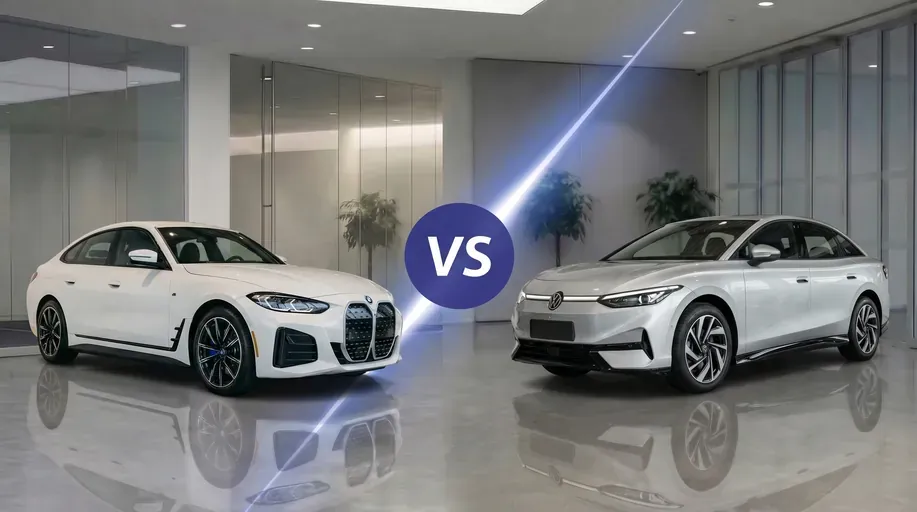
Comparison of the BMW i4 and Volkswagen ID.7. Find out which electric car has better real-world range, equipment, and driving comfort. Read our final verdict.
Apr 14, 2026