Car battle
Volkswagen Golf vs. Ford Focus: Complete comparison 2026
Volkswagen Golf vs. Ford Focus: a detailed comparison of the engine, equipment, and reliability. Find out which of these hatchbacks is the best choice for you.
Apr 13, 2026
Articles
Car battle
Deciding between the MG4 and the Opel Astra Electric? Our detailed comparison of range, price, and equipment will help you choose the right electric hatchback for you.
April 14, 2026
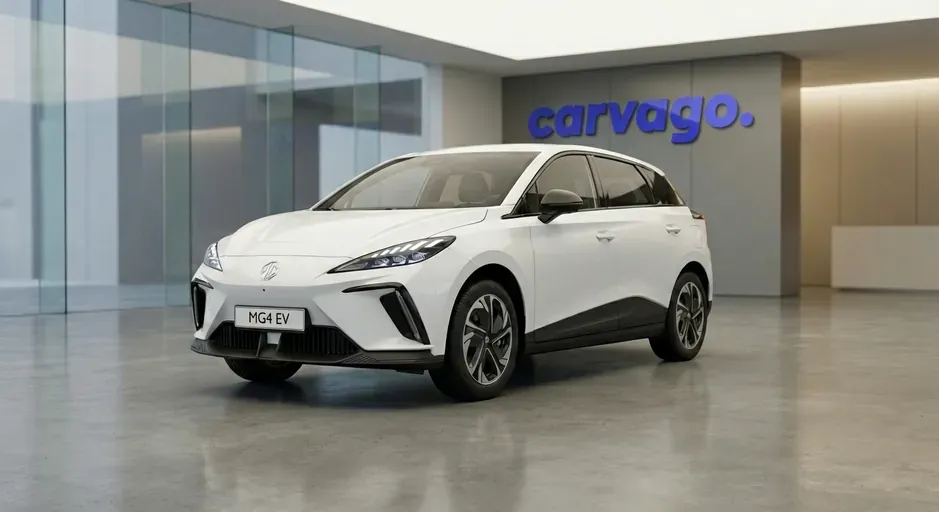
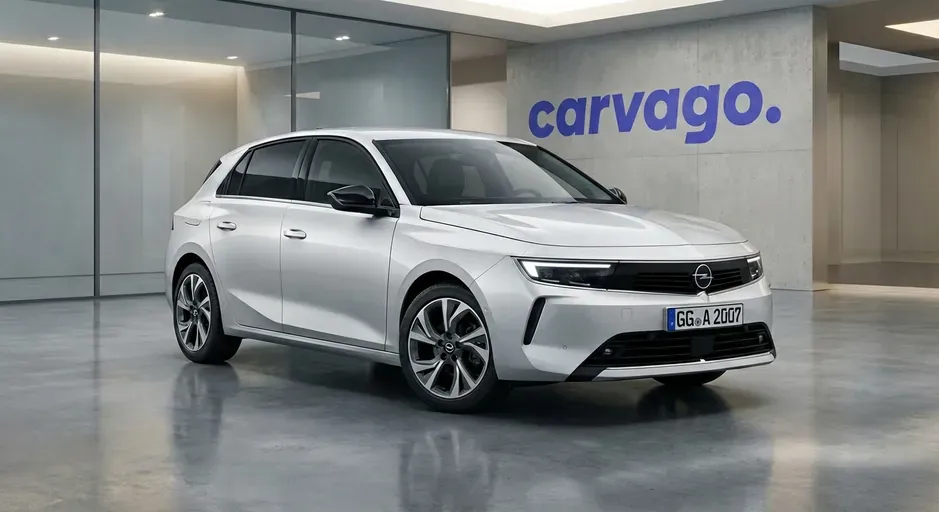
The MG4 is a dynamic and affordable electric hatchback that has significantly shaken up the electric vehicle market. Against it stands the Opel Astra Electric, the all-electric version of one of Europe's most famous models, which brings proven quality to the world of zero-emission driving. In this comparison, we'll look at how these two different approaches to the family electric car stack up against each other.
Looking at the MG4 and the Opel Astra Electric, it's clear that although both cars fall into the same compact hatchback segment, each takes a slightly different approach to design and spaciousness. The Opel Astra is longer and wider overall, which gives it the feel of a more mature and settled car on the road. Its proportions are more classic, building on the long history of the Astra model.
On the other hand, the MG4, built on a purely electric platform, takes full advantage of its benefits. Although it is shorter, it has a significantly longer wheelbase. This key difference is reflected primarily in the interior space. The MG4 is also noticeably taller, which promises a more airy cabin and more comfortable entry. The choice between them will therefore depend on whether you prefer traditional dimensions and elegance, or a modern concept of space and practicality given by the electric architecture.
The biggest difference between the two cars is in their length and wheelbase. The Opel Astra Electric outgrows the MG4 by a noticeable 87 mm, which can be seen, for example, in the boot volume. If that's not enough, Opel also offers a more practical Sports Tourer estate version. In contrast, the MG4 benefits from a 30 mm longer wheelbase, a typical advantage of cars on a dedicated electric platform – the wheels are pushed further into the corners of the body. This usually means more legroom for rear passengers. The MG4 is also taller, which you'll appreciate for both entry and headroom.
| Parameter | MG4 Electric Hatchback | Opel Astra Electric Hatchback | Opel Astra Electric Sports Tourer |
|---|---|---|---|
| Length (mm) | 4287 | 4374 | 4642 |
| Width (mm) | 1836 | 1860 | 1860 |
| Height (mm) | 1504–1516 | 1488 | 1481 |
| Wheelbase (mm) | 2705 | 2675 | 2732 |
When choosing an electric car in the compact class, practicality and boot size play a key role, especially for families or active individuals. At first glance, the MG4 and the Opel Astra Electric may seem to offer almost identical figures, but a closer look reveals crucial differences that could influence your decision.
In the basic seating arrangement, the contest is very close. The MG4, depending on the specific version from 2022-2025, provides a volume between 350 and 363 litres. The Opel Astra Electric (L generation, from 2023) counters with a figure of 352 litres. In this respect, the two cars are practically equal and can handle a regular shopping trip or a weekend getaway without any problems.
A more significant difference arises when the rear seats are folded down. While the MG4 offers a maximum volume ranging from 1165 to 1177 litres, the Opel Astra Electric provides considerably more, specifically 1268 litres. This extra 100 litres or so can be decisive when moving larger items or packing for a longer holiday. However, the Opel's biggest advantage is the existence of an estate version, called the Sports Tourer, which the MG4 does not offer. This takes practicality to a whole new level with a boot volume of 516 litres as standard and up to 1553 litres with the seats folded down, making it the clear choice for those who require maximum transport capacity.
| Parameter | MG4 Electric Hatchback | Opel Astra Electric Hatchback | Opel Astra Electric Sports Tourer |
|---|---|---|---|
| Basic volume (litres) | 350 - 363 | 352 | 516 |
| Max. volume with seats folded (litres) | 1165 - 1177 | 1268 | 1553 |
The ability to tow a trailer is still more of an exception than the rule for electric cars, and it is in this discipline that the two rivals differ dramatically. For many buyers, this parameter can be a key factor in the purchase decision. While one model offers at least basic utility, the other fails in this regard.
The MG4 comes with an unexpected advantage. All its versions, including the base model and the extended-range variant, can attach a trailer weighing up to 500 kg, both braked and unbraked. Although this is not a figure that would be sufficient for towing a large caravan, for everyday needs such as hauling garden waste, transporting materials from a DIY store, or attaching a small trailer with a motorbike, it is perfectly adequate and significantly increases the car's practicality.
On the other hand, there is the Opel Astra Electric, which, according to the manufacturer's official data, is not approved for any trailer towing weight. Its towing capacity is therefore zero. This is a major limitation for those who need to transport something, even if only occasionally. While the plug-in hybrid versions of the Astra can tow a trailer, the purely electric variant does not offer this option.
For the customer, the choice in terms of towing capacity is therefore clear. If even the slightest possibility of attaching a trailer is important to you, the MG4 is the only possible winner, as the Astra Electric completely lacks this practical feature.
| Model and Engine | Braked towing weight (kg) | Unbraked towing weight (kg) |
|---|---|---|
| MG4 Electric (all versions) | 500 | 500 |
| Opel Astra Electric | 0 | 0 |
Although the MG4 and Opel Astra Electric are both pure electric vehicles, their approach to powertrains differs significantly. The MG4 focuses on diversity, offering a wide range of variants to satisfy both drivers looking for the best price-to-performance ratio and those craving a sporty experience. Rear-wheel drive is standard, which is unusual in this class, and the lineup is topped by an all-wheel-drive version. In contrast, the Opel Astra Electric chooses the path of simplicity and efficiency. It offers a single, carefully tuned front-wheel-drive variant aimed at traditional European drivers transitioning from internal combustion cars, emphasizing a balanced range and predictable handling.
The MG4 is built on a modern electric platform (MSP) that allows for great flexibility. This enables it to offer several battery sizes and, as one of the few hatchbacks in the segment, rear-wheel drive for a better driving experience. The range starts with a basic version with a 51kWh battery, continues with the popular 64kWh variant, and ends with an extended-range model with a 77kWh battery. The absolute pinnacle is the sporty XPOWER version with all-wheel drive, two electric motors, and crushing performance that makes it a true electric hot-hatch.
| Version | Drive Type | Battery (usable) | Power (kW) | Torque (Nm) | Gearbox |
|---|---|---|---|---|---|
| Standard | Electric motor (RWD) | 50.8 kWh | 125 | 250 | 1-spd automatic |
| Comfort / Luxury | Electric motor (RWD) | 61.7 kWh | 150 | 250 | 1-spd automatic |
| Extended Range | Electric motor (RWD) | 74.4 kWh | 180 | 350 | 1-spd automatic |
| XPOWER | 2x Electric motor (AWD) | 61.7 kWh | 320 | 600 | 1-spd automatic |
With the Astra Electric, Opel has opted for a simple and clear strategy for the customer. It offers only one powertrain version, which is, however, focused on maximum efficiency. The car uses a new generation electric motor with 115 kW (156 hp) and 270 Nm of torque, which drives the front wheels. It draws energy from a 54 kWh battery (51 kWh usable capacity), which is intended to provide a solid range of up to 418 km according to the WLTP cycle. This "one engine for all" approach is the same for both the hatchback body and the more practical Sports Tourer estate.
| Version | Drive Type | Battery (usable) | Power (kW) | Torque (Nm) | Gearbox |
|---|---|---|---|---|---|
| Electric | Electric motor (FWD) | 51 kWh | 115 | 270 | 1-spd automatic |
Who will choose?
Choosing the right powertrain is key to long-term satisfaction with a car. In the case of these two electric vehicles, you are deciding between different philosophies. While MG offers several performance and battery capacity variants, Opel has bet on a single, yet carefully tuned option. Our recommendations are based on a combination of performance, real-world range, reliability, and user experience.
While the basic version with the 51kWh battery may be the most affordable entry into the world of MG for some, we consider the variant with the larger, 64kWh battery (usable approx. 61.7 kWh), found in the Comfort and Luxury trims, to be the optimal choice. This version represents the golden mean and the best ratio of price, range, and performance in the entire model line.
Opel has chosen the opposite strategy to MG and offers a single powertrain option for the Astra Electric model. So you don't have to make a complicated choice – the carmaker has done it for you, focusing on maximum efficiency and driving comfort, which are traditional values of the brand.
Official electricity consumption figures, measured in the WLTP cycle, are often the first guide for buyers. However, in real-world operation, consumption can vary depending on driving style, weather conditions, temperature, and route profile. To get the most accurate picture, we rely on data from real drivers, for example from the German portal Spritmonitor.de, as well as on the results of editorial tests that reveal how both cars perform in daily use.
Both cars are modern electric vehicles where manufacturers have emphasized efficiency. Nevertheless, there are interesting differences between them that can play a role in the decision-making process.
| Model and version | Average real-world consumption (kWh/100 km) |
|---|---|
| MG4 Electric (64 kWh) | 17.5 - 20.2 |
| Opel Astra Electric (54 kWh) | 16.5 - 18.9 |
Looking at the table, it is clear that the Opel Astra Electric shows slightly lower consumption in the real world. Long-term tests and user data show that the Astra can be driven with a consumption ranging from 16.5 to 18.9 kWh/100 km. The German hatchback can be very economical, especially with a calmer driving style and in the city.
The MG4 with the larger 64 kWh battery has a slightly higher appetite according to drivers' experiences, averaging between 17.5 and 20.2 kWh/100 km. This difference is not dramatic, but in the long run, it may have a slight impact on "fuel" costs. The slightly higher consumption can be attributed to the different concept with rear-wheel drive and perhaps less sophisticated aerodynamics compared to the Opel.
For the typical user, this means that while both cars will offer low running costs, the Astra has the potential to be a few cents cheaper per 100 kilometers. For drivers who often travel longer distances, the Astra's lower consumption can mean a few valuable extra kilometers of real-world range, reducing the stress of finding a charger. In the winter months, an increase in consumption must be expected for both models, but the percentage difference between them is likely to remain similar.
However, the electricity consumption is not so different as to be a decisive factor in itself. The choice between these two cars will rather depend on preferences in design, battery size, charging speed, interior space, and last but not least, the purchase price.
When comparing the prices of used cars, one of the fundamental differences between the MG4 and the Opel Astra Electric becomes apparent. Both models have been on the market for a relatively short time, so the supply of used cars consists mainly of one or two-year-old vehicles with low mileage. Even so, there is a significant price difference that mirrors the brands' strategies for new cars.
Even as a used car, the MG4 maintains its reputation as an affordable electric vehicle. The prices of the oldest and most used units, typically from 2023 and in the basic trim with a smaller battery, start at around €19,000. These cars represent a very attractive entry into the world of modern electromobility.
If you are looking for better-equipped versions with a larger battery, such as the Elegance or Luxury variants, prepare an amount in the range of from €23,000 to approximately €29,000. Even in this case, however, it is a very competitive offer compared to other electric hatchbacks on the market.
The Opel Astra Electric is noticeably more expensive on the used car market. Its price reflects the higher purchase price of a new car and the position of an established European brand. Used models from the first years of production (2023-2024) usually range in price from €27,000 to €33,000.
The supply of used electric Astras is still more limited, which also helps to maintain higher prices. Unlike the MG4, where you can find cars for under half a million crowns, such a price is currently unrealistic for the Astra. The buyer is paying extra for the design, perceived interior quality, and the image of a traditional brand.
Price Summary:
| MG4 | €19,000 - €29,000 | Lower price for base models, higher for versions with longer range and extensive features. |
|---|---|---|
| Opel Astra Electric | €27,000 - €33,000 | Higher entry price, usually solid equipment, a more premium interior. |
While the MG4 clearly targets customers looking for maximum value for their money, the Opel Astra Electric will appeal to those willing to pay extra for an established name and design, even if it means a higher investment in the used car market.
Although both cars underwent Euro NCAP tests in the same year, their results differ. It is important to realise that testing methodologies are constantly becoming stricter, and therefore ratings from different years cannot be directly compared. In this case, however, the tests were conducted in 2022, which gives us a relevant comparison of the safety levels of both models according to the standards of that time.
The MG4 received the maximum five-star rating from Euro NCAP tests in 2022, confirming a high level of safety built on the new Modular Scalable Platform (MSP). The car achieved solid results in all key areas: adult occupant protection was rated at 83% and child protection at 80%. Protection for vulnerable road users, such as pedestrians and cyclists, reached 75%, and the safety assist systems category scored 78%. All versions of the MG4 come standard with the MG Pilot assistance systems package, which includes features like active emergency braking and adaptive cruise control.
The Opel Astra, whose rating also applies to the electric version, received four stars in the 2022 Euro NCAP tests. Although this is a good result, it was not enough for five stars. According to Euro NCAP, the reason is the absence of some of the latest assistance technologies and a missing centre airbag, which protects occupants in a side impact. In the individual categories, the Astra scored 80% for adult occupant protection and 82% for child protection. However, it lags behind the MG4 in the protection of vulnerable road users and safety assist systems, with scores of 67% and 66% respectively.
Although both cars are safe, the MG4 is the winner in this comparison. Achieving five Euro NCAP stars and more balanced, higher overall scores in all monitored categories, especially in safety assist systems and pedestrian protection, make it a slightly more modern and comprehensively equipped car from a safety perspective. The four stars for the Astra are still a respectable result, but they indicate a slight technological gap and the absence of some features that are becoming standard.
| Parameter | MG4 | Opel Astra Electric |
|---|---|---|
| Year of testing | 2022 | 2022 |
| Adult Occupant Protection | 83 % | 80 % |
| Child Occupant Protection | 80 % | 82 % |
| Vulnerable Road User Protection | 75 % | 67 % |
| Safety Assist | 78 % | 66 % |
In addition to standard equipment, each model offers several unique features that can be decisive for an undecided customer. While the MG4 focuses on bold design and smart technology, the Opel Astra Electric sticks to proven German precision and practicality.
The MG4 presents itself as a dynamic and technologically advanced hatchback that isn't afraid to stand out from the crowd. It offers a range of smart solutions and sporty elements aimed at the modern driver.
The Opel Astra Electric prides itself on being, above all, a "normal" car, just with an electric powertrain. It focuses on build quality, proven technology, and features that enhance everyday usability without unnecessary frills.
Advantages:
Disadvantages:
Advantages:
Disadvantages:
Based on our own CarAudit inspections, breakdown statistics, and user feedback, we have compiled an overview of the most common problems that used car buyers should look out for. Although both models are relatively new, they have already shown some characteristic faults.
The MG4 entered the market as an affordable electric car, which unfortunately has resulted in some compromises in terms of reliability and quality. Fortunately, most of the problems are more of a nuisance than fatal flaws.
Overall, the MG4's problems are more of an annoying nature and are related to the rapid development and tuning of the software. Mechanical faults are less common, but it's good to be aware of them when buying a used model.
The Opel Astra benefits from the proven Stellantis group platform, which has a positive effect on its overall mechanical reliability. Nevertheless, it has not been immune to some of the electronic issues typical of modern cars.
The Opel Astra Electric appears to be a more reliable car in terms of hardware. Its problems are almost exclusively software-related and often solvable with a simple restart or an update at a service center. Thanks to fewer specific "teething problems," it comes across as a more mature product, although it is not 100% flawless either. An independent check of the car's technical condition before purchase is always recommended.
When buying a used car, a thorough inspection is key, and electric cars are no exception. Here are a few specific points to focus on with these two models to avoid potential problems.
Although both cars have batteries with similar capacities, the Opel Astra Electric often achieves a slightly longer real-world range thanks to its higher efficiency and better aerodynamics. However, the MG4 offers versions with a larger battery that surpass the Astra's range. But the differences can vary depending on driving style and conditions.
The MG4 offers a slightly larger basic boot volume of 363 litres compared to 352 litres in the Astra Electric. However, after folding down the rear seats, the situation reverses, and the Astra offers more space. Neither model has a front boot (frunk).
The Opel Astra Electric has an advantage in charging speed, for both home AC and fast DC charging. It supports DC charging at up to 100 kW, while the base version of the MG4 manages 87 kW. The Astra also has a more powerful 11 kW onboard charger compared to the 6.6 kW in the base MG4.
The base version of the MG4 has more power (170 hp vs. 156 hp) and better acceleration than the Astra Electric. The key difference is the drivetrain: the MG4 is rear-wheel drive, which gives it a sportier character, while the Astra Electric relies on a more traditional front-wheel drive.
Generally, the MG4 is the more affordable option, especially in its base version. It offers an attractive price-to-performance ratio, making it a strong competitor. The Opel Astra Electric maintains a higher price tag, which it justifies with factors like build quality and its traditional brand.
Sources: ADAC, mdcr.cz, novinky.cz, mobilmania.cz, chytreauto.cz, carstyle.cz
This article was prepared using artificial intelligence tools. The section guarantor is Petr Dušek.
Volkswagen Golf vs. Ford Focus: a detailed comparison of the engine, equipment, and reliability. Find out which of these hatchbacks is the best choice for you.
Apr 13, 2026
Mazda 3 vs. Toyota Corolla: Which bestseller is better? Our detailed comparison of engines, features, and handling will help you make your final choice.
Apr 13, 2026
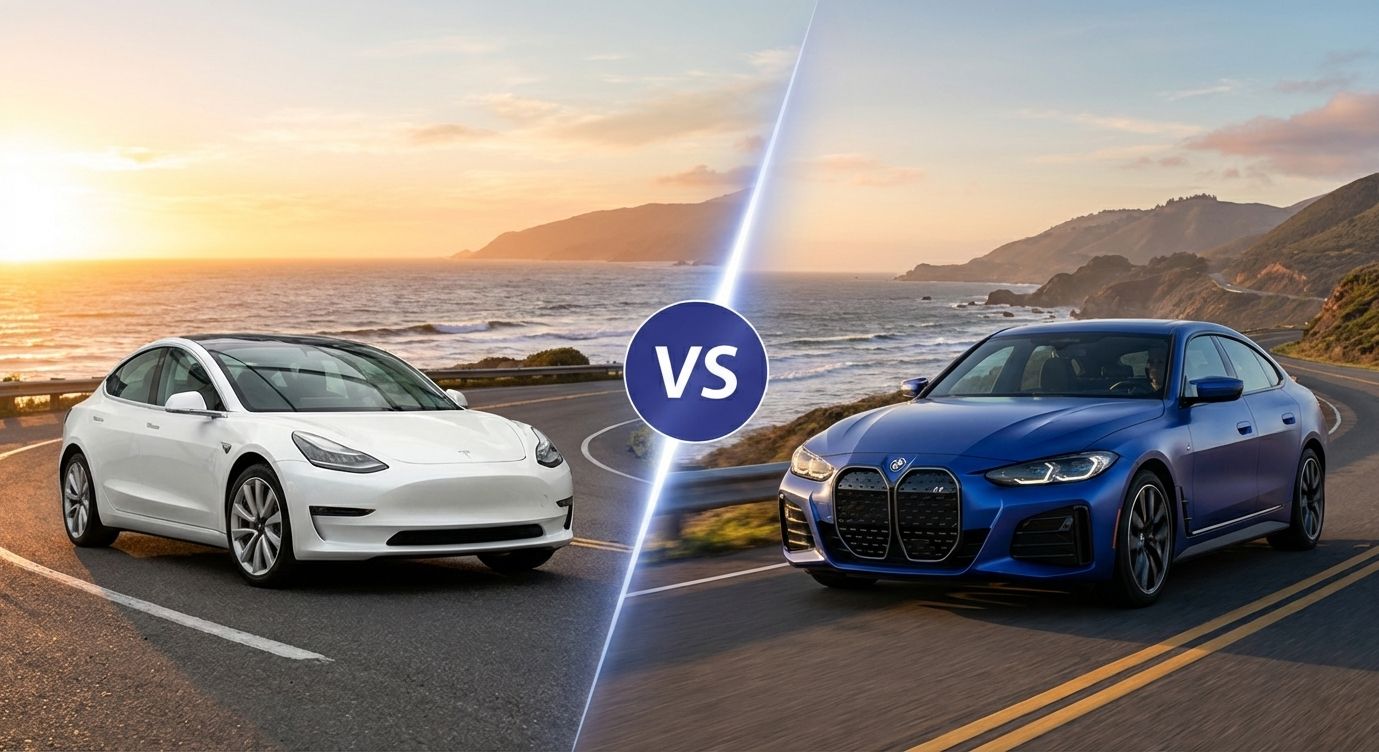
Tesla Model 3 vs. BMW i4: Which premium electric car is better? Our detailed comparison of range, performance, and price will help you choose.
Apr 14, 2026