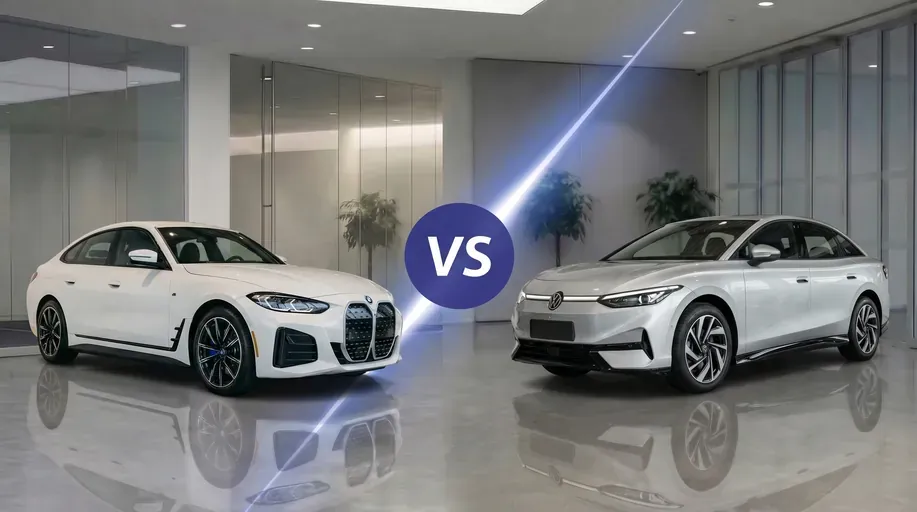
Car battle
BMW i4 vs. Volkswagen ID.7: Complete comparison 2026
Comparison of the BMW i4 and Volkswagen ID.7. Find out which electric car has better real-world range, equipment, and driving comfort. Read our final verdict.
Apr 14, 2026
Articles
Car battle
Tesla Model 3 vs. BMW i4: Which premium electric car is better? Our detailed comparison of range, performance, and price will help you choose.
April 14, 2026
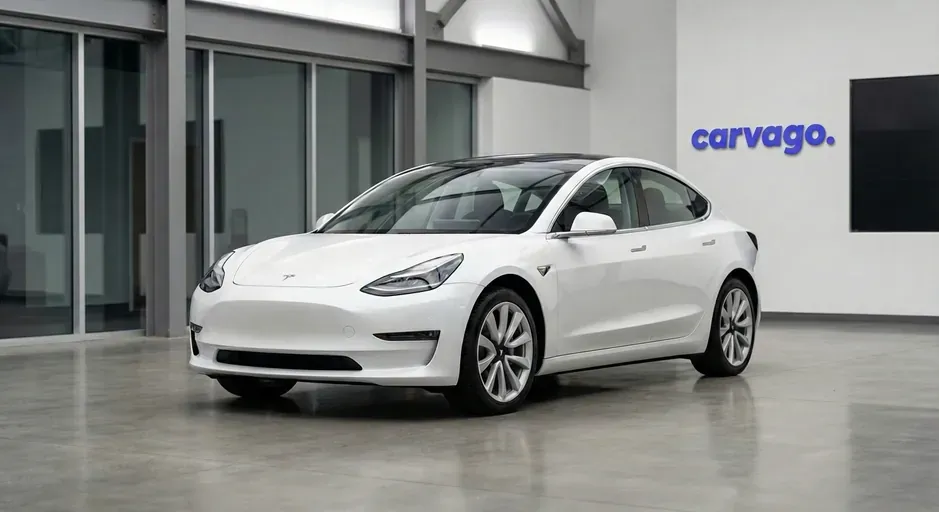
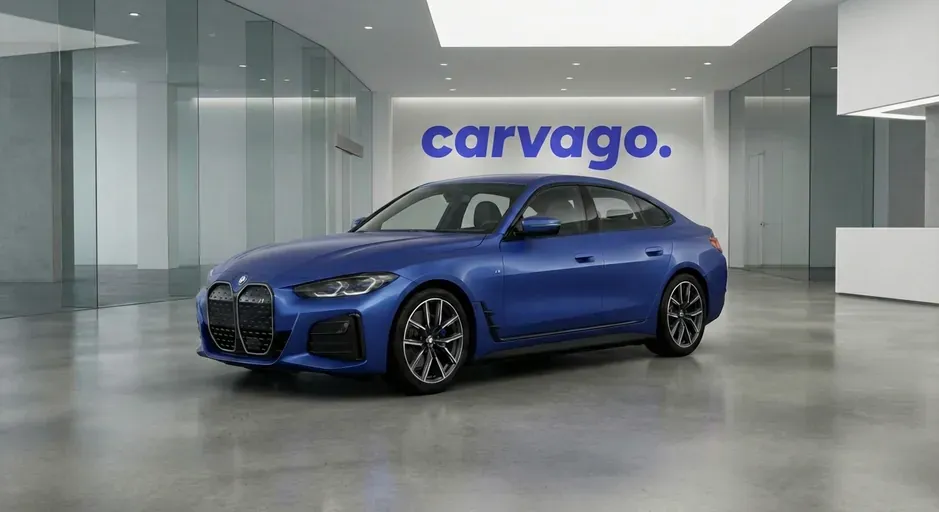
Tesla Model 3, the American phenomenon that kickstarted the revolution in affordable electric cars, is known for its minimalist design and technology. It faces off against the BMW i4, which brings the traditional Munich joy of driving, premium craftsmanship, and sporty elegance to the world of electric propulsion. The following comparison will show which of these premium electric sedans better suits your needs.
When we place the Tesla Model 3 and the BMW i4 side by side, it's immediately clear that the BMW is the larger car overall. Its body is longer and has a more substantial, classic feel. However, a surprise lies in a detail not visible at first glance – the wheelbase, where the Tesla paradoxically dominates, showcasing a different design philosophy in the construction of both vehicles.
The BMW i4 measures 4783 mm in length, surpassing the Model 3 (in the version produced until 2023) by a noticeable 89 mm. This difference is not only reflected in the exterior appearance, where the BMW looks like a car from a higher class, but it also has practical implications. The greater length might promise a more spacious interior, but it also means you'll have a slightly harder time finding a parking spot in crowded city streets with the BMW, whereas the Tesla, with its more compact dimensions, can fit into smaller gaps.
When it comes to width and height, both cars are surprisingly similar. At 1852 mm, the BMW i4 is just 3 mm wider, and at 1448 mm, it is 5 mm taller than the Tesla. These millimetre differences are completely negligible in the real world and will play virtually no role in the decision-making process between these two models. Both cars will thus offer a very similar feeling of width in a traffic lane and when entering a garage.
The most interesting comparison comes from the wheelbase. Although the Tesla is shorter overall, its wheelbase is 2875 mm, which is 19 mm more than the BMW i4's (2856 mm). This is evidence of a modern platform designed exclusively for electric vehicles, where the wheels are pushed as far into the corners of the body as possible. A longer wheelbase usually means more space for the occupants, especially in the rear seats, and better driving stability. For the buyer, this means that the Tesla can more efficiently use its footprint to maximise interior space.
| Parameter | Tesla Model 3 (Sedan) | BMW i4 (Sedan) |
|---|---|---|
| Length (mm) | 4694 | 4783 |
| Width (mm) | 1849 | 1852 |
| Height (mm) | 1443 | 1448 |
| Wheelbase (mm) | 2875 | 2856 |
The practicality of the luggage compartment is a key factor for many drivers, and in the battle between the Tesla Model 3 and the BMW i4, it reveals fundamental differences in their philosophies. Although the on-paper figures favour the Tesla, the reality is more complex. The choice between these cars may depend on how you plan to use the boot – whether you prefer total volume split into multiple parts, or easy access for bulky items.
The Tesla Model 3 for the 2022–2023 generation offers a total volume of 561 litres. This figure is the sum of the rear boot and the front storage space, the so-called "frunk," which has a volume of 88 litres and is ideal for storing charging cables or small luggage. The rear boot itself is therefore comparable to the BMW's. The newer, post-facelift version (from late 2023) increased the total volume to 594 litres. However, the main disadvantage of the Model 3 is its sedan body style with a small boot lid, which significantly limits the transport of bulky items.
On the other hand, the BMW i4, despite offering a smaller base volume of 470 litres and lacking a front boot, wins hands down in terms of practicality. Its Gran Coupé (liftback) body style with a huge fifth door allows for the loading of very bulky luggage, from a pram to a bicycle. Furthermore, folding down the rear seats creates a generous space of 1290 litres, making the i4 a much more versatile car for family needs or an active lifestyle. A similar figure is not officially provided for the Tesla. The choice is therefore clear: if you need maximum flexibility and easy access, the BMW i4 is unbeatable. If you just need space for regular luggage and appreciate the clever extra storage in the form of a frunk, the Tesla Model 3 will suffice.
| Parameter | Tesla Model 3 Sedan | BMW i4 Liftback |
|---|---|---|
| Basic Volume (litres) | 561 (including 88l frunk) | 470 |
| Max. Volume with Seats Folded (litres) | Data not provided by the manufacturer | 1290 |
The ability to tow a trailer is an increasingly important criterion for electric cars, and in this respect, the two rivals differ significantly. If a tow hitch is crucial for you, the BMW i4 offers substantially more flexibility and utility. This is one of the main practical differences that could decide your choice.
The BMW i4, across all its versions from the eDrive35 to the sporty M50, can tow a braked trailer weighing up to 1600 kg. This is an above-average figure in the electric sedan segment, allowing you to easily hitch up a small caravan for a weekend trip, a trailer with a motorbike, or a boat. For active families or DIY enthusiasts, this is a huge advantage that makes the i4 a much more versatile vehicle.
On the other hand, the Tesla Model 3 offers more modest capabilities. Most variants, including the Long Range and Standard Range versions, have a maximum permitted braked trailer weight of 1000 kg. While this is sufficient for a small unbraked trailer for hauling garden waste or building materials, it is limiting for heavier loads. A crucial piece of information is that the most powerful Performance version is usually not approved for towing trailers at all.
In the end, the choice is simple. If you plan to regularly use the tow hitch for anything heavier than a light trailer, the BMW i4 is clearly the better and more practical choice. Its 600 kg advantage in permitted towing capacity opens the door to a much wider range of uses.
| Model and Powertrain | Braked trailer weight (kg) | Unbraked trailer weight (kg) |
|---|---|---|
| BMW i4 (all versions) | 1600 | 750 |
| Tesla Model 3 (Standard/Long Range) | 1000 | 750 |
| Tesla Model 3 (Performance) | 0 (not approved) | 0 (not approved) |
The Tesla Model 3 and BMW i4 represent two completely different approaches to electric propulsion. While Tesla focuses on maximum simplicity, offering only a few clearly defined variants, BMW brings its traditional philosophy of a wide range of options to the world of electric cars. The result is crucial for the buyer: with Tesla, the choice is straightforward and focused on range and performance. BMW, on the other hand, allows for finer tuning according to preferences, whether it's pure performance, efficiency, or the classic rear-wheel drive that is typical for the brand.
The range of powertrains for the Tesla Model 3 is intentionally minimalist. In the used car market, you will most often encounter three key variants from the pre-facelift period (up to 2023). The base is the rear-wheel-drive version, which focuses on maximum efficiency and sufficient performance for daily use. The top of the range is represented by two all-wheel-drive (Dual Motor) variants – Long Range, which emphasizes the longest possible range, and Performance, which offers breathtaking acceleration that rivals supercars. All models are equipped with a single-speed automatic transmission.
| Version (approx. 2021–2023) | Drive | Power (kW) | Torque (Nm) | Acceleration 0-100 km/h (s) |
|---|---|---|---|---|
| Model 3 (Standard Range Plus) | Rear | 239 | 420 | 6.1 |
| Model 3 Long Range | 4x4 | 366 | 510 | 4.4 |
| Model 3 Performance | 4x4 | 377 | 660 | 3.3 |
BMW approached the i4 with the goal of satisfying a wider spectrum of drivers, including its traditional fans. The range therefore includes both rear-wheel-drive versions (eDrive), which provide the classic driving experience typical of BMW, and powerful all-wheel-drive versions (xDrive). The base model eDrive35 is ideal for those looking for a premium electric car for urban and suburban driving. The most popular choice is often the eDrive40 with its ideal balance of performance and range. At the top is the M50, the first fully electric model from the M division, which combines crushing performance with all-wheel drive and a sport-tuned chassis. All variants use a single-speed automatic transmission.
| Version (approx. 2021–2023) | Drive | Power (kW) | Torque (Nm) | Acceleration 0-100 km/h (s) |
|---|---|---|---|---|
| i4 eDrive35 | Rear | 210 | 400 | 6.0 |
| i4 eDrive40 | Rear | 250 | 430 | 5.7 |
| i4 M50 | 4x4 | 400 | 795 | 3.9 |
For drivers focused on the lowest possible running costs and maximum efficiency, the basic Tesla Model 3 is an excellent choice. If the priority is crushing straight-line acceleration and technological minimalism, the Performance version is the clear favorite. In contrast, the BMW i4 will appeal to those transitioning from powerful combustion engine cars who are looking for a premium-quality interior, more choices, and more refined handling in corners. The eDrive40 version is a great all-rounder, while the M50 offers the perfect combination of everyday usability and sporty character.
Choosing the right powertrain is key to long-term satisfaction with electric cars. Our recommendations are based on a combination of performance, real-world range, owner feedback, and overall reliability. Tesla and BMW approach electric propulsion differently: Tesla bets on simplicity and stunning straight-line performance, while BMW tries to bring traditional driving pleasure into the electric era. For those interested in cars that are about four years old, the choice is clearly defined by when the individual versions came to market.
For a 2020-2022 Model 3, the Long Range all-wheel-drive version is the ideal choice, masterfully combining stunning performance with excellent range. With 378 kW (514 hp) of power and acceleration from 0 to 100 km/h in just 4.4 seconds, it offers dynamics that far exceed those of ordinary family sedans. Two independent electric motors ensure not only lightning-fast responses but also the confidence of all-wheel drive in adverse conditions. The battery, with a capacity of around 75 kWh (usable), provides a real-world range of between 450 and 500 km, making it a fully-fledged car even for longer trips across Europe, supported by the unparalleled Supercharger network.
This version is ideal for drivers who want the best of both worlds: a practical electric car for everyday use with a range that won't disappoint on holiday, and at the same time, a sports car that can put a smile on your face. Although the Model 3 is generally reliable, with older units it's worth checking the condition of the chassis components, especially the control arms, and verifying the functionality of all electronic features, including the central display. The interior build quality can be inconsistent, so a careful inspection of the specific car is important.
The BMW i4 entered the market at the end of 2021, and for those interested in a used car, the eDrive40 rear-wheel-drive version represents the most balanced and sensible choice. With 250 kW (340 hp) of power and 430 Nm of torque, it offers dynamics that are more than sufficient for any situation (0-100 km/h in 5.7 seconds), while retaining the classic character of a rear-wheel-drive BMW. Therein lies its main charm – it's an electric car that drives like a true BMW.
Thanks to a battery with a usable capacity of 80.7 kWh, the i4 eDrive40 achieves one of the best ranges in its class, with real-world driving distances between 480 and 550 km. Compared to Tesla, the i4 offers a significantly higher-quality interior with premium materials and more traditional ergonomics, which will be appreciated by drivers switching from combustion engine cars. The chassis is tuned for an excellent compromise between comfort and sporty confidence. The eDrive40 model is thus ideal for drivers looking for a premium electric sedan with great range, excellent driving characteristics, and the quality that is synonymous with the BMW brand. As it is a relatively new model, there are no known major systemic problems, but it is still important to check the service history and battery condition via on-board diagnostics.
Official consumption figures, measured according to the WLTP cycle, are a useful guide, but real-world driving reveals the car's true efficiency. Factors such as driving style, temperature, route profile, or air conditioning use have a major impact on an electric car's consumption. To get the best possible picture, we compared not only the official figures but also data from real drivers, for example, from the German portal Spritmonitor.de, which collects data from thousands of users. This shows that Tesla has a long-standing lead in powertrain efficiency.
Looking at the specific numbers, it is clear that the Tesla Model 3 is more economical in all comparable versions. This difference is not negligible and in practice means lower "fuel" costs and a longer range on a single charge for the same battery capacity.
| Model and Version | Average Real-World Consumption (kWh/100 km) |
|---|---|
| Tesla Model 3 (Standard Range RWD) | 14.0 - 16.0 |
| Tesla Model 3 Long Range AWD | 15.5 - 18.0 |
| Tesla Model 3 Performance AWD | 17.5 - 20.5 |
| BMW i4 eDrive35/eDrive40 | 17.0 - 20.0 |
| BMW i4 M50 xDrive | 20.0 - 24.0 |
Note: The values shown are averages from real-world driving and may vary.
The table shows a clear trend. The basic rear-wheel-drive version of the Tesla is the benchmark for economy. Even the more powerful Long Range and Performance variants stay within reasonable limits, thanks to excellent aerodynamics and highly efficient motors. In contrast, the BMW i4, although not inefficient, shows systematically higher consumption. Especially with the top M50 version, sporty driving results in a significant increase in energy consumption, which can easily exceed 24 kWh/100 km.
For the average driver, this means that with a Tesla Model 3, you will save approximately 2-4 kWh of energy every 100 kilometres compared to a comparable BMW i4. For long-distance travellers, this could mean one less charging stop, while for those who charge at home, the difference will be reflected in a lower electricity bill. Therefore, if maximum operational efficiency and the lowest possible cost per kilometre are your main priorities, the Tesla Model 3 is the clear winner in this category.
When comparing the prices of used Tesla Model 3 and BMW i4 cars, we encounter significant differences, mainly due to the age of the two models on the market. While the Model 3 is already an established player with a wide range of offers, the i4 is a newcomer, which is clearly reflected in the price tags.
Tesla Model 3: More Affordable and with a Wider Selection
The Tesla Model 3, especially cars from 2020 to 2022, represents a significantly more affordable entry into the world of premium electromobility. Thanks to its longer presence on the market, the range of used cars is much wider and more varied in price.
BMW i4: A Premium Price for a Newer Car
The BMW i4 only entered the market in 2022, which means that even the oldest used models are relatively young. This is logically reflected in a higher price and a more limited supply compared to the Tesla.
Summary
While the Tesla Model 3 offers a wide range of options for buyers with different budgets and is the clear winner in the "price/performance" category on the used car market, the BMW i4 maintains its status as a newer and more premium car with a correspondingly higher price tag. For a buyer with a budget of up to €33,000, the Model 3 is practically the only choice, while those interested in an i4 must expect an investment exceeding one million crowns.
When evaluating safety, the situation is clear at first glance – the Tesla Model 3 received a full five stars, while the BMW i4 "only" took home four. However, it is crucial to look at the context and, above all, the year in which the cars were tested. The Euro NCAP crash test protocols are constantly being tightened, and therefore a direct comparison of percentage results from different years is not entirely conclusive. Tests conducted in a later year are always more demanding.
The Tesla Model 3 underwent Euro NCAP testing in 2019 and immediately ranked among the top. It received a full five-star rating with excellent results across all categories. An exceptionally high score of 94% in the Safety Assist category demonstrates the maturity and reliability of the Autopilot system at the time. Adult Occupant protection reached an excellent 96%, confirming the robustness of the car's structure. The Model 3 also performed very well in Child Occupant protection (86%) and Vulnerable Road Users protection (74%), solidifying its position as one of the safest cars on the market at the time of its launch.
The BMW i4 was tested three years later, in 2022, under stricter criteria. Although it received one star less, its results in passive safety are still at a high level. Adult and Child Occupant protection both achieved a very good 87%. The reason for the four-star rating was primarily a lower score in the Safety Assist (64%) and Vulnerable Road Users protection (71%) categories. Euro NCAP specifically mentioned that some assistance systems, such as autonomous emergency braking, did not achieve the highest ratings in more demanding scenarios included in the newer protocols.
Although both cars provide a high level of occupant protection, the Tesla Model 3 emerges as the winner in a direct comparison. Its lead lies primarily in the active safety category. The extremely high rating for its assistance systems back in 2019 shows how much emphasis Tesla places on accident prevention, which is a key factor in Euro NCAP ratings today.
While the BMW i4 offers solid passive safety, its suite of assistance systems at the time of testing was not up to par with the best, leading to the loss of the fifth star under the more demanding 2022 standards. For a buyer who places the greatest emphasis on the latest accident prevention technology, the Tesla Model 3 is the clearly more compelling choice.
| Parameter | Tesla Model 3 | BMW i4 |
|---|---|---|
| Year of testing | 2019 | 2022 |
| Adult Occupant Protection | 96 % | 87 % |
| Child Occupant Protection | 86 % | 87 % |
| Vulnerable Road User Protection | 74 % | 71 % |
| Safety Assist | 94 % | 64 % |
In addition to the standard equipment, each model offers several unique features that can be decisive for the customer, and each approaches added value in its own way.
Tesla builds its success on radical simplification and software superiority. The Model 3 is a perfect example of this – a minimum of buttons, a maximum of functions on the central display, and continuous improvement through online updates.
The BMW i4 takes the opposite approach. Instead of revolution, it bets on evolution, bringing the brand's proven qualities to the world of electromobility – top-notch workmanship, traditional luxury, and, above all, driving characteristics that will appeal to enthusiastic drivers.
Advantages:
Disadvantages:
Advantages:
Disadvantages:
Based on our own CarAudit inspections, reliability statistics, and user feedback, we have compiled an overview of the most common problems that used car buyers should watch out for. Neither of these models suffers from major systemic flaws, but both have specific areas that deserve attention.
The Tesla Model 3 has built a reputation as a pioneer, but early model years (especially 2019-2021) struggled with a number of "teething problems," primarily related to production quality and certain components.
Summary for the Tesla Model 3: Most problems relate to build quality and chassis components, which are now well-known and fixable. The powertrain itself is very reliable. A thorough, comprehensive vehicle inspection is key to identifying quality defects and chassis wear.
The BMW i4 benefits from the manufacturer's many years of experience in producing premium cars, which is reflected in its high build quality. Problems here tend to appear more in the area of complex electronics and specific electric drive components.
Summary for the BMW i4: The problems are more concentrated in the area of software and specific electrical components, many of which have been addressed through recalls. The build quality and mechanical durability are at the traditionally high BMW level. The most important thing is to check the service history and the car's participation in all recall campaigns.
A thorough inspection is key when buying a used car. Although both models are modern electric vehicles, they have their specific areas that are good to focus on to prevent expensive repairs in the future.
The Tesla Model 3 Performance is slightly faster in accelerating from 0 to 100 km/h, managing the sprint in 3.3 seconds. The BMW i4 M50 is close behind with a time of 3.9 seconds. Although the BMW has a higher power output on paper, the Tesla is lighter, which gives it an advantage in a straight line.
The Tesla Model 3 generally offers a slightly longer range and lower energy consumption, around 13.2 kWh/100 km. The BMW i4 has a slightly higher consumption, around 14.7 kWh/100 km, which affects the total range. The exact values vary depending on the specific version and driving conditions.
The Tesla Model 3 wins in terms of boot space, which is 594 litres compared to 470 litres in the BMW i4. However, the BMW can offer a subjectively higher-quality and more luxurious interior with a more traditional layout. In contrast, Tesla opts for a minimalist design with a single central display.
The BMW i4's driving characteristics are more similar to classic cars with internal combustion engines, offering precise steering and a comfortable, adaptive chassis. The Tesla Model 3 is known for its agility and immediate throttle response, which gives it a sportier character. The choice depends on the preference between the traditional driving experience of a BMW and the modern, purely electric feel of a Tesla.
The interior of the BMW i4 is more conservative, with classic elements and luxurious materials, but at the same time modern thanks to a large curved display. The Tesla Model 3 pioneers a minimalist approach, where almost all functions are controlled via a single large central touchscreen. This may suit some drivers more, while others will appreciate the physical buttons and traditional instrument cluster in the BMW.
Sources: ADAC, autocar.co.uk, pistonheads.com, electrek.co, thetruthaboutcars.com, greenreport.it
This article was prepared using artificial intelligence tools. The section guarantor is Petr Dušek.
Comparison of the BMW i4 and Volkswagen ID.7. Find out which electric car has better real-world range, equipment, and driving comfort. Read our final verdict.
Apr 14, 2026
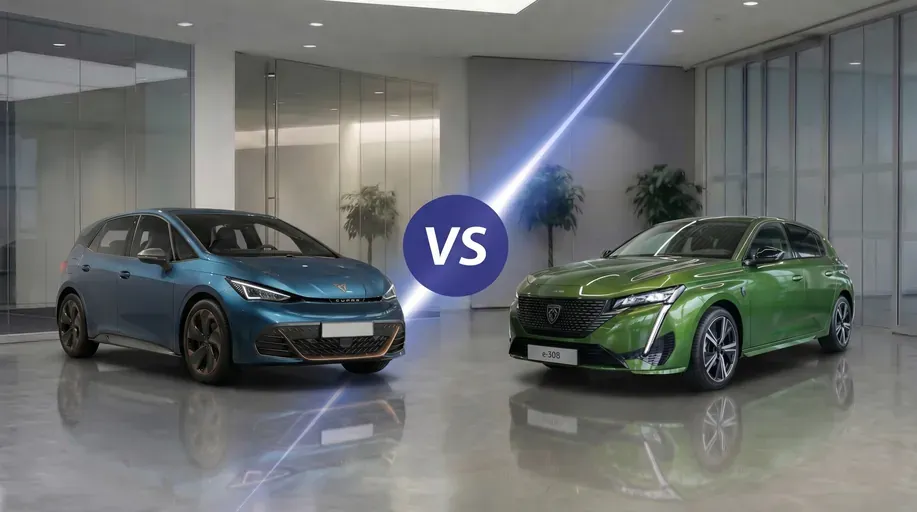
Are you choosing between the Cupra Born and the Peugeot e-308? We bring you a detailed comparison of both electric vehicles. Discover the real-world range, equipment, and read our verdict!
Apr 13, 2026
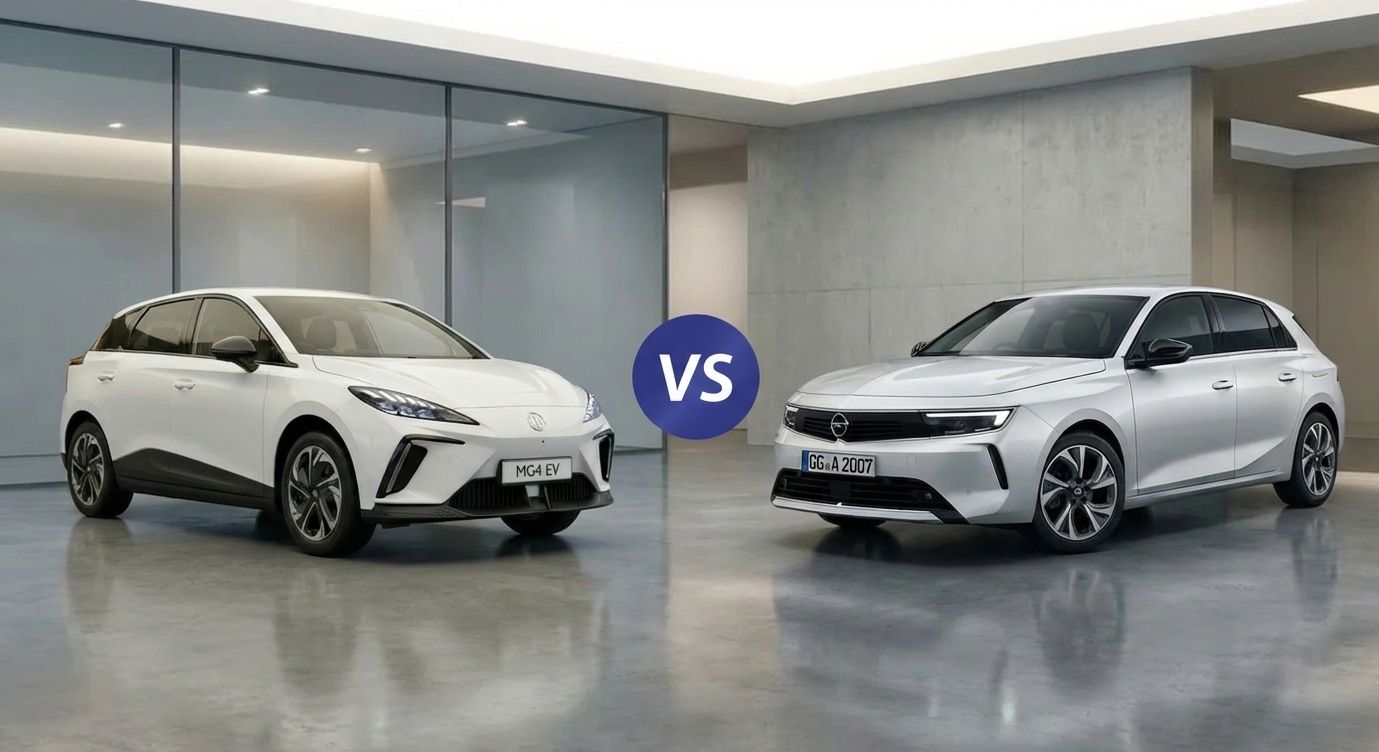
Deciding between the MG4 and the Opel Astra Electric? Our detailed comparison of range, price, and equipment will help you choose the right electric hatchback for you.
Apr 14, 2026