Car battle
MG4 vs. Opel Astra Electric: Complete comparison 2026
Deciding between the MG4 and the Opel Astra Electric? Our detailed comparison of range, price, and equipment will help you choose the right electric hatchback for you.
Apr 14, 2026
Articles
Car battle
Comparison of the BMW i4 and Volkswagen ID.7. Find out which electric car has better real-world range, equipment, and driving comfort. Read our final verdict.
April 14, 2026
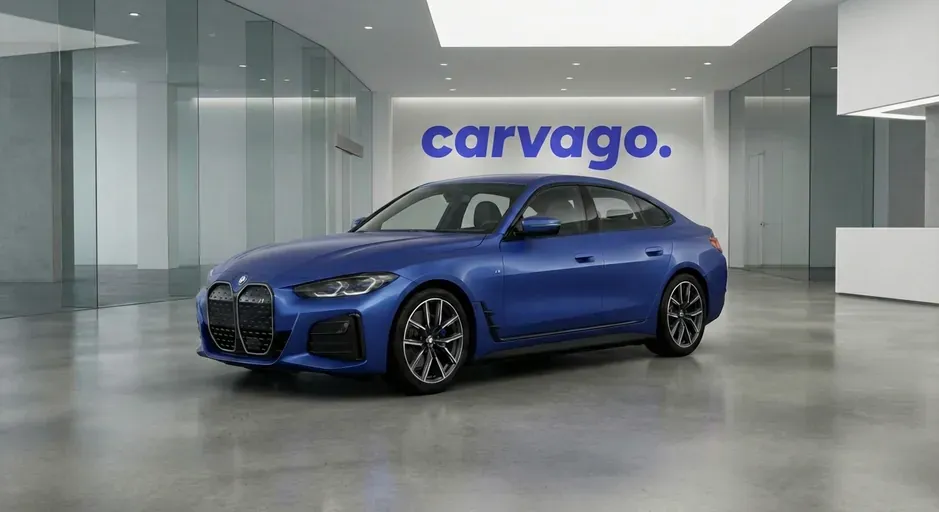
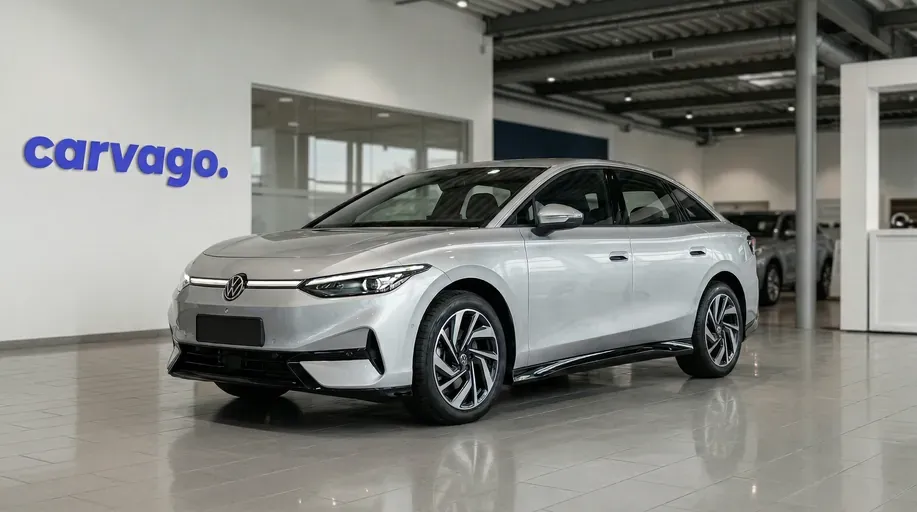
BMW i4, an elegant electric gran coupé that cleverly combines the Bavarian brand's traditional sporting dynamics with locally emission-free drive, represents an enticing choice for demanding drivers. Standing against it is the Volkswagen ID.7, a technology-packed electric flagship from Wolfsburg, which is also available on the Chinese market under the ID.7 Vizzion name, and which relies primarily on vast interior space and extraordinary aerodynamic efficiency. Let's take a detailed look at how these two advanced representatives of the modern electric mid-size class fare in a direct comparison and which of them represents the better choice for your daily life.
Looking at the exterior dimensions, it is immediately apparent that both representatives of the electric mid-size class approach body construction quite differently. The Volkswagen ID.7 makes a more majestic impression, which is clearly confirmed by the numbers – with a total length of 4961 mm, it is a significant 178 mm longer than the BMW i4, which measures 4783 mm. In practice, this significant difference manifests primarily in more generous longitudinal space for rear-seat passengers and an optically longer silhouette. Conversely, the more compact dimensions of the Munich model mean easier estimation of the body corners and better maneuverability in busy city traffic. If daily parking in tight spaces or underground garages is a priority for you, the shorter BMW i4 will be a more user-friendly choice.
Another fundamental difference is the overall height of both cars, while their width is almost identical (1862 mm for the ID.7 versus 1852 mm for the i4). With a height of just 1448 mm, the BMW i4 strictly adheres to the tradition of low-slung sports models, giving the car a very dynamic appearance and helping to lower the center of gravity for more confident driving characteristics. The Volkswagen ID.7, on the other hand, is significantly taller at 1535 to 1536 mm (up to 1551 mm for the estate body style). While this taller body construction slightly detracts from the sporty stance, it brings an undeniable advantage in the form of more comfortable entry and more generous headroom. For drivers seeking maximum travel comfort, the higher profile of the Volkswagen represents a clear advantage, while more sport-oriented individuals will appreciate the lower stance of the BMW.
The wheelbase, which is one of the most influential factors for vehicle stability at highway speeds and for the overall airiness of the cabin, shows another strength of the Wolfsburg model. The value of 2971 mm for the ID.7 confidently surpasses the BMW i4 with its wheelbase of 2856 mm (a difference of 115 mm). This long wheelbase on the Volkswagen not only ensures smoother filtering of long bumps but, above all, pushes the wheels further into the corners of the body, maximizing interior living space. While the BMW offers a smaller wheelbase, it makes the car more willing to turn and gives it a much more agile feel. The final choice thus depends purely on whether you prefer maximum family space and highway serenity (ID.7) or more agile behavior on country roads in a slightly more compact package (i4).
| Parameter | BMW i4 Hatchback | Volkswagen ID.7 Hatchback | Volkswagen ID.7 Estate |
|---|---|---|---|
| Length (mm) | 4783 | 4961 | 4961 |
| Width (mm) | 1852 | 1862 | 1862 |
| Height (mm) | 1448 | 1535-1536 | 1549-1551 |
| Wheelbase (mm) | 2856 | 2971 | 2970-2971 |
When choosing a business or family electric car, the volume and practicality of the luggage compartment often play a key role. Although the BMW i4 (representing the generation on the market since 2021) and the Volkswagen ID.7 (available since 2023) are attractive to a similar target group in the slightly used car segment due to their dimensions and focus, they take quite different approaches in terms of transport capacity. The difference in absolute liters and the body shape itself can be a deciding factor for families planning long vacations or for those who frequently need to transport larger items.
In the basic liftback body versions, the Volkswagen ID.7 benefits from its overall more robust and longer build. Its luggage compartment offers a very generous 532 liters in the standard configuration, which is comfortably enough for a full family's packing for a longer vacation. Furthermore, after folding the rear seats, the usable space increases to an impressive 1,586 liters. In contrast, the BMW i4, which places disproportionately more emphasis on a sporty silhouette and dynamic stance, has a solid but smaller basic volume of 470 liters. The maximum transport capacity after folding the rear backrests in the Munich car is 1,290 liters. In practice, this means that with the ID.7 model, you get space for several extra suitcases, which you will undoubtedly appreciate, for example, when loading strollers or bulkier sports equipment.
A major competitive advantage of the Volkswagen, however, is the existence of a practical estate variant, known as the ID.7 Tourer. This takes family usability to a whole new level, as it offers 605 liters as standard and swallows up to 1,714 liters of cargo when fully loaded with the backrests down. The BMW i4 does not offer such a body alternative for this model at all (you can find it, if necessary, in the larger i5 model). Since both cars are pure electric vehicles from the ground up, you won't encounter any reduction in trunk space due to additional batteries, which is a typical compromise in plug-in hybrids. The practicality of both cars is only slightly diminished by the absence of a front trunk (so-called frunk), so charging cables must travel in the main luggage compartment. While the BMW i4 offers a volume fully sufficient for weekend shopping and the daily routine of a couple or a smaller family, the Volkswagen ID.7 and especially its Tourer version act as genuine family haulers.
| Parameter | BMW i4 Liftback | Volkswagen ID.7 Liftback | Volkswagen ID.7 Estate |
|---|---|---|---|
| Basic volume (liters) | 470 | 532 | 605 |
| Maximum volume with seats folded (liters) | 1,290 | 1,586 | 1,714 |
If you are looking for maximum transport capacity for family vacations, the Volkswagen ID.7 is the clear winner thanks to its giant trunk, while the BMW i4 prefers a sportier cut with space sufficient primarily for common daily tasks.
Trailer weight, or towing capacity, represents a key parameter for many people interested in an electric vehicle, whether they are planning weekend trips with a caravan or just need to transport garden waste on a trailer. When comparing generations ideal for the used car market (for the BMW i4, these are models with the code designation I04 produced since 2021; for the Volkswagen ID.7, it is the 1st generation available since 2023), we encounter interesting differences that clearly define the practical possibilities of both cars.
The BMW i4 approaches towing capacity with exceptional consistency. All its available versions, from the efficient rear-wheel drive eDrive35 and eDrive40 to the powerful all-wheel drive xDrive40 and M50, can handle a braked trailer weighing 1,600 kg without any compromises. The unbraked trailer weight for all powertrains is the standard 750 kg. This is a very solid capacity, reliably sufficient for towing a medium-sized caravan or transporting heavier materials.
On the other hand, the Volkswagen ID.7 standardly offers a braked trailer towing capacity of only 1,000 kg for its Pro and Pro S versions (even with the more practical Tourer body style), while the value for an unbraked trailer remains at the traditional 750 kg. While this capacity easily provides space for a few extra suitcases, or reliably serves for a heavier tow bar mounted bike rack or a light trailer for weekend shopping, it is not suitable for more demanding use. However, a major turning point for Volkswagen comes with the more powerful and expensive GTX version. This pushes the braked trailer limit to an excellent 1,800 kg, surpassing its Bavarian competitor by 200 kg. Since both models are pure electric vehicles, customers fortunately do not have to worry about the complex compromises known from some hybrid variants, where battery packaging often limits towing capacity.
In conclusion, the BMW i4 offers much more versatile and stable values across its entire model range. It is thus a safe bet if you are looking for a car capable of acting as a reliable workhorse without having to worry about a specific powertrain. However, if you are looking for the absolute maximum and do not mind targeting the most expensive model in the price list, the Volkswagen ID.7 in the GTX version emerges from this duel as an objectively stronger and more capable car for towing heavy trailers.
| Model and motorization | Braked weight of trailer (kg) | Unbraked weight of trailer (kg) |
|---|---|---|
| BMW i4 eDrive35 / eDrive40 | 1600 | 750 |
| BMW i4 xDrive40 / M50 | 1600 | 750 |
| Volkswagen ID.7 Pro / Pro S | 1000 | 750 |
| Volkswagen ID.7 GTX | 1800 | 750 |
The BMW i4 and Volkswagen ID.7 represent different philosophies of electric mobility, even though both vehicles target customers looking for a premium experience over longer distances. The BMW i4 approaches powertrains from a traditional driver-focused position – offering a wide range of power outputs, a choice between rear-wheel and all-wheel drive, and, in its top specifications, delivering uncompromising sporty explosiveness. In contrast, the Volkswagen ID.7 profiles itself, even in its powertrain options, as an exceptionally refined family and executive cruiser. Its offering is more straightforward, but even the base model provides a massive torque exceeding 500 Nm, ensuring effortless overtaking. While a slightly used i4 will entertain you more with its sharp throttle responses, the ID.7 (available mainly as a nearly new or very young used car) bets on a velvety smooth pull and a quest for record-low consumption.
The BMW i4 (generation I04, produced since late 2021) features a sophisticated family of fifth-generation eDrive units. Given the focus on the used car market for vehicles around 4 years old, you will most often encounter models produced between 2021 and 2024. The absolute entry point of the range is the eDrive35 model, which powers the rear wheels with 210 kW and 400 Nm of torque. The eDrive40 (250 kW, 430 Nm) appears to be the ideal compromise, guaranteeing significantly higher agility without needing to dig too deep into your pockets. However, the true pride of the original lineup is the first electric model with the signature of the M sports division – the M50 version. A pair of motors here generates up to 400 kW and a breathtaking 795 Nm, catapulting the car to 100 km/h in 3.9 seconds. From available data, we know that production of the M50 model will end in 2025, after which it will be replaced by the more powerful M60 variant. An interesting alternative on the market for younger vehicles is the xDrive40 variant, which since mid-2024 combines safer all-wheel drive (295 kW, 600 Nm) with a more sober civilian chassis.
| Engine type | Fuel | Power (kW) | Torque (Nm) | Transmission |
|---|---|---|---|---|
| eDrive35 | Electric | 210 | 400 | 1-speed automatic |
| eDrive40 | Electric | 250 | 430 | 1-speed automatic |
| xDrive40 | Electric | 295 | 600 | 1-speed automatic |
| M50 | Electric | 400 | 795 | 1-speed automatic |
The Volkswagen ID.7 (1st generation) entered the market relatively recently in the autumn of 2023, so you will encounter it exclusively as a nearly new or at most two-year-old car. It relies on an exceptionally efficient architecture with an improved rear electric motor (designated as APP550). The basic Pro version and the Pro S version, available since 2024, deliver an identical output of 210 kW and a respectable 545 Nm of torque. The only structural difference between them is the battery size, with the Pro S opting for the largest one (86 kW) to achieve a record range. For those interested in higher performance and uncompromising 4MOTION all-wheel drive traction, the GTX version was launched during 2024. Thanks to the assistance of an additional front motor, it offers 250 kW (340 hp) and a combined torque at the limit of 560 Nm. In this top specification, the ID.7 reaches 0 to 100 km/h in a confident 5.4 seconds, also featuring the same single-speed reduction gearbox.
| Engine type | Fuel | Power (kW) | Torque (Nm) | Transmission |
|---|---|---|---|---|
| Pro | Electric | 210 | 545 | 1-speed automatic |
| Pro S | Electric | 210 | 545 | 1-speed automatic |
| GTX | Electric | 250 | 560 | 1-speed automatic |
While the BMW i4 scores on the used car market with its wide range of power outputs and the crushing acceleration of the sporty M50 version, the nearly new ID.7 represents the ideal for drivers looking for an exceptionally quiet, calm, yet still powerfully pulling powertrain born for long highway journeys.
Choosing the right powertrain, or rather the electric drive and battery capacity, is absolutely crucial for your long-term satisfaction with these two premium electric vehicles. While the BMW i4 (produced since late 2021) offers a wide range from basic versions with a smaller battery to extremely powerful M division models, the Volkswagen ID.7 enters the used car market as a hotter newcomer (available since late 2023) focused primarily on maximum efficiency and highway comfort. The right choice will affect not only the real-world range and charging speed but also the overall operating costs and reliability.
As is often the case with official figures, laboratory consumption values provided by car manufacturers often diverge from everyday reality on the roads, and for electric vehicles, this is doubly true due to temperatures or highway speeds. For the most accurate comparison of cars currently entering the nearly new used car market (roughly 2 to 4 years old), we have therefore analyzed real-world data from owners themselves on popular community platforms, led by the Spritmonitor.de server. Given the purely electric drive of both models, we state the average energy consumption in the corresponding units of kWh/100 km.
| Model and engine | Average consumption (kWh/100 km) |
|---|---|
| Volkswagen ID.7 Pro S (1st gen) | 13.6 |
| Volkswagen ID.7 Pro (1st gen) | 14.0 |
| Volkswagen ID.7 Tourer Pro (1st gen) | 14.4 |
| Volkswagen ID.7 GTX (1st gen) | 16.2 |
| BMW i4 eDrive35 (I04, 2022–2024) | 15.9 |
| BMW i4 eDrive40 (I04, 2021–2024) | 16.3 |
| BMW i4 xDrive40 (I04, from 2024) | 16.7 |
| BMW i4 M50 (I04, 2021–2024) | 18.4 |
User statistics reveal several clear trends that show the huge role aerodynamics and the latest powertrain management technologies play in electric vehicles. Despite its impressive external dimensions, the Volkswagen ID.7 proves to be an exceptionally efficient car. Thanks to excellent air resistance and the modernized drive of the MEB family, the Pro and Pro S versions stay around a fantastic 13.6 to 14.0 kWh/100 km. Conversely, a slightly higher energy appetite is evident in the BMW i4. Even so, the rear-wheel-drive eDrive35 and eDrive40 (model years 2021 to 2024) achieve very respectable values of around 16 kWh for a sportily tuned liftback. As expected, the thirstiest is the top-of-the-line dual-motor i4 M50 variant with its massive power, whose average climbs to 18.4 kWh/100 km.
For the typical user, these figures bring clear recommendations depending on the intended use. If you are a driver focused on savings who covers long highway stretches or seeks maximum efficiency for daily family commutes, the Volkswagen ID.7 will significantly reduce your charging bills and offer a longer real-world range between stops. The Tourer (estate) version requires only a minimal trade-off in the form of a few tenths of a kilowatt-hour extra. In contrast, those interested in the BMW i4 should expect that the more dynamic style and classic "Bavarian" architecture will take a bit more from the battery, which will be felt especially by those who charge the car mainly at expensive fast chargers.
So, will consumption be the deciding factor? It depends on your priorities. While the Volkswagen ID.7 wins this battle thanks to its top-tier efficiency and will please pragmatic buyers, the consumption of the BMW i4 eDrive35/40 models is still reasonable enough that it will not represent a major obstacle to purchase for drivers looking for premium materials and uncompromising driving characteristics.
When looking for a used electric vehicle in the premium and upper mid-size class, one fundamental difference must be considered: the age of both models on the market. While the BMW i4 (G26 generation) went on sale around late 2021, making it a common target for those looking for classic four-year-old used cars today, the Volkswagen ID.7 is a significantly younger vehicle that only began rolling off production lines at the end of 2023. This naturally and very significantly affects the current supply and the price floor of both cars.
Due to its longer presence on the market, the premium BMW i4 has already passed through its first and steepest depreciation curve. Paradoxically, as a used car, it is becoming a more financially accessible entry point into the world of electromobility than the representative of the more mainstream Volkswagen brand, which still maintains a high residual value due to its young age.
| Model | Typical years on the market | Starting price (used) | Average price | Top versions (M50 / GTX) |
|---|---|---|---|---|
| BMW i4 | 2022 – 2024 | ~€30,000 | ~€37,000 | ~€55,000 |
| Volkswagen ID.7 | 2023 – 2025 | ~€39,000 | ~€47,000 | ~€59,000 |
Note: Final prices may vary depending on total mileage, verifiable battery condition, and specific equipment.
If you have a fixed budget just under €41,000, the choice becomes quite clear. For this amount, you can confidently choose from a diverse range of well-equipped, four-year-old BMW i4 models with solid mileage, where the worst phase of depreciation has already occurred.
For the Volkswagen ID.7, on the other hand, this budget would relegate you to the very bottom of the current market offering. You would be forced to make compromises – most often in the form of cars with basic equipment (Pro) or above-average mileage. If you are aiming for performance and looking for more emotional all-wheel-drive versions (BMW i4 M50 or VW ID.7 GTX), prepare at least €53,000 for both brands.
Thanks to the four-year age of the first models, the used BMW i4 paradoxically offers much better availability and a lower entry price, while for a nearly new Volkswagen ID.7, you still have to pay significantly more for a more recent production year and minimal wear and tear.
Although a full five-star rating in Euro NCAP safety tests is often automatically expected for modern mid-range electric vehicles, these two models show differences that perfectly illustrate how important context and the year of testing are. It is crucial to know that the testing protocols of the independent organization Euro NCAP are constantly evolving and becoming stricter over the years. For this reason, percentage results from different years cannot be blindly compared – the latest methodologies include much more demanding parameters, such as complex intersection collision simulations, more advanced cyclist detection, or stricter rules for active assistance systems.
The BMW i4 underwent European safety tests in 2022. Even though the car is structurally excellent, it somewhat surprisingly received "only" a four-star rating. Its passive occupant protection is at a very high level – protection for both adults and children reached an equally excellent 87%. However, the electric vehicle hit limits in the category of protection for vulnerable road users (71%) and especially in the safety assist rating (64%). This is because BMW used an older generation of cameras and sensors in this model, taken from the internal combustion 3 Series, which, according to the newer and stricter 2022 protocols, meant significant point deductions for the absence of some modern accident prevention features.
The Volkswagen ID.7 underwent testing a year later, in 2023, according to even tougher standards. Here, however, it fully utilized the advantages of a newer platform and earned the maximum five stars. This electric liftback excelled primarily in adult occupant protection, where it achieved a fantastic 95%. It also received a solid rating of 88% for child protection. The main advantage over the BMW, however, lies in its advanced electronics: the ID.7 offered much better results in the protection of surrounding pedestrians and cyclists (83%) and the driving assistants themselves (80%). The car features, for example, an active hood or smart prevention of opening doors into the path of a passing cyclist.
From the perspective of today's standards, the conclusion is quite clear. If the worst happens and the car physically crashes, both models offer exceptionally robust passenger protection. However, the Volkswagen ID.7 brings a generation more modern and comprehensive set of active safety features, thanks to which it can prevent potential accidents much more effectively than the BMW.
| Parameter | BMW i4 | Volkswagen ID.7 |
|---|---|---|
| Year of testing | 2022 | 2023 |
| Adult occupant protection | 87 % | 95 % |
| Child occupant protection | 87 % | 88 % |
| Vulnerable road user protection | 71 % | 83 % |
| Safety assist systems | 64 % | 80 % |
While both cars are highly resilient and safe in terms of passive safety, the Volkswagen ID.7 offers a much more advanced set of assistance systems and rightfully boasts a full five-star rating.
In addition to standard equipment, each of the models offers more than just basic comfort and boasts a unique approach to added value, which can be key in the final purchasing decision. While one bets on traditional driving emotions connected with modern software, the other represents a technological peak in the name of maximum travel comfort.
The electric vehicle from Munich is built on the foundations of the popular 4 Series Gran Coupé, and its technological and comfort equipment is primarily focused on the driver and a sporty experience.
The flagship of the electric ID. family was designed from the start as a highway mile-muncher. Its technological features therefore primarily target top-tier aerodynamics, spaciousness, and innovative enhancements for long journeys.
Excellent driving characteristics with the typical sporty character of the BMW brand
Premium interior craftsmanship using top-tier materials
Great powertrain efficiency and long real-world range (especially in the eDrive40 version)
Fast, advanced, and user-friendly iDrive multimedia system
Impressive performance and blistering acceleration in higher specifications (e.g., the M50 version)
Compromises in spaciousness due to the platform shared with internal combustion models (high center tunnel)
Noticeably less legroom and headroom for adult passengers in the rear seats
Absence of a front luggage compartment (so-called frunk) for storing charging cables
Higher curb weight limits agility in tight corners
The BMW i4 is an ideal choice for enthusiastic drivers looking for a smooth transition to electromobility without losing the traditional sporty character and luxurious driving feel. The car perfectly suits individuals or couples for whom the driving experience and top-tier interior are more important than maximum space for rear passengers.
Huge interior space in all directions thanks to the dedicated MEB electric platform
Exceptionally comfortable suspension that excels during long highway journeys
Generous and highly practical luggage compartment with easy access (liftback body style)
Excellent aerodynamics and efficiency ensuring above-standard real-world range
Significantly faster and more sophisticated infotainment with better controls compared to older ID series models
Considerably more detached and overall less emotional driving experience compared to the BMW
Some plastic details in the interior do not reach the level of premium competitors
Very conservative exterior design that appears somewhat inconspicuous
Despite the car's pure electric platform, it completely lacks a front trunk (frunk)
The Volkswagen ID.7 represents an exemplary electric successor to traditional family and executive cruisers with an emphasis on pragmatism. It primarily targets families and business travelers who require maximum comfort, generous spaciousness, and the ability to effortlessly devour hundreds of kilometers on a single charge when buying a used car.
Based on long-term user feedback, service statistics, recall campaigns, and our own inspections through the CarAudit service, we have compiled an overview of the most common problems of both cars. For every used car, a thorough physical inspection of the vehicle before purchase is key, which will verify the real condition in detail and reveal any hidden defects.
As an electric car built on a proven platform shared with internal combustion engine models, the BMW i4 is robust overall; its initial so-called "teething troubles" mainly concerned electronics and software.
Although the BMW i4 is mechanically very reliable, for older model years, it is absolutely essential to check the service history and ensure that the car has undergone all important recall campaigns for the high-voltage system.
The Volkswagen ID.7 benefits from the improved technology of previous ID family models, yet some persistent ergonomic and user shortcomings remain that need to be considered when buying.
The biggest source of frustration with the ID.7 remains the over-complicated touch controls in the interior and the occasional unreliability of the app; however, as an electric car, it is a functional and well-made vehicle from a reliability perspective.
When buying a used car, a thorough inspection is key. Here are some specific points to focus on for these two models, where a consistent comprehensive car inspection and diagnostics can save you from very expensive repairs to the high-voltage system or chassis.
The Volkswagen ID.7 provides significantly more space in the rear seats and a more spacious trunk with a base volume of 532 liters. The BMW i4, which shares a platform with internal combustion models, offers a trunk with a volume of 470 liters and noticeably less legroom in the back. For frequent family travel, the representative from Wolfsburg is thus more practical.
Both cars offer excellent values, but the Volkswagen ID.7 in the version with the largest 86kWh battery promises an official WLTP range of over 700 kilometers. The BMW i4 in the eDrive40 version reaches a maximum of just under 600 kilometers, which is still an above-average value for most users. In real highway traffic, both models benefit from top-tier aerodynamics, which guarantees very low electricity consumption.
The BMW i4 is clearly more appealing to the driver, retaining the brand's traditional sporting DNA thanks to precise steering and a lower driving position. The Volkswagen ID.7, on the other hand, is primarily designed as a highway cruiser with maximum emphasis on acoustic and chassis comfort. If you are looking for a mile-muncher, the Volkswagen wins, but for dynamic driving in corners, the Munich model will be the better choice.
Charging speed at DC stations is very balanced for both competitors and reaches the 200 kW mark in the top versions. The BMW i4 can handle a maximum charging power of up to 205 kW, while the Volkswagen ID.7 can be charged with a power of up to 200 kW. For both cars, replenishing the battery capacity from 10 to 80 percent takes roughly 28 to 30 minutes under ideal conditions.
The BMW i4 features the proven iDrive system, which allows for very precise and safe control using a physical rotary controller on the center console. The Volkswagen ID.7 introduced a new generation of interface with a massive 15-inch display and finally backlit sliders, but it relies almost exclusively on touch and voice commands. In terms of overall ergonomics and distraction while driving, the more traditional control concept in the BMW usually wins.
Sources: ADAC, idnes.cz, e15.cz, elektromobil.cz, autosalon.tv, ceskyautoblog.cz
This article was prepared using artificial intelligence tools. The section guarantor is Petr Dušek.
Deciding between the MG4 and the Opel Astra Electric? Our detailed comparison of range, price, and equipment will help you choose the right electric hatchback for you.
Apr 14, 2026
Tesla Model 3 vs. BMW i4: Which premium electric car is better? Our detailed comparison of range, performance, and price will help you choose.
Apr 14, 2026
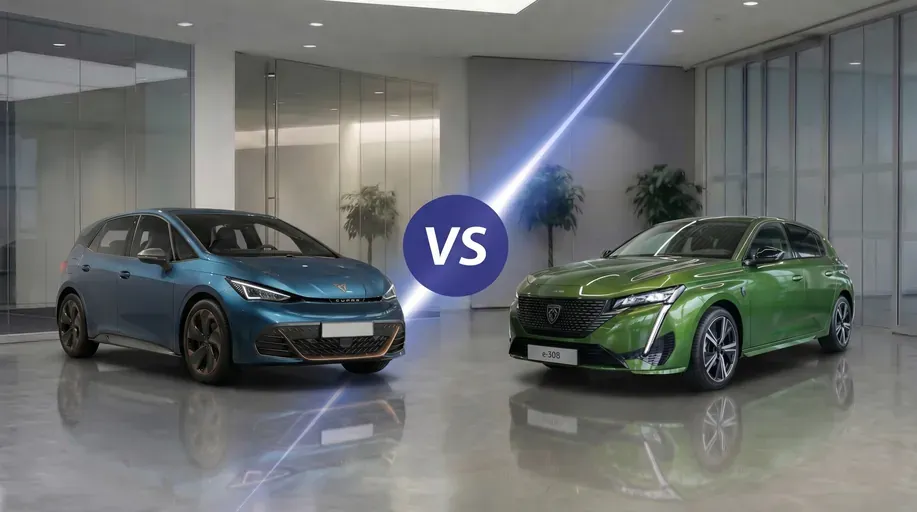
Are you choosing between the Cupra Born and the Peugeot e-308? We bring you a detailed comparison of both electric vehicles. Discover the real-world range, equipment, and read our verdict!
Apr 13, 2026