Cupra Born vs. Volkswagen ID.3: Complete comparison 2026
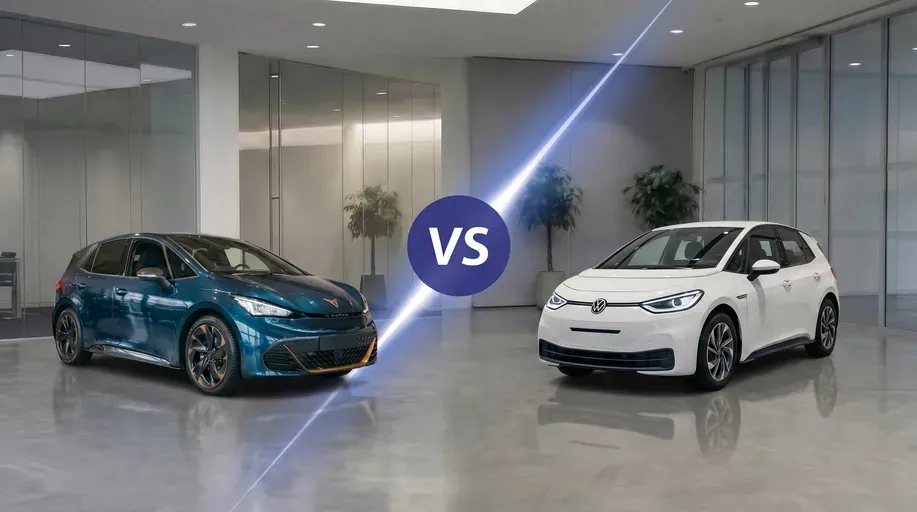
Detailed comparison of Cupra Born vs Volkswagen ID.3. Discover the key differences in performance, range, and equipment of these electric vehicles. Read our final verdict!
Oct 16, 2026
Articles
Car battle
Detailed comparison of the MG4 and Volkswagen ID.3 (VW ID.3) electric vehicles. Which hatchback offers better range, price, and features? Read our final verdict.
May 13, 2026


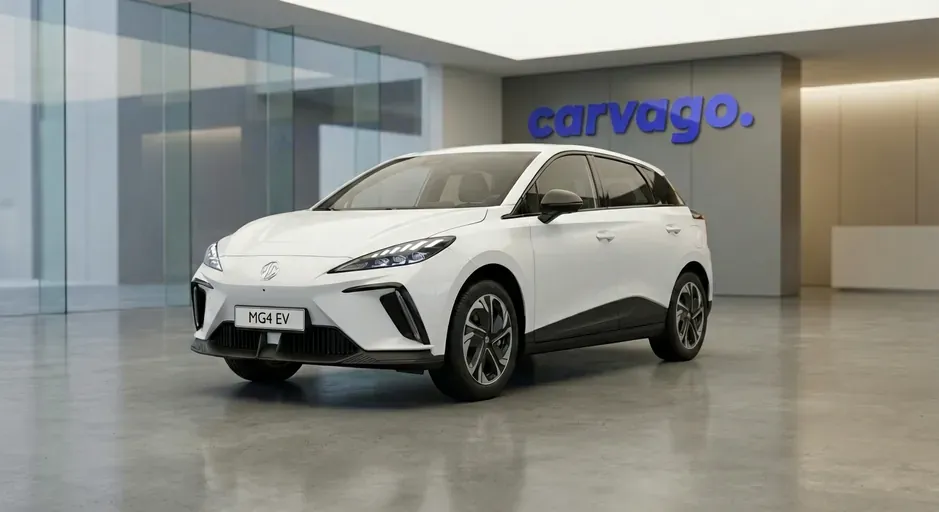
The Chinese MG4 electric hatchback, also known as the MG4 EV or MG Mulan in selected markets, recently revitalized the affordable compact car category with its aggressive looks and sophisticated rear-wheel-drive architecture. Its direct challenger is the seasoned Volkswagen ID.3 (renamed ID.3 Neo as part of the latest update), which in its time kicked off a completely new electric era for the German automaker and today represents a proven market staple. In the following comparison, we will take a detailed look at how these two popular C-segment representatives stack up against each other and which of them represents the more sensible choice when choosing a reliable used car.
Looking at the exterior dimensions, you'll find that although both cars fall into the category of compact electric hatchbacks, each approaches the use of space slightly differently. The MG4 is overall 22 to 26 mm longer (4287 mm) and 27 mm wider (1836 mm) than the Volkswagen ID.3. In daily city traffic, these differences in footprint are practically negligible, and you can park both cars in tight spaces with similar ease.
The Volkswagen ID.3 bets on a slightly raised profile, which, with its shape and concept featuring a very short hood, remotely resembles a small MPV. This is primarily reflected in the overall height – the Volkswagen, with values reaching up to 1568 mm, exceeds the MG4 (1504–1516 mm) by about five to six centimeters. The lower and wider build of the MG4, on the other hand, gives it a much sportier, more low-slung appearance. Conceptually, this helps lower the center of gravity, which will please more enthusiastic drivers during more dynamic cornering.
The most important dimension that usually defines the utility value of a family car is the wheelbase. Although the Volkswagen ID.3 is shorter overall, its wheels are pushed to the very corners of the body. The result is a generous wheelbase of 2769–2771 mm, which is a significant 65 mm more than what the MG4 offers (2705 mm). In combination with the higher roof, this means in practice that the ID.3 can offer a noticeably airier cabin and slightly more knee room in the rear seats. The MG4, by contrast, refers more to the traditional layout of a classic hatchback and will appeal more to those who prefer a more conventional and lower driving position.
| Parameter | MG4 Hatchback | Volkswagen ID.3 Hatchback |
|---|---|---|
| Width (mm) | 1836 | 1809 |
| Length (mm) | 4287 | 4261–4265 |
| Height (mm) | 1504–1516 | 1561–1568 |
| Wheelbase (mm) | 2705 | 2769–2771 |
When choosing a compact electric car for everyday use, the trunk capacity plays an important role. Whether it's for family utility, regular shopping, or packing for a long weekend, every extra liter makes life easier. While the MG4 and Volkswagen ID.3 fall into the same size category and share a hatchback body style, a look into the trunk reveals clear differences between these popular used cars.
In its first generation, the Volkswagen ID.3 offers a very solid basic trunk capacity of 385 liters. If you fold down the rear seats, you get a generous total space of 1,267 liters. These values make it a highly practical companion, with a trunk that is easily accessible, has a regular shape, and can easily accommodate a folded stroller or bulkier luggage for a longer family vacation.
On the other hand, the MG4 in comparable model years provides a basic capacity of 350 to 363 liters (the slight difference depends on the specific version and equipment). After fully folding the rear backrests, the transport capacity increases to 1,165 to 1,177 liters. Although this space is still fully sufficient for regular weekend shopping and daily commuting, the ID.3 has a slight edge in this regard. The difference of roughly 20 to 35 liters in the base and approximately 100 liters with the seats folded down means valuable space for a few extra small bags in practice for the Volkswagen.
| Parameter | MG4 Hatchback | Volkswagen ID.3 Hatchback |
|---|---|---|
| Basic capacity (liters) | 350 - 363 | 385 |
| Maximum capacity with seats folded (liters) | 1,165 - 1,177 | 1,267 |
If you are looking for maximum practicality and more frequently transport larger amounts of luggage, the Volkswagen ID.3 offers slightly more freedom than the more dynamically styled MG4 thanks to its larger trunk.
When choosing a family hatchback, the often-overlooked towing capacity plays a very important role. Whether you need to haul bulky garden waste or simply want to gain space for a few extra suitcases in the form of a small trailer, towing capacity takes the car's practicality to a new level. Furthermore, when comparing approximately four-year-old used cars in the world of electric vehicles, this parameter represents a major decision criterion for many buyers. With this specific pair, you will encounter a truly vast difference.
The Chinese challenger MG4 (first generation sold in Europe since 2022) allows trailer towing, albeit to a slightly limited extent. Regardless of whether you choose the base version, the Extended Range model with a 64kWh battery, or the top-of-the-line variant with a 77kWh capacity, the car offers identical values:
The 500 kg value naturally won't make the MG4 an ideal tow vehicle for a heavy family caravan, but it is a capacity perfectly sufficient for a weekend purchase of building materials, transporting furniture, or attaching a compact utility trailer.
Conversely, the popular first-generation Volkswagen ID.3 (in the widely available 2020–2022 model years for Pro or Pro Performance versions) completely fails in this purely utilitarian discipline. This model was simply not homologated for towing utility trailers from the factory at all, which is why towing capacity values are completely missing from technical data databases.
What does this technical parameter mean in practice? If your lifestyle requires occasional towing of even a small trailer for common household chores or moving, a used MG4 represents the only functional choice of this pair. The Volkswagen ID.3, on the other hand, will limit you exclusively to roof boxes or rear bike carriers in terms of transporting external loads.
| Model and powertrain | Braked trailer weight (kg) | Unbraked trailer weight (kg) |
|---|---|---|
| MG4 Electric / EV (base models, 51 kWh) | 500 | 500 |
| MG4 EV (64 kWh) / Extended Range | 500 | 500 |
| MG4 EV (77 kWh) | 500 | 500 |
Both representatives, the MG4 and the Volkswagen ID.3, were developed from the ground up as purely electric rear-wheel-drive hatchbacks, ensuring more efficient weight distribution, a small turning circle, and excellent dynamics. For those interested in a used car, this means they can rely on modern zero-emission electric motors paired exclusively with a single-speed automatic transmission, albeit with very different philosophies. Volkswagen relies on long-standing German refinement and an established portfolio – the standard in the four-year-old used car market is a battery with a usable capacity of 58 kWh, which delivers 107 kW in the Pro version or a more spirited 150 kW in the Pro Performance version. The most powerful commonly available used ID.3 is the Pro S model with a 77 kWh battery and 150 kW output. On the other hand, the MG4, although it only entered the market in 2022, shook up the electric car market with a more diverse range and different battery chemistries. The standard MG4 electric motor provides 125 kW powered by a robust 51 kWh LFP battery. At the top of the model range, MG offers a unique XPOWER sports variant with all-wheel drive and an impressive total output of 320 kW, significantly outperforming even the newer sports versions of the ID.3. Volkswagen's strength lies in its predictable range and wide availability of various trim levels from the first years of production; its weakness, conversely, is the absence of a more powerful motorization in the oldest model years. The MG4 counters with solid performance even in the base model and the possibility of stunning acceleration in the top version, but as a slightly younger model, it may not be as widely represented on the secondary market. For budget-oriented drivers on daily shorter routes, the base MG4 is ideal; drivers spending time on highways will appreciate the proven ID.3 Pro S, and lovers of brutal performance will undoubtedly head for the MG4 XPOWER.
MG4's electric powertrains were created with the goal of covering the entire breadth of the market, from affordable variants for daily commuting to demanding sports enthusiasts. The base Standard version with a 51 kWh battery has an output of 125 kW and is the only one in the range to use lithium iron phosphate (LFP) cells, which better tolerate regular charging to full capacity. The middle of the range, which appears most frequently on the market, consists of the Comfort and Luxury models with a more traditional 64 kWh NMC battery and 150 kW output. Since summer 2023, an important detail when looking for slightly newer cars, the automaker began selling the Extended Range version with a larger 77 kWh battery and an electric motor boosted to 180 kW to maximize range. A real draw for fans of dynamics is the top-of-the-line XPOWER version (also available since July 2023), which, thanks to two electric motors, provides all-wheel drive and a massive total output of 320 kW. All versions use an automatic transmission with a fixed gear ratio.
| Engine type | Fuel type | Power (kW) | Torque (Nm) | Transmission |
|---|---|---|---|---|
| 51 kWh Standard | Electric | 125 | 250 | Automatic |
| 64 kWh Comfort / Luxury | Electric | 150 | 250 | Automatic |
| 77 kWh Extended Range | Electric | 180 | 350 | Automatic |
| 64 kWh XPOWER AWD | Electric | 320 | 600 | Automatic |
The Volkswagen ID.3 range has been very diverse since the start of production in 2020, which is positively reflected in the rich selection among four-year-old used cars; however, some motorizations have gradually disappeared from the price lists. A typical example is the base Pure Performance variant with a 45 kWh battery and 110 kW output, which was only produced briefly until August 2021, making it relatively rare on the used car market today. The bulk of used car sales consists of the Pro (107 kW) and the much more popular Pro Performance (150 kW) models, which relied on a 58 kWh battery. Production of the Pro Performance version was reduced at the end of 2022, meaning these older model years absolutely dominate the used car market. For long-distance drivers, the Pro S version was offered, combining a 150 kW electric motor with the largest 77 kWh battery. All mentioned models feature rear-wheel drive. It wasn't until 2024 that the range expanded to include the sharp GTX and GTX Performance sports versions (with outputs of 210 and 240 kW and a new 79 kWh battery), but these logically do not yet appear on the market of commonly available used cars.
| Engine type | Fuel type | Power (kW) | Torque (Nm) | Transmission |
|---|---|---|---|---|
| 45 kWh Pure Performance | Electric | 110 | 310 | Automatic |
| 58 kWh Pro | Electric | 107 | 275 | Automatic |
| 58 kWh Pro Performance | Electric | 150 | 310 | Automatic |
| 77 kWh Pro S | Electric | 150 | 310 | Automatic |
While the Volkswagen ID.3 bets on smooth operation, a refined ride, and proven batteries from the first years of production, the MG4 offers a more aggressive approach with more attractive base performance and a fascinating XPOWER sports version for enthusiasts.
Both models, the MG4 and the Volkswagen ID.3, rely on rear-wheel drive and modern electric platforms, offering similar performance and capacity variants. While the MG4 appeared on the European market in 2022 and bets on unexpectedly sporty driving characteristics thanks to its extremely thin battery design (just 11 cm thick), the Volkswagen ID.3 has been on the market slightly longer (since 2020), and its MEB platform emphasizes smoothness, comfort, and robust build quality. Interestingly, both manufacturers work with different battery chemistries for different versions – while the MG4 in its basic variant (51 kWh) uses LFP cells (cheaper, but heavier and more sensitive to cold), for larger capacities it switches to energy-denser NMC chemistry, which Volkswagen also exclusively used for these model years. For the market of approximately four-year-old used cars, these mid-range batteries with NMC technology are proving to be the best choice overall.
This specification, produced mainly between 2022 and 2023, represents the absolute sweet spot of the range from the perspective of a four-year-old used car.
This motorization, available especially on cars from 2020 to 2022, is the most rational and most sought-after choice on the used car market.
For electric vehicles, the difference between official paper values and real-world energy consumption is a frequently discussed topic. While standardized measurements provide a useful basis for comparison, real-world driving experience tends to be different. To get the most accurate picture of how roughly four-year-old used cars perform on today's market, we can rely on real user data from aggregators and platforms such as Spritmonitor.de. We have therefore focused on the MG4 and Volkswagen ID.3 models from 2021 to 2023, which today represent a very rational and sought-after choice on the used car market.
| Model and powertrain | Average consumption (kWh/100 km) |
|---|---|
| Volkswagen ID.3 Pure Performance | 15.0 |
| Volkswagen ID.3 Pro Performance | 15.2 |
| Volkswagen ID.3 Pro | 15.4 |
| Volkswagen ID.3 Pro S | 15.4 |
| MG4 Electric | 16.5 |
| MG4 Electric Extended Range | 16.5 |
The analysis of the measured data reveals clear and, in some cases, slightly surprising trends. Across its versions (from the base Pure version to the Pro S variants with the largest battery), the Volkswagen ID.3 shows exceptionally consistent and efficient consumption, hovering just above the 15 kWh per 100 km mark. The Chinese challenger, the MG4, fares slightly worse in terms of consumption, taking an average of around 16.5 kWh/100 km from the battery, which surprisingly applies equally to the standard range versions and the Extended Range variant. An interesting finding is that the more powerful powertrains in both models bring practically no deterioration in average consumption, proving the excellent software and hardware optimization of current electric motors.
For a typical user who uses the car mainly in suburban mode or for daily commuting, the real-world differences in consumption between these two models will be almost negligible. Conversely, for drivers who regularly tackle longer highway routes, the better aerodynamics and energy management of the Volkswagen ID.3 will be more noticeable – not only through a slightly lower bill for public fast charging but, above all, through a more reliable real-world range. For budget-oriented buyers, however, the MG4 as a used car can often be more price-attractive, easily compensating for that roughly ten percent increase in energy consumption compared to its German competition.
In the end, although the Volkswagen ID.3 is objectively the more economical electric car in this comparison, the difference of approximately 1 to 1.5 kWh per 100 kilometers is not vast from a user perspective. Energy consumption should therefore not be the sole and primary argument when making a decision. When choosing between these four-year-old cars, more weight should be given to the actual battery health of the specific unit, the total purchase price, and personal preferences regarding ergonomics or driving characteristics.
When looking for a roughly four-year-old pure electric hatchback, the Volkswagen ID.3 and MG4 are among the most interesting offers on the market. While the German representative entered the market slightly earlier (in 2020) and the market is thus saturated with a large number of cars from expired corporate leases, the Chinese-British MG4 only began selling in Europe in the second half of 2022. This slight age shift is fundamentally reflected in the current price map.
| Model (typical years) | Starting price (base models) | Price for better-equipped versions with a larger battery | Main attraction on the used market |
|---|---|---|---|
| VW ID.3 (2021–2022) | from approx. €15,000 | €20,000 – €25,000 | Wide selection, depreciation from original price |
| MG4 (2022–2023) | from approx. €19,000 | €23,000 – €27,000 | Transferable factory warranty on car and battery |
For the Volkswagen ID.3, especially from the first years of production, the market has seen a relatively steep drop in prices. These cars suffered from minor software issues in the beginning, which the automaker gradually resolved via over-the-air (OTA) updates, but the earlier hit to their reputation accelerated their loss of value.
Thanks to this, a used ID.3 is now among the most affordable modern electric cars on the market. The very popular Pro Performance versions (with a usable battery capacity of 58 kWh and 150 kW output) can be found without much trouble even below the €16,000 mark. The customer thus gets an advanced and spacious car with a mature chassis for a fraction of its original list price.
The MG4 Electric targeted the automotive market with an aggressive pricing policy even as a new car, which is reflected in used car sales today. The most affordable versions with the basic 51kWh battery start in dealerships at around €19,000. Better-equipped models with the larger 64kWh battery, which significantly improves real-world range and adds faster charging speeds, range between €23,000 and €27,000.
Although the entry price of a used MG4 is slightly higher than the cheapest ID.3 examples, it offers one very fundamental benefit for buyers. The brand provides a seven-year factory warranty on its cars (or up to 150,000 km), which is fully transferable to the next owner. Most MG4 used cars currently on sale thus have three to four years of worry-free coverage for unexpected defects ahead of them.
The Volkswagen ID.3 currently offers an unbeatable price-to-utility ratio thanks to earlier depreciation, while the MG4 wins over buyers with unrivaled peace of mind thanks to the still-ongoing multi-year factory warranty.
Both compared models, the MG4 and the Volkswagen ID.3, earned the maximum five-star rating in independent Euro NCAP crash tests. When buying a used car, however, it is crucial to consider the year of testing and the associated context. Euro NCAP's methodology is constantly evolving and becoming stricter over time. Percentage results from different years cannot be directly compared, as newer protocols include more demanding frontal barriers, more advanced driver alertness monitoring, or complex detection of cyclists and pedestrians at intersections. The following data is based on the original homologation tests, which best correspond to cars sold today as roughly four-year-old used vehicles.
The MG4 model underwent crash tests in 2022. According to the very strict standards of the time, it achieved solid results across all measured categories. Adult occupant protection was rated at 83% and child protection at 80%. In the area of safety for vulnerable road users, which includes pedestrians and cyclists, the car recorded a good 75%. Active safety and assistance systems received 78%, clearly proving that even a relatively affordable electric hatchback can offer a modern and very sensitive array of sensors. An additional advantage of the MG4 model is that its five-star certification is valid for two years longer than that of older competitors.
The Volkswagen ID.3 underwent Euro NCAP tests at its market launch in 2020. Although these tests were conducted according to slightly milder criteria than for the MG4, the ID.3 clearly set the benchmarks for its class at the time. Adult protection was rated at an excellent 87% and child protection at an impressive 89%, making it a perfect candidate for family use. Safety assistance systems received a generous 88% from the assessors, although the car achieved a slightly weaker result of 71% for vulnerable road users. It is also useful to remember that the standard six-year validity of the original Euro NCAP certificate for the first 2020 ID.3 models will soon be coming to an end, although this does not change the physical robustness of the car itself.
Overall, these popular electric vehicles offer a comprehensive and top-tier level of safety. While the 2020 Volkswagen ID.3 scores with flawless passive occupant protection (especially for children in the rear seats), the MG4 benefits from being tested under more modern and stricter safety protocols that better reflect current standards for intelligent driving assistants.
| Parameter | MG4 | Volkswagen ID.3 |
|---|---|---|
| Year of testing | 2022 | 2020 |
| Adult occupant protection | 83 % | 87 % |
| Child protection | 80 % | 89 % |
| Vulnerable road user protection | 75 % | 71 % |
| Safety assistance systems | 78 % | 88 % |
Whether you go for the MG4, proven by modern tests, or choose the Volkswagen ID.3 with its excellent child protection, in both cases you get an exceptionally safe and robust electric car.
In addition to standard equipment, each model offers several unique features that can be decisive for the customer, and both cars clearly show that they have their own and very distinctive approach to added value.
The British-Chinese hatchback bets on technological innovations under the hood and features that will be appreciated by both enthusiastic drivers and practically-minded users.
The German representative focuses on digitalization, light signature, and advanced electronic assistants aimed at maximizing ease of daily use and increasing safety.
Excellent price-to-value ratio on the used car market
Fun and agile driving characteristics thanks to rear-wheel drive and a low center of gravity
Remaining long factory warranty (7 years or 150,000 km), which is a major advantage for a used EV
Distinctive and confident design that attracts attention
Very decent charging speed on versions with the larger battery (Long Range)
Slower and less intuitive infotainment system responses
Use of cheaper and harder plastics in the interior
Necessity to control basic functions (including air conditioning) exclusively via the touchscreen
Absence of a heat pump in basic trim levels
The MG4 is an ideal choice for pragmatic yet enthusiastic drivers looking for an affordable and engaging electric car. Thanks to the long factory warranty and excellent value for money, you can easily overlook minor compromises in material quality or display ergonomics.
Excellent use of interior space with plenty of room even for rear passengers
Top-notch maneuverability and a very small turning radius (ideal for city driving)
High level of driving comfort, bump absorption, and overall cabin soundproofing
Better residual value retention and a wide, accessible service network
Higher purchase price on the used market compared to direct Asian competitors
Problematic interior ergonomics, especially the unlit touch slider below the display and the absence of physical buttons on the steering wheel
Disappointment with the quality of hard plastics in models from the first years of production (pre-facelift in 2023)
Slow software in older model years (it is necessary to verify the availability of the latest updates when purchasing)
The Volkswagen ID.3 targets buyers who require a spacious, quiet, and exceptionally comfortable electric car for daily urban and suburban commutes. Although used cars from the first years of production suffer from unrefined infotainment and cheaper plastics, the car makes up for it with unrivaled agility and the solidity of an established brand.
Based on data from the CarAudit service, which involves a detailed independent inspection of the car's technical condition, and based on long-term user feedback and service statistics, we have compiled an overview of the most common problems that buyers of used models should watch out for.
The MG4 is one of the most popular and affordable electric cars, however, used cars from the early years (from 2022) show certain teething troubles, mainly concerning software and panel alignment.
The MG4 impresses with great driving characteristics and an excellent price-performance ratio; however, with used cars from the first years of production, arm yourself with patience for the slower infotainment and overly active lane-keeping assistant. Mechanically, the car is quite solid, but a thorough check of the build quality and electronics is advisable before buying.
The Volkswagen ID.3 went through a relatively complex development in its first years of production (2020–2022), which is reflected in the list of typical ailments for roughly four-year-old used cars – most of them, however, have fortunately been resolved by now through warranty repairs or software updates.
Buying a roughly four-year-old Volkswagen ID.3 makes sense primarily if the car has demonstrably undergone all available software updates and a service replacement of the 12V battery. While pre-facelift models suffer from a cheaper-feeling interior, if the software is in the current version, you get a very comfortable, spacious, and reliable electric car.
When buying a used car, a thorough inspection is key. Here are several specific points to focus on with these two electric models, ideally as part of an independent technical inspection of the car.
Both cars offer similar range values, with versions featuring the largest batteries (77 kWh) exceeding the 500 km mark. The Volkswagen ID.3 with a 77 kWh battery offers a slightly higher official range (up to 559 km) compared to the MG4 (up to 520 km). In real-world driving, however, the differences are minimal, and the range depends primarily on your driving style and the outside temperature.
The MG4 has long scored points with a much more aggressive pricing policy and offers an almost unrivaled price-to-performance ratio in its class. While the Volkswagen ID.3 is more expensive as a used car, it compensates for this with a slightly more premium interior finish and the denser service network of a traditional European brand. For a buyer looking for a modern electric car for the least amount of money, the MG4 is the clear favorite.
The luggage compartments of both cars are very comparable and fully sufficient for normal daily use. The Volkswagen ID.3 offers a trunk capacity of 385 liters in its basic configuration. The MG4 lags only slightly behind with a capacity of 363 liters (or 350 liters for higher trim levels), so you will hardly notice the difference in practice.
The MG4 features rear-wheel drive and, thanks to its excellent 50:50 weight distribution, delivers surprisingly sporty and agile driving characteristics for its class. While the Volkswagen ID.3 also has rear-wheel drive, it is overall tuned more for comfort and a calm family ride. If you prefer more driver involvement and fun behind the wheel, the MG4 will be the better choice.
The Volkswagen ID.3 suffered from software bugs in its first years of production, but updates and the transition to newer system versions from 2022 have significantly improved its speed and stability. The MG4 has a central display with good resolution, but it can sometimes feel slower, and some functions, such as climate control settings, are hidden deeper in the menu. Thus, VW currently offers a slightly more refined and intuitive software experience.
Sources: ADAC, auto.cz, svetmotoru.cz, motorvize.cz, autoweb.cz, autobox.cz
This article was prepared using artificial intelligence tools. The section guarantor is Petr Dušek.

Detailed comparison of Cupra Born vs Volkswagen ID.3. Discover the key differences in performance, range, and equipment of these electric vehicles. Read our final verdict!
Oct 16, 2026

Are you choosing between the Cupra Born and the Peugeot e-308? We bring you a detailed comparison of both electric vehicles. Discover the real-world range, equipment, and read our verdict!
Apr 13, 2026

Detailed comparison of Tesla Model 3 vs Volkswagen ID.7. Which electric car offers better range and space? Discover real-world driving experiences and our verdict.
Apr 26, 2026