Car battle
MG4 vs. Opel Astra Electric: Complete comparison 2026
Deciding between the MG4 and the Opel Astra Electric? Our detailed comparison of range, price, and equipment will help you choose the right electric hatchback for you.
Apr 14, 2026
Articles
Car battle
Detailed comparison of Tesla Model 3 vs Volkswagen ID.7. Which electric car offers better range and space? Discover real-world driving experiences and our verdict.
April 26, 2026
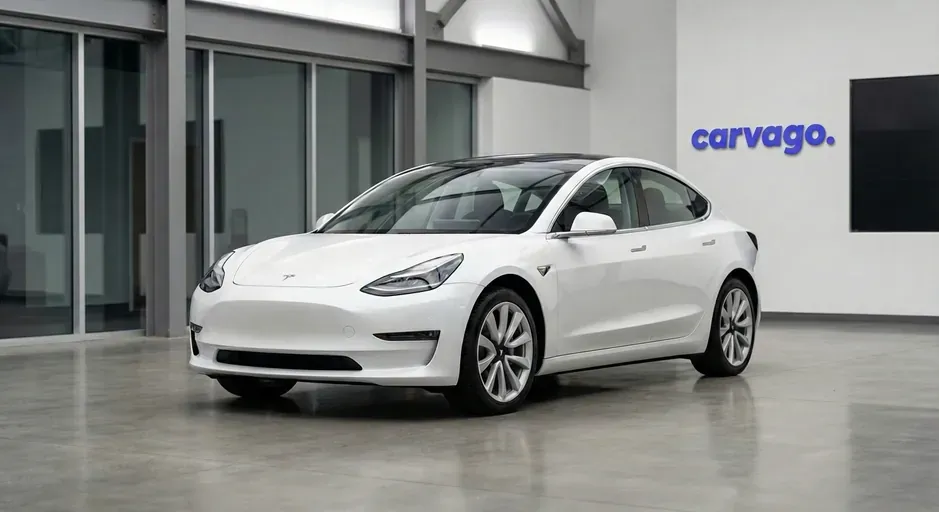
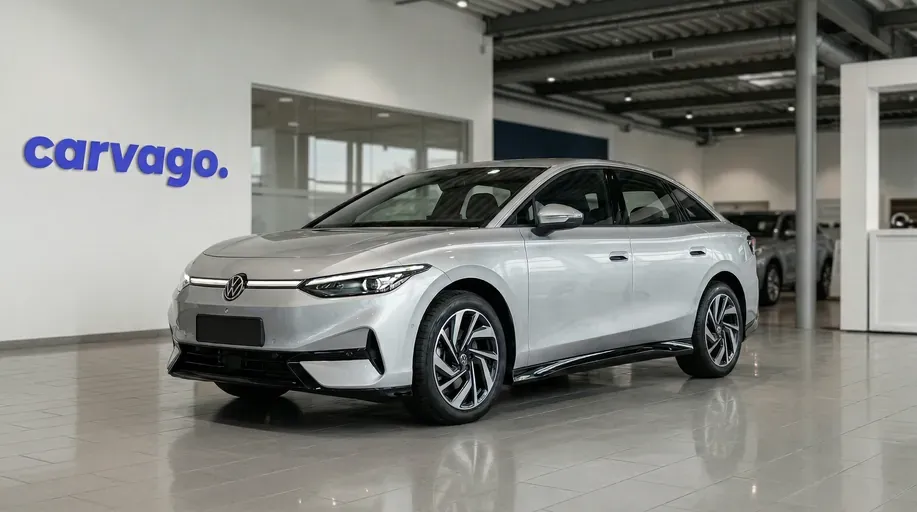
Tesla Model 3, a popular American electric car often referred to by its project name Highland for its updated version, has long defined the electric sedan segment with its minimalist approach and high efficiency. Its challenger today is the Volkswagen ID.7, the direct electric successor to the Passat model and former Aero B concept, also known as the ID.7 Vizzion in selected Asian markets, which bets primarily on premium space and uncompromising travel comfort. In the following comparison, we will take a detailed look at the key differences between both models to find out which one offers a smarter and more practical choice for your daily travel.
When comparing the external dimensions of both electric vehicles, it is clear at first glance that the Volkswagen ID.7 aims a segment higher than the Tesla Model 3. While the American representative is a typical mid-size sedan with a length of up to 4724 mm (depending on the specific year and version), the ID.7's proportions confidently challenge the upper mid-size class. With a total length of 4961 mm, the German car is an impressive 237 to 267 mm longer, making it a nearly five-meter-long vessel. Conversely, the width of both cars is very comparable – at 1862 mm, the Volkswagen is only about 12 to 13 mm wider than the Tesla. For drivers who frequently navigate cramped city streets or park in narrow underground garages, the significantly shorter Tesla Model 3 is a much more practical and agile choice, while the ID.7 will appeal more to those seeking a more majestic highway cruiser.
Fundamental differences also exist in body height and wheelbase length, which are key parameters for interior spaciousness. At 1535 to 1551 mm, the Volkswagen ID.7 is up to 120 mm taller than the low-slung Tesla (1431–1443 mm). The higher roofline, combined with a wheelbase extended by nearly 100 mm (2971 mm for the VW compared to 2875 mm for the Tesla), translates directly into a substantially airier cabin. Passengers thus have more room, especially in the leg and head areas of the rear seats, and getting into the car is also easier. Tesla, on the other hand, benefits from its lower silhouette in terms of exemplary aerodynamics and a lower center of gravity. In terms of overall comfort and generous space, the Volkswagen wins thanks to its long wheelbase and taller body, but the Tesla undoubtedly scores points with drivers who prefer a more dynamic, road-hugging stance.
The third important factor when assessing overall proportions is the range of body variants offered. Throughout its entire production, the Tesla Model 3 has stuck exclusively to the classic four-door sedan concept with a stepped rear. In contrast, Volkswagen offers the ID.7 in two more practical and versatile versions. Customers can choose either a five-door hatchback (effectively designed as an elegant liftback with a large loading opening) or a spacious station wagon under the Tourer (Estate) designation. The different approach to the tailgate design and the option of an estate body make the Volkswagen ID.7 a clearly more versatile family car, while the Tesla's traditional body with a smaller trunk opening will better suit individuals or couples without the need to regularly transport bulkier cargo.
| Parameter | Tesla Model 3 Sedan | Volkswagen ID.7 Hatchback | Volkswagen ID.7 Estate |
|---|---|---|---|
| Width (mm) | 1849 - 1850 | 1862 | 1862 |
| Length (mm) | 4694 - 4724 | 4961 | 4961 |
| Height (mm) | 1431 - 1443 | 1535 - 1536 | 1549 - 1551 |
| Wheelbase (mm) | 2875 | 2971 | 2970 - 2971 |
When we start talking about luggage capacity, the differences between these two electric cars begin to clearly define their target audience. For many buyers in the used car market, practicality, easy access, and the car's ability to serve family needs without compromise are key decision factors. While one model bets on a more traditional body with a smaller but cleverly laid out space, the other presents itself as a genuine family hauler for which large loads are no obstacle.
Tesla Model 3 (looking at the widely represented 2022 generation) offers a total basic luggage capacity of 561 liters in its sedan body style. However, this figure must be taken with a specific caveat, as it consists of a 473-liter rear boot and a very practical 88-liter front trunk (the so-called "frunk"). After fully folding down the rear seats, the total storage space increases to 977 liters. Although this is a very solid value, the practical usability of the Model 3 is slightly limited by the typically narrower boot opening. Packing luggage inside is not a problem, but transporting larger items such as furniture can be a challenge.
Volkswagen ID.7, on the other hand, fully benefits from the advantages of a hatchback and a much more family-oriented silhouette. Even in the basic liftback version, it offers an excellent 532 liters, which you can access much more easily and widely thanks to the large tailgate. By folding down the rear seats, you increase this space to a massive 1,586 liters. An even more interesting choice for cottagers and families is the spacious version sold as the ID.7 Tourer (estate). This swallows a generous 605 liters in its basic configuration and provides a massive 1,714 liters of transport capacity after folding down the second row of seats. Both body variants of the Volkswagen thus easily provide space for several extra suitcases, and their capacity is, with a huge margin, sufficient for weekend shopping and longer holidays.
In terms of overall practicality and variability, the Volkswagen ID.7 is a much more utilitarian vehicle, especially if you go for the huge Tourer variant. While the Tesla Model 3 cleverly scores points with its additional front trunk, ideal for safely storing charging cables or smaller bags, for stroller owners, camping enthusiasts, or active families in general, the much more easily accessible space of the German car is clearly the more rational choice.
| Parameter | Tesla Model 3 Sedan | Volkswagen ID.7 Liftback | Volkswagen ID.7 Estate |
|---|---|---|---|
| Basic capacity (liters) | 561 | 532 | 605 |
| Max. capacity with seats folded (liters) | 977 | 1586 | 1714 |
Thanks to its liftback and estate variants, the Volkswagen ID.7 offers incomparably better access and a huge maximum volume, making it the ultimate choice for families. Nevertheless, the Tesla Model 3 counters with a clever front trunk, and for normal daily use, its space is more than sufficient.
The ability to tow a trailer is playing an increasingly important role for many used electric car buyers, whether for transporting building materials or family camping with a caravan. When it comes to the total weight of the trailer, we find interesting differences in this comparison. Both the Tesla Model 3 and the Volkswagen ID.7 offer the same basic towing capacity in their most common versions (for example, the Tesla Model 3 Standard Range Plus and the VW ID.7 Pro). Both cars in these powertrains handle 1000 kg for a braked trailer and the traditional 750 kg for an unbraked one. This basic limit is more than sufficient for regular users for weekend trips to the hardware store, transporting several e-bikes, or attaching a smaller trailer, which gives you space for a few extra suitcases.
However, a major turning point comes when looking at the maximum towing capabilities and different specifications within the model ranges. While Tesla stops at a weight of 1000 kg, and its most powerful variant, the Model 3 Performance from this period, even completely lacks a tow bar in its specifications, Volkswagen opens up wider possibilities. The more powerful all-wheel-drive versions in the form of the Volkswagen ID.7 GTX and the more practical ID.7 Tourer GTX can tow a braked trailer weighing up to 1800 kg. This capacity can handle towing a medium-sized caravan for a longer holiday or transporting a larger boat without any compromises.
For occasional and light towing, both models represent a completely equal choice that will not disappoint. However, if you are specifically looking for a family car that will also serve as a strong workhorse for heavier loads, the Volkswagen ID.7 offers a significantly more useful and versatile solution with its specifications for the GTX version.
| Model and powertrain | Braked trailer (kg) | Unbraked trailer (kg) |
|---|---|---|
| Tesla Model 3 Standard Range Plus / RWD | 1000 | 750 |
| Tesla Model 3 Long Range | 1000 | 750 |
| Volkswagen ID.7 Pro / Pro S | 1000 | 750 |
| Volkswagen ID.7 GTX / Tourer GTX | 1800 | 750 |
Differences in motorizations between the Tesla Model 3 and Volkswagen ID.7 show two distinct approaches to electric mobility, fundamentally influencing dynamics, consumption, and the daily driving experience for different types of buyers. While the first generation of the Tesla Model 3 (roughly four-year-old cars on the used market) focuses on raw power and sporty characteristics with lightning-fast acceleration across both rear-wheel drive and all-wheel drive models, the slightly newer Volkswagen ID.7 bets on smoothness, refinement, and maximum comfort on long journeys. Both cars feature exclusively all-electric powertrains and single-speed automatic transmissions, but they differ in tuning. The Tesla is clearly driver-oriented and will please those looking for adrenaline and agility, while the Volkswagen will appeal to those interested in a quiet and spacious highway cruiser, whose base and top motorizations are tuned for maximum efficiency, smooth pull, and predictability.
Tesla Model 3 offers a very popular range of electric powertrains in its first generation, from economical variants to extremely powerful models. The base rear-wheel drive version (often referred to as Standard Range Plus or simply Model 3 in newer model years) provides an output of 208 kW, which is more than enough for very brisk driving in the city and on the highway. The Long Range variant (known in some regions and model years as Maximale Reichweite) adds a second electric motor, all-wheel drive, and raises the output to an impressive 366 kW. For sports driving enthusiasts, the top-of-the-line Performance model is available, pushing the limits to 377 kW and offering a massive torque of 660 Nm. All versions benefit from excellent thermal management and an efficient single-speed automatic transmission that transfers power to the wheels without any delay.
| Engine Type | Fuel | Power (kW) | Torque (Nm) | Transmission |
|---|---|---|---|---|
| Standard Range Plus (RWD) | Electricity | 208 | 420 | 1-speed automatic |
| Long Range (AWD) | Electricity | 366 | 493 | 1-speed automatic |
| Performance (AWD) | Electricity | 377 | 660 | 1-speed automatic |
The Volkswagen ID.7, representing the newer wave of electric liftbacks and estates (Tourer), builds its offering on a highly efficient synchronous electric motor at the rear axle in the case of the Pro and Pro S models. These standard variants differ only in battery capacity (77 kWh for the Pro version and 86 kWh for the Pro S version), but share the same output of 210 kW and a generous torque of 545 Nm, ensuring a very refined and smooth pull suitable for long distances. For customers who, on the other hand, require higher performance and the uncompromising traction of all-wheel drive, Volkswagen introduced the GTX version. This adds an asynchronous electric motor to the front axle, increasing the total system output to 250 kW and raising the torque to 560 Nm. As with the competing model, power delivery is handled by a smooth single-speed automatic transmission, ideal for gentle maneuvering and flexible acceleration.
| Engine Type | Fuel | Power (kW) | Torque (Nm) | Transmission |
|---|---|---|---|---|
| Pro (RWD) | Electricity | 210 | 545 | 1-speed automatic |
| Pro S (RWD) | Electricity | 210 | 545 | 1-speed automatic |
| GTX (AWD) | Electricity | 250 | 560 | 1-speed automatic |
While the Tesla Model 3 impresses used car buyers with raw power and sporty genes even in its base versions, the Volkswagen ID.7 represents the ideal choice for highway travelers who appreciate smooth power, silence, and premium comfort.
Choosing the right powertrain is crucial for long-term satisfaction. Our recommendations are based on real-world experience, range, reliability, and user feedback. Both manufacturers approach electric drive slightly differently. While Tesla has long prided itself on the fantastic efficiency and uncompromising dynamics of its electric motors, Volkswagen with the ID.7 model bets more on refinement, unwavering travel comfort, and excellent aerodynamics. The Model 3 is already an established and highly sought-after commodity on the roughly four-year-old used car market with a wide selection. In contrast, the Volkswagen ID.7 has only been on sale since the end of 2023 (listed in available data as ab 10/23), which means that typical four-year-old used cars do not yet exist and the market for nearly-new cars is only slowly forming. Even so, the most balanced version can be clearly identified for both cars.
When choosing a used Tesla Model 3 (from the pre-facelift generation, available between 2019–2023), the absolute ideal is the Long Range variant with all-wheel drive, often referred to as Maximale Reichweite on the German market. This version, typically equipped with a battery with a usable capacity of around 75 kWh, represents the golden mean. It offers sporty acceleration (0 to 100 km/h in 4.4 seconds) and, thanks to excellent thermal management – from the end of 2020, cars have been standardly equipped with a more economical heat pump – it provides a reliable real-world range between 400 and 450 kilometers. The software integration and charging speed on the Supercharger network are also excellent, making the car suitable for worry-free long-distance travel. However, when buying a used car, pay close attention to the chassis. Due to the high curb weight and massive torque, the control arms and ball joints of both the front and rear axles often suffer premature wear. Any play manifests as unpleasant squeaking from the wheels and reduced stability at higher speeds; therefore, definitely have the car inspected on a lift before purchase. It is also important to check the traction battery degradation via the car's service menu or specialized diagnostics. The Long Range AWD is absolutely ideal for drivers who want to travel long distances without range anxiety and at the same time value a safe ride with plenty of traction and power reserves without having to opt for the unnecessarily stiff Performance version.
Since the ID.7 is a complete newcomer to the market, you will logically be choosing between cars that are at most a few years or months old. The entry-level powertrain labeled Pro can be recommended with a clear conscience, both for the liftback body style and the more spacious Tourer estate. This brand-new electric motor with the internal designation APP550, which exclusively powers the rear axle, has brought a completely new level of dynamics and efficiency to the ID. model family. It offers a very respectable output of 210 kW and a massive torque of 545 Nm, which, in combination with a 77 kWh battery, means a real-world highway and combined range of around a comfortable 450 km. Unlike older generations of electric cars from VW, the ID.7 has had precisely tuned software from the start with fully functional automatic and manual battery pre-heating before arriving at a fast charger (charging power is up to 170 kW), which eliminates unnecessary waiting in the winter months. Although the powertrain is too new to evaluate long-term reliability, it appears very robust in construction and no systemic "teething troubles" have appeared so far. This version is perfect for typical highway travelers, families, and corporate fleets – in short, for those who are not looking for Tesla's racing sharpness but demand a quiet, exceptionally comfortable, and sophisticated travel cruiser for covering hundreds of kilometers at a time.
When evaluating the energy consumption of electric vehicles, it is common for the official values provided by the manufacturer according to the WLTP laboratory cycle to differ from reality. In practice, driving speed, outside temperature, and driving style play a huge role. To get a more accurate picture that makes sense for those interested in a used car, it is ideal to base it on real data from everyday operation. The following comparison is therefore based on statistics from user platforms such as Spritmonitor.de and EV-Database, which collect the long-term experiences of real drivers and reflect the actual energy demands of both cars. For the Tesla Model 3, we focus on models approximately four years old, while for the newer Volkswagen ID.7, we work with current data from the first generation.
| Model and powertrain | Average consumption (kWh/100 km) |
|---|---|
| Tesla Model 3 Standard Range Plus | 14.2 |
| Tesla Model 3 Long Range | 14.7 |
| Tesla Model 3 Performance | 16.5 |
| Volkswagen ID.7 Pro (incl. Tourer) | 14.2 |
| Volkswagen ID.7 Pro S (incl. Tourer) | 13.8 |
| Volkswagen ID.7 GTX (incl. Tourer) | 16.4 |
The data clearly shows that both the Tesla Model 3 and the Volkswagen ID.7 are among the absolute top in terms of aerodynamics and overall electric drive efficiency. Both the base and slightly more powerful single-axle drive versions achieve admirably low average consumption of around 14 kWh/100 km. A surprising finding may be that despite the fact that the Volkswagen ID.7 is a significantly larger and heavier liftback (or spacious Tourer estate), it can fully compete with the Tesla thanks to excellent battery management and a top-tier drag coefficient. Even the performance-oriented all-wheel-drive versions (Model 3 Performance and VW ID.7 GTX) demand a reasonable amount of energy. Their consumption of around 16.5 kWh/100 km is still an excellent result considering the dynamics offered.
For the average user, these figures mean that both vehicles are perfectly prepared for the role of the main family car and are not intimidated by long motorway journeys. Drivers who cover hundreds of kilometres daily will most appreciate the Tesla Model 3 Long Range or VW ID.7 Pro S variants. These versions combine higher battery capacity with highly efficient operation, which reduces the time spent at charging stations to an absolute minimum. Conversely, for those who spend most of their time on shorter routes or in urban and suburban traffic, the base variants will be more than sufficient. It is precisely in the city, thanks to frequent energy recuperation, that the real consumption of both cars can drop significantly below average values.
In the final decision between a used Tesla Model 3 and a slightly newer Volkswagen ID.7, energy consumption itself should not be the deciding factor. Both cars are highly balanced in terms of economy and are considered the technological peak in their class. The choice will therefore depend much more on how much interior and luggage space you need, or on your preferences regarding infotainment control and the overall approach of both carmakers to the concept of a modern vehicle.
When searching the used electric car market, you will encounter a different situation for these two cars, mainly due to their age and market history. Tesla Model 3 is a seasoned player, and the used market is full of cars from 2021–2023 (the popular pre-facelift generation), which ideally matches the demand for approximately four-year-old used cars. Volkswagen ID.7 entered the market at the turn of 2023 and 2024. Therefore, when choosing it, you will encounter nearly new cars, at most two years old, demonstration models, or cars from terminated short-term operational leases.
The table below reflects average prices on the used car market for the relevant model years and generations that make sense on the market.
| Model | Recommended years | Indicative used price (€) | Most affordable version | Top version |
|---|---|---|---|---|
| Tesla Model 3 | 2021–2023 | 23,000 – 37,000 | Standard Range Plus | Performance |
| Volkswagen ID.7 | 2023–2024 | 37,000 – 57,000 | Pro (77 kWh) | Pro S / GTX (86 kWh) |
The Tesla Model 3 has seen a significant drop in prices on the used market in recent years. This is due to both occasional across-the-board price cuts for new cars by the manufacturer itself and the arrival of the significantly modernized Highland version in late 2023, which pushed older model years lower in price.
Since the ID.7 is still a fresh newcomer on the used market, its prices logically remain significantly higher. It competes more with new or nearly new cars, and the biggest drop in value for this model is yet to come in the following years.
While a three- to four-year-old Tesla Model 3 represents an exceptionally affordable entry ticket to the world of long-distance electric cars with a great price-performance ratio on the used market, the significantly younger and more spacious Volkswagen ID.7 requires a larger investment but rewards you with a full factory warranty and premium comfort.
Both the Tesla Model 3 and the Volkswagen ID.7 received the maximum five-star rating in Euro NCAP crash tests. However, it is extremely important to view these results in the context of the year they were tested. The Euro NCAP methodology is constantly evolving and becoming stricter – new frontal impact simulations, stricter cyclist detection, or entirely new emergency scenarios at intersections are regularly introduced. For this reason, percentage scores from tests conducted in different years cannot be directly and unconditionally compared, as newer models must meet significantly more demanding and modern criteria to achieve the same percentage.
Tesla Model 3 underwent the latest round of Euro NCAP tests in 2025 (in its updated version) according to the strictest current standards. In these tests, the car confirmed its dominance in safety, achieving an excellent 90% for adult protection and completely dominating child protection with a score of 95%. It scored 89% for the protection of vulnerable road users, and its assistance systems were rated at 88%. However, if you are choosing a roughly four-year-old car on the used car market (pre-2022 facelift), it falls under the older 2019 test methodology. Even this older model easily earned five stars back then (with a record 96% for adults and 94% for assistants), but its official certification corresponds to earlier protocols. In any case, Tesla continuously modernizes its already advanced active safety systems through software updates.
Volkswagen ID.7, being a newer model, underwent rigorous Euro NCAP tests in 2023 and also took home a full five stars under the new and very strict rules. The car literally shone in the adult occupant protection category, where it achieved an impressive 95%. Child protection was rated at a solid 88%. The car scores points for its robust body and exceptionally reliable assistance systems (80%). Not only modern cyclist detection but also the standard Car2X technology contributes significantly to overall safety and the protection of vulnerable participants (83%). This allows the vehicle to communicate with the surrounding infrastructure and other cars, proactively warning the driver of local hazards, accidents, or traffic jams before they are even noticed.
In conclusion, both cars represent the absolute technological peak in the field of safety according to current standards. While the Volkswagen ID.7 offers phenomenal protection for adults in the cabin and innovative predictive features such as Car2X, the Tesla Model 3 in its latest iteration brings a slightly more comprehensive package for families – scoring with completely unrivaled protection for child passengers and very advanced active assistants for emergency situations. According to current standards, Tesla emerges as the winner of this duel by a narrow margin.
| Parameter | Tesla Model 3 | Volkswagen ID.7 |
|---|---|---|
| Year of testing | 2025 | 2023 |
| Adult occupant protection | 90 % | 95 % |
| Child protection | 95 % | 88 % |
| Vulnerable road user protection | 89 % | 83 % |
| Safety assistance systems | 88 % | 80 % |
Whether you choose the precisely protective Volkswagen ID.7 or the modern assistant-packed Tesla Model 3, both cars provide absolute five-star safety that reliably protects adults and the smallest passengers alike.
In addition to standard equipment, each model offers several unique features that can be decisive for the customer, with both cars approaching added value from completely different angles.
The American representative bets on technological innovation, an unrivaled software background, and features that change everyday life with a car.
The German flagship of the ID. family focuses on a more traditional concept of luxury, travel comfort, and technologies that make long journeys easier.
Excellent efficiency and very low energy consumption
Unrivaled integration into the Supercharger fast-charging network for worry-free travel
Lightning-fast infotainment response and frequent over-the-air (OTA) software updates
Top-tier driving dynamics and instant acceleration, especially in Long Range and Performance versions
Advanced driver-assistance systems (Autopilot) included even in the base equipment
Stiffer and less comfortable suspension on rough roads (especially in pre-facelift models)
Extreme minimalism with an absence of physical buttons and a traditional instrument cluster in front of the driver
Inconsistent build quality and body panel alignment in older model years
Less practical trunk opening due to the sedan body style
The Tesla Model 3 is an ideal choice for tech enthusiasts and more dynamically oriented drivers who appreciate unrivaled efficiency and a reliable fast-charging network. However, its extreme minimalism and sportier suspension tuning require compromises in traditional ergonomics and smooth ride comfort.
First-class ride comfort and excellent aerodynamic cabin soundproofing
Enormous interior space, especially in terms of legroom for rear-seat passengers
Great practicality thanks to the liftback body style (or Tourer estate) with excellent trunk access
Standard-fit head-up display with augmented reality (AR), which makes navigation easier
Top-tier ergoActive seats with advanced massage functions, ideal for long highway journeys
Slightly slower infotainment response compared to Tesla's system
Higher curb weight, which perceptibly reduces agility and nimbleness in sharp corners
Generally higher price level on the used car market due to the shorter time since the model's launch
More conventional charging curve, which may not always match the speed of the Supercharger V3 network
The Volkswagen ID.7 primarily targets motorists looking for a quiet, exceptionally spacious, and maximally comfortable electric car for long journeys. It represents a more conservative and practical alternative to the Tesla, which, while not achieving the same sporty aggression, excels in everyday comfort and traditional build quality.
Based on data from CarAudit expert inspections, long-term user feedback, and the inspection procedures included in our detailed physical pre-sale inspection of used cars, we have compiled an overview of the most common issues buyers should watch out for with both vehicles.
The Tesla Model 3 from roughly four-year-old vintages (the pre-Highland facelift generation) represents a huge technological leap, but its earlier production carries specific manufacturing and mechanical shortcomings that a used car buyer must focus on.
While the Model 3 excels in top-tier powertrain efficiency and software innovation, used car buyers should carefully focus primarily on inspecting the suspension arms and physical paint wear.
Since the Volkswagen ID.7 is a relatively new model on the market, it does not yet suffer from chronic mechanical defects associated with wear and tear. However, early service experience from the nearly-new used car market points to some teething troubles, software compromises, and peculiar engineering solutions.
The Volkswagen ID.7 is an excellent and spacious mile-muncher, but in its first years of production, you have to get used to more complex touch ergonomics and a very specific brake pedal feel.
When buying a used car, a thorough inspection is key. Here are some specific points to focus on for these two models to avoid unexpected investments.
The Volkswagen ID.7 is overall larger and, thanks to its liftback body style, provides much better access to the 532-liter trunk. While the Tesla Model 3 has a slightly less accessible rear trunk, unlike its German competitor, it also offers a practical front storage space (the so-called frunk). Passengers in the rear seats will have noticeably more legroom and headroom in the Volkswagen.
Both models are among the absolute top in aerodynamics and efficiency, so you can easily cover over 500 kilometers on a single charge with both. Tesla benefits from its exceptionally low consumption and lower weight, which ensures a top real-world range for the Long Range version. However, Volkswagen can close this gap with the version featuring the larger 86kWh battery, which is suitable even for the longest highway routes.
The Volkswagen ID.7 was designed as an electric alternative to the Passat, so it excels with premium soundproofing and an exceptionally comfortable chassis. The American competitor is tuned more sportily, so its chassis is stiffer and much more focused on dynamic driving. For calm highway cruising, the German car is clearly the more pleasant choice thanks to better seats and a smoother ride.
Tesla relies on a strictly minimalist interior where absolutely all functions, including wipers and air conditioning, are controlled via the central display. The ID.7 also offers a giant touchscreen but retains an instrument display in front of the driver and a head-up display (HUD). A significant advantage of the Volkswagen is support for Apple CarPlay and Android Auto, which the latter manufacturer has long refused to integrate.
The Model 3 can handle a charging power of up to 250 kW, which means very fast energy replenishment, especially on the company's Supercharger network. The ID.7 supports a maximum charging power of 175 to 200 kW depending on the battery version, but the charging curve is very stable and does not drop as quickly. In practice, you can replenish energy from 10 to 80% in less than half an hour for both cars, so the differences during travel itself are minimal.
Sources: ADAC, forbes.cz, mdcr.cz, autorevue.cz, automix.cz, ceskyautoblog.cz
This article was prepared using artificial intelligence tools. The section guarantor is Petr Dušek.
Deciding between the MG4 and the Opel Astra Electric? Our detailed comparison of range, price, and equipment will help you choose the right electric hatchback for you.
Apr 14, 2026
Detailed comparison of the MG4 and Peugeot e-308. We compared the real-world range, equipment, and driving characteristics of both electric vehicles. Read our verdict before you buy!
Apr 13, 2026
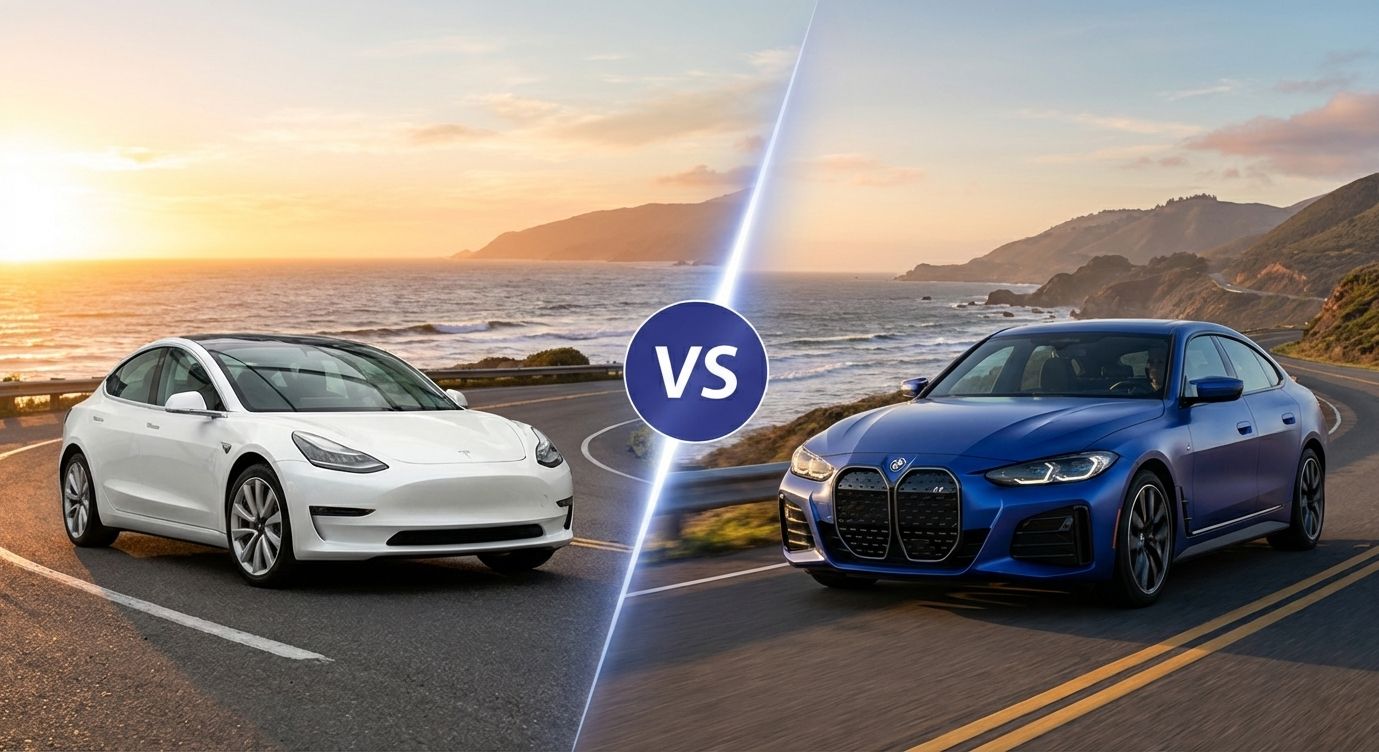
Tesla Model 3 vs. BMW i4: Which premium electric car is better? Our detailed comparison of range, performance, and price will help you choose.
Apr 14, 2026