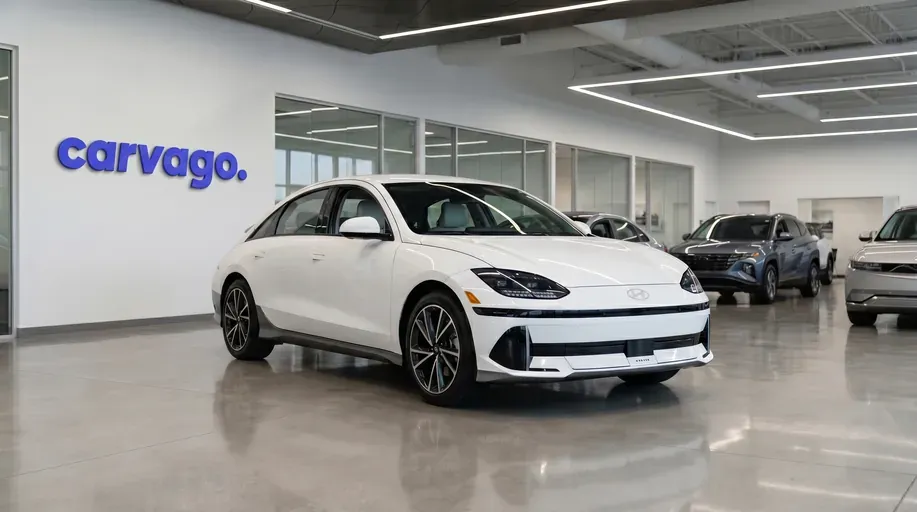
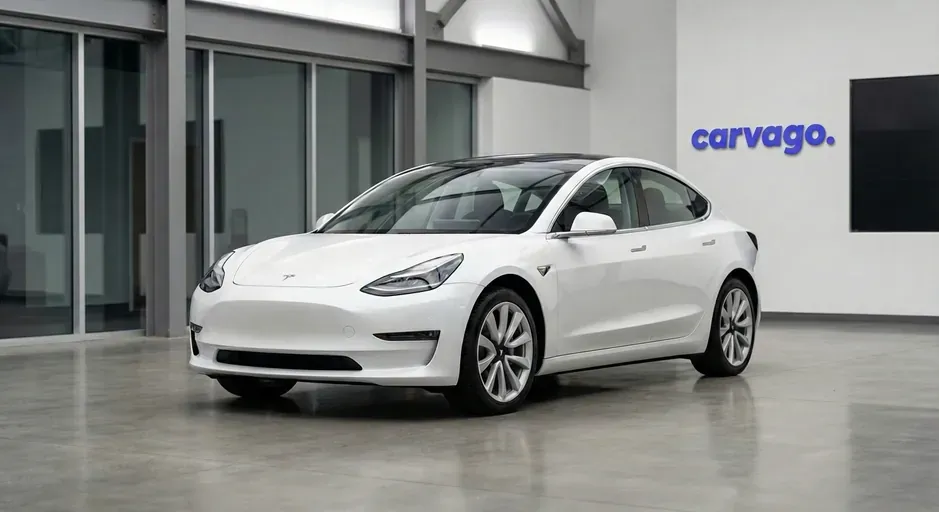
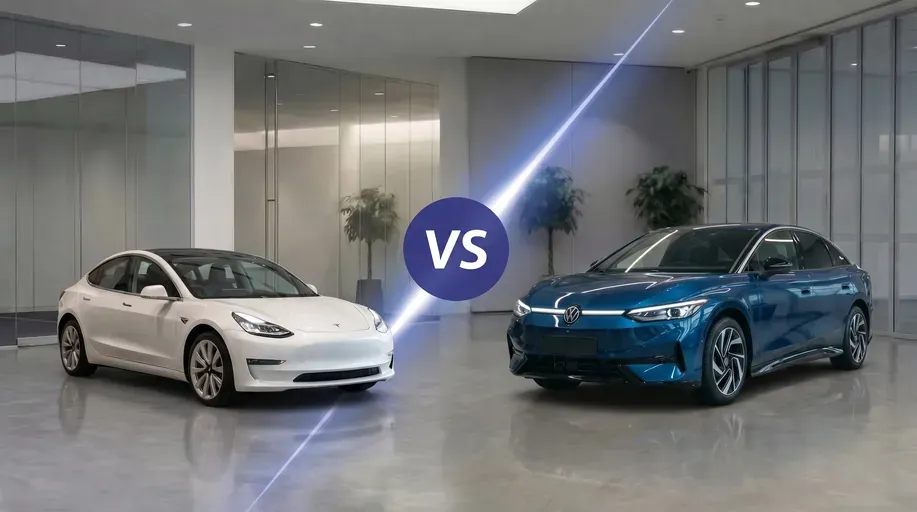
When choosing a used electric car around four years old, you will encounter a fundamental difference in overall size between these two models. Although both the Hyundai Ioniq 6 and the Tesla Model 3 place extreme emphasis on aerodynamic efficiency, their physical footprints on the road differ significantly. The Hyundai Ioniq 6 ranks among larger cars and its proportions give a more massive impression on the road, while the Tesla Model 3 sticks to more compact dimensions typical of mid-size cars. This overall size directly determines which car will be easier to live with depending on your environment.
Looking at specific data from 2022, the Hyundai Ioniq 6, at 4,855 mm, is a noticeable 161 mm longer than the Tesla Model 3 (4,694 mm). A similarly significant difference exists in the wheelbase, where the Hyundai offers 2,950 mm compared to 2,875 mm for the Tesla. In practice, this means significantly more longitudinal interior space for the occupants, which will primarily benefit rear-seat passengers. On the other hand, the Tesla Model 3 can turn its shorter and slightly narrower body (1,849 mm versus 1,880 mm for the Korean car) into a major advantage in daily city traffic. The American electric car is much easier to weave through narrow streets and you can park it in a typical parallel spot with much less effort.
In the compared versions, the Hyundai Ioniq 6 is also 52 mm taller (1,495 mm versus 1,443 mm), which has a positive effect on headroom and can make it slightly easier for passengers to get into the low-slung seats. These physical differences thus clearly profile the ideal buyer for both cars. If your priority is generous interior space for the family, stability on long journeys, and you don't mind the greater demands on parking space dimensions, the Ioniq 6 will be a better candidate for you. However, if you prefer a more agile performance and are looking for a car that is easy to handle even in cramped shopping mall garages, the Tesla Model 3 will suit you much better with its proportions.