Review
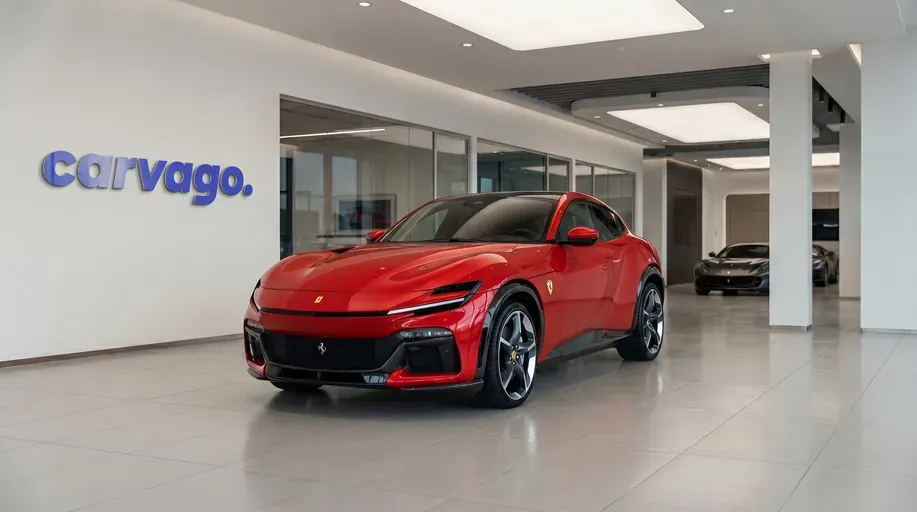
Review Ferrari Purosangue: What do owners and experts really say?
Ferrari Purosangue review: real owner experience, V12 performance, practicality, running costs and the definitive verdict before you buy.
Oct 18, 2026
Articles
Review
Mercedes-Benz GLS review: real owner experience, common faults, running costs and used prices — everything you need before you buy.
October 27, 2026

The Mercedes-Benz GLS sits at the summit of the brand’s sport utility portfolio as a full-size luxury vehicle, competing directly with multi-row peers such as the BMW X7 and Range Rover. This review covers the third generation (chassis code X167), which opened for European orders in May 2019 following its world premiere in April 2019, with the first customer deliveries arriving in October 2019.
Sold exclusively as a large Mercedes-Benz GLS SUV, the lineup encompasses standard three-row variants alongside dedicated high-performance AMG and ultra-luxury Maybach versions. Mercedes-Benz revealed a mid-cycle facelift on 4 April 2023, which arrived in European showrooms in late October 2023 with revised front styling, updated lighting signatures, modernized infotainment software, and refreshed powertrains. A subsequent model update was revealed on 31 March 2026.
Buyers typically turn to the Mercedes-Benz GLS for genuine adult seating across three rows, substantial towing capabilities, and long-distance touring capacity where the passenger and luggage room of an estate or standard saloon proves insufficient.
Owner feedback and workshop records for the third-generation Mercedes-Benz GLS indicate that while mechanical core assemblies are durable, early production years required frequent attention regarding electrical systems and on-board software. With production commencing in late 2019, early vehicles experienced teething issues connected to the complex electrical architecture and pneumatic suspension.
The most prominent operational complaint centers on the 48-volt electrical system. Official service bulletins and owners report sudden electrical lockouts on pre-facelift models, including the petrol Mercedes-Benz GLS 450. When the battery management system suffers communication timeouts or internal cell faults, the instrument cluster displays warnings such as "48V Battery Malfunction" and prevents the engine from cranking, as the powertrain relies entirely on an integrated starter-generator. Reprogramming control module software resolves false shutoffs, but genuine internal battery degradation requires replacing the 48-volt battery pack with an updated revision.
Infotainment and driver assistance systems on 2019 to 2022 vehicles also show recurring glitches. Owners report occasional freezing or sudden reboots of the twin central displays while driving. Furthermore, tests describe haze and moisture gathering inside the camera housing behind the windscreen, temporarily disabling driver assistance aids such as traffic sign recognition and lane keeping assist. Dealers address optical blinding by cleaning the glass enclosure and fitting an updated heating element, while comprehensive software updates stabilise the central screens.
Chassis wear is heavily influenced by the sheer mass of the vehicle. Tests describe micro-cracking in the rubber bellows of the standard air suspension struts after four to six years of environmental exposure. If an air leak causes a corner to sag when parked overnight, prolonged driving forces the air compressor to run continuously to maintain pressure, resulting in premature compressor burnout. Replacing leaking air struts promptly prevents secondary compressor failure. High vehicle weight also accelerates wear on front brake friction materials and the inner shoulders of large rear tyres.
Official European registers record several preventative safety campaigns for the third-generation GLS. Prospective buyers can verify whether a specific car has undergone these repairs by having its documented service records examined through CarAudit or by consulting an authorised dealer.
| Safety recall | Affected build window | Geographic reach | Official remedy |
|---|---|---|---|
| Windscreen camera and mirror bonding | 05 June 2024 to 20 February 2025 | Worldwide (including Europe) | Complete windscreen replacement |
| Transmission control software stalling | 07 November 2018 to 28 March 2023 (includes earlier models) | Worldwide (including Europe) | Transmission control unit software update |
| 48V ground terminal connection fire risk | 16 March 2017 to 07 January 2023 (includes earlier models) | Worldwide (including Europe) | Inspection and retightening of the bolted ground connection |
| Air conditioning drain hose water ingress | 2018 to 2021 (includes earlier models) | Worldwide (including Europe) | Inspection and correct re-routing of condensate drain hoses |
| Third-row seat backrest latch springs | Production up to 20 July 2022 | Worldwide (including Europe) | Repositioning of springs or replacement of the backrest assembly |
| Fuel delivery module impeller binding | July 2021 to September 2022 | Worldwide (including Europe) | Replacement of the in-tank fuel pump assembly |
| Rear door window divider trim bar | 2019 to 2022 | Worldwide (including Europe) | Refastening or replacement of window trim retaining clips |
Every engine in the third-generation Mercedes-Benz GLS lineup is paired with a nine-speed automatic transmission and permanent all-wheel drive. While the pre-facelift diesel engines relied solely on conventional turbocharging, the petrol units and all post-facelift engines incorporate 48-volt mild-hybrid technology with an integrated starter-generator.
| Engine | Fuel | Power | Gearbox | Model years |
|---|---|---|---|---|
| GLS 350 d 4MATIC | Diesel | 210 kW (286 hp) | 9-speed automatic | 2019–2023 |
| GLS 350 d 4MATIC | Diesel mild hybrid | 230 kW (313 hp) | 9-speed automatic | 2023–2026 |
| GLS 400 d 4MATIC | Diesel | 243 kW (330 hp) | 9-speed automatic | 2019–2023 |
| GLS 450 d 4MATIC | Diesel mild hybrid | 270 kW (367 hp) | 9-speed automatic | 2023–present |
| GLS 450 4MATIC | Petrol mild hybrid | 270 kW (367 hp) | 9-speed automatic | 2020–2023 |
| GLS 450 4MATIC | Petrol mild hybrid | 280 kW (381 hp) | 9-speed automatic | 2023–present |
| GLS 580 4MATIC | Petrol mild hybrid | 360 kW (489 hp) | 9-speed automatic | 2019–2023 |
| GLS 580 4MATIC | Petrol mild hybrid | 380 kW (517 hp) | 9-speed automatic | 2023–present |
| Mercedes-Maybach GLS 600 4MATIC | Petrol mild hybrid | 410 kW (557 hp) | 9-speed automatic | 2020–present |
| Mercedes-AMG GLS 63 4MATIC+ | Petrol mild hybrid | 450 kW (612 hp) | 9-speed automatic | 2020–present |
For long-distance touring and pulling heavy loads, the inline-six diesel units represent the most practical choice. As a used car, the GLS 400 d provides ample low-down pulling power, maintaining steady momentum without forcing the automatic gearbox into frequent downshifts. On newer models, the diesel Mercedes-Benz GLS 450 d adds mild-hybrid assistance that smooths out the stop-start process and delivers extended motorway range that petrol variants cannot match.
Vehicles of this size rarely belong in heavy urban traffic, where short journeys increase the risk of soot accumulation in diesel exhaust filters. Drivers with mixed commutes or lower annual mileage should focus on the inline-six petrol option in the Mercedes-Benz GLS 450. It operates with low vibration levels at suburban speeds, though professional tests note that accelerating with a full complement of passengers requires noticeably higher engine speeds than in the diesel models. For buyers seeking a vehicle primarily for city-adjacent driving, the petrol Mercedes-Benz GLS 450 eliminates diesel emission system concerns.
The biturbo V8 engines fitted to the GLS 580 and the Mercedes-Maybach GLS 600 cater to drivers who prioritize swift overtaking and steady high-speed cruising above operating economy. The flagship Mercedes-AMG GLS 63 delivers rapid straight-line acceleration, though its multi-clutch automatic transmission exhibits occasional low-speed hesitancy during parking maneuvers compared to the torque-converter setup in standard versions.
| Dimension / Capacity | Value |
|---|---|
| Length | 5,207–5,215 mm |
| Width (excluding / including mirrors) | 1,956 / 2,157 mm |
| Height | 1,823–1,888 mm |
| Wheelbase | 3,135 mm |
| Boot volume (all seats up / maximum) | 355 / 2,400 l |
Figures apply to standard seven-seat models. Sports styling packages slightly alter exterior length and width, while dedicated four-seat luxury variants feature a fixed bulkhead with different boot capacity.
The Mercedes-Benz GLS SUV delivers genuine three-row accommodation, allowing tall adults to sit comfortably in the third row rather than restricting the rearmost seats to children. Its second-row bench slides fore and aft electrically to balance knee room between compartments, accompanied by power-folding mechanisms that ease entry into the back. While the outer second-row seats offer supportive contours and plush cushioning, the middle perch is flatter and narrower, making it better suited to shorter journeys. Everyday cargo flexibility is a standout trait of the Mercedes-Benz GLS; even with all passenger seats occupied, the boot holds several carry-on suitcases or family shopping. Dedicated switches in the luggage area electrically fold both rear rows flat into the floor, opening up a level load deck for bulky cargo.
Road tests consistently characterise the Mercedes-Benz GLS as a relaxed, long-distance cruiser that prioritises motorway isolation over cornering agility. With the standard air suspension, the chassis floats smoothly over motorway surfaces, while wind and road noise remain subdued even at sustained cruising speeds. However, ride composure degrades over scarred urban tarmac and sharp transverse joints, where larger wheels transmit noticeable thuds into the passenger cell. Through bends, body roll is pronounced unless the vehicle is equipped with the optional active anti-roll suspension system, and slow-geared steering combined with substantial exterior dimensions makes urban manoeuvring clumsy.
Testers praise the supportive front seating and mechanical refinement of the inline-six engines, which emit minimal vibration into the cabin. Assessment of interior quality, however, reveals a clear split. While some reviewers commend the tight assembly tolerances and plush upper surfaces, others note that hard plastics on the lower console and door bins undermine the flagship billing. The shared dashboard layout with the smaller GLE also draws frequent criticism for lacking bespoke cabin exclusivity.
Testers broadly agree that the Mercedes-Benz GLS delivers genuine three-row touring capability, but diverge on low-speed ride composure and interior material consistency. The mid-cycle facelift updated software and subtle styling details, but left the relaxed driving dynamics and fundamental cabin architecture unchanged.
All the charts in this section are drawn from Carvago’s listings of the whole Mercedes-Benz GLS model family, including other generations represented in the data, not only the reviewed generation. Because the dataset covers the wider lineage without generation filters, it does not establish a separate price level for the reviewed generation. Across currently advertised vehicles, the median asking price stands at €45,400 for 2019 models, €108,900 for 2023 models, and €113,500 for 2026 models. These figures reflect a contemporary cross-section grouped by production year rather than tracking individual vehicle values over time.
Advertised listings for the Mercedes-Benz GLS grew from 562 vehicles in April 2026 to 700 in September 2026. The chart below tracks how the number of active listings developed across this six-month period.
Active listings over time
| Month | Mercedes-Benz GLS |
|---|---|
| 2026-04 | 562 |
| 2026-05 | 620 |
| 2026-06 | 667 |
| 2026-07 | 670 |
| 2026-08 | 661 |
| 2026-09 | 700 |
Source Carvago
With inventory remaining above 600 vehicles for most of this span, buyers have had a substantial selection to choose from, supported by a general increase in available cars over the period.
Among used Mercedes-Benz GLS listings advertised today, the median asking price of cars built in 2019 is €45,400, while the median asking price of cars built in 2026 is €113,500. The chart below outlines how median asking prices compare across the available model years.
Median advertised price by year of manufacture
| Model year | Mercedes-Benz GLS |
|---|---|
| 2017 | 46 000 |
| 2019 | 45 400 |
| 2021 | 68 200 |
| 2022 | 89 000 |
| 2023 | 108 900 |
| 2024 | 113 000 |
| 2025 | 112 800 |
| 2026 | 113 500 |
Source Carvago
Listings built in 2019 show a median asking price of €45,400, stepping up to €68,200 for 2021 models. For the newest model years, medians cluster between €112,800 and €113,500, with 2025 models at €112,800 coming in marginally lower than 2024 models at €113,000.
Over the six months from April to September 2026, diesel options accounted for the largest share of advertised Mercedes-Benz GLS models, rising from 451 listings in April to 539 in September. The chart below tracks how active listings were distributed across each fuel type over this period.
Supply composition by fuel type
Petrol
Diesel
Hybrid
| Month | Petrol | Diesel | Hybrid |
|---|---|---|---|
| 2026-04 | 105 | 451 | 6 |
| 2026-05 | 123 | 494 | 3 |
| 2026-06 | 147 | 517 | 3 |
| 2026-07 | 145 | 524 | 1 |
| 2026-08 | 134 | 526 | 1 |
| 2026-09 | 158 | 539 | 3 |
Source Carvago
Diesel dominates the selection by a wide margin, leaving petrol as the only other common alternative with 158 listings active in September 2026. Buyers seeking other powertrains will find minimal choice, with hybrid variants accounting for just 3 listings in that same month.
The chart tracks the average asking price for the Mercedes-Benz GLS from April 2026 to September 2026, opening at €107,500.
Average price development over time
| Month | Mercedes-Benz GLS |
|---|---|
| 2026-04 | 107 500 |
| 2026-05 | 105 000 |
| 2026-06 | 104 100 |
| 2026-07 | 103 000 |
| 2026-08 | 102 100 |
| 2026-09 | 102 500 |
Source Carvago
Across the six-month period, the average moved down overall to €102,500 in September 2026, reaching a low of €102,100 in August before a minor rebound, representing an overall drop of less than 5%.
Genuine three-row seating that accommodates adults comfortably in the rearmost seats
Smooth and quiet long-distance motorway cruising with low vibration levels
High towing capability and convenient electric folding for all rear seats
Early models prone to 48-volt electrical shutdowns and infotainment screen glitches
Clumsy urban manoeuvrability and pronounced body roll through bends
Ride composure degrades with noticeable thuds over sharp bumps on large wheels
While mechanical core assemblies are durable, early models from 2019 to 2022 can experience 48-volt electrical lockouts and air suspension leaks. Ensuring that all software updates and safety recall campaigns have been completed is essential.
For long-distance cruising and heavy towing, the inline-six diesels in the diesel Mercedes-Benz GLS provide strong low-down pulling power alongside superior motorway range. Buyers driving mainly shorter suburban trips should select the petrol inline-six instead to avoid soot accumulation in the diesel exhaust system.
Verify the service history and completion of safety recalls by VIN through CarAudit. Inspect the air suspension for overnight sagging and check tyres for uneven inner-shoulder wear.
Yes, the Mercedes-Benz GLS provides genuine three-row accommodation where tall adults fit comfortably in the rearmost seats thanks to an electrically sliding middle bench. The trade-off is reliance on slow-moving power folding mechanisms for access, while the middle seat of the second row remains relatively narrow.
Sources: mercedes-benz-media.co.uk, adac.de, oeamtc.at, autocar.co.uk, autoexpress.co.uk
This article was prepared using artificial intelligence tools. The section guarantor is Petr Dušek.
Ferrari Purosangue review: real owner experience, V12 performance, practicality, running costs and the definitive verdict before you buy.
Oct 18, 2026

Detailed comparison of the BMW X5 vs. BMW X7. Discover the main differences in space, equipment, and real-world driving characteristics. Read our verdict and make the right choice!
Oct 16, 2026
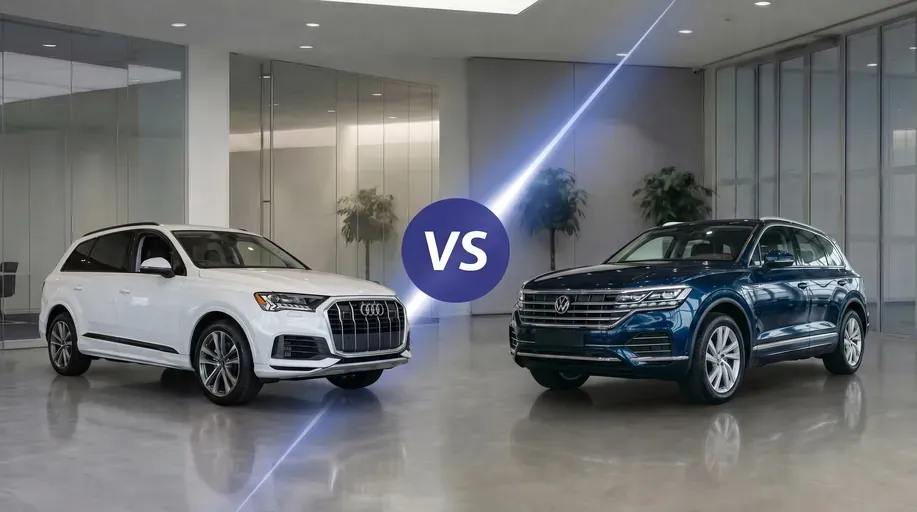
Detailed comparison of Audi Q7 vs. Volkswagen Touareg. Find out from real-world experience, equipment details, and our verdict which used premium SUV to choose.
May 1, 2026