Articles

Review

Review Ferrari Purosangue: What do owners and experts really say?

Ferrari Purosangue review: real owner experience, V12 performance, practicality, running costs and the definitive verdict before you buy.

October 18, 2026

Ferrari Purosangue

Introduction

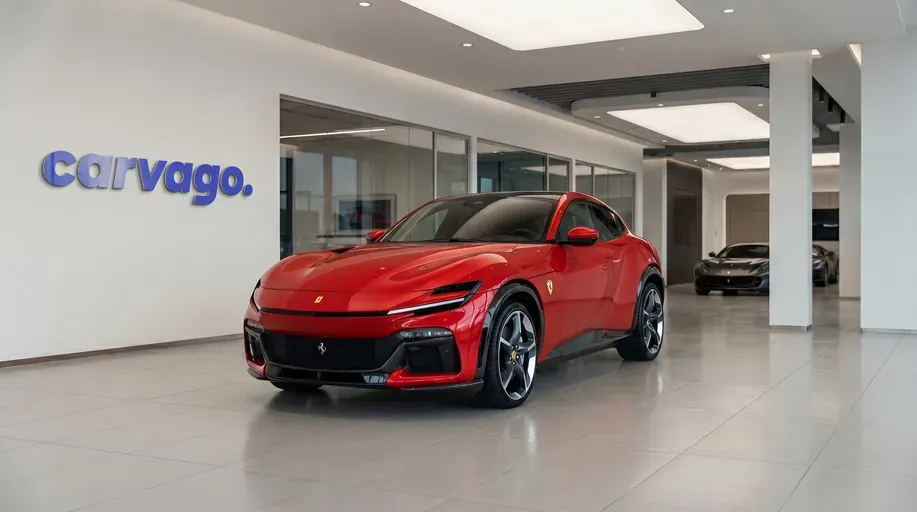
The Ferrari Purosangue represents the Italian manufacturer’s first entry into the four-door, four-seat segment. Unveiled at its world premiere on 13 September 2022, order books opened globally on the same date, while the first European customer deliveries commenced in April 2023. This review focuses on the first-generation model produced from late 2021 through 2026.

The generation has received no mid-cycle facelift, although Ferrari introduced an optional factory Handling Speciale performance package on 29 April 2026.

The model appeals primarily to long-standing marque enthusiasts and grand touring drivers who require year-round usability and dedicated rear passenger accommodation, competing at the upper boundary where sports cars meet high-performance luxury crossovers.

Owner Experiences: Common Faults and Recalls

European customer deliveries of the Ferrari Purosangue commenced in April 2023 under strictly capped factory production volumes. Because the European fleet remains young and median mileages are typically low, long-term mechanical reliability and wear patterns across high mileages are not yet established. Available ownership records and technical bulletins centre primarily on factory electrical updates and cabin interface ergonomics rather than structural powertrain failures.

Official Safety Recalls

In August 2025, an official worldwide safety recall was registered under European safety monitoring, affecting vehicles manufactured between 1 December 2021 and 28 February 2025 (covering 3,390 vehicles globally). Official notices state that the positive terminal of the fuse box power supply could make contact with the passenger-side footrest bracket above it. This contact can create a short circuit inside the fuse box, triggering a brake warning light and causing a reduction in braking performance.

Authorized workshops remedy the issue by installing a dedicated plastic insulating spacer between the positive terminal and the footrest bracket to ensure permanent clearance. This modification was integrated directly into factory assembly lines in late February 2025.

Interface Usability and Factory Button Retrofit

Professional tests and early drivers frequently reported erratic behaviour from the capacitive, touch-sensitive steering wheel controls. The original wheel configuration relies on flush haptic touchpads to operate the digital instrument display, driver assistance systems, and infotainment menus. During energetic steering inputs, drivers reported unintended inputs from their palms brushing against the pads, as well as delayed responses to swipe gestures that required visual confirmation off the road.

In response, an official factory retrofit kit became available through authorized dealers in March and April 2026. The kit replaces the touch-sensitive pads on the steering wheel spokes with physical, tactile buttons while retaining the capacitive engine start/stop switch, resolving unintended inputs and improving menu navigation.

Electrical Parasitic Drain and Voltage Sensitivity

Owners report that the Ferrari Purosangue exhibits rapid auxiliary battery drain if left parked without an active charger. The vehicle operates complex electronic networks, including active suspension controllers, onboard telemetry, and proximity sensors, which create continuous parasitic draws on the 12-volt battery.

When left unconditioned for more than five to seven days, the resulting voltage drop can cause the electronic control units to produce cascades of false error messages upon startup. Reported warnings include spurious faults for the active suspension, driving mode selectors, and brake-by-wire system, occasionally inhibiting transmission engagement until the electrical system is properly powered. Consistent use of the factory-supplied magnetic battery conditioner when parked prevents these voltage-induced warnings.
🔍 What to check before buying

  • Request an official VIN check through an authorized dealer to confirm that the passenger-side footrest fuse box insulating spacer recall has been completed.
  • Check the steering wheel controls during the test drive to verify whether the car retains the original capacitive haptic pads or has been upgraded with the physical button retrofit.
  • Verify 12-volt battery health and confirm that the digital instrument cluster remains free of active suspension or stability-control error warnings during a cold start.
  • Test the motorized rear doors and check that both electrical release buttons and power-latching mechanisms operate smoothly without hesitation or alignment binding.
  • Inspect official digital service records and verify vehicle condition with CarAudit to ensure all scheduled maintenance visits are documented within the manufacturer network.

Engines: Which One to Choose

The Ferrari Purosangue takes a distinct approach to the performance crossover segment by eschewing downsizing, turbocharging, and hybrid electrification in favour of a single powertrain. Every example features a front-mid-mounted, naturally aspirated V12 paired with an eight-speed rear-transaxle dual-clutch transmission and an integrated all-wheel-drive system.

EngineFuelPowerGearboxAvailable years
6.5 V12Petrol533 kW (725 hp)8-speed automatic2023 – present

Buying advice: matching use cases to the V12

Because the petrol Ferrari Purosangue is offered exclusively with this single mechanical configuration, choosing a car is less about selecting an engine badge and more about aligning your driving habits with a specialised, high-revving architecture.

  • Short trips in town: The naturally aspirated, dry-sump V12 is unsuited to repeated short urban journeys. The substantial fluid volumes require extended running to reach proper operating temperatures before being driven hard.
  • Mixed use and secondary roads: Open country roads showcase the primary strength of this powertrain. The atmospheric throttle response provides precise modulation through corners that turbocharged rivals struggle to match, while the dual-clutch transmission manages shifts smoothly in automatic mode and responds instantly to paddle inputs. Vehicles built from 2026 specified with the optional performance configuration deliver even sharper, more aggressive shifts in high-performance drive modes.
  • Long motorway distances: High-speed continental touring is the natural environment for this grand tourer. The transmission's top ratios keep engine speeds low during sustained motorway travel, while the broad spread of low-end torque provides immediate overtaking acceleration without requiring frantic kickdowns.
  • Towing: The platform is not intended for utility or towing duties; the manufacturer provides no factory towing rating and approves no tow hitch accessory.

For detailed information regarding mechanical durability, auxiliary electronic systems, and official safety campaigns, refer to the dedicated owner experiences section of this review.

Space & Practicality

DimensionValue
Length4,973 mm
Width2,028 mm
Height1,589 mm
Wheelbase3,018 mm
Boot volume (seats up / folded)473 / unverified l

The Ferrari Purosangue uses a strict four-seat architecture with two individual rear bucket seats divided by a fixed central console, omitting any five-seat bench option. Entry to the rear quarters is granted by rear-hinged doors, though passengers must step across wide door sills to reach their seats. Once seated, adult occupants have sufficient headroom and legroom for longer journeys. Standard equipment across all production years includes two individual rear seats with independent electrical adjustment, heating, and power-folding mechanisms. Folding the seatbacks flat extends the cargo area, although total luggage volume remains tighter than in conventional performance SUVs.

What the Tests Say

Professional tests commend the Ferrari Purosangue for chassis dynamics that disguise its tall profile. The active spool-valve suspension virtually eliminates body roll and pitch during cornering without requiring anti-roll bars, keeping the chassis level across crests and mid-corner compressions. Testers find the steering immediate and communicative, with standard rear-wheel steering providing the agility of a low-slung grand tourer rather than an upright crossover. Cabin refinement proves adaptable: at cruising speeds, the unhybridised twelve-cylinder powertrain settles into quiet isolation, yet delivers pronounced mechanical sound under heavy acceleration.

Inside the strict four-seat interior, reviewers highlight tailored leather finishes and supportive individual seating in both rows. However, ergonomic criticisms are consistent across independent road tests. Testers also criticise the absence of an integrated factory navigation system, which forces complete reliance on smartphone mirroring. In addition, high front wings compromise corner visibility on narrow routes.

Handling Speciale Configuration

Evaluated following its April 2026 release, the optional Handling Speciale configuration sharpens body control through retuned damper software and introduces a raspier exhaust note. Road testers observe slightly crisper turn-in during spirited driving, but point out that sharp road seams transmit noticeable vibrations through the low-profile tyres, concluding that the chassis package offers marginal real-world benefit over the already composed four-wheel-drive Ferrari Purosangue.

Prices and Market Offer

All the charts in this section are drawn from Carvago's listings of the whole Ferrari Purosangue model family, including other generations represented in the data, not only the reviewed generation, and do not establish a separate price level for the reviewed generation. In today's market snapshot, the median asking price is 591 900 EUR for 2023 cars and 618 900 EUR for 2024 models. For subsequent production, the median asking price sits at 599 900 EUR for 2025 and 569 900 EUR for 2026, where individual factory equipment and immediate availability largely drive seller listings.

The chart tracks the number of advertised Ferrari Purosangue models each month from April 2026, when 338 listings were active, through September 2026.

Ferrari Purosangue - availability over time

Active listings over time

MonthFerrari Purosangue
2026-04338
2026-05348
2026-06351
2026-07361
2026-08339
2026-09379

Source Carvago

Available stock fluctuated between 338 and 379 cars over this six-month span, dipping to 339 listings in August 2026 before climbing to 379 in September.

For cars advertised today, the median asking price of models built in 2024 is 618 900 EUR, while the median asking price of those built in 2023 is 591 900 EUR. The chart below illustrates how these median asking prices compare across build years from 2023 to 2026.

Ferrari Purosangue - median price by model year

Median advertised price by year of manufacture

Model yearFerrari Purosangue
2023591 900
2024618 900
2025599 900
2026569 900

Source Carvago

A buyer targeting 2026 models faces a median asking price of 569 900 EUR, whereas listings built in 2025 show a median asking price of 599 900 EUR and 2024 models are listed at 618 900 EUR.

Active monthly listings by fuel type between April and September 2026 opened at 338 advertised petrol cars and closed at 379 in September, with the month-by-month counts shown below.

Ferrari Purosangue - supply by fuel over time

Supply composition by fuel type

MonthPetrol
2026-04338
2026-05348
2026-06351
2026-07361
2026-08339
2026-09379

Source Carvago

Petrol accounts for every car on offer across the entire period, with zero listings recorded for any other fuel type. Buyers will find that the available inventory consists exclusively of petrol models.

Between April 2026 and September 2026, the average asking price for the Ferrari Purosangue began at 574 200 EUR and reached 576 100 EUR the following month. The chart below shows how advertised averages moved over this six-month period.

Ferrari Purosangue - price trend over time

Average price development over time

MonthFerrari Purosangue
2026-04574 200
2026-05576 100
2026-06560 400
2026-07557 800
2026-08552 800
2026-09553 700

Source Carvago

Overall, the average asking price moved from 574 200 EUR in April to 553 700 EUR in September, representing a modest decline of less than 4%. Values dipped to 552 800 EUR in August before edging up slightly in the final recorded month.

Pros & Cons

Ferrari Purosangue

Pros

Active suspension provides composed body control and suppresses roll without anti-roll bars

Naturally aspirated twelve-cylinder powertrain combines immediate throttle response with quiet high-speed cruising

Agile, communicative handling and road manners supported by rear-wheel steering

Cons

Capacitive steering-wheel controls suffer from unintended inputs unless retrofitted with physical buttons

Rapid auxiliary battery drain requires regular conditioning when parked to prevent false electronic faults

Strict four-seat cabin with wide sills that complicate rear access and no integrated factory navigation

Frequently asked questions

Long-term mechanical durability is not yet established due to low fleet mileages since deliveries began in April 2023. However, the Ferrari Purosangue requires routine connection to its battery conditioner when parked to avoid voltage-induced dashboard error warnings.

Request an official VIN check to confirm that the worldwide safety recall adding an insulating spacer between the passenger footrest bracket and fuse box has been performed. During the test drive, verify whether the steering wheel retains the original capacitive touchpads or has been upgraded with the factory physical button retrofit.

While it provides four-wheel drive and comfortable seating for four adults, a strict four-seat layout limits overall practicality compared to conventional performance SUVs. In addition, large fluid volumes require extended warm-up cycles, making the dry-sump V12 powertrain ill-suited to repeated short city errands.

Median asking prices on the secondary market start from 569 900 EUR depending on model year and specification. Listing prices are primarily driven by immediate delivery availability rather than conventional age-related depreciation.

Sources: ferrari.com, adac.de, quattroruote.it, autocar.co.uk, topgear.com

This article was prepared using artificial intelligence tools. The section guarantor is Petr Dušek.

Related articles

Car battle

Bentley Bentayga vs. Rolls-Royce Cullinan: Complete comparison 2026

Detailed comparison of luxury SUVs Bentley Bentayga vs. Rolls-Royce Cullinan. Discover the differences in performance, equipment, and comfort. Our verdict will make your choice easier!

Oct 16, 2026

Car battle

Volvo XC90 vs. Volkswagen Touareg: Complete comparison 2026

Volvo XC90 vs. Volkswagen Touareg: Which premium SUV is better? A detailed comparison, tests, and a clear verdict will help you choose.

Apr 14, 2026

Car battle

Porsche Cayenne vs. Volvo XC90: Complete comparison 2026

Detailed comparison of Porsche Cayenne vs Volvo XC90. Find out which of these premium SUVs offers better performance, comfort, and operating costs as a used car.

Apr 22, 2026

We accept online card payments as well as wire transfers.

visa payment provider logovisa-electron payment provider logomastercard payment provider logomaestro payment provider logodiners-club payment provider logodiscover payment provider logo