Review
Review Volkswagen ID.4: What do owners and experts really say?
Volkswagen ID.4 review: real owner experience, common faults, real-world range and used prices — everything you need before you buy.
Oct 18, 2026
Mercedes-Benz EQB review: real owner insights, 7-seat practicality, real-world range, common faults and our definitive buying verdict.
October 28, 2026
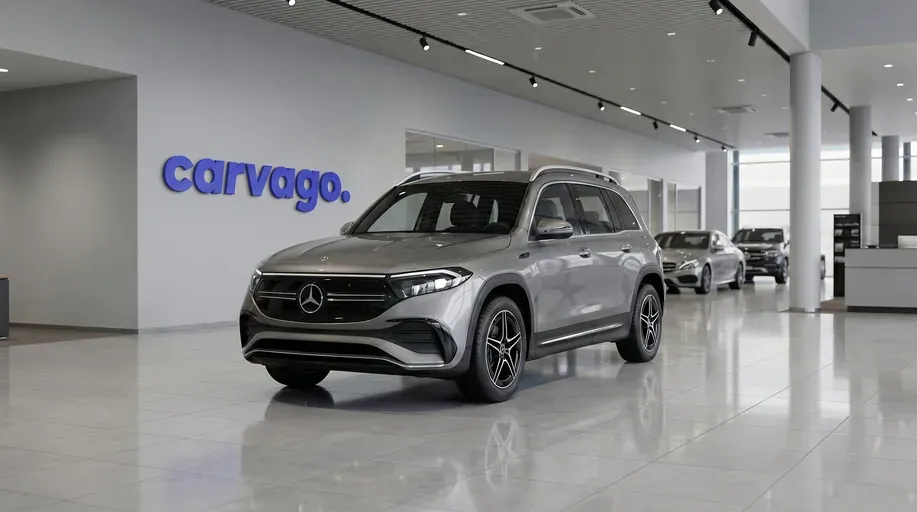
The Mercedes-Benz EQB represents the German brand’s entry into the compact electric SUV segment, bridging the gap between urban usability and multi-passenger utility. Built under the internal generation designation X243, series production began in October 2021, with initial European customer deliveries following in November 2021. Sold strictly as a five-door compact SUV, it stands out in its segment by offering a choice between five-seat and seven-seat configurations.
The model arrived with dual-motor all-wheel-drive powertrains, the EQB 300 4MATIC and EQB 350 4MATIC. A single-motor front-wheel-drive EQB 250 joined European price lists in May 2022, followed by the long-range EQB 250+ in October 2022. A mid-cycle facelift premiered on 24 August 2023, with order books opening in October 2023 and first European showroom deliveries arriving in January 2024. The update brought revised exterior styling and introduced factory trailer towing approval for five-seat variants.
The electric Mercedes-Benz EQB SUV primarily appeals to families and suburban commuters who require three-row versatility or modular cargo space within a compact, garage-friendly vehicle footprint.
While the Mercedes-Benz EQB has demonstrated reliable mechanical hardware in European service, several official safety campaigns and software quirks require careful verification on the used market. The most critical safety campaign was announced in February 2026 and registered across the European Union in March 2026, affecting EQA and EQB vehicles built between 20 February 2021 and 30 July 2024. This action is restricted to variants equipped with the larger high-voltage traction battery pack, primarily the single-motor electric Mercedes-Benz EQB 250+. The official safety alert states: "Due to the combination of certain production and use conditions, an internal short circuit of a battery cell in the high-voltage battery might lead to a thermal event. There is a risk of fire." Across 51,729 vehicles worldwide, authorised workshops replace the entire high-voltage traction battery assembly with a redesigned unit free of charge. With parts distribution phased through early 2028, official safety instructions direct affected drivers to limit battery charging to a maximum of 80% and park outdoors away from structures until the replacement has been completed.
Other verified safety recalls involve hardware assembly and body components. In May 2026, a recall was published for vehicles manufactured between November 2022 and December 2025 because "the wheel bolts were not tightened in accordance with the torque specifications. The bolts and the wheel assembly could detach while the vehicle is in motion..." Authorised workshops inspect all four wheel assemblies, torque the fasteners to specification, and replace any damaged bolts or hub threads. Earlier, in August 2024, a campaign affecting left-hand-drive models built from 18 June 2024 through 18 July 2024 addressed loose pyrotechnic fuse casings. The notice recorded: "The pyrofuse casing may move while the vehicle is in motion, potentially damaging cables. As a result, the pyrofuse could fail during an accident or cause the separator piston to dislodge into the driver's footwell, increasing the risk of injury. Additionally, in plug-in hybrid and electric vehicles, cable damage could lead to high-voltage system failure and loss of power without warning, increasing the risk of an accident." Dealers inspect the casing and wiring harness, securing or replacing components where necessary. An earlier April 2023 campaign covered 369 vehicles built between 28 June 2022 and 2 August 2022, replacing upper B-pillar and beltline trim panels that failed material specifications and risked damaging the window airbag upon deployment.
Beyond official recall campaigns, owners report recurring issues related to thermal management and onboard infotainment. In 2021 and 2022 builds, drivers frequently encountered a false "Check Coolant Level" warning on the digital instrument cluster during cold starts, despite adequate fluid levels. The dual-chamber battery cooling circuit can be susceptible to airlocks, and original reservoir sealing caps struggled in some cases to balance circuit pressures. Manufacturer bulletins address this by vacuum-bleeding the cooling system and fitting revised expansion reservoir caps. Professional tests and owners also report periodic screen freezing, sudden reboots, and temporary failures of the parking camera feed when using smartphone integration alongside satellite navigation. These glitches are resolved through workshop software updates to the infotainment head unit rather than physical component replacements. On all-wheel-drive Mercedes-Benz EQB variants, electric drive motors and single-speed reduction gearboxes show solid durability, though isolated auxiliary 12-volt battery depletion after extended idle periods can trigger temporary electronic startup errors.
The Mercedes-Benz EQB features an all-electric powertrain lineup consisting of single-motor front-wheel-drive configurations and dual-motor all-wheel-drive models. Every version pairs its electric drive unit with a single-speed automatic transmission.
| Engine | Fuel | Power | Drivetrain | Gearbox | Model years |
|---|---|---|---|---|---|
| EQB 250 | Electric | 140 kW (190 hp) | Front-wheel drive | Automatic (1-speed) | 2022–2023 |
| EQB 250+ | Electric | 140 kW (190 hp) | Front-wheel drive | Automatic (1-speed) | 2022–present |
| EQB 300 4MATIC | Electric | 168 kW (228 hp) | All-wheel drive | Automatic (1-speed) | 2021–present |
| EQB 350 4MATIC | Electric | 215 kW (292 hp) | All-wheel drive | Automatic (1-speed) | 2021–present |
For daily driving dominated by city commuting and short school runs, front-wheel-drive variants deliver responsive and quiet performance. Available only as a used car, the early EQB 250 was quickly succeeded by the EQB 250+, which incorporates a higher-capacity traction battery and represents the most sensible choice for mixed suburban and family duties.
For long motorway journeys, the electric Mercedes-Benz EQB in single-motor EQB 250+ specification remains the strongest contender. While dual-motor 4MATIC models provide brisk overtaking acceleration, their higher energy consumption and smaller battery restrict cruising radius at sustained motorway speeds. The front-driven variant strikes the best balance of range and usability, although brisk acceleration from a standstill on wet roads can trigger brief front-wheel slip.
Buyers requiring secure traction in winter conditions or looking to tow should select the Mercedes-Benz EQB 4MATIC. Adding an electric motor to the rear axle provides dependable all-weather grip. For towing, buyers must look specifically for a facelifted five-seat model, as pre-facelift cars and all seven-seat configurations lack factory trailer approval; in this role, the EQB 300 4MATIC and the more powerful EQB 350 4MATIC offer the highest towing ratings.
Cold winter temperatures noticeably reduce driving radius, as cabin heating demands and battery thermal management raise energy consumption. At rapid charging stations, the EQB operates with a modest peak DC charging rate that requires patience compared to bespoke electric platforms. Although the charging curve remains steady through mid-capacity, replenishment tapers off at higher states of charge, making planned stops essential on long-distance trips.
| Parameter | 5-Seat SUV | 7-Seat SUV |
|---|---|---|
| Length | 4,684 mm | 4,684 mm |
| Width (excluding door mirrors) | 1,834 mm | 1,834 mm |
| Height (facelift / pre-facelift) | 1,654 / 1,667 mm | 1,654 / 1,667 mm |
| Wheelbase | 2,829 mm | 2,829 mm |
| Boot volume (standard / folded) | 495 / 1,710 l | 465 / 1,620 l |
Note: Cargo figures for seven-seat versions reflect the third row folded flush into the floor.
The upright, boxy profile of the electric Mercedes-Benz EQB SUV provides ample headroom across the first two rows. Second-row seats feature standard backrest rake adjustment and optional fore-and-aft sliding, allowing occupants to adapt legroom to cargo needs.
Adults travel comfortably in the outer second-row positions, though the optional third row remains suitable only for children or shorter occupants due to tight access and limited knee space. When not in use, the rearmost pair folds flat into the floor to maintain an even load area. Everyday practicality is tempered only by the absence of a front storage compartment under the bonnet for charging cables.
On the road, the Mercedes-Benz EQB prioritises relaxed cruising over driver engagement. The suspension absorbs highway undulations smoothly on standard wheels, delivering composed long-distance comfort. However, optional larger alloys introduce an unsettled, brittle edge at urban speeds over sunken drains and sharp tarmac joints. While cornering stability remains secure with progressive electronic interventions, agility is noticeably curtailed by the vehicle's substantial mass. The steering is linearly weighted and predictable, though testers note a distinct lack of road feel and a vague on-centre sensation during straight-line cruising. Cabin refinement is a recognised strength: powertrain hum and wind rush are well suppressed, although coarse surfaces induce tyre roar and occasional hollow suspension thuds from the rear axle.
Inside, the electric Mercedes-Benz EQB offers an upright, commanding driving position with clear outward visibility. Solid metal ventilation nozzles lend a tactile feel to the upper dashboard, but brittle, unpadded plastics on the lower doors and centre tunnel draw criticism for falling short of premium expectations. Voice recognition responds quickly and reliably, yet the steering wheel’s capacitive touch-sensitive sliders prove frustrating in daily use, frequently registering unintended inputs while turning.
Professional reviews reach a clear consensus regarding the vehicle's safe handling and quiet propulsion, but diverge on low-speed ride comfort, which depends heavily on wheel diameter. The facelift updated styling and infotainment software, but the fiddly steering-wheel controls remain a distraction while driving.
All the charts in this section are drawn from Carvago's listings of the whole model family, including other generations represented in the data, not only the reviewed generation, so this chart does not establish a separate price level for the reviewed generation. Across currently advertised Mercedes-Benz EQB listings, the median asking price is €35,900 for 2021 builds and €35,800 for 2022 cars. The median stands at €37,000 for 2023 models, €39,600 for 2024 examples, and €48,600 for 2026 vehicles, where newer specifications and factory towing certification on five-seat layouts command higher market figures.
Between April and September 2026, monthly listings for the Mercedes-Benz EQB ranged from a low of 2,208 cars in May to a high of 2,866 in August. The chart below illustrates how active listing numbers developed across these six months.
Active listings over time
| Month | Mercedes-Benz EQB |
|---|---|
| 2026-04 | 2 423 |
| 2026-05 | 2 208 |
| 2026-06 | 2 349 |
| 2026-07 | 2 622 |
| 2026-08 | 2 866 |
| 2026-09 | 2 753 |
Source Carvago
Buyers can count on a wide selection in the classifieds, with active inventory remaining at or above 2,208 vehicles in every recorded month and finishing at 2,753 in September 2026.
The chart compares median asking prices across build years for used listings advertised today, where 2021 models show a median asking price of €35,900 while 2026 models reach a median asking price of €48,600.
Median advertised price by year of manufacture
| Model year | Mercedes-Benz EQB |
|---|---|
| 2021 | 35 900 |
| 2022 | 35 800 |
| 2023 | 37 000 |
| 2024 | 39 600 |
| 2025 | 42 900 |
| 2026 | 48 600 |
Source Carvago
Buyers exploring earlier build years will find 2021 and 2022 models grouped closely with median asking prices of €35,900 and €35,800, while stepping up to 2025 or 2026 models commands median asking prices of €42,900 and €48,600.
This depreciation curve illustrates how the model's residual value declines with age, shedding approximately 14% in its first year and 31% by age three.
Residual value by vehicle age
| Vehicle age | Mercedes-Benz EQB |
|---|---|
| New | 43 300 |
| 1 yr | 37 100 |
| 2 yrs | 33 100 |
| 3 yrs | 30 000 |
| 4 yrs | 27 000 |
| 5 yrs | 25 900 |
| 6 yrs | 23 800 |
| 7 yrs | 20 400 |
Source Carvago
Across the full seven-year span shown, the model loses roughly 53% of its initial residual value. The steepest annual decline takes place in the first year, after which the pace of depreciation moderates significantly over the subsequent years.
Across the six months shown, advertised listings were entirely electric, opening at 2,423 vehicles in April 2026 and finishing at 2,753 in September 2026. The breakdown below details the monthly volume of advertised cars by fuel type.
Supply composition by fuel type
| Month | Electric |
|---|---|
| 2026-04 | 2 423 |
| 2026-05 | 2 208 |
| 2026-06 | 2 349 |
| 2026-07 | 2 622 |
| 2026-08 | 2 866 |
| 2026-09 | 2 753 |
Source Carvago
Every car on offer is electric, with zero petrol, diesel, or hybrid options recorded in September 2026 or any preceding month. A buyer will therefore choose exclusively from all-electric vehicles when searching the market.
The chart outlines the average asking price for the Mercedes-Benz EQB from April 2026 to September 2026, opening at €38,500 and peaking at €39,500 in June 2026.
Average price development over time
| Month | Mercedes-Benz EQB |
|---|---|
| 2026-04 | 38 500 |
| 2026-05 | 39 200 |
| 2026-06 | 39 500 |
| 2026-07 | 39 300 |
| 2026-08 | 39 200 |
| 2026-09 | 39 000 |
Source Carvago
Across the six-month window, the average asking price saw only minor movement, ending at €39,000 in September 2026 for an overall increase of just over one percent compared to April.
Optional seven-seat layout with versatile sliding second-row seating
Quiet cabin refinement with well-suppressed wind and powertrain noise
Upright driving position with clear outward visibility
Modest rapid charging speeds require patience on long-distance trips
Fiddly capacitive steering-wheel controls prone to accidental inputs
Factory towing unavailable on pre-facelift examples and all seven-seat versions
The single-motor Mercedes-Benz EQB 250+ is the most practical choice for daily and mixed driving, offering the longest driving range thanks to its higher-capacity battery. However, buyers who need assured winter traction or maximum towing capability should opt for a dual-motor all-wheel-drive Mercedes-Benz EQB 4MATIC.
Verify the vehicle identification number with an authorised dealer to confirm that safety recalls—especially the high-voltage battery replacement on single-motor variants and wheel bolt torque inspections—have been completed. Check that infotainment software updates have eliminated any display freezing or camera feed dropouts.
No, the rearmost seats feature tight access and restricted knee room, making them practical only for children or shorter occupants on shorter journeys. When not needed, both third-row seats fold flush into the floor to preserve an even cargo area.
Factory towing approval is restricted strictly to facelifted five-seat models, with dual-motor 4MATIC versions offering the highest towing ratings. Pre-facelift models and all seven-seat configurations lack factory trailer certification entirely.
Sources: mercedes-benz-media.co.uk, adac.de, ec.europa.eu, autocar.co.uk, autobild.de
This article was prepared using artificial intelligence tools. The section guarantor is Petr Dušek.
Volkswagen ID.4 review: real owner experience, common faults, real-world range and used prices — everything you need before you buy.
Oct 18, 2026
Detailed comparison of the Hyundai Ioniq 5 and Volkswagen ID.4 electric cars. Find out the real range, equipment details, and our verdict to help you make your choice.
Apr 13, 2026
Hyundai Ioniq 5 vs. Kia EV6: Which electric car is better? A detailed comparison of range, technology, and price to help you make the right decision.
Oct 23, 2026