Review Volkswagen ID.4: What do owners and experts really say?
Volkswagen ID.4 review: real owner experience, common faults, real-world range and used prices — everything you need before you buy.
October 18, 2026
Introduction
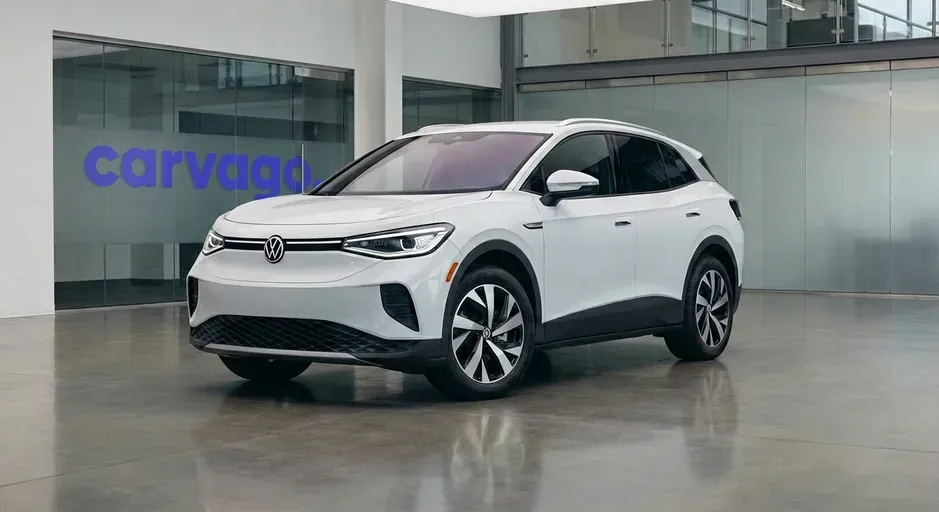
The Volkswagen ID.4 SUV represents the brand’s core entry in the competitive compact electric crossover segment. Built exclusively as a five-door SUV, it primarily targets family buyers and company-car drivers seeking a practical, zero-emission alternative to traditional mid-size estate cars and crossovers. This review focuses on the first generation (Type E21), which began series production in August 2020 before reaching European customers with initial deliveries in March 2021.
Rather than receiving a traditional cosmetic facelift, the Volkswagen ID.4 received a substantial mid-cycle technical revision that went on sale in October 2023. This overhaul brought a newly developed, more efficient rear electric drive unit, an enlarged central infotainment display, and reworked thermal management and operating software. Additional running changes arrived in April 2026, returning tactile physical buttons to the steering wheel and increasing towing limits for all-wheel-drive configurations. With first-generation production concluding in late 2026 ahead of the model line transitioning to the ID. Tiguan, this guide examines what buyers should know when evaluating used examples from across the production run.
Owner Experiences: Common Faults and Recalls
Real-world reliability of the Volkswagen ID.4 differs substantially between early production years and subsequent revisions. Roadside breakdown logs identify the 12-volt auxiliary battery as the single most common cause of electrical immobilisation on vehicles built between 2020 and 2022. Background telematics and control modules caused parasitic draw during sleep cycles, draining the low-voltage battery. Because the high-voltage contactors require 12-volt power to close, a depleted auxiliary battery prevents startup, door unlocking, and drive selection. Manufacturer workshop campaigns addressed this by replacing the original battery with an upgraded unit and installing revised power-management firmware.
On vehicles manufactured from 2021 to 2023, tests describe and owners report persistent instrument cluster alerts stating driver-assistance features are unavailable. This defect stems from deteriorating capacitive sensor foils inside the steering wheel rim failing to register hands-on contact. Software updates cannot resolve internal impedance faults; in reported cases, physical steering wheel assembly replacement proved to be the effective fix. Infotainment stability on early production runs was another frequent grievance: tests describe sluggish system startup, sudden screen reboots, and occasional temporary blanking of the digital driver display. Stability improved through progressive updates, while an upgraded screen and faster processing hardware introduced in October 2023 addressed the underlying latency.
Mechanical wear is heavily influenced by electric braking dynamics. Because energy recuperation handles most routine deceleration on the electric Volkswagen ID.4, friction brakes see limited use. Technical inspection records show above-average failure rates during mandatory vehicle inspections due to heavy surface rust and scoring on the front steel brake discs. At the rear, the enclosed drum brakes protect against environmental road grime, but moisture buildup and infrequent mechanical application can cause the shoes to bind, resulting in loud grinding noises during initial morning reversing maneuvers.
Several safety recalls have been registered across Europe for this generation. Buyers should note that remedial work must be verified directly against official service records.
Production Window
Affected Component & Defect
European Reach & Remedy
February 2022 – August 2024
High-voltage battery cell modules may overheat during charging, creating a potential fire hazard.
Worldwide; workshop inspects modules, applies diagnostic software, and replaces defective cell modules free of charge.
April 2024 (04.04.2024 – 26.04.2024)
Electronic Stability Control pump motor may detach due to missing fasteners, causing primary hydraulic brake failure.
EU-wide; workshop inspects the unit and torques new fasteners or replaces damaged hydraulic assemblies.
February 2022 – March 2024
Defective screw connections between seat backrest and seat pan may compromise crash support.
Pan-European; workshop inspects and retorques or replaces backrest attachment bolts.
European markets; dealer inspects steering column connection and installs upgraded hardware.
August 2022 – October 2022
Improperly tightened seat belt retractor bolts on front seats may reduce restraint effectiveness.
EU-wide; workshop inspects and retorques retractor fasteners to specification.
2020 – 2021
Steering gear mechanical defect may degrade steering assistance or directional control.
European markets; workshop inspects and replaces defective steering gear assemblies.
Before committing to a pre-owned vehicle, buyers can have its digital service history, battery condition, and recall status independently inspected through CarAudit.
🔍 What to check before buying
Request an official dealer printout to confirm completion of high-voltage battery cell diagnostics and that any necessary module replacements were performed.
Check the digital service record to verify the 12-volt auxiliary battery was upgraded under the factory service campaign on vehicles built between 2020 and 2022.
Test the driver-assistance systems during the test drive to verify no false steering-wheel warning chimes or unexpected disengagements occur.
Visually inspect the front brake discs for deep corrosion grooves and test the mechanical brakes firmly in neutral to ensure smooth operation without rear drum binding.
Have a franchised workshop or independent diagnostic tool confirm all pending safety recall campaigns have been executed for the specific vehicle identification number (VIN).
Engines: Which One to Choose
The Volkswagen ID.4 is powered exclusively by rear-mounted single-motor or dual-motor all-wheel-drive electric powertrains paired with a single-speed automatic transmission. The line-up underwent a substantial technical overhaul in late 2023, introducing a revised rear drive unit alongside updated power outputs and charging hardware.
Engine
Fuel
Power
Gearbox
Drivetrain
Model Years
Pure
Electric
109 kW (148 hp)
Automatic (1-speed)
Rear-wheel drive
2021
Pure Performance
Electric
125 kW (170 hp)
Automatic (1-speed)
Rear-wheel drive
2021–2022
Pure
Electric
125 kW (170 hp)
Automatic (1-speed)
Rear-wheel drive
2023–2026
Pure
Electric
140 kW (190 hp)
Automatic (1-speed)
Rear-wheel drive
2026
Pro Performance
Electric
150 kW (204 hp)
Automatic (1-speed)
Rear-wheel drive
2020–2023
Pro
Electric
128 kW (174 hp)
Automatic (1-speed)
Rear-wheel drive
2022–2023
Pro 4MOTION
Electric
195 kW (265 hp)
Automatic (1-speed)
All-wheel drive
2022–2023
Pro
Electric
210 kW (286 hp)
Automatic (1-speed)
Rear-wheel drive
2023–2026
Pro 4MOTION
Electric
210 kW (286 hp)
Automatic (1-speed)
All-wheel drive
2023–2026
Pro 4MOTION
Electric
220 kW (299 hp)
Automatic (1-speed)
All-wheel drive
2026
GTX 4MOTION
Electric
220 kW (299 hp)
Automatic (1-speed)
All-wheel drive
2021–2023
GTX 4MOTION
Electric
250 kW (340 hp)
Automatic (1-speed)
All-wheel drive
2023–2026
For urban driving and short daily commutes, the base smaller-battery rear-wheel-drive models provide sufficient low-speed response and easy manoeuvrability around town, though the earliest entry version requires extra anticipation when merging onto fast roads.
For mixed driving and long motorway trips, the larger-battery rear-wheel-drive electric Volkswagen ID.4 is the most balanced choice. Units produced from late 2023 onward feature the redesigned rear electric motor, which delivers noticeably stronger mid-range overtaking punch alongside improved electrical efficiency at cruising speeds.
Drivers requiring all-weather traction or looking to tow trailers will be best served by the dual-motor Volkswagen ID.4 4x4 variants, such as the 4MOTION or the range-topping GTX. Both versions offer secure grip on unpaved or slippery surfaces and provide the highest braked towing limits in the range. While the GTX delivers swift straight-line acceleration, its mass keeps it focused on high-speed stability rather than hot-hatch agility.
Real-World Range and Charging
Owners frequently note that cold weather causes a noticeable reduction in driving range, driven by the demands of cabin heating and decreased electrochemical efficiency in cold traction cells. On early production cars, achieving optimum fast-charging speeds at rapid DC chargers often required extended driving to warm the pack. Models produced from late 2023 onward addressed this by adding active battery pre-conditioning linked directly to the on-board navigation system, which owners confirm results in more consistent charging curves on long road trips.
Space & Practicality
Parameter
Measurement
Length
4,584 mm
Width (excluding mirrors)
1,852 mm
Height
1,632–1,640 mm
Wheelbase
2,771 mm
Boot capacity (seats upright)
543 l
Boot capacity (seats folded)
1,575 l
Figures apply to standard rear-wheel-drive and all-wheel-drive models; the sports-styled performance variant sits lower on dedicated suspension and measures slightly shorter.
Thanks to its dedicated electric architecture, the Volkswagen ID.4 SUV features a completely flat floor without a central tunnel, providing rear passengers with unhindered foot room across all three seating positions. Adult occupants find sufficient knee room and headroom behind tall drivers, though the rear bench is fixed and cannot slide fore or aft to expand luggage room. Instead, cargo flexibility comes from 60:40 folding rear seatbacks and a ski through-loading hatch in the centre armrest. At the rear, the luggage area offers a wide opening and a level loading surface with the adjustable floor raised, underneath which charging cables can be concealed. Because the rear drive unit is mounted low between the wheels, boot capacity remains identical whether choosing rear-wheel drive or dual-motor all-wheel drive. However, the Volkswagen ID.4 lacks an additional storage compartment under the bonnet, so charging leads share boot capacity when travelling fully laden.
What the Tests Say
Professional road tests describe the Volkswagen ID.4 as an easy-going, composed cruiser. Fitted with optional adaptive dampers or standard suspension, it absorbs uneven asphalt smoothly, though examples on large wheels or lowered sports suspension transmit noticeable vertical thumps over sharp urban ruts. Steering is light and predictable, and rear-wheel-drive variants boast a tight turning circle that aids urban manoeuvring. However, agility is curtailed by the car's substantial weight; tests note early understeer and aggressive stability-control intervention during abrupt avoidance manoeuvres. Testers consistently praise motorway refinement, highlighting muted wind roar and quiet powertrain operation.
Cabin assessments reflect a clear divide between earlier and revised models. First production years drew frequent criticism for hard plastics in lower passenger areas and frustrating ergonomics, especially unlit touch-sensitive climate sliders and capacitive steering-wheel pads that distract while driving. Road testers broadly welcomed subsequent revisions that introduced an enlarged central display with illuminated controls (introduced in October 2023) and restored physical buttons to the steering wheel (from April 2026).
Across published road tests, consensus forms around the car's quiet cabin, supportive seating, and reassuring high-speed stability. Disagreement centres mainly on low-speed compliance, where some testers find the chassis slightly firm over fractured tarmac, alongside occasional criticism of grabby pedal response when blending regenerative and mechanical braking.
Prices and Market Offer
All the charts in this section are drawn from Carvago's listings of the whole Volkswagen ID.4 model family, including other generations represented in the data, not only the reviewed generation. Because listings are not separated by generation, this dataset does not establish an isolated price level for the reviewed generation. In the current market offer, the median asking price sits at 24 600 EUR for 2020 models and reaches 47 600 EUR for 2026 models. Differences between model years reflect the variety of battery capacities, drivetrain choices, and optional equipment across the offered inventory.
From April to September 2026, the volume of active Volkswagen ID.4 advertisements shifted from 5,974 down to a low of 4,533 listings in June.
Volkswagen ID.4 - availability over time
Active listings over time
Month
Volkswagen ID.4
2026-04
5 974
2026-05
4 766
2026-06
4 533
2026-07
4 961
2026-08
5 124
2026-09
5 489
Source Carvago
Available stock rebounded through the remainder of the period, closing at 5,489 listings in September 2026 and providing buyers with a broad selection of vehicles to choose from.
Across current listings, the median asking price of cars advertised today ranges from €24,600 for models built in 2020 to €47,600 for those built in 2026. The breakdown by model year shows how asking figures compare across consecutive production years.
Volkswagen ID.4 - median price by model year
Median advertised price by year of manufacture
Model year
Volkswagen ID.4
2020
24 600
2021
26 900
2022
27 900
2023
34 400
2024
41 000
2025
41 900
2026
47 600
Source Carvago
Buyers considering early examples from 2020 face a median asking price of €24,600, while stepping up to 2023 models requires around €34,400, and the newest 2026 builds reach €47,600.
This depreciation curve shows how the Volkswagen ID.4 loses value over time, shedding roughly 15% of its initial residual value after one year and nearly 34% by age three, as detailed below.
Volkswagen ID.4 - value loss by age
Residual value by vehicle age
Vehicle age
Volkswagen ID.4
New
49 500
1 yr
42 200
2 yrs
38 100
3 yrs
32 800
4 yrs
30 700
5 yrs
27 900
6 yrs
24 800
7 yrs
23 500
Source Carvago
Over the full seven-year span shown, the model sheds roughly 53% of its original residual value. The sharpest declines occur during the first three years, after which annual losses taper off considerably.
Active listings across recent months consist entirely of electric powertrains, with 5,974 advertised vehicles recorded in April 2026 and 5,489 in September 2026, as shown in the breakdown below.
Volkswagen ID.4 - supply by fuel over time
Supply composition by fuel type
Month
Electric
2026-04
5 974
2026-05
4 766
2026-06
4 533
2026-07
4 961
2026-08
5 124
2026-09
5 489
Source Carvago
Because every advertised car in September 2026 was electric, with zero petrol, diesel, or hybrid listings, buyers searching this model family will find only all-electric options.
Between April 2026 and September 2026, the average asking price for the Volkswagen ID.4 began at €32,000 before climbing to €33,300 in May, as outlined in the monthly figures below.
Volkswagen ID.4 - price trend over time
Average price development over time
Month
Volkswagen ID.4
2026-04
32 000
2026-05
33 300
2026-06
34 300
2026-07
34 400
2026-08
34 500
2026-09
34 700
Source Carvago
Over the recorded period, the average asking price moved from €32,000 to €34,700, representing an overall increase of about 8% with the largest monthly gains occurring between April and June.
Composed motorway cruising with a quiet and well-insulated cabin
Spacious rear passenger legroom aided by a completely flat floor
Tight turning circle on rear-wheel-drive versions eases city driving
Cons
Frustrating unlit touch sliders and sluggish infotainment on early models
High vehicle weight limits cornering agility during abrupt manoeuvres
Lack of front under-bonnet storage means charging cables occupy boot space
Frequently asked questions
Which model year of used Volkswagen ID.4 is best to buy?
Models produced from late 2023 onward are recommended for their improved infotainment responsiveness, battery pre-conditioning, and more efficient rear motor. Earlier 2020 to 2022 cars are acceptable budget choices, provided their 12-volt auxiliary battery update is documented.
Which powertrain version should I choose?
The larger-battery rear-wheel-drive Volkswagen ID.4 offers the most balanced combination of efficiency and range for mixed driving. Buyers needing all-weather traction or maximum towing capability should choose an all-wheel-drive model instead.
What should I check before buying a used ID.4?
Verify by VIN that all recall campaigns have been completed, particularly high-voltage battery diagnostics. During the test drive, ensure driver-assistance features engage without false steering-wheel warnings and check the mechanical brakes for surface rust or binding.
How much does a used Volkswagen ID.4 cost?
Median asking prices start at roughly 24 600 EUR for early 2020 models. Because depreciation is steepest over the first three years, well-maintained three-year-old examples offer the strongest balance between purchase cost and equipment.