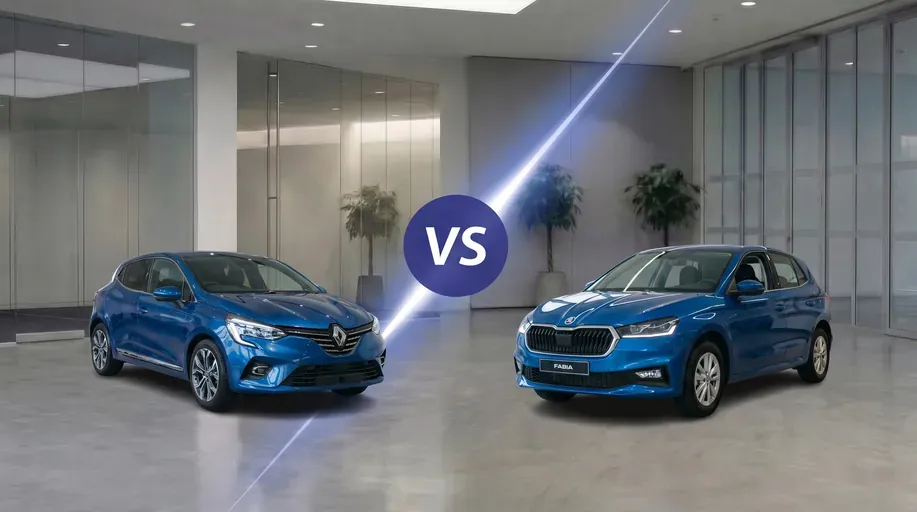
Car battle
Renault Clio vs. Škoda Fabia: Complete comparison 2026
Big comparison: Renault Clio vs. Škoda Fabia. A detailed look at reliability, engines, and real-world driving characteristics. Read our verdict before you buy!
Oct 16, 2026
Articles
Review
Hyundai i10 review: real owner experience, reliability, running costs, prices, and our verdict. Everything you need to know before buying.
November 2, 2026
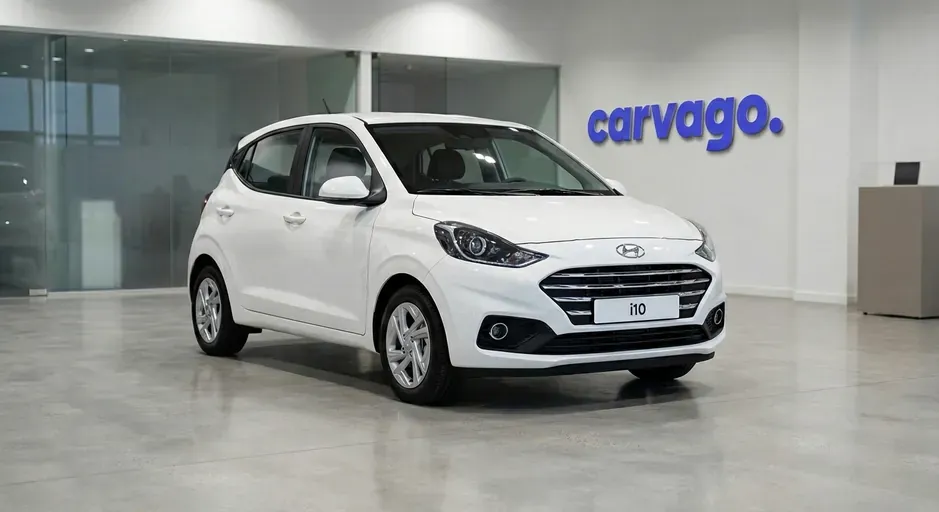
The Hyundai i10 sits in Europe’s city car segment, offering an urban-focused footprint at a time when many manufacturers have scaled back their smallest vehicle lines. This review focuses on the third-generation model, designated internally as the AC3. European series production began in January 2020, with first customer deliveries following later that month. It is sold exclusively as a five-door Hyundai i10 hatchback, accompanied by the visually distinct N Line variant delivered from summer 2020.
A mid-cycle facelift debuted in February 2023, entering production in April 2023 before reaching European customers that summer. The update brought revised exterior lighting graphics, updated interior detailing, and refreshed connectivity features, followed by retuned engine calibrations introduced in April 2024.
Across European markets, the third-generation Hyundai i10 primarily appeals to daily commuters, learner or first-time drivers, and private buyers downsizing from larger segments who seek compact outer dimensions, straightforward parking, and manageable running costs.
The third-generation Hyundai i10 enjoys an above-average reputation for dependability in the city car class. Mechanically, the naturally aspirated 1.0 MPi and 1.2 MPi engines, as well as the turbocharged 1.0 T-GDi, show few structural weak points when basic maintenance schedules are respected. Where faults do emerge on this generation, they predominantly involve transmission behavior and minor infotainment glitches.
The most widely reported mechanical grievance involves the robotized automated manual transmission. Available on naturally aspirated petrol models, tests and owner reports frequently describe pronounced shift hesitation, uncommanded engine rev flare during gear changes, and low-speed shuddering in crawling traffic. While diagnostic recalibration of the clutch actuator and transmission control module can improve shift timing in some cases, persistent shuddering has required premature replacement of the dry clutch disc and pressure plate in others. Buyers considering a Hyundai i10 with an automatic gearbox should scrutinize low-speed engagement, as the conventional five-speed manual transmission proves far more durable and predictable over time.
Electrical gremlins are isolated and rarely leave the vehicle stranded. In professional reliability tests, minor faults have centered almost exclusively on the central touchscreen. Drivers report occasional display freezing, dropped Bluetooth connections, and latency when engaging the reversing camera. In nearly all reported cases, a straightforward infotainment firmware update or a system reset cleared the issue without requiring physical hardware replacement.
Several safety recalls have been issued across the European Union and the United Kingdom that prospective secondhand buyers must verify:
| Defect / Affected Component | Production Window | Scope | Stated Risk & Remedy |
|---|---|---|---|
| Low-pressure fuel pump impeller | 01.11.2021 – 25.04.2023 | EU & UK (89,158 worldwide) | Impeller expansion may cause loss of fuel pressure, potentially leading to non-start or sudden loss of propulsion while driving. Authorized workshops replace the fuel pump assembly. |
| Fuel supply line connection | 02.10.2024 – 25.10.2025 | EU & UK (681 worldwide) | Incorrect installation allows the fuel supply line to detach, creating a fuel leak that can ignite on hot engine parts. Dealers inspect and refit the pipe or replace the tank connection. |
| Exhaust Gas Recirculation (EGR) valve | 27.03.2024 – 20.04.2024 | EU & UK (3,412 worldwide) | Internal short circuit in the EGR valve can lead to engine stalling, damage, and breakdown. Workshops inspect and replace the valve assembly with an updated part. |
| Seat belt pretensioner | 05.09.2020 – 16.10.2020 | EU & UK (1,775 worldwide) | Abnormal deployment performance of the front or rear right seat belt pretensioner mechanism increases injury risk in a collision. Technicians inspect barcode batches and replace defective units. |
The third generation of the petrol Hyundai i10 relies on an all-petrol engine line-up consisting of two naturally aspirated units and a range-topping turbocharged three-cylinder. Depending on the engine, buyers could choose between a five-speed manual gearbox and a five-speed automated manual transmission.
| Engine | Fuel | Power | Gearbox | Model years |
|---|---|---|---|---|
| 1.0 MPi | Petrol | 49 kW (67 hp) | 5-speed manual, 5-speed automated manual | 2020–2024 |
| 1.0 MPi | Petrol | 46 kW (63 hp) | 5-speed manual, 5-speed automated manual | 2024–present |
| 1.2 MPi | Petrol | 62 kW (84 hp) | 5-speed manual, 5-speed automated manual | 2020–2024 |
| 1.2 MPi | Petrol | 58 kW (79 hp) | 5-speed manual, 5-speed automated manual | 2024–present |
| 1.0 T-GDi (N Line) | Petrol | 74 kW (100 hp) | 5-speed manual | 2020–2024 |
| 1.0 T-GDi (N Line) | Petrol | 66 kW (90 hp) | 5-speed manual | 2024–present |
For urban commuting and short daily errands, the entry-level three-cylinder 1.0 MPi provides adequate pace around town while benefiting from a simple indirect injection design.
For mixed everyday driving across suburban routes and country roads, the four-cylinder 1.2 MPi is the most balanced choice. Its extra cylinder ensures smoother running at idle and substantially better mid-range pulling power, which prevents the driver from having to work the engine hard when merging or climbing hills.
Drivers who frequently travel on motorways should seek out the turbocharged 1.0 T-GDi. Thanks to its low-end turbo boost, it sustains higher speeds with far less mechanical strain and reduces the need for constant downshifting, though it was paired exclusively with a five-speed manual gearbox rather than a more relaxed six-speed unit.
Towing utility on the Hyundai i10 is heavily restricted, with the manufacturer homologating a strictly limited trailer capacity regardless of engine choice. This makes the car suitable only for lightweight luggage trailers or towbar-mounted bicycle racks.
For verified factory recalls, component defects, and long-term drivetrain issues reported by drivers, refer to the owner experiences section.
| Dimension | Standard Hatchback | N Line |
|---|---|---|
| Length (mm) | 3,670 | 3,675 |
| Width (mm) | 1,680 | 1,680 |
| Height (mm) | 1,480 | 1,483 |
| Wheelbase (mm) | 2,425 | 2,425 |
| Boot capacity – seats upright (l) | 252 | 252 |
| Boot capacity – seats folded (l) | 1,050 | 1,050 |
Width excludes door mirrors.
Given its compact exterior dimensions, the third-generation Hyundai i10 hatchback offers practical passenger space, seating four average-height adults in reasonable comfort. The rear bench is fixed, meaning back-seat passengers cannot slide the base forward to prioritise cargo. Depending on market and trim specification, the cabin comes configured with either four or five seatbelts, though the narrow cabin width limits the middle rear spot to short journeys or small children.
In the boot, everyday usability benefits from a 60:40 split-folding rear backrest fitted as standard across the range. A dual-height floor board—fitted on higher trims or as an option depending on the market—can be raised to create a flat loading area flush with the sill or lowered to maximise vertical cargo volume for taller items.
On the road, the Hyundai i10 displays mature high-speed stability that defies its modest footprint. Ride comfort varies depending on chassis tuning and wheel choice: standard versions absorb regular tarmac imperfections cleanly, whereas cars with larger wheels or the firmer sports suspension transmit sharp ridges and potholes abruptly into the cabin. Steering feels light in urban traffic, though it offers minimal road feedback at higher speeds. Cornering remains composed and predictable, although severe emergency braking can induce noticeable chassis pitch.
Cabin refinement reflects the car’s city-focused remit. The petrol engines remain quiet at idle and around town, but faster cruising introduces persistent wind and tyre roar. The manual gearbox shifts precisely, though reverse gear can occasionally balk, and the absence of a sixth gear leaves highway journeys noisier than in larger alternatives.
Inside, the Hyundai i10 hatchback relies almost entirely on hard plastics. While panel fit is robust and textured dash inserts break up the utilitarian grey surfaces, it feels basic. Seating provides decent comfort, but a steering column that adjusts only for tilt and not for reach compromises driving ergonomics for taller drivers. Testers also noted a minor misstep with the mid-cycle refresh: while structural assembly remains rattle-free throughout production, the digital instrument cluster introduced with the 2023 facelift was viewed as less legible than the earlier analogue dials.
All charts across this section reflect Carvago listings for the entire Hyundai i10 model family across multiple generations, rather than the third generation in isolation. Because the dataset does not establish a distinct price boundary between generations, buyers should note that asking figures scale primarily by manufacturing year. Advertised stock begins at a median asking price of €10,000 for 2019 models and steps steadily through €11,900 for 2020 cars to €12,900 for 2022 examples. The median steps up to €15,000 for 2023 cars and reaches €17,900 for 2026 vehicles.
The number of Hyundai i10 listings tracked across the platform decreased each month from 6,013 in May 2026 to 4,009 in October 2026, as shown in the breakdown below.
Active listings over time
| Month | Hyundai i10 |
|---|---|
| 2026-05 | 6 013 |
| 2026-06 | 5 506 |
| 2026-07 | 5 402 |
| 2026-08 | 4 890 |
| 2026-09 | 4 749 |
| 2026-10 | 4 009 |
Source Carvago
Even with listings declining continuously over these six months, buyers still have thousands of vehicles to choose from across the market.
The median asking price of used cars advertised today, built in 2019, is €10,000, while listings built in 2026 show a median asking price of €17,900 as broken down by build year below.
Median advertised price by year of manufacture
| Model year | Hyundai i10 |
|---|---|
| 2019 | 10 000 |
| 2020 | 11 900 |
| 2021 | 12 300 |
| 2022 | 12 900 |
| 2023 | 15 000 |
| 2024 | 16 900 |
| 2025 | 17 100 |
| 2026 | 17 900 |
Source Carvago
Buyers looking at model years from 2019 through 2021 encounter median asking prices between €10,000 and €12,300, while those considering cars built from 2024 to 2026 see median asking prices from €16,900 to €17,900.
This depreciation curve shows how the Hyundai i10 loses value as it ages, shedding 27% of its initial residual value by age three. The decline continues across all seven years recorded in the data.
Residual value by vehicle age
| Vehicle age | Hyundai i10 |
|---|---|
| New | 17 800 |
| 1 yr | 16 400 |
| 2 yrs | 14 600 |
| 3 yrs | 13 000 |
| 4 yrs | 11 900 |
| 5 yrs | 11 400 |
| 6 yrs | 10 300 |
| 7 yrs | 9 000 |
Source Carvago
Across the full seven-year span, the model sheds 49% of its initial residual value. Value loss is most pronounced over the first three years, before moderating to its gentlest pace between age four and five.
This chart details the number of advertised cars per month across different fuel types, led by petrol options which moved from 5,914 listings in May 2026 to 3,933 listings in October 2026. The breakdown below tracks how each powertrain is represented over this period.
Supply composition by fuel type
Petrol
Diesel
Hybrid
LPG
| Month | Petrol | Diesel | Hybrid | LPG |
|---|---|---|---|---|
| 2026-05 | 5 914 | 2 | 0 | 94 |
| 2026-06 | 5 423 | 3 | 0 | 76 |
| 2026-07 | 5 309 | 5 | 0 | 84 |
| 2026-08 | 4 796 | 9 | 1 | 78 |
| 2026-09 | 4 658 | 8 | 1 | 77 |
| 2026-10 | 3 933 | 7 | 1 | 65 |
Source Carvago
Petrol dominates the current selection, accounting for 3,933 advertised cars in October 2026 compared to 65 LPG vehicles, 7 diesels, and 1 hybrid. Buyers will realistically be choosing from petrol models, as alternative powertrains appear only in very small numbers.
The chart tracks the average asking price for the Hyundai i10 between May 2026 and October 2026, beginning at €14,300.
Average price development over time
| Month | Hyundai i10 |
|---|---|
| 2026-05 | 14 300 |
| 2026-06 | 14 100 |
| 2026-07 | 13 800 |
| 2026-08 | 13 800 |
| 2026-09 | 13 700 |
| 2026-10 | 13 700 |
Source Carvago
Across the six months, the average asking price edged down by roughly 4% to €13,700, representing a relatively small shift across the period.
Proven mechanical reliability across the naturally aspirated petrol engines
Mature high-speed stability and composed road manners for a city car
Practical luggage area with a versatile dual-height boot floor
Automated manual transmission suffers from pronounced shift hesitation and low-speed shudder
Steering column adjusts only for tilt, compromising driving ergonomics for taller motorists
Elevated tyre and wind roar on motorways, compounded by the absence of a sixth gear
Yes, the Hyundai i10 earns an above-average reputation for mechanical dependability. Minor reported issues are largely confined to occasional infotainment glitches that are typically resolved with a software update.
The four-cylinder 1.2 MPi is the most balanced choice for mixed driving, offering smoother operation and stronger mid-range pulling power than the base three-cylinder. Frequent motorway drivers should look for the turbocharged 1.0 T-GDi instead.
No. The robotized automated manual gearbox suffers from slow shift response and low-speed shudder in traffic, making the manual Hyundai i10 a far smoother and more durable option.
Verify by VIN with an authorized dealer that all safety recalls—notably for the low-pressure fuel pump—have been completed. On test drives, check automated models for low-speed clutch shudder and inspect the wheels and lower bumpers for urban impact damage.
Sources: hyundai.news, adac.de, autoexpress.co.uk, autocar.co.uk, whatcar.com
This article was prepared using artificial intelligence tools. The section guarantor is Petr Dušek.
Big comparison: Renault Clio vs. Škoda Fabia. A detailed look at reliability, engines, and real-world driving characteristics. Read our verdict before you buy!
Oct 16, 2026
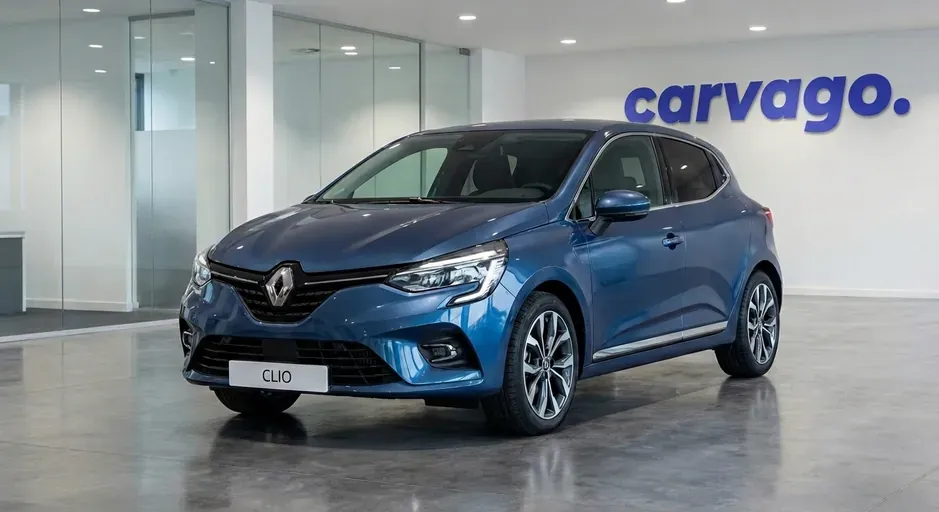
Renault Clio VI review: real owner feedback, hybrid running costs, boot space, pricing and our definitive verdict on the new supermini.
Oct 22, 2026
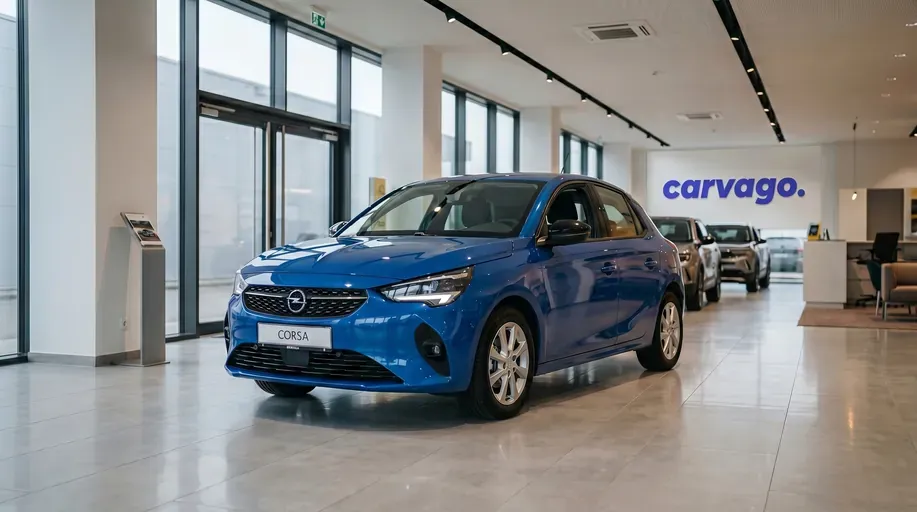
Opel Corsa review: real owner experience, common faults, engine picks, running costs and used prices — everything you need before you buy.
Oct 19, 2026