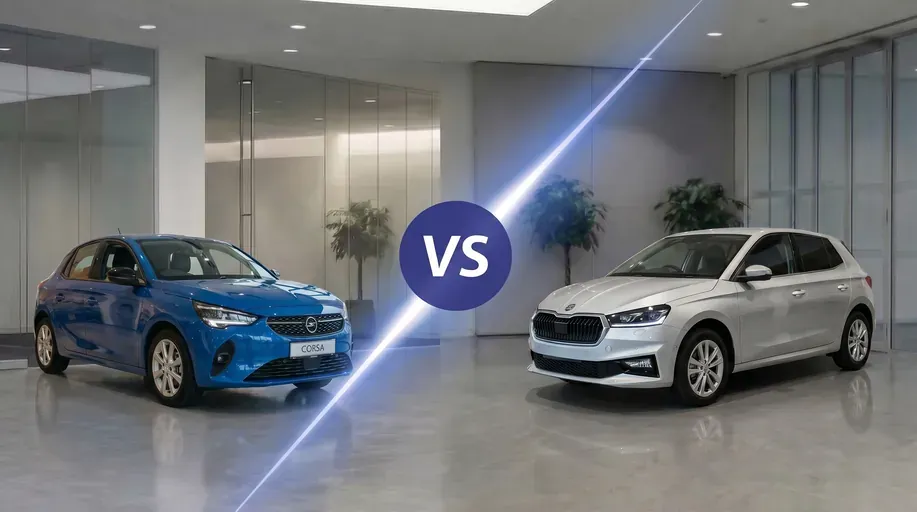
Car battle
Opel Corsa vs. Škoda Fabia: Complete comparison 2026
Detailed comparison: Opel Corsa vs. Škoda Fabia. Discover the differences in equipment, engines, and reliability. Real-world experiences to help you choose your used car.
Apr 24, 2026
Articles
Car battle
Big comparison: Renault Clio vs. Škoda Fabia. A detailed look at reliability, engines, and real-world driving characteristics. Read our verdict before you buy!
October 16, 2026
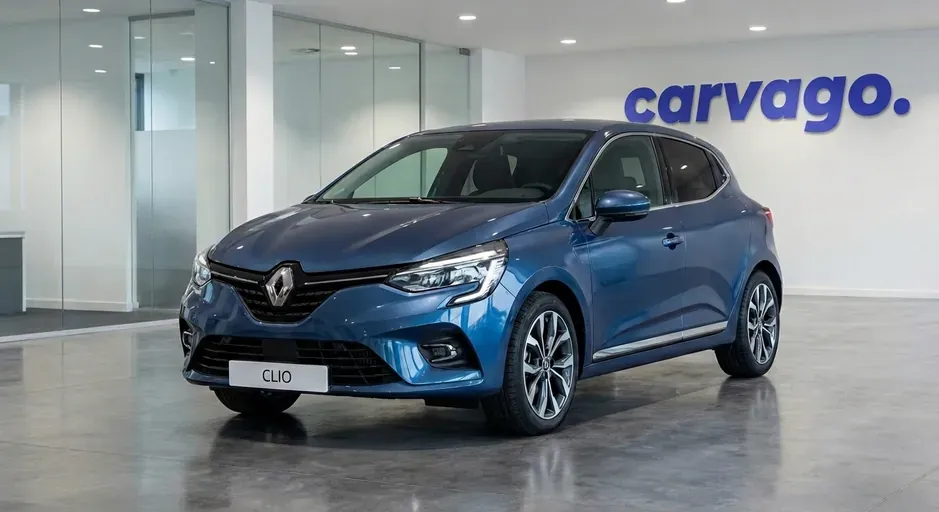
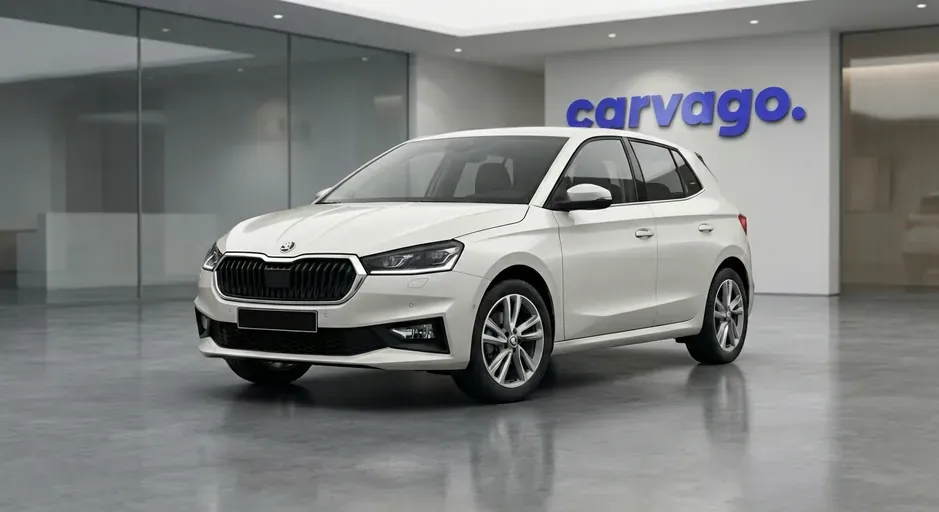
Renault Clio, also sold on the Japanese market under the alternative name Renault Lutecia, represents the French vision of a stylish city car that has long scored points with its elegant design and advanced technologies. Standing against it is the Škoda Fabia, a traditional benchmark of practicality from Mladá Boleslav, which stands out on the used car market primarily for its unrivaled spaciousness and cleverly designed interior. In this comparison, we will take a detailed look at the strengths and weaknesses of both roughly four-year-old generations to help you find out which of these exceptionally popular hatchbacks will better suit your daily needs.
When it comes to external dimensions, both models in their latest generations (Škoda Fabia IV and Renault Clio V) confidently exceed the magic four-meter mark. While they were previously typical cars primarily intended for the city, today these grown-up hatchbacks can fulfill the role of a sole family car without major compromises. With a length of 4,108 to 4,137 mm, the fourth-generation Fabia is slightly longer and, at 1,458 to 1,461 mm, also taller than its French competitor. In practice, this primarily brings more headroom and more generous longitudinal space, which will be especially appreciated by adult passengers in the rear seats.
The fifth-generation Renault Clio, on the other hand, counters with a wider body (1,798 mm compared to 1,780 mm for the Fabia) and a slightly longer wheelbase. From the driver's perspective, the Clio thus feels more natural and stable, providing more generous shoulder room. The Clio's longer wheelbase (2,583 mm) slightly aids a smoother ride and better filtering of road imperfections. On the other hand, when maneuvering in tight city streets and parking garages, the Fabia's nearly two-centimeter narrower build, combined with its excellent visibility, can be a slight advantage.
A major turning point in the decision-making process occurs if you are looking for a more practical estate on the market for roughly four-year-old used cars. Since neither manufacturer offers this variant in their latest generations, families' attention turns to the previous generations – namely the Škoda Fabia III Combi and the Renault Clio IV Grandtour. In these older models, the external proportions are very balanced, and both cars have an identical width of 1,732 mm. The Fabia Combi relies on a slightly higher body profile, which benefits a more upright seating position and easier entry. The Clio Grandtour, by contrast, impresses with a significantly longer wheelbase (2,589 mm compared to 2,470 mm for the Fabia), giving the Renault the advantage of slightly calmer and more stable behavior at highway speeds and a proportionally more elegant appearance.
| Parameter | Renault Clio Hatchback | Škoda Fabia Hatchback | Renault Clio Grandtour | Škoda Fabia Combi |
|---|---|---|---|---|
| Length (mm) | 4050 - 4053 | 4108 - 4137 | 4267 - 4277 | 4257 - 4262 |
| Width (mm) | 1798 | 1780 | 1732 | 1732 |
| Height (mm) | 1440 | 1458 - 1461 | 1445 - 1475 | 1467 - 1488 |
| Wheelbase (mm) | 2583 | 2549 - 2564 | 2589 | 2470 |
Luggage capacity is often a decisive factor for used car buyers looking for a practical car for daily use and weekend trips. Although the Renault Clio and Škoda Fabia both belong to the small city car segment, their transport capacities can differ significantly. This parameter determines whether the car can easily accommodate family groceries, a stroller, or travel equipment. Historically, the Škoda Fabia has been considered a champion of spaciousness, but Renault, with its well-thought-out interior solutions, certainly does not lag behind.
If we focus on the generations available on the market as roughly four-year-old used cars (with a production year around 2022), we encounter the fourth-generation Škoda Fabia in the hatchback version, which offers a top-tier base volume of 380 liters. After folding the rear seats, the space increases to an impressive 1,190 liters, providing reliable room for several extra suitcases. The fifth-generation Renault Clio counters with very solid values as well – standard versions with internal combustion engines provide a base volume of 340 to 391 liters (depending on the presence of a double floor), with a maximum capacity of up to 1,069 liters. However, it is important to mention the specifics of the Clio E-Tech hybrid powertrain, where the battery placement reduces the base trunk volume to a more modest 246 to 254 liters.
A fundamental difference between the two models from a family usability perspective lies in the availability of the more practical estate body style. Renault ended production of its extended models after the fourth generation (which, as the Grandtour/Estate version, offered a decent 443 liters). In contrast, the third-generation Škoda Fabia still offered the popular Combi (Estate) model, which was successfully sold as late as 2022. This roughly four-year-old Fabia Combi thus represents a clear trump card for families thanks to its massive base volume of 530 liters, which is sufficient for weekend shopping and longer holidays. After folding the seats, this space increases to a maximum of 1,395 liters.
As a result, a fairly clear rule applies to used car buyers. If every extra liter is crucial for you and you plan to transport bulkier cargo frequently, the Škoda Fabia is a safe bet – especially if you go for its phasing-out but unrivaled Combi version. On the other hand, the Renault Clio will perfectly suit drivers who are satisfied with a more traditional hatchback volume and are looking for modern style, though with the need to watch out for the limited space in the fuel-efficient hybrid variants.
| Parameter | Renault Clio Hatchback | Škoda Fabia Hatchback | Renault Clio Grandtour | Škoda Fabia Combi |
|---|---|---|---|---|
| Base volume (l) | 340 - 391 | 380 | 443 | 530 |
| Maximum volume with seats folded (l) | 979 - 1069 | 1190 | 1380 | 1395 |
The Škoda Fabia clearly dominates in terms of space, especially thanks to the recently available Combi version, while the Clio scores with a solid trunk in standard versions but loses volume with the hybrid powertrain.
Trailer weight and total towing capacity are not usually the main selection criteria in the small city car segment, but for practically-minded drivers, they can make a significant difference. Whether it's hauling garden waste or weekend camping, a car's capabilities can save you a lot of trouble. Looking at cars approximately four years old—the current fifth-generation Renault Clio and the fourth-generation Škoda Fabia—we find that both manufacturers approach this parameter differently.
Renault Clio (5th generation) pleases with a very clear and unified towing capacity. No matter which version you choose, the maximum weight of a braked trailer is always set at exactly 900 kg. A major plus is that this standard and maximum limit remains unchanged even for the modern full hybrid E-Tech versions, which is not always the rule—in many competing hybrids, towing capacity drops due to complex technology. An unbraked trailer for the Clio can weigh from 615 to 670 kg, depending on specification and equipment.
Škoda Fabia (4th generation), on the other hand, ties towing capacity directly to the power of the chosen engine. While the base 1.0 MPI engine can only handle 800 kg for a braked trailer and 560 kg for an unbraked one, the turbocharged 1.0 TSI engines already offer a much more interesting 1000 to 1100 kg. At the absolute top of the range is the 1.5 TSI four-cylinder, where the maximum braked trailer weight moves up to an impressive 1200 kg (and 620–630 kg for an unbraked trailer).
In practice, these differences mean that while the uniform 900 kg of the Clio is perfectly sufficient for weekend shopping, minor renovations, or transporting materials, the top-of-the-line Fabia with a capacity of 1200 kg opens up space for much more demanding tasks. It easily handles heavier building materials or towing a light caravan, providing room for a few extra suitcases and comfort for longer holidays.
The conclusion in this case is clear: if the ability to tow heavier loads is key for you, the Škoda Fabia combined with the more powerful TSI engines is undoubtedly the better workhorse. Renault Clio scores points for its consistency across the model range, making it a perfect choice for drivers who want an efficient hybrid powertrain but don't want to give up the practical option of attaching a standard trailer.
| Model and engine | Braked trailer weight (kg) | Unbraked trailer weight (kg) |
|---|---|---|
| Renault Clio V 1.0 SCe / TCe | 900 | 615 - 625 |
| Renault Clio V E-Tech Hybrid | 900 | 670 |
| Škoda Fabia IV 1.0 MPI | 800 | 560 |
| Škoda Fabia IV 1.0 TSI | 1000 - 1100 | 570 - 610 |
| Škoda Fabia IV 1.5 TSI | 1200 | 620 - 630 |
When comparing the engine options of four-year-old used cars, the Renault Clio (fifth generation) and Škoda Fabia (fourth generation) take completely different paths. Renault relies on an extremely diverse range of powertrains and, as one of the last in this class, still offers four-cylinder diesels or a very advanced full-hybrid system, which will be appreciated by both high-mileage drivers and eco-conscious city motorists. In contrast, Škoda carried out a strict rationalisation for the fourth generation, completely abandoning diesel engines and basing its range exclusively on highly efficient and proven TSI and MPI petrol units. While the Fabia's big draw is the option of a dynamic and powerful 1.5 TSI four-cylinder, the Clio scores with its excellent factory LPG conversion, which is a major plus for budget-oriented drivers.
The fifth-generation Renault Clio boasts a range on the used car market that satisfies literally every type of driver. The base is the reliable naturally aspirated SCe three-cylinder, but you will soon find that many more used cars carry the turbocharged TCe units. For customers looking for the lowest possible running costs, the TCe 100 LPG is a crucial model, featuring a trouble-free factory gas installation. At a time when competitors gave up on diesel in small hatchbacks, the Clio still held onto the 1.5 Blue dCi diesel engines with fantastic fuel consumption for cars from 2020–2022 – although they are now disappearing from new car price lists and are sought-after rarities among used cars. An alternative to diesel is the more complex but city-ideal E-Tech full-hybrid system with a unique multi-mode automatic transmission.
| Engine type | Fuel | Power (kW) | Torque (Nm) | Transmission |
|---|---|---|---|---|
| 1.0 SCe 65 | Petrol | 48 | 95 | 5MT |
| 1.0 TCe 90 | Petrol | 66 | 160 | 6MT / CVT |
| 1.0 TCe 100 LPG | Petrol / LPG | 74 | 170 | 6MT |
| 1.3 TCe 140 | Petrol | 103 | 260 | 6MT |
| 1.5 Blue dCi 100 | Diesel | 74 | 260 | 6MT |
| 1.6 E-Tech 145 | Hybrid | 105 | 144 + 205 (electric motor) | Multi-mode auto. |
The fourth-generation Škoda Fabia, which arrived on the market in 2021 (making it a perfect representative of nearly-new used cars), relies exclusively on petrol power units. The earlier and much-discussed TDI diesel engines are completely absent in this generation, underlining the manufacturer's focus on efficient petrol combustion. At the bottom of the hierarchy is the naturally aspirated 1.0 MPI unit, suitable exclusively for shorter trips, but the successful turbocharged 1.0 TSI three-cylinder is much more in demand. In its more powerful version (81 kW), it offers an excellent compromise between fuel consumption and flexibility, with a choice of either a six-speed manual or a seven-speed DSG automatic. For those who aren't fans of three-cylinder engines, the Fabia is one of the few cars in this segment where you can opt for a pure-bred 1.5 TSI four-cylinder with cylinder deactivation (ACT) and 110 kW of power, which makes the small Škoda run like a true highway beast.
| Engine type | Fuel | Power (kW) | Torque (Nm) | Transmission |
|---|---|---|---|---|
| 1.0 MPI 80 | Petrol | 59 | 93 | 5MT |
| 1.0 TSI 95 | Petrol | 70 | 175 | 5MT |
| 1.0 TSI 110 | Petrol | 81 | 200 | 6MT / 7DSG |
| 1.5 TSI 150 | Petrol | 110 | 250 | 7DSG |
While the Renault Clio attracts with an exceptionally rich range spanning from factory LPG to economical diesels and advanced hybrids, the fourth-generation Škoda Fabia has perfected a purely petrol offering with the top-tier dynamic 1.5 TSI four-cylinder.
Choosing the right engine is crucial for long-term satisfaction with the car, which is why we have based our recommendations on real-world service experience, reliability ratings, actual fuel consumption, and owner feedback. Although the fifth-generation Renault Clio and fourth-generation Škoda Fabia – which currently dominate the market for used cars around four years old – rely primarily on modern turbocharged one-liter three-cylinder engines, their technical approach differs fundamentally. Renault relies on indirect fuel injection for its base turbo, making it a very mechanically robust engine for city traffic, while Škoda fully utilizes direct injection for maximum efficiency and highway dynamics. From the wide range of available engines, we have selected those that make the most sense for a used car in terms of long-term ownership.
From the diverse range of fifth-generation engines, the 1.0 TCe turbocharged petrol three-cylinder is the absolute ideal for a roughly four-year-old used car. Used car buyers should note that the economical BLUE dCi diesel versions were mostly produced only until 2021 and have practically disappeared from the market. Thus, the standard 1.0 TCe 90 petrol engine remains the safest choice, which you will encounter by far the most often in advertisements.
In the fourth generation of the Škoda Fabia, whose range has been limited exclusively to petrol units without the presence of diesel versions, the undisputed sales king and best all-rounder is the 1.0 TSI turbocharged one-liter three-cylinder in the more powerful 81 kW version (or 85 kW in newer model years). In cars from model year 2021 onwards, it is a guaranteed path to a reliable and fast car.
Official paper fuel consumption values often differ significantly from everyday reality, for turbocharged engines often by more than a liter per hundred kilometers. For the most accurate comparison of operating costs for roughly four-year-old used cars, we have therefore used real data collected directly from drivers themselves on the Spritmonitor.de community portal. We focused on the generations that currently make the most sense on the used car market – the fifth generation of the Renault Clio (produced since 2019) and the fourth generation of the Škoda Fabia (on the market since 2021).
| Model and engine | Average consumption (l/100 km) |
|---|---|
| Renault Clio 1.0 SCe 48 kW (Petrol) | 5.0 |
| Škoda Fabia 1.0 MPI 59 kW (Petrol) | 5.1 |
| Renault Clio 1.0 TCe 67 kW (Petrol) | 5.5 |
| Škoda Fabia 1.0 TSI 81 kW (Petrol) | 5.5 |
| Škoda Fabia 1.5 TSI 110 kW (Petrol) | 5.6 |
| Renault Clio 1.5 Blue dCi 74 kW (Diesel) | 4.5 |
| Renault Clio E-Tech Hybrid 140 (Hybrid) | 4.8 |
| Renault Clio 1.0 TCe 74 kW (LPG) | 6.8 |
A detailed look at the average values reveals several interesting trends. While the basic naturally aspirated three-cylinder engines of both brands represent the most economical pure petrol choice, it may come as a surprise that the popular small turbo engines do not save as much fuel as originally expected. During more dynamic driving or highway travel, it is necessary to rev the small-displacement turbocharged one-liter engines (TCe and TSI) more, which slightly increases consumption. A great example of mature and economical technology, on the other hand, is the larger 1.5 TSI four-cylinder in the Fabia. In the real world, thanks in part to the cylinder deactivation system, it consumes only a negligible tenth of a liter more fuel than the much weaker one-liter TSI. The absolute winner in terms of consumption on long routes is the reliable 1.5 Blue dCi diesel engine from Renault. In contrast, Škoda said goodbye to diesels with the fourth-generation Fabia and offers exclusively petrol units.
For the average user and potential buyer, these figures provide a clear guide. If you are looking for a car primarily for short trips and city driving, simple naturally aspirated versions with real consumption around 5 liters will perfectly serve their purpose. For drivers commuting longer distances daily, it makes sense to go for either the diesel Clio or the dynamic and surprisingly frugal Fabia with the 1.5 TSI engine. Customers focused on the lowest possible operating budget should definitely consider the Clio with factory LPG drive. Although the absolute gas consumption is higher (around 6.8 l/100 km), thanks to its low purchase price, the total costs per kilometer fall to an absolute minimum. A specific chapter is the full-hybrid Clio E-Tech, which overall drives under the five-liter mark, but its territory and the place where it saves the most remains primarily urban and suburban traffic with frequent braking.
In conclusion, consumption should not be the only decisive criterion that guides you to a chosen brand. For standard petrol engines, direct competitors show almost identical appetites and have nothing to reproach each other for. The fundamental difference thus lies mainly in whether you need a certain type of drive for your specific driving style. While Škoda bets on efficient and straightforward petrol classics in its fourth generation, Renault has a clear competitive advantage for more demanding buyers – it offers a quite exceptional range of used cars including not only traditional petrol, but also a diesel engine, an economical hybrid, or extremely advantageous LPG.
When choosing a roughly four-year-old used car (typically with a production year around 2022), market specifics become fully apparent. While the fifth-generation Renault Clio attracts with a more appealing purchase price and very good equipment, the fourth-generation Škoda Fabia traditionally holds its value much better on the domestic market. For the Škoda, this means a higher initial investment, but at the same time, it promises a more favorable resale price in the future.
For four-year-old Renault Clio V models, price tags most often range from €10,000 to €13,000. It depends primarily on the engine and trim level. The most common and sought-after power unit on the used car market is the reliable turbocharged three-cylinder 1.0 TCe. A major advantage of the Clio is the fact that even in lower price brackets, you often come across cars with excellent equipment, including Full LED headlights, modern infotainment with connectivity, and automatic climate control. Exceptionally, top-of-the-line RS Line versions also appear (often with the more powerful 1.3 TCe engine), where the price can already approach the €15,000 mark.
Škoda Fabia is considered a safe bet on the used market, which is reflected in its higher price. You can typically buy a used fourth-generation Fabia with the popular and economical 1.0 TSI engine from €11,000. However, models with richer equipment (for example, the sought-after Style trim) and lower mileage commonly sell for amounts between €13,000 and €15,000.
Market interest: In the 2021 and 2022 model years, you may also come across the outgoing previous generation Fabia III in the Combi body style (often sold under the Tour designation). These cars are slightly more affordable and represent a practical choice for families looking for a large trunk, even at the cost of older generation technology.
For a quick idea of the budget, we offer a comparison of typical price levels for roughly four-year-old representatives of both models:
| Model (approx. 2022) | Base version (1.0 MPI / 1.0 SCe) | Golden middle ground (1.0 TCe / 1.0 TSI, mid-range trim) | Top models (RS Line / Style, or more powerful engines) |
|---|---|---|---|
| Renault Clio V | from approx. €10,000 | €11,000 – €12,000 | €13,000 – €15,000 |
| Škoda Fabia IV | from approx. €11,000 | €11,000 – €14,000 | €14,000 – €16,000 |
When deciding, your personal approach to finances plays the main role. While with the Fabia model you get a more conservative car with excellent residual value retention, with the Renault Clio you get objectively more attractive equipment and more premium materials in the interior for the same budget.
While a used Renault Clio offers significantly more modern equipment and flair for the same money, the Škoda Fabia represents a safe bet on the Czech market with a much slower depreciation.
Both models, Renault Clio and Škoda Fabia, boast a maximum five-star rating in independent Euro NCAP safety tests. When choosing a used car around four years old, it is very important to look not only at the total number of stars but especially at the context and the year the car underwent testing. The Euro NCAP methodology is constantly evolving and becoming stricter over time, so percentage results from different years cannot be judged by the same standard.
The fifth-generation Renault Clio underwent crash tests in 2019, while the fourth-generation Škoda Fabia was tested two years later, at the end of 2021. Although a two-year difference might not seem significant, Euro NCAP introduced significantly tougher testing protocols in 2020. For example, a new mobile barrier for frontal impact was added, as well as measurements for occupant protection in side impacts from the opposite side, and much more demanding scenarios for pre-collision systems, such as detecting cyclists and pedestrians at intersections.
| Parameter | Renault Clio | Škoda Fabia |
|---|---|---|
| Year of testing | 2019 | 2021 |
| Adult occupant protection | 96 % | 85 % |
| Child occupant protection | 89 % | 81 % |
| Vulnerable road users protection | 72 % | 70 % |
| Safety assist systems | 75 % | 71 % |
Although the Renault Clio has higher percentage ratings on paper, it doesn't automatically mean it's a safer car overall. Its certification reflects older and somewhat more lenient standards, while the Škoda Fabia had to earn its rating under noticeably tougher conditions. Even so, the Fabia performed so well that it even won the prestigious "Best in Class" award in its year as the safest small family car on the market.
In practice, both cars offer a very high standard of safety for four-year-old used vehicles. Both the Clio and the Fabia are equipped with a range of modern active safety features, such as autonomous emergency braking, lane-keeping assist, or driver drowsiness detection. However, thanks to its more modern platform and success in newer tests, the Škoda Fabia represents a slightly more comprehensive safety package, with smart assistance systems better prepared to handle today's most complex traffic situations.
Both cars are exceptionally safe and boast five stars, but the Škoda Fabia offers slightly more modern protection, verified by stricter crash tests from 2021.
Both vehicles offer much more than just basic equipment, with each model taking its own distinctive approach to bringing customers maximum added value and making daily use more pleasant.
The fifth generation of the Renault Clio focuses on a premium interior feel, advanced connectivity, and electrified powertrains. It relies primarily on emotion, design, and modern technology.
The fourth generation of the Fabia model relies on the proven Group recipe. It brings a huge leap in spaciousness, emphasizes clever solutions for families, and scores with excellent aerodynamics that reduce consumption on long routes.
High-quality interior workmanship with a high proportion of soft-touch materials
Attractive and emotive exterior design
Excellent cabin soundproofing and refinement on board
Availability of an efficient full hybrid powertrain (E-Tech)
Excellent safety ratings and a wealth of standard assistance equipment
Less headroom and knee room for rear-seat passengers
Higher loading lip of the luggage compartment, making it harder to handle heavy loads
Occasionally slower and less intuitive responses from the Easy Link multimedia system
The fifth-generation Renault Clio is an ideal choice for drivers looking for a stylish small car with a premium interior feel and excellent soundproofing. Thanks to the availability of a sophisticated hybrid powertrain, it will particularly appeal to those who spend most of their time in city traffic and value a refined and economical drive.
Unrivalled interior spaciousness in its class, especially in the rear seats
Large (380 litres) and exceptionally practical luggage compartment
Great dashboard ergonomics with the retention of logical physical climate control buttons
Mature and comfortable driving characteristics approaching cars from a class above
A wide range of "Simply Clever" solutions that make everyday use easier
A higher proportion of hard plastics in the interior compared to its French rival
Complete absence of any form of hybrid or diesel powertrain in the range
Higher purchase price on the used car market and less willingness from dealers to offer significant discounts
Rather conservative design that may not appeal to emotionally driven customers
The fourth-generation Škoda Fabia functions as a full-fledged car in a compact package, focusing on maximum utility, thoughtful ergonomics, and above-average interior space. It is suitable for rational buyers and small families who prefer exceptional practicality, predictable driving characteristics, and reliable petrol engines.
Based on service reports, breakdown statistics, and our expert data from the CarAudit service, we have compiled an overview of the most common problems that buyers of roughly four-year-old used cars may encounter. An independent technical inspection always plays a crucial role in a safe purchase, as it reliably reveals the actual condition of a specific vehicle.
Mechanically, the fifth-generation Renault Clio is considered a very durable car; most of the headaches for owners are caused by modern electronic systems and issues associated with short city trips.
From a mechanical standpoint, the Clio with TCe engines is one of the most durable cars in its class, but it suffers from infotainment teething troubles and shorter battery life in city traffic.
The fourth generation of the Škoda Fabia brought more advanced technology at the cost of greater complexity, with the most concerns caused by on-board systems and carbon buildup in direct-injection engines under improper use.
The Fabia IV is a spacious and mature-feeling hatchback that requires regular maintenance of the TSI engines for long-term reliability and, for the oldest models, a necessary update of the on-board software.
When buying a used car, a thorough inspection is key. Here are a few specific points to focus on for these two models. Given the modern and complex technology on board both vehicles, an independent car technical inspection is always worth it before the purchase itself, as it helps uncover potential expensive hidden defects.
Both models are among the best in their class, but the fourth-generation Škoda Fabia offers a very practical 380 litres. The fifth-generation Renault Clio claims up to 391 litres for pure petrol versions, but this volume drops to 301 litres for the hybrid variant. However, the shape of the Czech car's boot is somewhat more regular and, thanks to Simply Clever features, often more usable in practice.
Thanks to a longer wheelbase and an overall emphasis on maximizing interior space, the Czech representative is the clear winner for the rear seats. Rear passengers have significantly more legroom and headroom, making the car a more viable option for longer trips with adults. Its French competitor prioritizes generous comfort in the front seats, so its rear bench is slightly more cramped.
The French model stands out with its E-Tech full-hybrid powertrain, which can drive on electricity for a large part of the time in the city and is extremely fuel-efficient. In contrast, Škoda relies exclusively on traditional petrol engines for this car, most often in the form of the popular 1.0 TSI three-cylinder. Although these conventional units are highly efficient in their own right, a hybrid makes a bit more sense for heavy city traffic.
In the four-year-old used car market, both cars are considered highly reliable without chronic or fatal defects. Petrol engines from the TSI family have had a great reputation for robustness for years and mostly require only timely basic servicing. The French competitor fares similarly well with its petrol units, but its more complex hybrid technology may pose a risk of more expensive maintenance in older used cars.
Behind the wheel, the Clio feels more mature and slightly more driver-oriented, and its chassis manages to combine confidence in corners with good directional stability on the motorway. The Fabia, on the other hand, is tuned with a greater emphasis on a calm and smooth ride, with the suspension fantastically filtering out common city potholes and bumps. While one car will slightly more please those who enjoy driving, the other relies unreservedly on relaxed and effortless travel comfort.
Sources: ADAC, aktualne.cz, idnes.cz, emobility.cz, autosalon.tv, logistika.ihned.cz
This article was prepared using artificial intelligence tools. The section guarantor is Petr Dušek.
Detailed comparison: Opel Corsa vs. Škoda Fabia. Discover the differences in equipment, engines, and reliability. Real-world experiences to help you choose your used car.
Apr 24, 2026
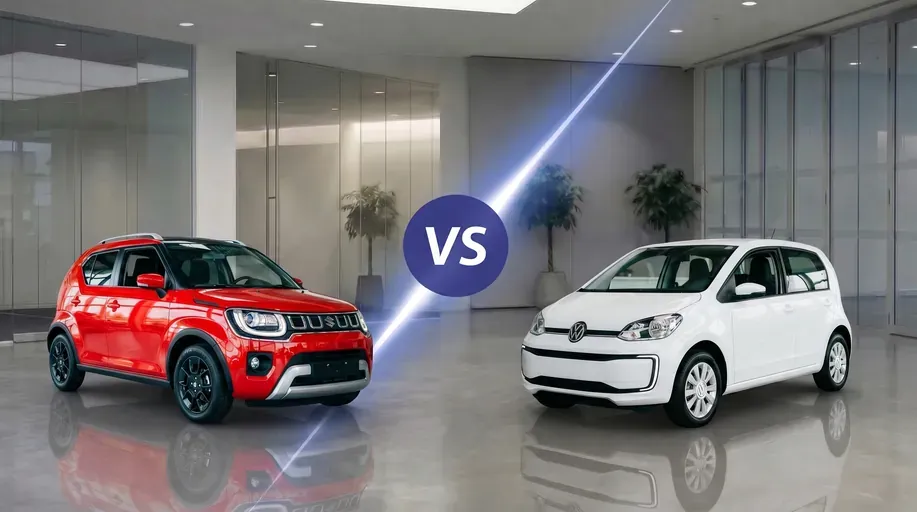
Detailed comparison of the Suzuki Ignis and Volkswagen up! (VW up!). Find out which used city car offers better reliability, real-world fuel consumption, and a clear verdict.
Oct 16, 2026
Used Car Comparison: Citroën C3 vs Suzuki Swift. Read a detailed comparison of engines, reliability, and equipment. Find out which city hatchback is the right one for you.
Apr 28, 2026