Car battle
Škoda Fabia vs. Toyota Yaris: Complete Comparison 2026
Škoda Fabia vs. Toyota Yaris. A detailed comparison of engines, features, and prices. Find out which of these popular small cars is the right one for you.
Oct 23, 2026
Articles
Review
Opel Corsa review: real owner experience, common faults, engine picks, running costs and used prices — everything you need before you buy.
October 19, 2026
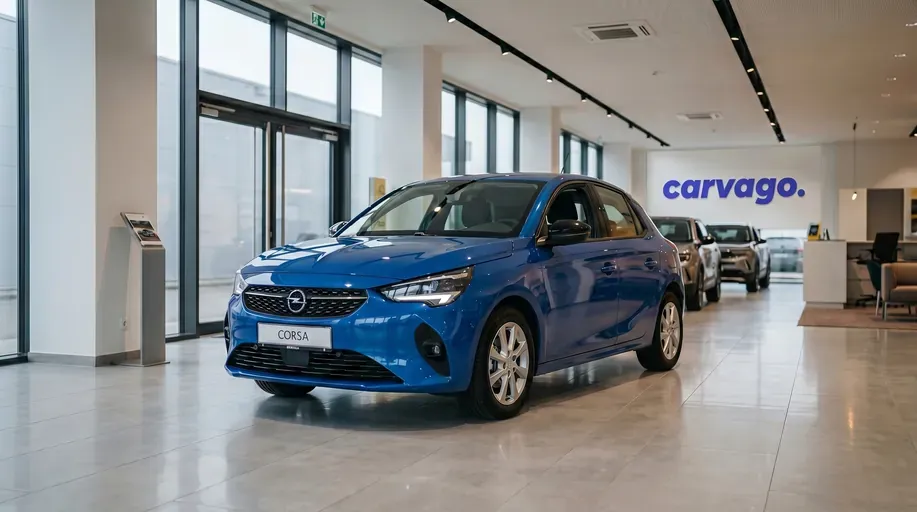
The sixth-generation Opel Corsa (internal code Corsa F) is one of Europe’s core small-car contenders. Assembled in Zaragoza, Spain, serial production started in October 2019, followed by first European customer deliveries in November 2019 for combustion models and March 2020 for the battery-electric version. This review focuses exclusively on the sixth generation, which remains in active production and on sale across Europe in 2026.
Sold exclusively as a five-door Opel Corsa hatchback, the range underwent a mid-cycle refresh unveiled on 24 May 2023, with customer deliveries starting in October 2023. The update integrated the brand's Vizor front fascia, upgraded digital cockpit screens, and rebranded the electric variant to Corsa Electric. Mechanical updates accompanied the visual change: the diesel engine was discontinued from price lists in July 2023, while a 48V hybrid option joined the lineup when order books opened in February 2024, though related component production dates to June 2023.
The Corsa primarily targets urban commuters, smaller households, and commercial fleet operators seeking manageable outer dimensions for dense city traffic alongside dependable stability on motorways, supported by a diverse choice of petrol, mild hybrid, and fully electric drivetrains.
The sixth-generation Opel Corsa has accumulated a detailed reliability record since customer deliveries began in late 2019. On petrol Opel Corsa variants built between October 2019 and late 2023, the most critical mechanical concern involves the oil-immersed timing belt. Professional tests and workshop teardowns describe how chemical degradation from fuel dilution—particularly during frequent short journeys—causes the outer rubber surface of the belt to soften, crack, and shed debris directly into the engine oil. These particles migrate into the sump, clogging the oil pump pickup strainer and the brake servo vacuum pump. This deterioration manifests as low engine oil pressure warnings or a hard brake pedal due to lost vacuum assistance. The manufacturer shortened the belt inspection and replacement interval and mandated specific motor oil formulations. Petrol variants with 48V hybrid technology introduced in early 2024 eliminated this issue by switching to a conventional timing chain.
For diesel Opel Corsa vehicles built up to the 2023 model year, the dual-overhead valvetrain presents another documented vulnerability. Official campaign notices and owner reports show that the 7 mm synchronisation chain linking the two camshafts is prone to premature elongation and snapping under high contact stress and soot contamination. When the chain breaks, valve-to-piston contact causes catastrophic top-end failure. An official factory remedy replaces the assembly with a reinforced 8 mm chain and updated camshaft carrier.
On battery-electric electric Opel Corsa models produced between 2020 and 2023, owners frequently report unexpected failures of the AC on-board charger. The failure triggers dashboard warnings such as "Electric Traction System Fault", trips domestic wallbox circuit breakers, and completely halts Type 2 alternating-current charging, even while direct-current fast charging at rapid chargers remains functional. Rectifying the defect requires installing a revised charging module. Across all variants, tests note occasional central infotainment freeze-ups and nuisance electrical warning messages, which are often traced to a loose 12V battery grounding clamp.
Several official safety recalls have addressed factory defects across the European market. A significant campaign announced in March 2026 targeted hybrid Opel Corsa vehicles and related models due to tight packaging between the particulate filter pipe and the 48V starter-generator. Additionally, an August 2024 recall covered 216,361 models worldwide built between 2019 and 2023 with the 1.2 naturally aspirated petrol engine to address faulty evaporative characteristics in the canister purge valve and fuel line.
| Defect & Affected Component | Production Window | European Reach & Remedy |
|---|---|---|
| 48V Starter-Generator Clearance: Particulate filter pipe clearance under 10 mm risks electrical arcing and fire in wet conditions. | June 2023 – January 2026 | EU/EEA-wide. Workshops inspect clearance, modify wiring harness routing, and fit protective shielding. |
| Water Pump Pulley Slippage (Diesel): Pulley sprocket detachment causes timing belt misalignment and sudden engine shutdown. | Specific VIN range (2023–2024 production) | EU/EEA and UK. Authorised repairers inspect pulley tracking and fit revised water pump and timing components. |
| Piston Oil Cooling Nozzles (Petrol): Damaged spray nozzles cause piston overheating, engine stall, and crankcase breach leading to fire risk. | October 2022 – November 2024 | Worldwide. Technicians inspect internal cooling nozzles and renew compromised engine assemblies. |
| Camshaft Synchronisation Chain (Diesel): Carbon build-up reduces resistance on the original synchronisation chain, risking breakage and engine ruin. | 2019 – 2023 | EU/EEA and UK. Workshops assess valvetrain noise and elongation, installing a reinforced chain kit where required. |
| Side Airbag Ground Connection: Faulty electrical ground connection can cause unintended side airbag deployment without an impact. | 2019 – 2021 | Worldwide (~93,000 vehicles). Workshops inspect and rework electrical grounding points. |
| Rear Axle Weld Defect: Improperly welded rear axle beam can crack and compromise vehicle steerability. | 13 January 2023 – 18 January 2023 | Worldwide (462 vehicles). Dealers inspect the rear axle serial batch and replace defective assemblies. |
The sixth-generation Opel Corsa offers a broad range of powertrains spanning conventional internal combustion units, 48-volt mild hybrids, and pure battery-electric systems. All variants transfer propulsion exclusively to the front wheels.
| Engine | Fuel | Power | Gearbox | Model years |
|---|---|---|---|---|
| 1.2 | Petrol | 55 kW (75 hp) | 5-speed manual | 2019–present |
| 1.2 Turbo | Petrol | 74 kW (100 hp) | 6-speed manual | 2019–present |
| 1.2 Turbo | Petrol | 74 kW (100 hp) | 8-speed automatic | 2019–2025 |
| 1.2 Turbo | Petrol | 96 kW (130 hp) | 8-speed automatic | 2019–2024 |
| 1.2 Turbo Hybrid 48V | Petrol MHEV | 74 kW (100 hp) | 6-speed dual-clutch automatic | 2024–present |
| 1.2 Turbo Hybrid 48V | Petrol MHEV | 100 kW (136 hp) | 6-speed dual-clutch automatic | 2024–present |
| 1.5 Turbo D | Diesel | 75 kW (102 hp) | 6-speed manual | 2019–2023 (production into 2024) |
| Corsa-e / Corsa Electric | Electric | 100 kW (136 hp) | 1-speed automatic | 2020–present |
| Corsa Electric | Electric | 115 kW (156 hp) | 1-speed automatic | 2023–present |
| Corsa GSE | Electric | 207 kW (281 hp) | 1-speed automatic | 2026–present |
For urban commuting and short daily trips, the entry-level naturally aspirated petrol Opel Corsa provides basic, dependable propulsion, though it feels strained on open roads. City drivers with home charging will find the battery-electric Corsa Electric well matched to stop-and-go conditions due to its quiet, instant throttle response.
For mixed everyday driving, the mid-output turbocharged 1.2 petrol serves as the practical balance of pace and running costs. While its six-speed manual gearbox exhibits a slightly notchy shift action, pairing this engine with the torque-converter eight-speed automatic delivers smoother progress in heavy traffic. Buyers shopping newer post-facelift stock should look closely at the hybrid Opel Corsa, which pairs a dual-clutch automatic with an integrated electric motor that aids off-the-line response and allows low-speed maneuvering on battery power alone.
Long-distance highway drivers shopping on the secondary market are best served by the diesel Opel Corsa, which was retired from price lists in July 2023; as a used car, the 1.5 Turbo D delivers long cruising range, though tests record a coarse idle. Alternatively, the higher-output turbocharged petrol or the more potent 48V hybrid maintain quiet cruising stability at sustained motorway speeds.
Drivers planning to pull light utility trailers must select an internal combustion or 48V hybrid powertrain, as the electric Opel Corsa carries no type-approved towing capacity.
For detailed service risks and common mechanical faults across these powertrains, refer to the owner experiences section.
| Parameter | Standard Hatchback (ICE & Hybrid) | Electric Hatchback |
|---|---|---|
| Length (mm) | 4,060 | 4,060 |
| Width (mm) | 1,765 | 1,765 |
| Height (mm) | 1,433–1,435 | 1,433–1,435 |
| Wheelbase (mm) | 2,538 | 2,545 |
| Boot volume — seats up (l) | 309 | 267 |
| Boot volume — seats folded (l) | 1,081 | 1,042 |
Height reflects minor factory revisions between pre-facelift and facelift models. The reduced electric boot capacity stems from underfloor drive components.
While the front cabin offers sufficient space even for tall occupants, the rear bench of the hatchback Opel Corsa prioritises compact exterior footprints over adult passenger accommodation. Narrow rear door openings hinder entry and exit, while legroom and foot space remain restricted if front passengers sit further back. Short rear seat cushions provide modest under-thigh support, and the narrow central position serves strictly as an emergency perch for short hops. In the boot, everyday utility is straightforward with a split-folding rear backrest fitted as standard across all versions, though the absence of an adjustable cargo floor creates a noticeable step in the loading area when the backrests are folded down flat.
Professional road tests consistently portray the Opel Corsa as an agile, securely planted supermini that prioritises taut chassis control over plush ride quality. On open roads, its direct front axle resists body roll effectively, tracking straight over asphalt ruts and maintaining predictable stability during sudden swerve manoeuvres. However, low-speed compliance divides opinions: while the taut damping prevents float, testers widely agree that transverse expansion joints, sharp ridges, and cobblestones transmit noticeable thumps into the passenger compartment.
Steering calibration is safe and accurate across the line-up, but tests note that its light assistance leaves the rim largely devoid of tactile road feedback off-centre. Acoustic refinement earns mixed verdicts. In town and on regional routes, wind roar and powertrain thrum remain well subdued, particularly in battery-electric variants. At sustained motorway speeds, however, wind rustle around the door mirrors and tyre rumble become prominent, while three-cylinder petrol engines emit a distinct growl under hard acceleration before settling into a steady hum when cruising.
Inside, testers appreciate the driving position and supportive front seats, along with the decision to retain dedicated rotary climate dials beneath the infotainment screen rather than burying everyday adjustments in submenus. Assembly is solid across the dashboard, though hard, scratch-prone plastics dominate the lower door casings and centre console. The facelift introduced upgraded digital displays and sharper infotainment graphics.
All charts in this section reflect advertised listings across the entire Opel Corsa model family on Carvago, including earlier generations alongside the current one, rather than filtering exclusively to the reviewed generation. Consequently, these figures illustrate broader market listings and do not establish a separate price level for the sixth generation alone. Across the recorded build years, the median asking price ranges from €10,800 for 2019 vehicles to €19,500 for 2026 models, with 2023 examples sitting at a median asking price of €16,500.
Active listings for the Opel Corsa stood at 26,703 in April 2026 and reached a peak of 28,272 in July. The chart below tracks the monthly count of advertised cars through September 2026.
Active listings over time
| Month | Opel Corsa |
|---|---|
| 2026-04 | 26 703 |
| 2026-05 | 26 986 |
| 2026-06 | 27 076 |
| 2026-07 | 28 272 |
| 2026-08 | 26 271 |
| 2026-09 | 25 499 |
Source Carvago
Buyers can expect a wide selection across the market, with overall stock remaining above 25,000 cars despite listing numbers pulling back in the final two months.
Across listings advertised today, the median asking price of cars built in 2019 is €10,800, while the median asking price of cars built in 2026 is €19,500.
Median advertised price by year of manufacture
| Model year | Opel Corsa |
|---|---|
| 2019 | 10 800 |
| 2020 | 13 500 |
| 2021 | 13 800 |
| 2022 | 14 500 |
| 2023 | 16 500 |
| 2024 | 17 700 |
| 2025 | 18 500 |
| 2026 | 19 500 |
Source Carvago
A buyer targeting a 2020 model year needs a budget aligning with the median asking price of €13,500, whereas a 2024 model year demands a median asking price of €17,700.
This depreciation curve tracks how the Opel Corsa's residual value declines with age, showing a loss of 15 percent in the first year and 26 percent by age three.
Residual value by vehicle age
| Vehicle age | Opel Corsa |
|---|---|
| New | 19 400 |
| 1 yr | 16 500 |
| 2 yrs | 15 700 |
| 3 yrs | 14 300 |
| 4 yrs | 13 000 |
| 5 yrs | 11 900 |
| 6 yrs | 11 600 |
| 7 yrs | 9 700 |
Source Carvago
Over seven years, the model sheds 50 percent of its initial residual value, with the steepest early drop occurring in the first year before annual losses moderate through age six.
Between April 2026 and September 2026, petrol models dominated advertised inventory, opening the period at 21,960 listings and finishing at 22,737. The chart below illustrates how active listings were distributed across each powertrain over these six months.
Supply composition by fuel type
Petrol
Diesel
Hybrid
Electric
LPG
| Month | Petrol | Diesel | Hybrid | Electric | LPG |
|---|---|---|---|---|---|
| 2026-04 | 21 960 | 783 | 110 | 3 693 | 132 |
| 2026-05 | 22 981 | 880 | 169 | 2 797 | 124 |
| 2026-06 | 23 240 | 863 | 189 | 2 613 | 131 |
| 2026-07 | 24 478 | 831 | 223 | 2 557 | 147 |
| 2026-08 | 23 091 | 732 | 233 | 2 075 | 112 |
| 2026-09 | 22 737 | 741 | 222 | 1 644 | 123 |
Source Carvago
In September 2026, petrol cars formed the vast majority of available choices at 22,737 listings, followed by electric models at 1,644 and diesel at 741. Buyers will have an easy time finding petrol configurations, while electric and diesel options are considerably less common, and hybrid and LPG variants remain niche with 222 and 123 listings respectively.
Across the months from April 2026 to September 2026, the average asking price for the Opel Corsa began at €16,100 before easing slightly, as shown below.
Average price development over time
| Month | Opel Corsa |
|---|---|
| 2026-04 | 16 100 |
| 2026-05 | 15 900 |
| 2026-06 | 15 700 |
| 2026-07 | 15 700 |
| 2026-08 | 15 700 |
| 2026-09 | 15 700 |
Source Carvago
Overall price movement across the period was very small, shifting from €16,100 in April to €15,700 in June and remaining at €15,700 through September 2026.
Stable handling with strong body control and good motorway composure
Diverse powertrain range covering petrol, mild hybrid, and fully electric versions
Straightforward dashboard ergonomics with physical climate dials retained beneath the touchscreen
Vulnerable wet timing belt on pre-2024 petrols and synchronisation chain wear on pre-facelift diesels
Tight rear passenger space with narrow door openings and restricted legroom
Firm low-speed ride that transmits sharp thumps over ridges and cobblestones
Reliability is reasonable overall, but pre-2024 petrol Opel Corsa versions and early diesel Opel Corsa variants require vigilance regarding timing component wear. Later 48V hybrid models adopt a conventional timing chain to eliminate belt-in-oil concerns.
The mid-output turbocharged 1.2 petrol provides the practical everyday balance of pace and running costs, particularly when paired with the torque-converter eight-speed automatic. If budget allows, post-facelift hybrid Opel Corsa models add electric low-speed maneuvering and improved responsiveness.
On pre-2024 petrol cars, check the wet timing belt for swelling or cracking, and on the electric Opel Corsa, verify that AC charging initiates properly. Always check the VIN with an authorised dealer to confirm completed safety recall campaigns.
It works well for urban commuters and smaller households, but tight rear legroom and narrow rear door openings make it cramped for adult passengers on long journeys. The split-folding rear bench expands luggage capacity when needed, though folding the seats leaves a step in the cargo floor.
Sources: media.stellantis.com, adac.de, ec.europa.eu, autocar.co.uk, autoexpress.co.uk
This article was prepared using artificial intelligence tools. The section guarantor is Petr Dušek.
Škoda Fabia vs. Toyota Yaris. A detailed comparison of engines, features, and prices. Find out which of these popular small cars is the right one for you.
Oct 23, 2026
Hyundai i20 vs Suzuki Swift: Which hatchback is better? Our detailed comparison of equipment, ride, and price will help you choose. Read the verdict.
Oct 23, 2026
Detailed comparison of the Citroën C3 and Peugeot 208. Read about real-world experiences, equipment comparisons, and driving characteristics to find out which hatchback to choose.
May 5, 2026