Review
Review Opel Grandland: What do owners and experts really say?
Opel Grandland review: real owner experience, hybrid and EV powertrains, boot space, and pricing — everything you need before you buy.
Oct 19, 2026
BMW X1 (U11) review: real owner experience, engine picks, practical boot space, and running costs — our expert verdict before you buy.
November 5, 2026
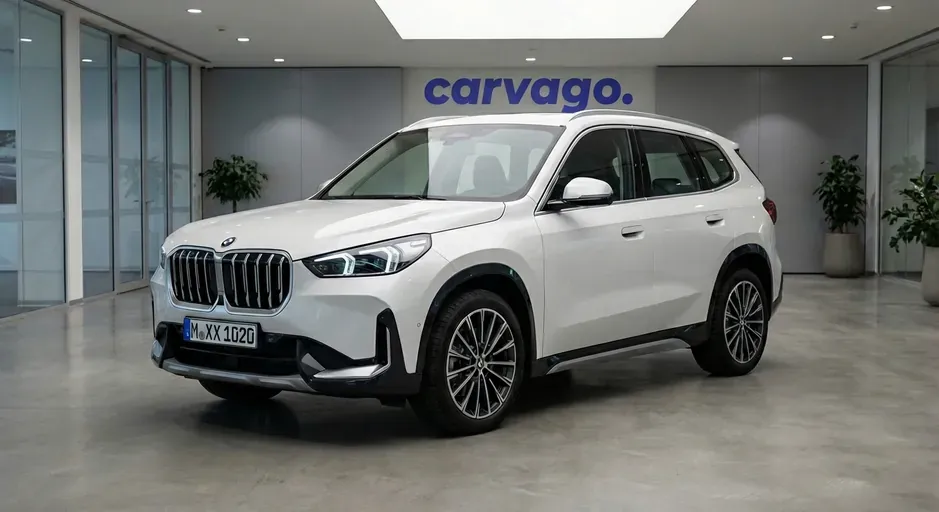
The BMW X1 serves as the entry point to the Bavarian brand’s crossover lineup, competing directly in the premium compact SUV segment. This review focuses exclusively on the third generation (internal code U11). Production commenced in July 2022 at BMW Group Plant Regensburg, with first European customer deliveries starting in October 2022. Built solely as a five-door BMW X1 SUV, the model remains in active production without a mid-cycle facelift, having received running digital, trim, and mechanical updates in 2023 and 2024.
BMW steadily expanded the range following its initial European release. Plug-in hybrid iterations and a mild-hybrid petrol variant arrived with customer deliveries in November 2022. The performance-focused M35i xDrive opened for orders in June 2023, reaching European owners in November 2023, while an updated mild-hybrid diesel variant joined the European lineup in July 2024.
Attracting families, daily commuters, and company car drivers alike, this generation of the BMW X1 is sought after for its elevated driving position, manageable external footprint, and versatile interior layout. The following sections examine how its hardware, space, driving dynamics, and ownership record hold up for prospective used-car buyers across Europe.
Because deliveries of the third-generation BMW X1 began in late 2022, long-term mechanical durability over high mileage is still establishing itself across European fleets. Early ownership records show robust structural assembly, but driver experiences consistently highlight software calibration quirks, low-speed drivetrain hesitation, and several safety recalls overseen by European authorities.
The most frequent complaint among owners and professional testers concerns low-speed driveability with the seven-speed dual-clutch automatic transmission. Drivers document a noticeable pause when accelerating from a dead stop, manoeuvring in tight parking spaces, or crawling in stop-and-go traffic, which is often followed by sudden clutch engagement. On mild-hybrid petrol and diesel versions, the aggressive engine restart logic further amplifies this uneven step-off. Workshop software updates issued by the manufacturer smooth out clutch application curves, but the characteristic remains largely an inherent trait of the gearbox calibration and emissions-focused start-stop tuning rather than a single broken component.
Digital system stability is another recurring topic. Owners describe occasional central screen blackouts on the curved display, sudden reboots while driving, intermittent dropouts during wireless smartphone integration, and delayed touch responses in climate menus. These software anomalies appear more frequently on vehicles manufactured from late 2023 onward with newer operating software. In most cases, having an authorised workshop apply the latest complete vehicle software update remedies the glitches, while physical hardware replacements of the display unit remain rare.
Safety authorities across Europe and the UK have coordinated several official manufacturer recall campaigns covering structural parts, seat belts, and the braking system.
| Campaign Subject | Affected Production Window | Geographic Reach | Defect and Remedial Action |
|---|---|---|---|
| Integrated Braking System (IBS) | June 2022 to January 2024 (expanded to November 2024) | Worldwide (approx. 1.5 million vehicles across BMW models), including EU and UK | Signal interruption or an improper servomotor weld can cause hydraulic brake assist to fail, disabling ABS and stability control and extending stopping distance. Dealers install diagnostic software and replace the hydraulic module if a defect is detected. |
| B-Pillar Reinforcement Plates | 17 September 2024 to 22 October 2024 | Worldwide (25,059 vehicles), EU and UK | Inadequate material used in reinforcement plates can alter crash deformation and elevate injury risk. Dealers inspect the pillar structure and replace non-compliant reinforcement plates. |
| Front Seat Belt Retractor | June 2025 to August 2025 | Worldwide (approx. 8,800 vehicles), EU and UK | Manufacturing damage to the retractor torsion bar can impair seat belt restraint performance in an accident. Dealers inspect and replace both front seat belt retractors. |
| Second-Row Seat Belt Sensor | July 2025 to October 2025 | Worldwide (24,041 vehicles), EU and UK | Faulty manufacturing of the sensitivity sensor on rear outer seat belts may prevent proper deployment during an impact. Dealers replace the affected rear belt assemblies. |
When buying a used BMW X1, verifying the completion of safety work is essential, and you can also have the car's complete history and mechanical condition independently evaluated through CarAudit.
The third-generation BMW X1 offers a diverse powertrain catalogue comprising pure combustion units, 48-volt mild hybrids, and plug-in hybrids. Every engine variant is paired exclusively with a seven-speed dual-clutch automatic transmission.
| Engine | Fuel | Power | Drivetrain | Gearbox | Model years |
|---|---|---|---|---|---|
| sDrive18i | Petrol | 100 kW (136 hp) | Front-wheel drive | 7-speed automatic | 2022–present |
| sDrive20i | Petrol mild hybrid | 125 kW (170 hp) | Front-wheel drive | 7-speed automatic | 2022–present |
| xDrive23i | Petrol mild hybrid | 160 kW (218 hp) | All-wheel drive | 7-speed automatic | 2022–present |
| M35i xDrive | Petrol | 221 kW (300 hp) | All-wheel drive | 7-speed automatic | 2023–present |
| sDrive18d | Diesel | 110 kW (150 hp) | Front-wheel drive | 7-speed automatic | 2022–present |
| sDrive20d | Diesel mild hybrid | 120 kW (163 hp) | Front-wheel drive | 7-speed automatic | 2024–present |
| xDrive20d | Diesel mild hybrid | 120 kW (163 hp) | All-wheel drive | 7-speed automatic | 2022–2024 |
| xDrive23d | Diesel mild hybrid | 155 kW (211 hp) | All-wheel drive | 7-speed automatic | 2022–present |
| xDrive25e | Petrol plug-in hybrid | 180 kW (245 hp) | All-wheel drive | 7-speed automatic | 2022–present |
| xDrive30e | Petrol plug-in hybrid | 240 kW (326 hp) | All-wheel drive | 7-speed automatic | 2022–present |
For frequent short urban commutes, a plug-in hybrid BMW X1 (xDrive25e or xDrive30e) fits best if you have access to regular wallbox charging, allowing zero-emission daily running. Drivers without home charging facilities will find the mild-hybrid petrol sDrive20i better suited to city traffic thanks to its integrated starter-generator, while the pure petrol sDrive18i avoids the exhaust filter clogging risks associated with repeated short diesel runs.
For mixed everyday driving across suburban routes and country roads, the four-cylinder petrol BMW X1 xDrive23i offers the most balanced delivery, combining linear throttle response with standard all-wheel drive. Buyers seeking elevated performance can choose the M35i xDrive, which adds a mechanical limited-slip front differential for sharper cornering, though its firmer chassis calibration compromises outright ride suppleness.
For sustained motorway journeys and high annual mileage, the diesel BMW X1 lineup remains the logical selection. The front-wheel-drive sDrive18d handles steady long-distance cruising comfortably, whereas the twin-turbocharged xDrive23d provides confident overtaking reserves at higher speeds. The mild-hybrid sDrive20d—or the earlier all-wheel-drive xDrive20d when shopping as a used car—serves as a capable middle tier.
For towing duty or hauling heavier payloads in slippery conditions, the all-wheel-drive BMW X1 options with higher low-end pulling power are recommended, specifically the diesel xDrive23d or the petrol xDrive23i. Both feature standard xDrive traction to pull away securely on steep gradients and maintain stability with a trailer attached.
For detailed information on real-world transmission behaviour, software updates, and manufacturer recall campaigns, refer to the owner experiences section.
| Version | Dimensions (L × W × H, mm) | Wheelbase (mm) | Boot volume (seats up / folded, l) |
|---|---|---|---|
| Pure petrol & diesel | 4,500 × 1,845 × 1,642 | 2,692 | 540 / 1,600 |
| Mild-hybrid | 4,500 × 1,845 × 1,642 | 2,692 | 500 / 1,545 |
| Plug-in hybrid | 4,500 × 1,845 × 1,630 | 2,692 | 490 / 1,495 |
Note: Exterior dimensions differ slightly on the performance M35i xDrive due to extended bumpers and lower suspension setup.
The BMW X1 SUV provides an upright seating posture with sufficient headroom and knee clearance for tall rear-seat occupants. A 40:20:40 split-folding rear bench featuring multi-stage backrest inclination comes standard across all versions, helping drivers balance passenger comfort against cargo capacity. However, rear-cabin modularity depends on the choice of powertrain. Pure combustion models feature an optional fore-and-aft sliding rear bench, but this functionality is omitted on mild-hybrid and plug-in hybrid variants because of battery packaging underneath the rear seats. The electrified models also lose underfloor storage space, although a wide tailgate aperture and a level loading lip ensure convenient daily practicality across the entire BMW X1 lineup.
Professional road tests describe the BMW X1 as agile and composed in corners, resisting body roll effectively for a tall crossover. However, chassis compliance is a consistent point of contention. When fitted with optional sports suspension and larger wheel diameters, the ride turns brittle and busy over broken urban pavement, transmitting small surface imperfections directly into the passenger compartment. Testers generally recommend standard suspension setups and moderate tyre profiles to preserve daily comfort. Steering response is quick and light around town, though several reviewers observe that feedback feels muted off-centre. Acoustic insulation suppresses wind and powertrain roar effectively at motorway speeds, though coarse road surfaces occasionally induce faint cabin trim vibrations.
Inside, the cabin receives credit for its supportive seating, commanding forward visibility, and tidy dashboard assembly. Closer scrutiny reveals cost-cutting deeper down, marked by unyielding lower plastics and thinner door padding than in larger brand stablemates. Ergonomics provoke the strongest criticism: evaluators almost unanimously regret the removal of the physical rotary controller. Managing climate settings and navigating complex sub-menus entirely through the touchscreen and voice commands proves distracting on the move. While road tests broadly align in praising the vehicle's cornering stability and cabin space, they agree that overly firm damping and touchscreen-dependent controls diminish everyday ease of use.
All market charts in this section are drawn from Carvago’s listings of the whole BMW X1 model family, including previous generations present in the data, rather than solely the third generation. Current listings reflect a median asking price ranging from €22,900 for 2019 models up to €48,000 for 2026 models. A notable step in median asking prices appears between 2022 models at €28,900 and 2023 models at €40,000, which reflects the market transition period, though these model-year aggregates do not establish a separate price level isolated strictly to the newest generation.
Advertised BMW X1 availability fluctuated over the six months from May to October 2026, starting at 19,471 listings and reaching a peak of 20,997 in July 2026.
Active listings over time
| Month | BMW X1 |
|---|---|
| 2026-05 | 19 471 |
| 2026-06 | 20 166 |
| 2026-07 | 20 997 |
| 2026-08 | 20 196 |
| 2026-09 | 20 454 |
| 2026-10 | 19 370 |
Source Carvago
Volume finished at 19,370 listings in October 2026, ensuring that buyers have maintained an extensive selection of vehicles despite moderate month-to-month changes.
The median asking price of cars advertised today, built in 2019, is €22,900, while the median asking price of cars advertised today, built in 2026, reaches €48,000. The chart details how this median asking price compares across each available model year.
Median advertised price by year of manufacture
| Model year | BMW X1 |
|---|---|
| 2019 | 22 900 |
| 2020 | 25 000 |
| 2021 | 26 000 |
| 2022 | 28 900 |
| 2023 | 40 000 |
| 2024 | 44 000 |
| 2025 | 44 500 |
| 2026 | 48 000 |
Source Carvago
Buyers considering models built between 2019 and 2022 encounter median asking prices between €22,900 and €28,900. For those looking at vehicles built from 2023 to 2026, the median asking price spans from €40,000 to €48,000.
This depreciation curve illustrates how the model's residual value declines over time. On average, it loses approximately 17% of its initial value in the first year and nearly 29% by age three.
Residual value by vehicle age
| Vehicle age | BMW X1 |
|---|---|
| New | 50 700 |
| 1 yr | 42 000 |
| 2 yrs | 38 700 |
| 3 yrs | 36 200 |
| 4 yrs | 28 000 |
| 5 yrs | 24 200 |
| 6 yrs | 22 700 |
| 7 yrs | 20 000 |
Source Carvago
Across the seven-year span shown, the model sheds roughly 61% of its initial value overall. The steepest annual drop occurs in the first year, with the pace of depreciation moderating noticeably between age one and age three.
Across the six recorded months, diesel and petrol variants formed the vast majority of BMW X1 advertisements, opening in May 2026 with 8,696 diesel and 7,232 petrol listings. The chart below traces how active listings broke down across each powertrain through October 2026.
Supply composition by fuel type
Petrol
Diesel
Hybrid
Electric
| Month | Petrol | Diesel | Hybrid | Electric |
|---|---|---|---|---|
| 2026-05 | 7 232 | 8 696 | 3 539 | 0 |
| 2026-06 | 7 407 | 8 912 | 3 844 | 0 |
| 2026-07 | 7 680 | 9 252 | 4 063 | 0 |
| 2026-08 | 7 564 | 8 719 | 3 909 | 2 |
| 2026-09 | 7 757 | 8 747 | 3 944 | 4 |
| 2026-10 | 7 498 | 8 301 | 3 562 | 3 |
Source Carvago
In October 2026, diesel led the available inventory with 8,301 listings, followed by 7,498 petrol models and 3,562 hybrids, while electric listings totaled 3. Buyers will find the widest selection among diesel and petrol options alongside a solid hybrid supply, whereas pure electric choices are practically non-existent.
Between May 2026 and October 2026, the average asking price across listings moved from €33,500 to €34,100, as shown in the monthly figures below.
Average price development over time
| Month | BMW X1 |
|---|---|
| 2026-05 | 33 500 |
| 2026-06 | 33 400 |
| 2026-07 | 33 500 |
| 2026-08 | 33 700 |
| 2026-09 | 33 900 |
| 2026-10 | 34 100 |
Source Carvago
Following a small dip to €33,400 in June 2026, the average climbed each subsequent month, though the overall change across the six months was under two percent.
Agile handling with composed cornering and effective body roll control
Practical cabin with ample passenger space and a standard split-folding rear bench
Broad selection of petrol, diesel, mild-hybrid, and plug-in hybrid powertrains
Dual-clutch automatic transmission hesitates and jerks at low speeds
Distracting climate and menu controls following the removal of the physical rotary controller
Firm, brittle ride comfort over broken pavement with sports suspension and large wheels
Structural assembly is robust, but long-term durability is still establishing itself across European fleets. Mechanical reliability is generally solid, provided safety recall campaigns have been verified and completed.
The petrol xDrive23i provides the most balanced everyday performance for mixed driving, while high-mileage drivers will benefit most from the diesel range. Plug-in hybrids suit those with home charging, whereas pure petrol engines best serve short urban commutes.
Have an authorised workshop verify by VIN that all safety recalls for the braking system and seat belts are complete. During the test drive, check for smooth low-speed transmission engagement and ensure the touchscreen operates without freezing.
Yes, the BMW X1 provides ample passenger space and a standard 40:20:40 split-folding rear bench. However, sliding rear seats and maximum underfloor storage are restricted to pure combustion versions due to electrified battery packaging.
Sources: bmwgroup.com, adac.de, kba.de, service.gov.uk, autocar.co.uk
This article was prepared using artificial intelligence tools. The section guarantor is Petr Dušek.
Opel Grandland review: real owner experience, hybrid and EV powertrains, boot space, and pricing — everything you need before you buy.
Oct 19, 2026
Audi Q3 vs Jaguar E-Pace Comparison: Which premium used SUV to choose? We reveal the differences in equipment, driving characteristics, and reliability. Find out the winner!
May 15, 2026

Detailed comparison: BMW X1 vs Jaguar E-Pace. Find out which premium SUV offers better equipment, space, and reliability. Read our final verdict!
Nov 12, 2026