Review Opel Grandland: What do owners and experts really say?

Opel Grandland review: real owner experience, hybrid and EV powertrains, boot space, and pricing — everything you need before you buy.

October 19, 2026

Opel Grandland

Verdict at a Glance

  • Who it suits: Family buyers and fleet drivers seeking an electrified crossover with practical ergonomics and quiet cruising comfort.
  • Recommended engine: The plug-in hybrid for versatile mixed commuting and towing, or the mild hybrid for urban use without home charging.
  • What to avoid: Any car lacking documented completion of safety recall repairs—always verify history by VIN.

Introduction

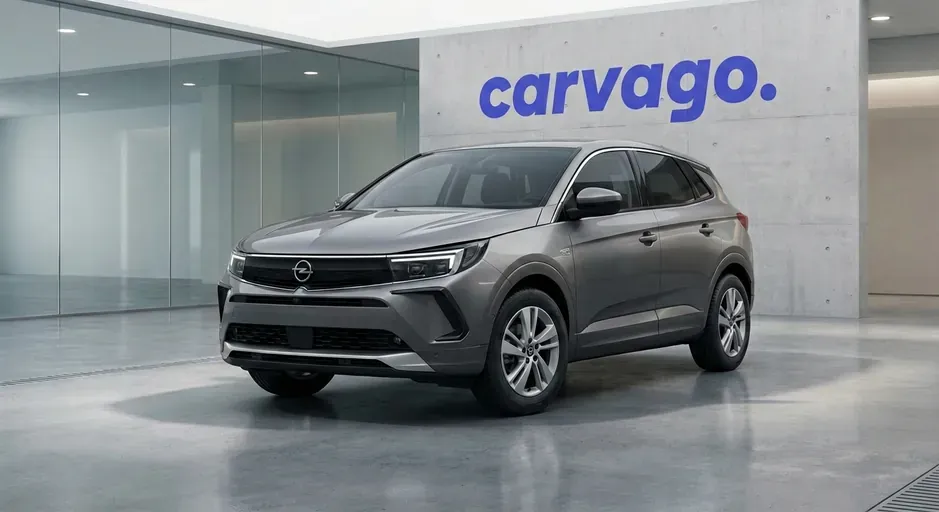
The second-generation Opel Grandland represents the brand's flagship entry in the competitive compact crossover segment. Built on the Stellantis STLA Medium platform, this generation celebrated its world premiere in April 2024, with order books opening in July 2024 and initial European customer deliveries arriving in November 2024. Sold exclusively as a five-door Opel Grandland SUV, the model remains in its original production cycle with no mid-cycle facelift to date.

The model range expanded steadily following its debut. Initial customer handovers commenced with mild-hybrid and front-wheel-drive electric variants, followed by a plug-in hybrid in summer 2025 and an all-wheel-drive electric version announced in 2025 ahead of its premiere in August 2026. This review focuses strictly on this second-generation vehicle produced from 2024 onward.

Aimed primarily at family buyers and fleet drivers seeking electrified motoring, the Grandland provides a versatile cabin alongside multiple low-emission propulsion options. Evaluating how each powertrain handles daily commuting and longer journeys will help prospective buyers decide whether this modern crossover matches their practical requirements.

Owner Experiences: Common Faults and Recalls

With customer deliveries in Europe starting in November 2024, the second-generation Opel Grandland has accumulated under two years of road service as of October 2026. Because fleet mileage remains relatively modest, long-term mechanical reliability patterns and periodic inspection defect rates have not yet been established. Professional tests describe occasional cold-boot latency and intermittent wireless smartphone projection disconnects on early production media screens, though the manufacturer addressed these software stability concerns through subsequent over-the-air patches and workshop updates.

Early production runs have been subject to several verified European safety recalls. In January 2025, an official campaign covered 6,372 vehicles worldwide manufactured between 21 March 2024 and 19 November 2024. In the words of the safety notice, fixing screws on the front left and right ball joint mounts on the lower suspension arm could break; two missing screws could cause the mount to pivot and the wheel to change direction and strike the mudguard, compromising steering control. Dealerships inspect and replace the ball joint mounts and fasteners.

A separate recall announced in February 2025 affected 4,094 vehicles worldwide built between 21 March 2024 and 19 November 2024. In this batch, routing of the front seat wiring harness could allow the bundle to rub against the seat rail stop when the seat is pushed to its rearmost setting. Friction with metal parts creates a risk of wire damage that could provoke an airbag malfunction during an impact or trigger a short circuit leading to a fire. Authorized workshops inspect the routing, reroute the harness, and repair or replace any damaged cabling.

Powertrain-specific campaigns followed later in the production cycle. An official safety recall was issued for high-pressure fuel line leakage on 2024 builds produced up to April 2025, where loose union nuts between the high-pressure fuel pump and common rail created a fire risk. In September 2025, a recall was announced for 2,104 units of the hybrid Opel Grandland produced between 26 June 2025 and 13 August 2025. A defective bolted connection in the 48V auxiliary heating connector could loosen, leading to loss of cabin heat or electrical overheating that could cause a fire. Technicians verify the connection, tighten the bolt to factory specifications, and replace the harness if signs of thermal damage appear. Most recently, in June 2026, an update was issued covering a combined 26,010 Opel Astra and Grandland models worldwide built between 11 July 2023 and 4 July 2024. A software defect could cause random and unexpected deactivation of the interior door handles, potentially preventing occupants from exiting during an emergency; workshops apply a module software reflash.

When considering a used example of the second generation, particularly the electric Opel Grandland or hybrid models from the initial assembly period, verifying that all service updates have been completed is the primary diligence step. Having a prospective car thoroughly assessed before purchase through CarAudit ensures that its electronic health and hardware status align with factory service standards.
🔍 What to check before buying

  • Request official dealer service records to verify by vehicle identification number (VIN) that all safety recalls—covering front suspension ball joint hardware, seat wiring routing, high-pressure fuel line leakage, the 48V heating connection, and door latch software—have been completed.
  • Move both front seats through their full mechanical travel, paying close attention to the rearmost position to ensure the under-seat harness does not foul against the seat frame stops.
  • Boot the central touchscreen from cold to verify system responsiveness, navigation initialization, and stability of the wireless smartphone connection.
  • On plug-in hybrid and electric versions, inspect the charging flap and port latching mechanism, and ensure all original charging cables are present.

Engines: Which One to Choose

The second-generation Opel Grandland relies entirely on electrified propulsion. The line-up spans 48-volt mild-hybrid petrol, plug-in hybrid, and battery-electric drivetrains, with manual gearboxes completely retired in favour of dual-clutch and direct-drive automatic transmissions.

EngineFuelPowerDrivetrainGearboxModel Years
1.2 Direct Injection Turbo HybridPetrol mild hybrid100 kW (136 hp)Front-wheel drive6-speed automatic2024–2025
1.2 Direct Injection Turbo HybridPetrol mild hybrid107 kW (145 hp)Front-wheel drive6-speed automatic2025–present
1.6 Direct Injection Turbo Plug-in HybridPetrol plug-in hybrid143 kW (195 hp)Front-wheel drive7-speed automatic2025–present
Electric (73 kWh)Electric157 kW (213 hp)Front-wheel driveAutomatic2024–present
Electric Long Range (97 kWh)Electric170 kW (231 hp)Front-wheel driveAutomatic2025–present
Electric AWD (73 kWh)Electric239 kW (325 hp)All-wheel driveAutomatic2025–present

Which engine fits your driving profile?

Urban commuting and mixed suburban errands suit the mild-hybrid petrol version best. The integrated electric motor inside the dual-clutch transmission assists stop-and-go driving and low-speed parking manoeuvres, making this the sensible pick for buyers without dedicated home charging facilities who want an uncomplicated everyday petrol runabout.

Drivers splitting their mileage between local commutes and regular motorway trips will find the greatest flexibility in the plug-in hybrid Opel Grandland. When charged overnight, it handles daily urban travel on battery power alone, while the four-cylinder petrol engine eliminates range pauses on long holiday journeys. It also carries the highest braked towing rating in the line-up, making it the practical option for pulling heavier trailers or caravans.

For owners with access to routine home or workplace charging, the standard front-wheel-drive electric Opel Grandland delivers smooth and quiet operation on daily family duties. Those who frequently cover long distances on cross-country motorways should prioritise the Long Range electric variant, which provides the larger energy reserve needed to space out rapid-charging stops on the highway.

Buyers facing harsh winter conditions or requiring confident traction on steep, slippery inclines are best served by the dual-motor all-wheel-drive Opel Grandland. It pairs improved grip across both axles with higher towing capabilities than the single-motor electric variants.

Space & Practicality

DimensionStandard (FWD / PHEV)Electric AWD
Length (mm)4,6504,650
Width (mm)1,9051,905
Height (mm)1,658–1,6651,665
Wheelbase (mm)2,784–2,7952,795
Boot capacity, seats upright (l)550485
Boot capacity, seats folded (l)1,6451,580

The second-generation Opel Grandland SUV provides an accommodating passenger compartment with an elevated seating position that affords clear outward visibility. Rear passengers benefit from ample legroom and adult-friendly headroom, although the rear cabin relies on shared ventilation outlets without independent climate temperature controls.

Everyday flexibility across the Opel Grandland range is anchored by a standard 40:20:40 split-folding rear seat backrest that drops flat into the cargo floor, making it simple to slide long equipment through the centre opening while carrying two passengers on the outer seats. However, the rear bench itself is fixed and does not slide fore or aft. Cargo volume remains uniform across petrol hybrid, plug-in hybrid, and front-wheel-drive electric variants, whereas all-wheel-drive electric models surrender underfloor storage depth to accommodate the secondary electric drive motor on the rear axle.

What the Tests Say

On the road, the second-generation Opel Grandland exhibits a distinctly firm chassis setup across both combustion and battery-powered models. Damping remains composed and settles well on smooth motorways, but broken city pavement and sunken potholes transmit persistent low-level fidgeting and sudden vertical jarring into the cabin. Testers diverge regarding the steering: some find it naturally weighted, while others describe it as completely numb and detached from road feedback. Cornering is secure, yet quick directional transitions reveal noticeable body lean and substantial curb weight, with electronic stability intervention cutting in early. Acoustic insulation suppresses wind and tyre roar effectively at cruising speeds, but the hybrid Opel Grandland displays unpolished powertrain calibration in town, vibrating at low engine revs and hesitating when the combustion engine kicks in. The electric Opel Grandland runs quieter, though its regenerative braking lacks a true one-pedal stop function.

Inside, the cabin earns consistent praise for its sensible ergonomics. The uncluttered dashboard retains tactile physical switchgear for ventilation controls and a dedicated button for driver-assistance systems, avoiding the annoyance of submenus. Build quality feels robust, and the ergonomically certified front seats, fitted standard on higher trims and optional on entry models, deliver supportive bolstering, even if their firm foam padding accentuates the stiff ride. Professional assessments agree on the car's quiet high-speed cruising, dependable assembly, and logical layout. Opinions split primarily over suspension compliance, where several evaluations consider the ride unnecessarily rigid for a family-oriented crossover.

Prices and Market Offer

All the market charts in this section are drawn from Carvago's listings of the whole Opel Grandland model family, including other generations represented in the data, rather than the reviewed generation alone. Because no verified generation-specific split is provided, these figures do not establish a separate price level for the newest shape. Across the currently advertised selection, the median asking price spans from €17,800 for 2019 models to €35,400 for 2026 vehicles, reflecting later build dates and newer powertrain variants.

Active Opel Grandland listings grew from 8,788 in April 2026 to a peak of 10,144 in July 2026 before dipping slightly in late summer. The chart below shows how the monthly volume of available cars developed over this six-month span.

Opel Grandland - availability over time

Active listings over time

MonthOpel Grandland
2026-048 788
2026-058 923
2026-069 161
2026-0710 144
2026-089 758
2026-099 721

Source Carvago

With 9,721 vehicles listed in September 2026, buyers have an extensive selection to choose from across the market. Available stock has remained well above early-spring figures despite the modest decline heading into autumn.

Among used listings advertised today, the median asking price for cars built in 2019 is €17,800, compared to €35,400 for vehicles built in 2026.

Opel Grandland - median price by model year

Median advertised price by year of manufacture

Model yearOpel Grandland
201917 800
202019 900
202120 500
202222 900
202325 000
202425 900
202533 300
202635 400

Source Carvago

Buyers exploring earlier model years can target a median asking price of €19,900 for 2020 models, while stepping up to a 2025 model corresponds to a median asking price of €33,300.

This depreciation curve illustrates how the Opel Grandland's residual value declines with vehicle age, losing roughly 39% by age three. The steepest year-on-year drop occurs between age one and age two, leading into the progression shown below.

Opel Grandland - value loss by age

Residual value by vehicle age

Vehicle ageOpel Grandland
New34 800
1 yr29 500
2 yrs23 800
3 yrs21 100
4 yrs19 800
5 yrs17 200
6 yrs15 800
7 yrs15 600

Source Carvago

Across the seven years shown, the model sheds approximately 55% of its initial residual value. Depreciation eases considerably in the later years, with the annual decline flattening to just over 1% between age six and age seven.

Petrol models formed the largest group of advertised vehicles throughout this period, recorded at 5375 listings in April 2026 and 6638 in September 2026. The monthly breakdown below shows how availability was split across each powertrain.

Opel Grandland - supply by fuel over time

Supply composition by fuel type

  • Petrol

  • Diesel

  • Hybrid

  • Electric

  • LPG

MonthPetrolDieselHybridElectricLPG
2026-045 3758742 0055112
2026-055 5658981 8855484
2026-065 7988981 8216233
2026-076 6558871 8717123
2026-086 5548761 6586524
2026-096 6388741 6315605

Source Carvago

In September 2026, petrol dominated the offer with 6638 listings, compared to 1631 hybrids, 874 diesels, and 560 electric cars. Buyers will have the widest selection among petrol and hybrid models, whereas diesel and fully electric alternatives present a much smaller pool of vehicles.

The chart tracks the average asking price for the Opel Grandland from April 2026, when listings averaged €26,600, through September 2026.

Opel Grandland - price trend over time

Average price development over time

MonthOpel Grandland
2026-0426 600
2026-0526 200
2026-0625 900
2026-0725 600
2026-0825 500
2026-0925 200

Source Carvago

Across this six-month period, the average asking price decreased in each consecutive month, moving from €26,600 down to €25,200, an overall decline of about 5%.

Pros & Cons

Opel Grandland

Pros

Sensible cabin ergonomics with physical controls for ventilation and driver-assistance features

Standard 40:20:40 split-folding rear backrest that drops flat into the cargo floor

Quiet, well-insulated passenger compartment during high-speed motorway cruising

Cons

Rigid suspension setup that transmits jarring and fidgeting over broken urban pavement

Fixed rear seat bench that does not slide fore or aft

Multiple early production safety recalls requiring official history verification by VIN

Frequently asked questions

Long-term mechanical reliability has not yet been established due to the model's recent introduction. Early production examples were subject to official safety recalls and software updates, making verified completion by VIN essential.

Urban commuters without home charging are best served by the mild-hybrid petrol, while the plug-in hybrid Opel Grandland offers the greatest versatility for towing and long journeys. Drivers with regular charging access should choose the electric Opel Grandland.

Verify through official service records that all factory safety recalls have been completed by vehicle identification number (VIN). On test drives, inspect touchscreen cold-boot responsiveness and ensure all original charging equipment is present on electrified variants.

The Opel Grandland features a firm suspension setup that provides stable motorway cruising, though it transmits noticeable vertical jarring over broken city pavement.

Sources: media.stellantis.com, opel.de, adac.de, ec.europa.eu, autocar.co.uk

This article was prepared using artificial intelligence tools. The section guarantor is Petr Dušek.

Related articles

Car battle

Peugeot 2008 vs. Suzuki Vitara: Complete comparison 2026

A major comparison of the Peugeot 2008 and Suzuki Vitara. Discover the differences in equipment, reliability, and fuel consumption of used cars. Read our verdict and make the right choice.

May 7, 2026

Car battle

Ford Puma vs. Peugeot 2008: Complete Comparison 2026

Ford Puma vs Peugeot 2008: Which crossover should you choose? Our detailed comparison, real-world insights, and verdict will help you decide.

Oct 23, 2026

Car battle

Seat Arona vs. Suzuki Vitara: Complete comparison 2026

Detailed comparison: Seat Arona vs. Suzuki Vitara. Discover the differences in engines, equipment, and reliability. Our verdict will help you choose the ideal used SUV.

May 5, 2026

We accept online card payments as well as wire transfers.

visa payment provider logovisa-electron payment provider logomastercard payment provider logomaestro payment provider logodiners-club payment provider logodiscover payment provider logo