Car battle
Audi Q3 vs. DS 7: Complete comparison 2026
Detailed comparison of the Audi Q3 and DS 7 (Crossback). We evaluated real-world driving characteristics, spaciousness, and engines. Find out in our verdict which SUV to choose.
Apr 25, 2026
Articles
Car battle
Audi Q3 vs Jaguar E-Pace Comparison: Which premium used SUV to choose? We reveal the differences in equipment, driving characteristics, and reliability. Find out the winner!
May 15, 2026
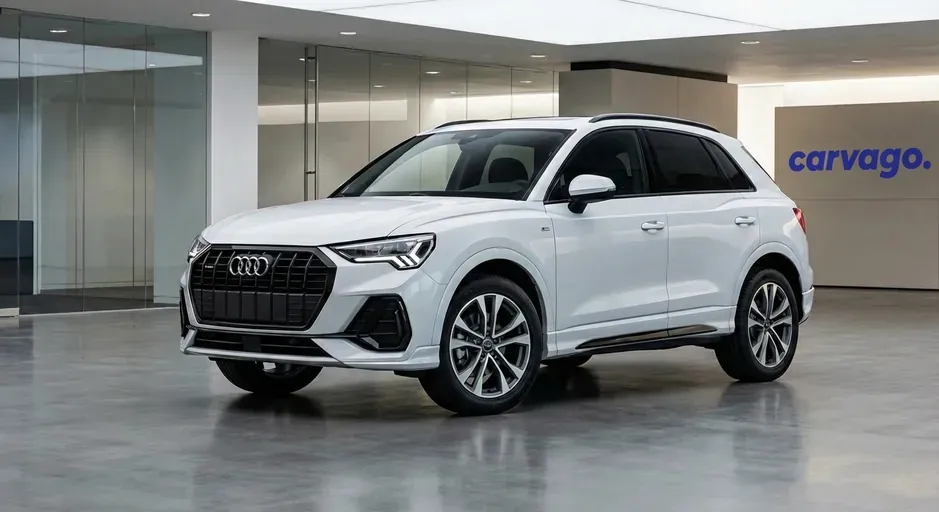
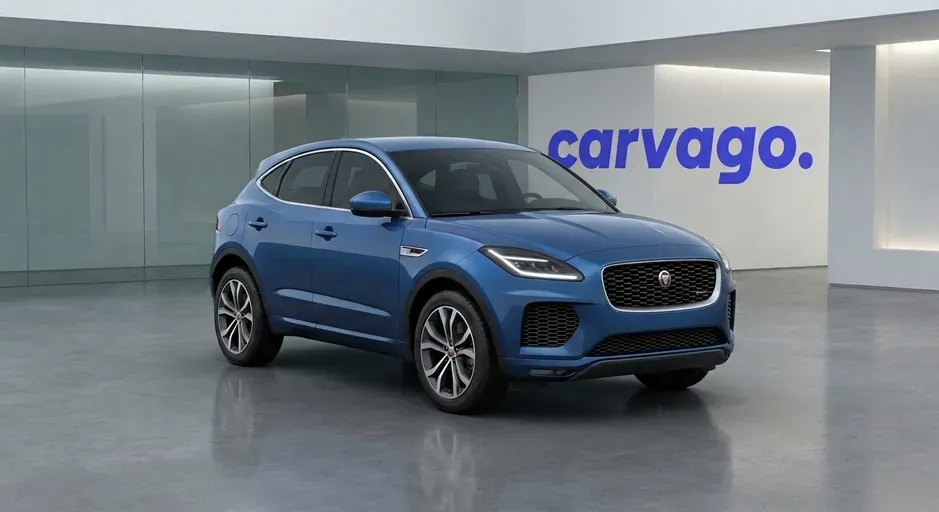
Audi Q3, a popular compact SUV of German production, which in its second generation is also available in the more stylish Sportback body version, attracts buyers with top-notch ergonomics and advanced technologies. Its confident British rival is the Jaguar E-Pace (also known internally by the code name X540), which brings a sporty design inspired by the F-Type coupé and a strong emphasis on dynamic driving characteristics to the segment of smaller luxury crossovers. Let's take a detailed look at which of these attractive, roughly four-year-old premium models represents a better choice on the used car market for your daily journeys.
When looking at the exterior dimensions of both premium compact SUVs from roughly the same period (the F3 generation for Audi and the X540 model from around 2021–2022 for Jaguar), we discover fundamental conceptual differences. Although both cars share an almost identical wheelbase (2680 mm for the Audi versus 2681 mm for the Jaguar), the German representative offers more in terms of overall length. The standard Audi Q3 measures 4484 mm, and in the more stylish Sportback version, it reaches exactly 4500 mm. The Jaguar E-Pace is just under 9 centimetres shorter with its length of 4395 mm. In practice, this difference in body overhangs means that while the British feline feels more compact on the road and is slightly easier to parallel park, Audi cleverly converts its extra centimetres into slightly better use of interior space and the boot.
With its 1984 mm, the Jaguar E-Pace ranks among the truly broad-shouldered athletes, surpassing the more modest Audi Q3 (1849 mm) by a staggering 135 mm. In practice, for the British model, this means a stunningly muscular stance on the road and more generous shoulder room inside the cabin. On the other hand, this characteristic turns into a significant disadvantage when parking in typical European underground garages or near narrow kerbs. The Audi weaves through narrow city streets much more naturally and brings significantly less stress to the driver.
The British aristocrat also dominates in the vertical direction. A height of up to 1649 mm gives the Jaguar a more traditional, upright character of a classic SUV. The Audi Q3, by contrast, stays closer to the ground (1585 mm, or 1567 mm for the Sportback body with its sloping roofline). The taller build of the E-Pace will please those seeking a truly dominant driving position and a more upright seating posture that makes getting in and out easier. However, the taller silhouette takes its toll in the form of slightly worse aerodynamics. Overall, the Audi Q3 is a more rational and practically shaped car for the city, while the Jaguar plays on emotions, robustness, and a wide stance, albeit at the cost of poorer manoeuvrability in tight spaces.
| Parameter | Audi Q3 SUV | Audi Q3 Sportback SUV | Jaguar E-Pace SUV |
|---|---|---|---|
| Width (mm) | 1849 | 1843 | 1984 |
| Length (mm) | 4484 | 4500 | 4395 |
| Height (mm) | 1585 | 1567 | 1648–1649 |
| Wheelbase (mm) | 2680 | 2680 | 2681 |
Luggage capacity is often a decisive factor for those interested in premium compact SUVs, whether for everyday family utility, transporting sports equipment, or large weekend shopping trips. A direct comparison of roughly four-year-old used cars shows that although both cars target a similar customer group, their approach to interior space differs slightly. The Audi Q3 focuses on maximum practicality and flexibility, while the Jaguar E-Pace places a bit more emphasis on dynamic exterior design, which takes a slight toll on overall transport capacity.
The current generation Audi Q3 (F3) is one of the top performers in its class. The standard SUV version offers an excellent base volume of 530 liters, a value that is easily sufficient for a family holiday and space for several extra suitcases. Folding down the rear seats creates a storage area of up to 1,525 liters. If you opt for the more stylish Q3 Sportback variant with its sloping roof, the base volume remains at the same 530 liters, but the maximum capacity after folding the seats drops to 1,400 liters. It is also important to note the plug-in hybrid versions (TFSI e), where the batteries take up valuable space, reducing the base volume to 380 liters.
Jaguar E-Pace underwent a facelift for the 2021 model year, which is what you will now encounter most often on the used car market. Its trunk offers a base volume of 494 liters for standard engines. For normal daily needs and shopping, this space is perfectly adequate; however, when comparing the maximum volume after folding the rear backrests, the British cat lags noticeably behind – offering 1,170 liters, which is significantly less than its German competitor. When moving bulkier items, you will reach the Jaguar's limits sooner.
In terms of pure practicality and volume, the clear winner is the Audi Q3, which provides more generous luggage space and an overall more versatile interior. The Jaguar E-Pace, on the other hand, will appeal more to drivers who don't mind trading a few dozen liters of maximum volume for unmistakable style.
| Parameter | Audi Q3 SUV | Audi Q3 Sportback | Jaguar E-Pace SUV |
|---|---|---|---|
| Base volume (liters) | 530 | 530 | 494 |
| Maximum volume with seats folded (liters) | 1525 | 1400 | 1170 |
While the Jaguar E-Pace offers a decent base trunk for everyday use, the Audi Q3 is the clear choice for families and demanding travelers thanks to its significantly larger maximum volume and overall versatility.
The ability to tow a trailer is often a key factor when choosing a compact premium SUV. Whether you are planning a summer holiday with a family caravan or need to occasionally transport heavier building materials, the maximum permitted trailer weight can significantly limit your options. Looking at cars approximately four years old reveals interesting differences in the engineering capabilities of the two compared vehicles.
For the Audi Q3 (F3 generation, typically cars from 2019 to the present), the standard capacity for a braked trailer with common petrol engines, such as the 35 TFSI, is a very solid 1800 kg. However, if you opt for the more powerful 40 TDI diesel version, the maximum towing capacity increases to an excellent 2200 kg. Special attention should be paid to the 45 TFSI e plug-in hybrid variant. Due to the installation of heavy batteries and a different weight distribution, the permitted load for this model drops to just 1400 kg.
The British representative, the Jaguar E-Pace (X540 generation), lags slightly behind its German competitor in this discipline, although its values are still sufficient for most users. Most entry-level engines (e.g., P200 petrol or D165/D180 diesel) offer a standard towing capacity of 1800 kg. The top of the range in this regard is the more powerful D200 diesel unit, which can tow exactly 2000 kg. Similar to the Audi, there is a price to pay for electrification – the P300e plug-in hybrid version can tow a maximum of 1600 kg.
In practice, this means that both cars can easily handle towing a small boat or a motorcycle trailer, which is sufficient for a weekend trip or common utility needs. However, the Audi Q3 with its maximum of 2200 kg is a significantly better candidate for worry-free towing of large and heavy family caravans or spacious horse trailers. While the Jaguar reliably meets standard requirements, the diesel version of the Audi offers greater utility and a sense of reserve for more demanding tasks, making it the clear winner for more demanding users seeking maximum versatility.
| Model and engine | Braked trailer weight (kg) | Unbraked trailer weight (kg) |
|---|---|---|
| Audi Q3 35 TFSI (F3 generation) | 1800 | 750 |
| Audi Q3 40 TDI (F3 generation) | 2200 | 750 |
| Audi Q3 45 TFSI e (PHEV, F3) | 1400 | 750 |
| Jaguar E-Pace D165 (X540 generation) | 1600-1800 | 750 |
| Jaguar E-Pace D200 (X540 generation) | 2000 | 750 |
| Jaguar E-Pace P300e (PHEV, X540) | 1600 | 750 |
When choosing an engine for premium compact SUVs around four years old (i.e., 2021 and 2022 models), you will encounter two very different engineering approaches. From the perspective of daily usability, this plays a crucial role in fuel consumption, maintenance, and driving character. For the Q3, Audi relies on the renowned and long-refined technology of the Volkswagen Group, which is built on efficient turbocharged four-cylinder engines. It scores points with low fuel consumption, availability of spare parts, and the speed of dual-clutch transmissions. In contrast, the Jaguar E-Pace relies on its own Ingenium engine family. Since the E-Pace is a relatively heavy car for its class, the manufacturer focused heavily on deploying mild-hybrid (MHEV) and plug-in hybrid (PHEV) technologies in the facelifted models after 2021 to help smooth out power delivery and reduce engine load. While the Audi is thus a rational choice for economical long-distance travel, its British competitor targets those who appreciate a more dynamic drive and a traditional torque-converter automatic paired with a 4x4 system.
Given the focus on approximately four-year-old used cars, we are talking exclusively about the current generation of the Audi Q3 (internal designation F3, on sale since 2018). The previous 8U generation, production of which ended in 2018, naturally no longer features in the market for nearly-new used cars. The current range for the Q3 is logically structured and consists exclusively of turbocharged units. For more relaxed and budget-conscious drivers, there is the base 35 TFSI four-cylinder (110 kW), which also features mild-hybrid technology when paired with the S tronic dual-clutch automatic transmission. More demanding dynamics are served by the 2.0-litre 40 TFSI (140 kW) or the top-of-the-line 45 TFSI (180 kW). Traditionally, however, the TDI diesel versions are highly sought after – specifically the 35 TDI (110 kW) and 40 TDI (147 kW), which are considered fantastic mile-munchers with excellent fuel economy. Electric motor response then dominates the 45 TFSI e version, a modern plug-in hybrid ideal for city commuting. More powerful engines are standardly paired with the advanced quattro all-wheel drive and a 7-speed dual-clutch automatic.
| Engine Type | Fuel Type | Power (kW) | Torque (Nm) | Transmission |
|---|---|---|---|---|
| 35 TFSI | Petrol | 110 | 250 | 6MT / 7DSG |
| 40 TFSI | Petrol | 140 | 320 | 7DSG |
| 45 TFSI | Petrol | 180 | 370 | 7DSG |
| 35 TDI | Diesel | 110 | 340 | 6MT / 7DSG |
| 40 TDI | Diesel | 147 | 400 | 7DSG |
| 45 TFSI e | Plug-in hybrid | 180 | 400 | 6DSG |
The range for the Jaguar E-Pace underwent a major technological turning point, which is very important to know when looking at the used car market. Earlier popular diesel engines without electrification, such as the D150, D180, and high-performance D240, were only offered until 2020 and are therefore essentially not found in four-year-old vehicles. The incoming updated range from 2021 onwards saw the near-universal adoption of 48V mild-hybrid (MHEV) systems. The base of the range became the more efficient P160 turbocharged three-cylinder (118 kW) driving the front wheels. However, the core consists of 2.0-litre petrol MHEV four-cylinders: P200, P250, and the brisk P300 version (up to 221 kW). More modest drivers can choose from the updated diesel derivatives D165 (120 kW) and D200 (150 kW). The technological pinnacle is the P300e plug-in hybrid, which combines a 1.5-litre three-cylinder petrol engine with an electric motor at the rear, offering an impressive combined output of 227 kW and a massive 540 Nm of torque. Jaguar uses permanent AWD all-wheel drive in the vast majority of vehicles in combination with classic 8- and 9-speed automatics, which brings excellent smoothness when pulling away at the cost of slightly higher fuel consumption compared to the Audi.
| Engine Type | Fuel Type | Power (kW) | Torque (Nm) | Transmission |
|---|---|---|---|---|
| P160 | Petrol (MHEV) | 118 | 260 | 8AT |
| P200 | Petrol (MHEV) | 147 | 320 | 9AT |
| P250 | Petrol (MHEV) | 184 | 365 | 9AT |
| P300 | Petrol (MHEV) | 221 | 400 | 9AT |
| D165 | Diesel (MHEV) | 120 | 380 | 6MT / 9AT |
| D200 | Diesel (MHEV) | 150 | 430 | 9AT |
| P300e | Plug-in hybrid | 227 | 540 | 8AT |
If you are looking for proven reliability, exceptionally low fuel consumption, and the ideal vehicle for high motorway mileage, the TDI engines in the Audi Q3 are clearly the most rational choice. For drivers who instead prefer powerful dynamics, standard 4x4 drive, and a smooth-shifting torque-converter automatic, Jaguar's updated MHEV or PHEV arsenal offers an exclusive and more emotional, albeit slightly more expensive to operate, driving experience.
Choosing the right engine is a critical step for long-term satisfaction with compact premium SUVs, with our recommendations based on real-world driving performance, actual fuel consumption, and proven mechanical reliability. While the Audi Q3 generation F3 (produced since 2018) benefits from the lightweight MQB modular platform, which allows it to work great even with efficient smaller engines, the Jaguar E-Pace (X540) is a surprisingly heavy car despite its compact dimensions (curb weight exceeds 1.8 tonnes for some versions). For this reason, for the British car, we must focus on engines with a sufficient reserve of torque so that it does not feel sluggish and suffer from excessive consumption, while for its German competitor, it makes sense to bet on a modern, agile, and economical petrol base in the 4-year-old used car market.
This four-cylinder petrol engine is by far the most sensible choice for most regular users in the current generation (F3) on the used car market, especially when paired with the S tronic automatic transmission.
Given the unexpectedly high weight of the E-Pace model, the most capable and practical unit after the facelift (available as a used car from approximately the beginning of 2021) is the mild-hybrid 2.0-liter diesel from the Ingenium family.
As is common with modern cars, official fuel consumption figures provided by manufacturers often differ significantly from everyday reality. While laboratory measurements according to WLTP standards promise very optimistic numbers, real-world operation with varying loads, air conditioning, and actual weather conditions shows a different picture. To get the most accurate idea of how much fuel roughly four-year-old used cars actually require, we rely on real-world data from the crowdsourcing portal Spritmonitor.de, where thousands of ordinary drivers record their daily refueling.
We focused exclusively on the generations of both models that make sense for the four-year-old used car market, namely the Audi Q3 (F3 generation) and the Jaguar E-Pace (X540 generation). The following table clearly summarizes the average consumption values across the main engine versions, based on real user data.
| Model and engine | Average consumption (l/100 km) | Data source |
|---|---|---|
| Audi Q3 35 TDI 110 kW | 5.5 | Spritmonitor.de |
| Audi Q3 40 TDI 147 kW | 6.4 | Spritmonitor.de |
| Audi Q3 35 TFSI 110 kW | 6.3 | Spritmonitor.de |
| Audi Q3 40 TFSI 140 kW | 7.6 | Spritmonitor.de |
| Jaguar E-Pace D165 120 kW | 6.8 | Spritmonitor.de |
| Jaguar E-Pace D200 150 kW | 7.0 | Spritmonitor.de |
| Jaguar E-Pace P160 118 kW | 8.2 | Spritmonitor.de |
| Jaguar E-Pace P200 147 kW | 8.9 | Spritmonitor.de |
| Jaguar E-Pace P250 184 kW | 9.4 | Spritmonitor.de |
Looking at the hard data, fairly clear trends are evident. The Audi Q3 emerges from this comparison as a noticeably more economical car. This is primarily due to its lower curb weight and the very efficiently tuned powertrains of the Volkswagen Group. Diesel engines (especially the popular 35 TDI) are known for being very frugal and can easily be driven well below the six-liter mark. A surprising finding, however, is that even the entry-level petrol 35 TFSI in the Audi can achieve 6.3 liters in real-world driving, which for many drivers almost erases the traditional efficiency advantage of diesel.
In contrast, the British Jaguar suffers from its exceptionally massive and heavy construction. The weight handicap of the E-Pace is fully reflected in the appetite of all its power units. The entry-level Ingenium diesel range (D165 and D200) requires about a liter and a half more fuel than the equivalent diesel engines in the Audi. The petrol versions of the Jaguar (P200 and P250) are then outright thirsty; their consumption rarely drops below 8.5 liters and in the city, it often attacks the ten-liter mark. Even the use of a downsized three-cylinder petrol engine in the P160 version doesn't help – on the contrary, the small engine struggles too much with the heavy car and in practice takes over 8 liters, which practically nullifies the expected operational savings.
For the typical user, this means a clear set of priorities. If you are a long-distance highway driver, drive mostly in the city, or are looking for an economically-minded family SUV, the Audi Q3 will be a significantly more rational and cheaper choice to operate. Conversely, the Jaguar E-Pace targets buyers with a higher budget who prefer a fresh British design and a robust body over low fuel bills.
In conclusion, it can be clearly stated that fuel consumption plays a pivotal role in the decision between these two cars. While for some other premium compact SUVs the differences tend to be more cosmetic, there is a real gap of 1.5 to 2 liters of fuel per 100 kilometers between the Q3 and the E-Pace, to the disadvantage of the Jaguar. In the discipline of daily operating costs, the victory of German efficiency is simply overwhelming.
When looking for a roughly four-year-old premium compact SUV (model years 2021–2022), the second-generation Audi Q3 (F3) and the Jaguar E-Pace (following its recent facelift) appear as very interesting candidates. At this age, both vehicles have already moved past their steepest initial depreciation, but a closer look at the secondary market reveals quite different price curves. While the representative from Ingolstadt holds its residual value very tenaciously due to its massive popularity, the British aristocrat's price drops significantly more sharply. This makes it a surprisingly affordable entry ticket into the world of luxury on the used car market.
For the current market with models from 2021 and 2022, there are fairly clear rules that reflect the differing demand for both vehicles:
The dynamics of value loss are completely different for these two competitors. The popular Audi Q3 functions as a highly liquid safe bet on the used market – once you list the car at a realistic market price, it usually sells very quickly. Its depreciation curve is smooth, and thanks to a wide service network and the general popularity of the German brand, it simply doesn't get much cheaper.
In contrast, the Jaguar E-Pace is a much more exotic sight on the secondary market. Lower awareness among average buyers and partial (though often unfounded) concerns about more expensive servicing mean that original owners must drop the price more drastically when selling. For a savvy used car buyer, however, this represents a huge opportunity: a similarly aged E-Pace with comparable mileage and equipment can often be purchased for 10 to 20% less than an equivalent Audi Q3.
| Parameter / Model (approx. 4 years old) | Audi Q3 (Generation F3) | Jaguar E-Pace |
|---|---|---|
| Starting price of a used car | from approx. €27,000 | from approx. €19,000 |
| Price for a more powerful engine / better equipment | €32,000 – €37,000 | €25,000 – €31,000 |
| Depreciation curve | Gradual and very stable | Steeper (faster initial drop) |
| Liquidity on the used market | High (quick and easy resale) | Lower (requires more time to find a specific buyer) |
While the popular Audi Q3 represents financial security on the used market with minimal depreciation, the Jaguar E-Pace attracts as a more affordable alternative, where the second owner benefits most from the lower residual price.
Both of these premium compact SUVs earned the maximum five-star rating in rigorous Euro NCAP tests, demonstrating their excellent levels of passive and active safety. However, when comparing these results, it is essential to consider the broader context and the exact year of testing. The Euro NCAP methodology is constantly evolving, becoming stricter, and regularly incorporating entirely new scenarios and dummies into the tests. For this reason, percentage scores from different years cannot be directly and unconditionally compared. Given the age of both tests (2017 and 2018), their official certification has formally expired; however, for buyers in the four-year-old used car market, these detailed results still serve as a very reliable benchmark of quality.
Audi Q3 underwent safety testing in 2018. This year already introduced newer testing protocols that focused more closely on advanced autonomous emergency braking (AEB) systems, including cyclist detection and improved night-time testing. The Q3 performed brilliantly in these modernized tests, achieving an extraordinary 95% in adult occupant protection, a result that is hard to beat in this class. Child protection was rated at a confident 86%. In the protection of vulnerable road users (pedestrians and cyclists), the car scored 76%. Safety assistance systems, such as lane-keep assist, benefited from the state-of-the-art sensors of the time and received a well above-average score of 85%.
Jaguar E-Pace passed through the test laboratories a year earlier, in 2017. Although this is a slight time difference, the methodology at that time did not test some newer and more complex road situations with the same rigor as in the case of the Audi. Nevertheless, its massive body demonstrated excellent strength. Adult protection was rated at a solid 86%, and in child protection, the British Jaguar achieved a great 87%, even surpassing its German rival by one percentage point. From the perspective of protecting vulnerable road users, the E-Pace achieved a very respectable result of 77%. A score of 72% in the safety assist category reflects the fact that the E-Pace featured functional AEB systems with pedestrian detection, but older rules did not consider such a wide range of threats and cyclists.
Final Summary
Although both SUVs represent perfectly safe family vehicles with a solid body structure, the Audi Q3 offers a more modern and overall more comprehensive safety package. Its dominant result in adult passenger protection and demonstrably better performance of electronic safety assistants, which were tested under a more demanding methodological year, make it a more advanced choice according to more current standards. Despite slightly lower numbers in assistance systems, the Jaguar E-Pace reliably protects both adult and child occupants, but from a purely technological standpoint, the lead goes to Audi.
| Parameter | Audi Q3 | Jaguar E-Pace |
|---|---|---|
| Year of testing | 2018 | 2017 |
| Adult occupant protection | 95 % | 86 % |
| Child occupant protection | 86 % | 87 % |
| Vulnerable road user protection | 76 % | 77 % |
| Safety assist systems | 85 % | 72 % |
Although both compact SUVs protect their occupants at an excellent five-star level, the Audi Q3 represents a more sophisticated choice overall due to its more recent testing date, higher adult protection score, and more advanced electronics.
In addition to standard equipment, both models offer much more than just basic functions, and each has its own specific approach to added value that can be decisive for the customer. While the German representative relies on cold logic and spatial variability, the British one appeals to emotions with playful details and unconventional technological gadgets.
The German compact SUV excels primarily in its well-thought-out ergonomics and clever use of interior space. The equipment focuses on practicality and the precise functioning of all systems.
Jaguar approaches the segment from a more emotional side. The E-Pace model was visually inspired by the F-Type sports coupe and brings interesting British innovations and attention to detail to the world of family SUVs.
Excellent build quality and interior ergonomics
Very spacious cabin with generous rear seat legroom
Highly practical and voluminous luggage compartment (up to 530 liters)
Intuitive and fast MMI multimedia system with logical controls
High residual value and excellent resale potential on the used car market
Wide range of proven and fuel-efficient engines
Higher purchase price on the used car market compared to its British rival
Driving characteristics are safe but less engaging for the driver
Presence of harder and cheaper-feeling plastics in the lower parts of the dashboard
The Audi Q3 is an excellent choice for those looking for a premium, exceptionally practical, and technologically advanced family SUV. Thanks to its perfect use of interior space, great sound insulation, and high residual value, it represents a highly rational and safe investment on the used car market.
Very attractive and sporty exterior design with a distinct character
Above-average agile driving characteristics and fun handling on winding roads
High-quality and pleasant-to-the-touch interior materials (especially in facelifted models)
Very generous standard equipment even in lower trim levels
High curb weight negatively affecting real-world fuel consumption
More cramped space for rear passengers and a noticeably smaller luggage compartment
Steeper depreciation and potentially higher long-term maintenance costs
Occasional hesitant reactions from the nine-speed automatic transmission in stop-and-go traffic
The Jaguar E-Pace will surely appeal to drivers whose clear priorities are distinctive style, British charm, and a significantly sportier feel behind the wheel. Despite logical compromises in overall practicality and higher running costs, it is a very charismatic and emotional alternative to its more conservative German competitors.
Based on user service reports, breakdown statistics, and detailed data from our certified CarAudit service, which involves an independent comprehensive vehicle inspection carried out by experienced mechanics, we have compiled an overview of the most common problems and weaknesses that potential buyers of four-year-old used cars of these models should watch out for.
The current generation Audi Q3 (F3) benefits from a reliable shared platform and proven technologies, but even in models manufactured around 2020 and 2021, specific faults appear, mainly associated with software errors and the tuning of onboard systems.
Although the Audi Q3 is a mechanically very robust and reliable SUV, potential buyers should be prepared for occasional electronic ailments and, when purchasing, check for smooth automatic transmission shifting and the tightness of the panoramic window.
One of the smallest models from the British automaker is accompanied by a premium interior and attractive shapes, but its technology, especially in vehicles from 2018–2021 associated with diesel engines, requires exceptionally careful pre-purchase oversight.
While the Jaguar's design is unquestionable, purchasing a four-year-old diesel model without a crystal-clear oil change history represents a major financial risk. It is therefore worth investing in a thorough pre-purchase inspection and looking for a car that hasn't just been driven around town.
When buying a used car, a thorough inspection is key. Both premium SUVs have their specifics and weak points that you should watch out for. For complete peace of mind, an independent technical inspection of the car is always useful, as it can reveal even carefully hidden defects before purchase.
Audi Q3 provides a significantly larger and more practical luggage compartment with a base volume of 530 liters. In addition, it features sliding rear seats as standard, allowing the trunk volume to be increased to an impressive 675 liters. The Jaguar E-Pace, on the other hand, offers a rather below-average 425 liters in this class and fixed rear seats.
Despite its higher weight, the Jaguar E-Pace is focused on a sportier driving experience, offering a stiffer chassis and very precise steering. The Audi Q3, by contrast, focuses primarily on everyday comfort, an exceptionally quiet cabin, and a smoother ride over urban bumps. If you're looking for fun behind the wheel, the British car will be the better choice; for comfortable travel, the German competitor wins.
Audi generally benefits from an extensive service network and proven group technology, which means slightly lower and more predictable routine maintenance costs. Jaguar ranks slightly lower in independent reliability rankings, often due to minor issues with electronics or infotainment software. Spare parts and hourly rates at authorized service centers are also typically higher for the British brand.
For families, the Audi Q3 makes much more sense, primarily thanks to its smarter interior packaging and high variability of the rear seats. In the rear, the German model offers significantly more legroom and headroom. The Jaguar has a more cramped space in the back due to the sloping roofline, and bulkier child car seats are harder to install through the rear doors.
Both cars are primarily designed as urban SUVs and will spend most of their lives on asphalt. However, thanks to its clever all-wheel-drive system and special All Surface Progress Control off-road modes, the Jaguar can surprisingly handle mud or light terrain. Audi relies on the proven quattro system, which is perfectly suited for ensuring maximum traction on snow and wet roads.
Sources: ADAC, idnes.cz, novinky.cz, elektromobil.cz, autorevue.cz, podnikatel.cz
This article was prepared using artificial intelligence tools. The section guarantor is Petr Dušek.
Detailed comparison of the Audi Q3 and DS 7 (Crossback). We evaluated real-world driving characteristics, spaciousness, and engines. Find out in our verdict which SUV to choose.
Apr 25, 2026
Detailed comparison: Seat Arona vs. Suzuki Vitara. Discover the differences in engines, equipment, and reliability. Our verdict will help you choose the ideal used SUV.
May 5, 2026
Opel Grandland vs. Seat Ateca: Which SUV to choose? Our detailed comparison will reveal the key differences and help you find the right car for you.
Apr 14, 2026